
Earths Layers S 6 E 5 a Compare

- Slides: 22
Earth’s Layers S 6 E 5. a. Compare and contrast the Earth’s crust, mantle, and core including temperature, density, and composition.
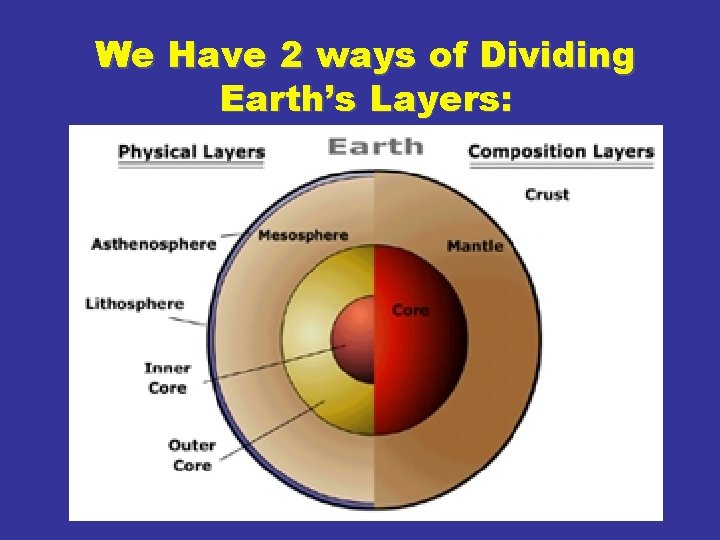
We Have 2 ways of Dividing Earth’s Layers:
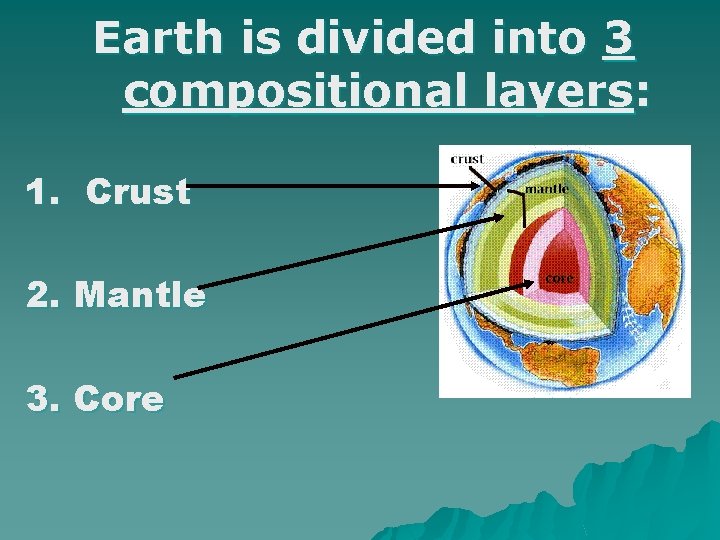
Earth is divided into 3 compositional layers: 1. Crust 2. Mantle 3. Core
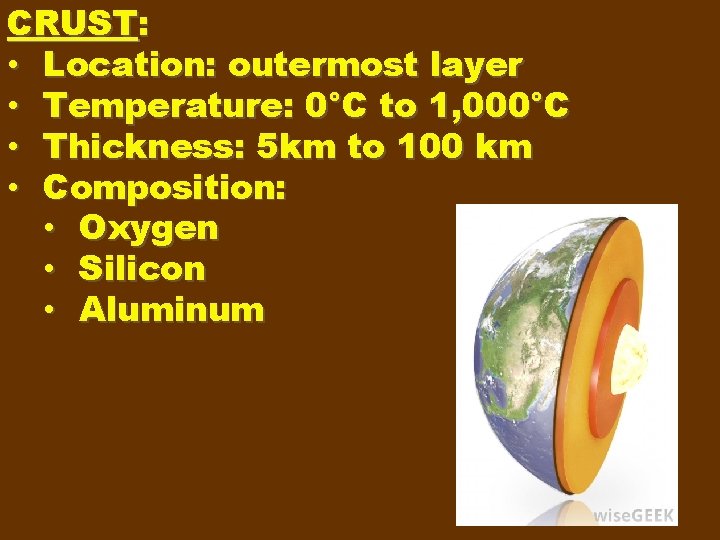
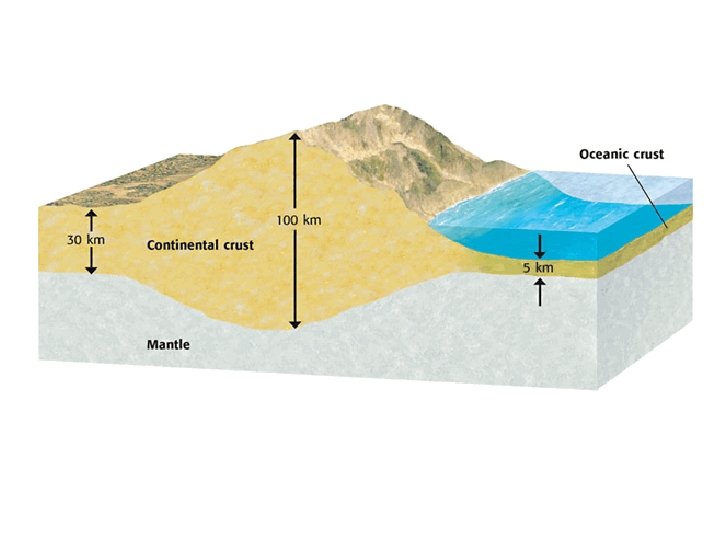
CRUST: • Location: outermost layer • Temperature: 0°C to 1, 000°C • Thickness: 5 km to 100 km • Composition: • Oxygen • Silicon • Aluminum
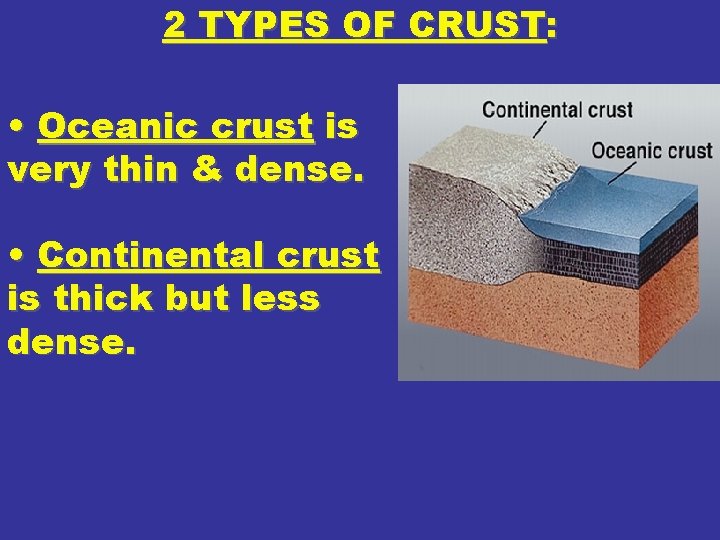
2 TYPES OF CRUST: • Oceanic crust is very thin & dense. • Continental crust is thick but less dense.
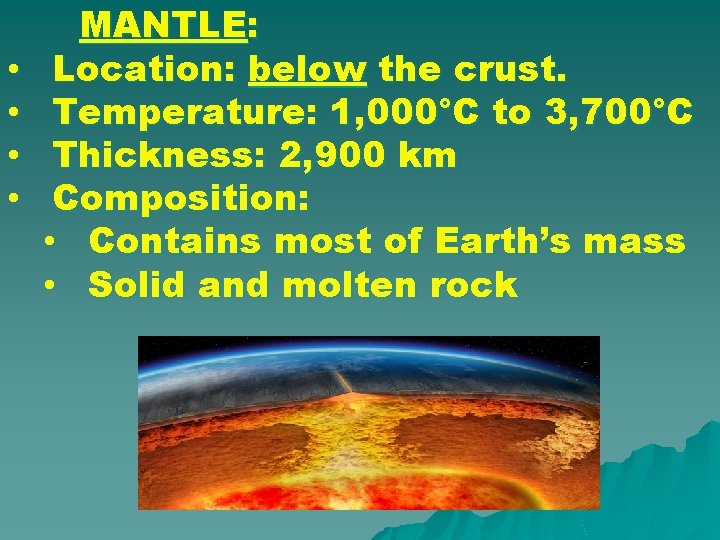
• • MANTLE: Location: below the crust. Temperature: 1, 000°C to 3, 700°C Thickness: 2, 900 km Composition: • Contains most of Earth’s mass • Solid and molten rock
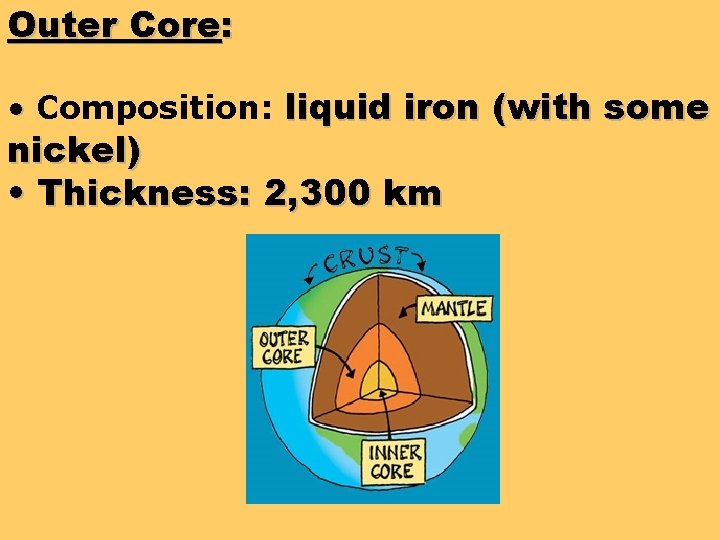
CORE: • Location: Earth’s center • Temperature: 3, 700°C - 7, 000°C • Thickness: 3, 500 km • Composition: mostly iron, some nickel • Divided into 2 layers: • Outer Core • Inner Core
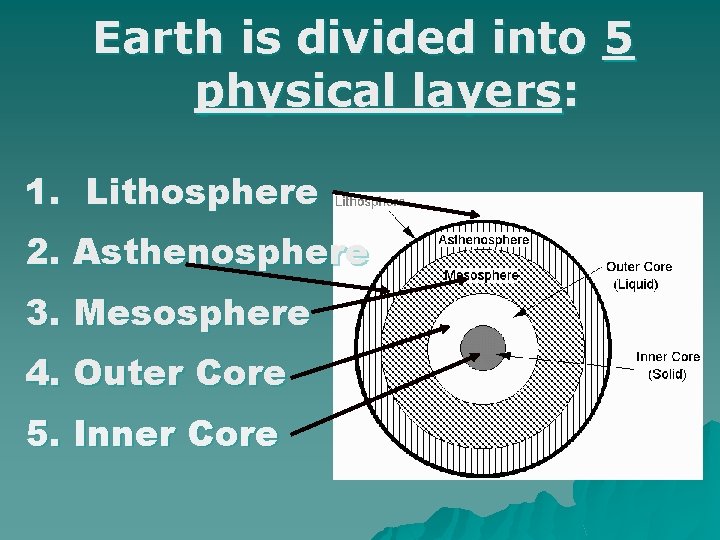
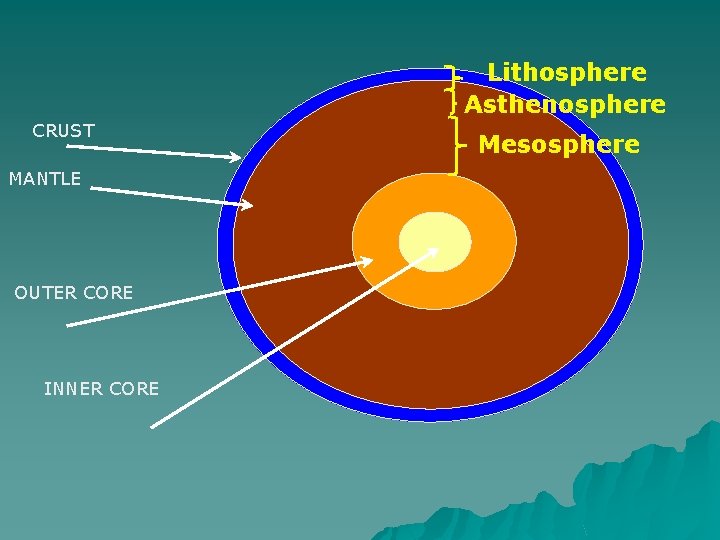
Earth is divided into 5 physical layers: 1. Lithosphere 2. Asthenosphere 3. Mesosphere 4. Outer Core 5. Inner Core
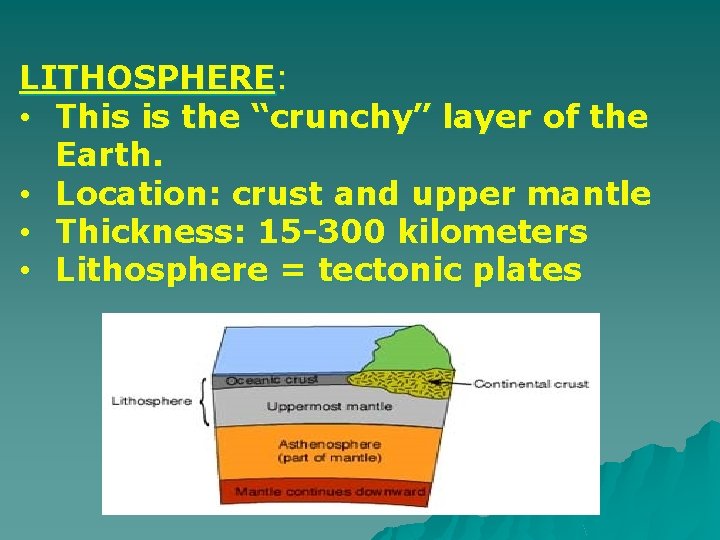
LITHOSPHERE: • This is the “crunchy” layer of the Earth. • Location: crust and upper mantle • Thickness: 15 -300 kilometers • Lithosphere = tectonic plates
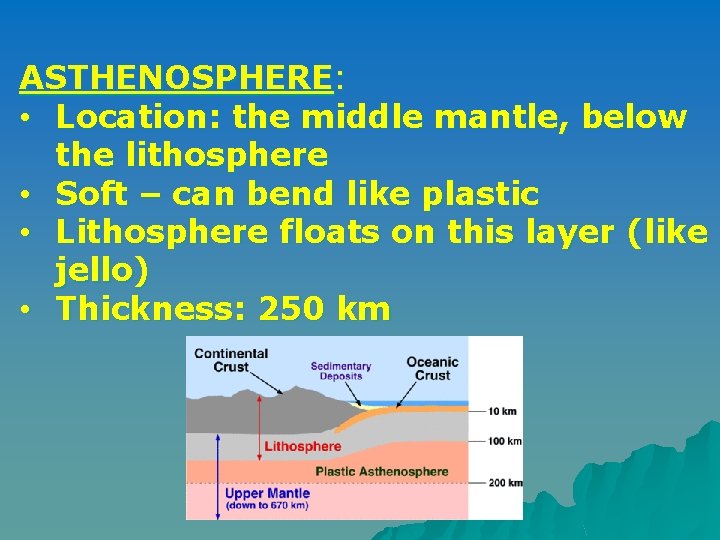
ASTHENOSPHERE: • Location: the middle mantle, below the lithosphere • Soft – can bend like plastic • Lithosphere floats on this layer (like jello) • Thickness: 250 km
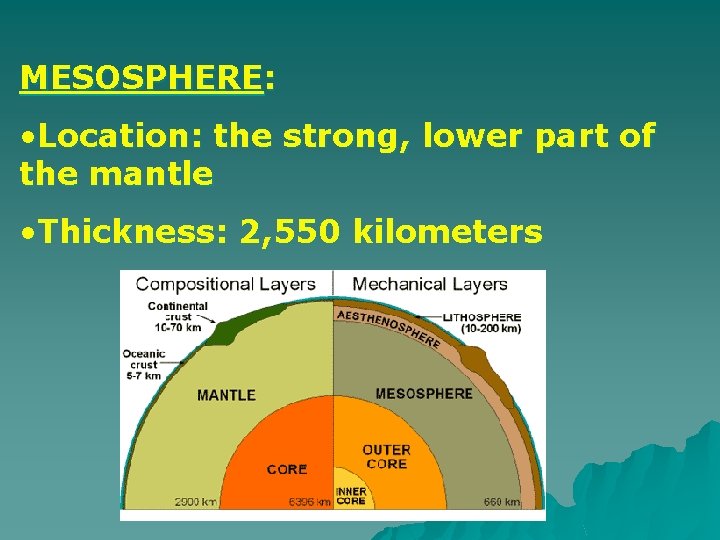
MESOSPHERE: • Location: the strong, lower part of the mantle • Thickness: 2, 550 kilometers
Outer Core: • Composition: liquid iron (with some nickel) • Thickness: 2, 300 km
Inner Core: • Composition: solid iron and a little nickel. • Thickness: 1, 220 km thick. • Solid because of increased pressure.
Lithosphere Asthenosphere CRUST MANTLE OUTER CORE INNER CORE Mesosphere
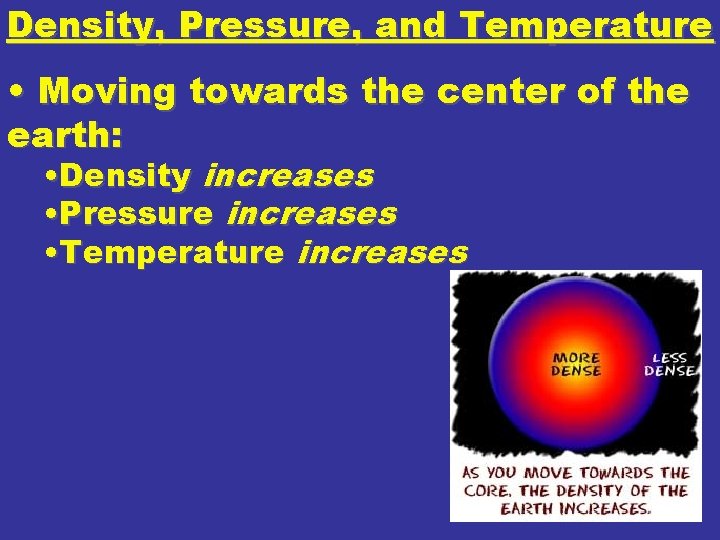
Density, Pressure, and Temperature • Moving towards the center of the earth: • Density increases • Pressure increases • Temperature increases
How do we know there are layers of the earth? • Earthquakes emit different kinds of seismic waves that can travel through different substances and at different speeds • Scientists used these waves to determine the layers based on the speed and movement of the layers!
The MOHO • The Moho is the boundary where the crust meets the mantle • It was discovered in 1909 by Andrija Mohorovicic • It was discovered because at this point density changes and seismic waves change direction
The MOHO
Why does Earth have a magnetic field?
Why does Earth have a magnetic field? • Earth’s magnetic field is a result of the movement of iron in the Earth’s liquid inner core.
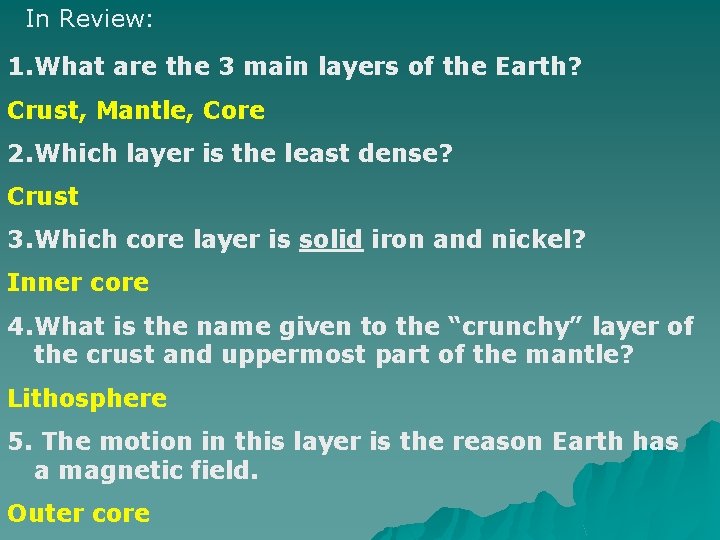
In Review: 1. What are the 3 main layers of the Earth? Crust, Mantle, Core 2. Which layer is the least dense? Crust 3. Which core layer is solid iron and nickel? Inner core 4. What is the name given to the “crunchy” layer of the crust and uppermost part of the mantle? Lithosphere 5. The motion in this layer is the reason Earth has a magnetic field. Outer core