
EARTHS LANDFORMS CHAPTER 1 LESSON 1 LANDFORMS n
- Slides: 13
EARTH’S LANDFORMS CHAPTER 1 LESSON 1
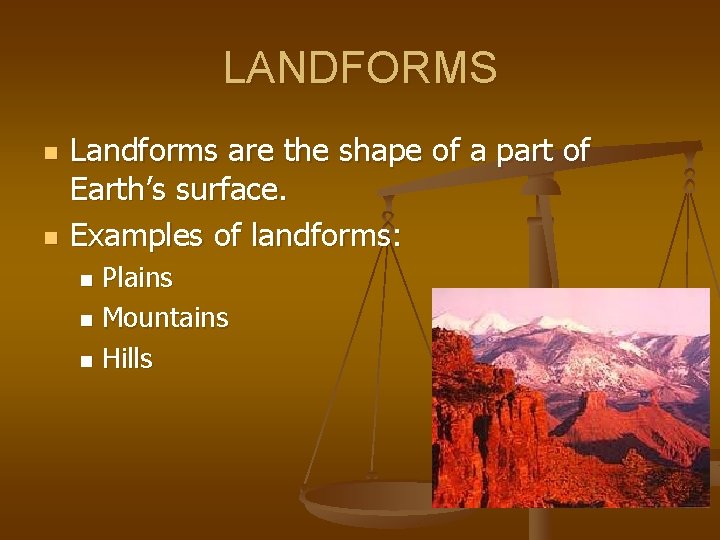
LANDFORMS n n Landforms are the shape of a part of Earth’s surface. Examples of landforms: Plains n Mountains n Hills n
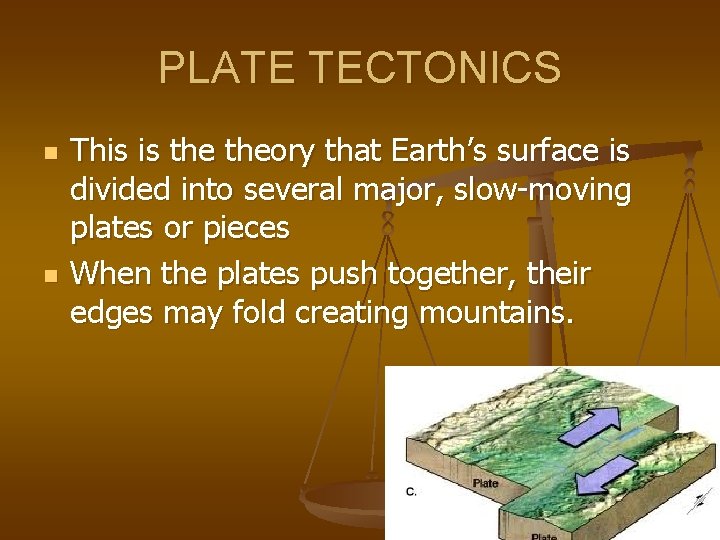
PLATE TECTONICS n n This is theory that Earth’s surface is divided into several major, slow-moving plates or pieces When the plates push together, their edges may fold creating mountains.
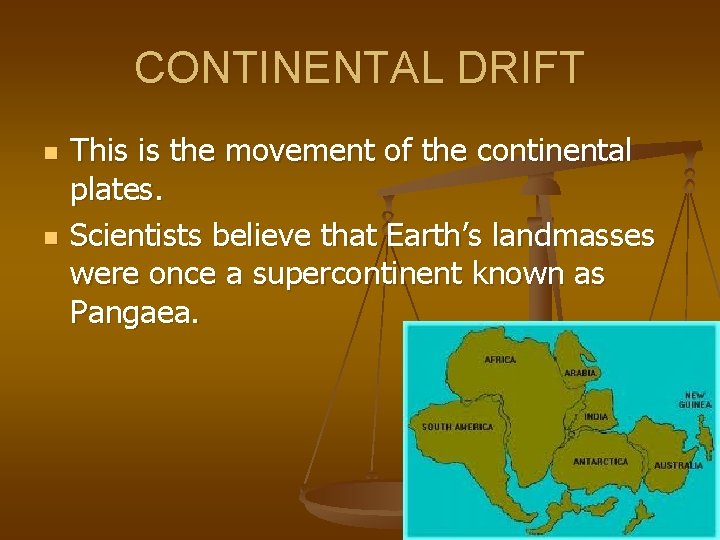
CONTINENTAL DRIFT n n This is the movement of the continental plates. Scientists believe that Earth’s landmasses were once a supercontinent known as Pangaea.
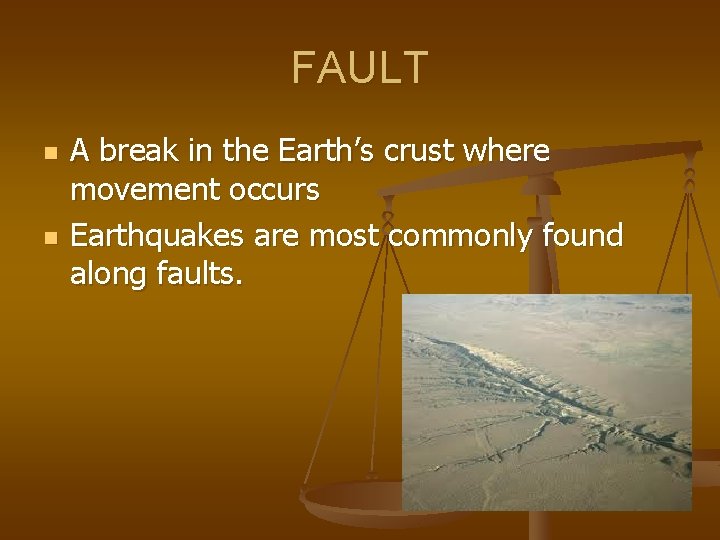
FAULT n n A break in the Earth’s crust where movement occurs Earthquakes are most commonly found along faults.
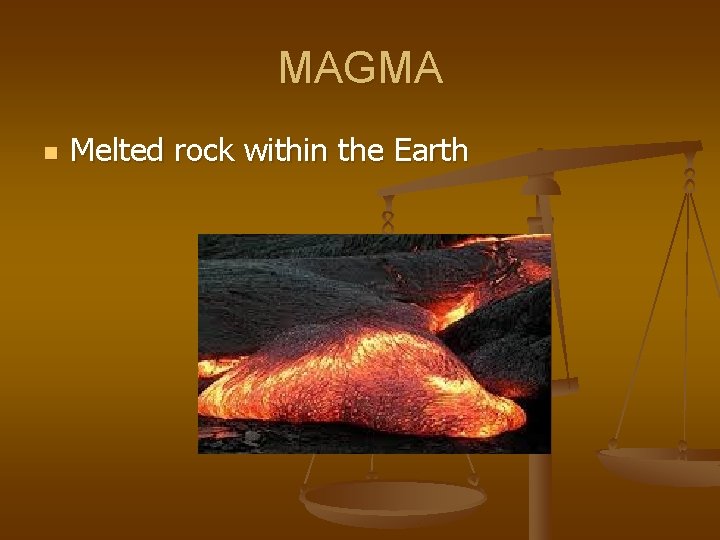
MAGMA n Melted rock within the Earth
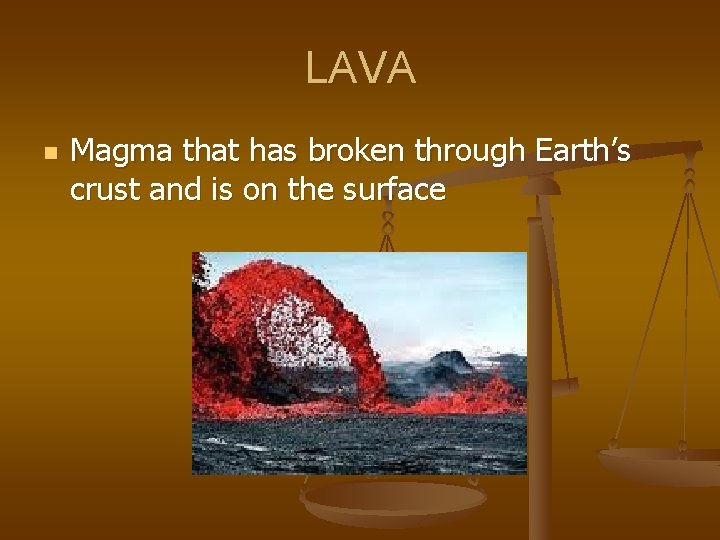
LAVA n Magma that has broken through Earth’s crust and is on the surface
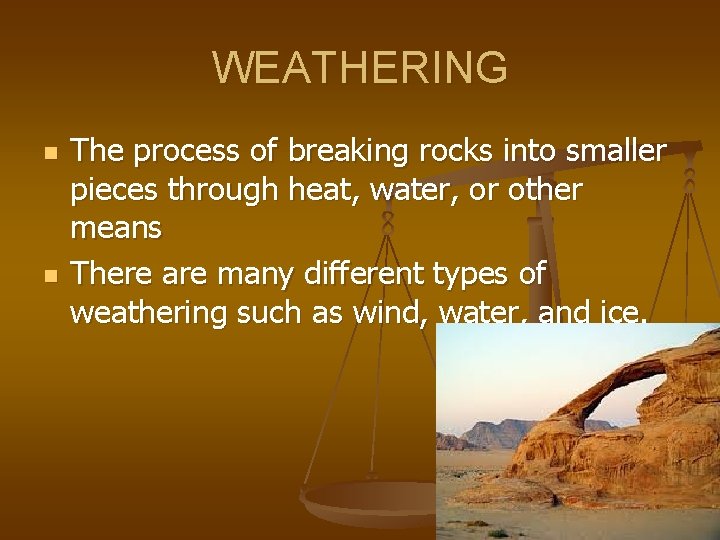
WEATHERING n n The process of breaking rocks into smaller pieces through heat, water, or other means There are many different types of weathering such as wind, water, and ice.
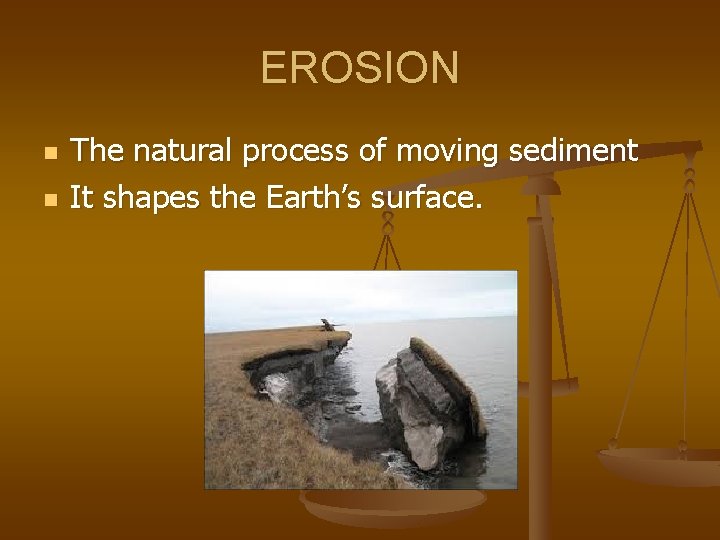
EROSION n n The natural process of moving sediment It shapes the Earth’s surface.
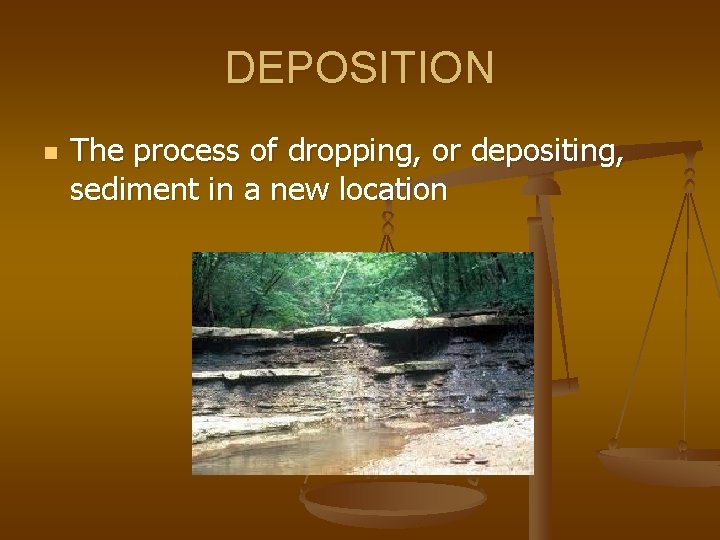
DEPOSITION n The process of dropping, or depositing, sediment in a new location
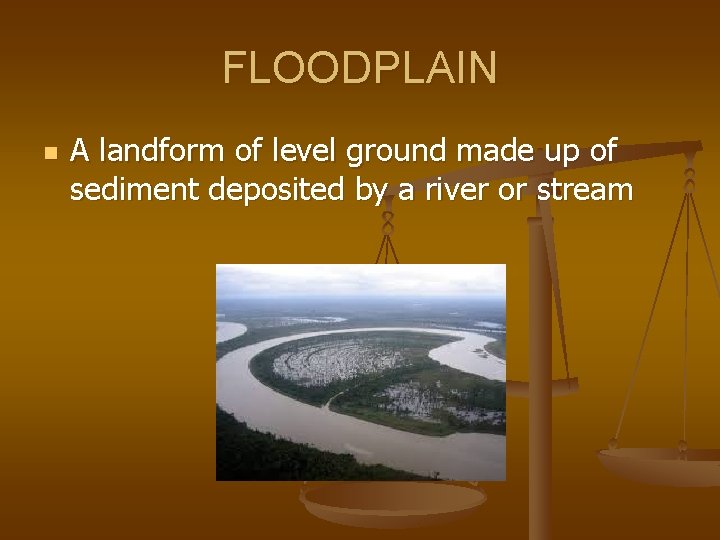
FLOODPLAIN n A landform of level ground made up of sediment deposited by a river or stream
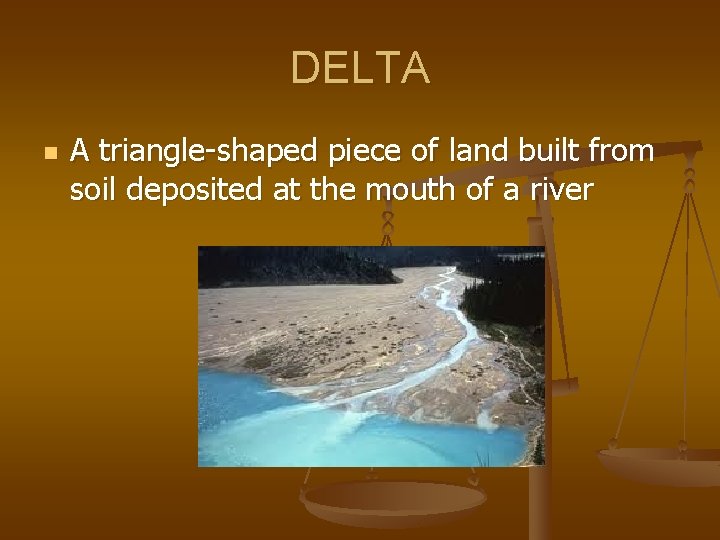
DELTA n A triangle-shaped piece of land built from soil deposited at the mouth of a river
How do people change the land? n n n By building farms By building cities By planting crops By reshaping waters and creating new ones By draining water from wetlands to create dry land for cities and farms