
Earths Geological Cycle What Are the Earths Major
- Slides: 33
Earth’s Geological Cycle
What Are the Earth’s Major Geological Processes? § Main Processes: 1. Plate Tectonics 2. Rock Cycle 3. Soil Formation
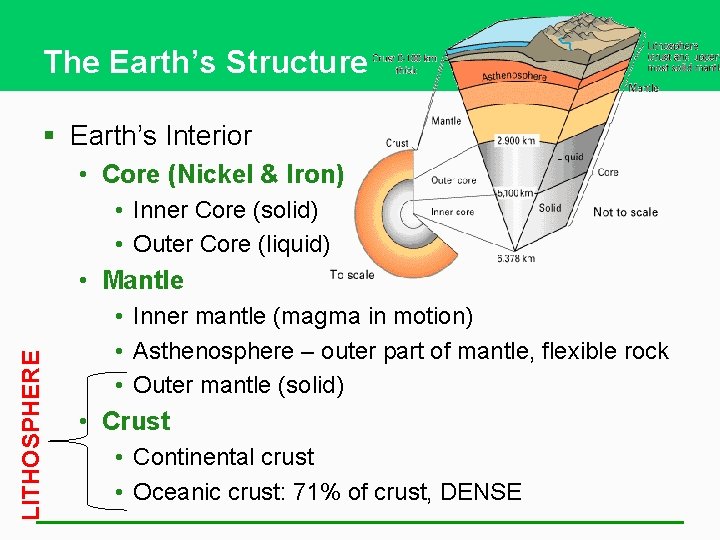
The Earth’s Structure § Earth’s Interior • Core (Nickel & Iron) • Inner Core (solid) • Outer Core (liquid) LITHOSPHERE • Mantle • Inner mantle (magma in motion) • Asthenosphere – outer part of mantle, flexible rock • Outer mantle (solid) • Crust • Continental crust • Oceanic crust: 71% of crust, DENSE
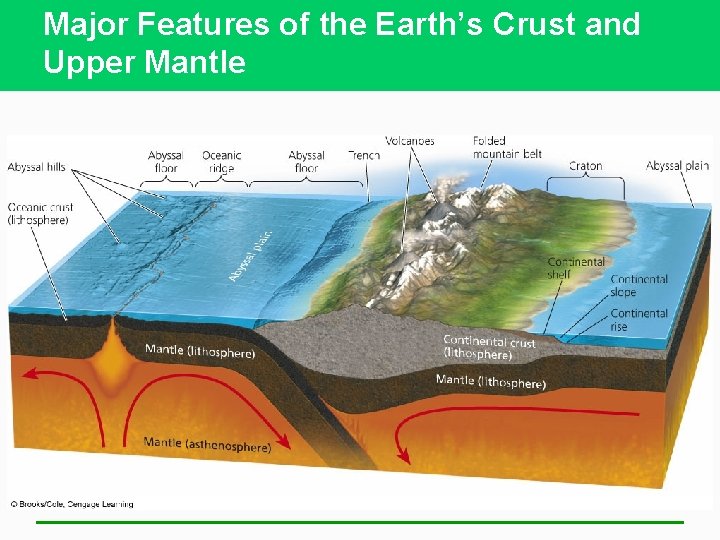
Major Features of the Earth’s Crust and Upper Mantle
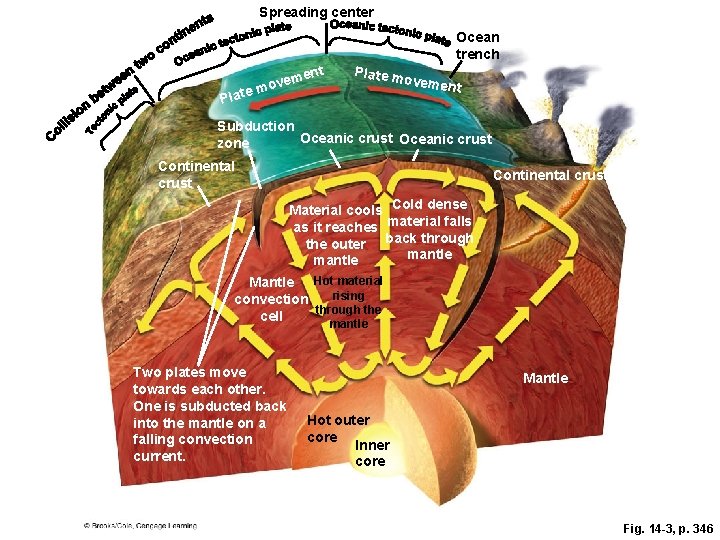
The Earth Beneath Your Feet Is Moving § Why do the tectonic plates move? • Convection cells, or currents • Liquid rock is heated near the core and rises, cooler rock falls = convection currents INSIDE the earth
Theory of Plate Tectonics § Alfred Wegner 1912 • Noticed coastlines of the east coast of South America and the west coast of Africa seemed to fit together like a jigsaw puzzle – PANGEA § Theory Says: Says the Earth's lithosphere is made up individual plates riding over the fluid mantle that create different types of plate boundaries and shape earth’s landscape
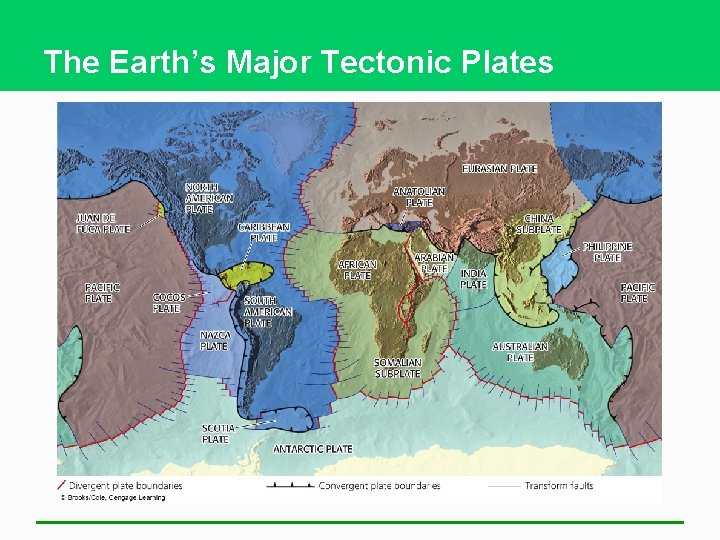
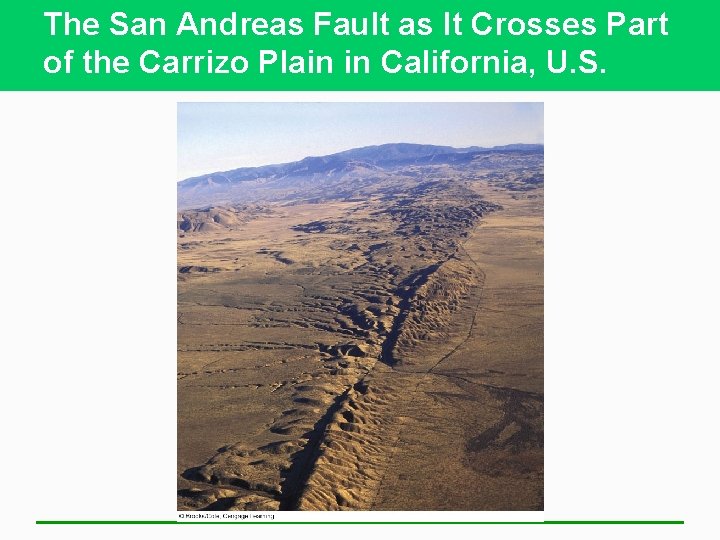
Types of Boundaries § Three types of boundaries between plates 1. Divergent plates • Magma • Oceanic ridge 2. Convergent plates • Subduction zone • Trench • Volcano 3. Transform fault; e. g. , San Andreas fault
Spreading center Ocean trench e ovem em Plat nt Plate m ovemen t Subduction Oceanic crust zone Continental crust Material cools Cold dense as it reaches material falls the outer back through mantle Mantle Hot material rising convection through the cell mantle Two plates move towards each other. One is subducted back into the mantle on a falling convection current. Mantle Hot outer core Inner core Fig. 14 -3, p. 346
The Earth’s Major Tectonic Plates
The San Andreas Fault as It Crosses Part of the Carrizo Plain in California, U. S.
The Geological Cycle: Some Parts of the Surface Build Up & Some Wear Down § Internal geologic processes • Generally build up the earth’s surface § External geologic processes • Generally wear down the earth’s surface • Driven directly or indirectly by sun and gravity • Weathering • Physical, Chemical, and Biological • Erosion • • Wind Flowing water Human activities Glaciers
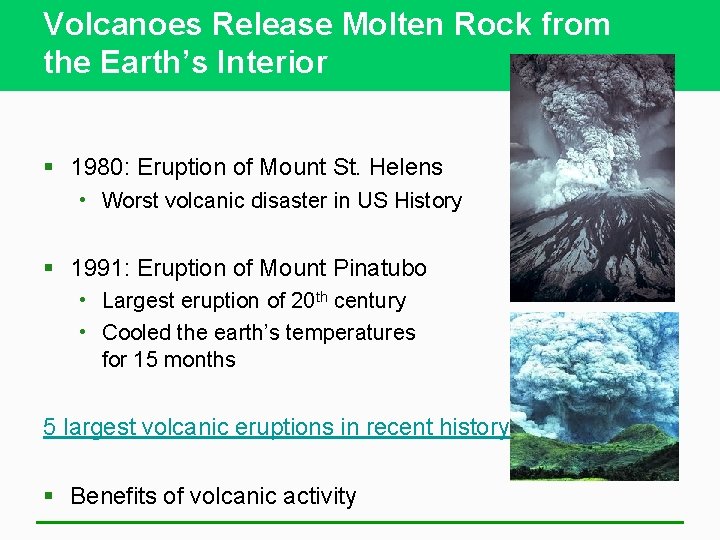
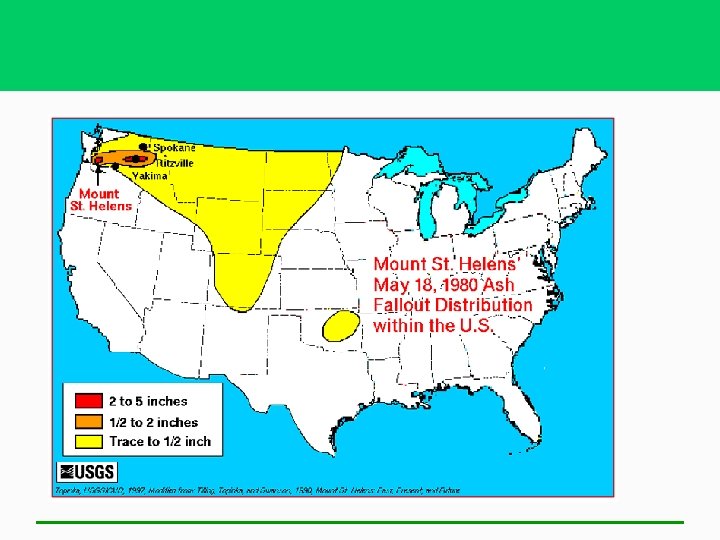
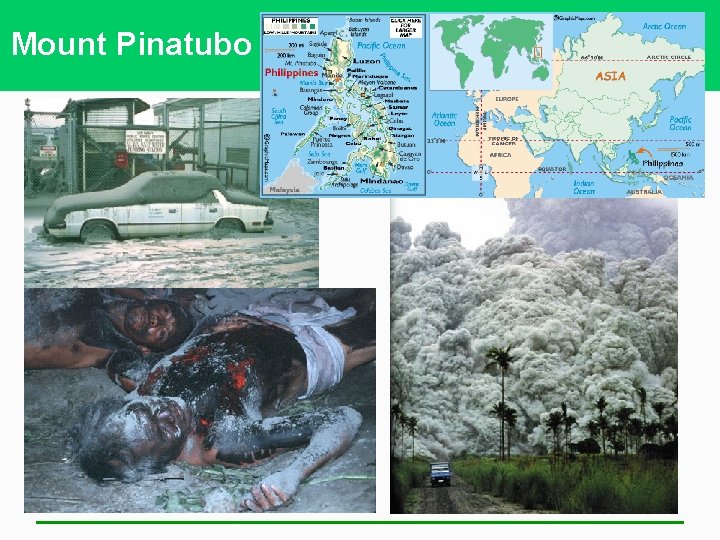
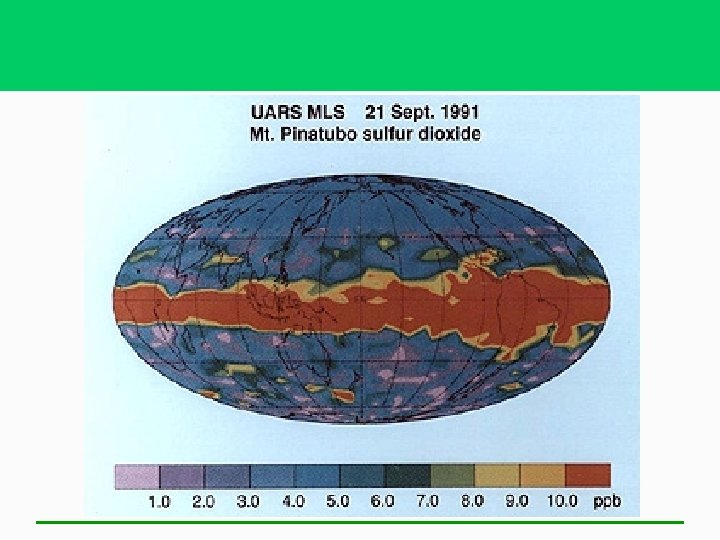
Volcanoes Release Molten Rock from the Earth’s Interior § 1980: Eruption of Mount St. Helens • Worst volcanic disaster in US History § 1991: Eruption of Mount Pinatubo • Largest eruption of 20 th century • Cooled the earth’s temperatures for 15 months 5 largest volcanic eruptions in recent history § Benefits of volcanic activity
Mount Pinatubo
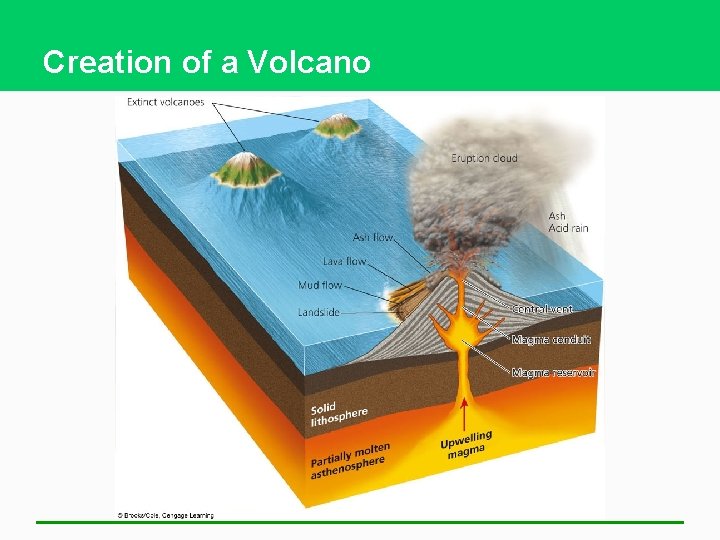
Creation of a Volcano
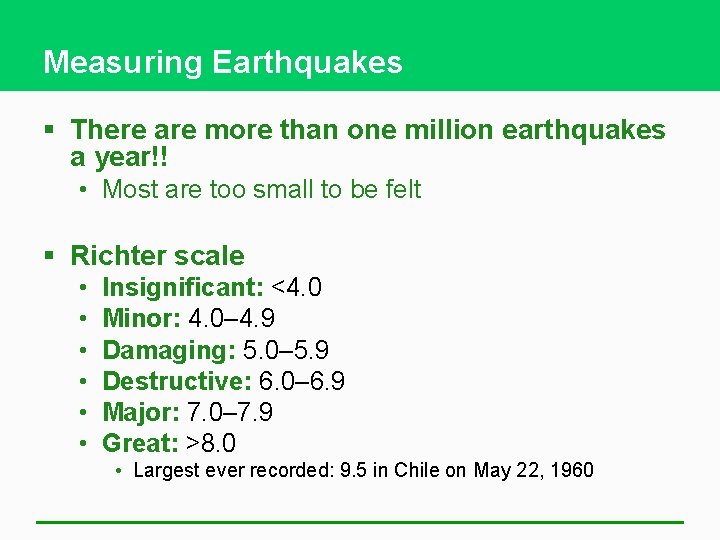
Measuring Earthquakes § There are more than one million earthquakes a year!! • Most are too small to be felt § Richter scale • • • Insignificant: <4. 0 Minor: 4. 0– 4. 9 Damaging: 5. 0– 5. 9 Destructive: 6. 0– 6. 9 Major: 7. 0– 7. 9 Great: >8. 0 • Largest ever recorded: 9. 5 in Chile on May 22, 1960
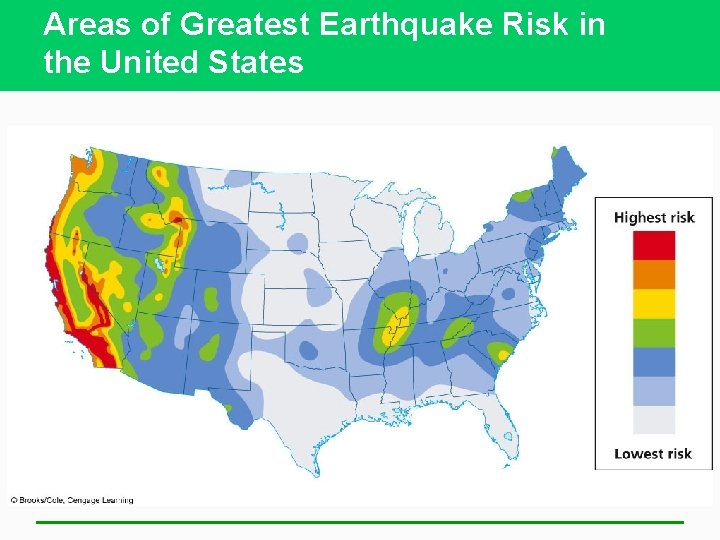
Areas of Greatest Earthquake Risk in the United States
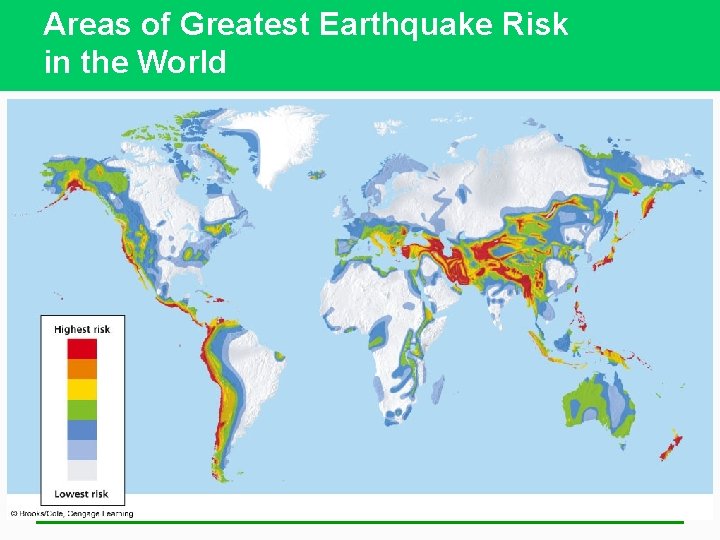
Areas of Greatest Earthquake Risk in the World
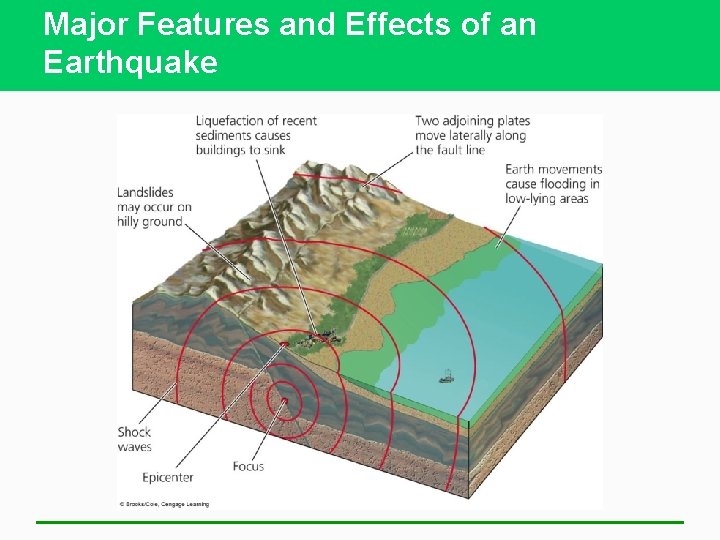
Major Features and Effects of an Earthquake
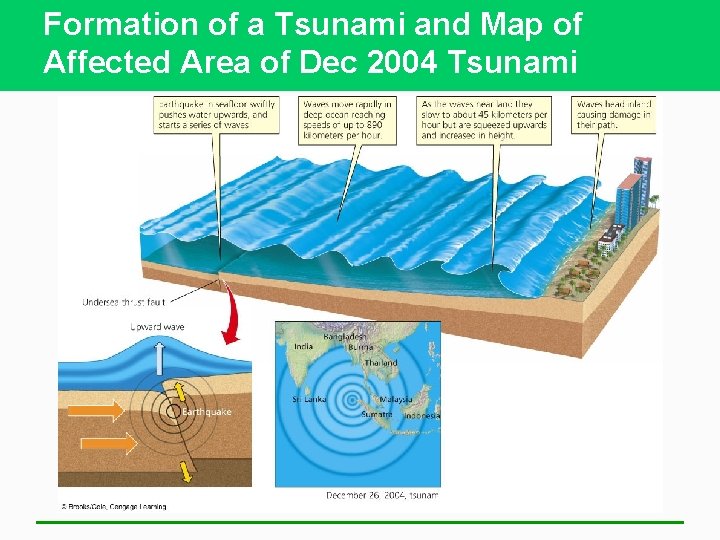
Earthquakes on the Ocean Floor Can Cause Huge Waves Called Tsunamis § Tsunami, tidal wave • Caused by movement of the ocean floor • Can travel as fast as a jet plane across open ocean § Detection of tsunamis • DART (http: //nctr. pmel. noaa. gov/Mov/DART_04. swf) • Pressure recorders on the ocean floor measure changes in pressure (increased waves) § December 2004: Indian Ocean tsunami • Magnitude of 9. 15 • Role of coral reefs and mangrove forests in reducing death toll
Formation of a Tsunami and Map of Affected Area of Dec 2004 Tsunami
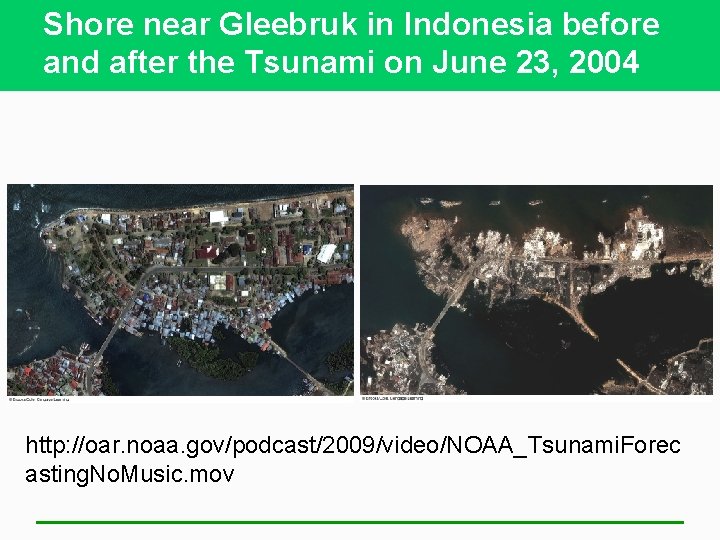
Shore near Gleebruk in Indonesia before and after the Tsunami on June 23, 2004 http: //oar. noaa. gov/podcast/2009/video/NOAA_Tsunami. Forec asting. No. Music. mov
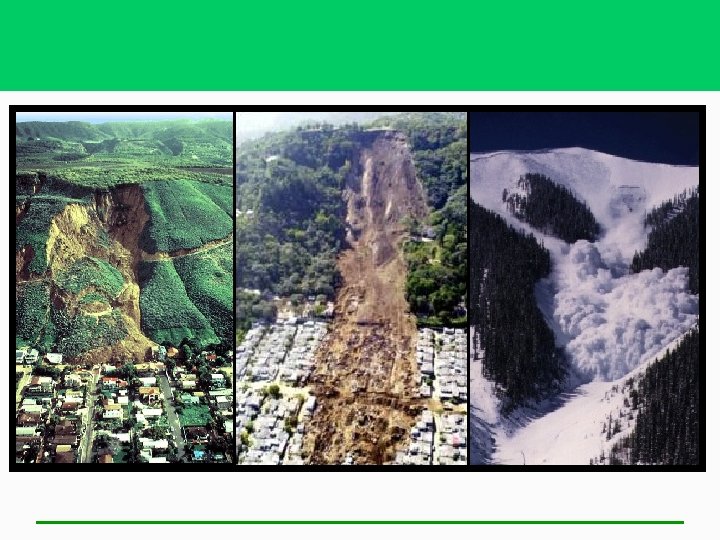
Gravity and Earthquakes Can Cause Landslides § Mass wasting (Slope Movement by Gravity) • Slow movement • Fast movement • Rockslides • Avalanches • Mudslides § Increased due to human activities • • Forest Clearing Road building Crop Growing Building houses on steep slopes
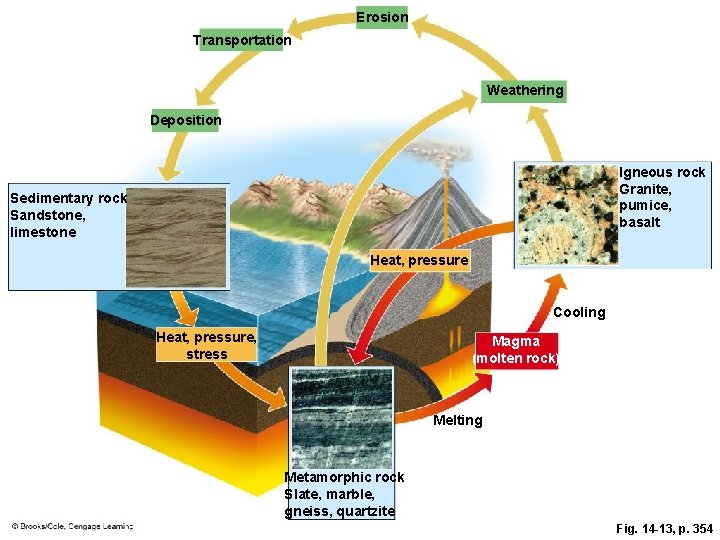
The Cycling of Earth’s Rocks § The three major types of rocks found in the earth’s crust—sedimentary, igneous, and metamorphic—are recycled very slowly by the process of erosion, melting, and metamorphism.
The crust is composed of rocks & minerals § Minerals- elements or inorganic compounds that occur naturally in the earth’s crust as a solid with a regular internal crystalline structure • § Ex: gold, diamond, silver, salt, quartzite Rocks – a solid combination of one or more minerals found in the earth’s crust • Example: Granite = mica + feldspar + quartz
Classifying Rocks § There are three broad classes of rocks, based on formation 1. Sedimentary (deposited) 2. Igneous (volcanic) 3. Metamorphic (heat & pressure)
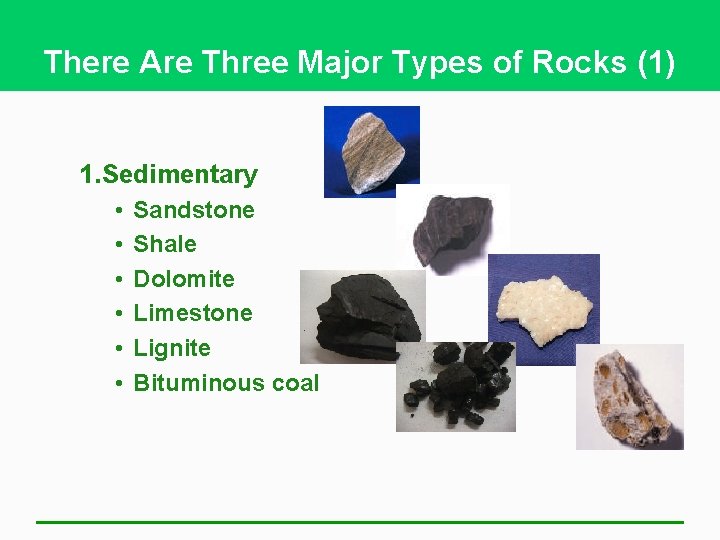
There Are Three Major Types of Rocks (1) 1. Sedimentary • • • Sandstone Shale Dolomite Limestone Lignite Bituminous coal
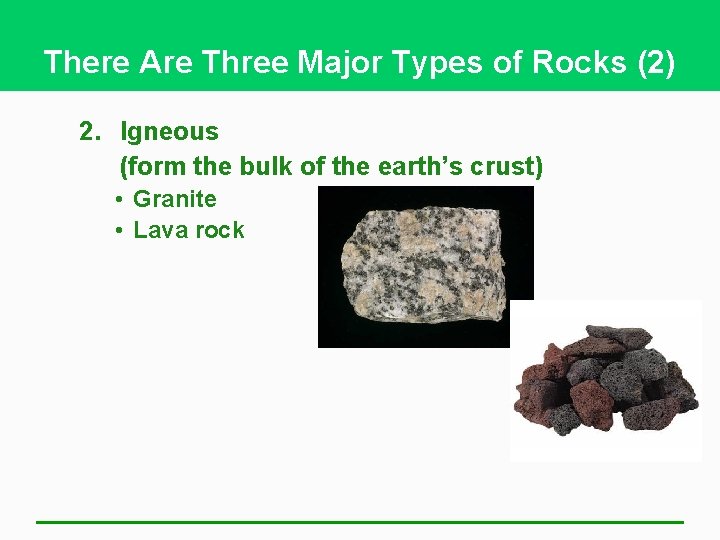
There Are Three Major Types of Rocks (2) 2. Igneous (form the bulk of the earth’s crust) • Granite • Lava rock
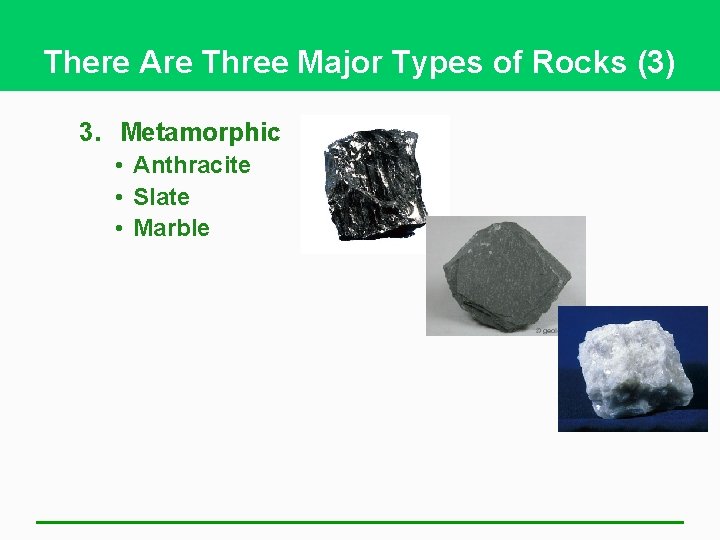
There Are Three Major Types of Rocks (3) 3. Metamorphic • Anthracite • Slate • Marble
The Earth’s Rocks Are Recycled Very Slowly § Rock cycle § Slowest of the earth’s cyclic processes
Erosion Transportation Weathering Deposition Igneous rock Granite, pumice, basalt Sedimentary rock Sandstone, limestone Heat, pressure Cooling Heat, pressure, stress Magma (molten rock) Melting Metamorphic rock Slate, marble, gneiss, quartzite Fig. 14 -13, p. 354