
Earths Early History 17 2 Formation of Earth
- Slides: 70
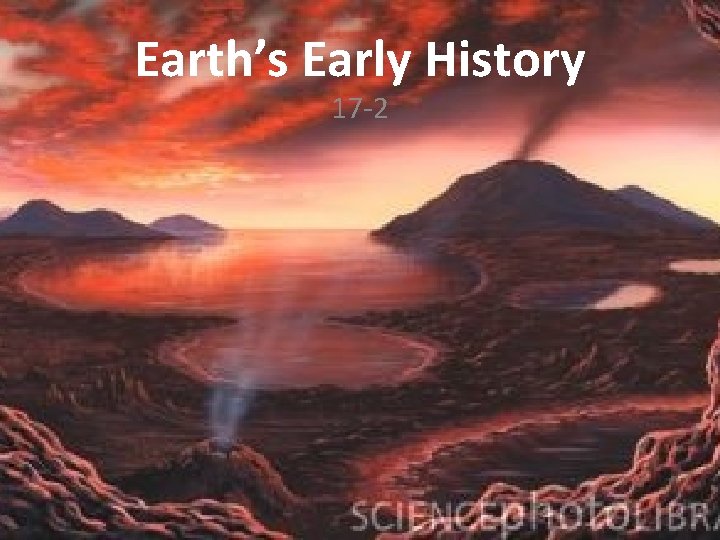
Earth’s Early History 17 -2
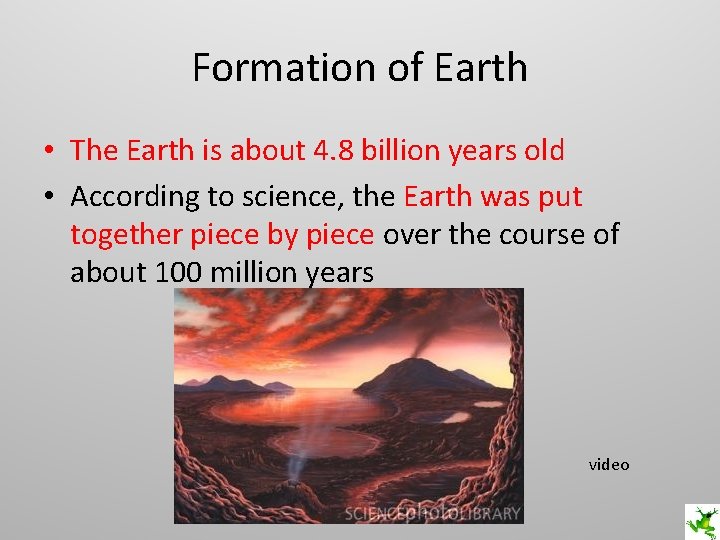
Formation of Earth • The Earth is about 4. 8 billion years old • According to science, the Earth was put together piece by piece over the course of about 100 million years video
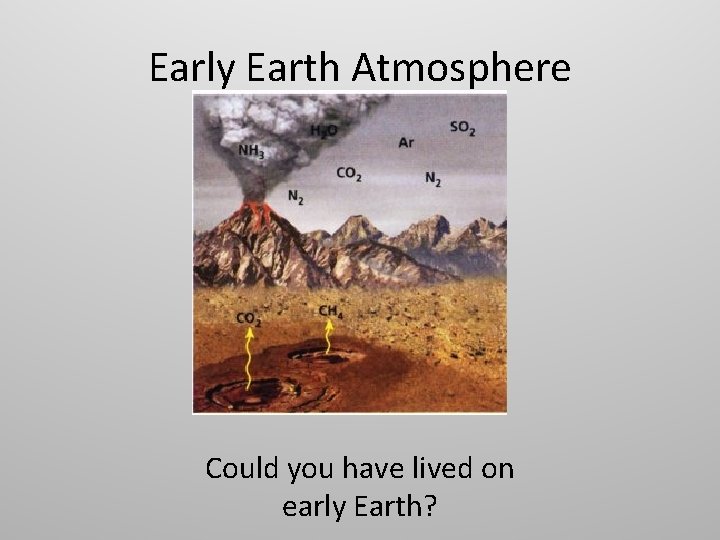
Early Earth Atmosphere Earths early atmosphere was made up of 6 main things: • Hydrogen cyanide • Carbon dioxide • Carbon monoxide • Nitrogen • Hydrogen sulfide • water
Early Earth Atmosphere Could you have lived on early Earth?
Cooling of the Earth • Not only was the atmosphere not suitable for life the early Earth was VERY hot • About 4 billion years ago the earth began to cool – Rocks formed on the earths surface
Formation of water • 3. 8 billion years ago the earth cooled even more – Liquid was able to remain on the earths surface forming the first oceans video
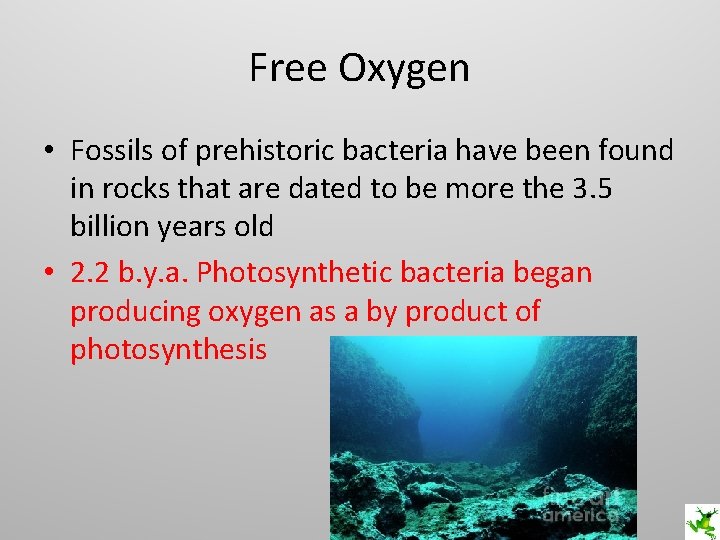
Free Oxygen • Fossils of prehistoric bacteria have been found in rocks that are dated to be more the 3. 5 billion years old • 2. 2 b. y. a. Photosynthetic bacteria began producing oxygen as a by product of photosynthesis
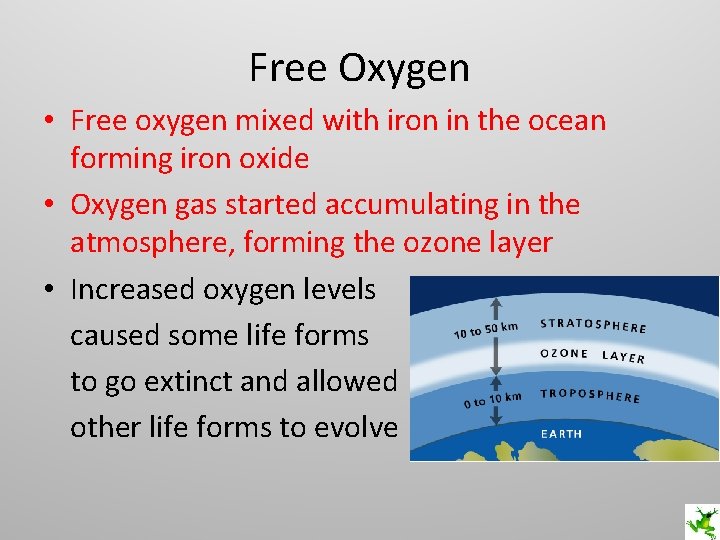
Free Oxygen • Free oxygen mixed with iron in the ocean forming iron oxide • Oxygen gas started accumulating in the atmosphere, forming the ozone layer • Increased oxygen levels caused some life forms to go extinct and allowed other life forms to evolve
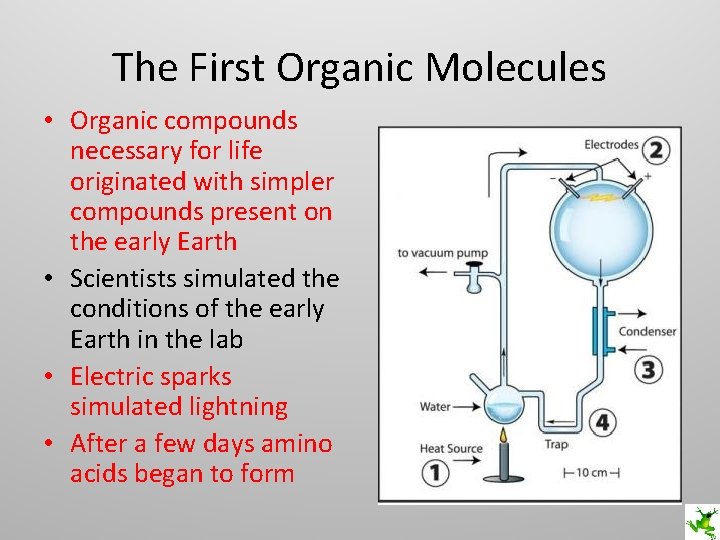
The First Organic Molecules • Organic compounds necessary for life originated with simpler compounds present on the early Earth • Scientists simulated the conditions of the early Earth in the lab • Electric sparks simulated lightning • After a few days amino acids began to form
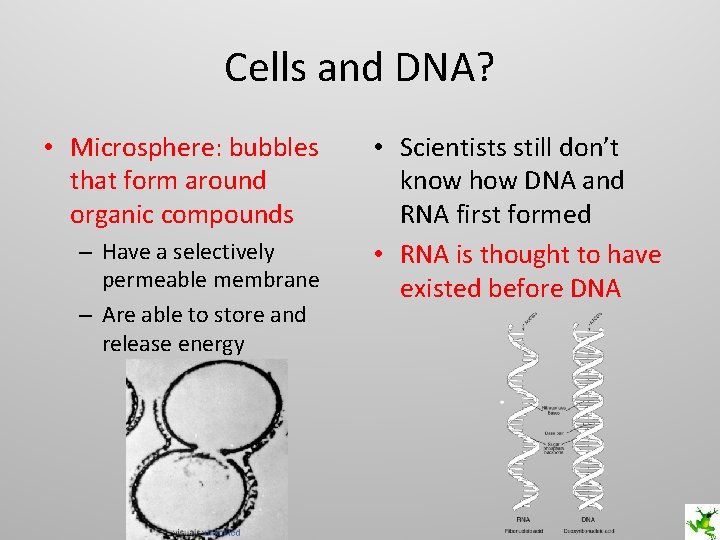
Cells and DNA? • Microsphere: bubbles that form around organic compounds – Have a selectively permeable membrane – Are able to store and release energy • Scientists still don’t know how DNA and RNA first formed • RNA is thought to have existed before DNA
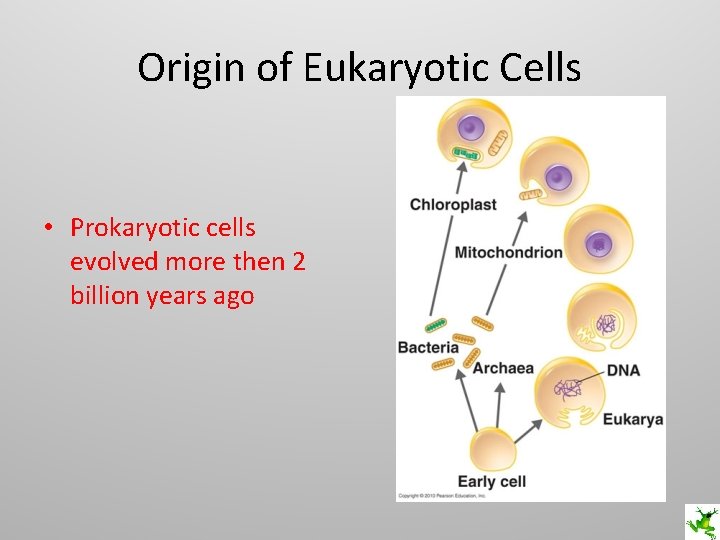
Origin of Eukaryotic Cells • Prokaryotic cells evolved more then 2 billion years ago
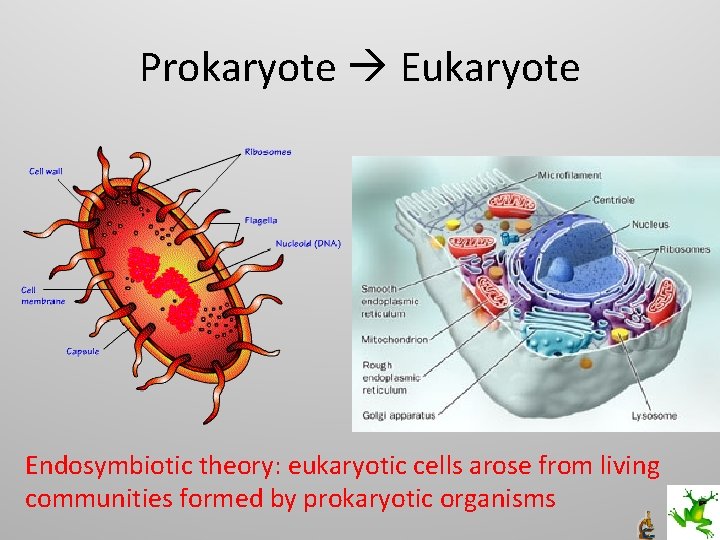
Prokaryote Eukaryote Endosymbiotic theory: eukaryotic cells arose from living communities formed by prokaryotic organisms
The Fossil Record 17. 1
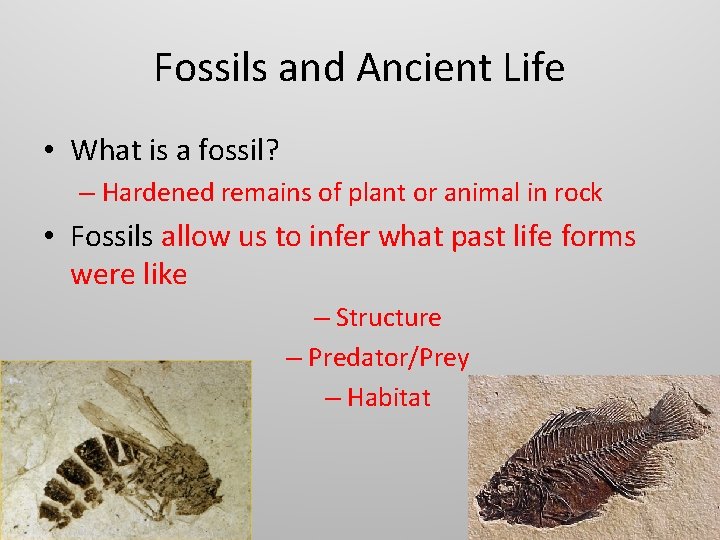
Fossils and Ancient Life • What is a fossil? – Hardened remains of plant or animal in rock • Fossils allow us to infer what past life forms were like – Structure – Predator/Prey – Habitat
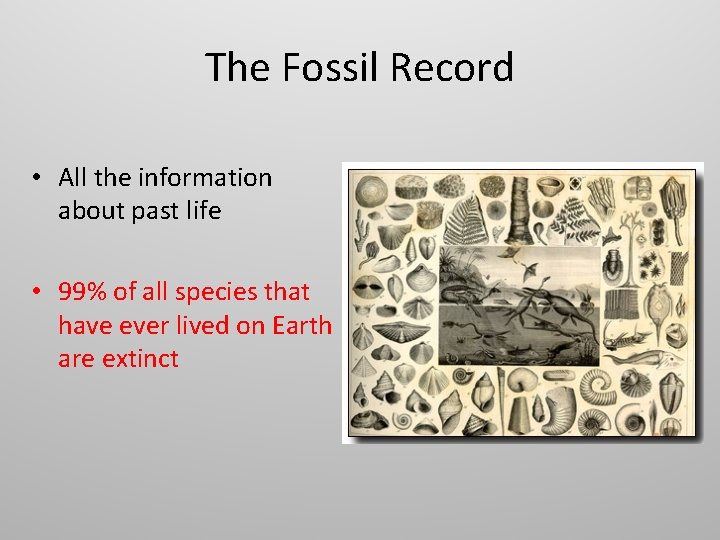
The Fossil Record • All the information about past life • 99% of all species that have ever lived on Earth are extinct
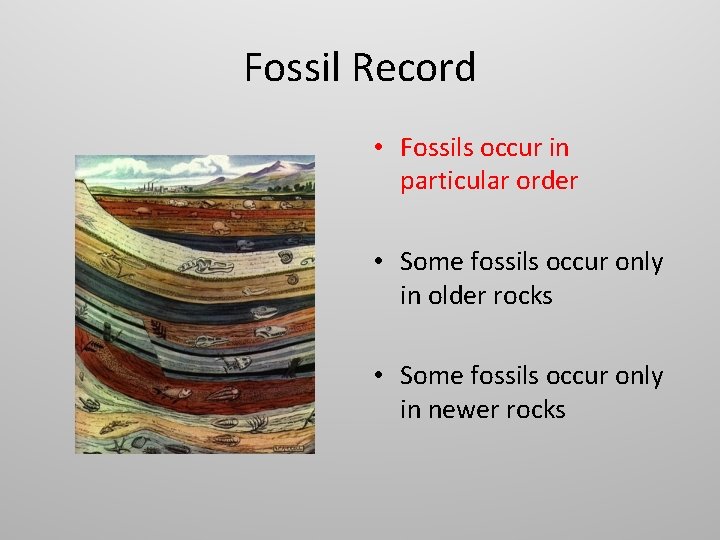
Fossil Record • Fossils occur in particular order • Some fossils occur only in older rocks • Some fossils occur only in newer rocks
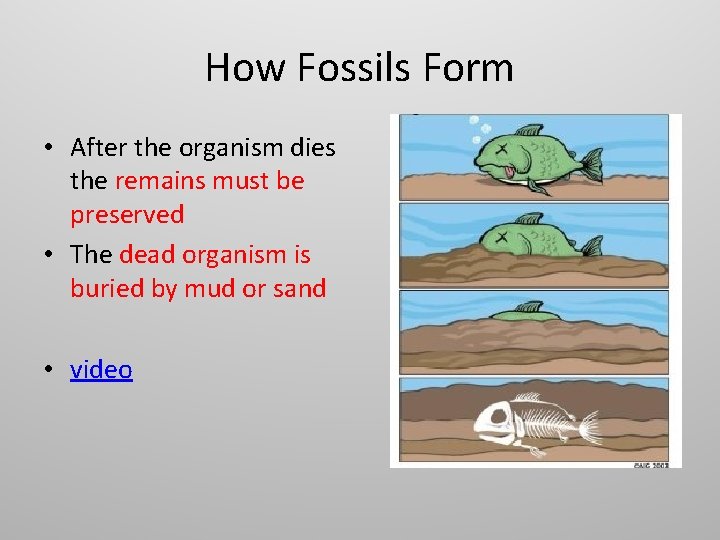
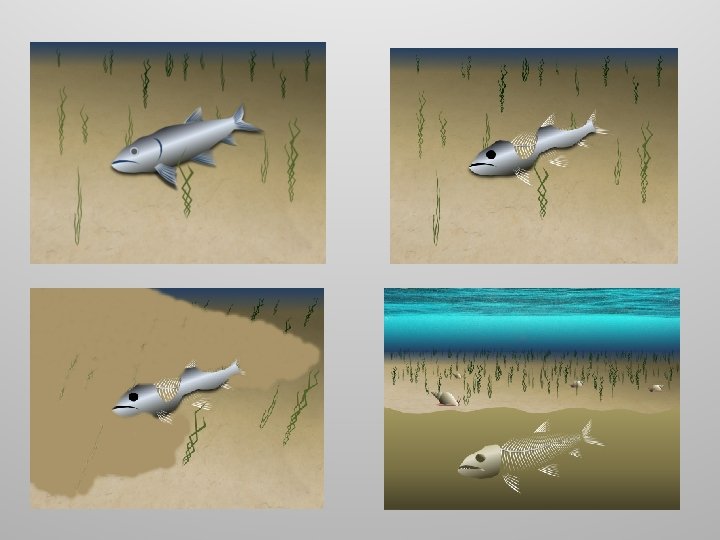
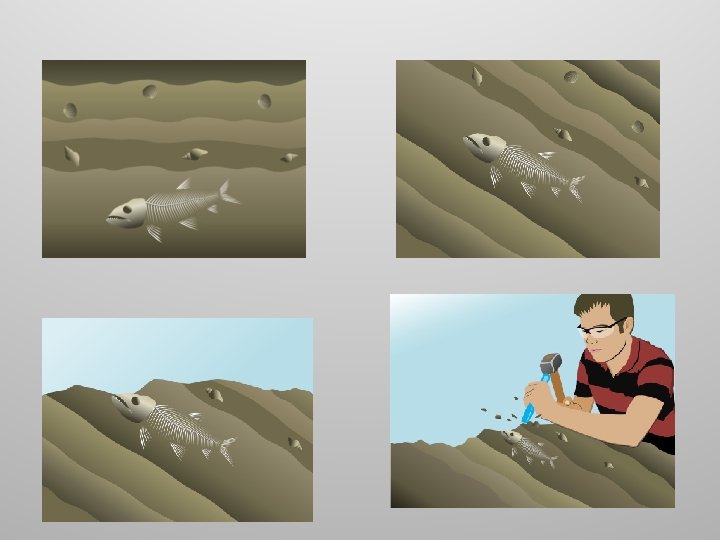
How Fossils Form • After the organism dies the remains must be preserved • The dead organism is buried by mud or sand • video
Steps to fossil formation 1. rapid and permanent burial – protecting the specimen from environmental or biological disturbance 2. oxygen deprivation – limiting the extent of decay and also biological activity/scavenging 3. continued sediment accumulation – ensuring the organism remains buried in the longterm 4. absence of excessive heating or compression which might otherwise destroy it.
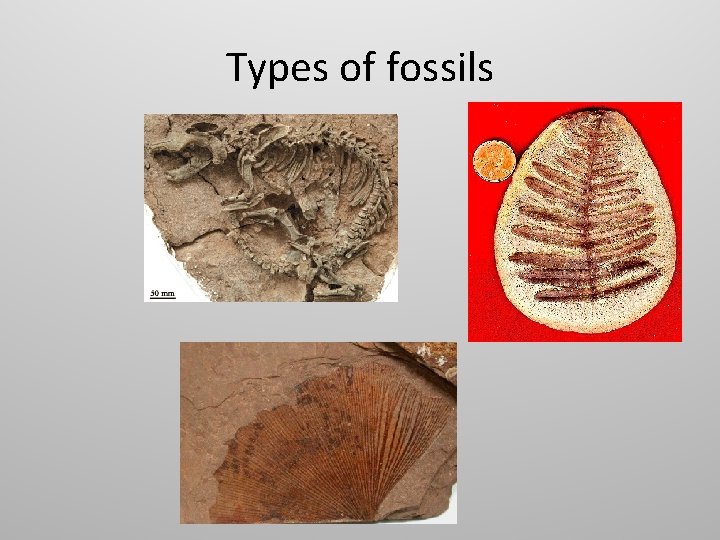
How Fossils Form • The fossil record is incomplete because not EVERY organism that dies becomes fossilized • Different types of fossils can be formed – Hard parts: preserved by being replaced by longlasting mineral compounds – Imprints: the external molds of very thin organisms, such as leaves. They are often found in rocks such as sandstone, shale and volcanic ash.
Types of fossils
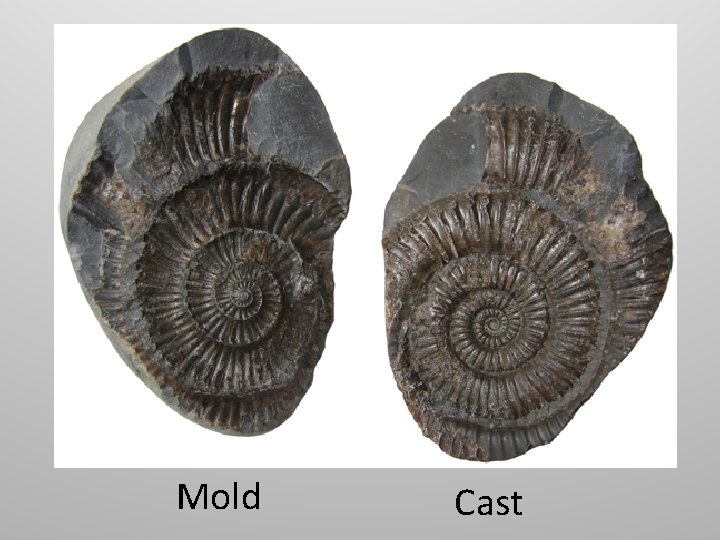
Mold Cast
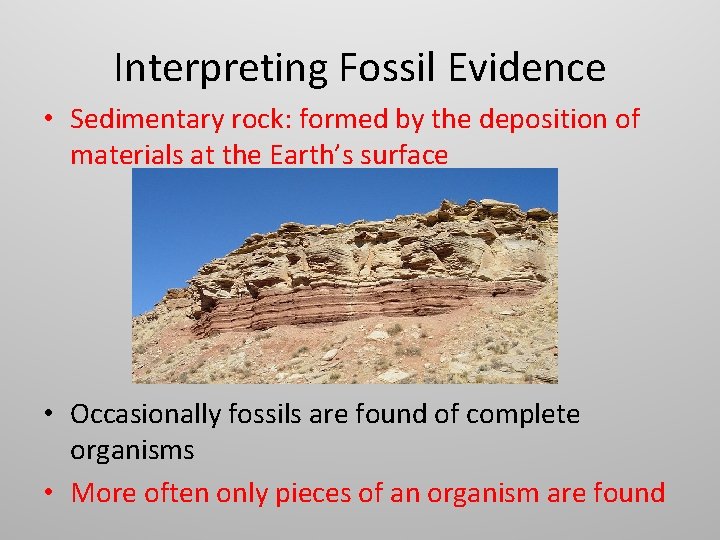
Interpreting Fossil Evidence • Sedimentary rock: formed by the deposition of materials at the Earth’s surface • Occasionally fossils are found of complete organisms • More often only pieces of an organism are found
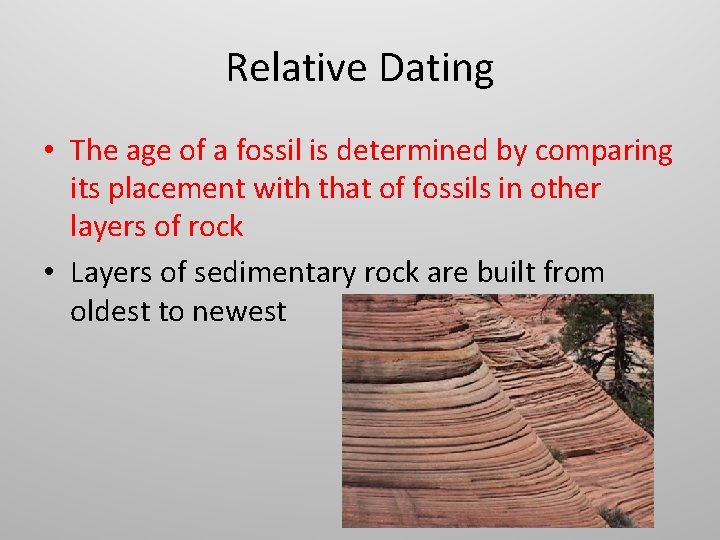
Relative Dating • The age of a fossil is determined by comparing its placement with that of fossils in other layers of rock • Layers of sedimentary rock are built from oldest to newest
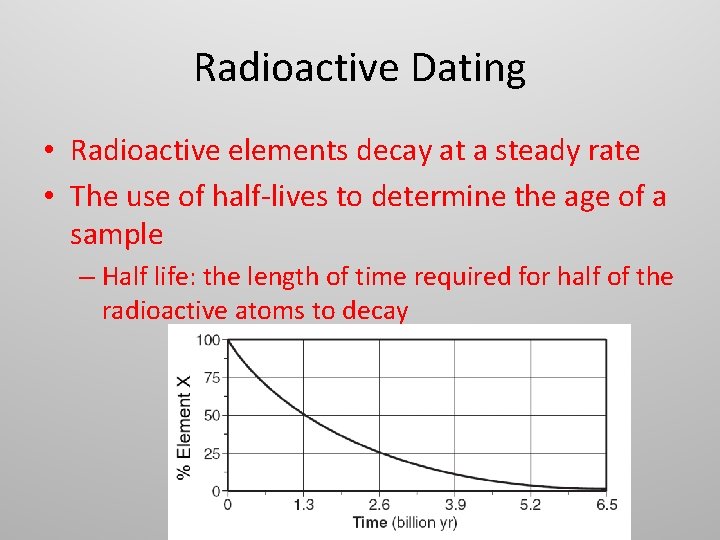
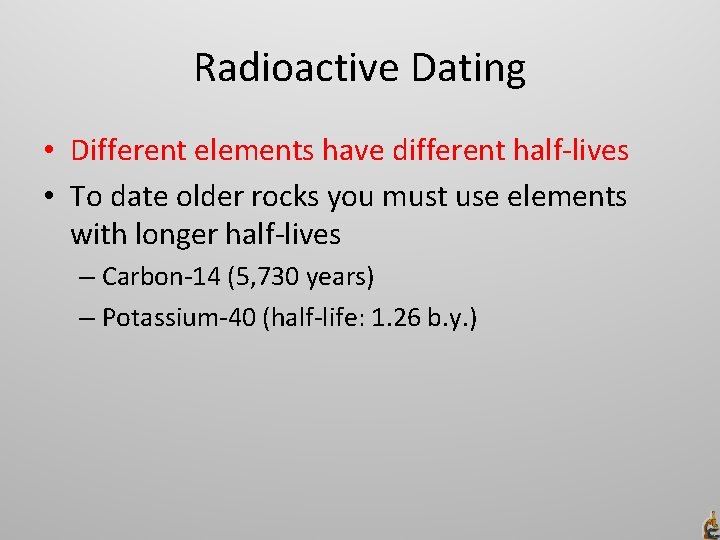
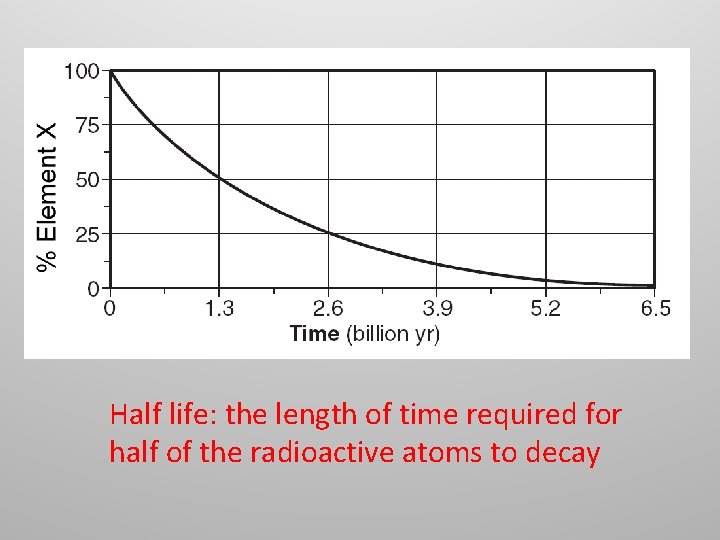
Radioactive Dating • Radioactive elements decay at a steady rate • The use of half-lives to determine the age of a sample – Half life: the length of time required for half of the radioactive atoms to decay
Radioactive Dating • Different elements have different half-lives • To date older rocks you must use elements with longer half-lives – Carbon-14 (5, 730 years) – Potassium-40 (half-life: 1. 26 b. y. )
Half life: the length of time required for half of the radioactive atoms to decay
Evolution of Multicellular Life 17. 3
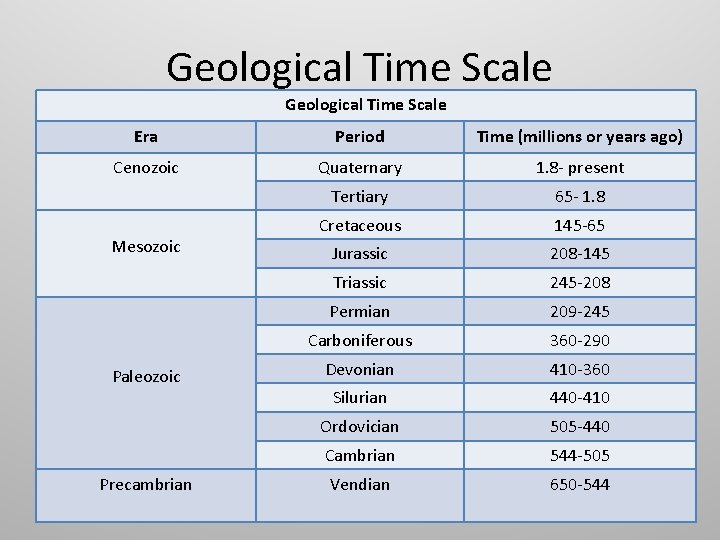
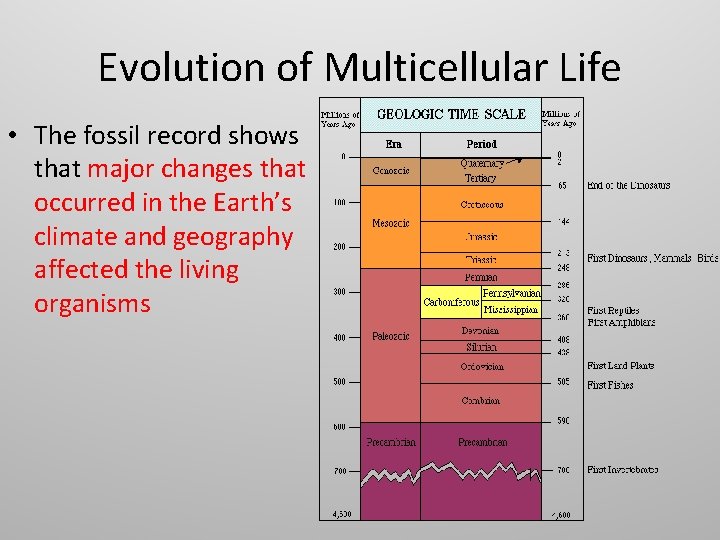
Geological Time Scale Era Period Time (millions or years ago) Cenozoic Quaternary 1. 8 - present Tertiary 65 - 1. 8 Cretaceous 145 -65 Jurassic 208 -145 Triassic 245 -208 Permian 209 -245 Carboniferous 360 -290 Devonian 410 -360 Silurian 440 -410 Ordovician 505 -440 Cambrian 544 -505 Vendian 650 -544 Mesozoic Paleozoic Precambrian
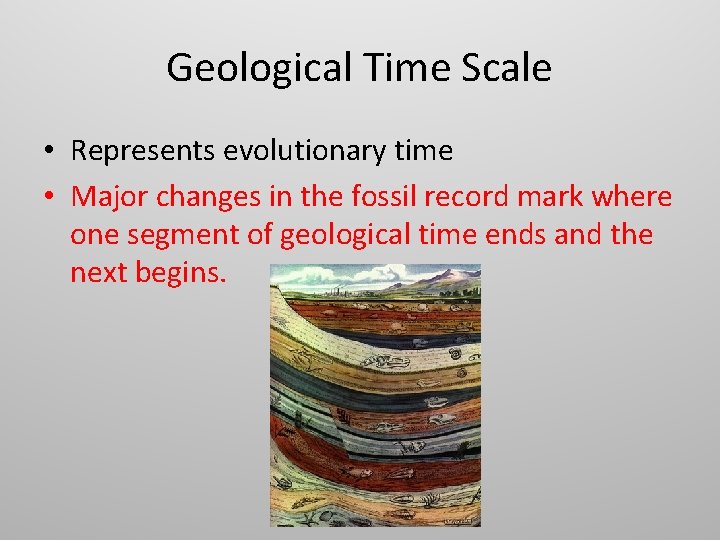
Geological Time Scale • Represents evolutionary time • Major changes in the fossil record mark where one segment of geological time ends and the next begins.
Index Fossils • Used to identify geological time periods • Organisms that are easily recognized, lived for a short period, and had a wide geographic range. – Only found in a few rock layers – Layers found in different geographic locations
Eras and Periods • 4 eras – Precambrian – Paleozoic- many animals lived during this time period – Mesozoic- Age of the Dinosaurs – Cenozoic- Age of the Mammals • Earths most recent era • Each era is divided into multiple periods
Evolution of Multicellular Life • The fossil record shows that major changes that occurred in the Earth’s climate and geography affected the living organisms
Precambrian Time • 90% of Earths history occurred during the Precambrian. • All of the geological time prior to 600 million years ago • Major evolutionary advances – origin of life – development of key metabolic pathways (photosynthesis and aerobic respiration) – development of eukaryotic cells – evolution of multicellularity.
Precambrian time • Living organisms during this time: – Simple anaerobic forms of life – Photosynthetic forms – Aerobic forms of life – Eukaryotic organisms (~2. 1 b. y. a) • Some eukaryotic forms evolved into multicellular organisms that became increasingly complex. • Life existed only in the sea, fossil record is incomplete
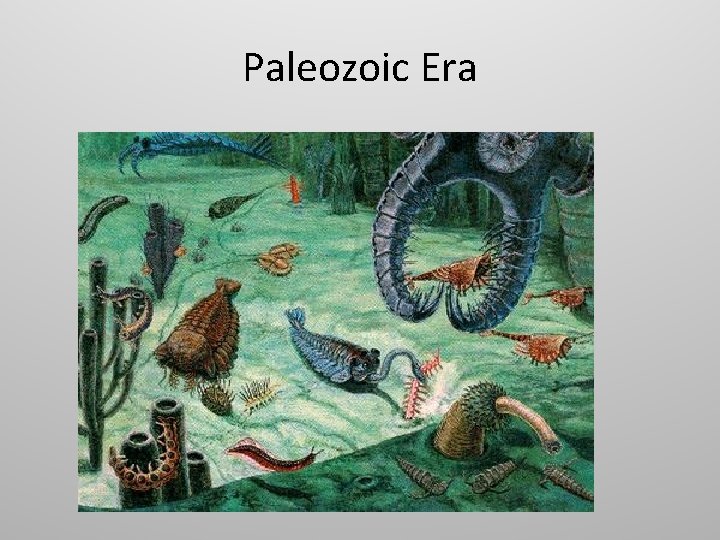
Paleozoic Era
Paleozoic Era • Fossil record shows diversity of marine life • 544 million years ago – 245 million years ago – 297 million years • Made up of 6 periods – Cambrian, Ordovician, Silurian, Devonian, Carboniferous, Permian
Cambrian Period • 544 -505 m. y. a • Cambrian Explosion – Massive diversification of life • The first known animal life evolved – Invertebrates (jelly fish, worms and sponges…) – almost all living animal phyla appeared within a few millions of years
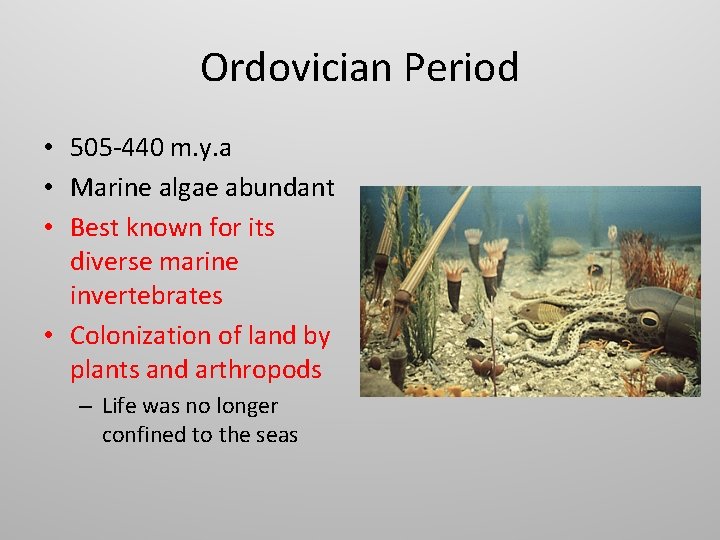
Ordovician Period • 505 -440 m. y. a • Marine algae abundant • Best known for its diverse marine invertebrates • Colonization of land by plants and arthropods – Life was no longer confined to the seas
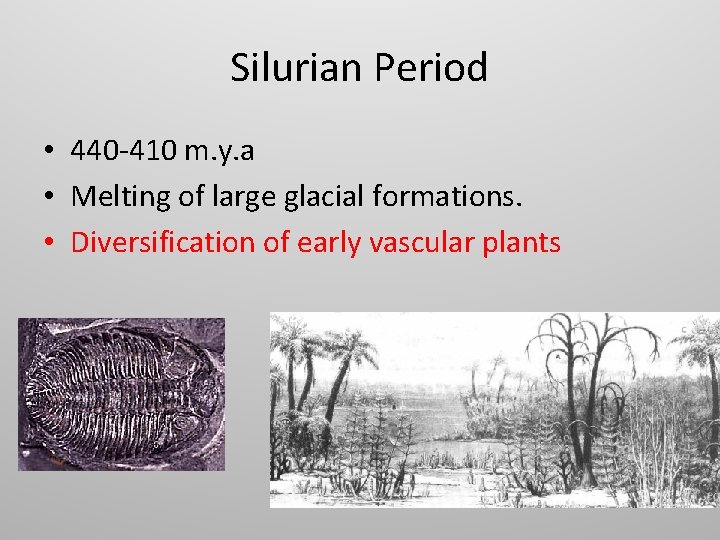
Silurian Period • 440 -410 m. y. a • Melting of large glacial formations. • Diversification of early vascular plants
Devonian Period • Age of the fishes – Diversification of bony fishes • First tetrapods and insects – Plants began adapting to dryer areas – Both invertebrates and vertebrates were in the water – Vertebrates began to invade the land
Carboniferous Period • 360 -290 m. y. a • Life expanded over Earth’s continents • Coal beds – heat and pressure transformed these organic remains into coal • Extensive forests of vascular plants • First seed plants
Permian Period • • 290 -245 m. y. a Radiation of reptiles Origin of most present-day orders of insects largest mass extinction recorded in the history of life on Earth. – Extinction of many marine and terrestrial organisms at the end of period
Mesozoic Era • 245 m. y. a- 65 m. y. a • Divided into 3 periods – Triassic – Jurassic – Cretaceous • Major events: – Increasing dominance of dinosaurs
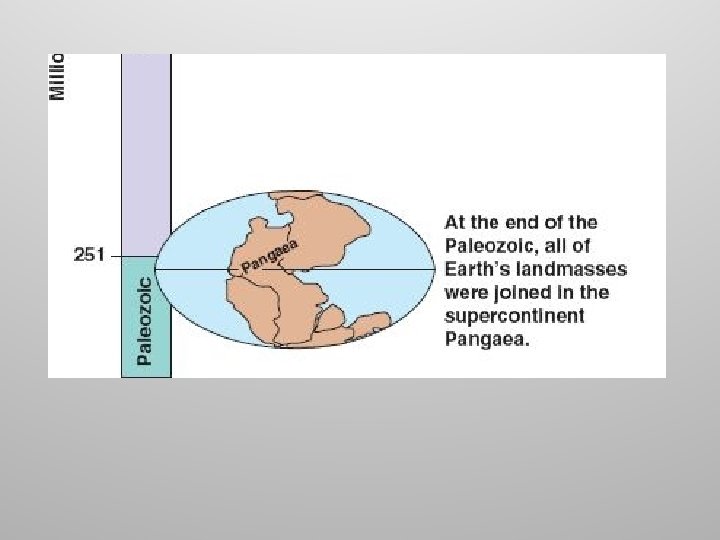
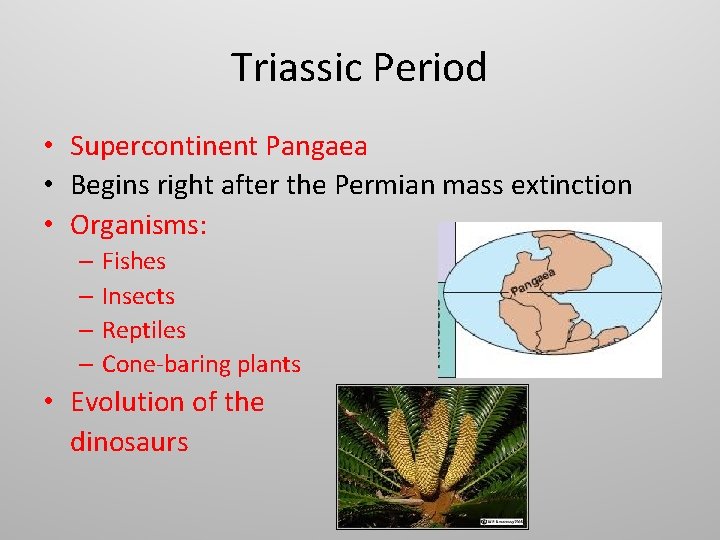
Triassic Period • Supercontinent Pangaea • Begins right after the Permian mass extinction • Organisms: – Fishes – Insects – Reptiles – Cone-baring plants • Evolution of the dinosaurs
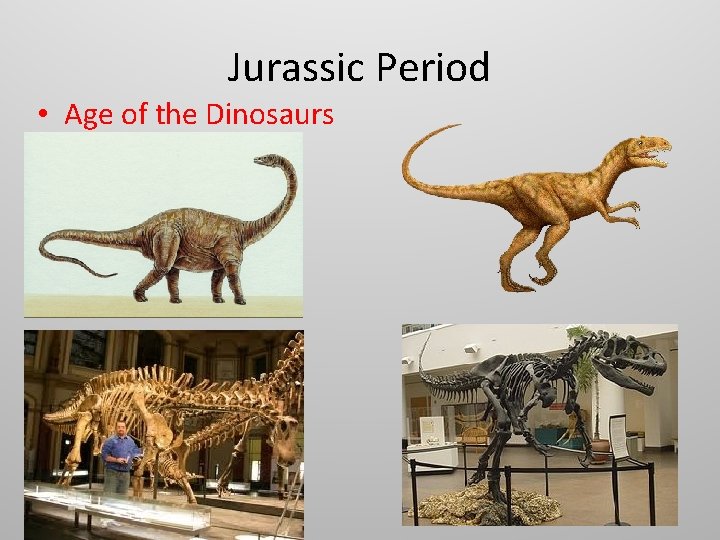
Jurassic Period • Age of the Dinosaurs
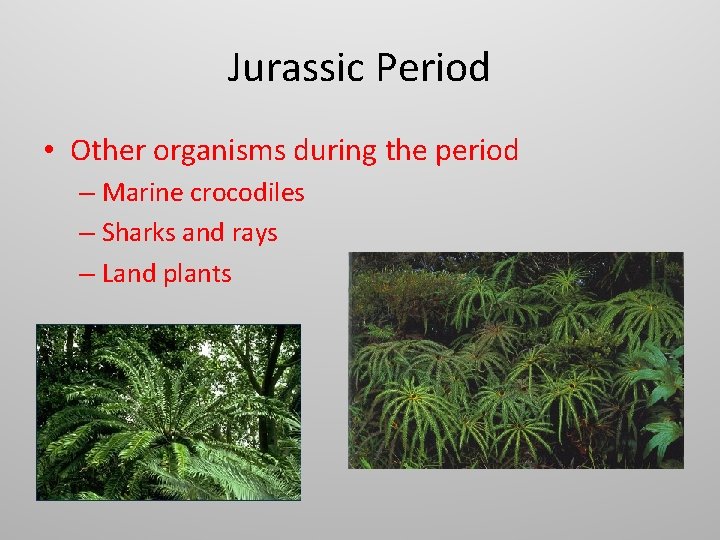
Jurassic Period • Other organisms during the period – Marine crocodiles – Sharks and rays – Land plants
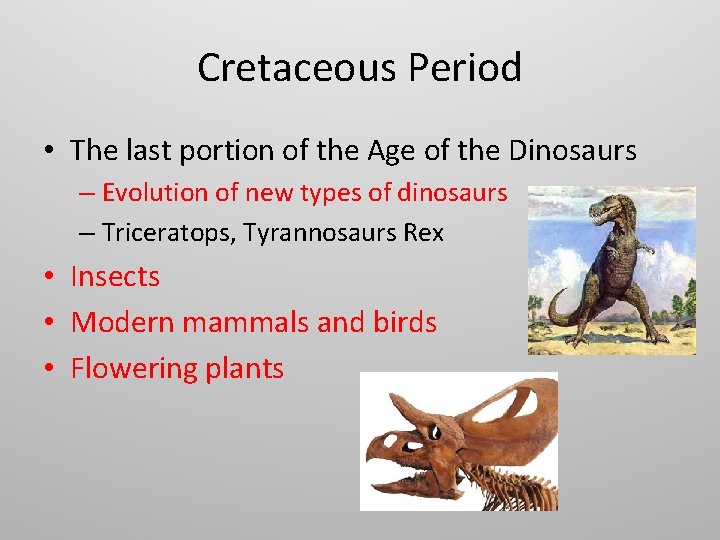
Cretaceous Period • The last portion of the Age of the Dinosaurs – Evolution of new types of dinosaurs – Triceratops, Tyrannosaurs Rex • Insects • Modern mammals and birds • Flowering plants
Cretaceous Extinction • 65 m. y. a • Mass extinction where dinosaurs died out (except for birds) • Extensive environmental changes – Continental drift – Climate change • Asteroid hit Earth on the Yucatan Peninsula in Mexico
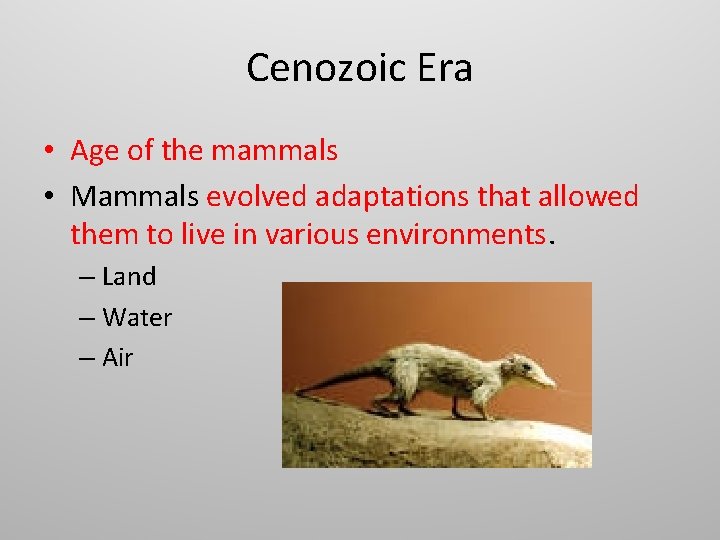
Cenozoic Era • Age of the mammals • Mammals evolved adaptations that allowed them to live in various environments. – Land – Water – Air
Tertiary Period • Climate was warm and mild • Types of organisms – Oceans: whales and dolphins – Land: grazing mammals (deer, sheep, cows)
Quanternary Period • A series of cooling and heating of the Earth Cooling: • Earth’s climate began cooling causing a series of ice ages • Ocean levels fell more then 100 meters Heating: • 20, 000 years ago the Earth began to melt – First “human” fossils date back to 200, 000 years
Precambrian Era • Living organisms during this time: – Simple anaerobic forms of life – Photosynthetic forms – Aerobic forms of life – Eukaryotic organisms (~2. 1 b. y. a) • Some eukaryotic forms evolved into multicellular organisms that became increasingly complex. • Life existed only in the sea, fossil record is incomplete
Paleozoic Era • Fossil record shows diversity of marine life • Cambrian Explosion – Massive diversification of life • The first known animal life evolved • Colonization of land by plants and arthropods – Diversification of early vascular plants • First tetrapods and insects – Life expanded over Earth’s continents
Mesozoic Era • Major events: – Increasing dominance of dinosaurs • Organisms: – Fishes – Insects – Reptiles – Cone-baring plants • Modern mammals and birds • Flowering plants
Cenozoic Era • Age of the mammals • Mammals evolved adaptations that allowed them to live in various environments. • What allowed for mammals to start diversifying? – Extensive environmental changes – Asteroid hit the earth destroying the habitats
Cenozoic Era • A series of cooling and heating of the Earth Cooling: • Earth’s climate began cooling causing a series of ice ages • Ocean levels fell more then 100 meters Heating: • 20, 000 years ago the Earth began to melt – First “human” fossils date back to 200, 000 years
Patterns of Evolution 17 -4
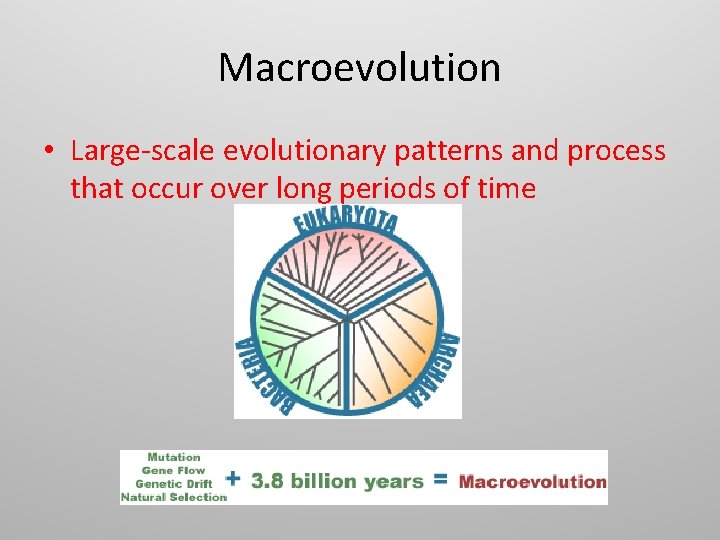
Macroevolution • Large-scale evolutionary patterns and process that occur over long periods of time
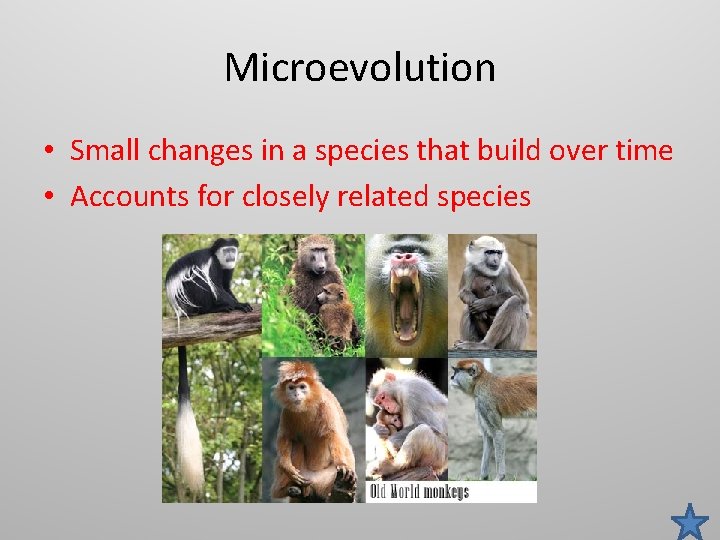
Microevolution • Small changes in a species that build over time • Accounts for closely related species
Extinction • Most common cause for extinction: – Species compete for resources – Environments change • Natural selection causes extinction
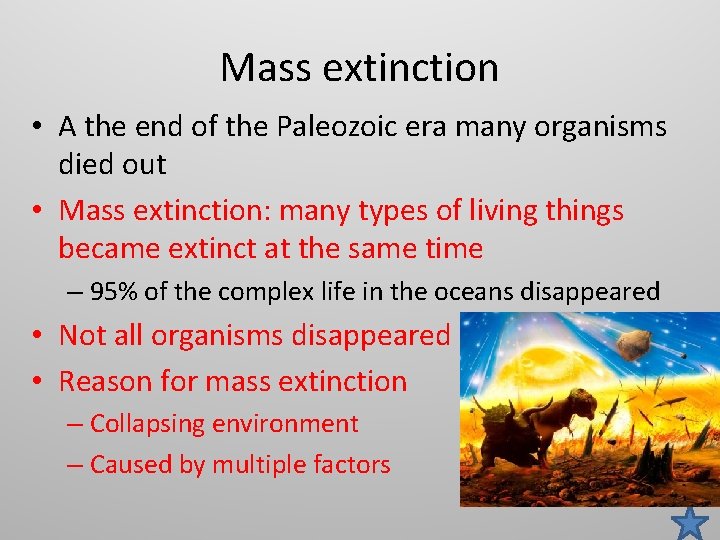
Mass extinction • A the end of the Paleozoic era many organisms died out • Mass extinction: many types of living things became extinct at the same time – 95% of the complex life in the oceans disappeared • Not all organisms disappeared • Reason for mass extinction – Collapsing environment – Caused by multiple factors
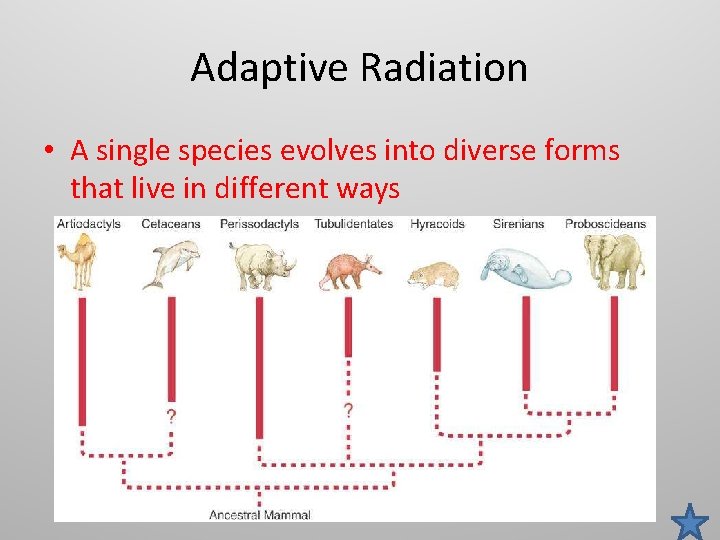
Adaptive Radiation • A single species evolves into diverse forms that live in different ways
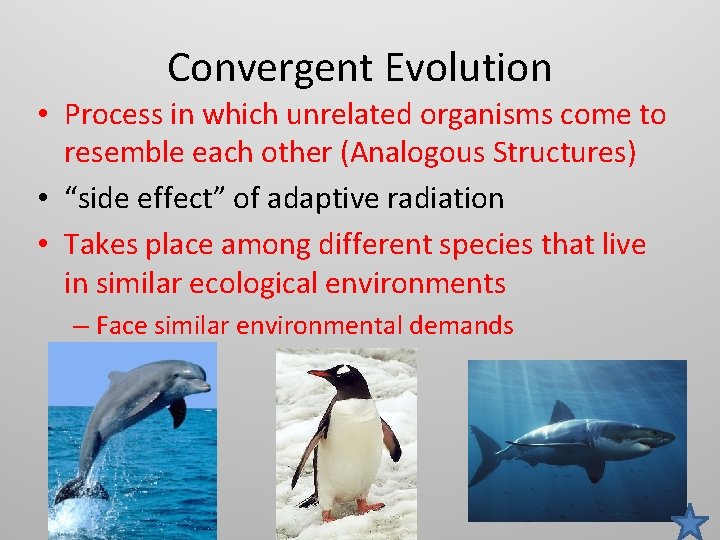
Convergent Evolution • Process in which unrelated organisms come to resemble each other (Analogous Structures) • “side effect” of adaptive radiation • Takes place among different species that live in similar ecological environments – Face similar environmental demands
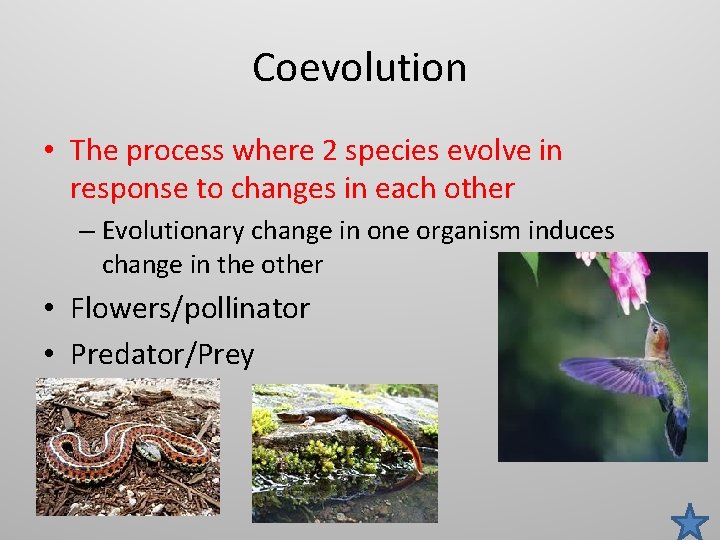
Coevolution • The process where 2 species evolve in response to changes in each other – Evolutionary change in one organism induces change in the other • Flowers/pollinator • Predator/Prey
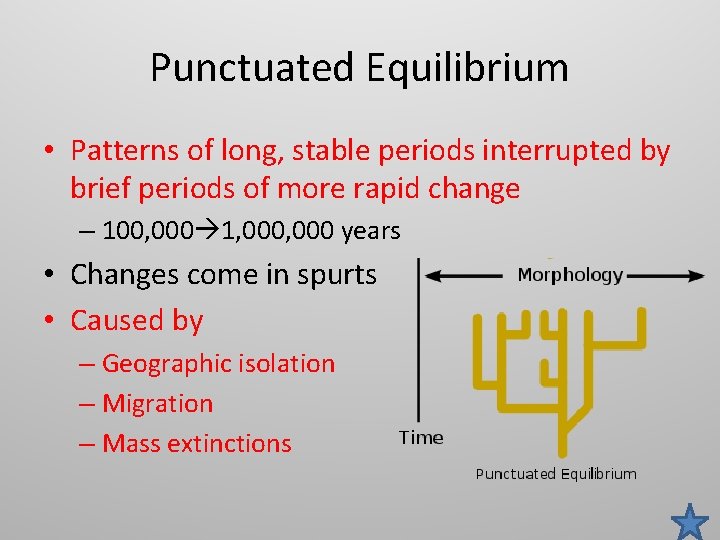
Punctuated Equilibrium • Patterns of long, stable periods interrupted by brief periods of more rapid change – 100, 000 1, 000 years • Changes come in spurts • Caused by – Geographic isolation – Migration – Mass extinctions
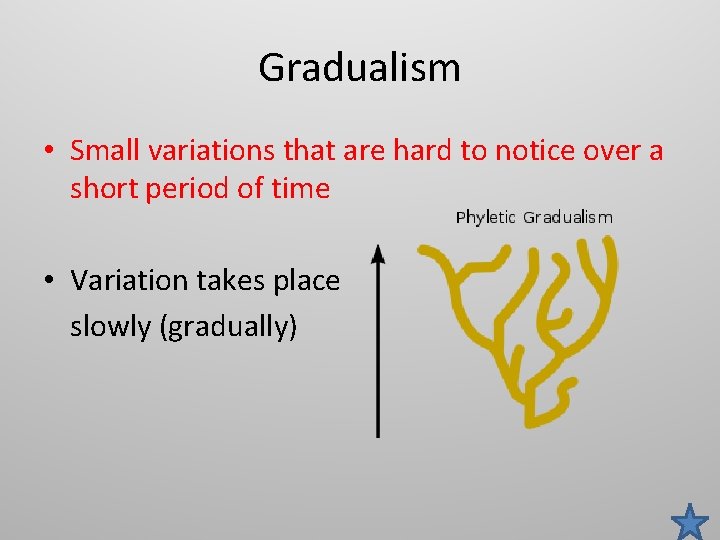
Gradualism • Small variations that are hard to notice over a short period of time • Variation takes place slowly (gradually)