
Earths Dynamic Climate Lauren Heerschap Fort Lewis College

- Slides: 61
Earth’s Dynamic Climate Lauren Heerschap, Fort Lewis College, Spring 2016
“Warmups…” • Do you think Earth is cooler or warmer now, compared to past climates? • What are some factors that cause Earth’s climate to change? • How do current changes compare to past changes?
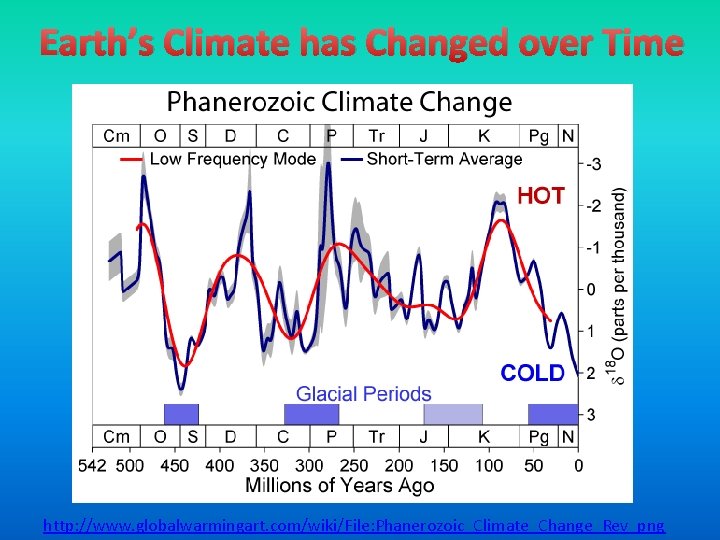
Earth’s Climate has Changed over Time http: //www. globalwarmingart. com/wiki/File: Phanerozoic_Climate_Change_Rev_png
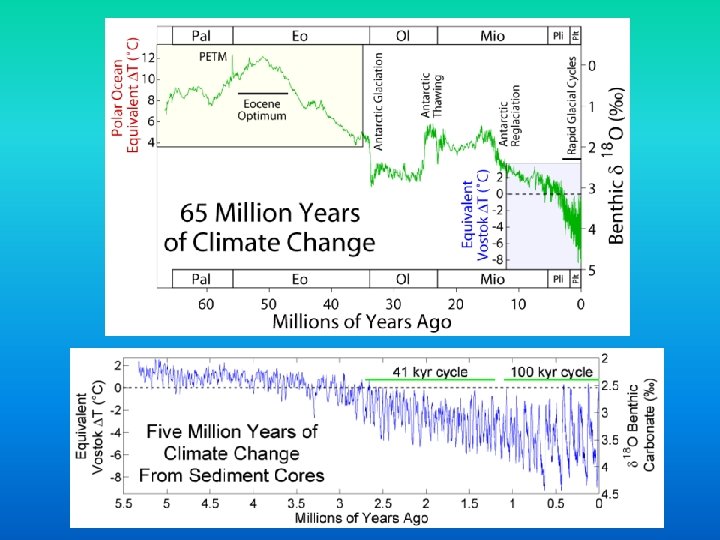
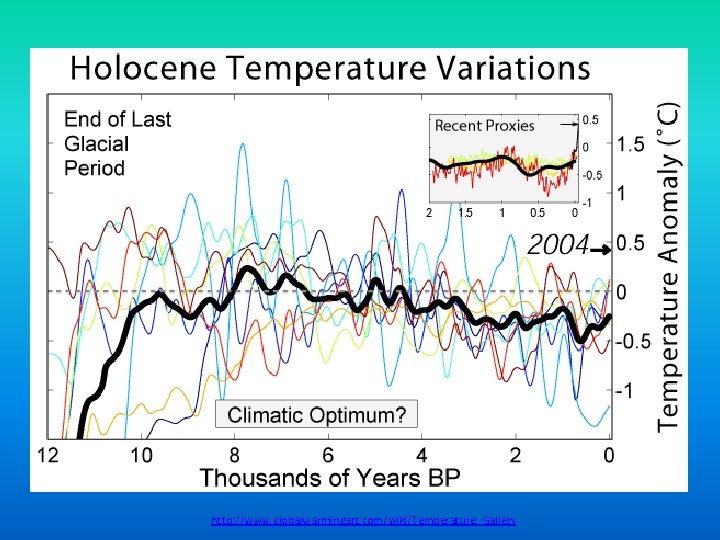
http: //www. globalwarmingart. com/wiki/Temperature_Gallery
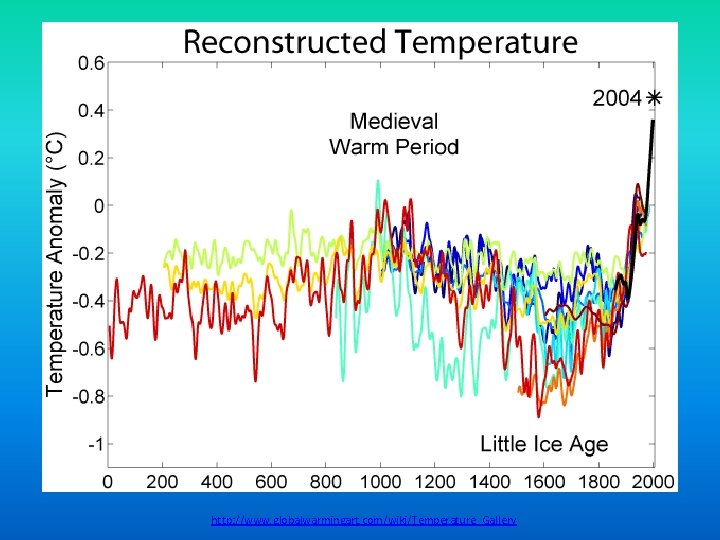
http: //www. globalwarmingart. com/wiki/Temperature_Gallery
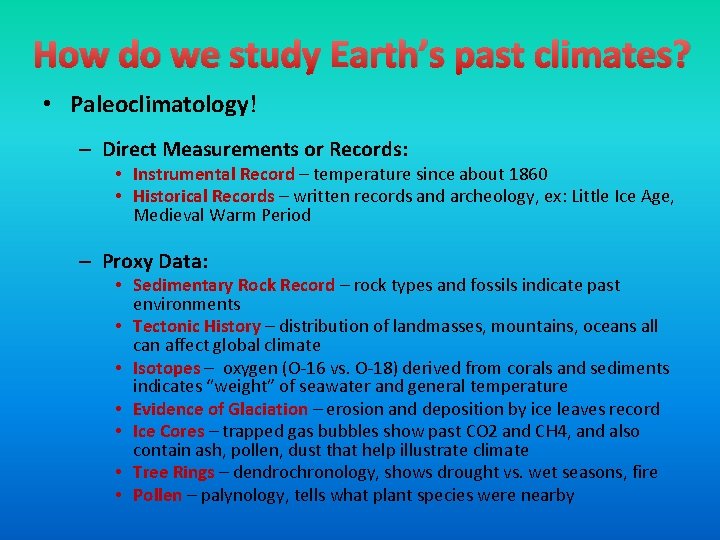
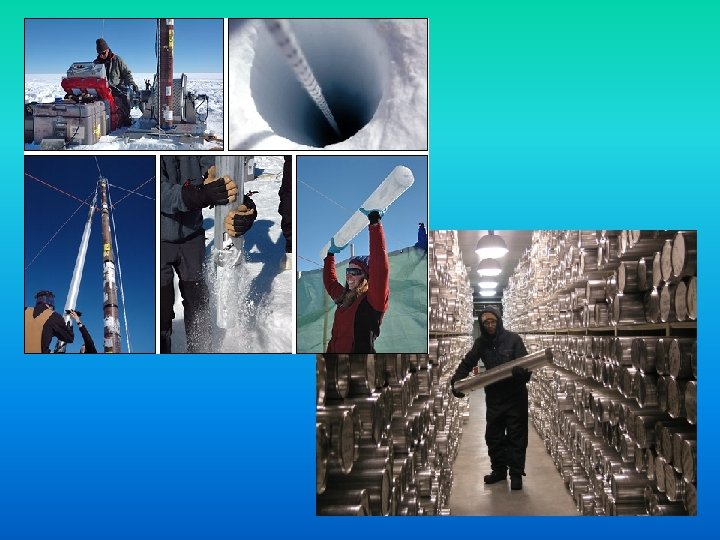
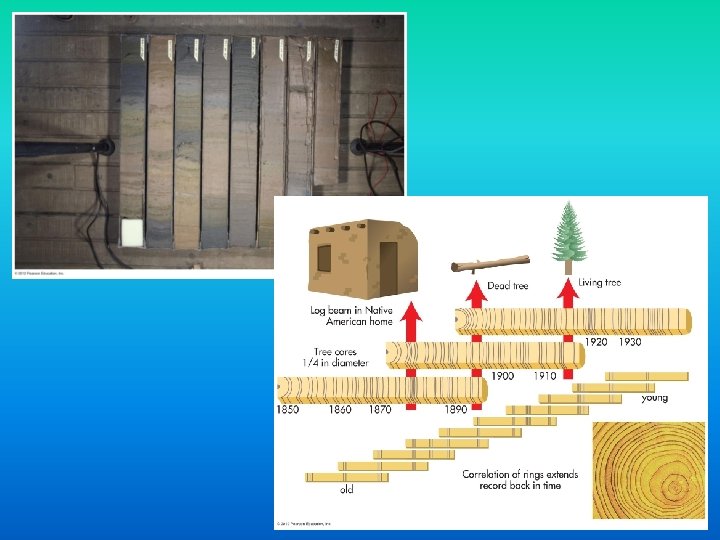
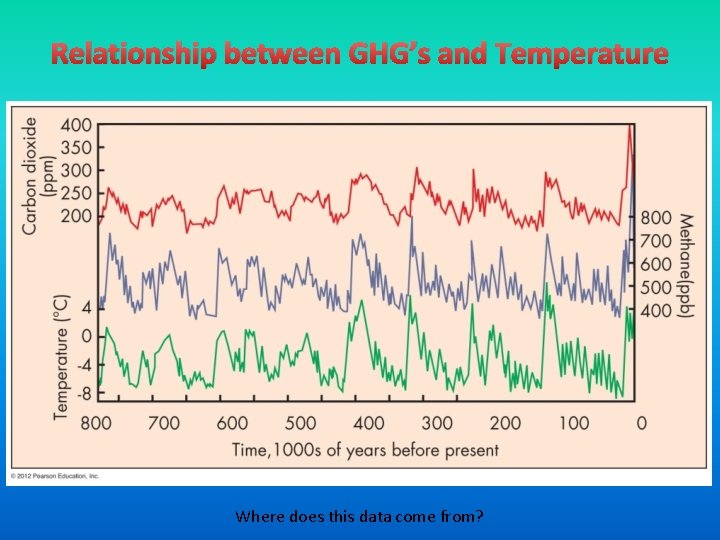
How do we study Earth’s past climates? • Paleoclimatology! – Direct Measurements or Records: • Instrumental Record – temperature since about 1860 • Historical Records – written records and archeology, ex: Little Ice Age, Medieval Warm Period – Proxy Data: • Sedimentary Rock Record – rock types and fossils indicate past environments • Tectonic History – distribution of landmasses, mountains, oceans all can affect global climate • Isotopes – oxygen (O-16 vs. O-18) derived from corals and sediments indicates “weight” of seawater and general temperature • Evidence of Glaciation – erosion and deposition by ice leaves record • Ice Cores – trapped gas bubbles show past CO 2 and CH 4, and also contain ash, pollen, dust that help illustrate climate • Tree Rings – dendrochronology, shows drought vs. wet seasons, fire • Pollen – palynology, tells what plant species were nearby
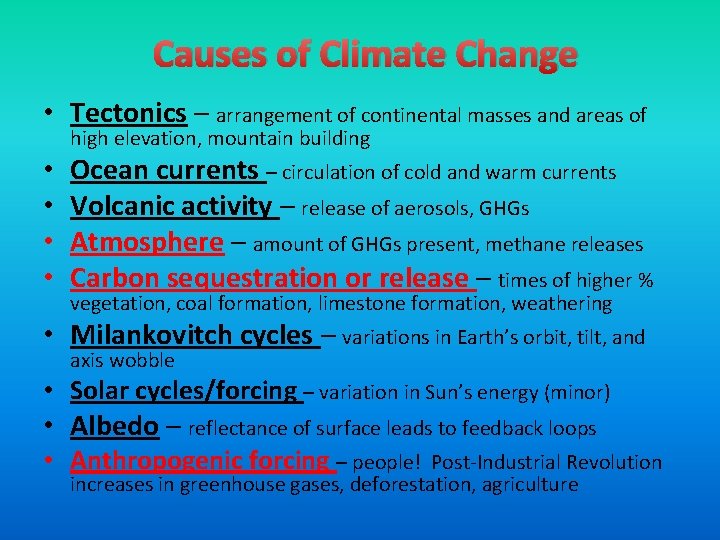
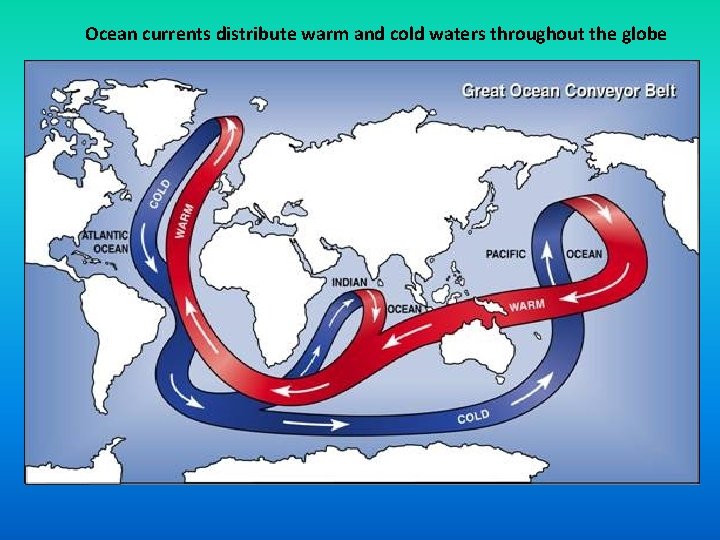
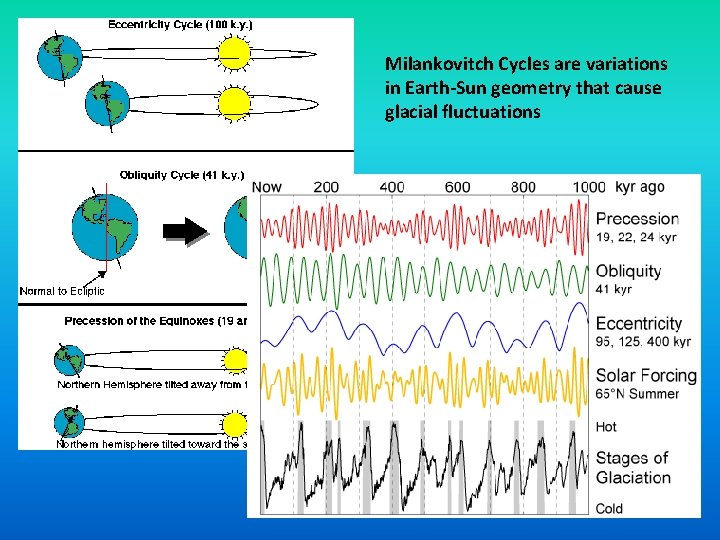
Causes of Climate Change • Tectonics – arrangement of continental masses and areas of high elevation, mountain building • • Ocean currents – circulation of cold and warm currents Volcanic activity – release of aerosols, GHGs Atmosphere – amount of GHGs present, methane releases Carbon sequestration or release – times of higher % vegetation, coal formation, limestone formation, weathering • Milankovitch cycles – variations in Earth’s orbit, tilt, and axis wobble • Solar cycles/forcing – variation in Sun’s energy (minor) • Albedo – reflectance of surface leads to feedback loops • Anthropogenic forcing – people! Post-Industrial Revolution increases in greenhouse gases, deforestation, agriculture
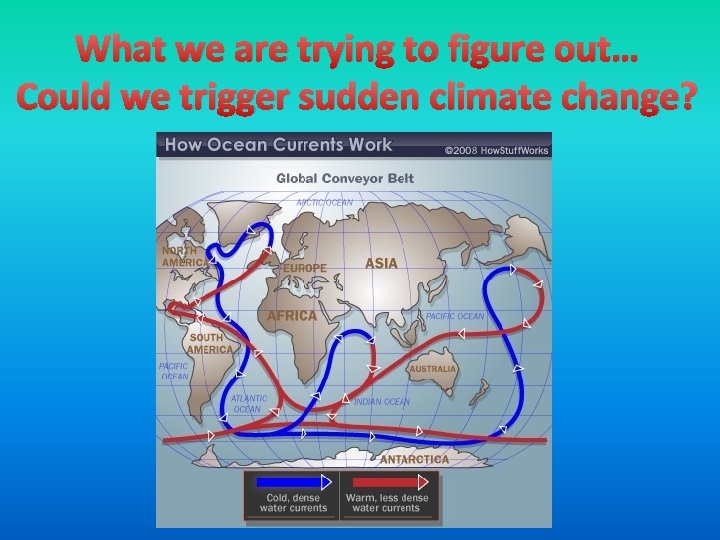
Ocean currents distribute warm and cold waters throughout the globe
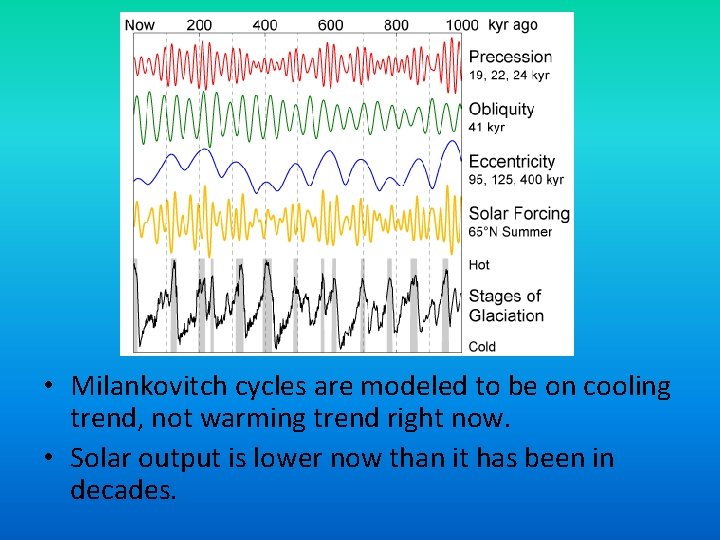
Milankovitch Cycles are variations in Earth-Sun geometry that cause glacial fluctuations
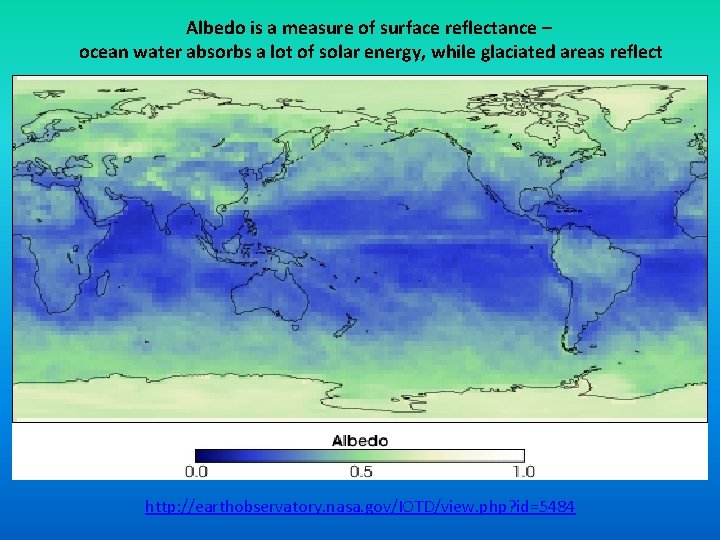
Albedo is a measure of surface reflectance – ocean water absorbs a lot of solar energy, while glaciated areas reflect http: //earthobservatory. nasa. gov/IOTD/view. php? id=5484
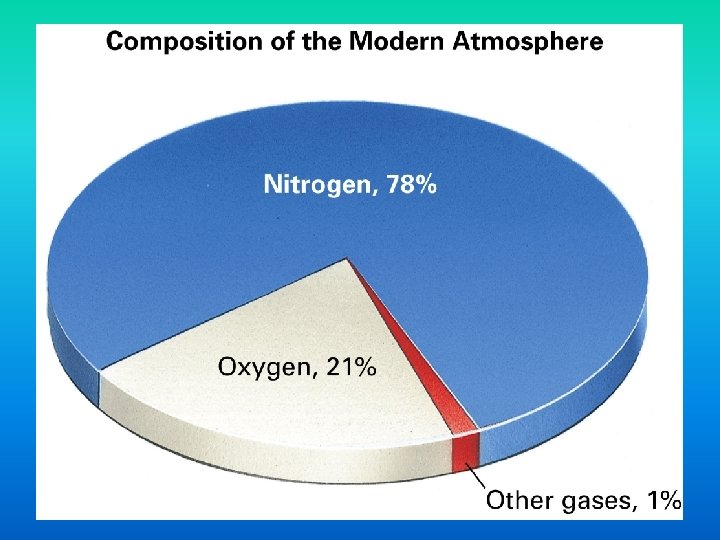
Composition of Earth’s Current Atmosphere
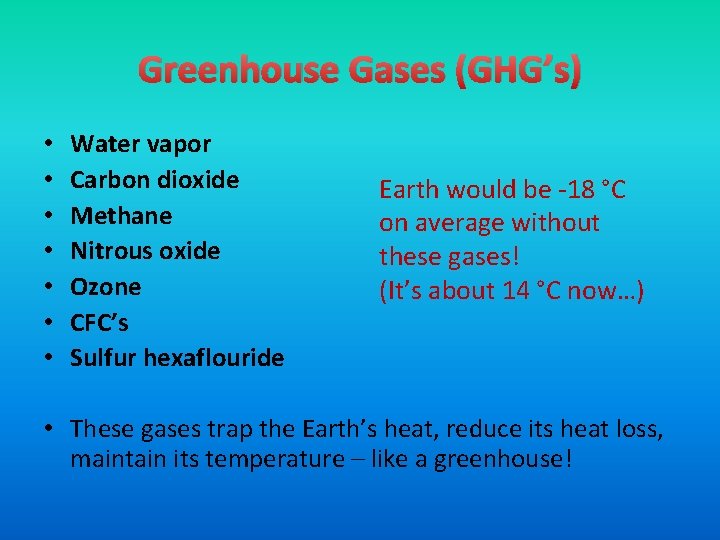
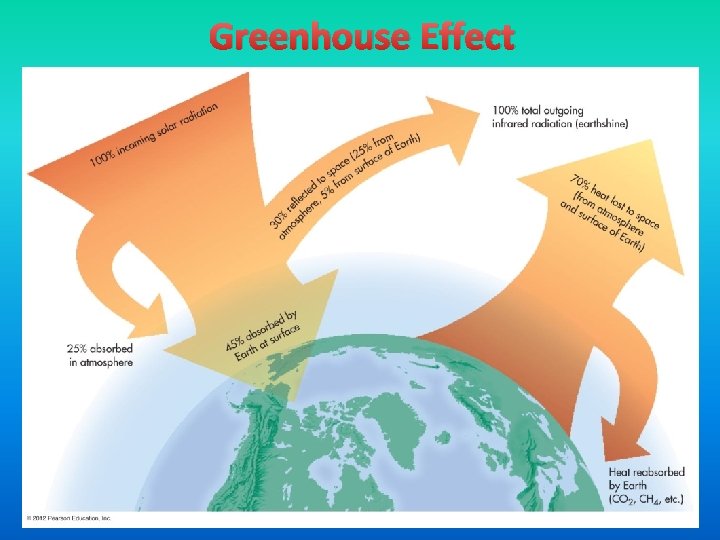
Greenhouse Gases (GHG’s) • • Water vapor Carbon dioxide Methane Nitrous oxide Ozone CFC’s Sulfur hexaflouride Earth would be -18 °C on average without these gases! (It’s about 14 °C now…) • These gases trap the Earth’s heat, reduce its heat loss, maintain its temperature – like a greenhouse!
Greenhouse Effect
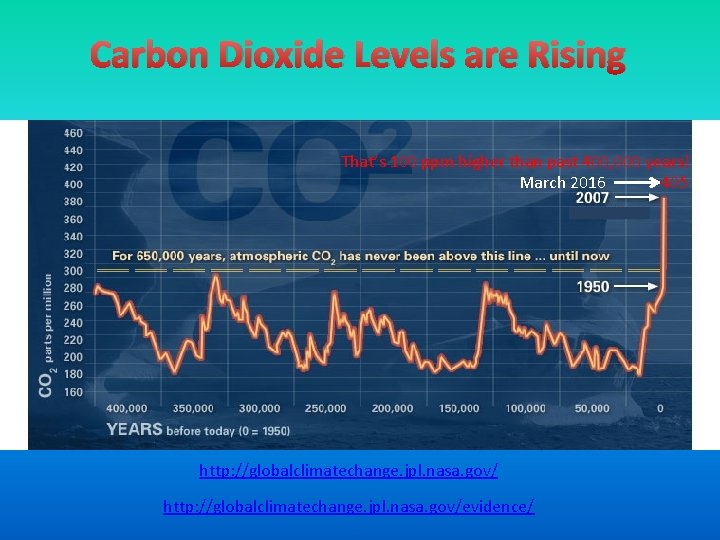
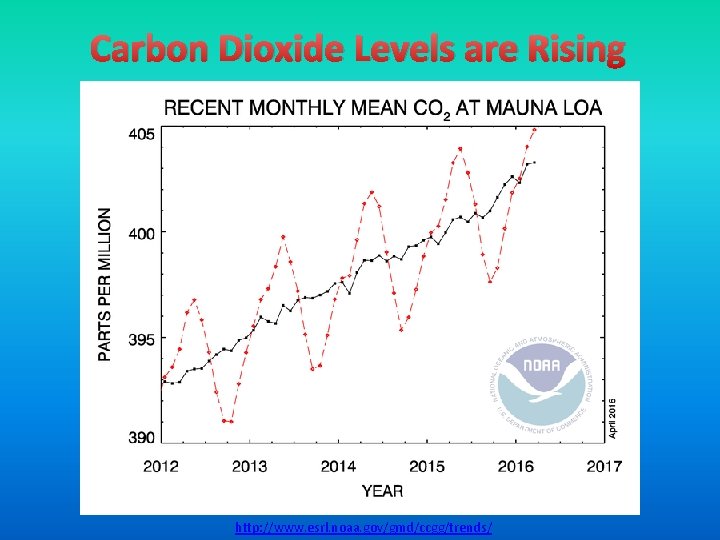
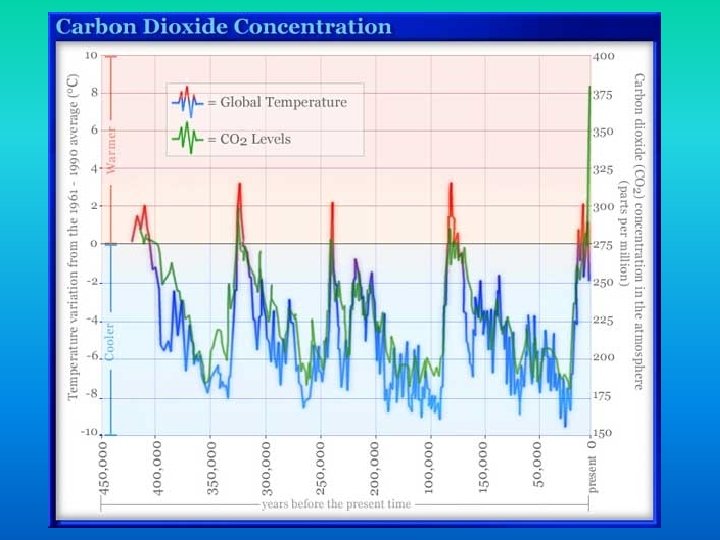
Carbon Dioxide Levels are Rising That’s 100 ppm higher than past 400, 000 years! March 2016 405 http: //globalclimatechange. jpl. nasa. gov/evidence/
Relationship between GHG’s and Temperature Where does this data come from?
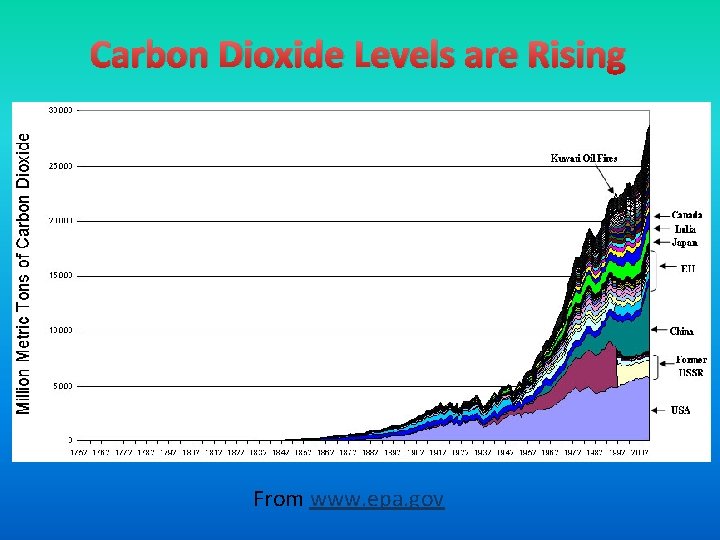
Carbon Dioxide Levels are Rising From www. epa. gov
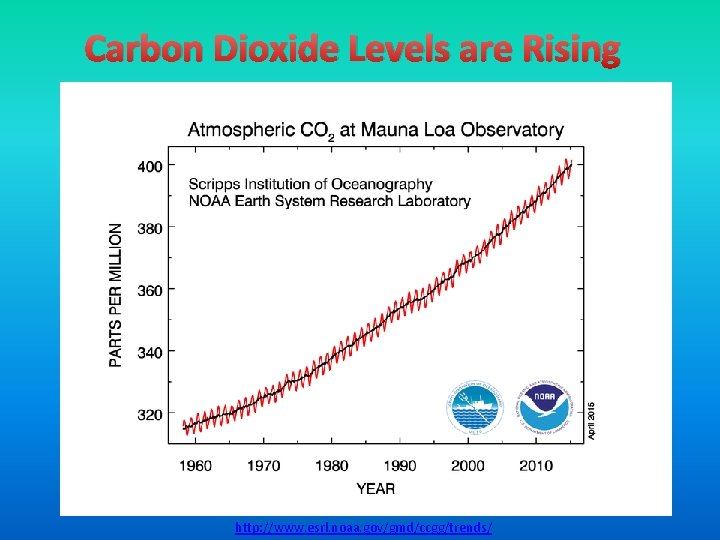
Carbon Dioxide Levels are Rising http: //www. esrl. noaa. gov/gmd/ccgg/trends/
Carbon Dioxide Levels are Rising http: //www. esrl. noaa. gov/gmd/ccgg/trends/
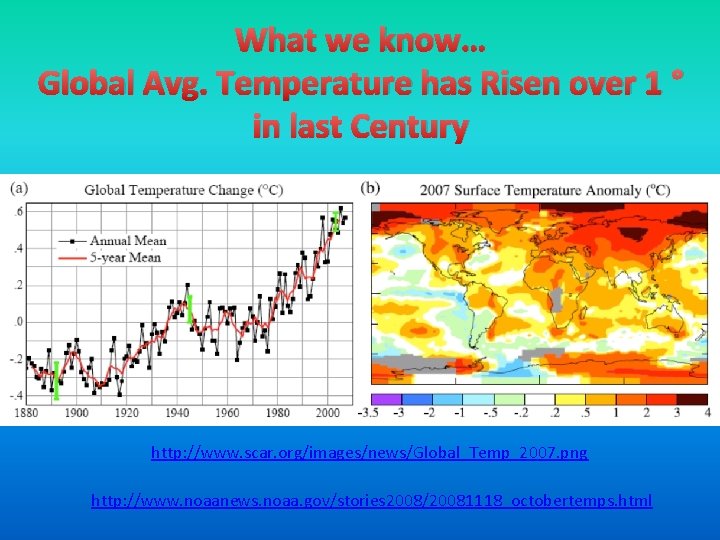
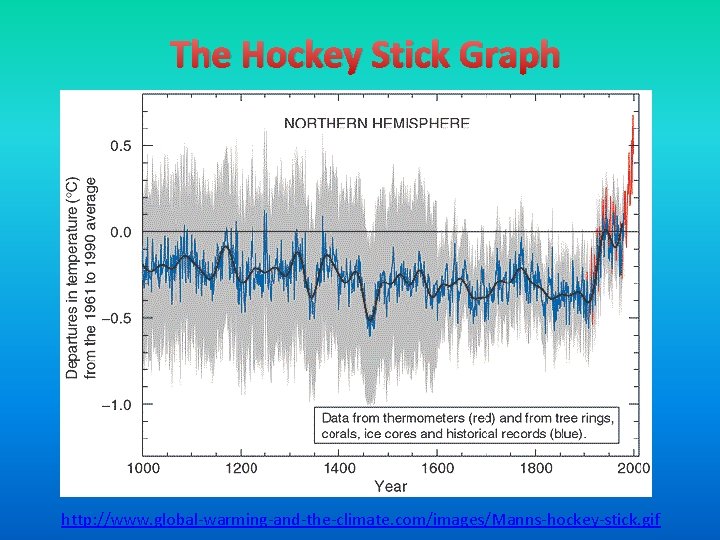
What we know… Global Avg. Temperature has Risen over 1 ° in last Century http: //www. scar. org/images/news/Global_Temp_2007. png http: //www. noaanews. noaa. gov/stories 2008/20081118_octobertemps. html
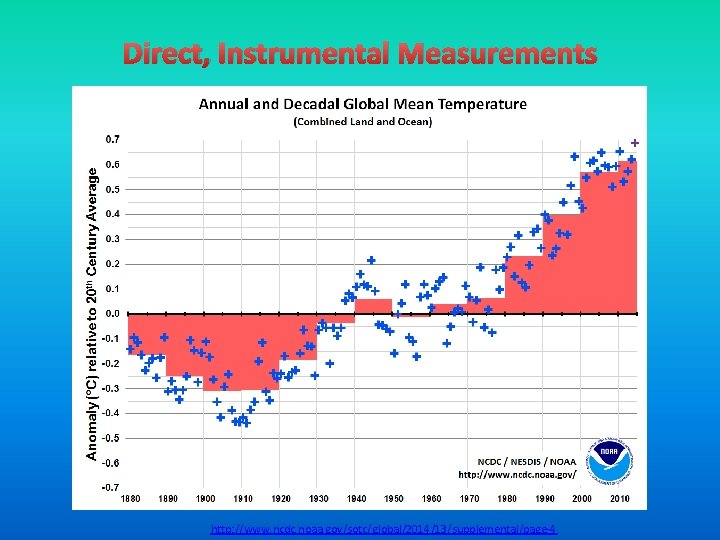
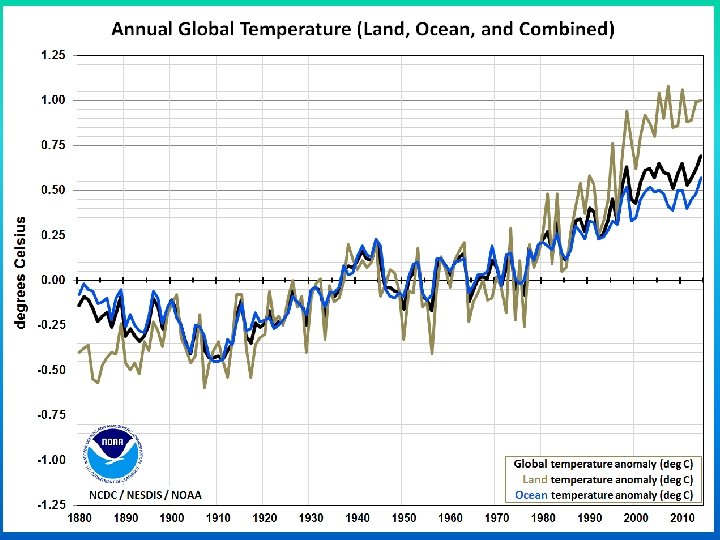
Direct, Instrumental Measurements http: //www. ncdc. noaa. gov/sotc/global/2014/13/supplemental/page-4
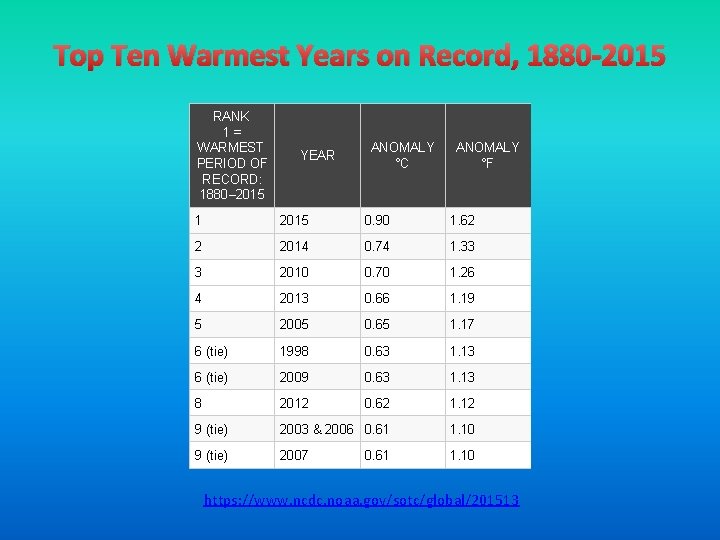
Top Ten Warmest Years on Record, 1880 -2015 RANK 1 = WARMEST PERIOD OF RECORD: 1880– 2015 YEAR ANOMALY °C ANOMALY °F 1 2015 0. 90 1. 62 2 2014 0. 74 1. 33 3 2010 0. 70 1. 26 4 2013 0. 66 1. 19 5 2005 0. 65 1. 17 6 (tie) 1998 0. 63 1. 13 6 (tie) 2009 0. 63 1. 13 8 2012 0. 62 1. 12 9 (tie) 2003 & 2006 0. 61 1. 10 9 (tie) 2007 1. 10 0. 61 https: //www. ncdc. noaa. gov/sotc/global/201513
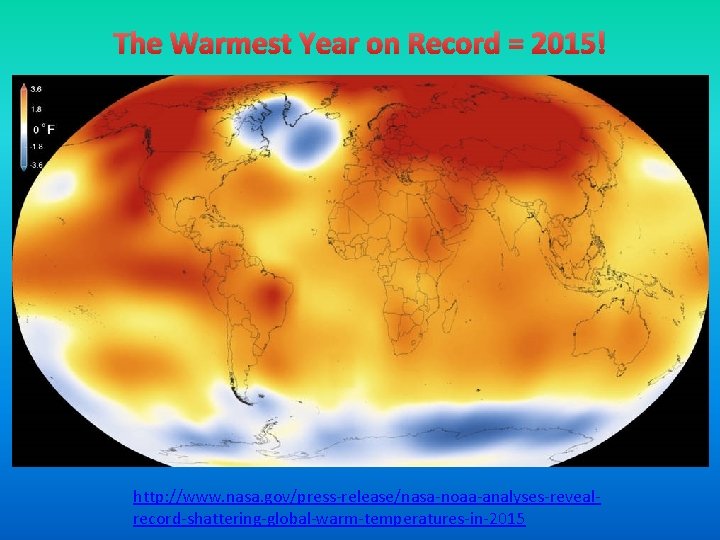
The Warmest Year on Record = 2015! http: //www. nasa. gov/press-release/nasa-noaa-analyses-revealrecord-shattering-global-warm-temperatures-in-2015
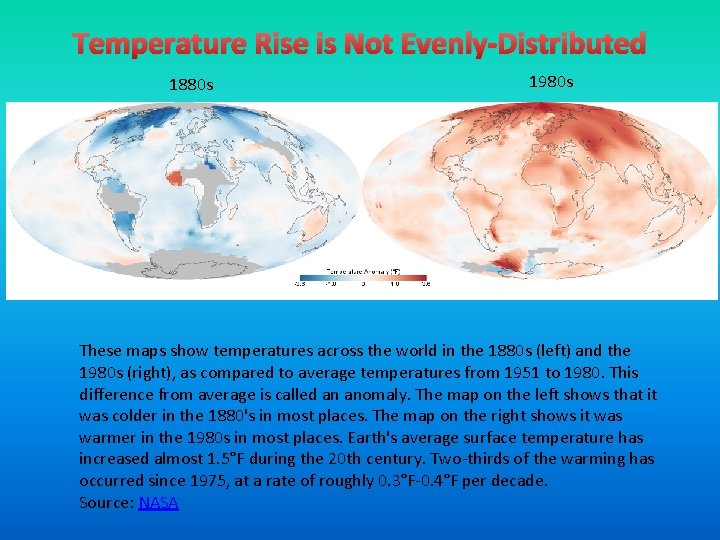
Temperature Rise is Not Evenly-Distributed 1880 s 1980 s These maps show temperatures across the world in the 1880 s (left) and the 1980 s (right), as compared to average temperatures from 1951 to 1980. This difference from average is called an anomaly. The map on the left shows that it was colder in the 1880's in most places. The map on the right shows it was warmer in the 1980 s in most places. Earth's average surface temperature has increased almost 1. 5°F during the 20 th century. Two-thirds of the warming has occurred since 1975, at a rate of roughly 0. 3°F-0. 4°F per decade. Source: NASA
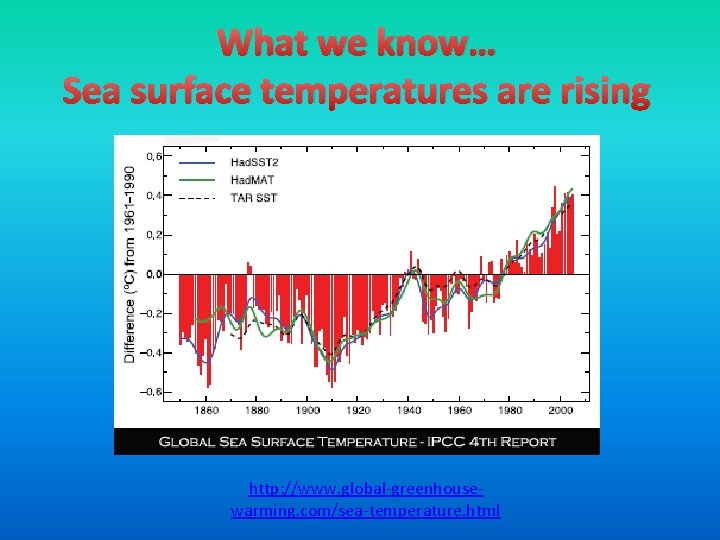
What we know… Sea surface temperatures are rising http: //www. global-greenhousewarming. com/sea-temperature. html
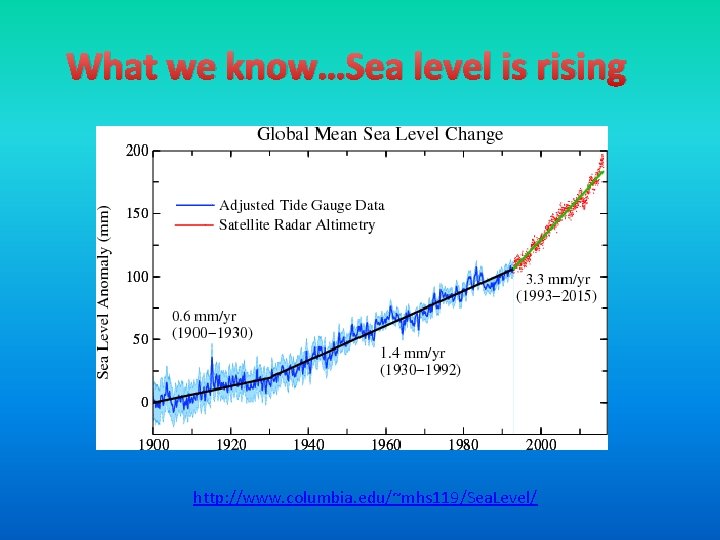
What we know…Sea level is rising http: //www. columbia. edu/~mhs 119/Sea. Level/
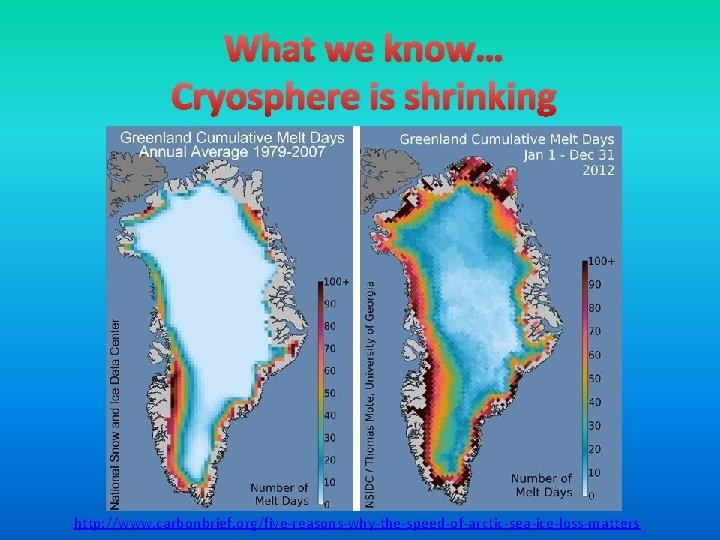
What we know… Cryosphere is shrinking http: //www. carbonbrief. org/five-reasons-why-the-speed-of-arctic-sea-ice-loss-matters
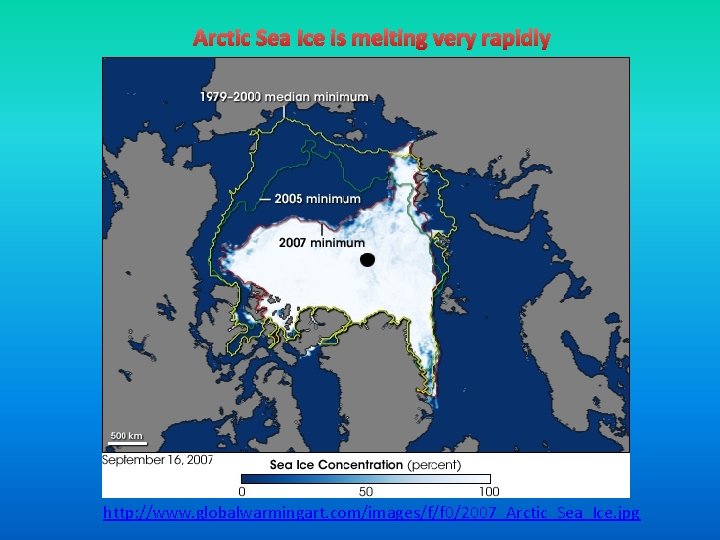
Arctic Sea Ice is melting very rapidly http: //www. globalwarmingart. com/images/f/f 0/2007_Arctic_Sea_Ice. jpg
http: //www. ncdc. noaa. gov/sotc/global/2013/13 http: //www. ncdc. noaa. gov/sotc/service/global/extremes/201313. gif
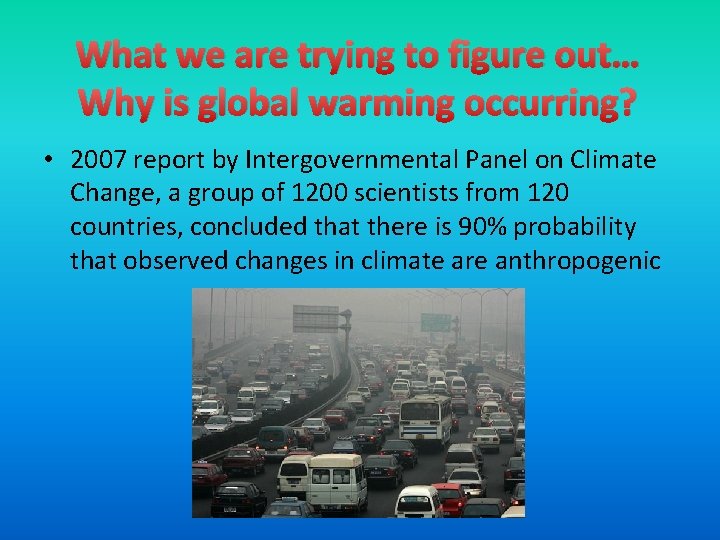
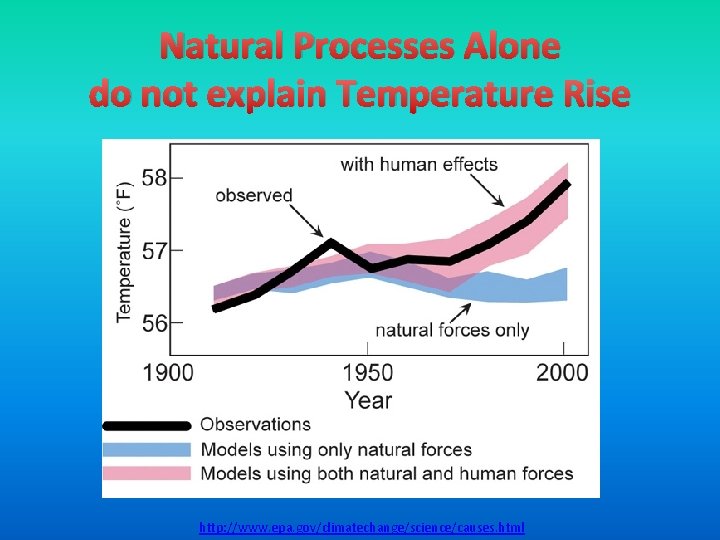
What we are trying to figure out… Why is global warming occurring? • 2007 report by Intergovernmental Panel on Climate Change, a group of 1200 scientists from 120 countries, concluded that there is 90% probability that observed changes in climate are anthropogenic
• Milankovitch cycles are modeled to be on cooling trend, not warming trend right now. • Solar output is lower now than it has been in decades.
Natural Processes Alone do not explain Temperature Rise http: //www. epa. gov/climatechange/science/causes. html
The Hockey Stick Graph http: //www. global-warming-and-the-climate. com/images/Manns-hockey-stick. gif
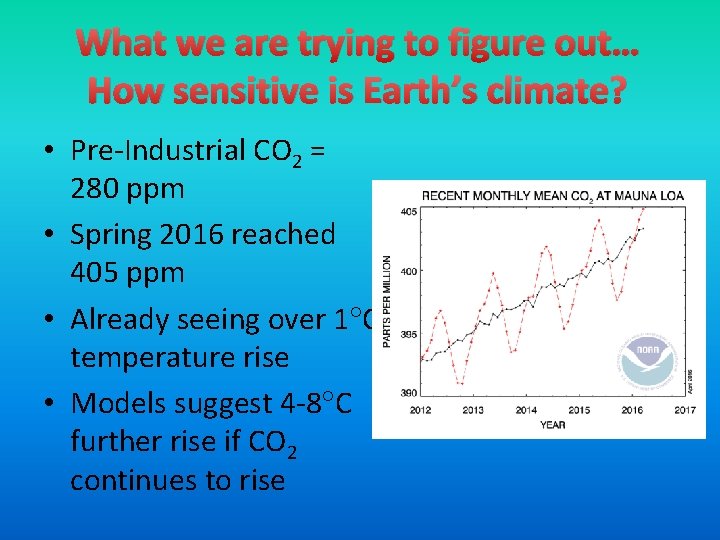
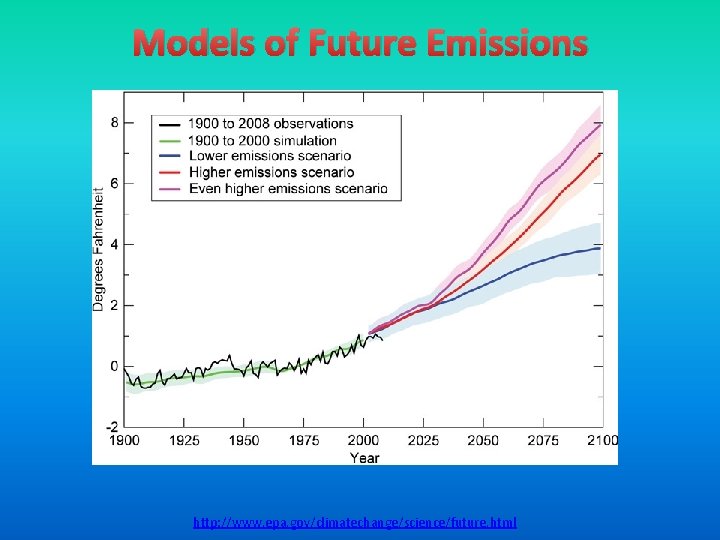
What we are trying to figure out… How sensitive is Earth’s climate? • Pre-Industrial CO 2 = 280 ppm • Spring 2016 reached 405 ppm • Already seeing over 1 C temperature rise • Models suggest 4 -8 C further rise if CO 2 continues to rise
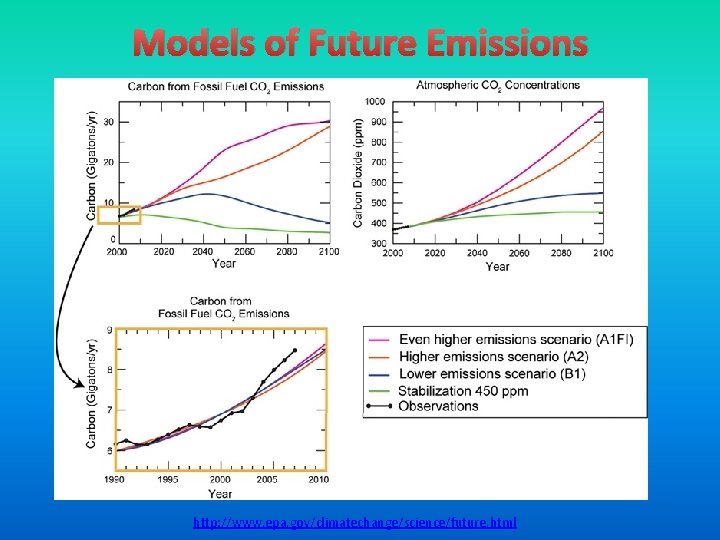
Models of Future Emissions http: //www. epa. gov/climatechange/science/future. html
Models of Future Emissions http: //www. epa. gov/climatechange/science/future. html
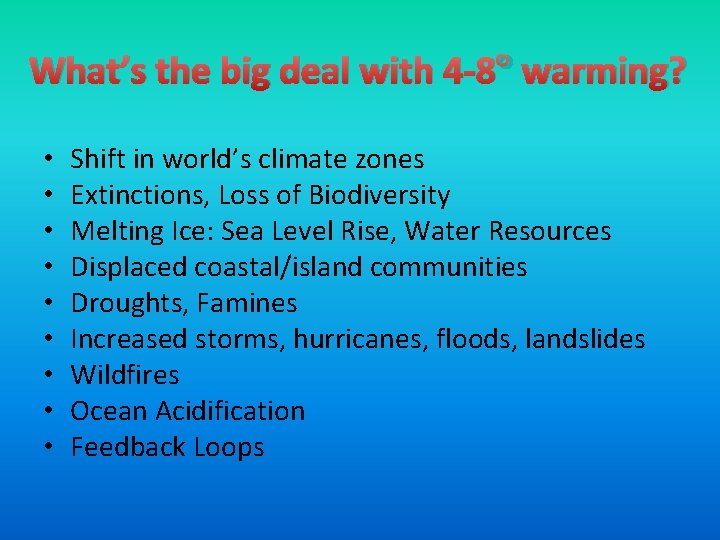
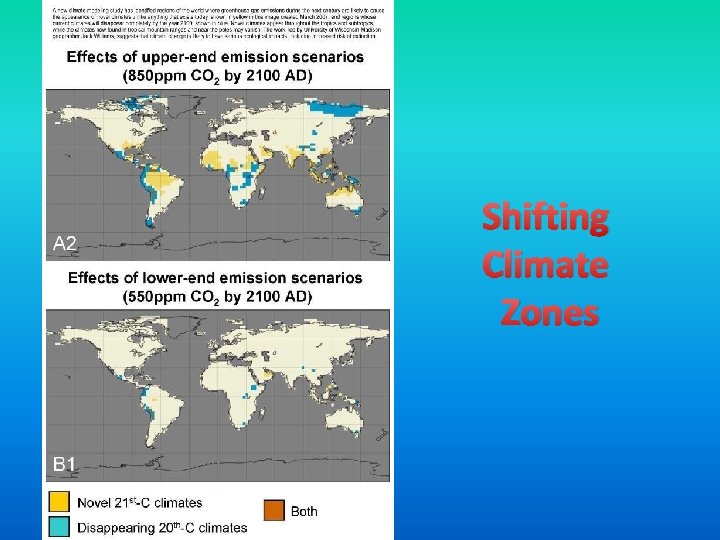
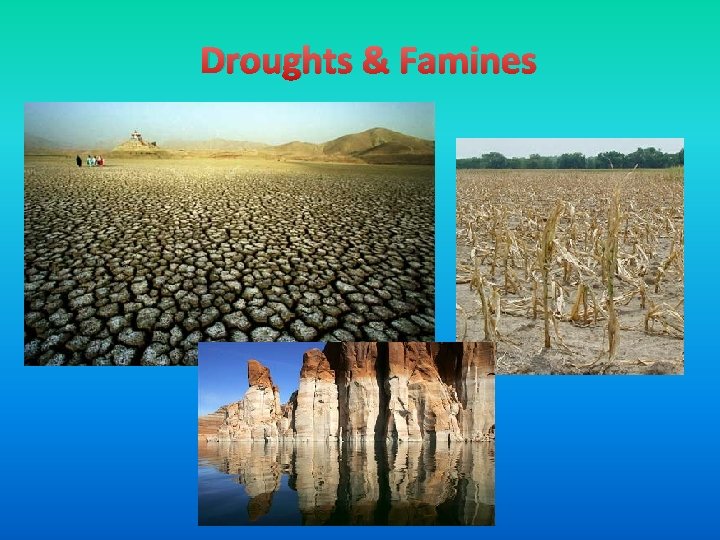
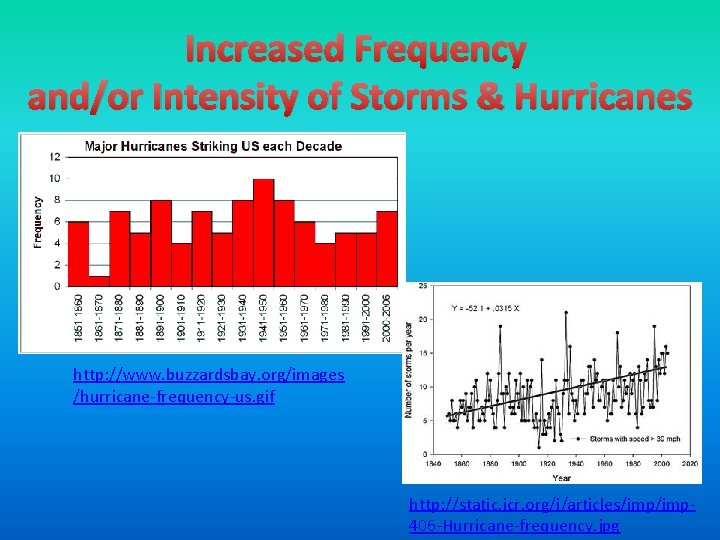
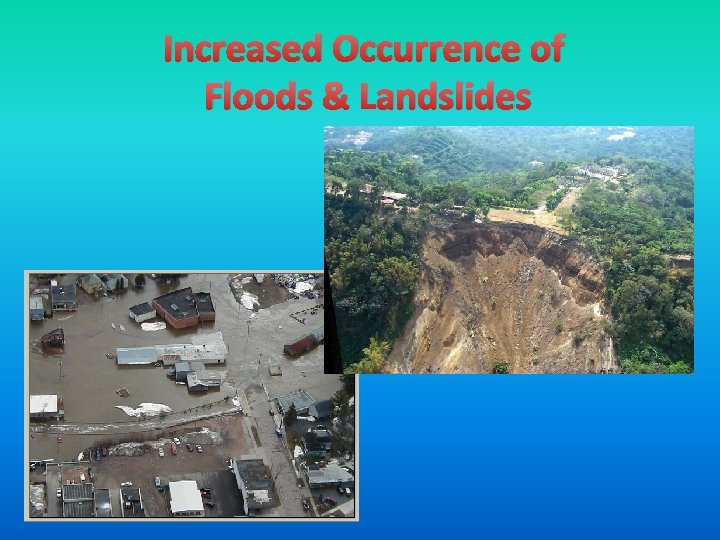
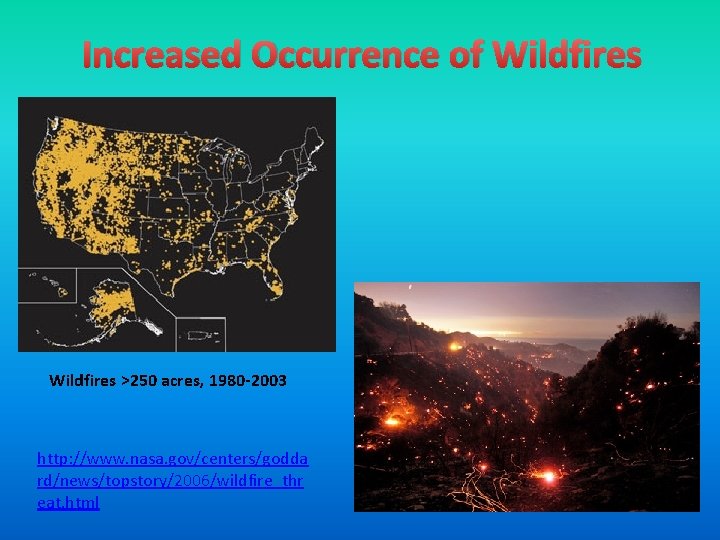
What’s the big deal with 4 -8 warming? • • • Shift in world’s climate zones Extinctions, Loss of Biodiversity Melting Ice: Sea Level Rise, Water Resources Displaced coastal/island communities Droughts, Famines Increased storms, hurricanes, floods, landslides Wildfires Ocean Acidification Feedback Loops
Shifting Climate Zones
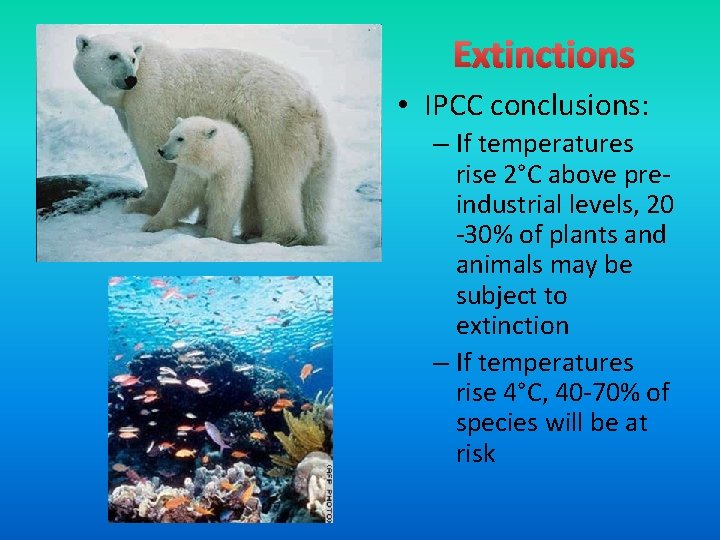
Extinctions • IPCC conclusions: – If temperatures rise 2°C above preindustrial levels, 20 -30% of plants and animals may be subject to extinction – If temperatures rise 4°C, 40 -70% of species will be at risk
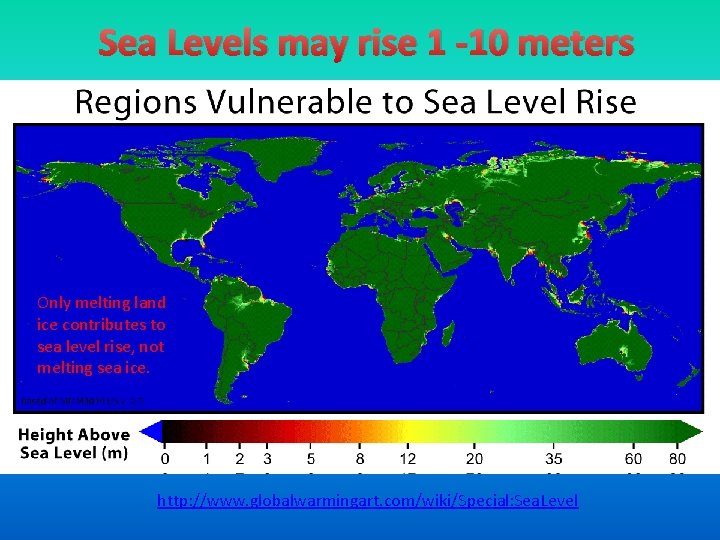
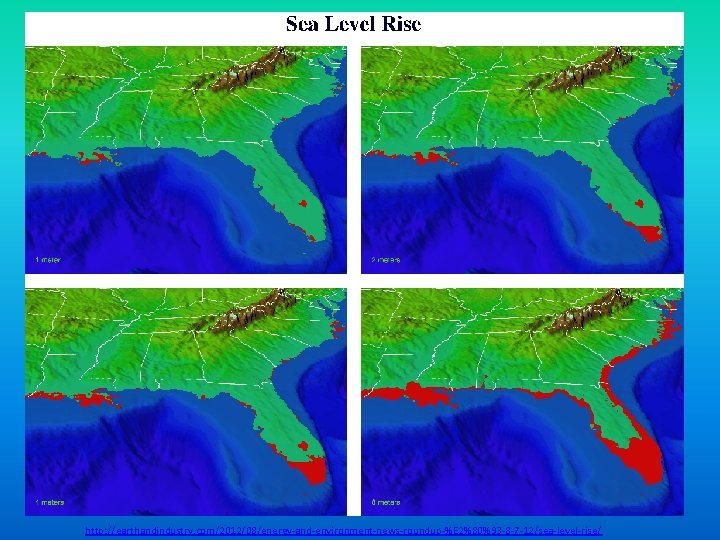
Sea Levels may rise 1 -10 meters Only melting land ice contributes to sea level rise, not melting sea ice. http: //www. globalwarmingart. com/wiki/Special: Sea. Level
http: //earthandindustry. com/2012/08/energy-and-environment-news-roundup-%E 2%80%93 -8 -7 -12/sea-level-rise/
Droughts & Famines
Increased Frequency and/or Intensity of Storms & Hurricanes http: //www. buzzardsbay. org/images /hurricane-frequency-us. gif http: //static. icr. org/i/articles/imp 406 -Hurricane-frequency. jpg
Increased Occurrence of Floods & Landslides
Increased Occurrence of Wildfires >250 acres, 1980 -2003 http: //www. nasa. gov/centers/godda rd/news/topstory/2006/wildfire_thr eat. html
What we are trying to figure out… Could we trigger sudden climate change?
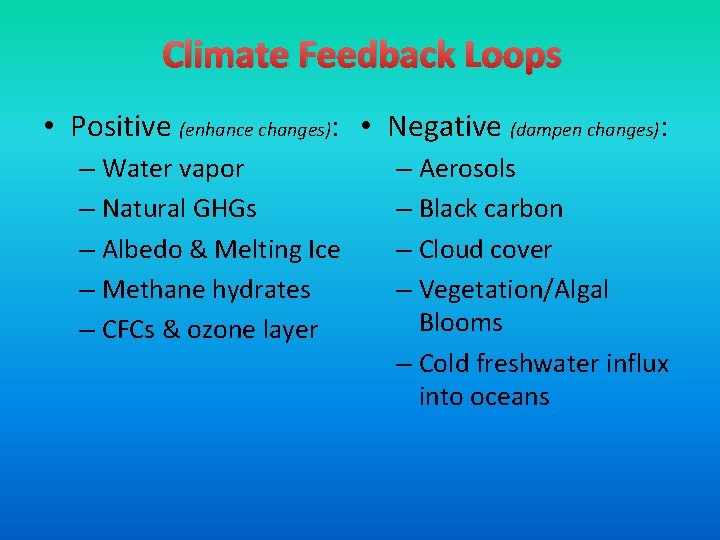
Climate Feedback Loops • Positive (enhance changes): • Negative (dampen changes): – Water vapor – Natural GHGs – Albedo & Melting Ice – Methane hydrates – CFCs & ozone layer – Aerosols – Black carbon – Cloud cover – Vegetation/Algal Blooms – Cold freshwater influx into oceans
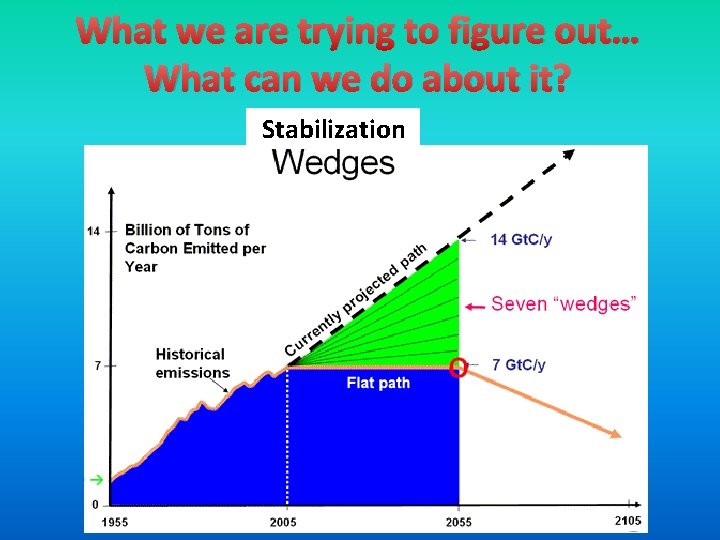
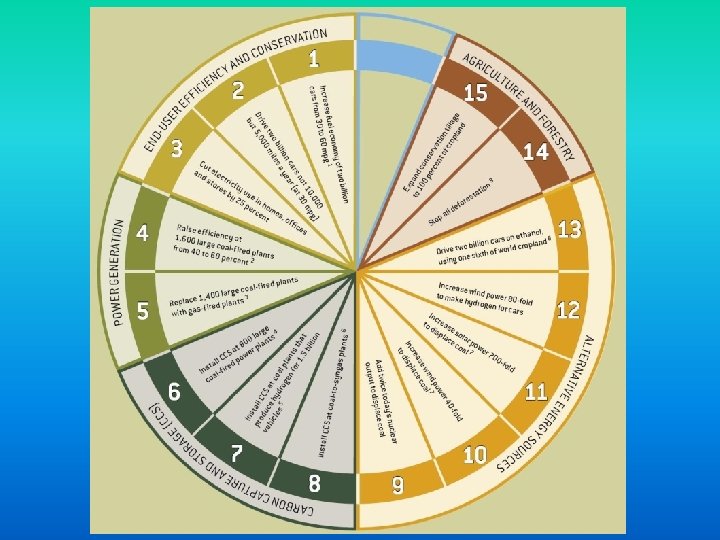
What we are trying to figure out… What can we do about it? Stabilization
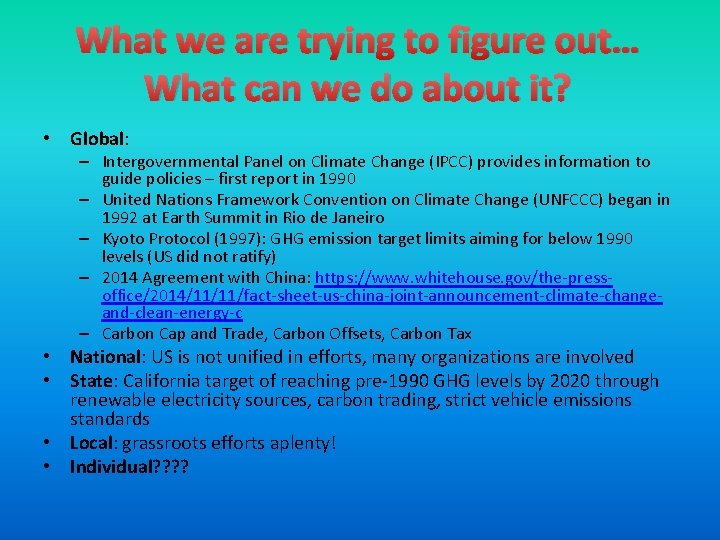
What we are trying to figure out… What can we do about it? • Global: – Intergovernmental Panel on Climate Change (IPCC) provides information to guide policies – first report in 1990 – United Nations Framework Convention on Climate Change (UNFCCC) began in 1992 at Earth Summit in Rio de Janeiro – Kyoto Protocol (1997): GHG emission target limits aiming for below 1990 levels (US did not ratify) – 2014 Agreement with China: https: //www. whitehouse. gov/the-pressoffice/2014/11/11/fact-sheet-us-china-joint-announcement-climate-changeand-clean-energy-c – Carbon Cap and Trade, Carbon Offsets, Carbon Tax • National: US is not unified in efforts, many organizations are involved • State: California target of reaching pre-1990 GHG levels by 2020 through renewable electricity sources, carbon trading, strict vehicle emissions standards • Local: grassroots efforts aplenty! • Individual? ?
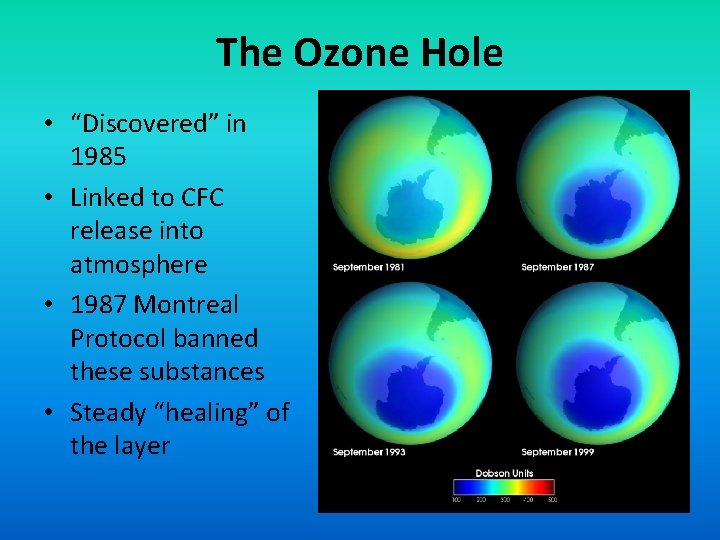
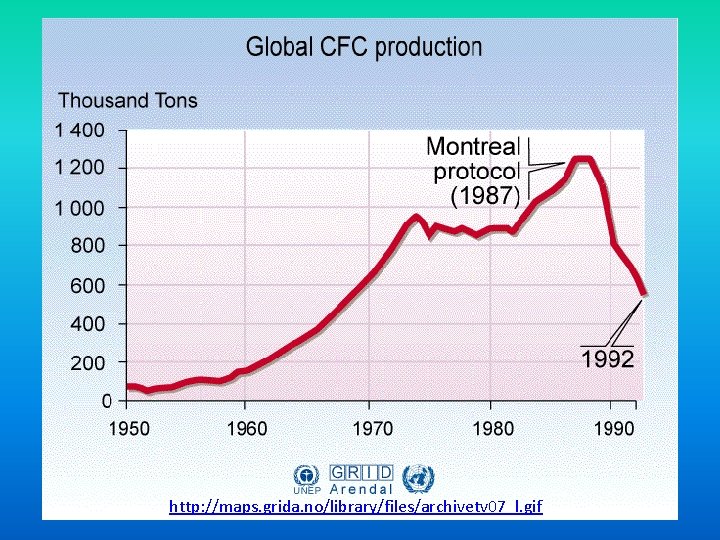
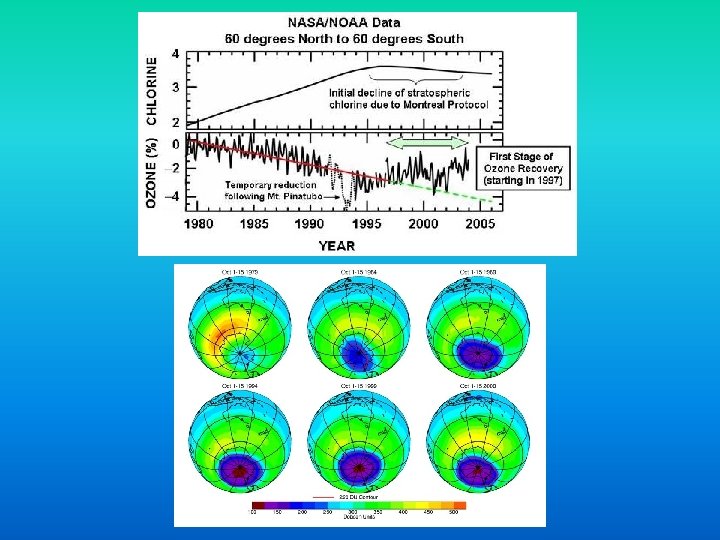
The Ozone Hole • “Discovered” in 1985 • Linked to CFC release into atmosphere • 1987 Montreal Protocol banned these substances • Steady “healing” of the layer
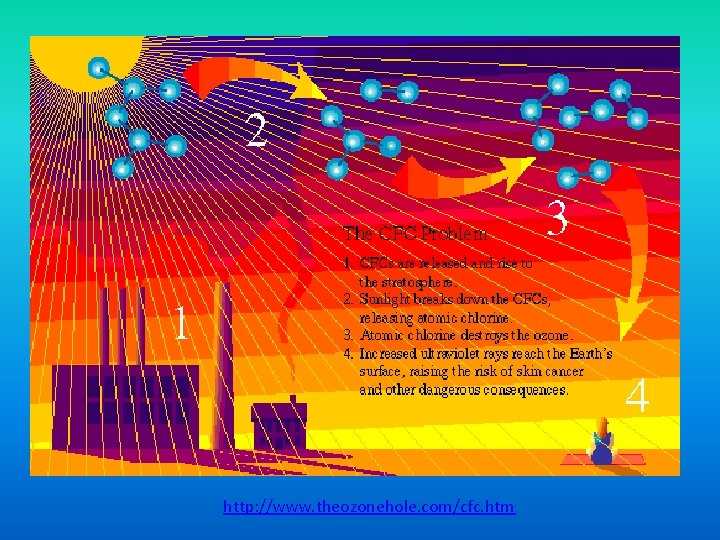
http: //www. theozonehole. com/cfc. htm
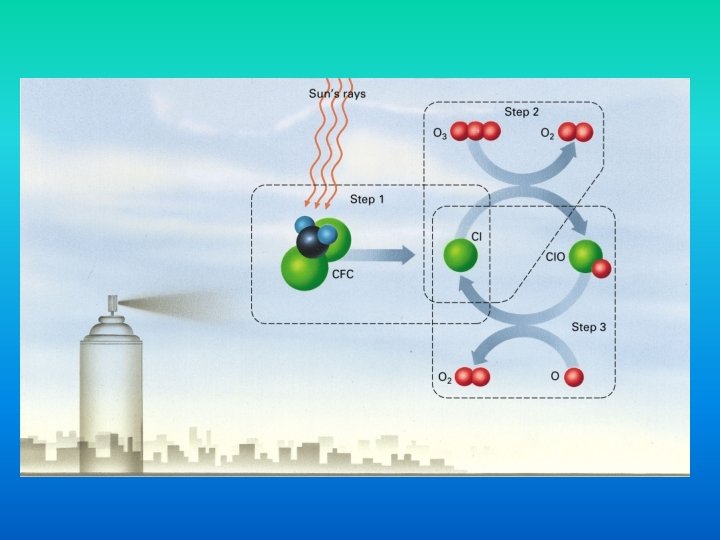
http: //maps. grida. no/library/files/archivetv 07_l. gif
Climate Discussion Questions • What facts support the idea of anthropogenic causes for global warming? • Climate skeptics use what counter-arguments against anthropogenic causes? • How can people look at the same facts but have differing interpretations? • In your opinion, what is the ‘scariest’ consequence of future global warming? • Are there any positive aspects of global warming? • What is the most important thing humans should do NOW to counteract global warming? • Are the environment and the economy inherently at odds with each other?
Great Resources about Climate Change • EPA: http: //www. epa. gov/climatechange/ and http: //www. epa. gov/climatechange/science/causes. html • NOAA: http: //www. ncdc. noaa. gov/climate-information • IPCC: http: //www. ipcc. ch/ • NASA: http: //climate. nasa. gov/