
EARTHS CHANGING PROCESSES WEATHERING AND EROSION WORDS TO
- Slides: 14
EARTH’S CHANGING PROCESSES
WEATHERING AND EROSION
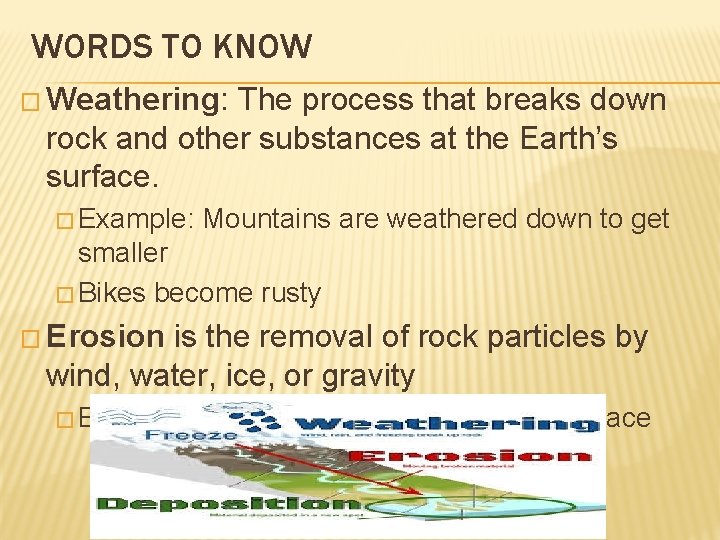
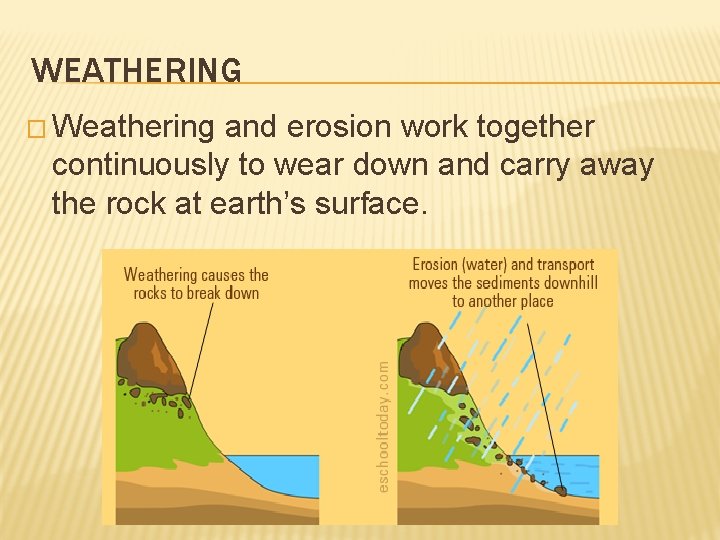
WORDS TO KNOW � Weathering: The process that breaks down rock and other substances at the Earth’s surface. � Example: Mountains are weathered down to get smaller � Bikes become rusty � Erosion is the removal of rock particles by wind, water, ice, or gravity � Example: Rivers move soil from place to place
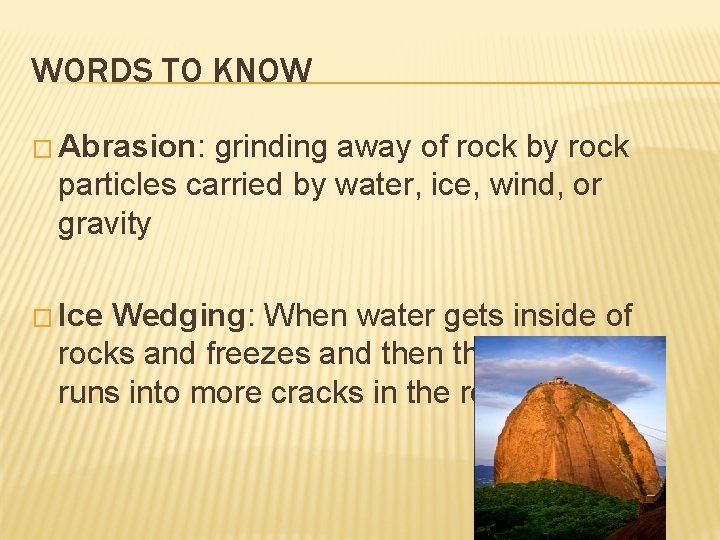
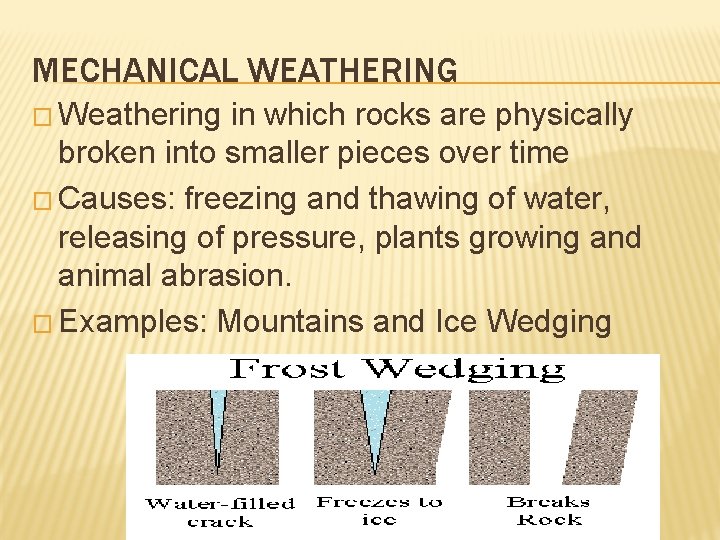
WORDS TO KNOW � Abrasion: grinding away of rock by rock particles carried by water, ice, wind, or gravity � Ice Wedging: When water gets inside of rocks and freezes and then thaws out and runs into more cracks in the rock.
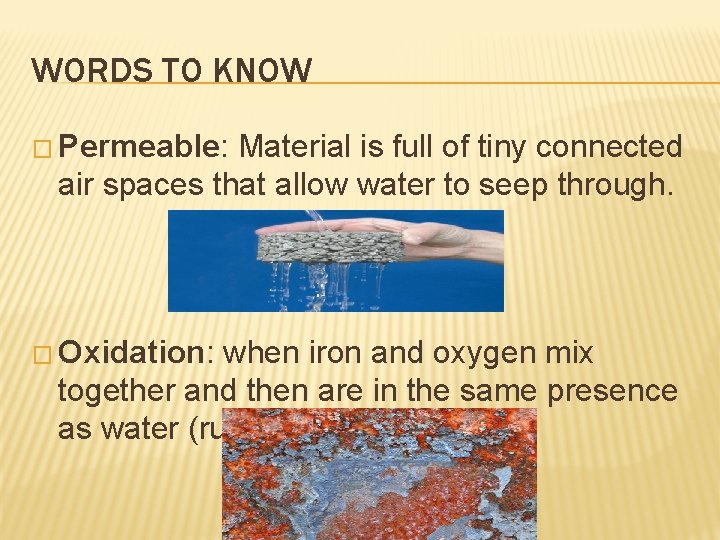
WORDS TO KNOW � Permeable: Material is full of tiny connected air spaces that allow water to seep through. � Oxidation: when iron and oxygen mix together and then are in the same presence as water (rust)
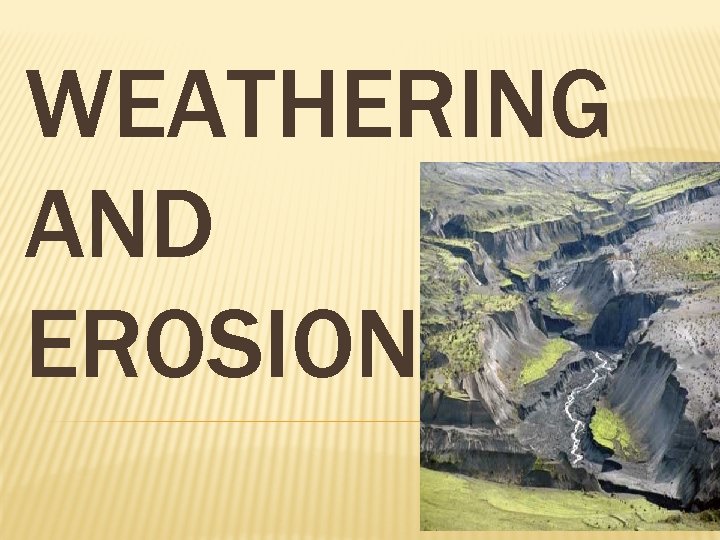
WEATHERING � Weathering and erosion work together continuously to wear down and carry away the rock at earth’s surface.
MECHANICAL WEATHERING � Weathering in which rocks are physically broken into smaller pieces over time � Causes: freezing and thawing of water, releasing of pressure, plants growing and animal abrasion. � Examples: Mountains and Ice Wedging
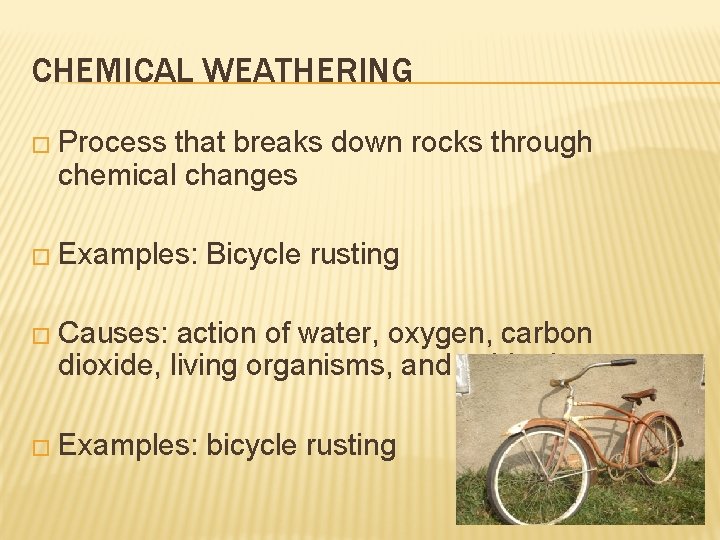
CHEMICAL WEATHERING � Process that breaks down rocks through chemical changes � Examples: Bicycle rusting � Causes: action of water, oxygen, carbon dioxide, living organisms, and acid rain � Examples: bicycle rusting
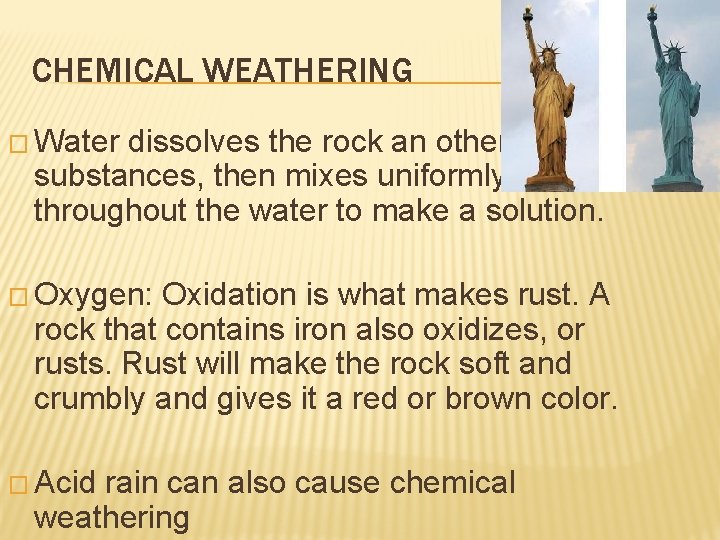
CHEMICAL WEATHERING � Water dissolves the rock an other substances, then mixes uniformly throughout the water to make a solution. � Oxygen: Oxidation is what makes rust. A rock that contains iron also oxidizes, or rusts. Rust will make the rock soft and crumbly and gives it a red or brown color. � Acid rain can also cause chemical weathering
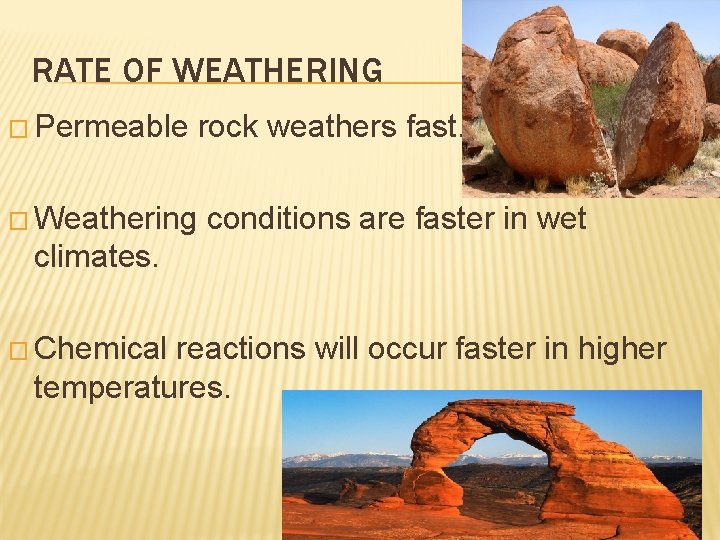
RATE OF WEATHERING � Permeable rock weathers fast. � Weathering conditions are faster in wet climates. � Chemical reactions will occur faster in higher temperatures.
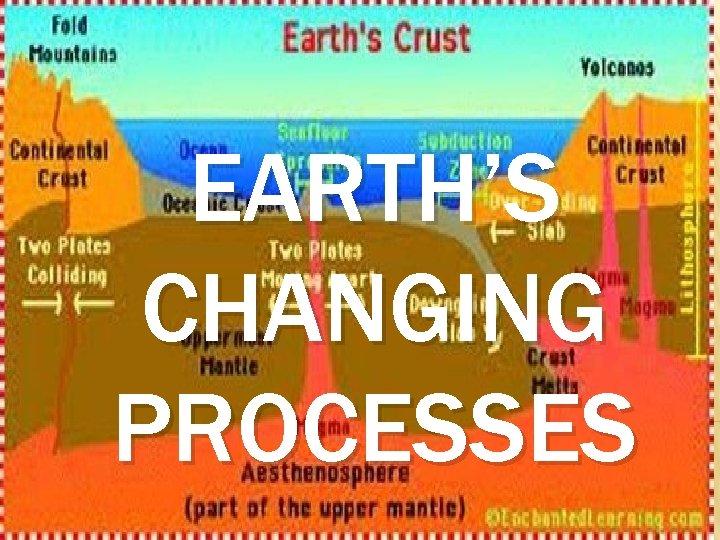
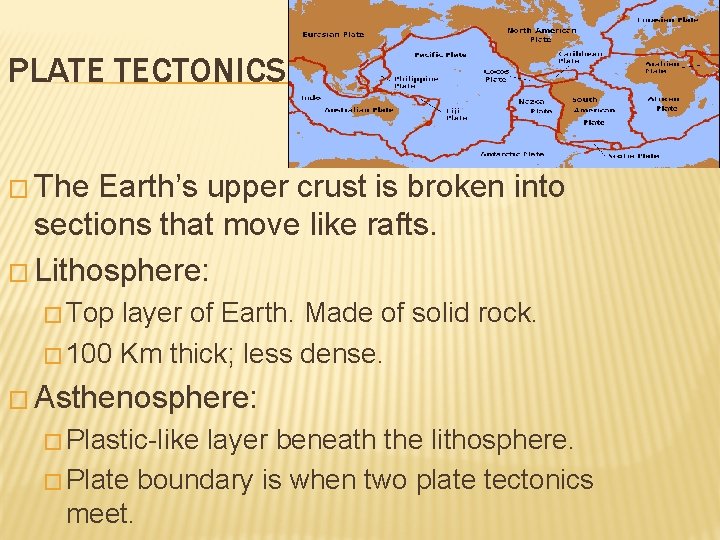
PLATE TECTONICS � The Earth’s upper crust is broken into sections that move like rafts. � Lithosphere: � Top layer of Earth. Made of solid rock. � 100 Km thick; less dense. � Asthenosphere: � Plastic-like layer beneath the lithosphere. � Plate boundary is when two plate tectonics meet.
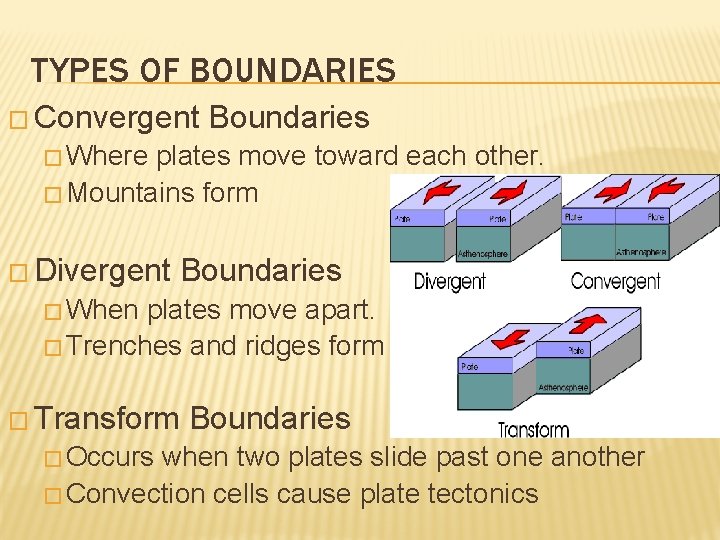
TYPES OF BOUNDARIES � Convergent Boundaries � Where plates move toward each other. � Mountains form � Divergent Boundaries � When plates move apart. � Trenches and ridges form � Transform � Occurs Boundaries when two plates slide past one another � Convection cells cause plate tectonics
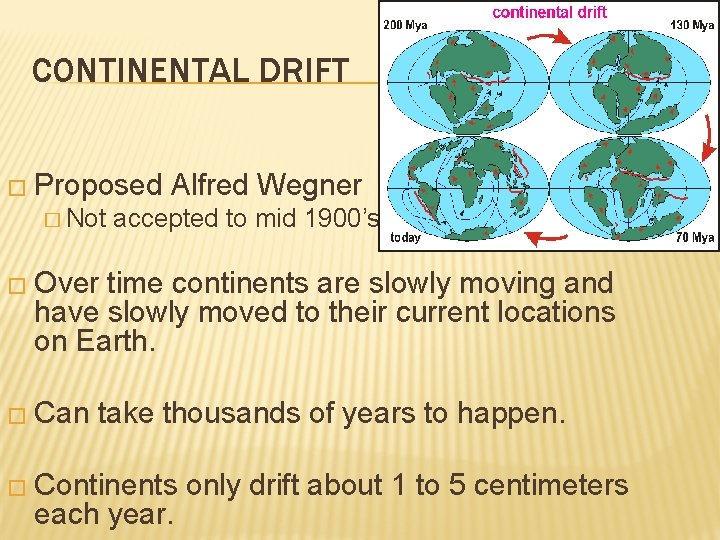
CONTINENTAL DRIFT � Proposed � Not Alfred Wegner accepted to mid 1900’s � Over time continents are slowly moving and have slowly moved to their current locations on Earth. � Can take thousands of years to happen. � Continents each year. only drift about 1 to 5 centimeters
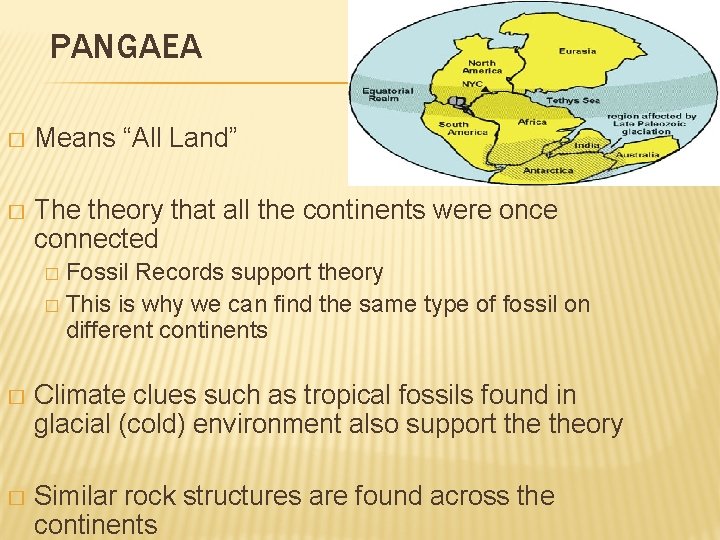
PANGAEA � Means “All Land” � The theory that all the continents were once connected Fossil Records support theory � This is why we can find the same type of fossil on different continents � � Climate clues such as tropical fossils found in glacial (cold) environment also support theory � Similar rock structures are found across the continents