
Earths Atmosphere ES 11 Origins Evolution What is
- Slides: 32
Earth’s Atmosphere ES 11: Origins & Evolution
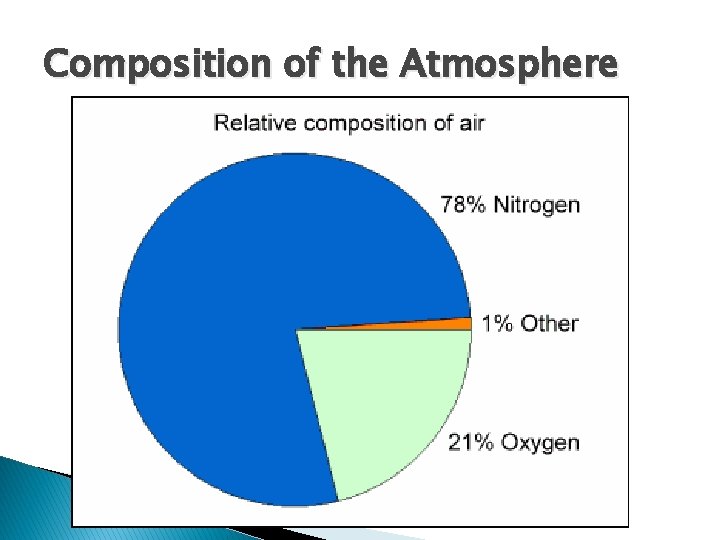
What is the atmosphere? � The atmosphere is a mixture of gases that surrounds a planet or moon � Our atmosphere is composed of: ◦ 78% Nitrogen ◦ 21% Oxygen ◦ 1% Trace Gases (Argon, carbon dioxide, water vapor, and other gases) � Our atmosphere is unique because it is the only one that we know contains oxygen, which is necessary for most complex life forms to exist
Composition of the Atmosphere
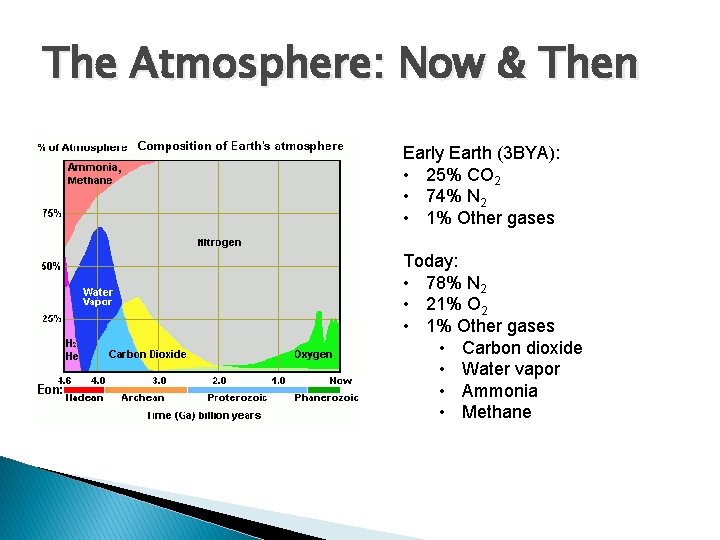
Can the atmosphere’s composition change? � Yes! � Early on, the atmosphere was mainly helium (He) and hydrogen (H) � After the moon formed, the atmosphere was composed of mostly CO, CO 2, and H 2 O vapor � Many of these gasses came from volcanic out gassing and meteor /comet impacts � Early photosynthetic life then modified the atmosphere further by slowly adding oxygen
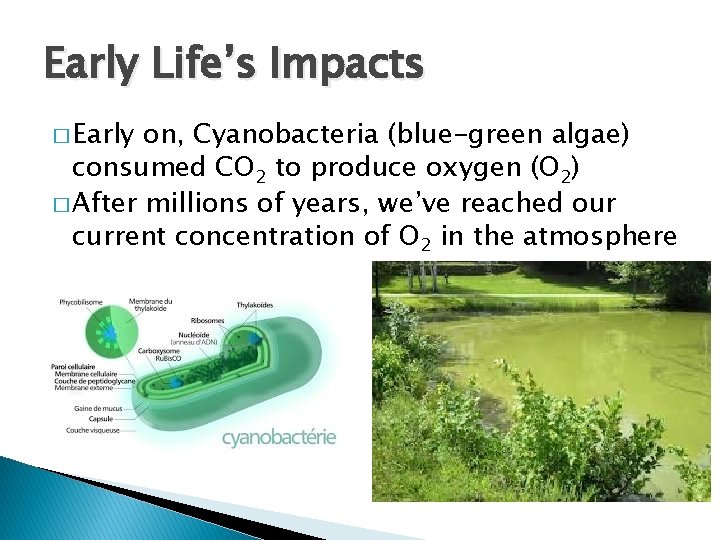
Early Life’s Impacts � Early on, Cyanobacteria (blue-green algae) consumed CO 2 to produce oxygen (O 2) � After millions of years, we’ve reached our current concentration of O 2 in the atmosphere
The Atmosphere: Now & Then Early Earth (3 BYA): • 25% CO 2 • 74% N 2 • 1% Other gases Today: • 78% N 2 • 21% O 2 • 1% Other gases • Carbon dioxide • Water vapor • Ammonia • Methane
Greenhouse Effect: The good and the bad… � Greenhouse Effect: the warming of the surface and lower atmosphere of the Earth that occurs when water vapor, carbon dioxide, and other gases absorb and reradiate thermal energy � The greenhouse effect occurs naturally, but human activities, such as burning fossil fuels, increases the volume of greenhouse gases which can unnaturally accelerate climate change
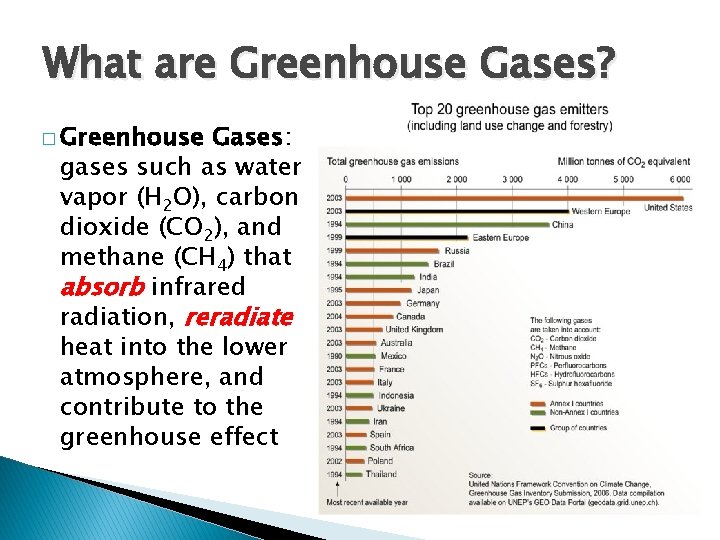
What are Greenhouse Gases? � Greenhouse Gases: gases such as water vapor (H 2 O), carbon dioxide (CO 2), and methane (CH 4) that absorb infrared radiation, reradiate heat into the lower atmosphere, and contribute to the greenhouse effect
Greenhouse Effect: The good and the bad… � The good: � The bad: ◦ Allows our planet to stay warm enough to allow life to exist ◦ If increased, planet could overheat and cause serious problems (melting ice caps, changes in ocean currents, extinction of certain species of plants and animals, etc. )
Climate Change & Global Warming � Global warming refers to a gradual increase in average global temperature caused by the addition of greenhouse gases in the lower atmosphere � Over the last 100 years, average global temperature have been steadily increasing.
Atmospheric Heating � The Earth receives energy from the sun in the form of radiation. � Radiation – the transfer of energy as electromagnetic waves � We only receive 2/1, 000, 000 of the energy from the sun.
Atmospheric Heating � Of the energy we receive: ◦ 25% is scattered and reflected by clouds and air ◦ 20% is absorbed by ozone, clouds, and atmospheric gases ◦ 5% is reflected by the Earth’s surface ◦ 50% is absorbed by the Earth’s surface
Ways Energy is Transferred � Conduction – the transfer of energy as heat through a material � Example: Touching a hot stove ◦ The stove directly transfers heat into your hand.
Ways Energy is Transferred � Convection – the transfer of thermal energy by the circulation or movement of a liquid or gas � Example: Feeling the heat from a hot stove through the air � Convection Current – circular movement of air due to differences in temperature.
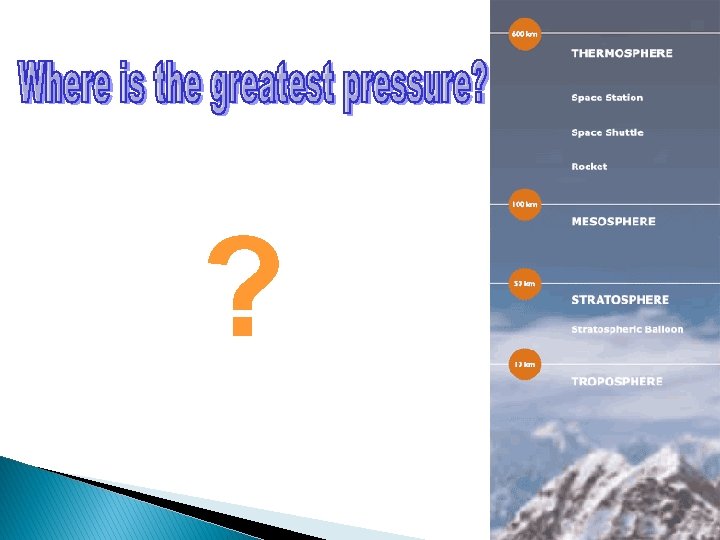
Can you feel the pressure? � Our atmosphere rises 700 km from the surface of the Earth. � 700 km = 434 miles � 1 km =. 62 miles � The measure of the force with which air molecules push on a surface is called air pressure.
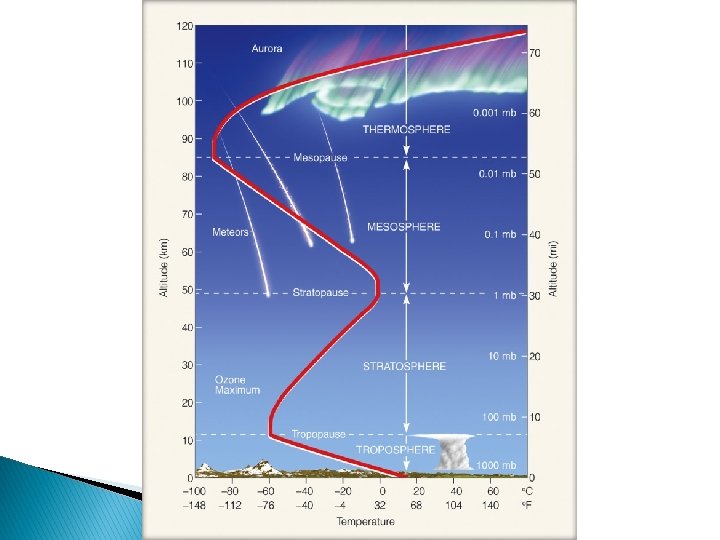
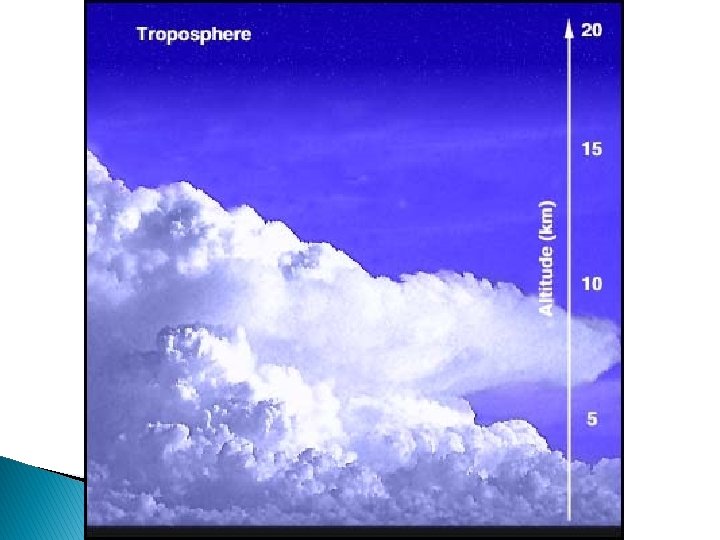
Layers of the Atmosphere � Troposphere ◦ ◦ ◦ Tropo- = “change” Lowest layer Densest layer Contains almost 90% of the atmosphere’s mass Where weather occurs Where we live
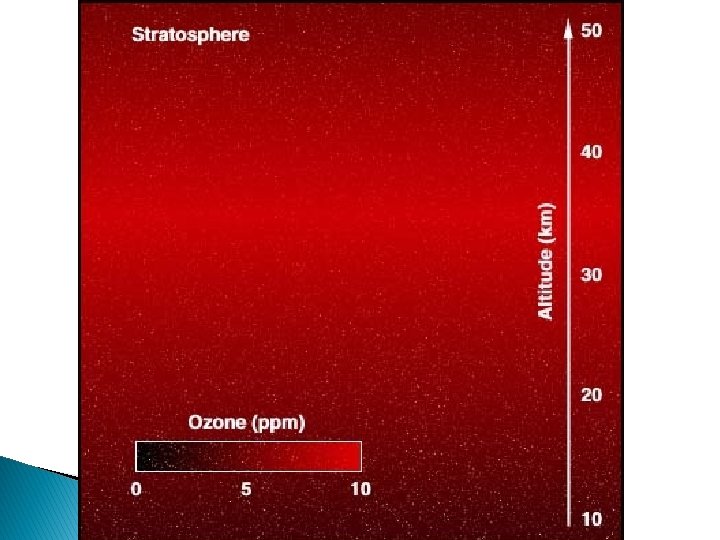
Layers of the Atmosphere � Stratosphere ◦ ◦ ◦ Strato- = “layer” Air is very thin Contains little moisture Lower stratosphere is very cold (-60 degrees C) Temperature rises higher in the stratosphere Ozone layer exists here
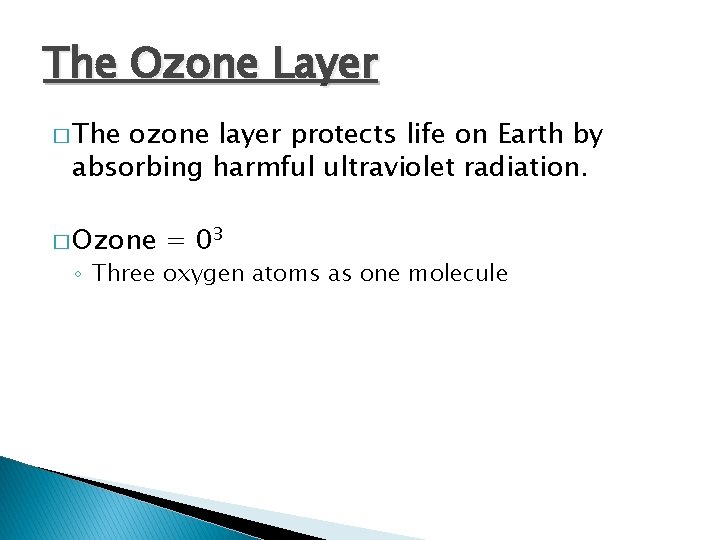
The Ozone Layer � The ozone layer protects life on Earth by absorbing harmful ultraviolet radiation. � Ozone = 03 ◦ Three oxygen atoms as one molecule
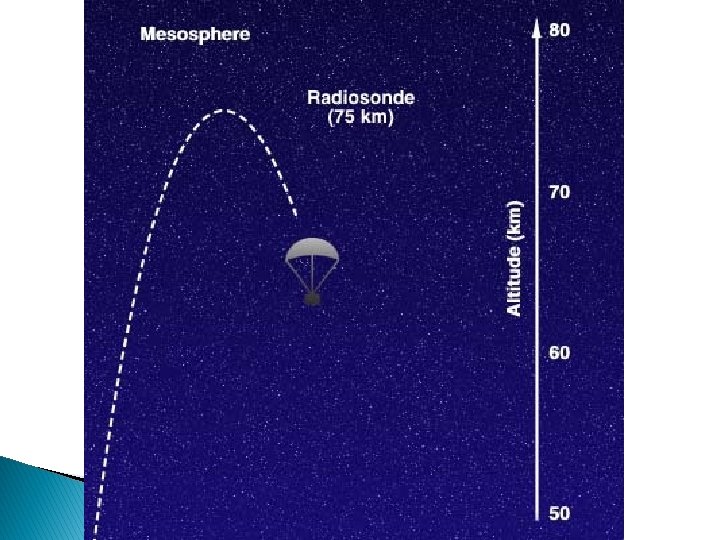
Layers of the Atmosphere � Mesosphere ◦ Middle layer of the atmosphere �Meso- = “middle” ◦ Coldest layer of the atmosphere ◦ Temperature decreases with altitude ◦ Can be as cold as -93 degrees C
Layers of the Atmosphere � Thermosphere ◦ Thermo- = “heat” ◦ Uppermost layer ◦ Temperature increases with altitude �Temperatures can be 1000 degrees C or higher ◦ Does not “feel” hot ◦ Particle are very far apart ◦ Ionosphere �Inside thermosphere
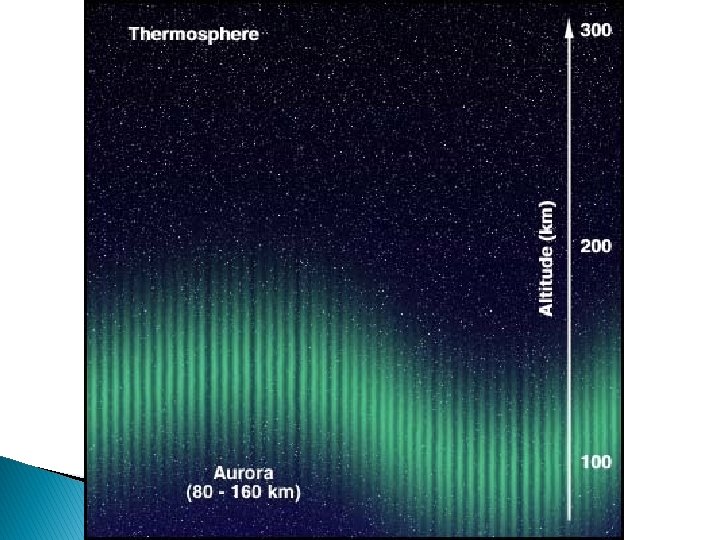
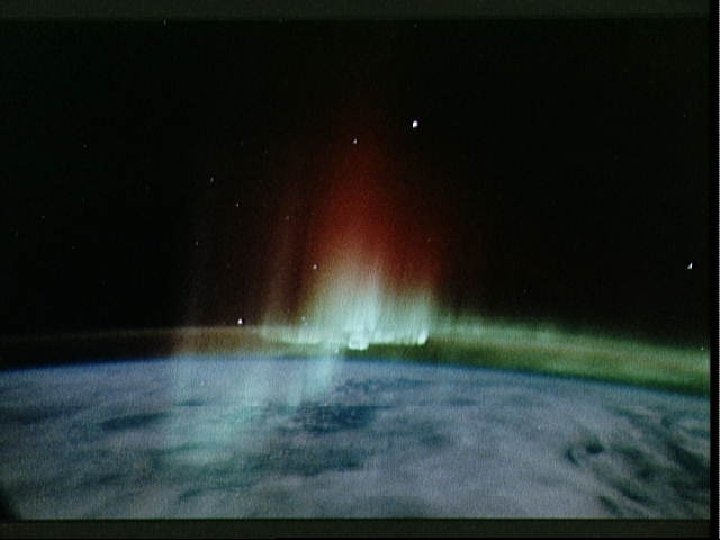
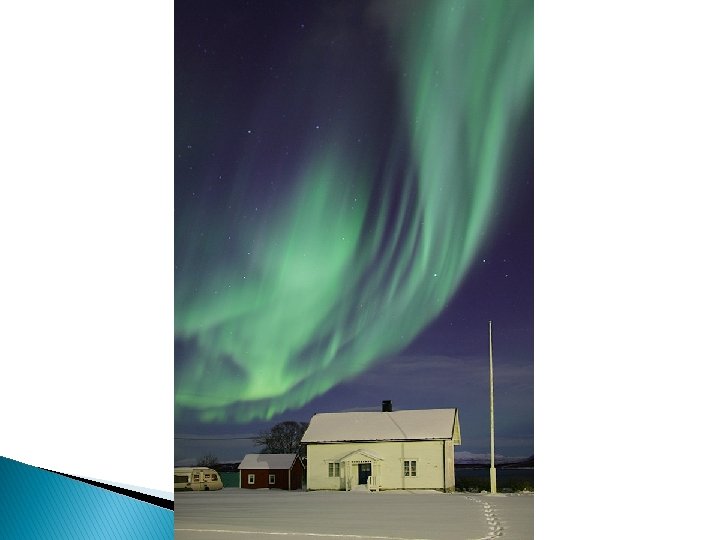
The Ionosphere � Nitrogen and oxygen atoms in upper mesosphere and thermosphere react to solar radiation � Become electrically charged ◦ Ions – electrically charged particles � Seen as shimmering lights called auroras � Reflects AM radio
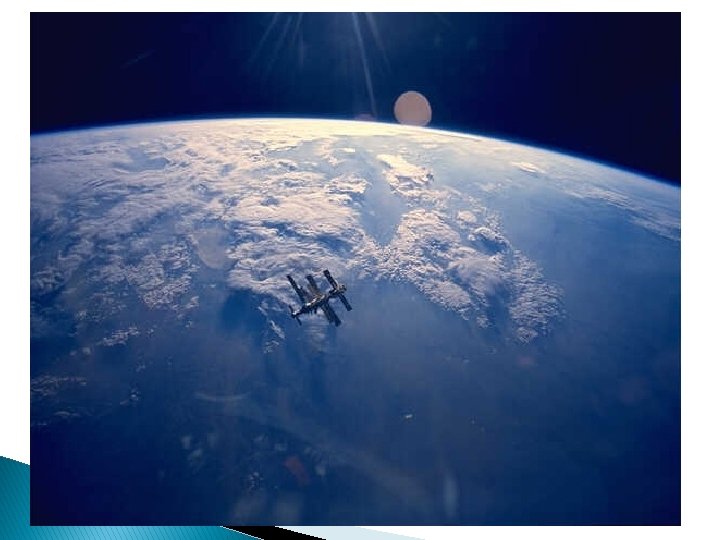
The Exopshere � Outer most layer of Earth’s atmosphere. � Lies above the Ionosphere � It extends from about 500 km, to the edge of space
Layers of the Atmosphere � We will now complete the Layers of the Atmosphere Worksheet together.