
Earthquakes What is an earthquake Vibration of Earth
Earthquakes
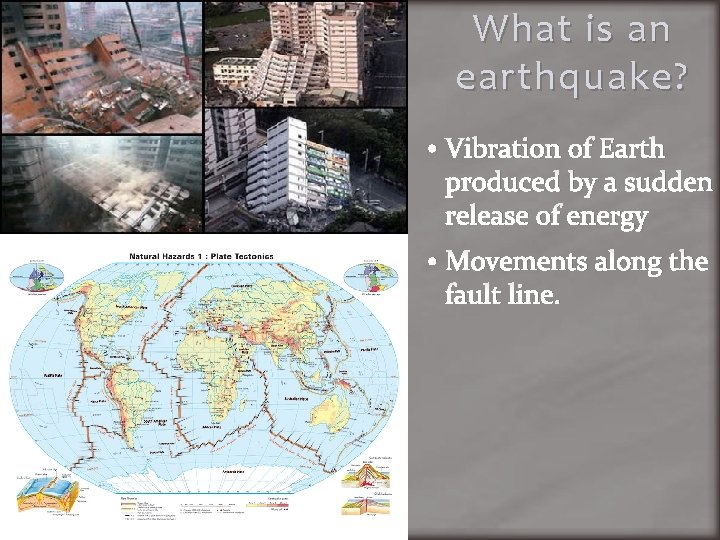
What is an earthquake? • Vibration of Earth produced by a sudden release of energy • Movements along the fault line.

Focus, Epicenter and Faults • Focus – point within the Earth where the Earthquake starts • Epicenter – location on the surface of Earth directly above the focus • Fault- associated with earthquake activity where movement has occurred
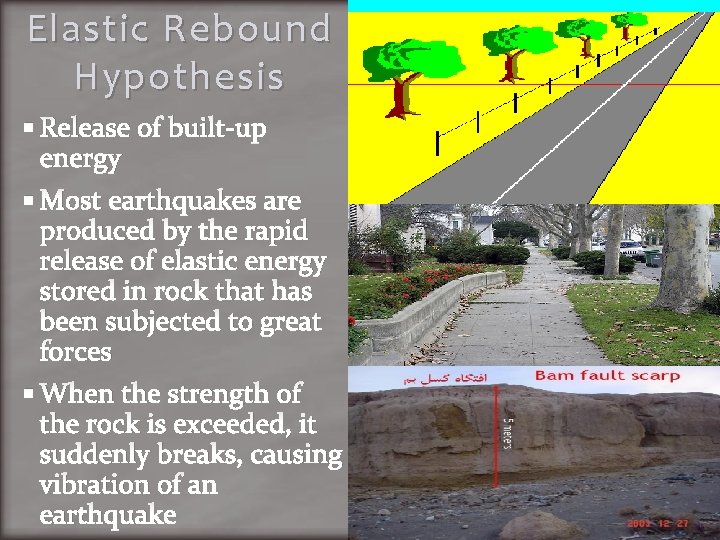
Elastic Rebound Hypothesis Release of built-up energy Most earthquakes are produced by the rapid release of elastic energy stored in rock that has been subjected to great forces When the strength of the rock is exceeded, it suddenly breaks, causing vibration of an earthquake
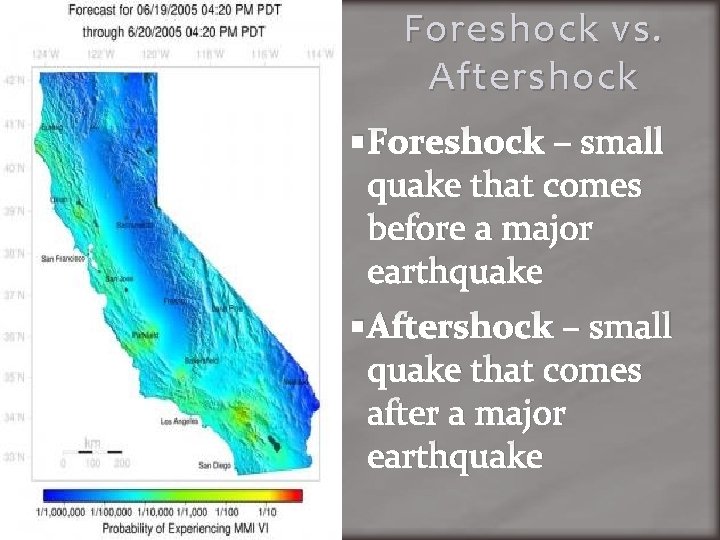
Foreshock vs. Aftershock Foreshock – small quake that comes before a major earthquake Aftershock – small quake that comes after a major earthquake

Seismology – study of earthquake waves Seismograph – instruments that record earthquake waves Seismograms – the record made by a seismograph
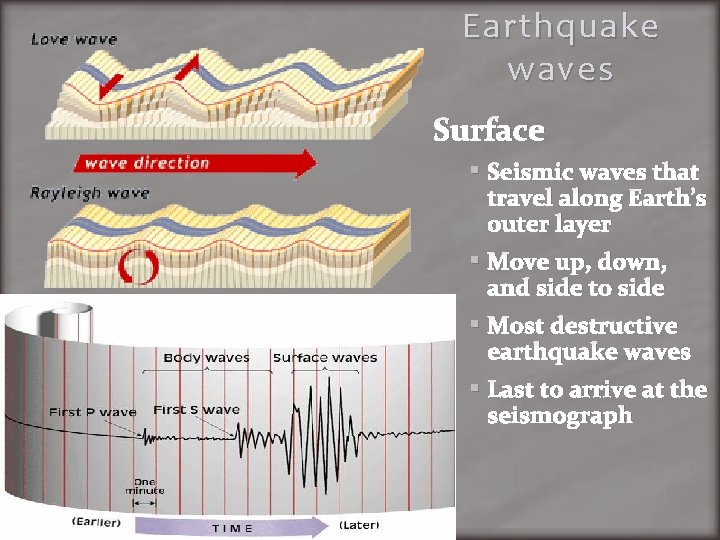
Earthquake waves Surface Seismic waves that travel along Earth’s outer layer Move up, down, and side to side Most destructive earthquake waves Last to arrive at the seismograph
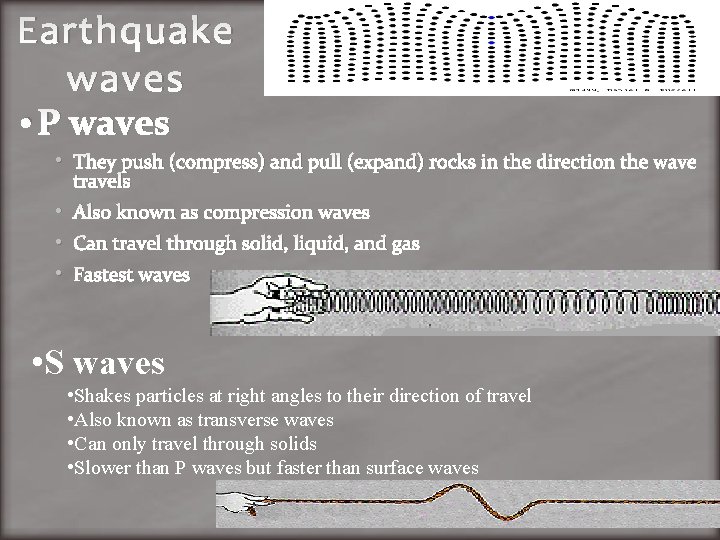
Earthquake waves • P waves • They push (compress) and pull (expand) rocks in the direction the wave travels • Also known as compression waves • Can travel through solid, liquid, and gas • Fastest waves • S waves • Shakes particles at right angles to their direction of travel • Also known as transverse waves • Can only travel through solids • Slower than P waves but faster than surface waves
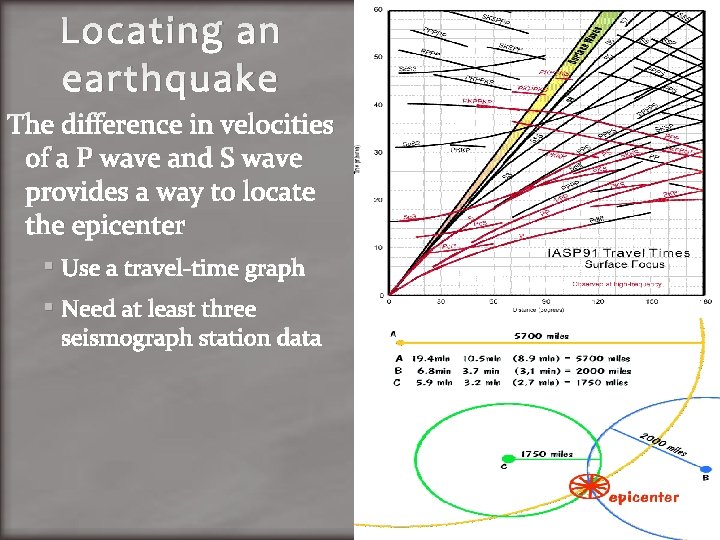
Locating an earthquake The difference in velocities of a P wave and S wave provides a way to locate the epicenter Use a travel-time graph Need at least three seismograph station data
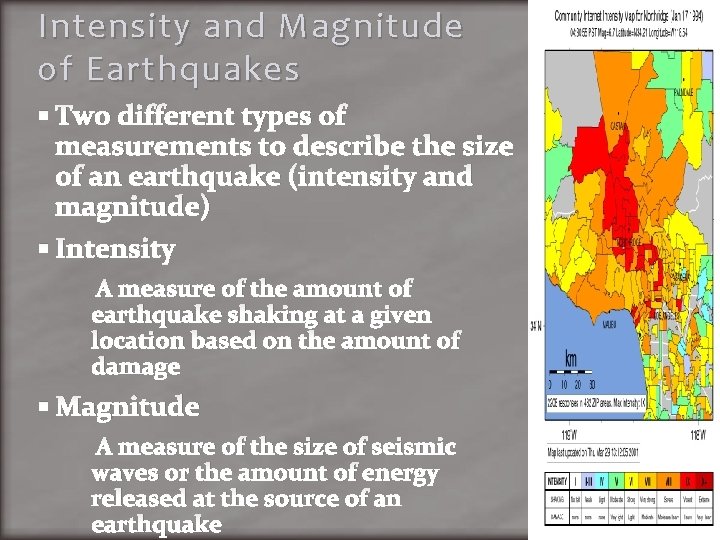
Intensity and Magnitude of Earthquakes Two different types of measurements to describe the size of an earthquake (intensity and magnitude) Intensity A measure of the amount of earthquake shaking at a given location based on the amount of damage Magnitude A measure of the size of seismic waves or the amount of energy released at the source of an earthquake
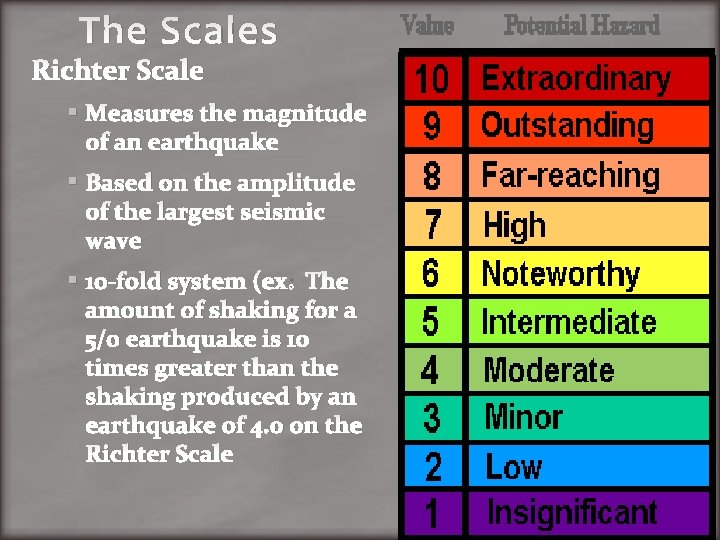
The Scales Richter Scale Measures the magnitude of an earthquake Based on the amplitude of the largest seismic wave 10 -fold system (ex: The amount of shaking for a 5/0 earthquake is 10 times greater than the shaking produced by an earthquake of 4. 0 on the Richter Scale
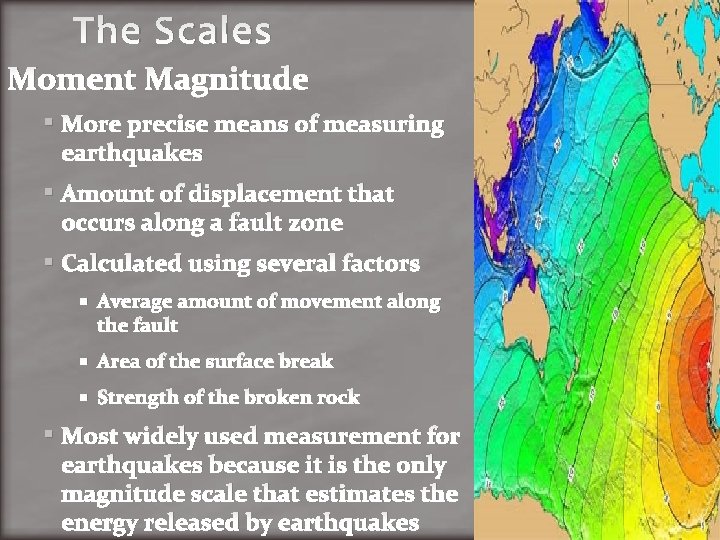
The Scales Moment Magnitude More precise means of measuring earthquakes Amount of displacement that occurs along a fault zone Calculated using several factors Average amount of movement along the fault Area of the surface break Strength of the broken rock Most widely used measurement for earthquakes because it is the only magnitude scale that estimates the energy released by earthquakes
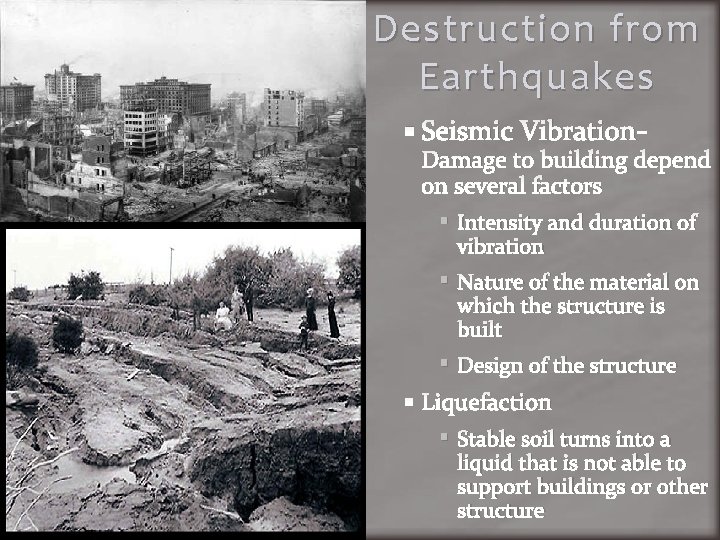
Destruction from Earthquakes Seismic Vibration- Damage to building depend on several factors Intensity and duration of vibration Nature of the material on which the structure is built Design of the structure Liquefaction Stable soil turns into a liquid that is not able to support buildings or other structure
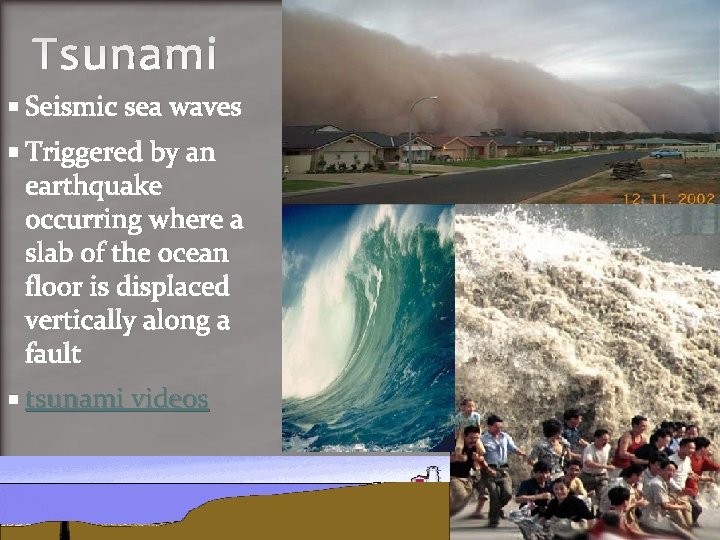
Tsunami Seismic sea waves Triggered by an earthquake occurring where a slab of the ocean floor is displaced vertically along a fault tsunami videos
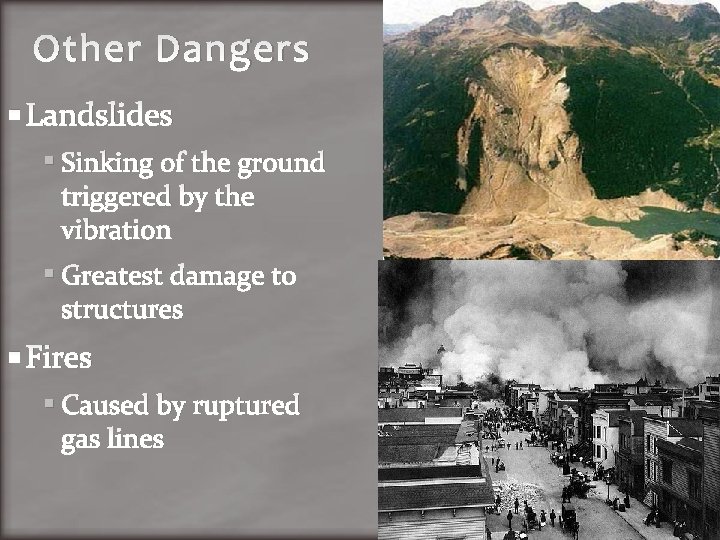
Other Dangers Landslides Sinking of the ground triggered by the vibration Greatest damage to structures Fires Caused by ruptured gas lines
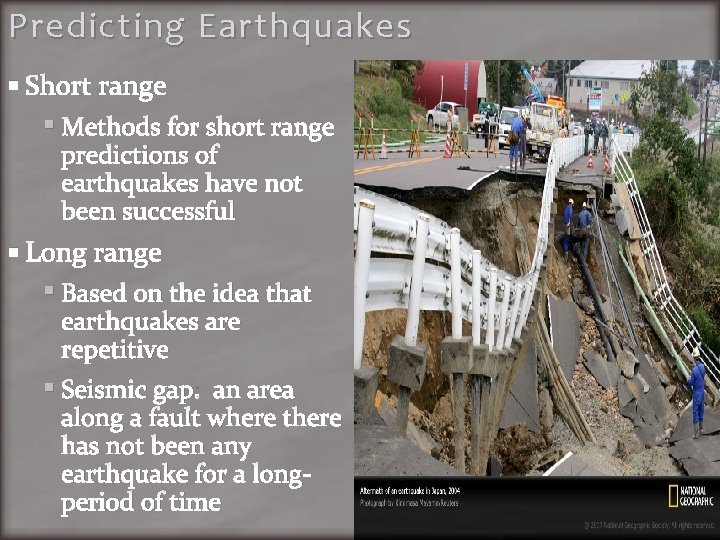
Predicting Earthquakes Short range Methods for short range predictions of earthquakes have not been successful Long range Based on the idea that earthquakes are repetitive Seismic gap: an area along a fault where there has not been any earthquake for a longperiod of time
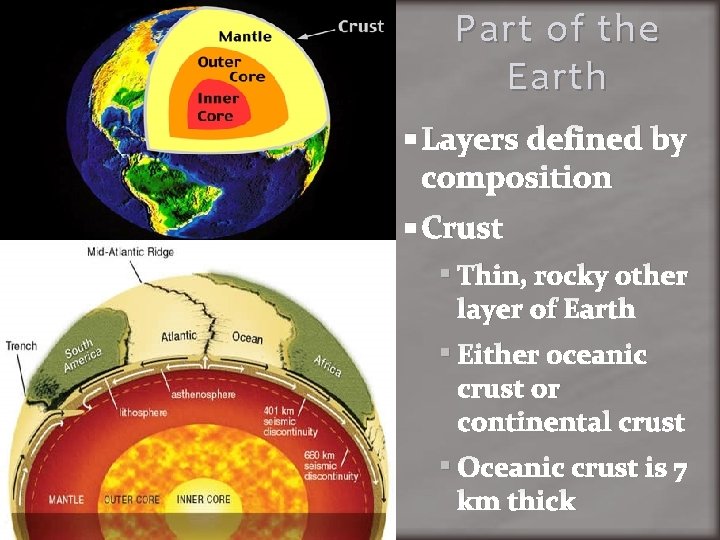
Part of the Earth Layers defined by composition Crust Thin, rocky other layer of Earth Either oceanic crust or continental crust Oceanic crust is 7 km thick
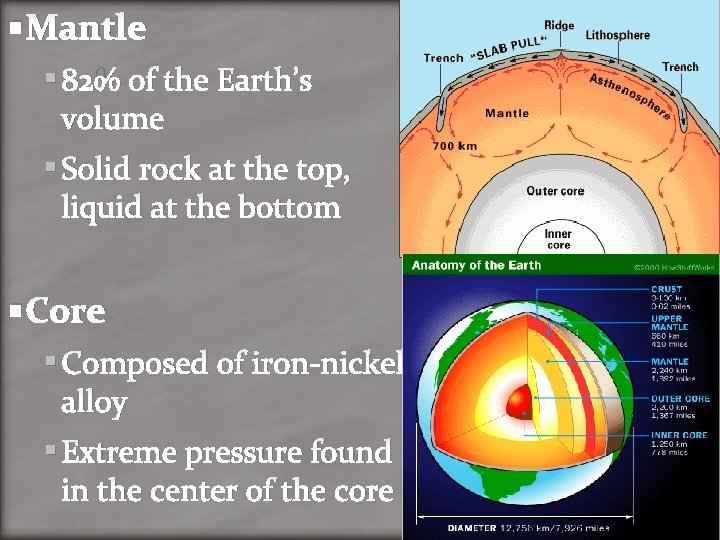
Mantle 82% of the Earth’s volume Solid rock at the top, liquid at the bottom Core Composed of iron-nickel alloy Extreme pressure found in the center of the core
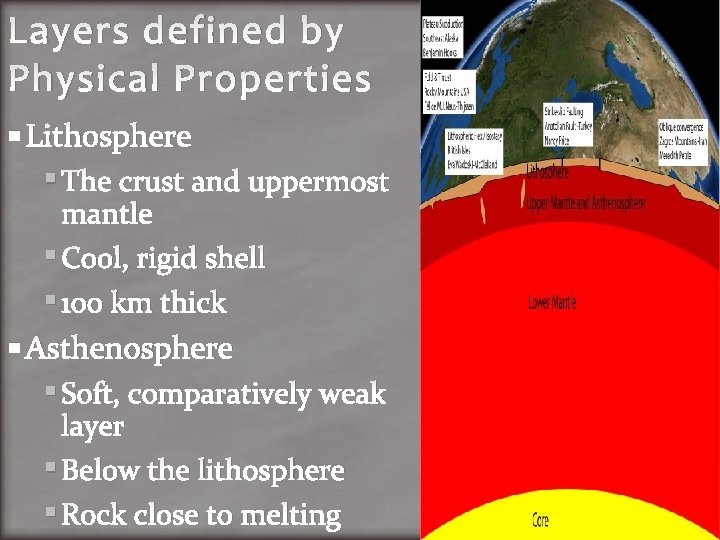
Layers defined by Physical Properties Lithosphere The crust and uppermost mantle Cool, rigid shell 100 km thick Asthenosphere Soft, comparatively weak layer Below the lithosphere Rock close to melting
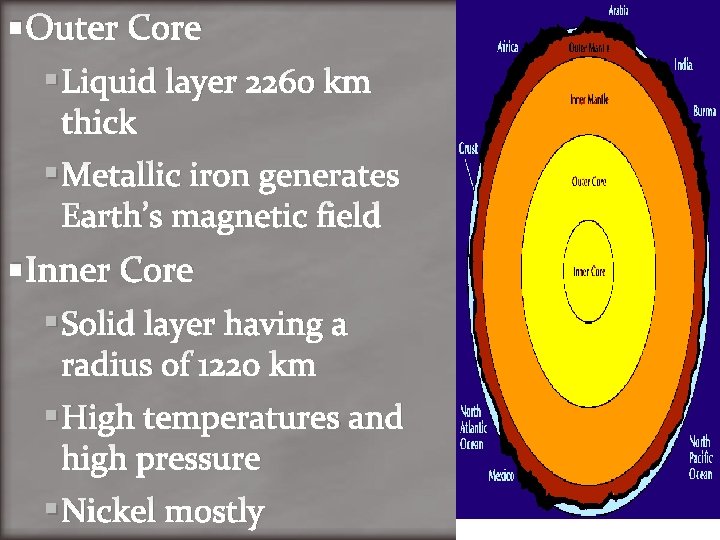
Outer Core Liquid layer 2260 km thick Metallic iron generates Earth’s magnetic field Inner Core Solid layer having a radius of 1220 km High temperatures and high pressure Nickel mostly
- Slides: 20