
Earthquakes What causes Earthquakes Earthquakes n What is
- Slides: 46
Earthquakes What causes Earthquakes?
Earthquakes n What is happening when an Earthquake occurs?
Earthquakes n What is happening when an Earthquake occurs? n The Earth’s crust moves suddenly.
Earthquakes n What is happening when an Earthquake occurs? n The Earth’s crust moves suddenly. n Built up tension between two plates is released very quickly and the plates move.
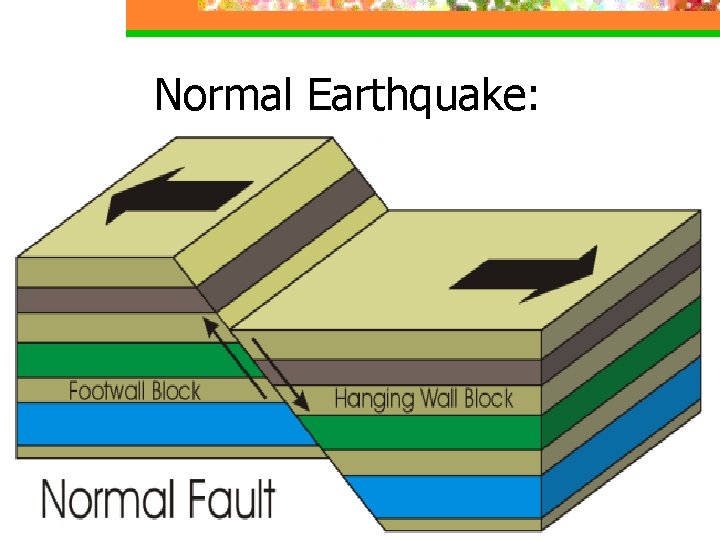
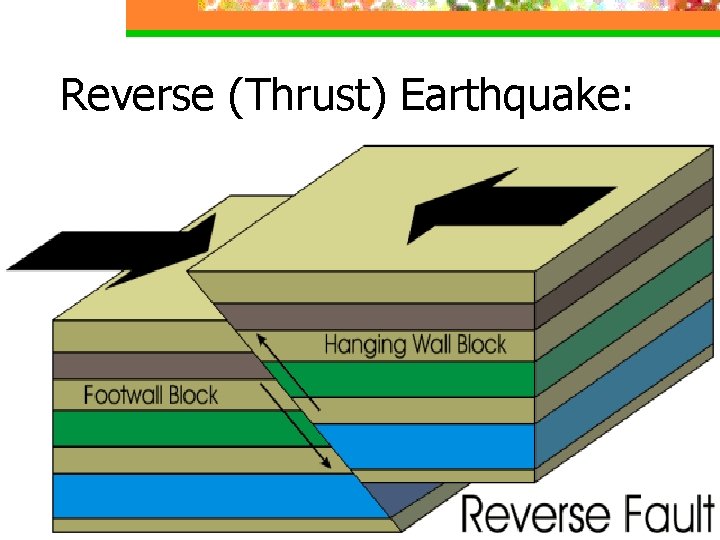
Earthquake key terms: n Foot wall: The plate that doesn’t move during an Earthquake.
Earthquake key terms: Foot wall: The plate that doesn’t move during an Earthquake. n Hanging wall: The plate that moves during an Earthquake. n
Earthquake key terms: Foot wall: The plate that doesn’t move during an Earthquake. n Hanging wall: The plate that moves during an Earthquake. n Fault plane: The plane along which the break between two plates occurs. n
Earthquake key terms: Foot wall: The plate that doesn’t move during an Earthquake. n Hanging wall: The plate that moves during an Earthquake. n Fault plane: The plane along which the break between two plates occurs. n Fault line: The line in the surface of the Earth caused by the fault plane. n
Earthquake key terms: n Focus: Exact point where the earthquake begins.
Earthquake key terms: Focus: Exact point where the earthquake begins. n Epicenter: place on the surface of the Earth directly above the focus. n
Earthquake key terms: Focus: Exact point where the earthquake begins. n Epicenter: place on the surface of the Earth directly above the focus. n P-Waves: 1 st set of waves which travel quickly through the interior of the Earth in a spiral motion. n
Earthquake key terms: n S-Waves: Secondary waves – move slowly through the Earth in an “S” shaped motion.
Earthquake key terms: S-Waves: Secondary waves – move slowly through the Earth in an “S” shaped motion. n Surface Waves: move in a circular pattern on the surface of the Earth. Causes damage to the surface of the Earth. n
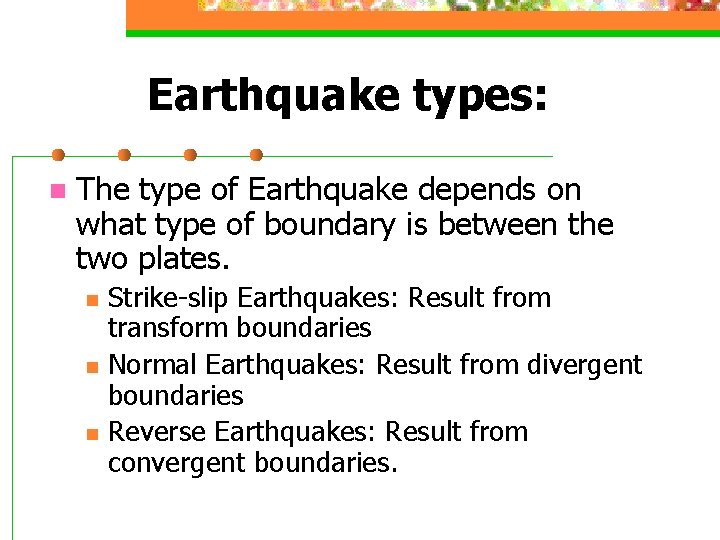
Earthquake types: n The type of Earthquake depends on what type of boundary is between the two plates.
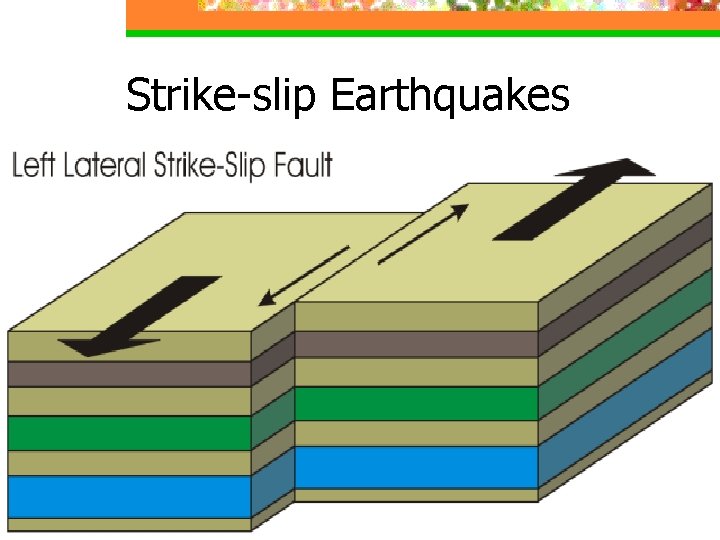
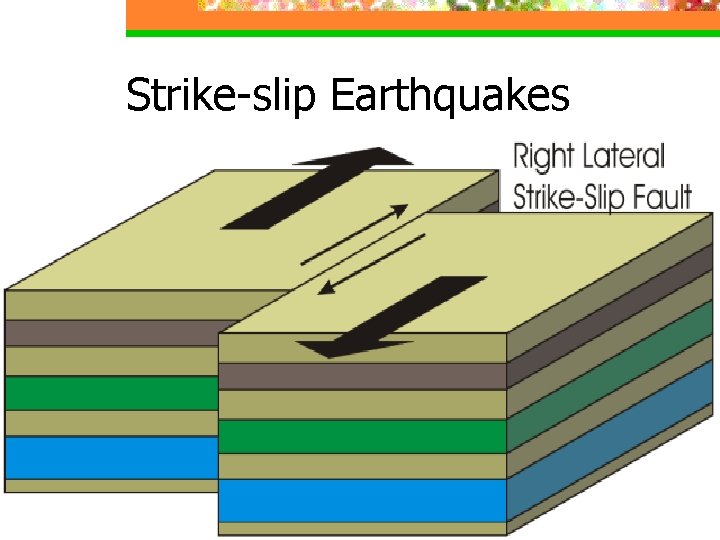
Earthquake types: n The type of Earthquake depends on what type of boundary is between the two plates. n Strike-slip Earthquakes: Result from transform boundaries
Earthquake types: n The type of Earthquake depends on what type of boundary is between the two plates. n n Strike-slip Earthquakes: Result from transform boundaries Normal Earthquakes: Result from divergent boundaries
Earthquake types: n The type of Earthquake depends on what type of boundary is between the two plates. n n n Strike-slip Earthquakes: Result from transform boundaries Normal Earthquakes: Result from divergent boundaries Reverse Earthquakes: Result from convergent boundaries.
Strike-slip Earthquakes
Strike-slip Earthquakes
Normal Earthquake:
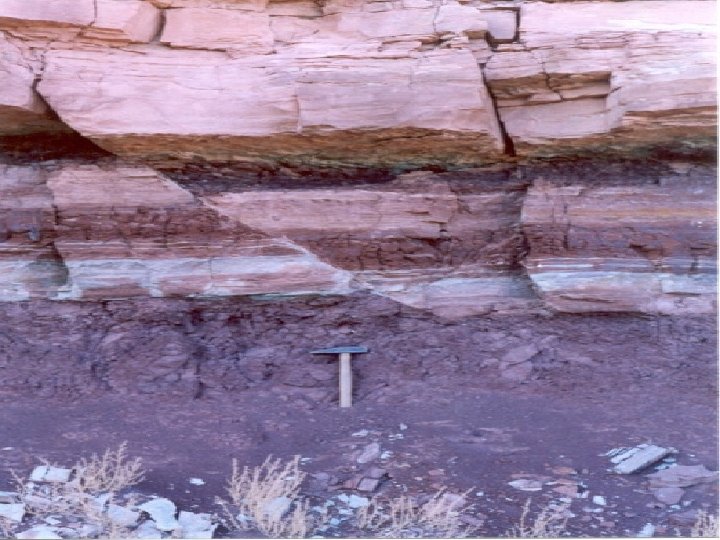
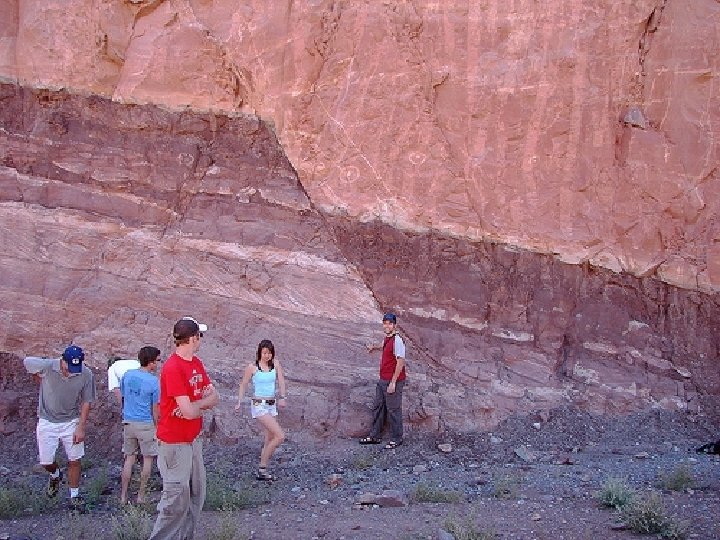
Reverse (Thrust) Earthquake:
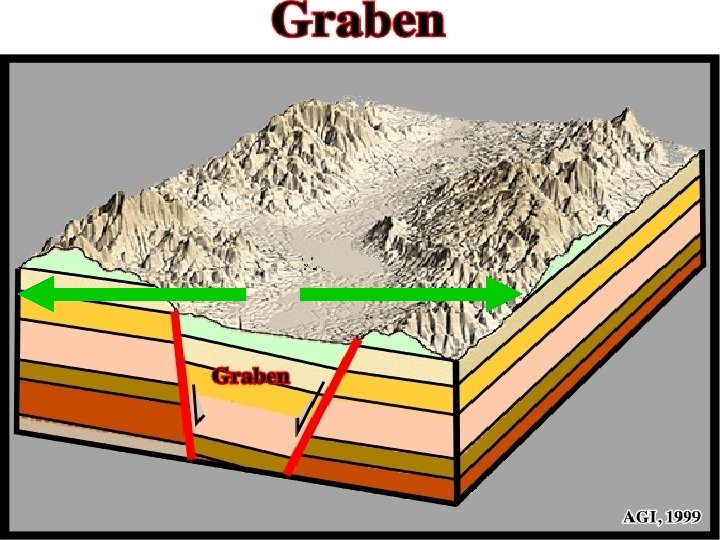
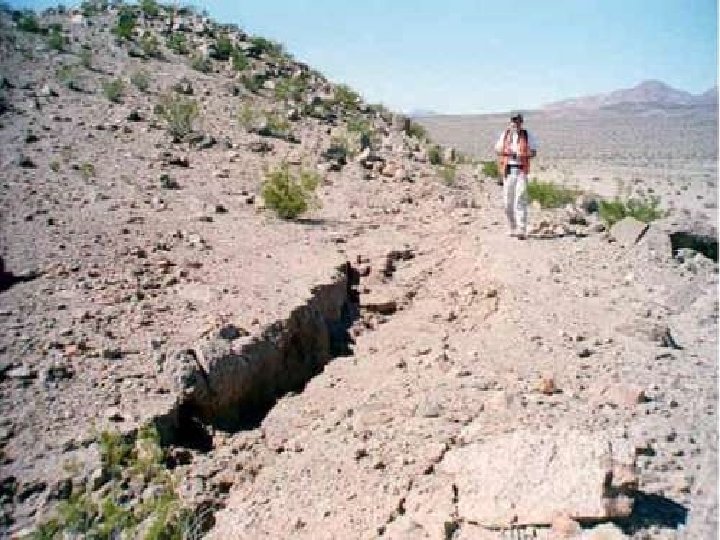
Graben:
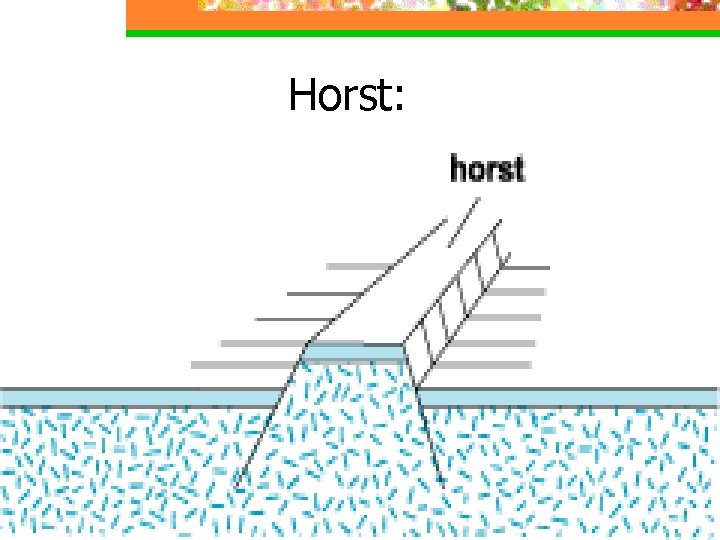
Horst:
Where do Earthquakes happen?
Where do Earthquakes happen? n Most of the time they happen where plates meet.
Where do Earthquakes happen? Most of the time they happen where plates meet. n They can happen in the middle of a plate as well. n
Where do Earthquakes happen? Most of the time they happen where plates meet. n They can happen in the middle of a plate as well. n n This is usually caused by the crust dropping like a sink hole.
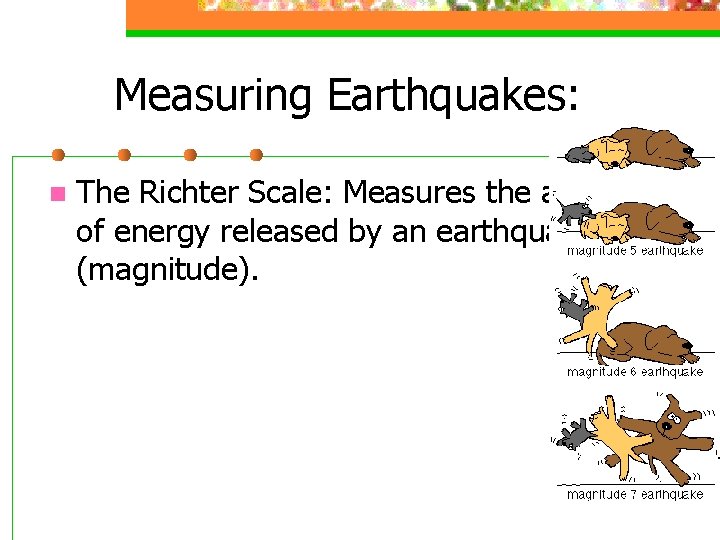
Measuring Earthquakes: n The Richter Scale: Measures the amount of energy released by an earthquake (magnitude).
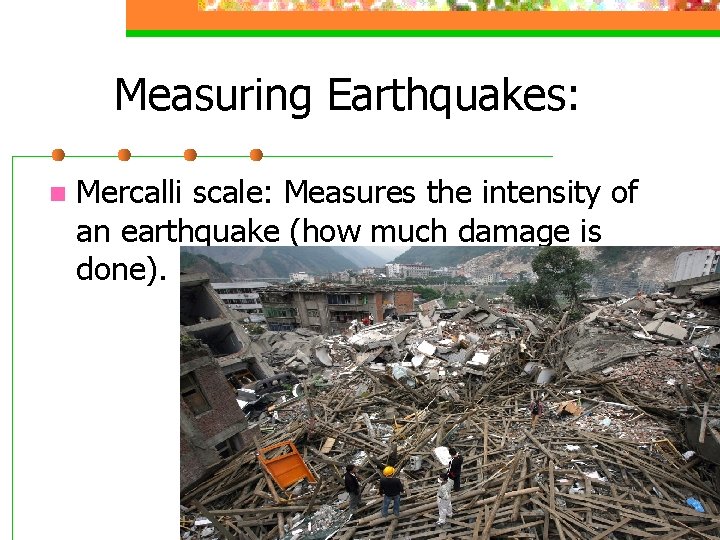
Measuring Earthquakes: n Mercalli scale: Measures the intensity of an earthquake (how much damage is done).