
Earthquakes Volcanoes Tectonic Plates Plates are constantly moving
- Slides: 30
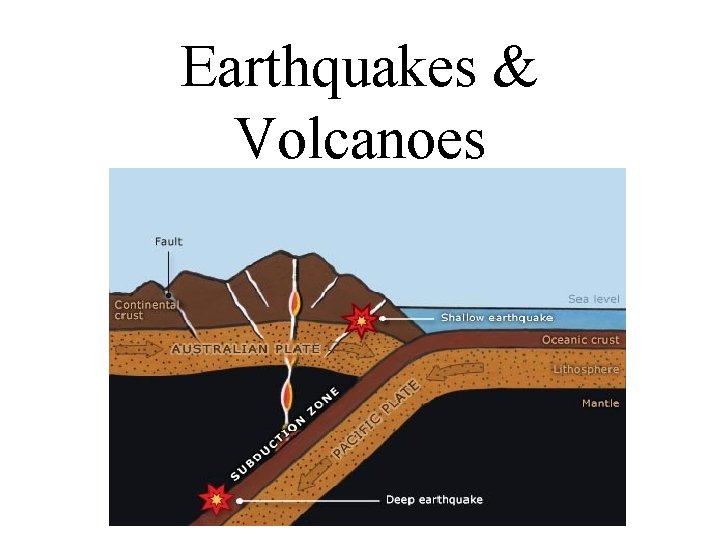
Earthquakes & Volcanoes
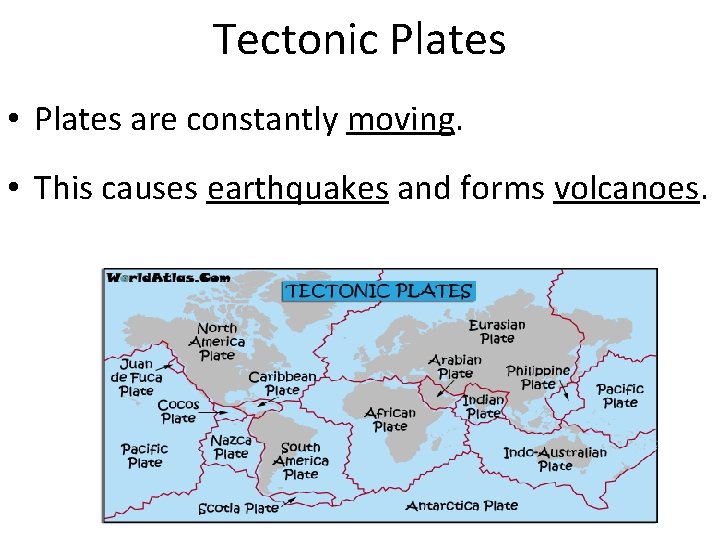
Tectonic Plates • Plates are constantly moving. • This causes earthquakes and forms volcanoes.
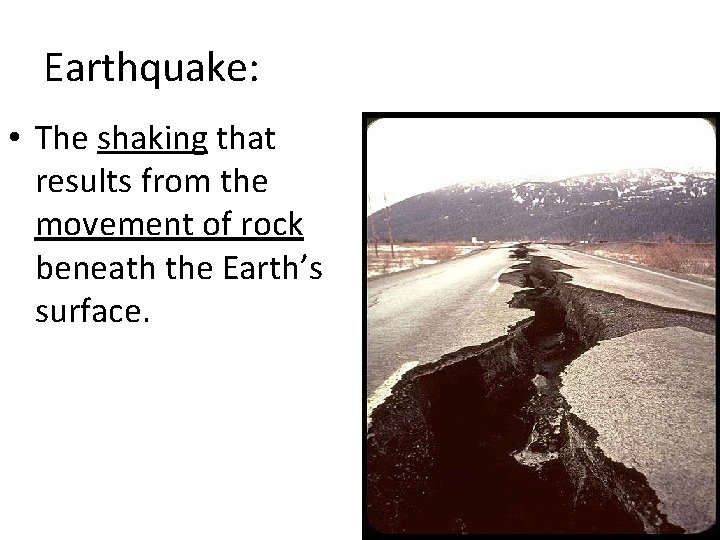
Earthquake: • The shaking that results from the movement of rock beneath the Earth’s surface.
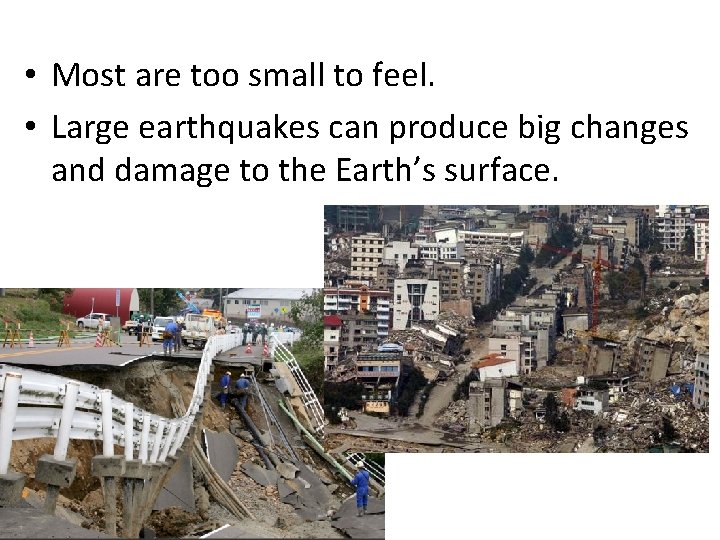
• Most are too small to feel. • Large earthquakes can produce big changes and damage to the Earth’s surface.
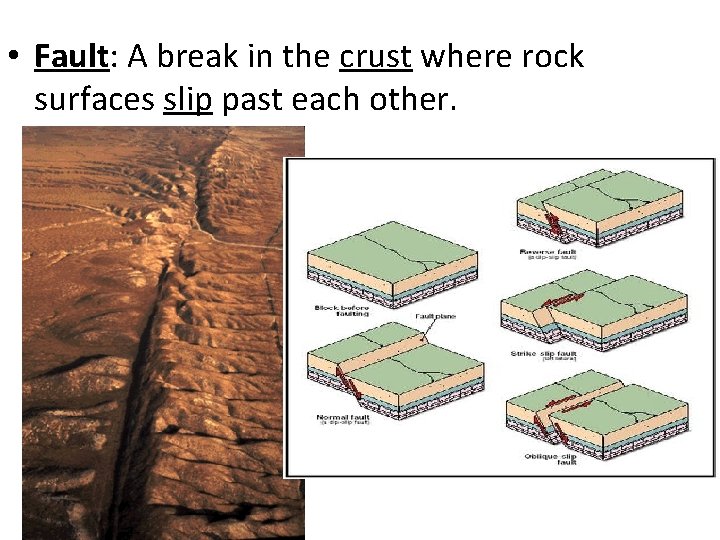
• Fault: A break in the crust where rock surfaces slip past each other.
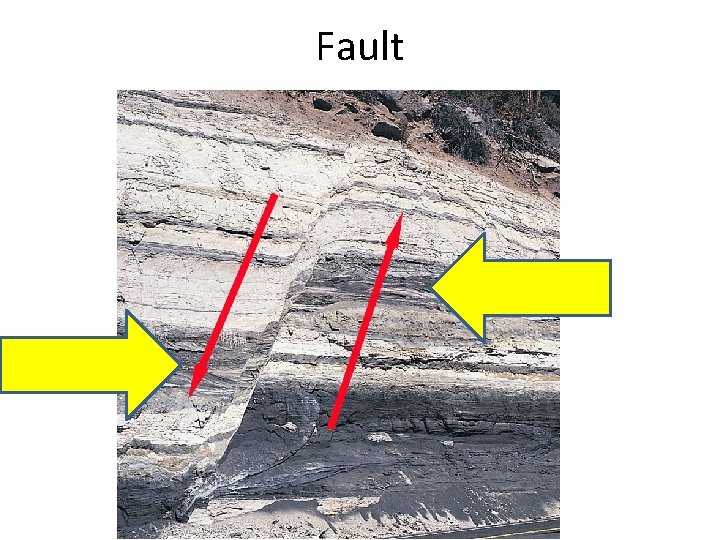
Fault
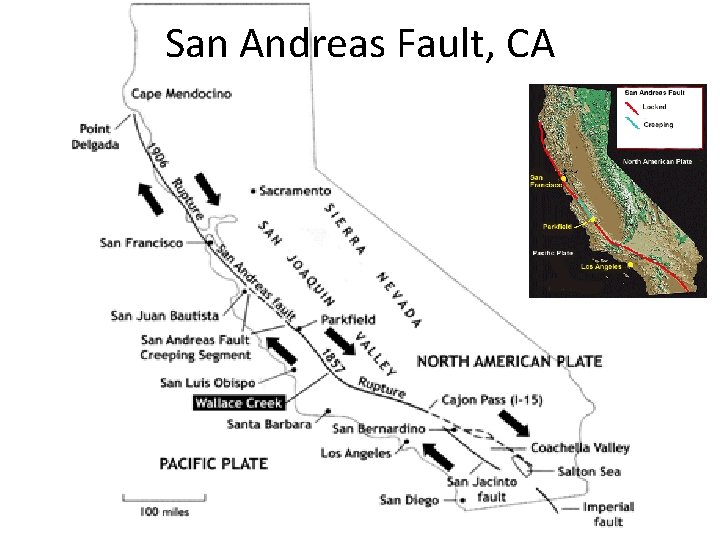
San Andreas Fault, CA
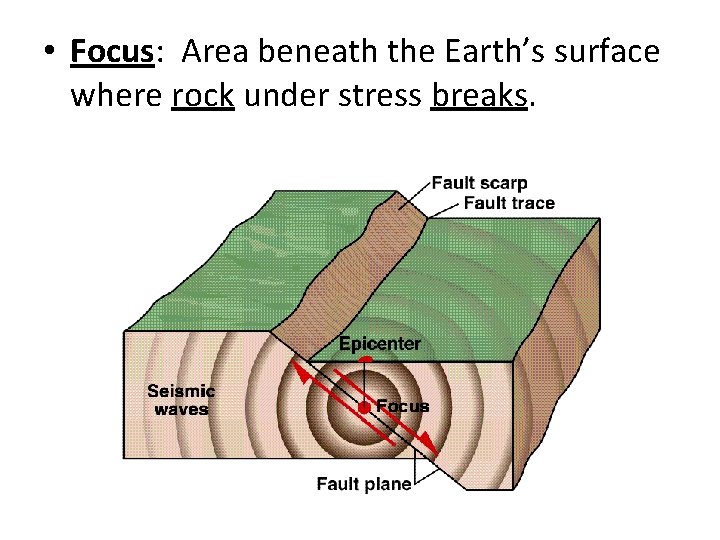
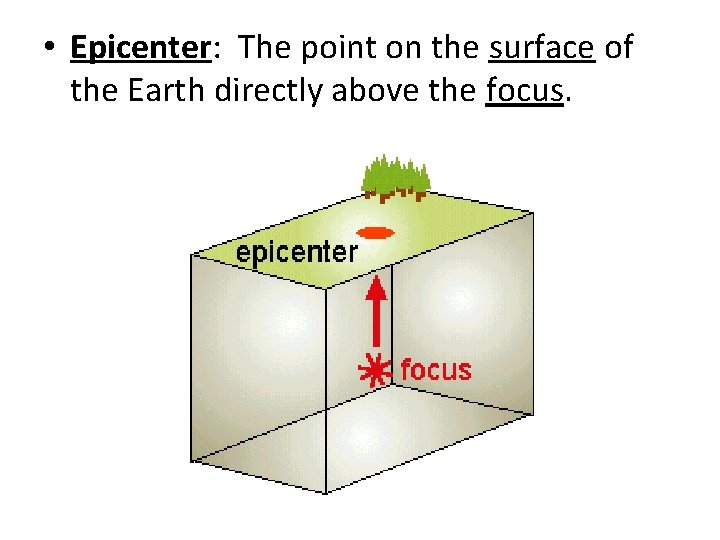
• Focus: Area beneath the Earth’s surface where rock under stress breaks.
• Epicenter: The point on the surface of the Earth directly above the focus.
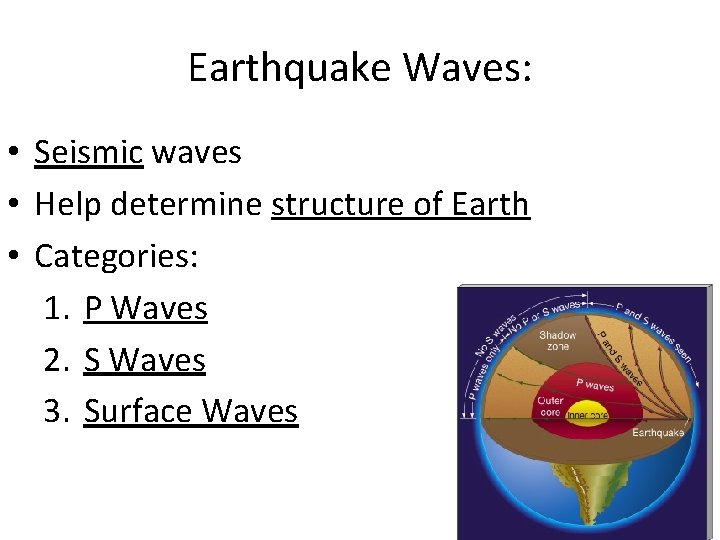
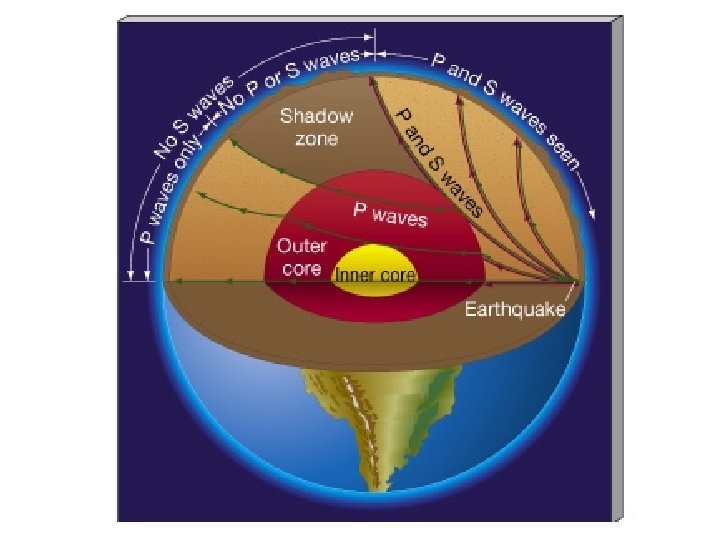
Earthquake Waves: • Seismic waves • Help determine structure of Earth • Categories: 1. P Waves 2. S Waves 3. Surface Waves
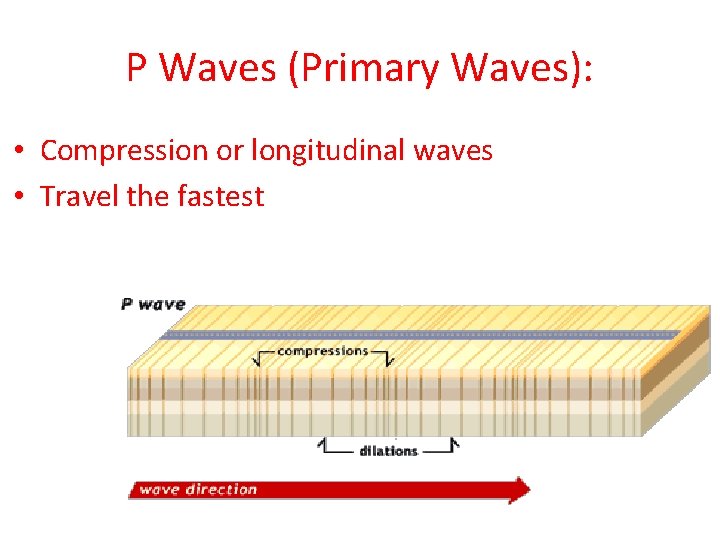
P Waves (Primary Waves): • Compression or longitudinal waves • Travel the fastest
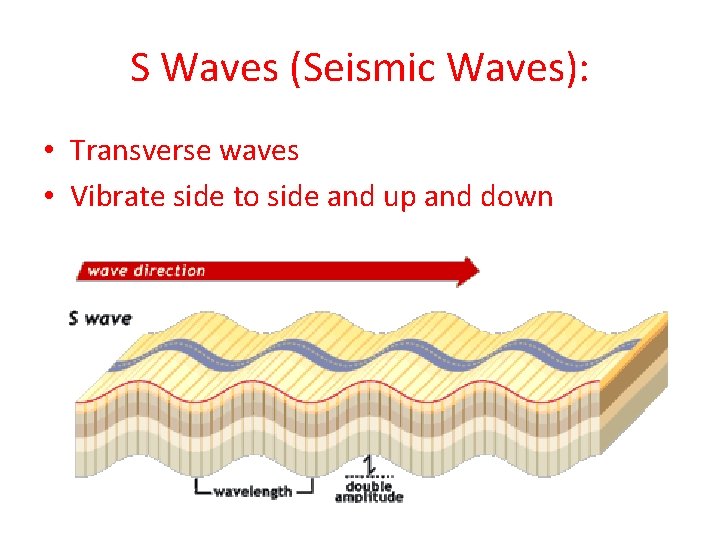
S Waves (Seismic Waves): • Transverse waves • Vibrate side to side and up and down
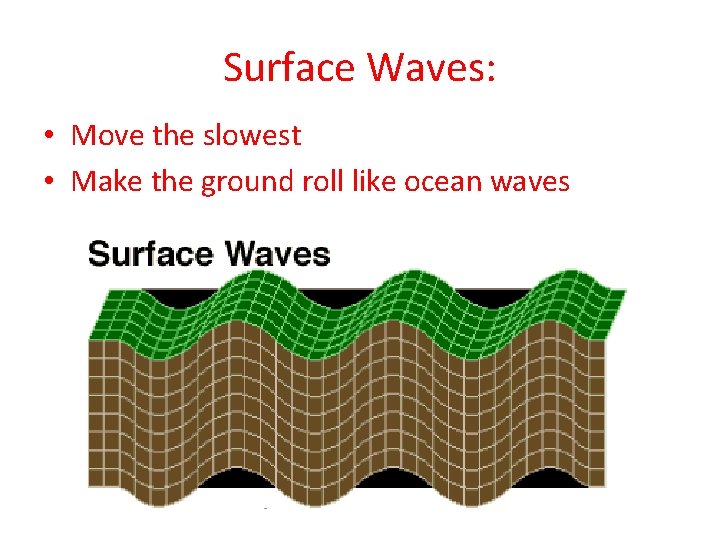
Surface Waves: • Move the slowest • Make the ground roll like ocean waves
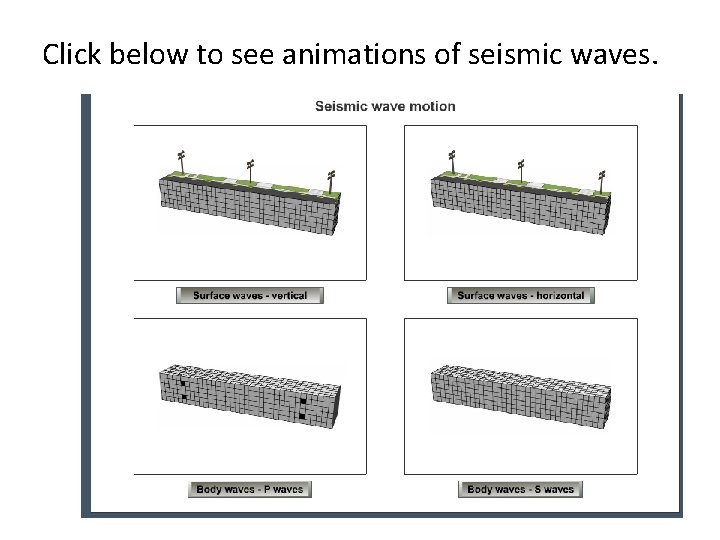
Click below to see animations of seismic waves.
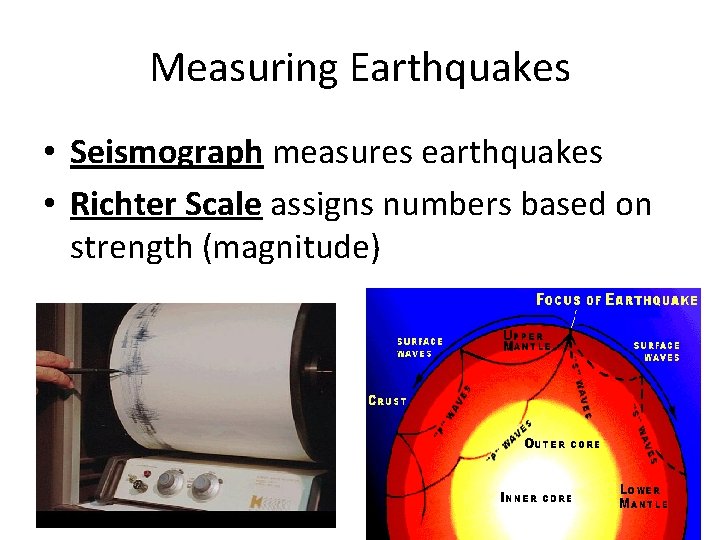
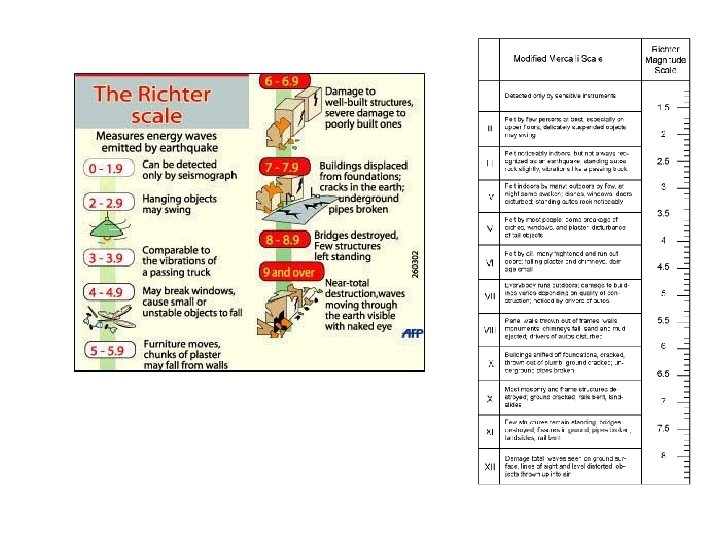
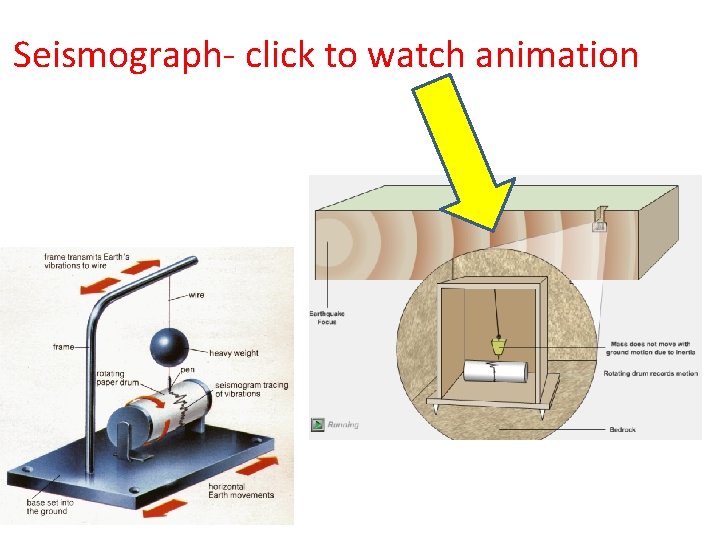
Measuring Earthquakes • Seismograph measures earthquakes • Richter Scale assigns numbers based on strength (magnitude)
Seismograph- click to watch animation
Oh…. that Moby Please do not skip the Brainpop videos!! Log-in: ballston Password: scotties
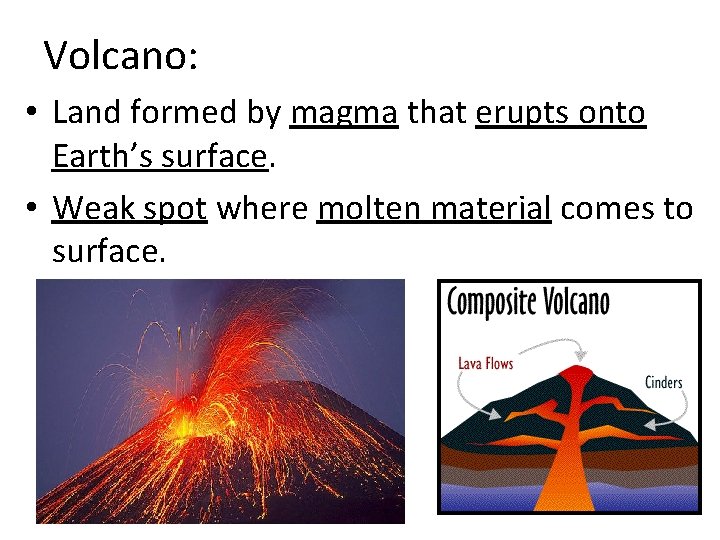
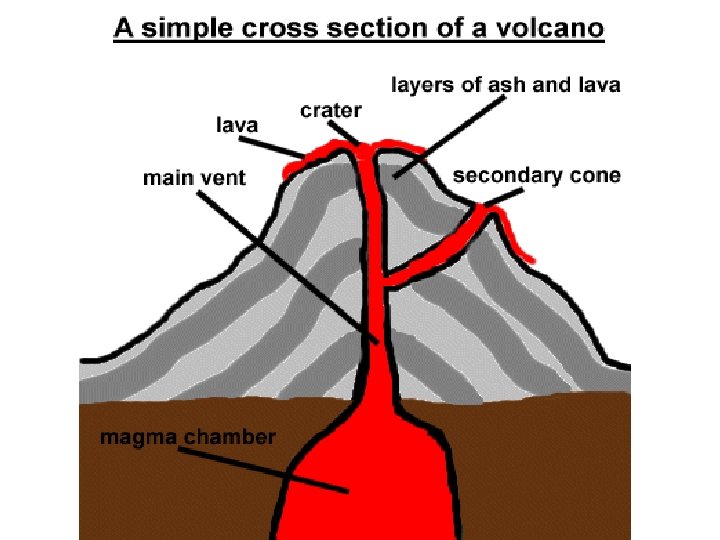
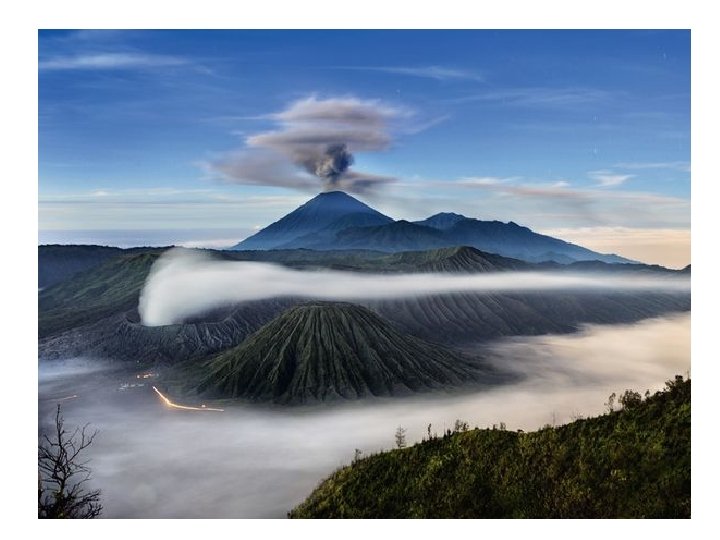
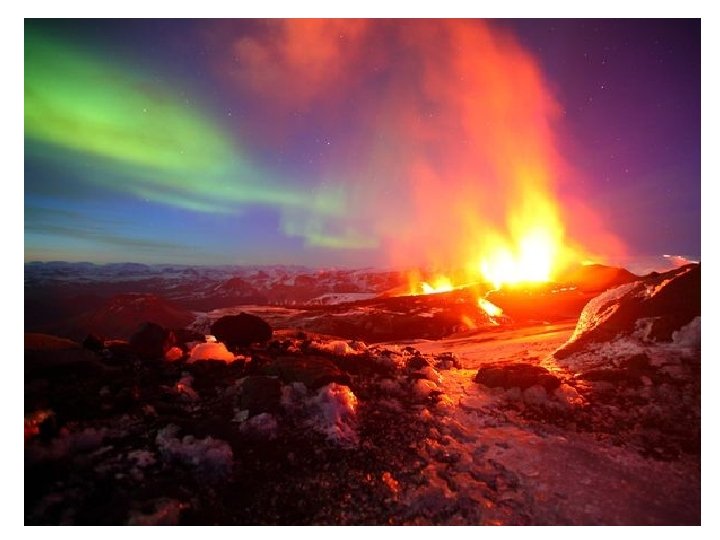
Volcano: • Land formed by magma that erupts onto Earth’s surface. • Weak spot where molten material comes to surface.
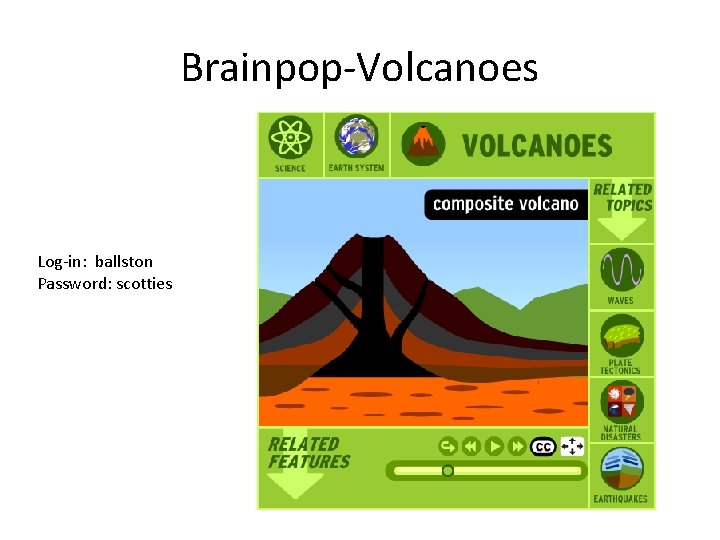
Brainpop-Volcanoes Log-in: ballston Password: scotties
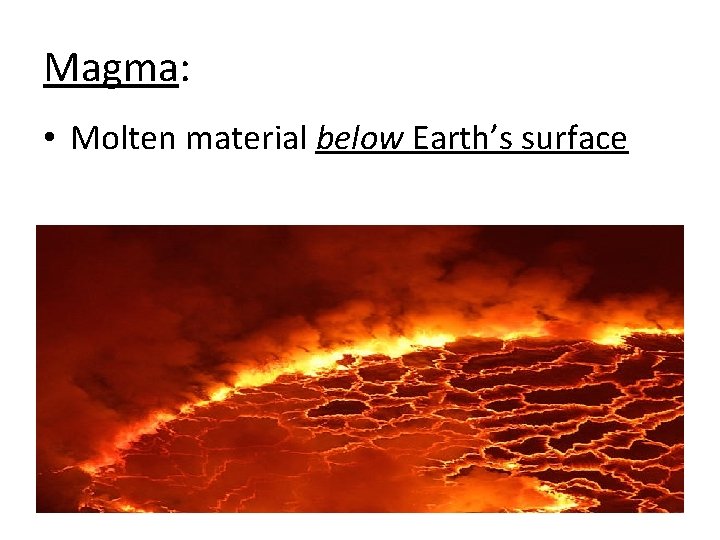
Magma: • Molten material below Earth’s surface
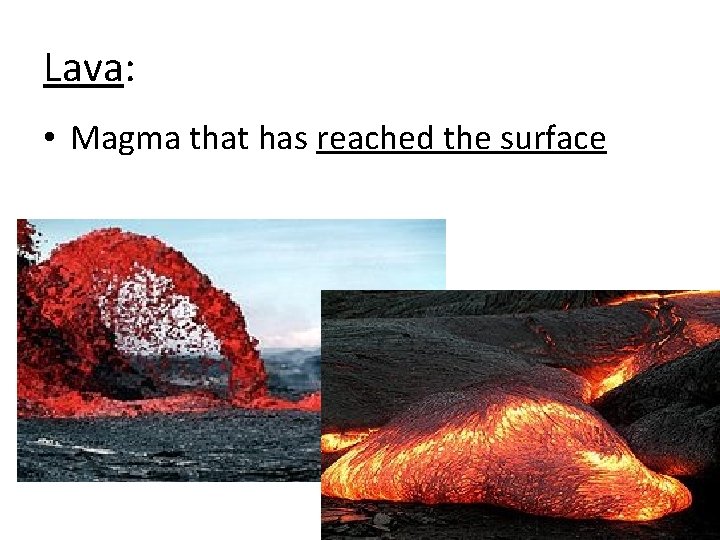
Lava: • Magma that has reached the surface
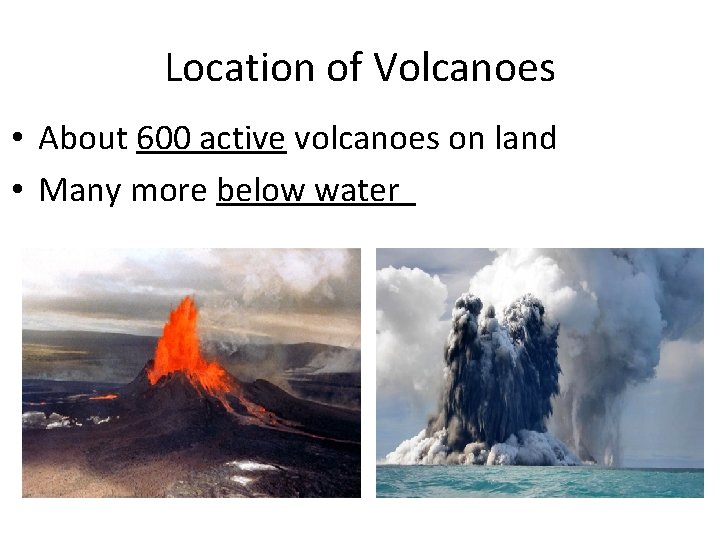
Location of Volcanoes • About 600 active volcanoes on land • Many more below water
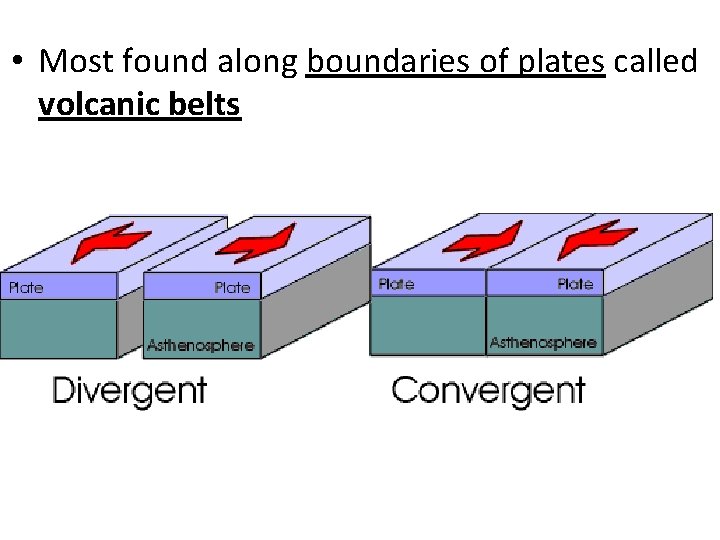
• Most found along boundaries of plates called volcanic belts
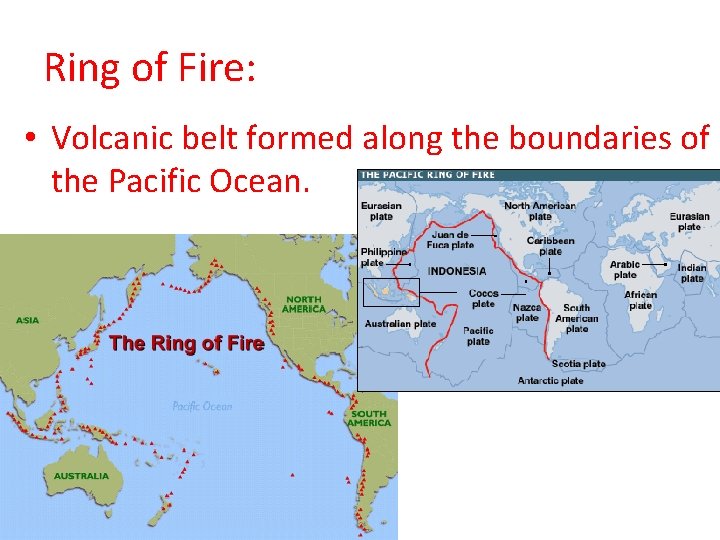
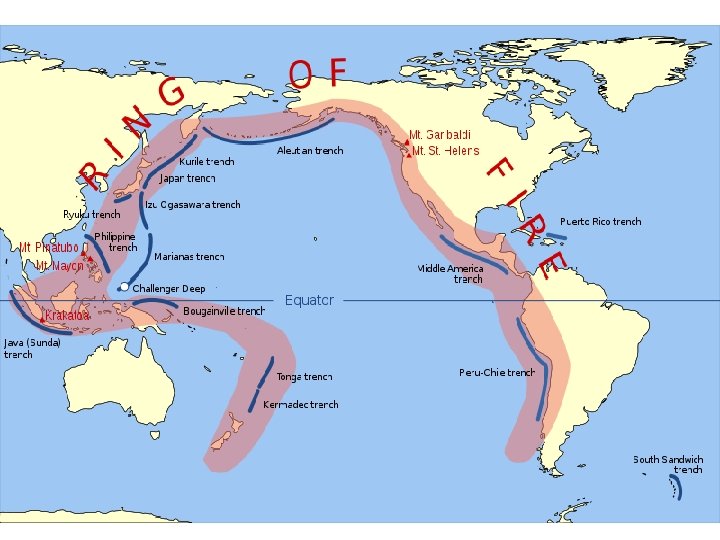
Ring of Fire: • Volcanic belt formed along the boundaries of the Pacific Ocean.