
EARTHQUAKES STURDIVANT EARTHQUAKE NATGEO WHAT IS AN EARTHQUAKE
- Slides: 19
EARTHQUAKES STURDIVANT
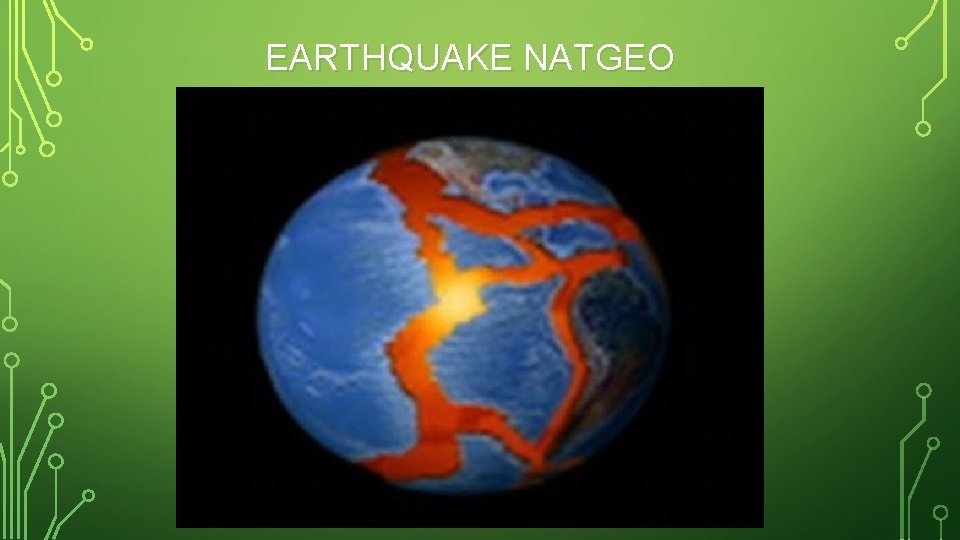
EARTHQUAKE NATGEO
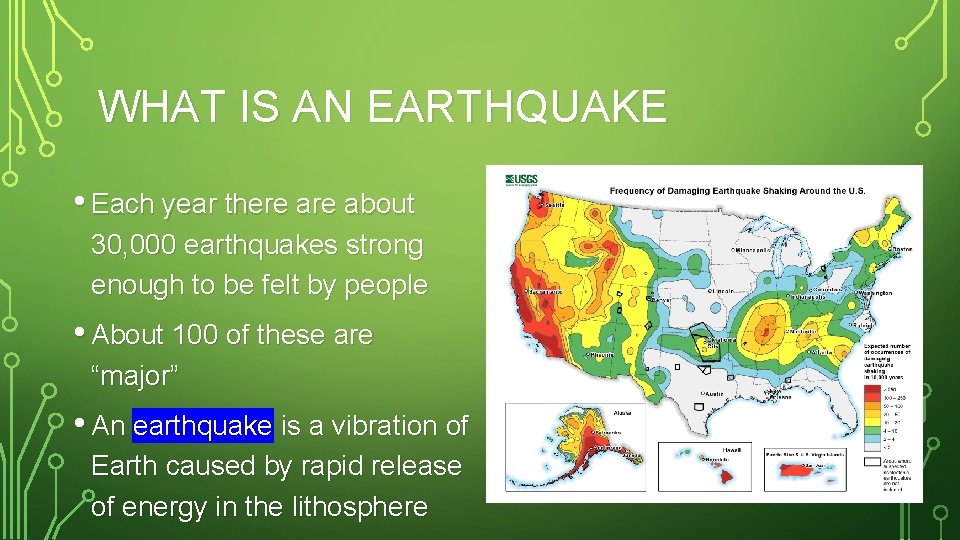
WHAT IS AN EARTHQUAKE • Each year there about 30, 000 earthquakes strong enough to be felt by people • About 100 of these are “major” • An earthquake is a vibration of Earth caused by rapid release of energy in the lithosphere
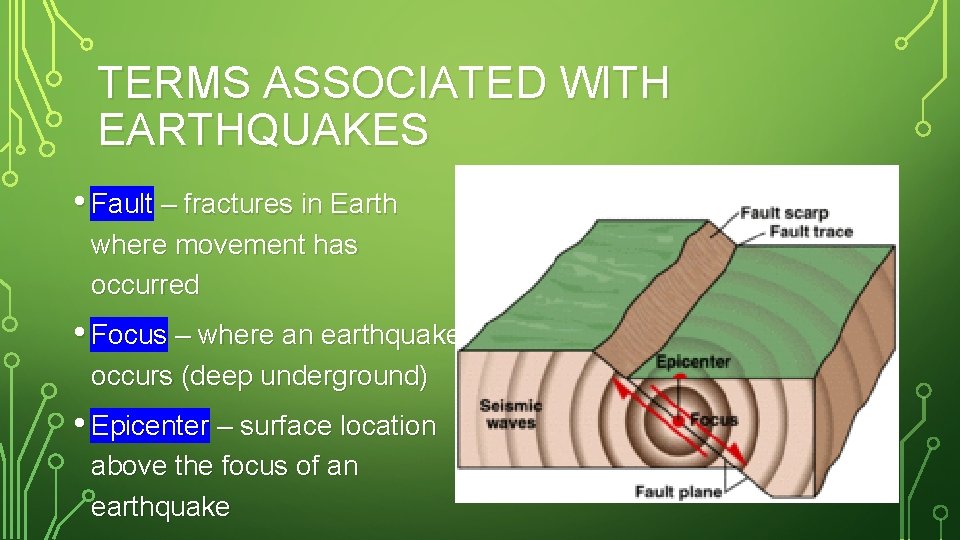
TERMS ASSOCIATED WITH EARTHQUAKES • Fault – fractures in Earth where movement has occurred • Focus – where an earthquake occurs (deep underground) • Epicenter – surface location above the focus of an earthquake
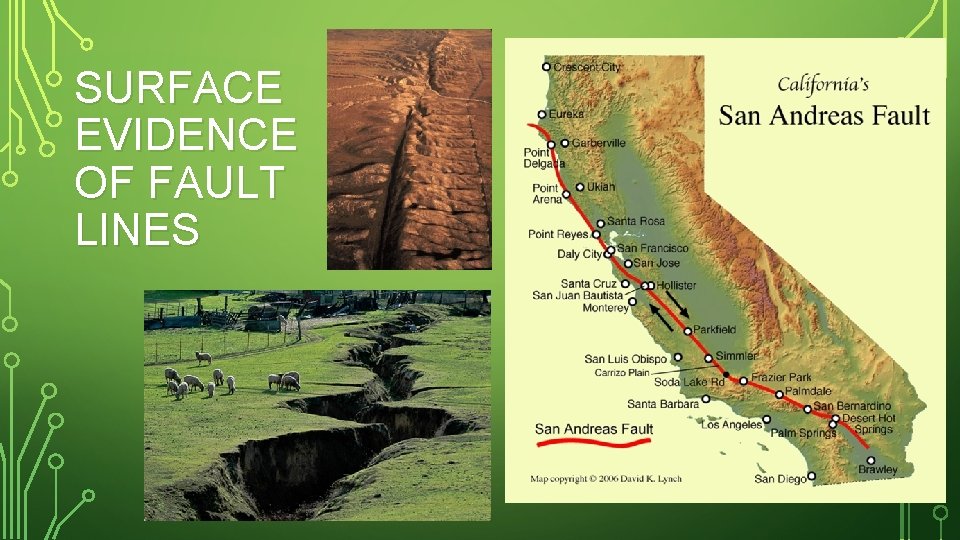
SURFACE EVIDENCE OF FAULT LINES
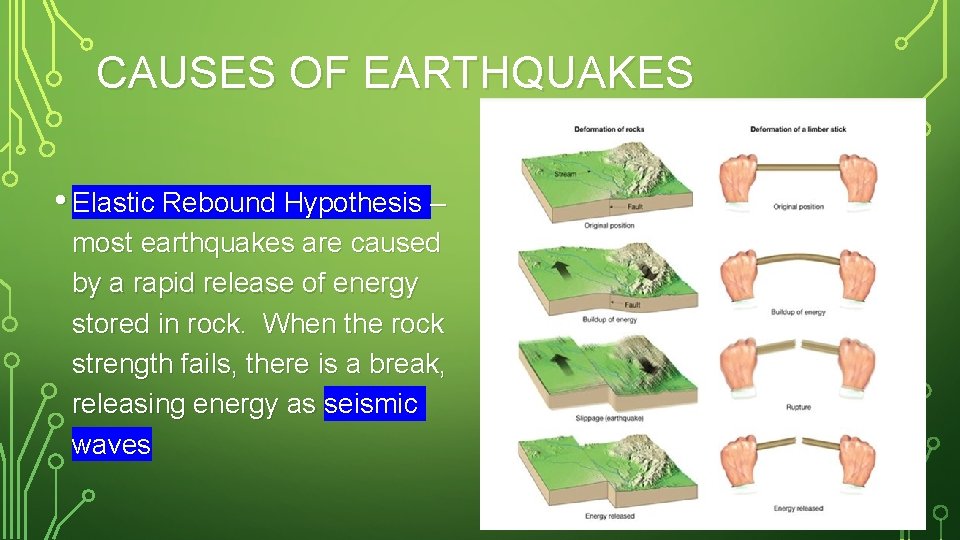
CAUSES OF EARTHQUAKES • Elastic Rebound Hypothesis – most earthquakes are caused by a rapid release of energy stored in rock. When the rock strength fails, there is a break, releasing energy as seismic waves
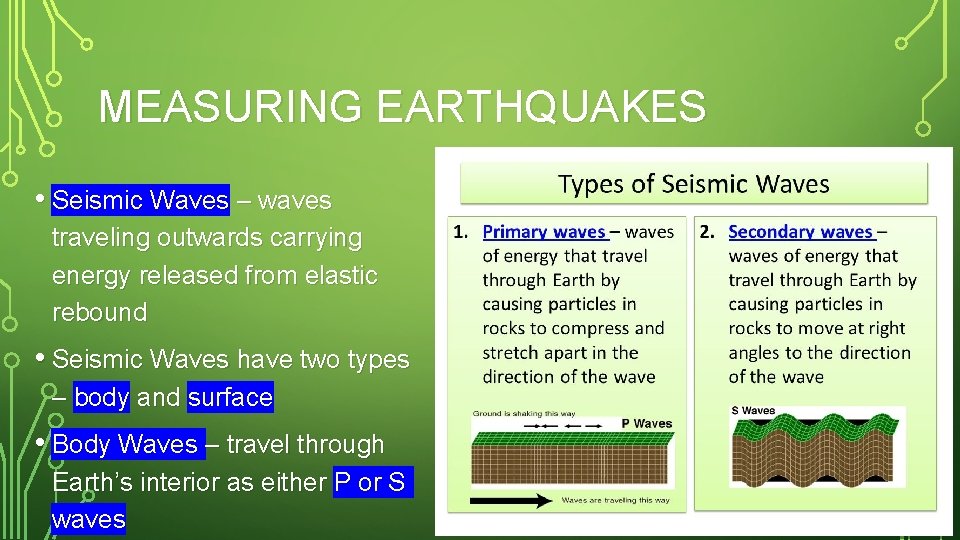
MEASURING EARTHQUAKES • Seismic Waves – waves traveling outwards carrying energy released from elastic rebound • Seismic Waves have two types – body and surface • Body Waves – travel through Earth’s interior as either P or S waves
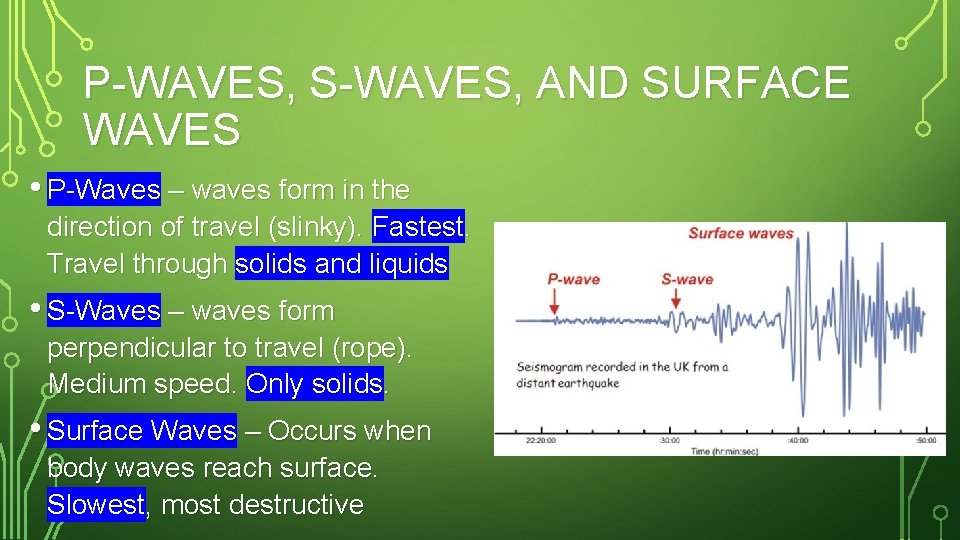
P-WAVES, S-WAVES, AND SURFACE WAVES • P-Waves – waves form in the direction of travel (slinky). Fastest. Travel through solids and liquids • S-Waves – waves form perpendicular to travel (rope). Medium speed. Only solids. • Surface Waves – Occurs when body waves reach surface. Slowest, most destructive
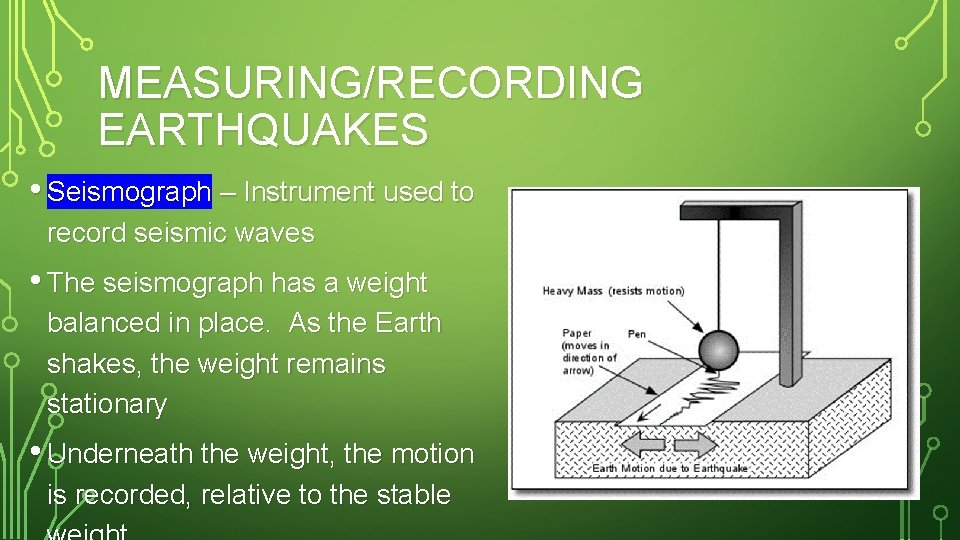
MEASURING/RECORDING EARTHQUAKES • Seismograph – Instrument used to record seismic waves • The seismograph has a weight balanced in place. As the Earth shakes, the weight remains stationary • Underneath the weight, the motion is recorded, relative to the stable
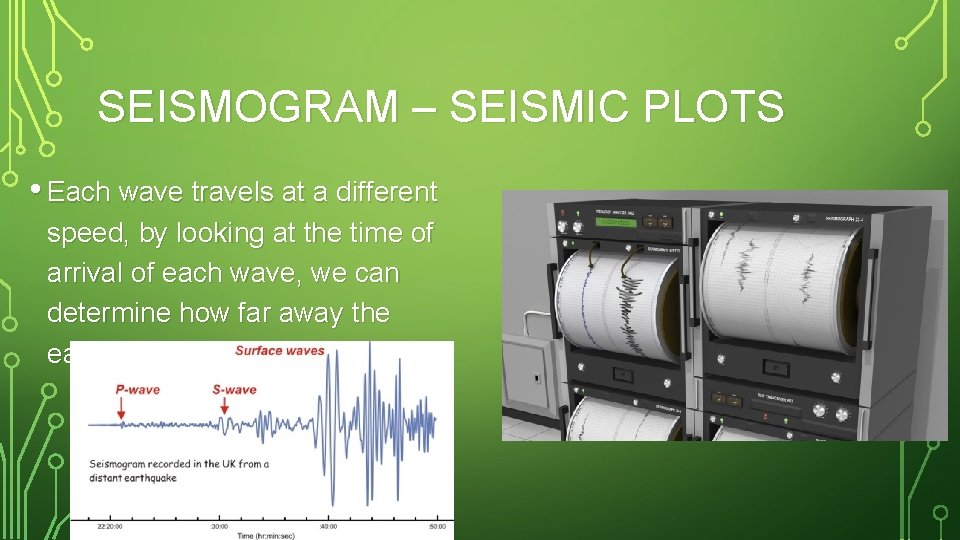
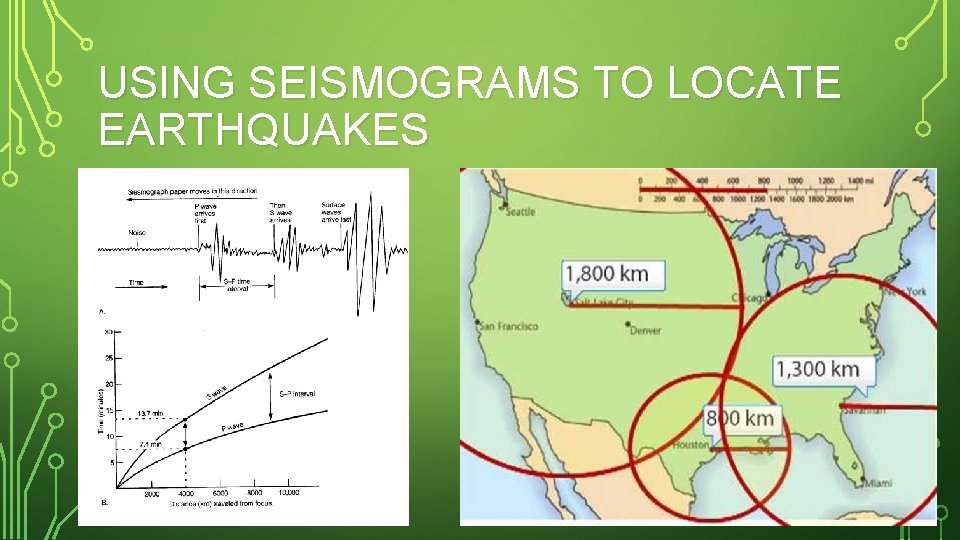
SEISMOGRAM – SEISMIC PLOTS • Each wave travels at a different speed, by looking at the time of arrival of each wave, we can determine how far away the earthquake occurred
USING SEISMOGRAMS TO LOCATE EARTHQUAKES
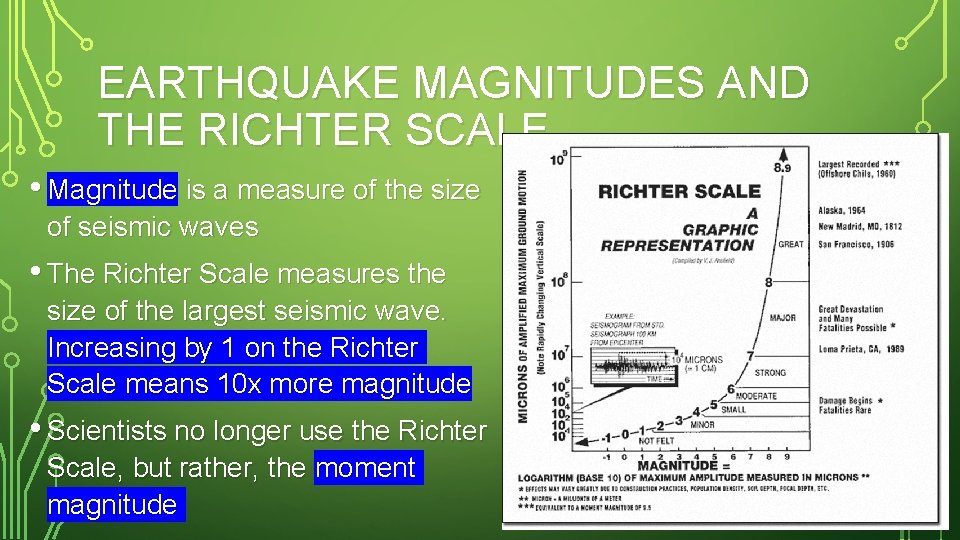
EARTHQUAKE MAGNITUDES AND THE RICHTER SCALE • Magnitude is a measure of the size of seismic waves • The Richter Scale measures the size of the largest seismic wave. Increasing by 1 on the Richter Scale means 10 x more magnitude • Scientists no longer use the Richter Scale, but rather, the moment magnitude
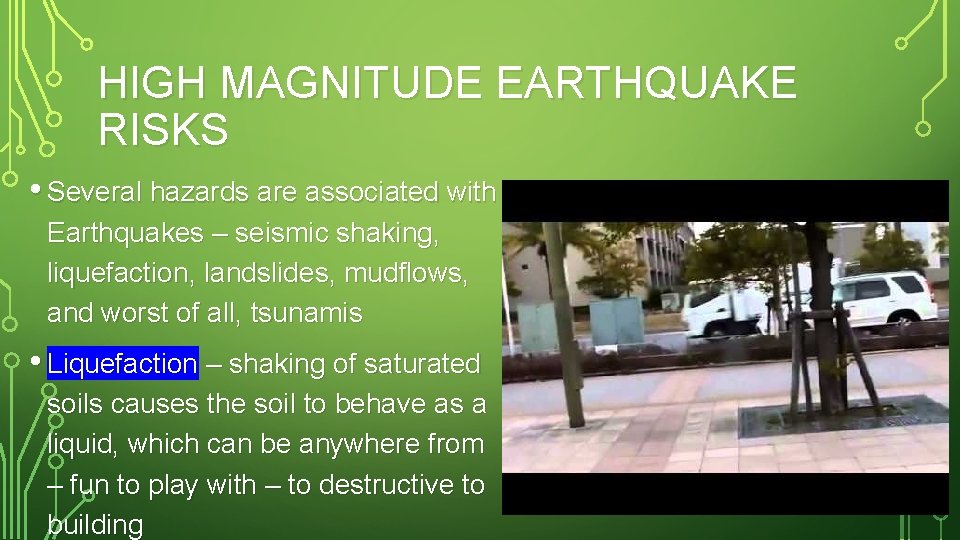
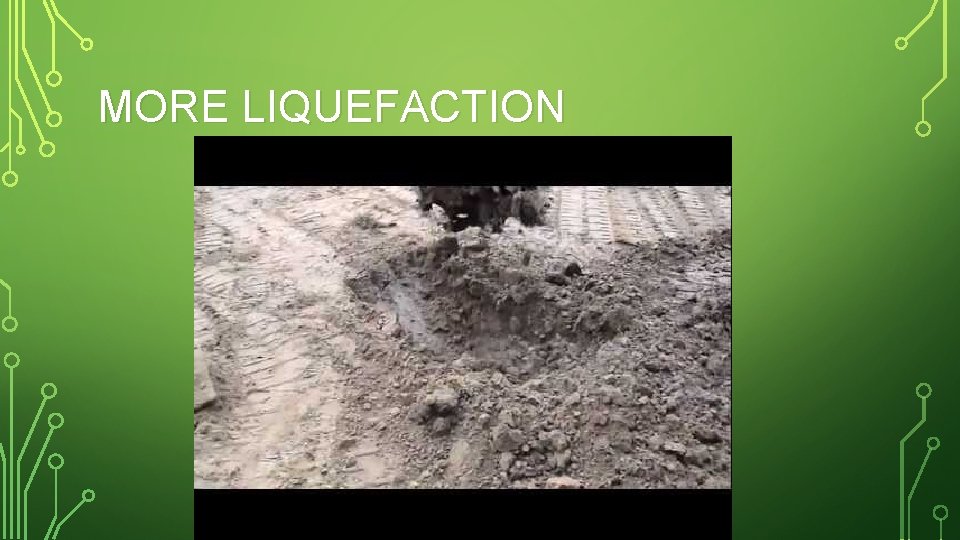
HIGH MAGNITUDE EARTHQUAKE RISKS • Several hazards are associated with Earthquakes – seismic shaking, liquefaction, landslides, mudflows, and worst of all, tsunamis • Liquefaction – shaking of saturated soils causes the soil to behave as a liquid, which can be anywhere from – fun to play with – to destructive to building
MORE LIQUEFACTION
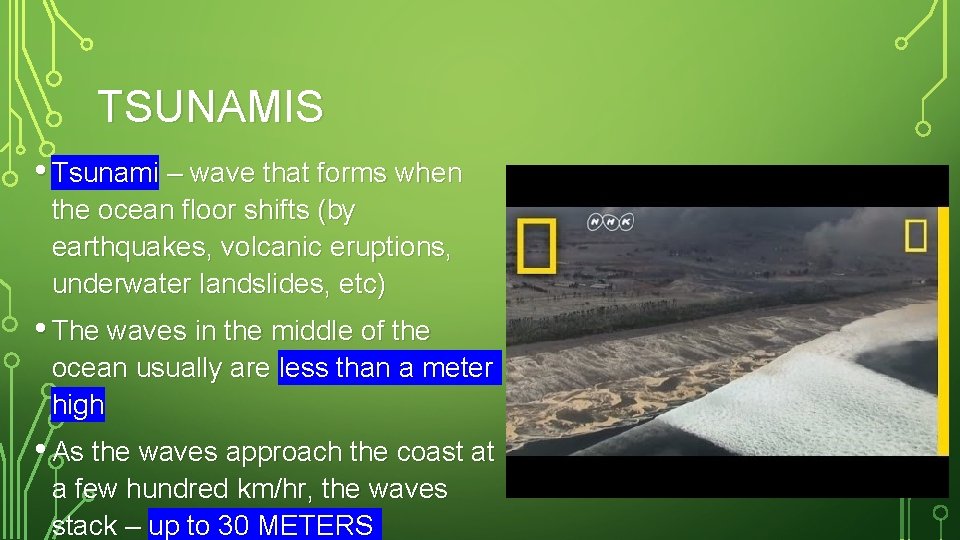
TSUNAMIS • Tsunami – wave that forms when the ocean floor shifts (by earthquakes, volcanic eruptions, underwater landslides, etc) • The waves in the middle of the ocean usually are less than a meter high • As the waves approach the coast at a few hundred km/hr, the waves stack – up to 30 METERS
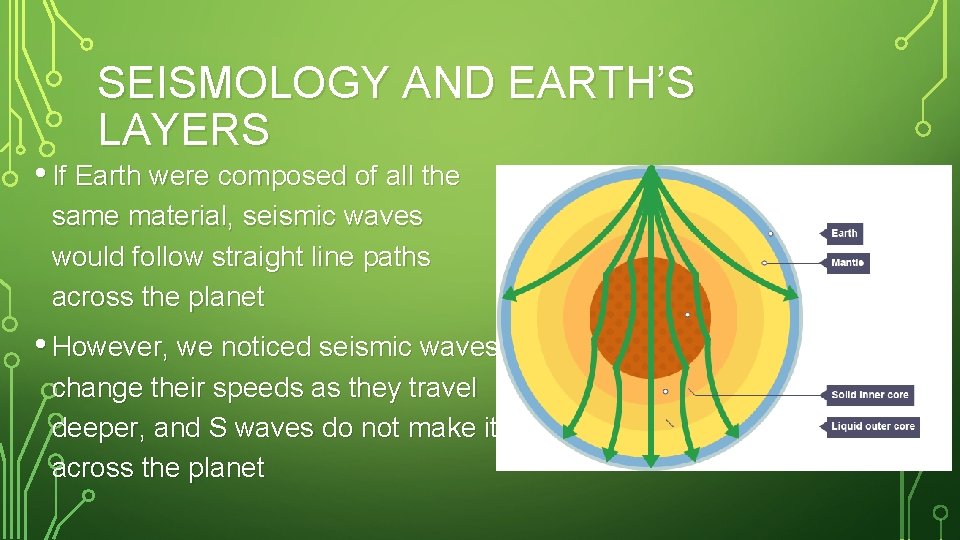
SEISMOLOGY AND EARTH’S LAYERS • If Earth were composed of all the same material, seismic waves would follow straight line paths across the planet • However, we noticed seismic waves change their speeds as they travel deeper, and S waves do not make it across the planet
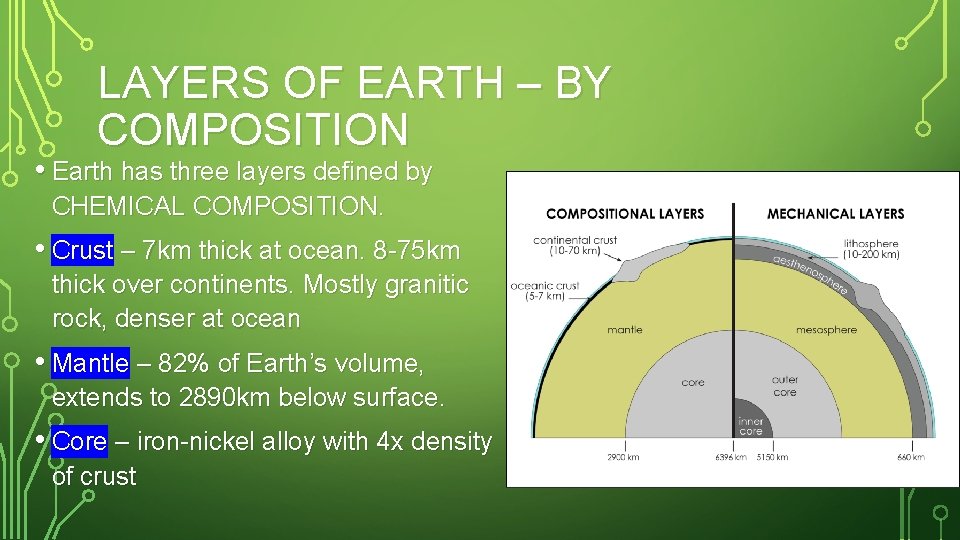
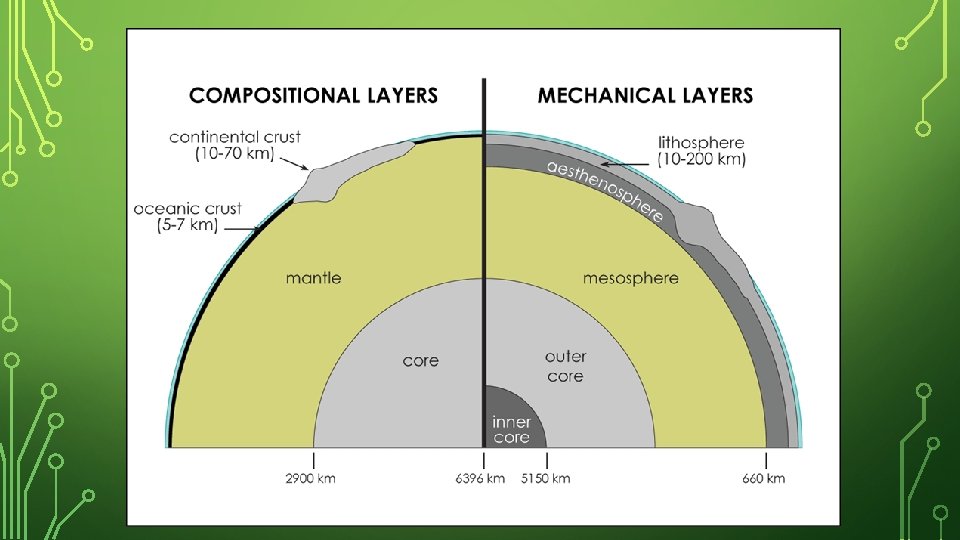
LAYERS OF EARTH – BY COMPOSITION • Earth has three layers defined by CHEMICAL COMPOSITION. • Crust – 7 km thick at ocean. 8 -75 km thick over continents. Mostly granitic rock, denser at ocean • Mantle – 82% of Earth’s volume, extends to 2890 km below surface. • Core – iron-nickel alloy with 4 x density of crust
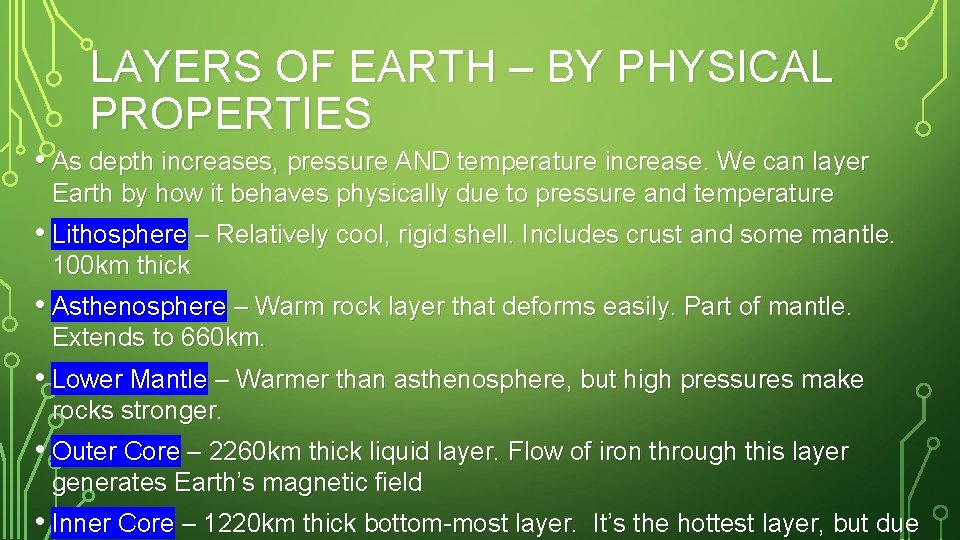
LAYERS OF EARTH – BY PHYSICAL PROPERTIES • As depth increases, pressure AND temperature increase. We can layer Earth by how it behaves physically due to pressure and temperature • Lithosphere – Relatively cool, rigid shell. Includes crust and some mantle. 100 km thick • Asthenosphere – Warm rock layer that deforms easily. Part of mantle. Extends to 660 km. • Lower Mantle – Warmer than asthenosphere, but high pressures make rocks stronger. • Outer Core – 2260 km thick liquid layer. Flow of iron through this layer generates Earth’s magnetic field • Inner Core – 1220 km thick bottom-most layer. It’s the hottest layer, but due