
Earthquakes On Shaky Ground Earthquakes The shaking of






- Slides: 39
Earthquakes On Shaky Ground
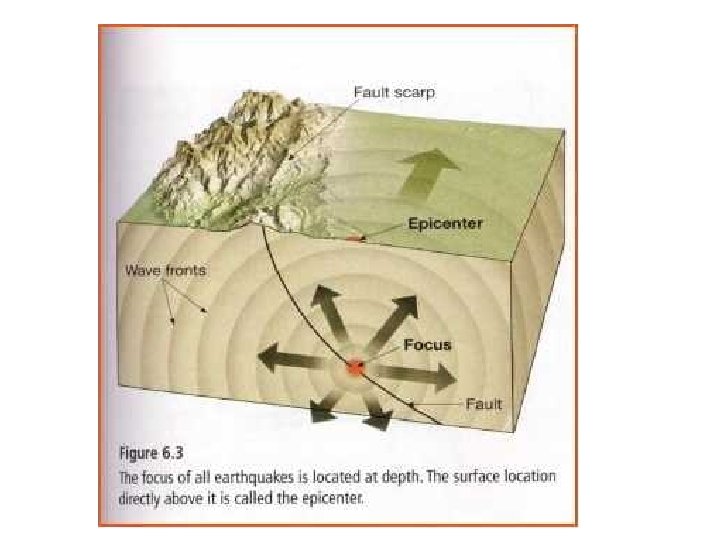
Earthquakes • The shaking of the Earth’s surface • Caused by faulting beneath the surface – Faults are when the rock splits and slips along that split causing vibration • The vibration causes shock waves called seismic waves which move outward from the fault
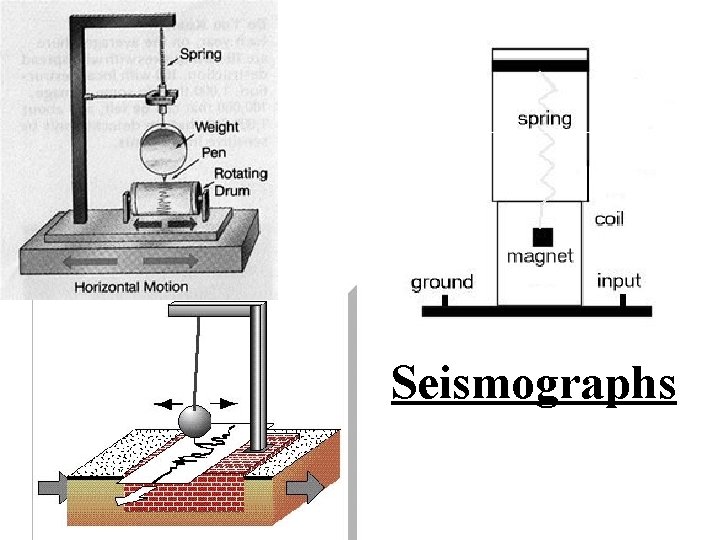
Seismographs • Instruments that measure the movement of the Earth’s surface • They measure the seismic waves of earthquakes and even the waves created by large explosions • They are sensitive enough to pick up even minor earthquakes that we can’t feel
Seismographs
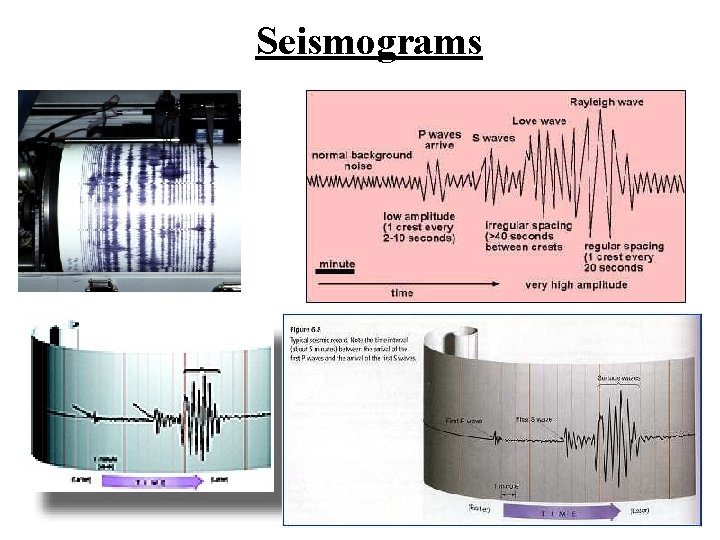
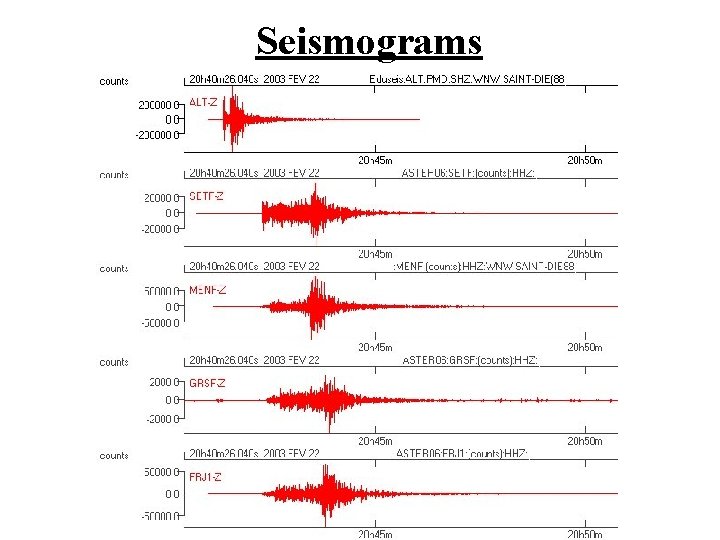
Seismograms • The written record produced by a seismograph • It looks like an EKG when the doctor checks your heart rhythm
Seismograms
Seismograms
Focus • The location beneath the Earth’s surface where the faulting of the Earthquake occurred – It is beneath the Earth’s surface at some depth (focal depth) – Where the faulting occurs
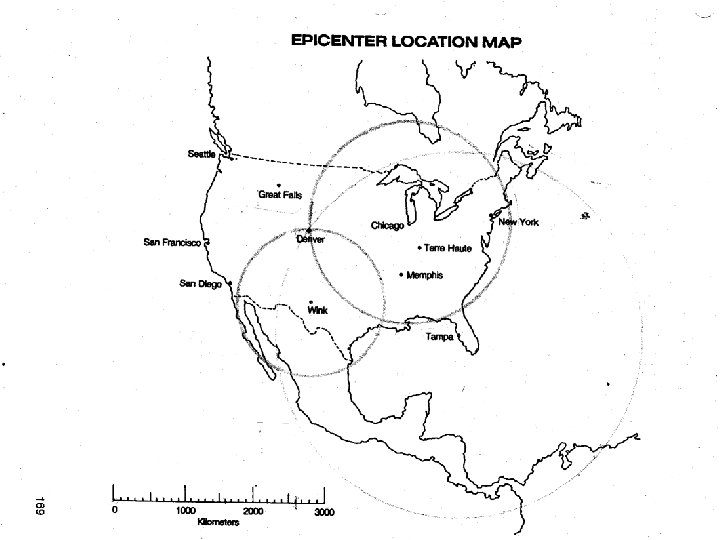
Epicenter • The location on the Earth’s Surface directly above the focus • The location shown on a map • Where the circles of three seismic station intersect
Seismic Waves • The shock waves that move outward from the focus (the fault) • They speed up as the rock gets denser • This increase in velocity causes them to be refracted (bent) back toward the surface
Types of Seismic Waves • There are many types of seismic waves • Some are important to us and some are important to seismologists – P-Waves (important to us) – S-Waves (important to us) – Love Waves – Rayleigh Waves – Oscillations
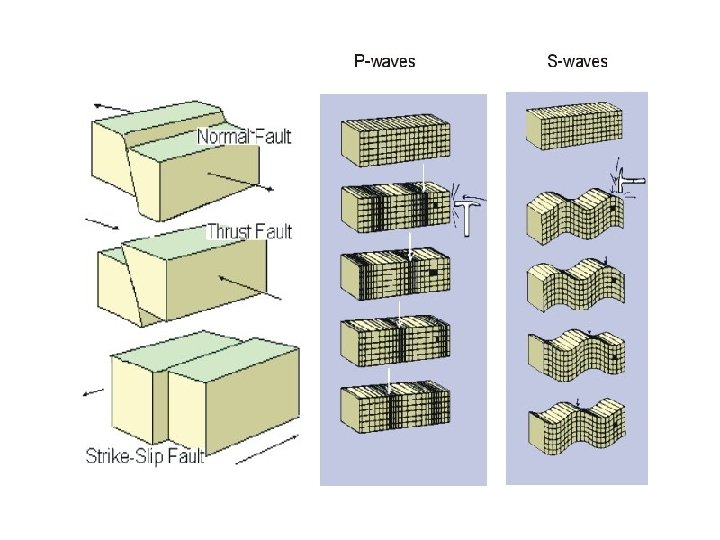
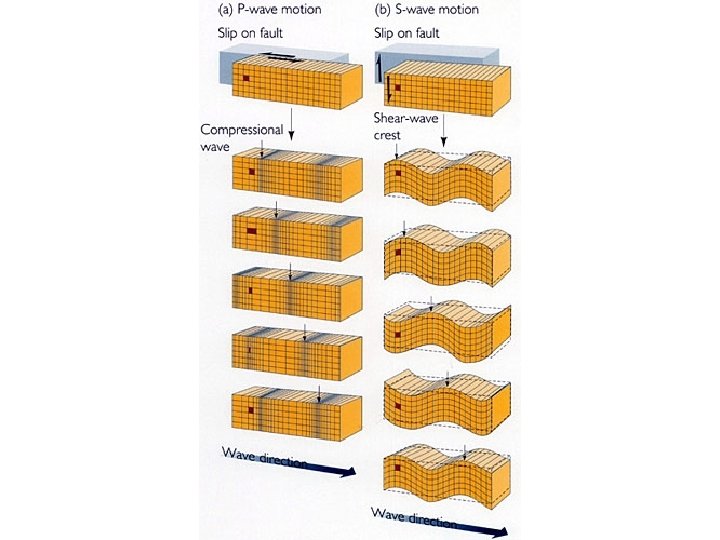
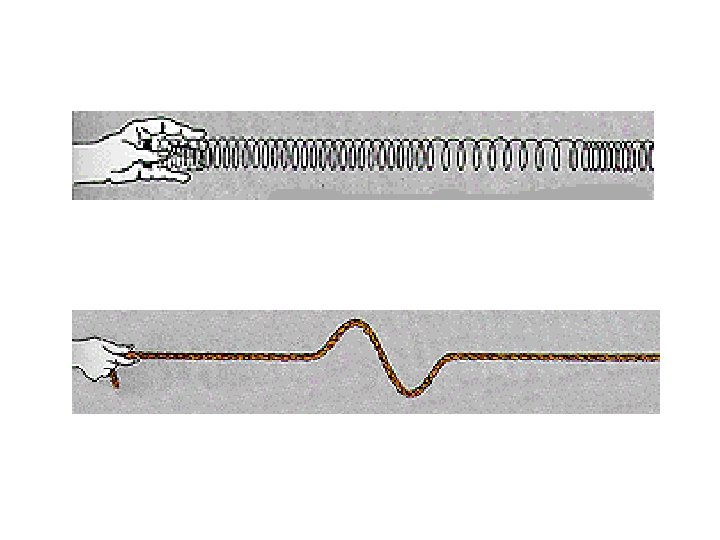
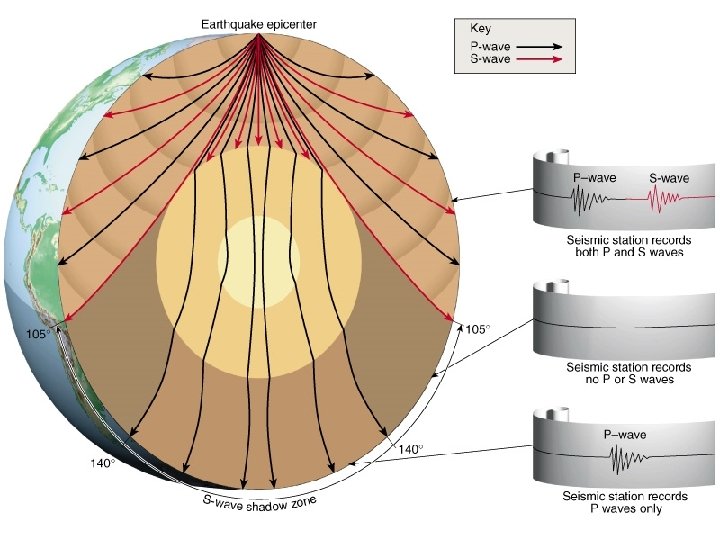
P-Waves • Primary Waves (they arrive first) • They travel with the fastest speed • Compressional Waves (Push-Pull Waves) – Wave motion is the same as direction of travel • Travel through solids, liquids, and gases
S-Waves • Secondary Waves (arrive second) • They travel second fastest (slower than P-Waves) • They are shear waves (Side-to-Side waves) – move 90 o to the direction of wave travel • Travel through solids only
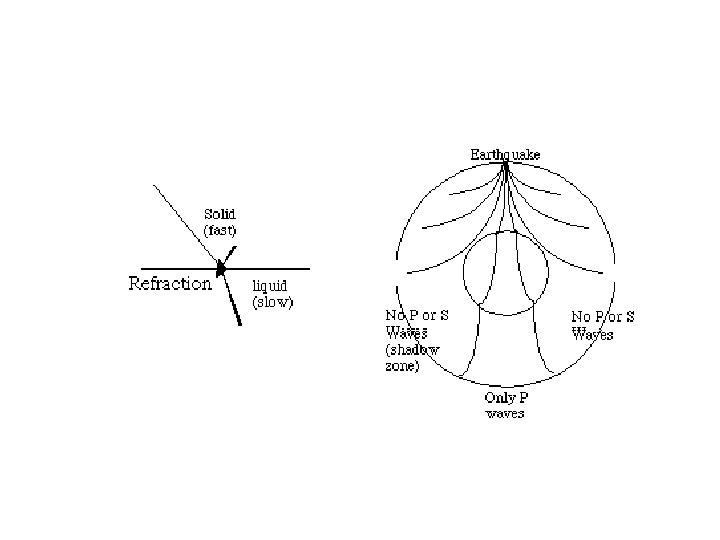
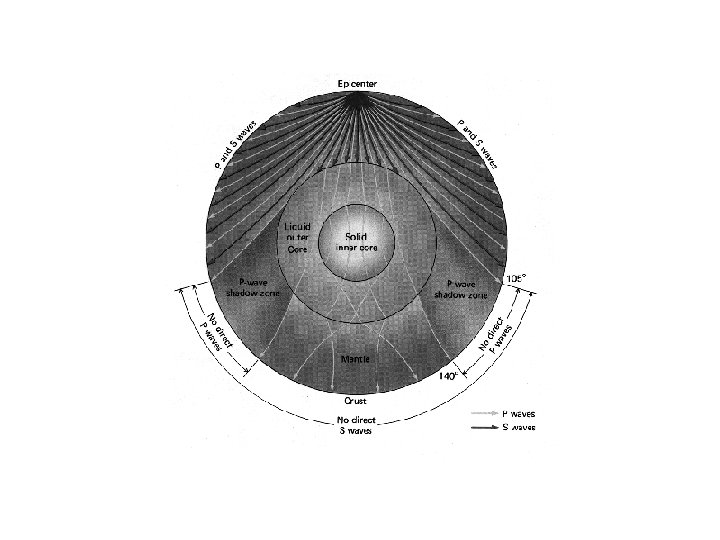
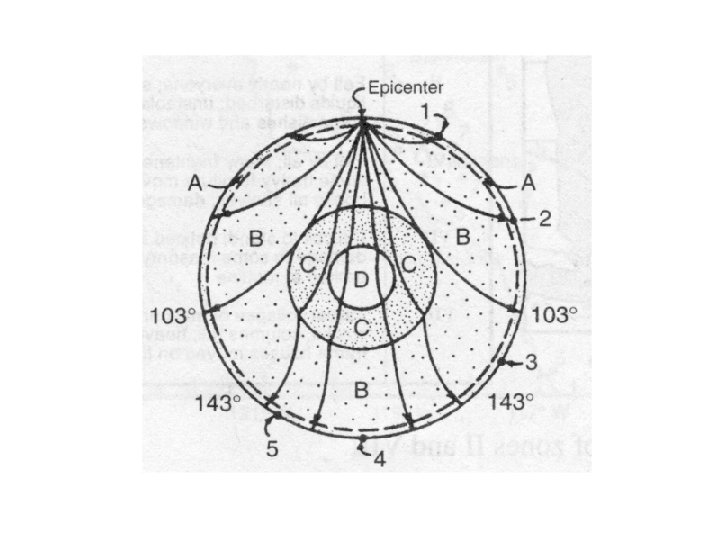
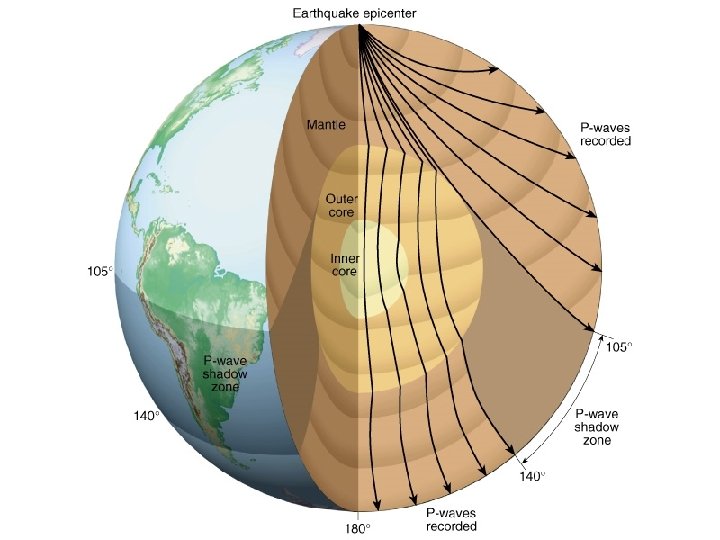
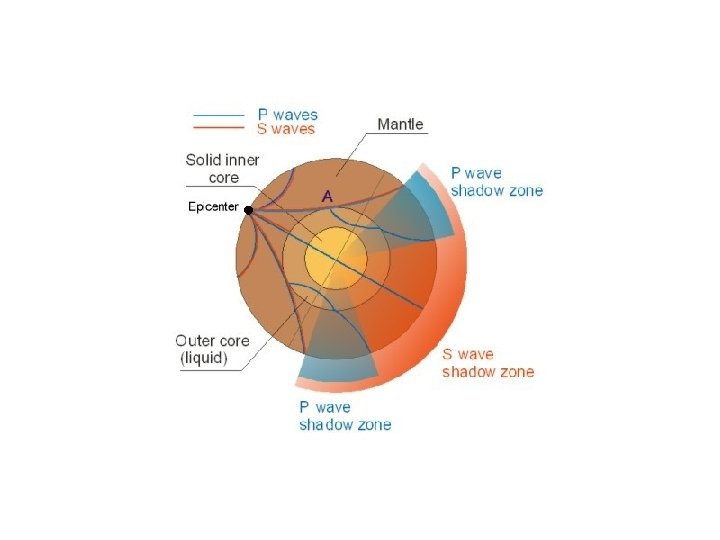
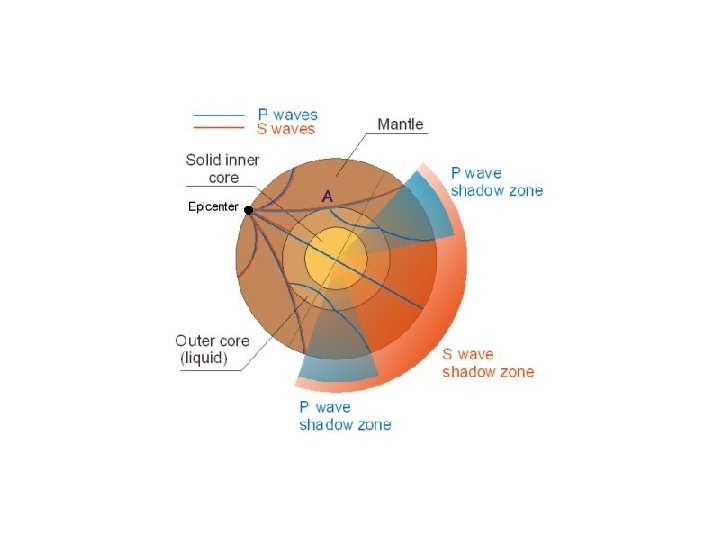
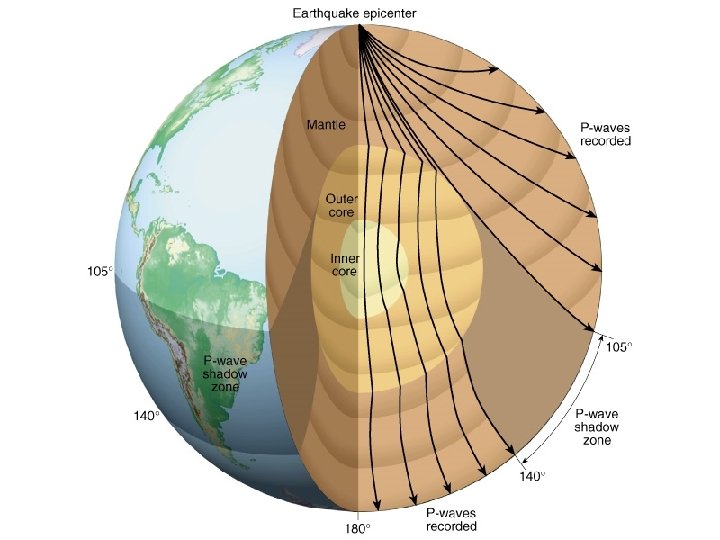
Where do the waves go? • The refraction (bending) of the waves as they enter different layers with different densities creates a shadow zone where no seismic waves are detected • S-Waves are absorbed when they reach the liquid outer core so there is an S-Wave shadow where only P-Waves are detected
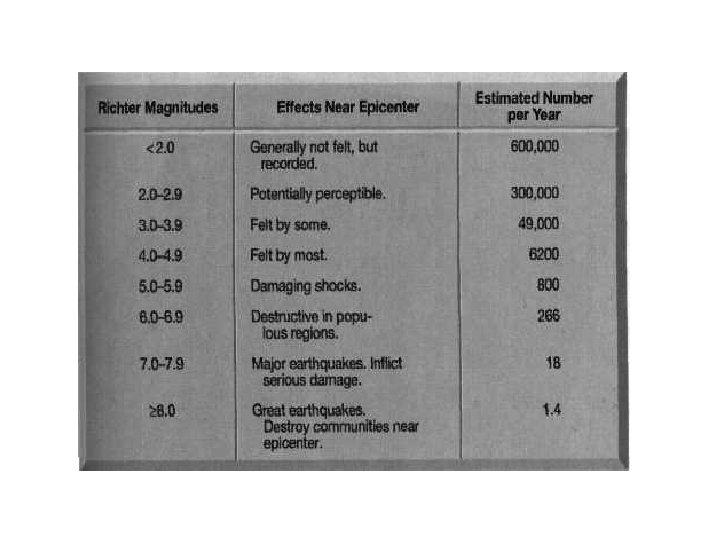
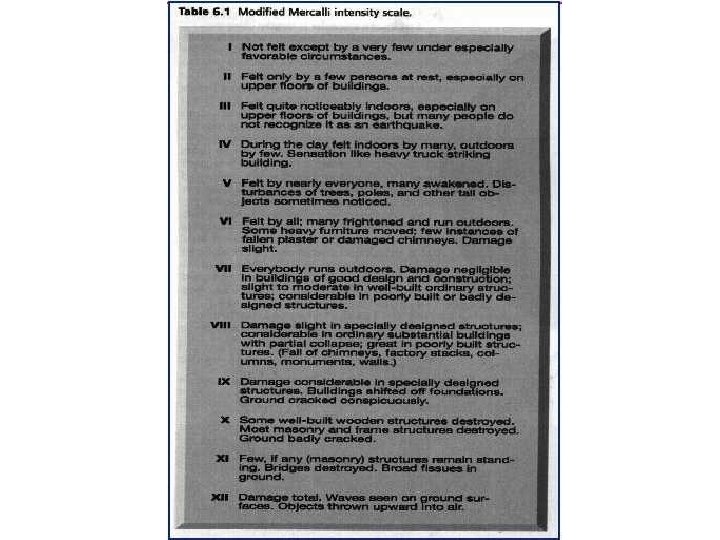
How Bad Was It? • The Richter Scale is used to describe the amount of shaking – Based on the magnitude of the waves • The Mercalli Scale is used to describe the amount of damage the earthquake causes – Depends upon the location of the earthquake – Depends upon the population
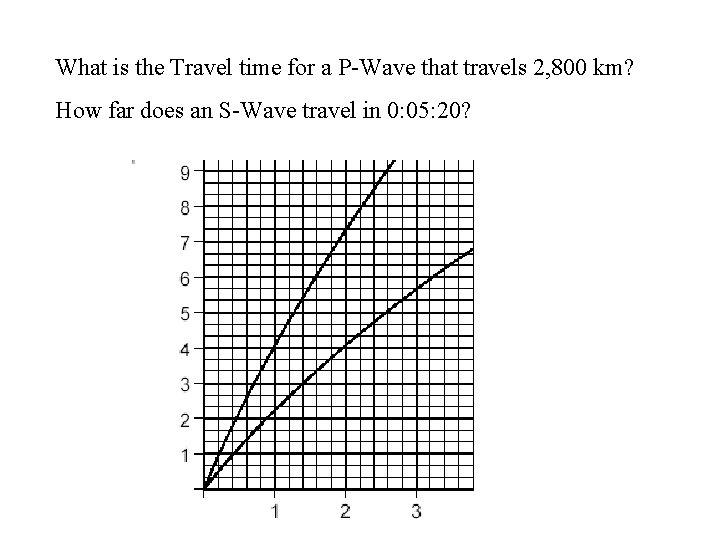
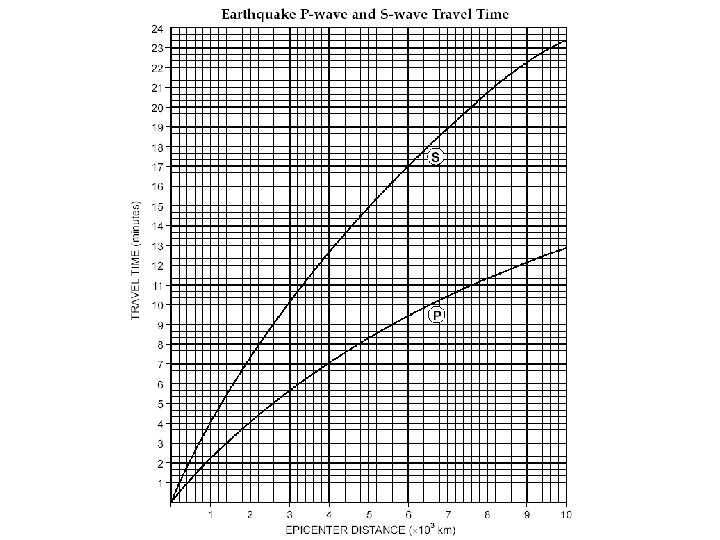
Determining Travel Time … • Find the distance along the bottom • Go up to the appropriate curve • Go over and read the time off the side axis
What is the Travel time for a P-Wave that travels 2, 800 km? How far does an S-Wave travel in 0: 05: 20?
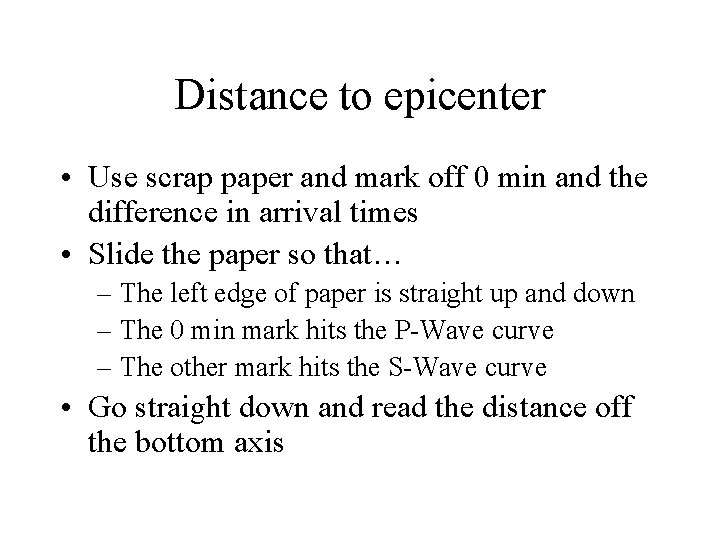
Distance to epicenter • Use scrap paper and mark off 0 min and the difference in arrival times • Slide the paper so that… – The left edge of paper is straight up and down – The 0 min mark hits the P-Wave curve – The other mark hits the S-Wave curve • Go straight down and read the distance off the bottom axis
What can be done in areas where earthquakes are common? • Let’s make a list – What do you think?