
Earthquakes in the Ocean Where Why and What


- Slides: 35
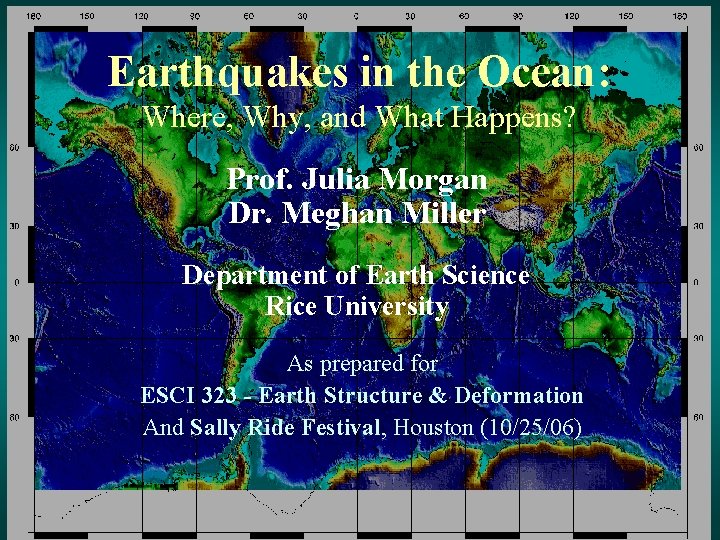
Earthquakes in the Ocean: Where, Why, and What Happens? Prof. Julia Morgan Dr. Meghan Miller Department of Earth Science Rice University As prepared for ESCI 323 - Earth Structure & Deformation And Sally Ride Festival, Houston (10/25/06)
An aside: Dale Sawyer’s Discovering Plate Boundaries Exercise (http: //terra. rice. edu/plateboundary) • • Designed for students to observe & classify Appropriate for broad range of ages/exper. Designed for 3 days, w/ variations Excellent framework for MARGINS & similar
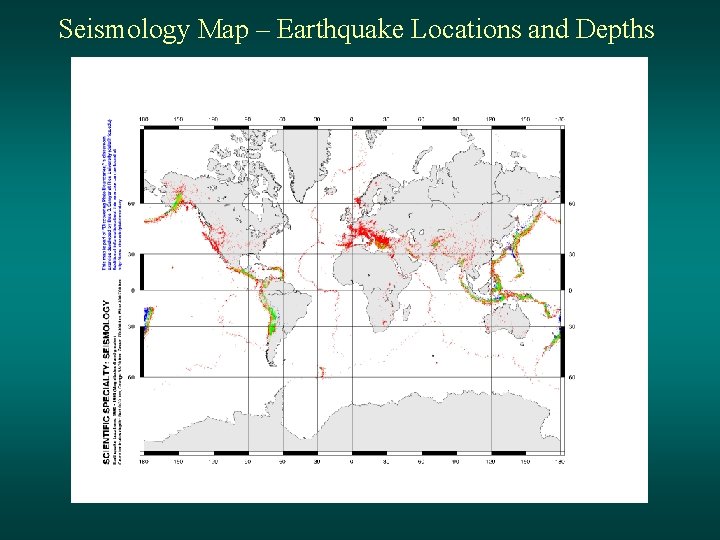
Seismology Map – Earthquake Locations and Depths
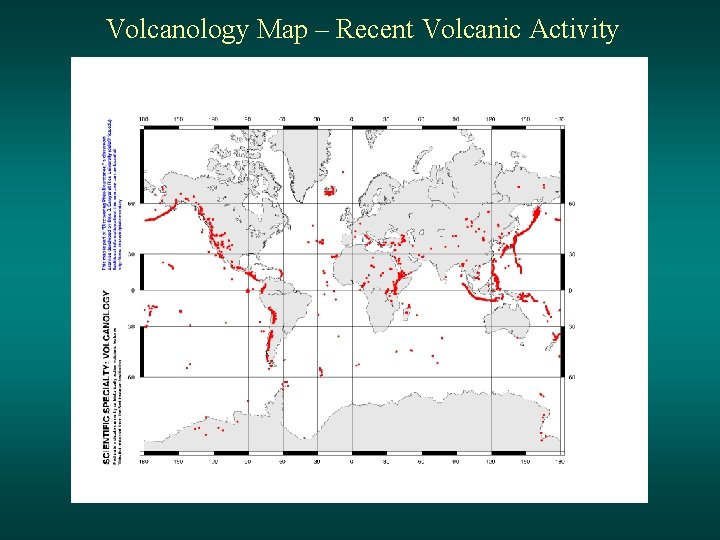
Volcanology Map – Recent Volcanic Activity
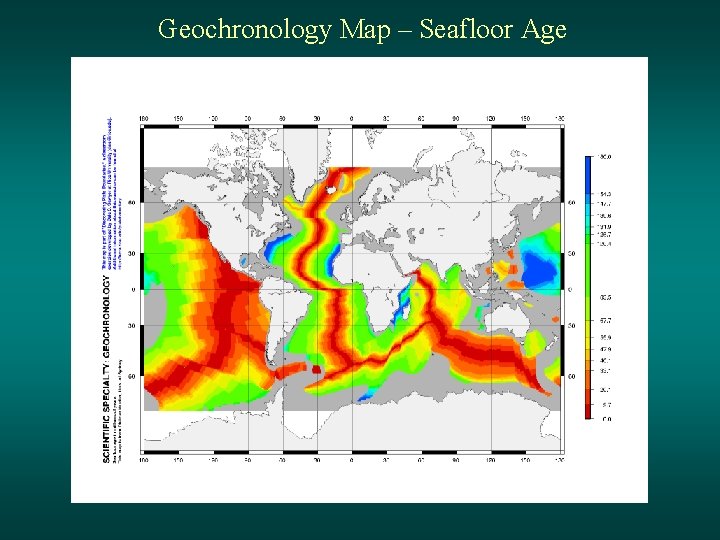
Geochronology Map – Seafloor Age
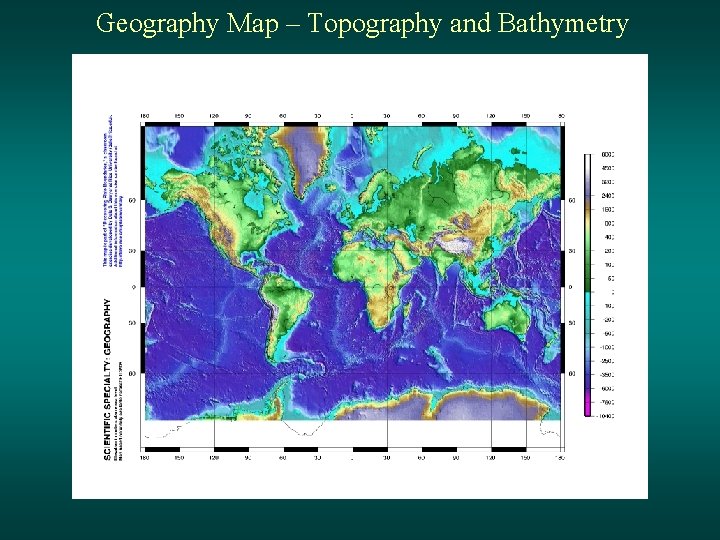
Geography Map – Topography and Bathymetry
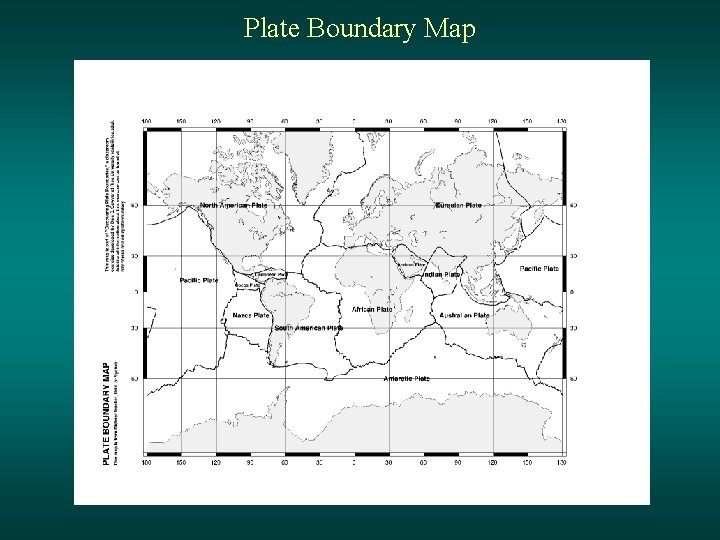
Plate Boundary Map
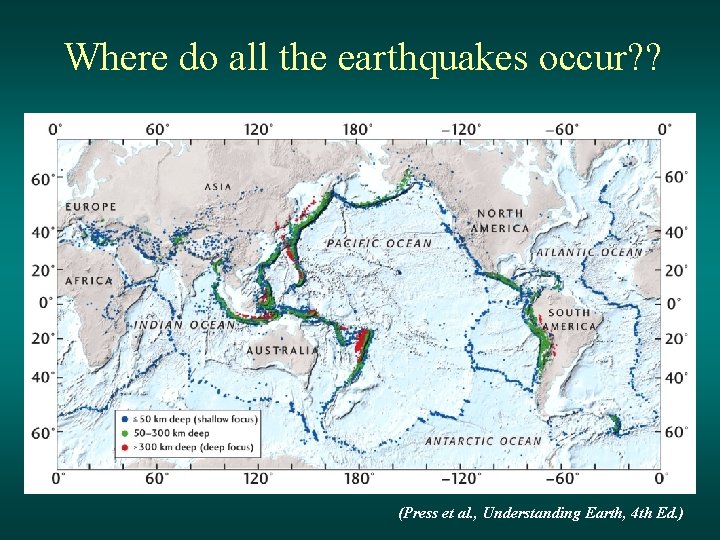
Where do all the earthquakes occur? ? (Press et al. , Understanding Earth, 4 th Ed. )
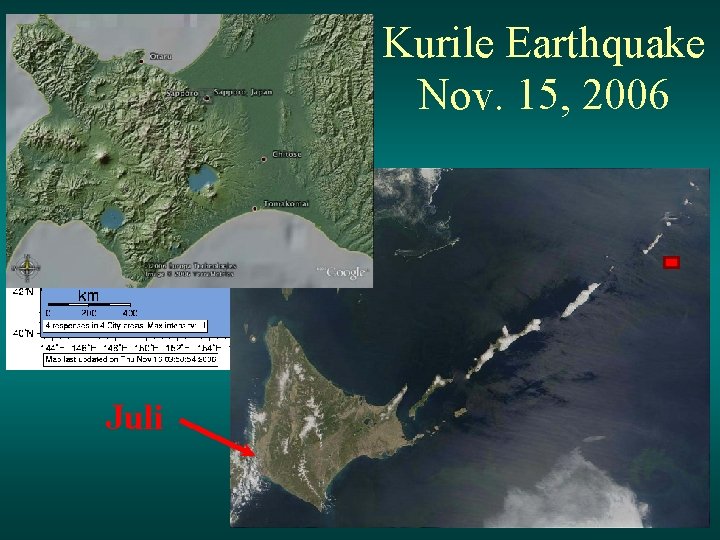
Kurile Earthquake Nov. 15, 2006 Juli
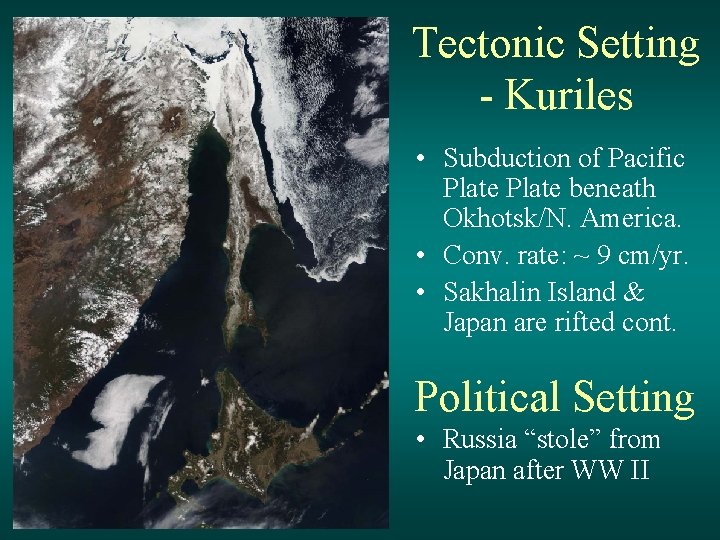
Tectonic Setting - Kuriles • Subduction of Pacific Plate beneath Okhotsk/N. America. • Conv. rate: ~ 9 cm/yr. • Sakhalin Island & Japan are rifted cont. Political Setting • Russia “stole” from Japan after WW II
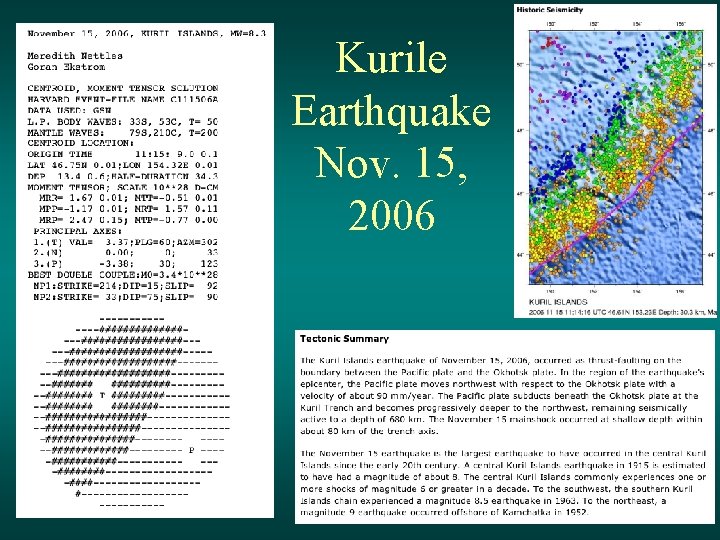
Kurile Earthquake Nov. 15, 2006
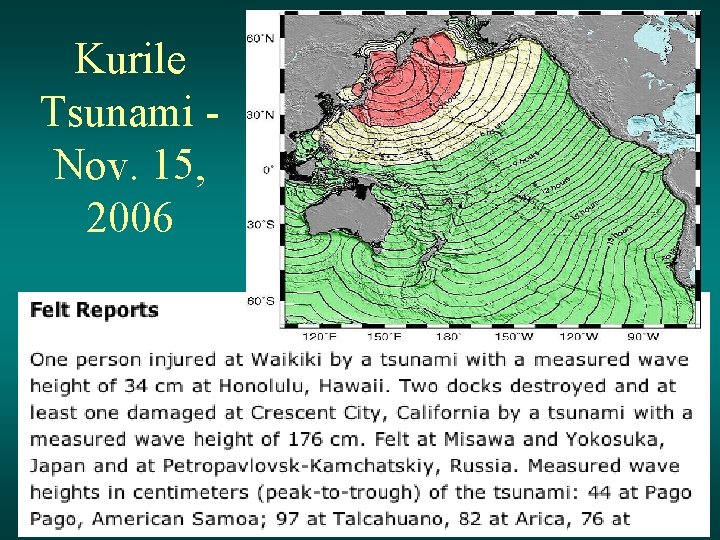
Kurile Tsunami Nov. 15, 2006
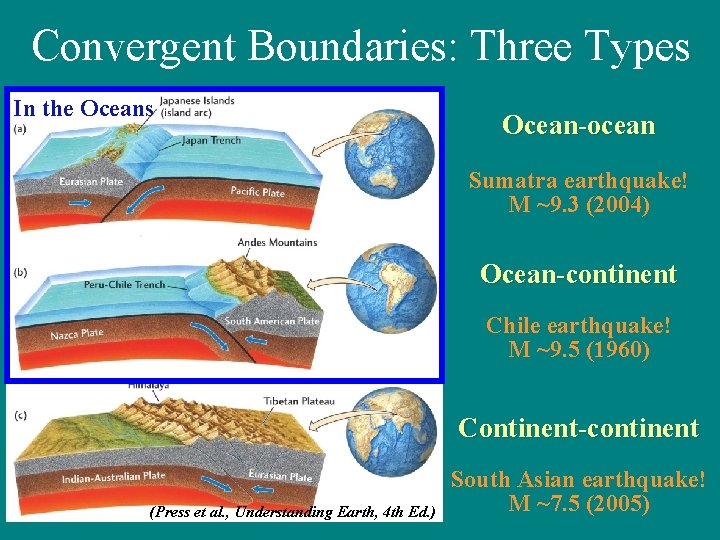
Convergent Boundaries: Three Types In the Oceans Ocean-ocean Sumatra earthquake! M ~9. 3 (2004) Ocean-continent Chile earthquake! M ~9. 5 (1960) Continent-continent (Press et al. , Understanding Earth, 4 th Ed. ) South Asian earthquake! M ~7. 5 (2005)
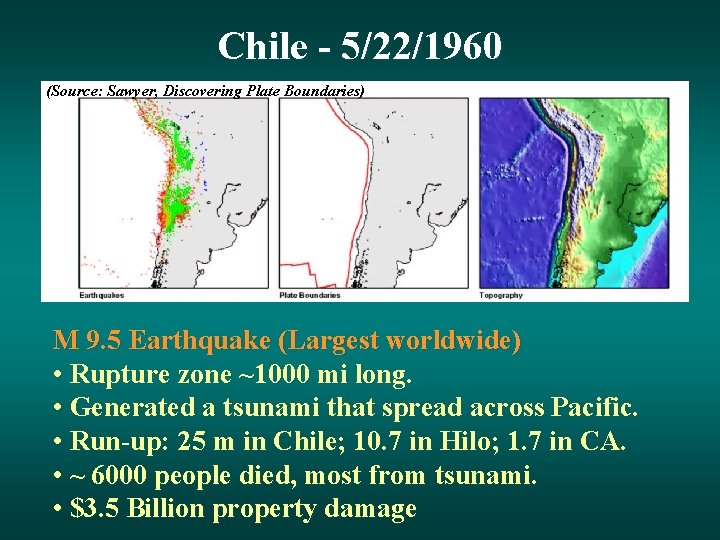
Chile - 5/22/1960 (Source: Sawyer, Discovering Plate Boundaries) M 9. 5 Earthquake (Largest worldwide) • Rupture zone ~1000 mi long. • Generated a tsunami that spread across Pacific. • Run-up: 25 m in Chile; 10. 7 in Hilo; 1. 7 in CA. • ~ 6000 people died, most from tsunami. • $3. 5 Billion property damage
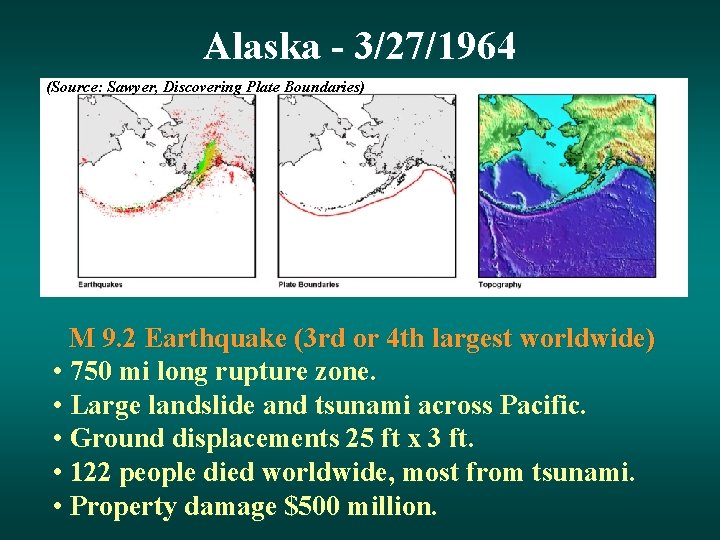
Alaska - 3/27/1964 (Source: Sawyer, Discovering Plate Boundaries) M 9. 2 Earthquake (3 rd or 4 th largest worldwide) • 750 mi long rupture zone. • Large landslide and tsunami across Pacific. • Ground displacements 25 ft x 3 ft. • 122 people died worldwide, most from tsunami. • Property damage $500 million.
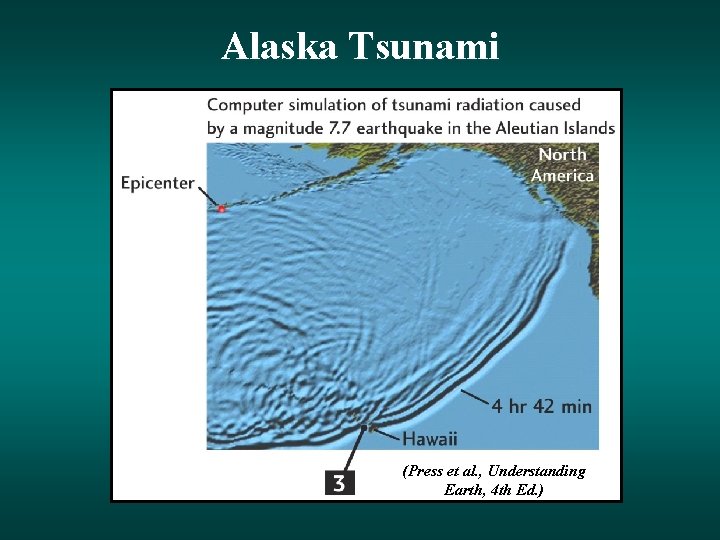
Alaska Tsunami (Press et al. , Understanding Earth, 4 th Ed. )
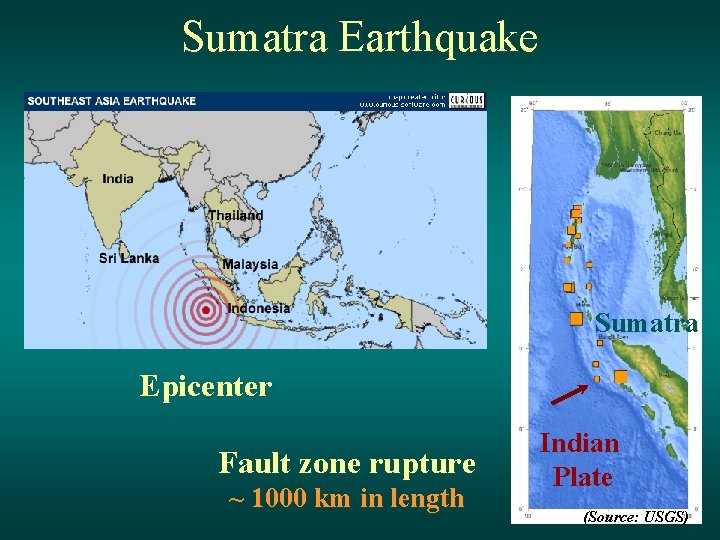
Southeast Asia - 12/26/2004 (Source: Sawyer, Discovering Plate Boundaries) M 9. 3 Earthquake (2 nd largest worldwide) • 1000 km long fault rupture. • Generated a tsunami that went around the world. • No warning. • More than 200, 000 people died. • Untold property damage….
Sumatra Earthquake Sumatra Epicenter Fault zone rupture ~ 1000 km in length Indian Plate (Source: USGS)
What is a tsunami & How does it form? • A sudden impulse pushes the water, forming a train of waves that spreads outward from the source. • Tsunami front propagates at ~450 mi/hr (~600 km/hr). (Source: Prof. Miho Aoki, U. Alaska Fairbanks)
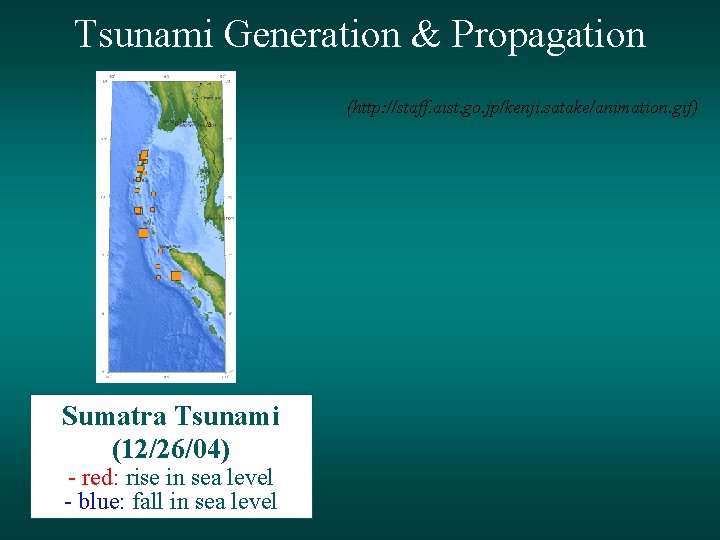
Tsunami Generation & Propagation (http: //staff. aist. go. jp/kenji. satake/animation. gif) Sumatra Tsunami (12/26/04) - red: rise in sea level - blue: fall in sea level
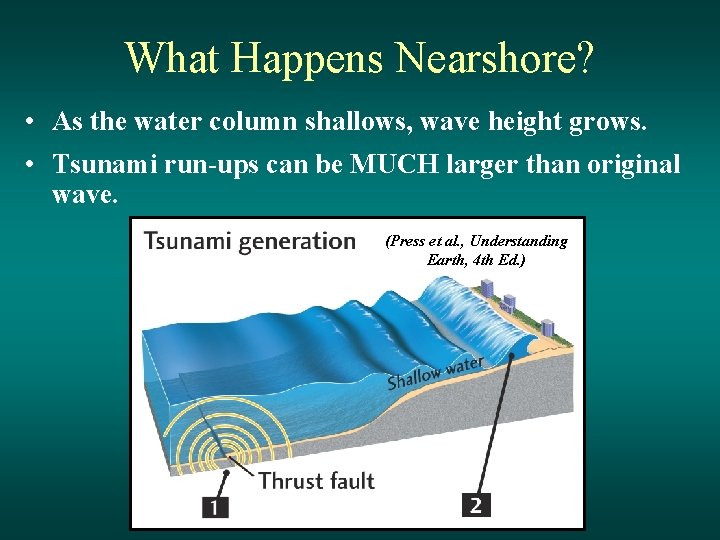
What Happens Nearshore? • As the water column shallows, wave height grows. • Tsunami run-ups can be MUCH larger than original wave. (Press et al. , Understanding Earth, 4 th Ed. )
What are the Consequences? (Source: Prof. Miho Aoki, U. Alaska Fairbanks) • Coastal damage and destruction.
Can This Happen in N. America? Yes!!
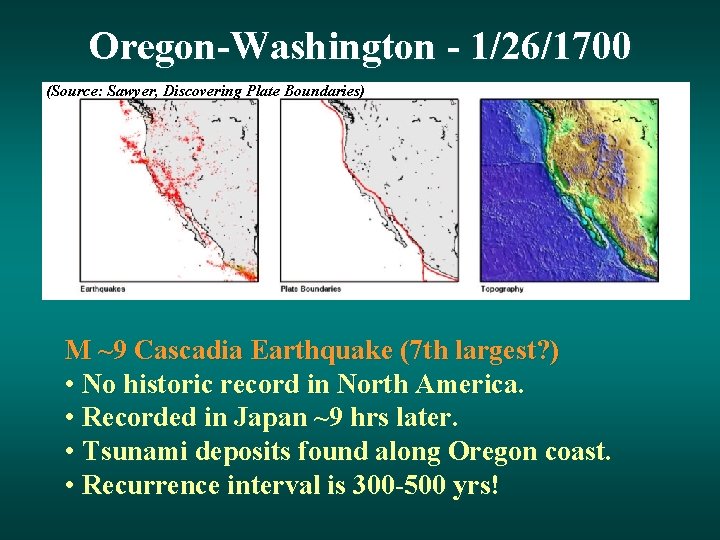
Oregon-Washington - 1/26/1700 (Source: Sawyer, Discovering Plate Boundaries) M ~9 Cascadia Earthquake (7 th largest? ) • No historic record in North America. • Recorded in Japan ~9 hrs later. • Tsunami deposits found along Oregon coast. • Recurrence interval is 300 -500 yrs!
January 1700 Cascadia Tsunami (Source: K. Satake, http: //www. pgc. nrcan. gc. ca/press/index_e. php)
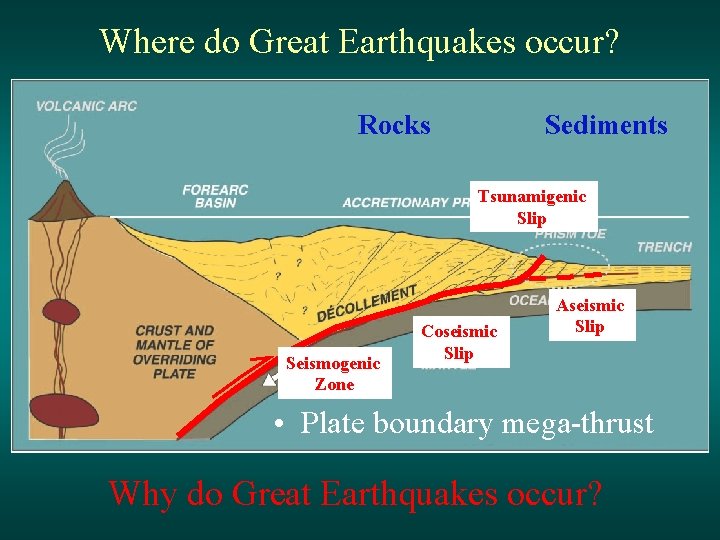
Where do Great Earthquakes occur? Rocks Sediments Tsunamigenic Slip Seismogenic Zone Coseismic Slip Aseismic Slip • Plate boundary mega-thrust Why do Great Earthquakes occur?
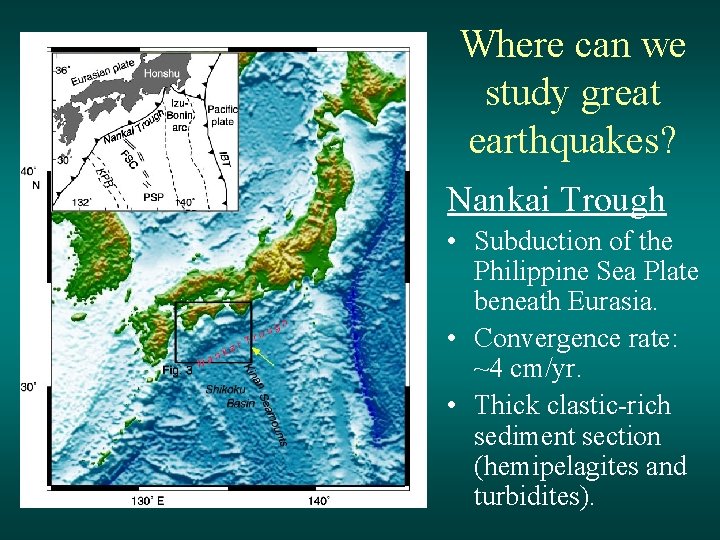
Where can we study great earthquakes? Nankai Trough • Subduction of the Philippine Sea Plate beneath Eurasia. • Convergence rate: ~4 cm/yr. • Thick clastic-rich sediment section (hemipelagites and turbidites).
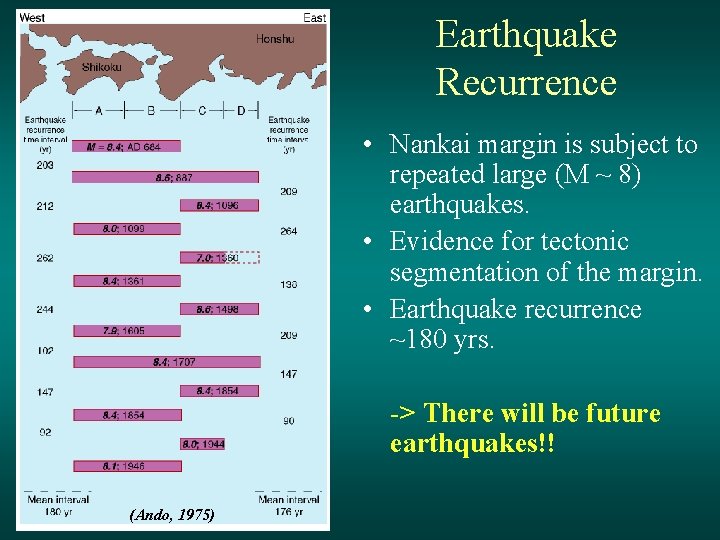
Earthquake Recurrence • Nankai margin is subject to repeated large (M ~ 8) earthquakes. • Evidence for tectonic segmentation of the margin. • Earthquake recurrence ~180 yrs. -> There will be future earthquakes!! (Ando, 1975)
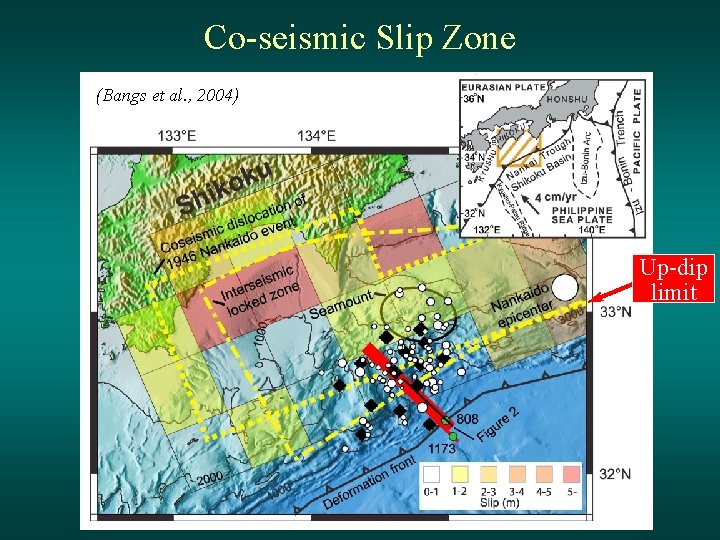
Co-seismic Slip Zone (Bangs et al. , 2004) Up-dip limit
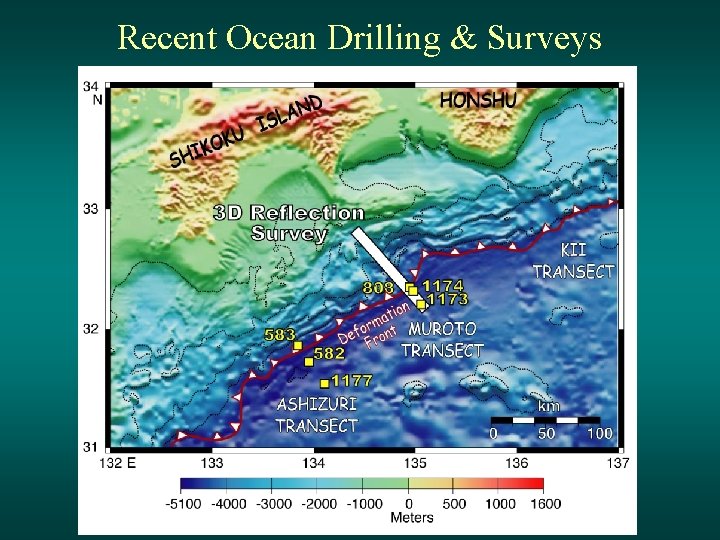
Recent Ocean Drilling & Surveys
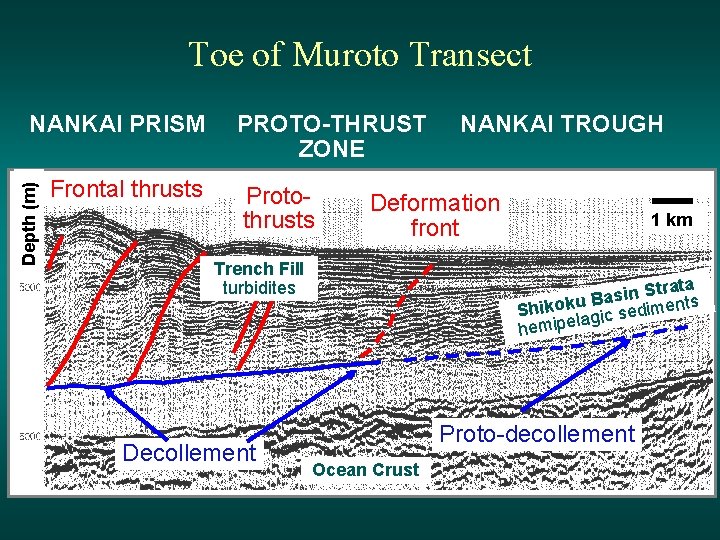
Toe of Muroto Transect Depth (m) NANKAI PRISM Frontal thrusts PROTO-THRUST ZONE Protothrusts Deformation front Trench Fill turbidites Decollement NANKAI TROUGH 1 km trata S n i s a u. B Shikok agic sediments l hemipe Proto-decollement Ocean Crust
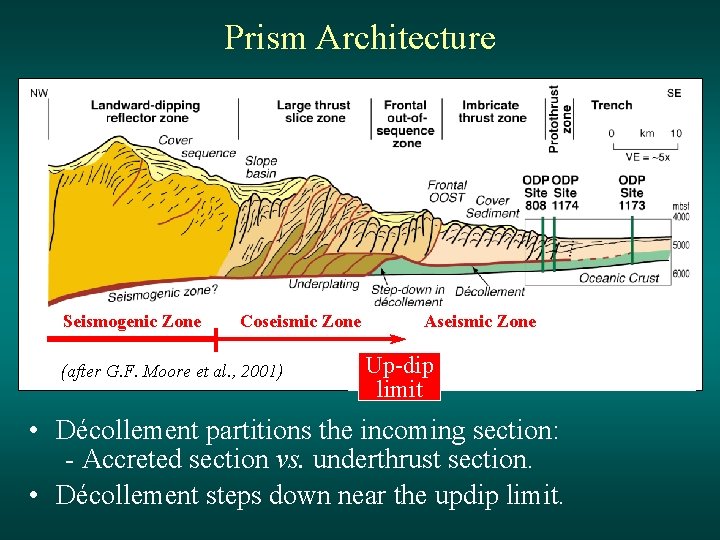
Prism Architecture Seismogenic Zone and Zone Coseismic Zone(J. C. Moore Aseismic Saffer, 2001) (after G. F. Moore et al. , 2001) Up-dip limit • Décollement partitions the incoming section: - Accreted section vs. underthrust section. • Décollement steps down near the updip limit.
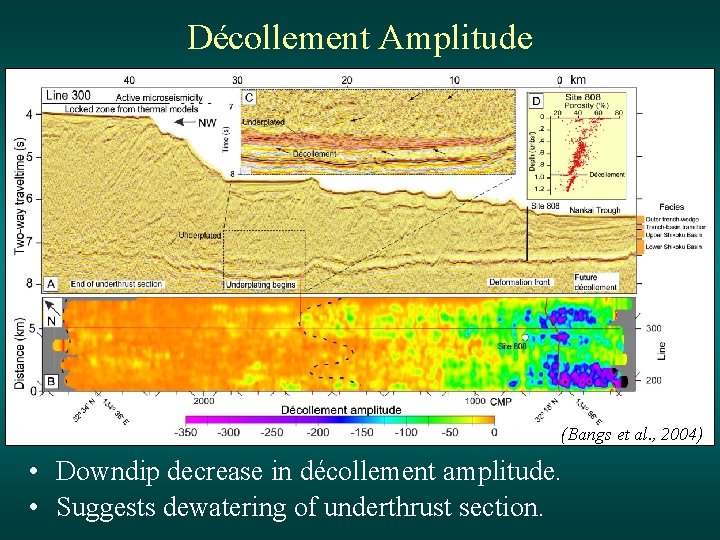
Décollement Amplitude (Bangs et al. , 2004) • Downdip decrease in décollement amplitude. • Suggests dewatering of underthrust section.
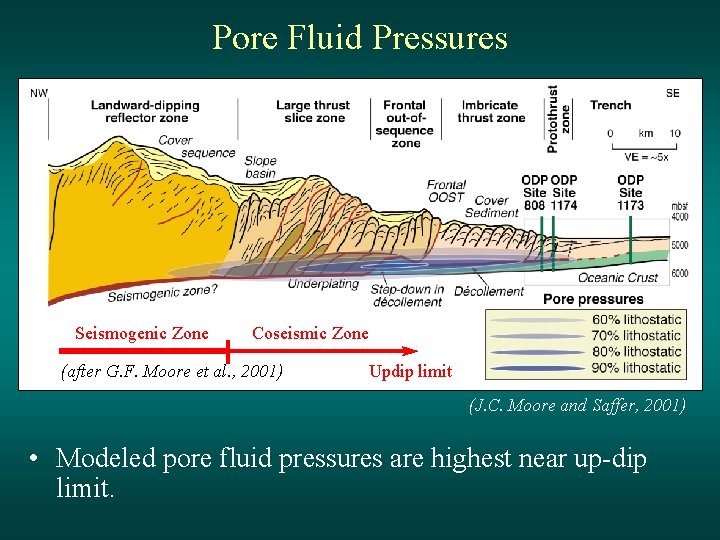
Pore Fluid Pressures Seismogenic Zone Coseismic Zone (after G. F. Moore et al. , 2001) Updip limit (J. C. Moore and Saffer, 2001) • Modeled pore fluid pressures are highest near up-dip limit.
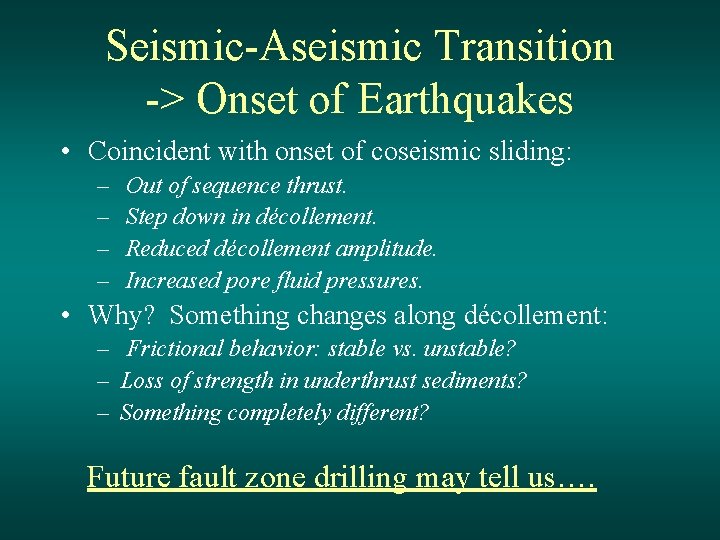
Seismic-Aseismic Transition -> Onset of Earthquakes • Coincident with onset of coseismic sliding: – – Out of sequence thrust. Step down in décollement. Reduced décollement amplitude. Increased pore fluid pressures. • Why? Something changes along décollement: – Frictional behavior: stable vs. unstable? – Loss of strength in underthrust sediments? – Something completely different? Future fault zone drilling may tell us….