
Earthquakes Earths Plates Earths lithosphere is divided into
- Slides: 12
Earthquakes
Earth’s Plates �Earth’s lithosphere is divided into plates (continental and oceanic) which float and move on the mantle. �Plate Tectonics Video Segment
Faults �Surfaces along which rocks move, fracture, and are displaced. �Stress builds along faults, causing the rocks to bend and stretch. When they reach their “elastic limit”, they break = Earthquake �There are three types of faults: ◦ http: //scign. jpl. nasa. gov/learn/plate 6. htm
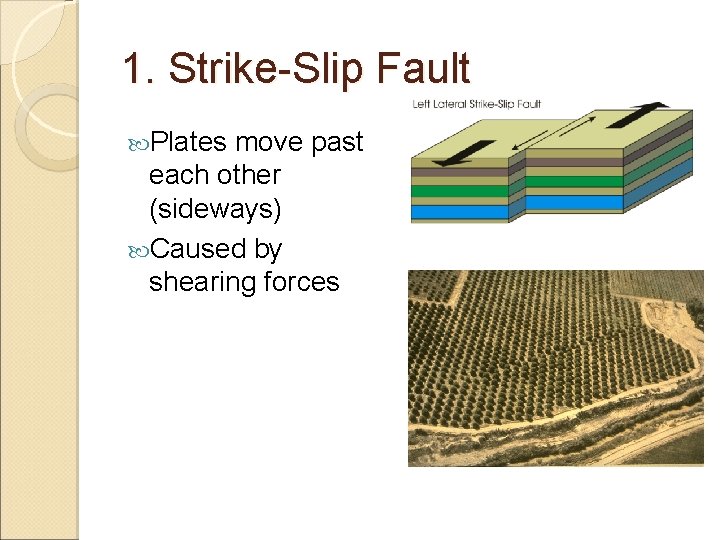
1. Strike-Slip Fault Plates move past each other (sideways) Caused by shearing forces
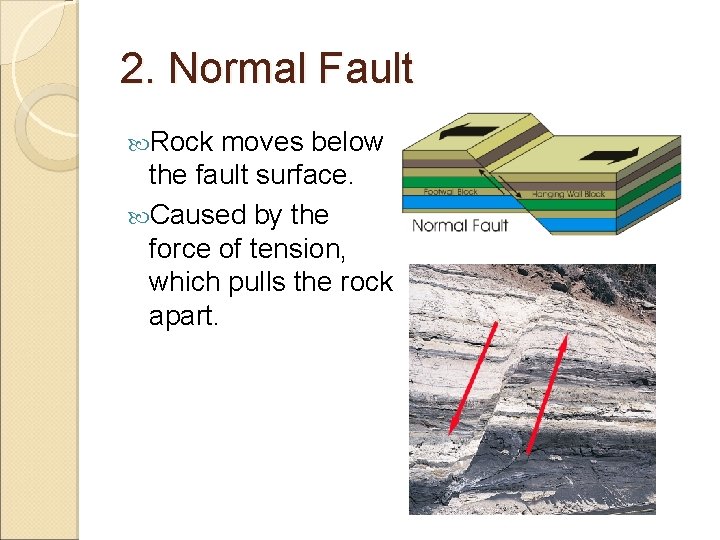
2. Normal Fault Rock moves below the fault surface. Caused by the force of tension, which pulls the rock apart.
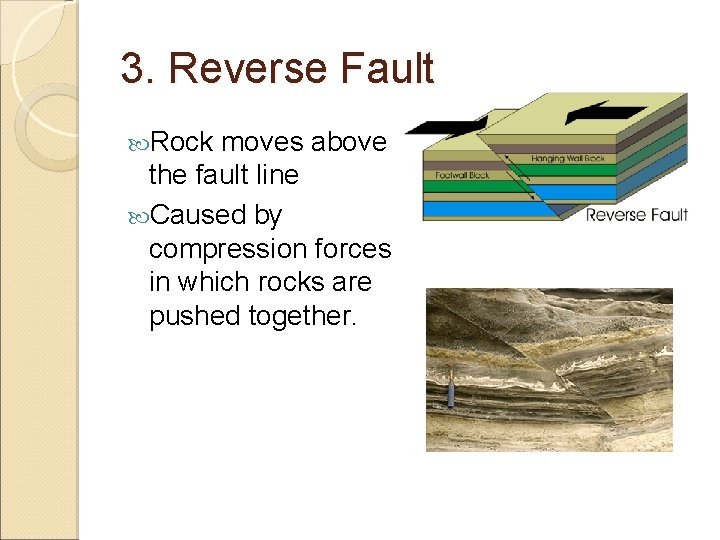
3. Reverse Fault Rock moves above the fault line Caused by compression forces in which rocks are pushed together.
Earthquakes �Occur as a result of motion along a fault when energy is released �Produce seismic waves – carry energy through the Earth
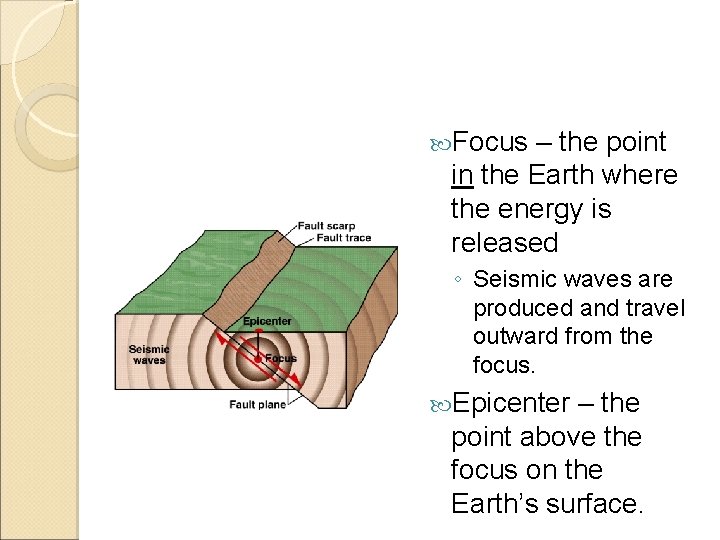
Focus – the point in the Earth where the energy is released ◦ Seismic waves are produced and travel outward from the focus. Epicenter – the point above the focus on the Earth’s surface.
Types of Seismic Waves � http: //physicsquest. homestead. com/Seis. Wave. Anim. gif �P waves ◦ Primary waves ◦ Move back and forth in the same direction as the wave is moving ◦ Fastest moving waves
� http: //physicsquest. homestead. com/Seis. Wave. Anim. gif �S waves ◦ Secondary waves ◦ Particles move at right angles to the motion of the waves (up and down)
� http: //physicsquest. homestead. com/Seis. Wave. Anim. gif �Surface waves ◦ Particles move in an elliptical motion as well as a back-and-forth motion. ◦ Slowest moving waves ◦ Cause the most damage
Seismograph �Seismic waves are measured with a seismograph �http: //www. thetech. org/exhibits/online/ quakes/seismo/