
Earthquakes EARTHQUAKE 101 Focus This is the origin
- Slides: 18
Earthquakes EARTHQUAKE 101
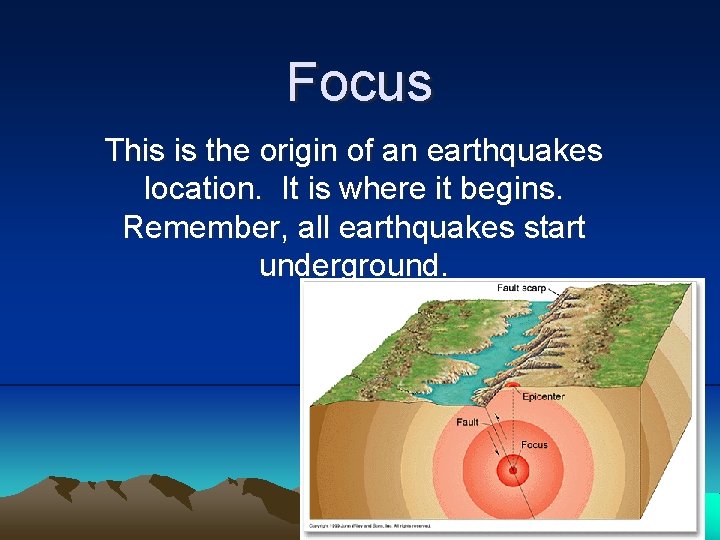
Focus This is the origin of an earthquakes location. It is where it begins. Remember, all earthquakes start underground.
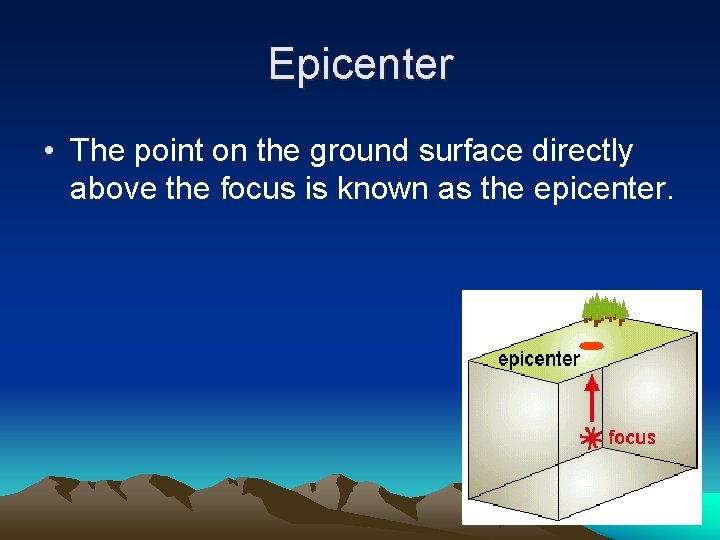
Epicenter • The point on the ground surface directly above the focus is known as the epicenter.
Primary Waves • Primary waves are the fastest waves. They are also called P-Waves. • P-waves move through solids, liquids, and gases.
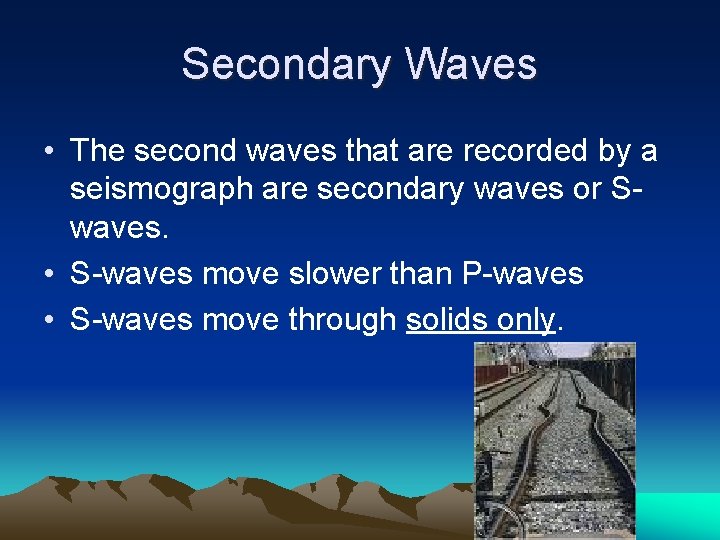
Secondary Waves • The second waves that are recorded by a seismograph are secondary waves or Swaves. • S-waves move slower than P-waves • S-waves move through solids only.
Surface Waves • Surface waves move along the Earth’s surface. • Surface waves are also known as Long waves, or L-waves. • These waves are the last to be recorded. • L-waves can move through solids causing Earth’s surface to rise and fall like ocean waves.
DISCUSS • Take a few minutes and discuss the 3 types of seismic waves with your group. Compare the seismic waves to what happens when you toss a rock into a pond. • FIST TO FIVE CHECK?
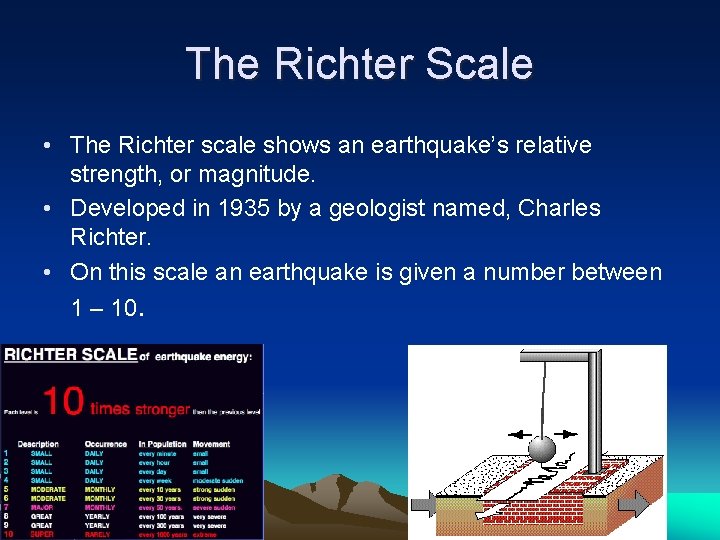
The Richter Scale • The Richter scale shows an earthquake’s relative strength, or magnitude. • Developed in 1935 by a geologist named, Charles Richter. • On this scale an earthquake is given a number between 1 – 10.
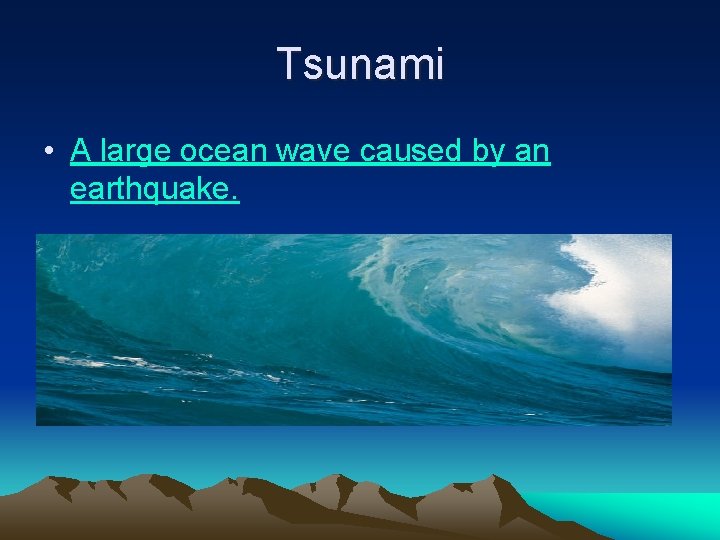
Tsunami • A large ocean wave caused by an earthquake.
• Before and After pictures of Japanese Tsunami • Intro to Japan's tsunami • Real time video of incoming Japanese tsunami-primary and secondary waves • Incoming Tsunami-Surface waves
What Causes Earthquakes?
Tectonic Plate Movement • Tectonic plate movement along fault lines causes earthquakes. • Rocks on both sides of the fault are squeezed together. • Pressure on rocks increases. • Eventually the rocks break at their weakest point releasing energy. • This energy is in the form of vibrations/waves.
Faults • There are four kinds of faults
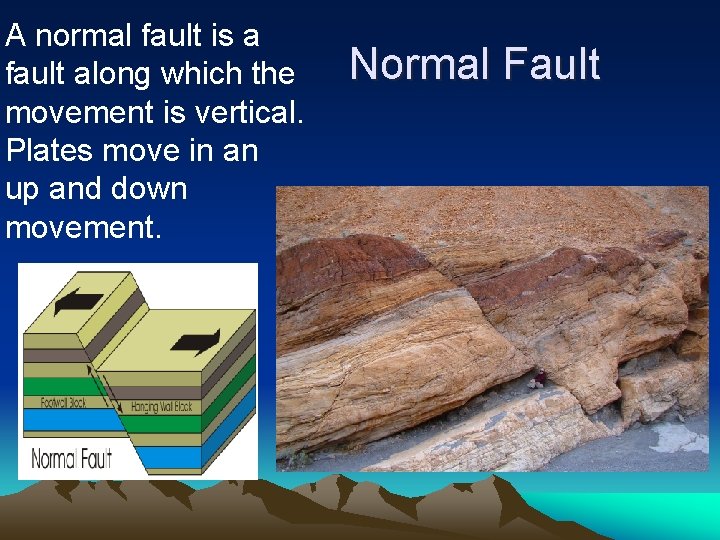
A normal fault is a fault along which the movement is vertical. Plates move in an up and down movement. Normal Fault
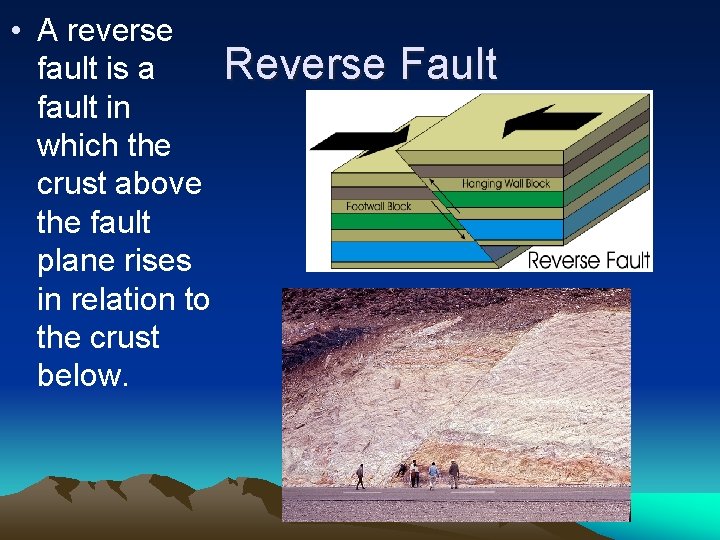
• A reverse fault is a fault in which the crust above the fault plane rises in relation to the crust below. Reverse Fault
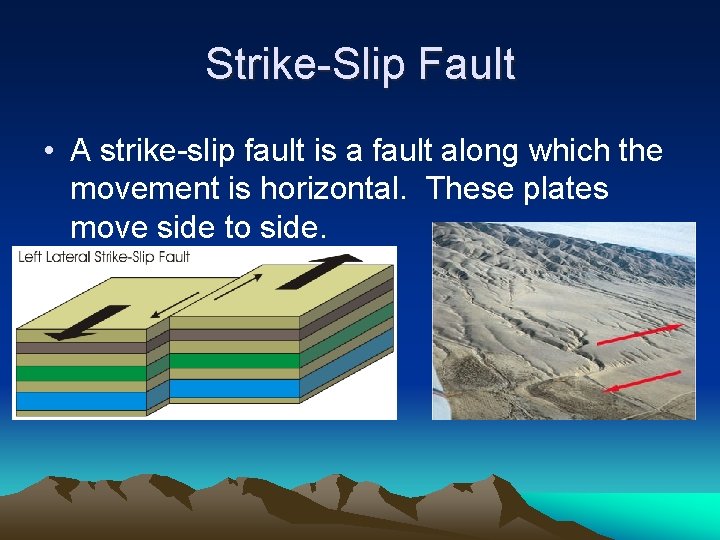
Strike-Slip Fault • A strike-slip fault is a fault along which the movement is horizontal. These plates move side to side.
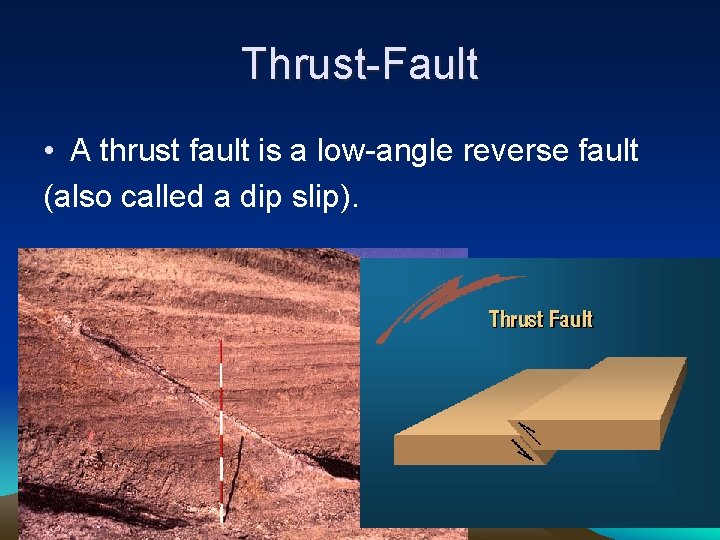
Thrust-Fault • A thrust fault is a low-angle reverse fault (also called a dip slip).
THE END