
Earthquakes Chapter 8 18 2 What is an

- Slides: 22
Earthquakes Chapter 8. 1/8. 2
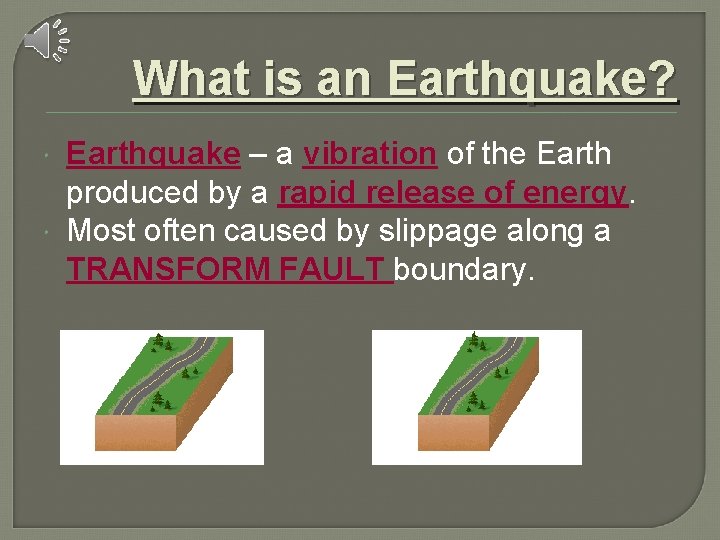
What is an Earthquake? Earthquake – a vibration of the Earth produced by a rapid release of energy. Most often caused by slippage along a TRANSFORM FAULT boundary.
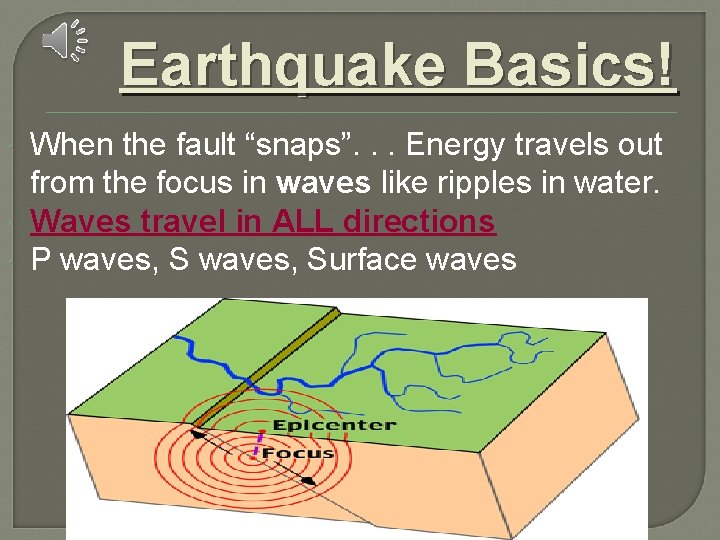
Earthquake Basics! When the fault “snaps”. . . Energy travels out from the focus in waves like ripples in water. Waves travel in ALL directions P waves, Surface waves
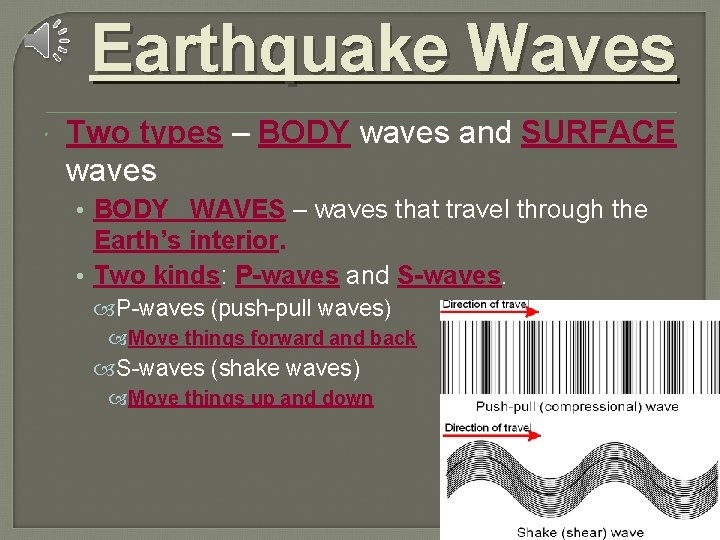
Earthquake Waves Two types – BODY waves and SURFACE waves • BODY WAVES – waves that travel through the Earth’s interior. • Two kinds: P-waves and S-waves. P-waves (push-pull waves) Move things forward and back S-waves (shake waves) Move things up and down
Seismic Wave Motion with Surface Effects
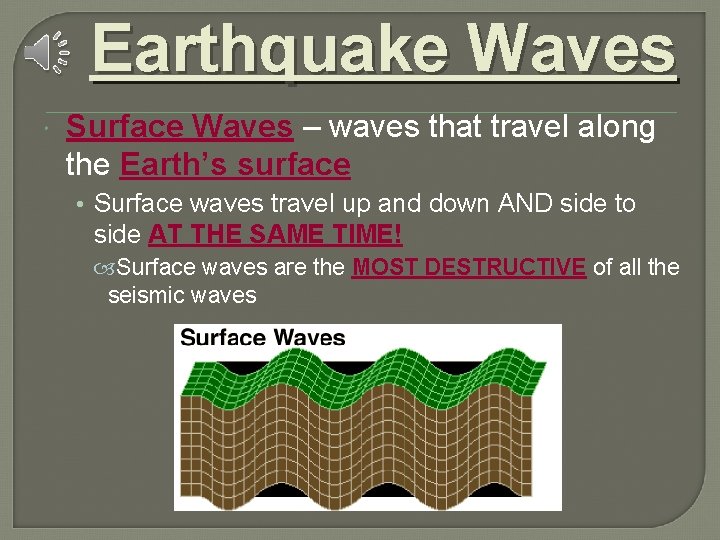
Earthquake Waves Surface Waves – waves that travel along the Earth’s surface • Surface waves travel up and down AND side to side AT THE SAME TIME! Surface waves are the MOST DESTRUCTIVE of all the seismic waves
Seismic Wave Motion
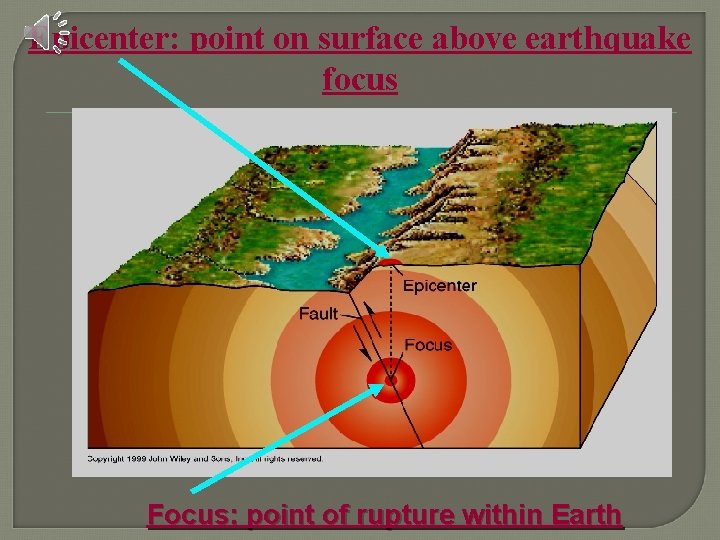
Epicenter: point on surface above earthquake focus Focus: point of rupture within Earth
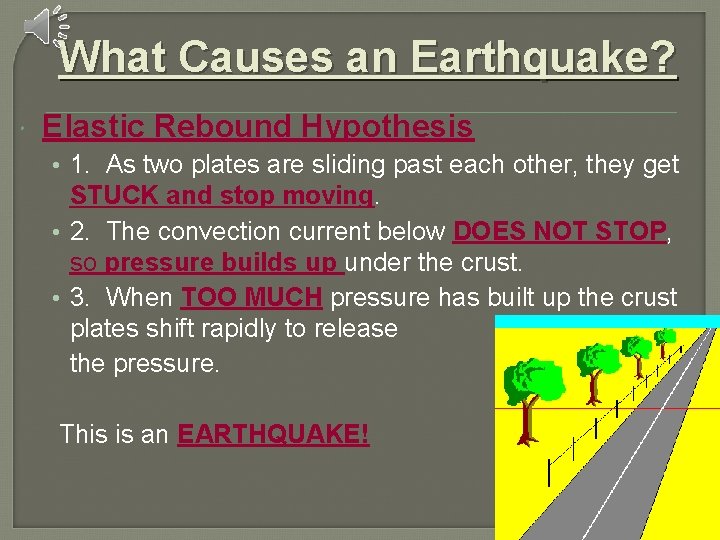
What Causes an Earthquake? Elastic Rebound Hypothesis • 1. As two plates are sliding past each other, they get STUCK and stop moving. • 2. The convection current below DOES NOT STOP, so pressure builds up under the crust. • 3. When TOO MUCH pressure has built up the crust plates shift rapidly to release the pressure. This is an EARTHQUAKE!
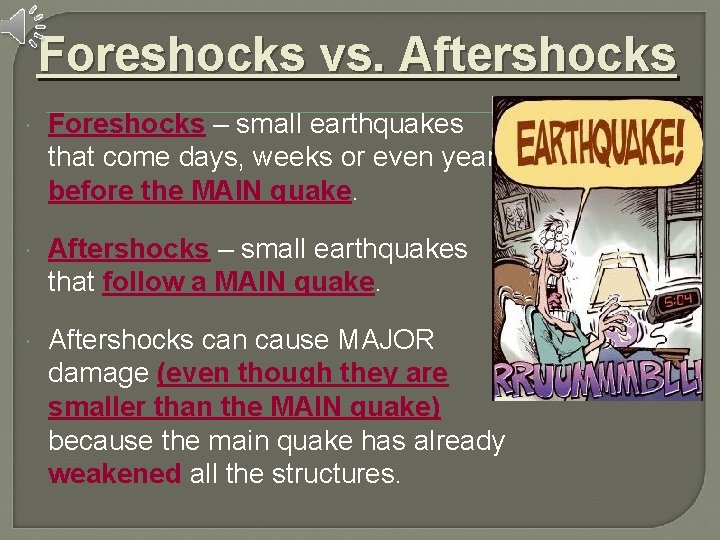
Foreshocks vs. Aftershocks Foreshocks – small earthquakes that come days, weeks or even years before the MAIN quake. Aftershocks – small earthquakes that follow a MAIN quake. Aftershocks can cause MAJOR damage (even though they are smaller than the MAIN quake) because the main quake has already weakened all the structures.
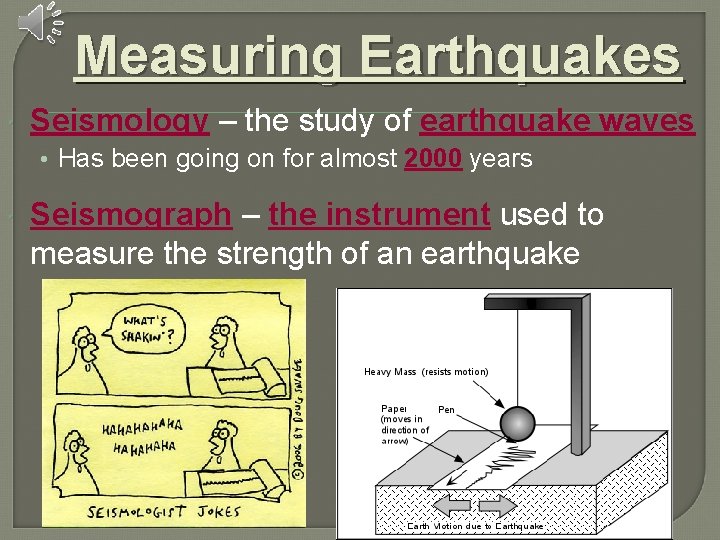
Measuring Earthquakes Seismology – the study of earthquake waves • Has been going on for almost 2000 years Seismograph – the instrument used to measure the strength of an earthquake
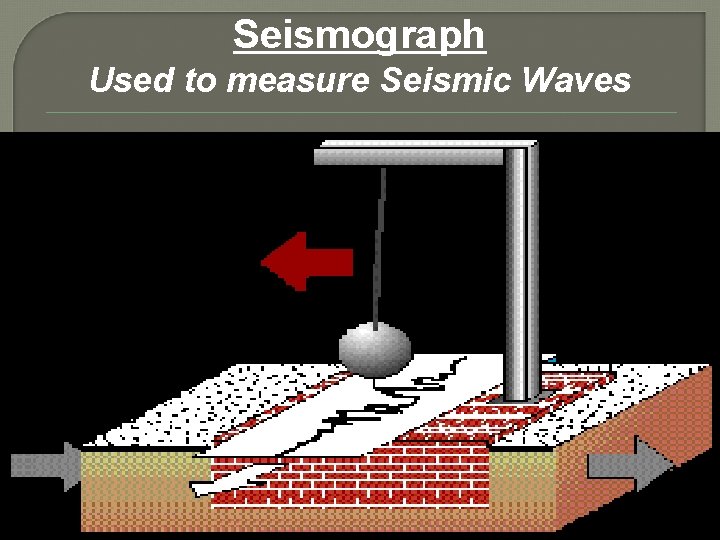
How a Seismograph Works The machine is attached to the Earth The Earth moves during an earthquake – moving the machine as well. The hanging weight DOES NOT MOVE!! Attached to the weight is a pen. As the paper moves back and forth with the machine, the pen marks the paper, recording the strength of the seismic http: //www. youtube. com/watch? v=83 GOKn 7 k waves. WXM&feature=endscreen&NR=1 http: //www. youtube. com/watch? v=Gbd 1 Fcu. LJLQ
Seismograph Used to measure Seismic Waves
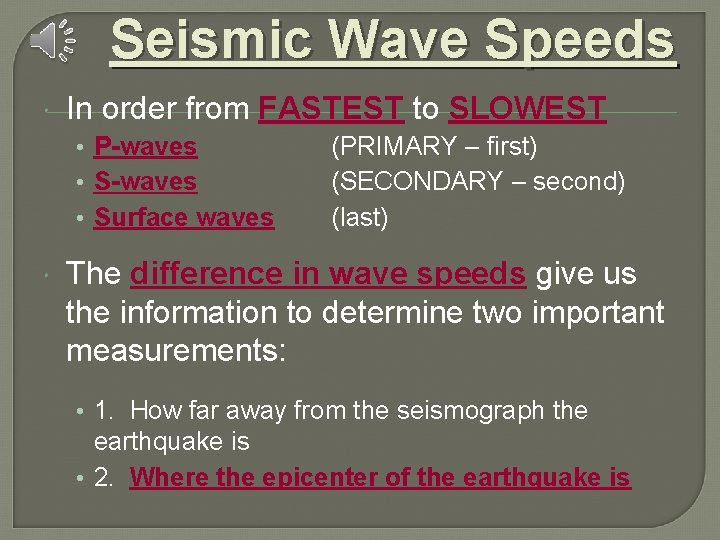
Seismic Wave Speeds In order from FASTEST to SLOWEST • • • P-waves Surface waves (PRIMARY – first) (SECONDARY – second) (last) The difference in wave speeds give us the information to determine two important measurements: • 1. How far away from the seismograph the earthquake is • 2. Where the epicenter of the earthquake is
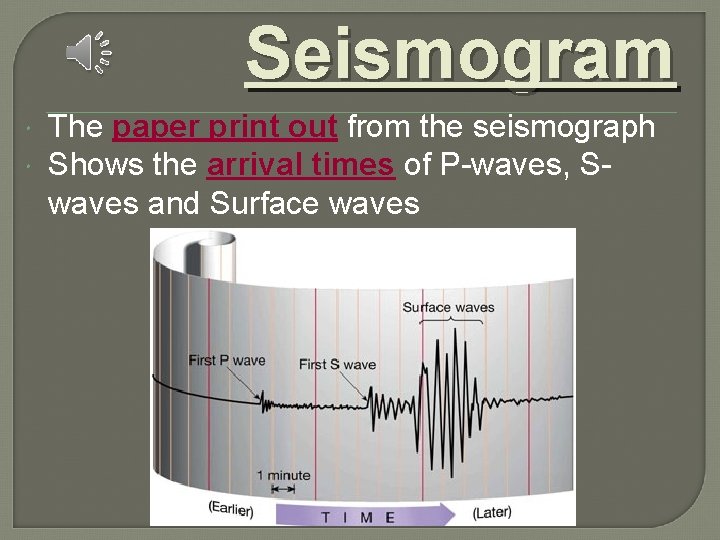
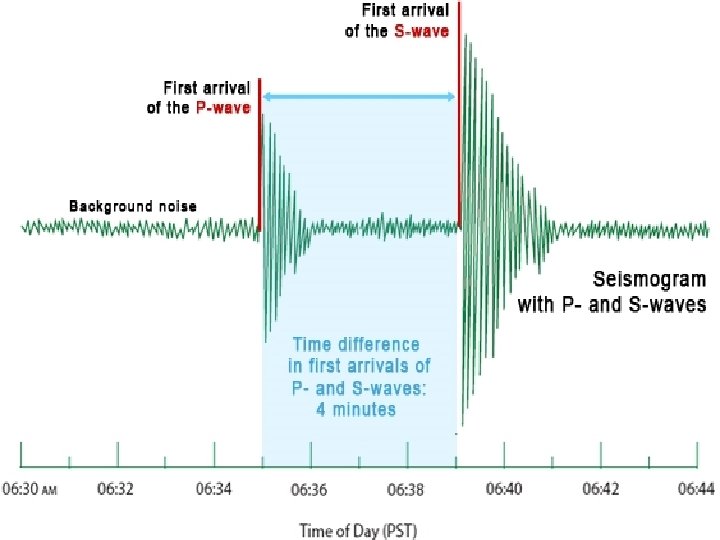
Seismogram The paper print out from the seismograph Shows the arrival times of P-waves, Swaves and Surface waves
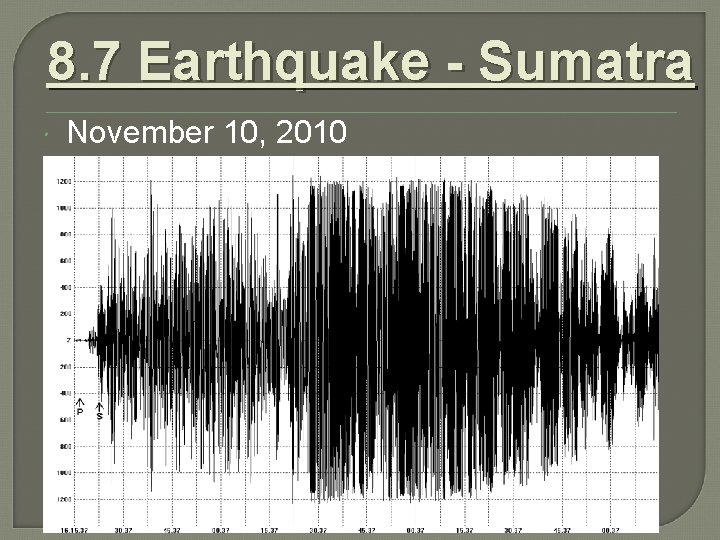
8. 7 Earthquake - Sumatra November 10, 2010
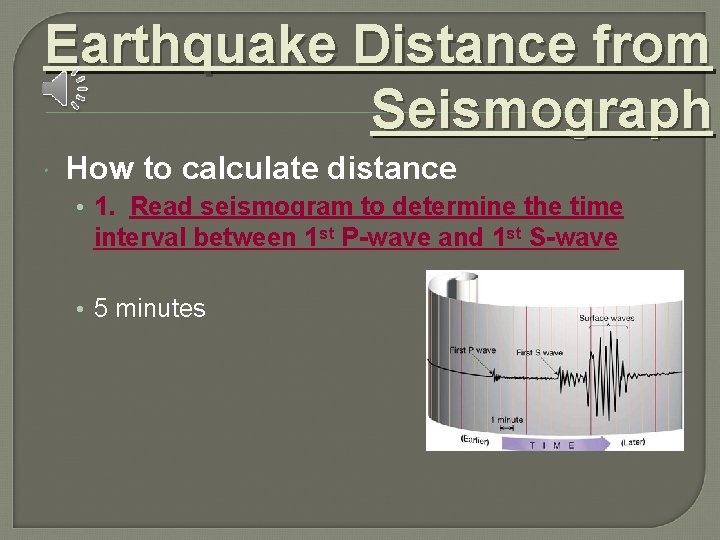
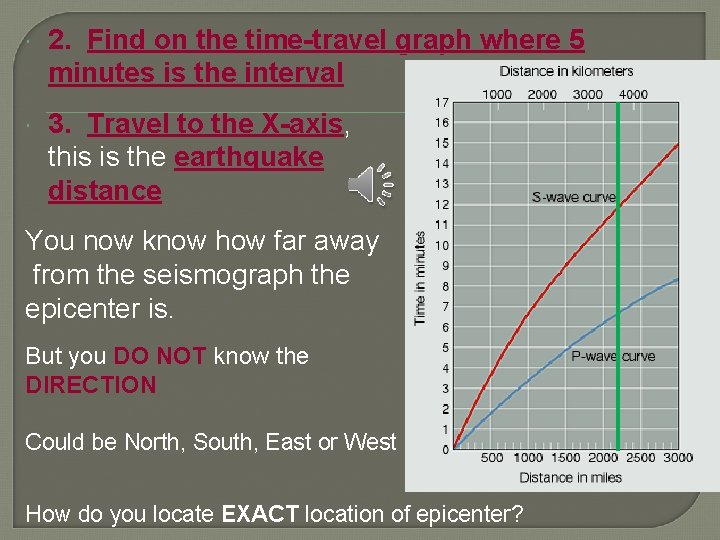
Earthquake Distance from Seismograph How to calculate distance • 1. Read seismogram to determine the time interval between 1 st P-wave and 1 st S-wave • 5 minutes
2. Find on the time-travel graph where 5 minutes is the interval 3. Travel to the X-axis, this is the earthquake distance You now know how far away from the seismograph the epicenter is. But you DO NOT know the DIRECTION Could be North, South, East or West How do you locate EXACT location of epicenter?
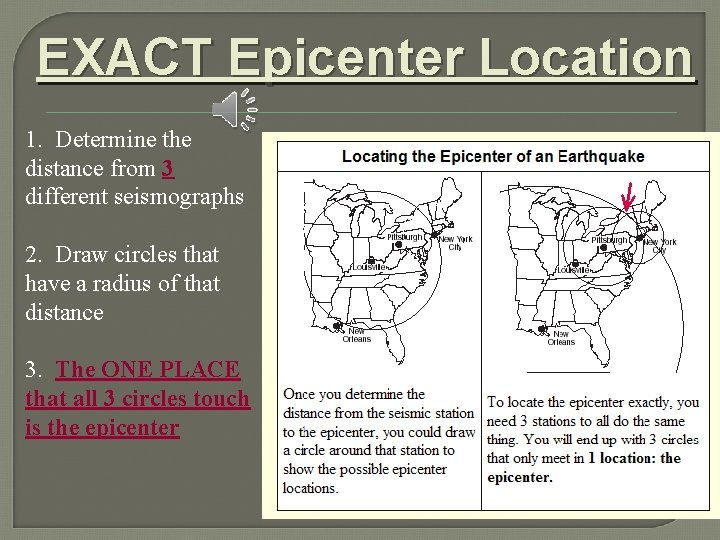
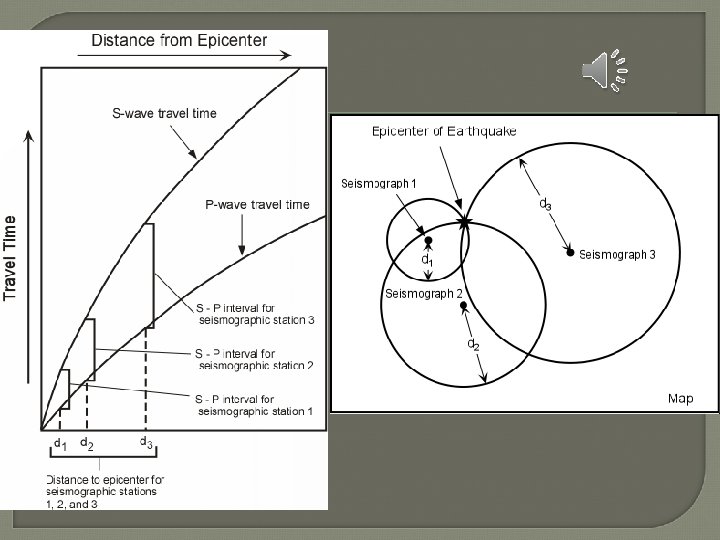
EXACT Epicenter Location 1. Determine the distance from 3 different seismographs 2. Draw circles that have a radius of that distance 3. The ONE PLACE that all 3 circles touch is the epicenter
Virtual Labs – copy and paste into google chrome http: //www. glencoe. com/sites/common_as sets/science/virtual_labs/ES 09. html (virtual lab part 1) http: //www. sciencecourseware. com/virtual earthquake/VQuake. Execute. html (virtual lab part 2)