
Earthquakes and Volcanoes Vocabulary Unit 2 Earths Systems
Earthquakes and Volcanoes Vocabulary Unit 2: Earth’s Systems and Resources
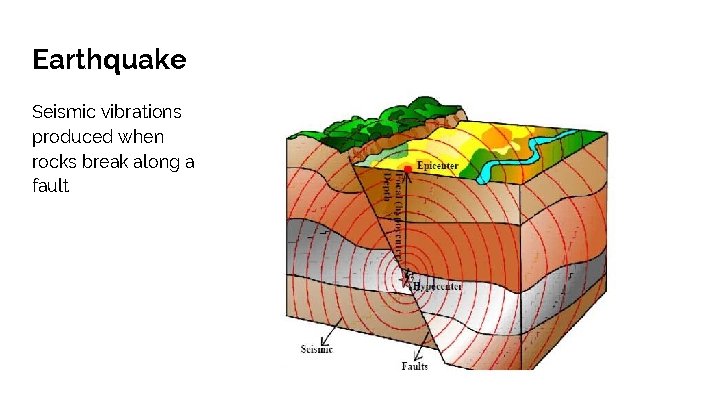
Earthquake Seismic vibrations produced when rocks break along a fault
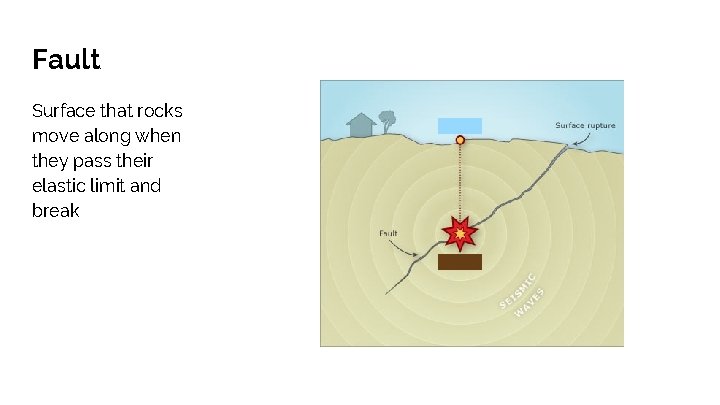
Fault Surface that rocks move along when they pass their elastic limit and break
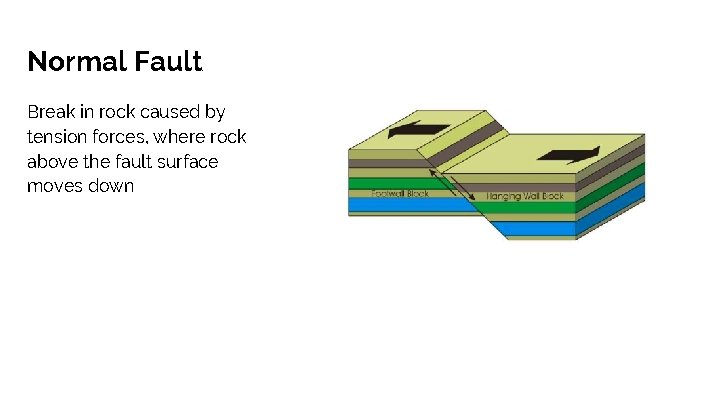
Normal Fault Break in rock caused by tension forces, where rock above the fault surface moves down
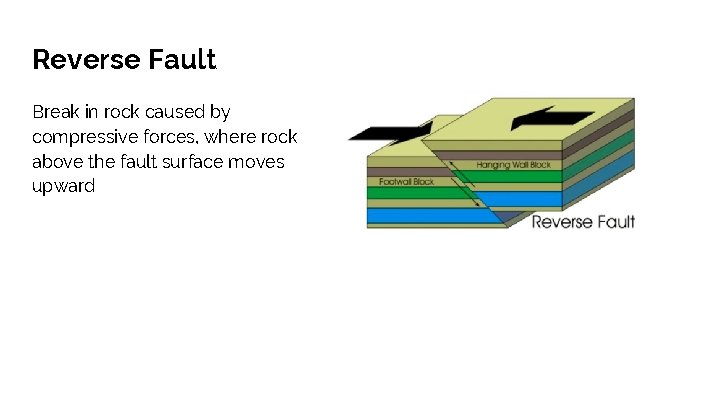
Reverse Fault Break in rock caused by compressive forces, where rock above the fault surface moves upward
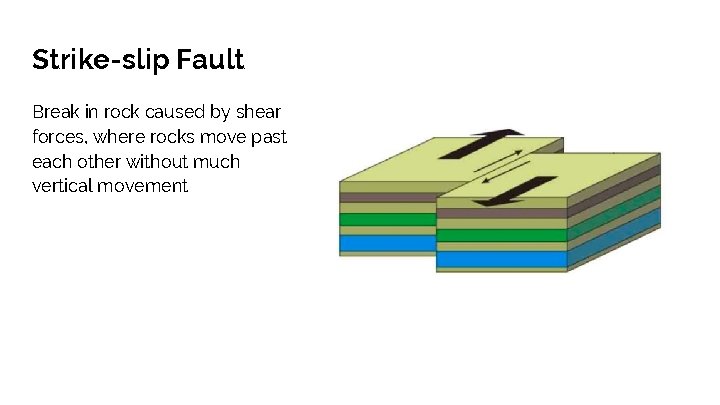
Strike-slip Fault Break in rock caused by shear forces, where rocks move past each other without much vertical movement
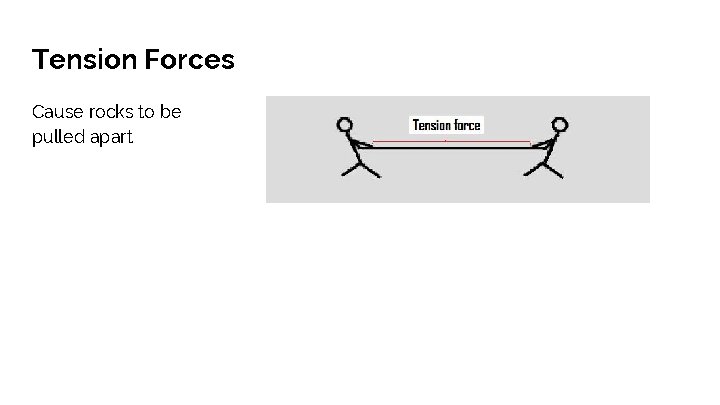
Tension Forces Cause rocks to be pulled apart
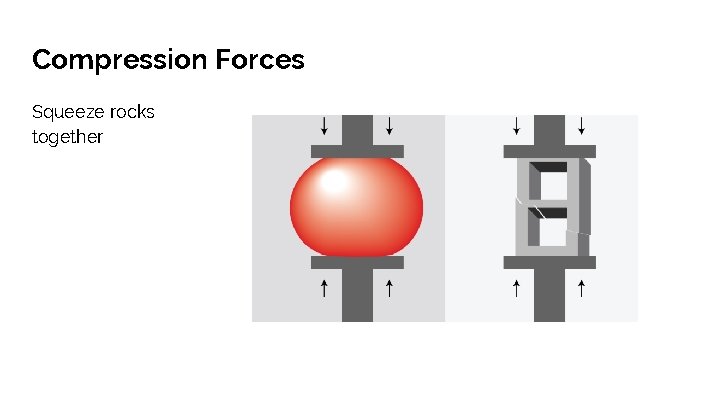
Compression Forces Squeeze rocks together
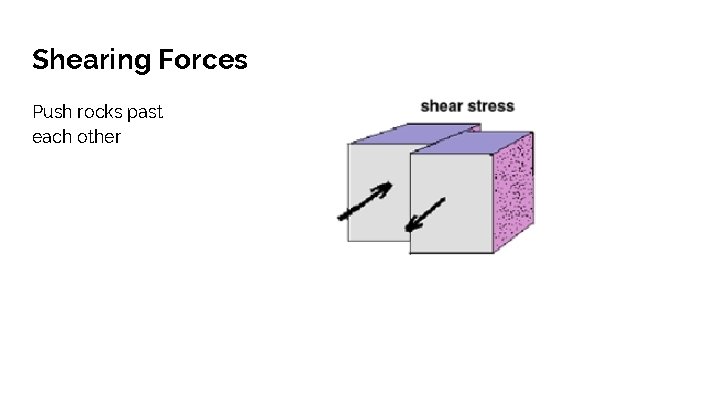
Shearing Forces Push rocks past each other
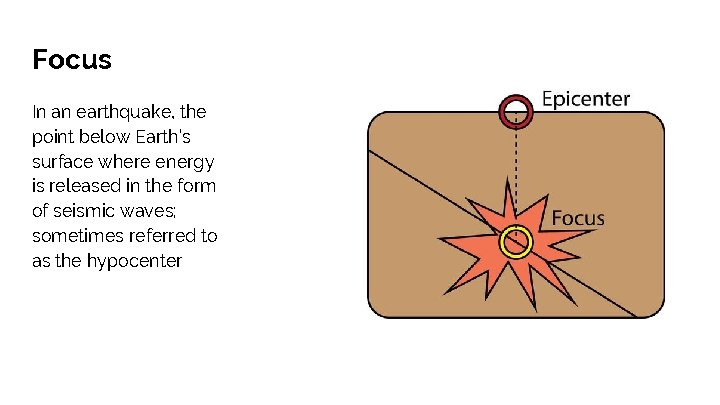
Focus In an earthquake, the point below Earth’s surface where energy is released in the form of seismic waves; sometimes referred to as the hypocenter
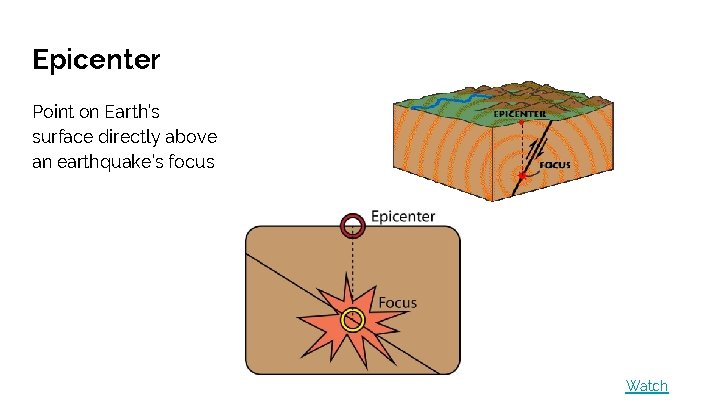
Epicenter Point on Earth’s surface directly above an earthquake’s focus Watch
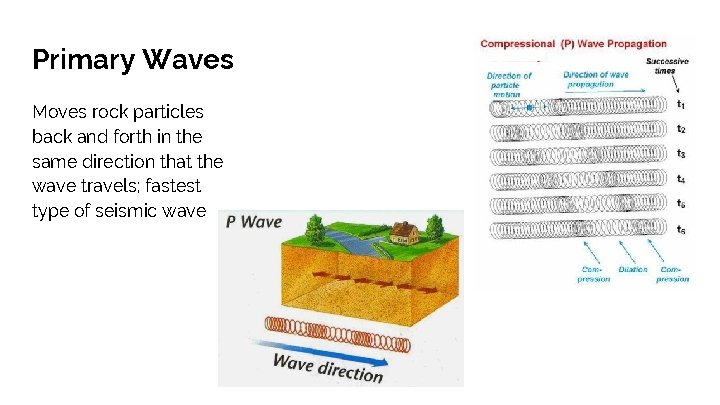
Primary Waves Moves rock particles back and forth in the same direction that the wave travels; fastest type of seismic wave
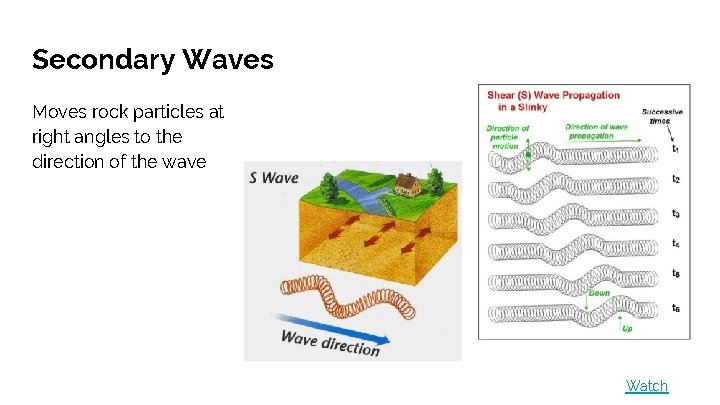
Secondary Waves Moves rock particles at right angles to the direction of the wave Watch
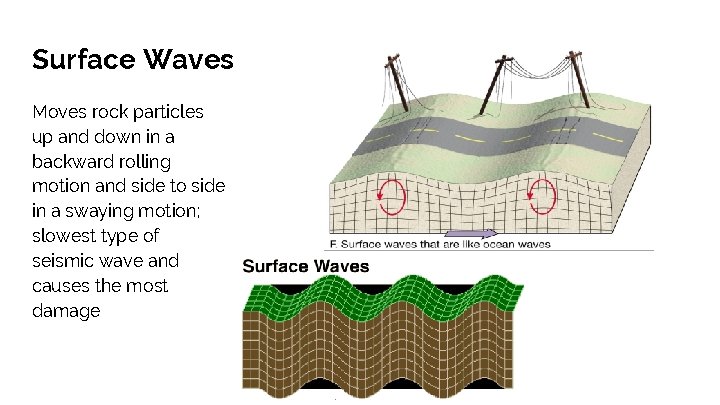
Surface Waves Moves rock particles up and down in a backward rolling motion and side to side in a swaying motion; slowest type of seismic wave and causes the most damage
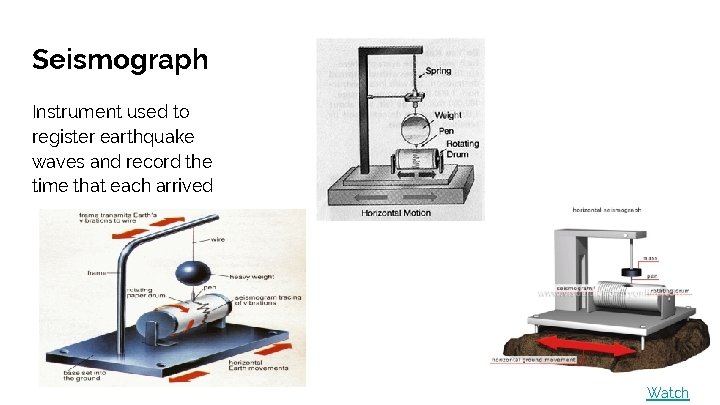
Seismograph Instrument used to register earthquake waves and record the time that each arrived Watch
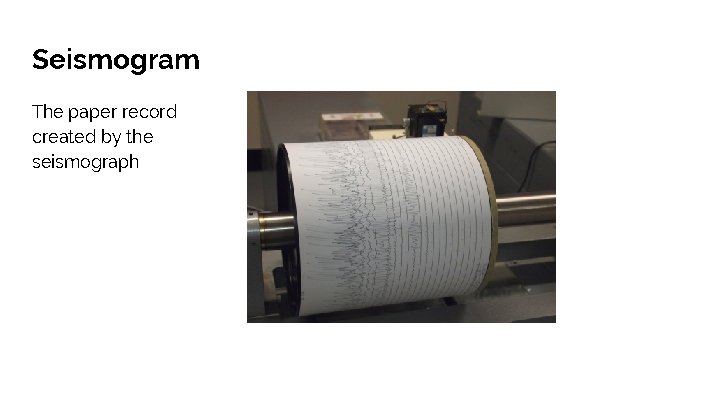
Seismogram The paper record created by the seismograph
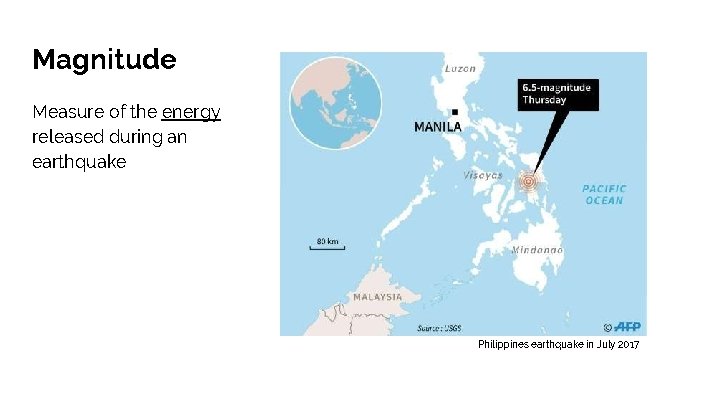
Magnitude Measure of the energy released during an earthquake Philippines earthquake in July 2017
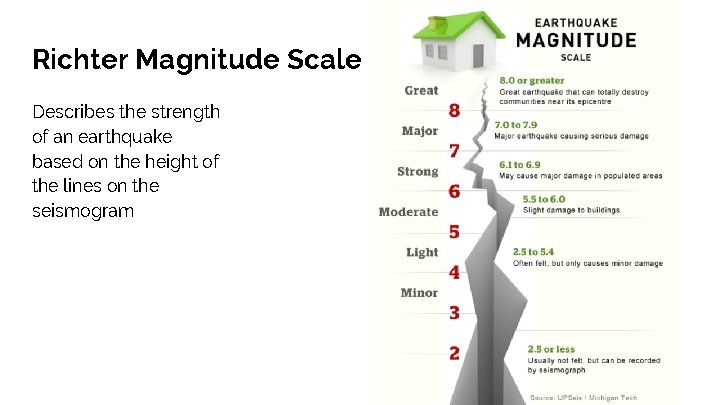
Richter Magnitude Scale Describes the strength of an earthquake based on the height of the lines on the seismogram
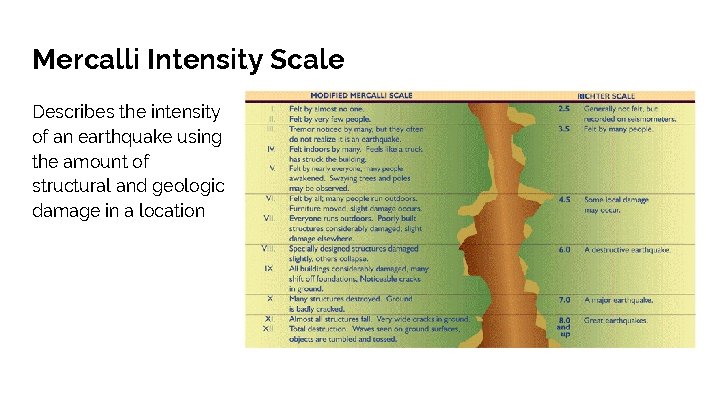
Mercalli Intensity Scale Describes the intensity of an earthquake using the amount of structural and geologic damage in a location
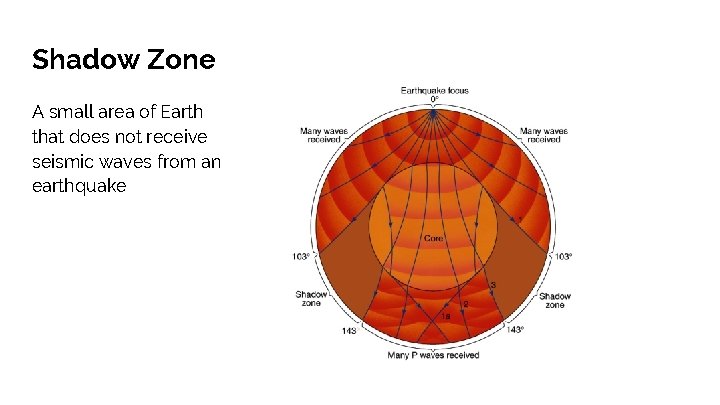
Shadow Zone A small area of Earth that does not receive seismic waves from an earthquake
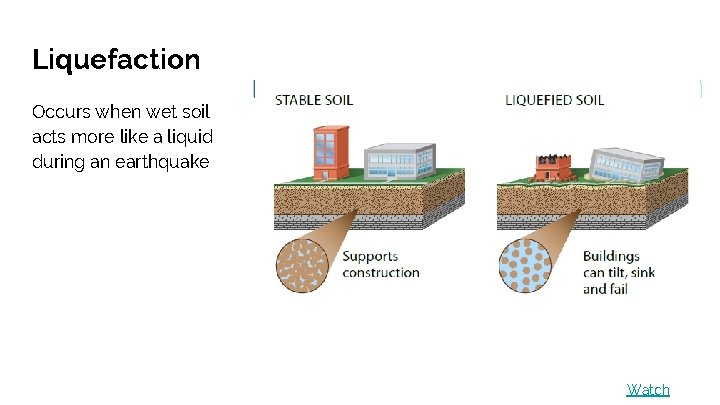
Liquefaction Occurs when wet soil acts more like a liquid during an earthquake Watch
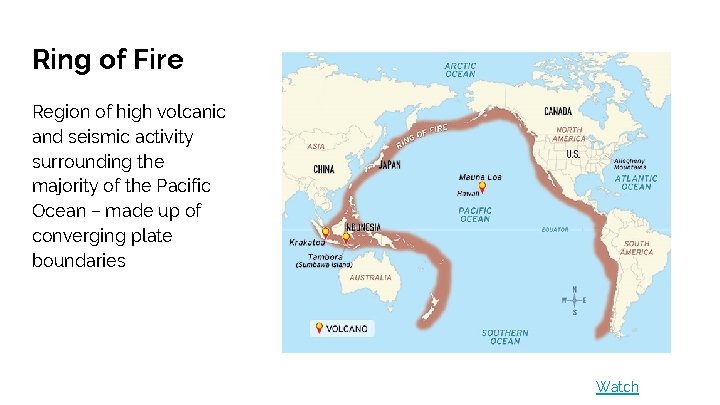
Ring of Fire Region of high volcanic and seismic activity surrounding the majority of the Pacific Ocean – made up of converging plate boundaries Watch
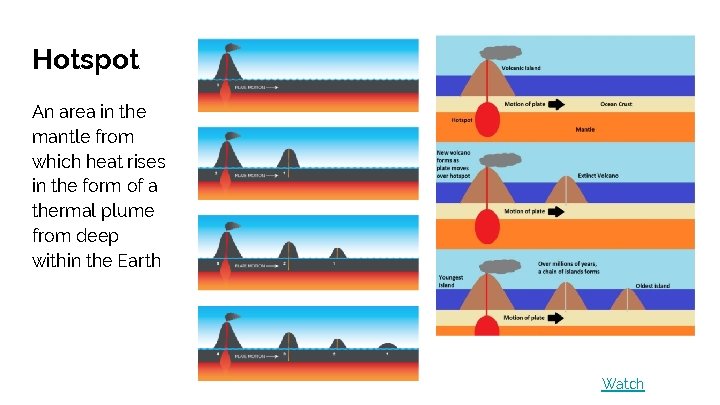
Hotspot An area in the mantle from which heat rises in the form of a thermal plume from deep within the Earth Watch
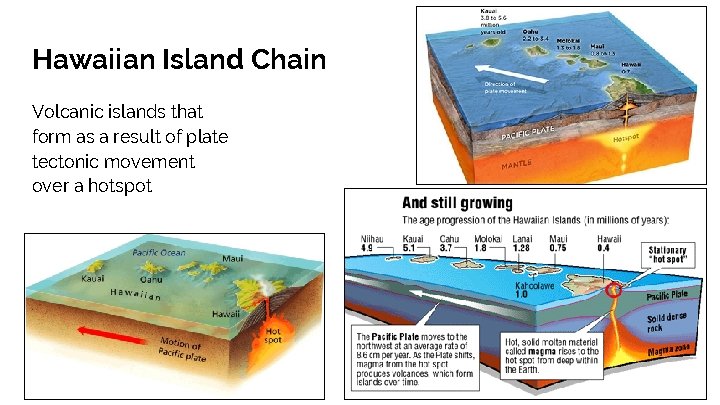
Hawaiian Island Chain Volcanic islands that form as a result of plate tectonic movement over a hotspot
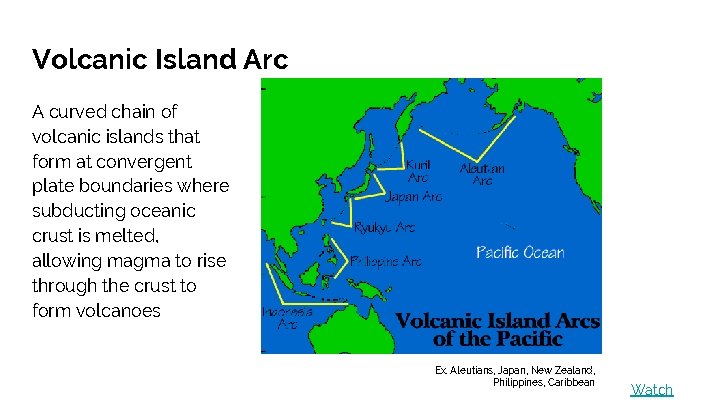
Volcanic Island Arc A curved chain of volcanic islands that form at convergent plate boundaries where subducting oceanic crust is melted, allowing magma to rise through the crust to form volcanoes Ex. Aleutians, Japan, New Zealand, Philippines, Caribbean Watch
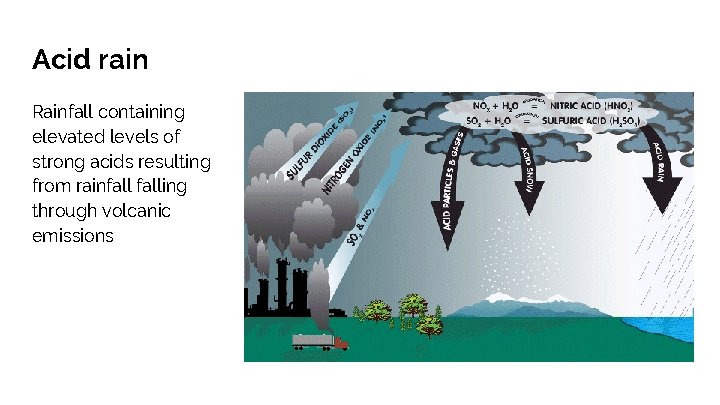
Acid rain Rainfall containing elevated levels of strong acids resulting from rainfalling through volcanic emissions
- Slides: 26