
Earthquakes and the Earths Structure Earthquakes An earthquake
- Slides: 24
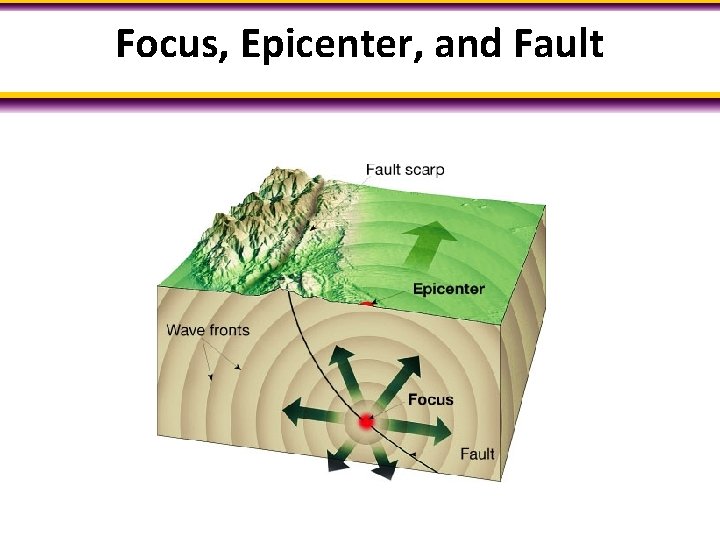
Earthquakes and the Earth’s Structure Earthquakes An earthquake is the vibration of Earth produced by the rapid release of energy Focus and Epicenter • • Focus is the point within Earth where the earthquake starts. Epicenter is the location on the surface directly above the focus. Faults • Faults are fractures in Earth where movement has occurred.
What causes an earthquake? • Caused by sudden slip on a fault, and the resulting ground shaking and radiated seismic energy caused by the slip • Caused by volcanic or magmatic activity, • Caused by other sudden stress changes in the earth.
Focus, Epicenter, and Fault
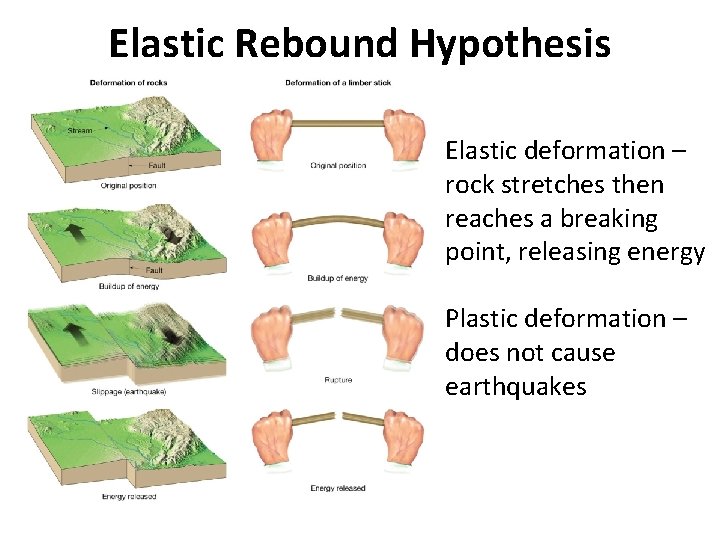
Earthquakes Cause of Earthquakes Elastic Rebound Hypothesis • Most earthquakes are produced by the rapid release of elastic energy stored in rock that has been subjected to great forces. • When the strength of the rock is exceeded, it suddenly breaks, causing the vibrations of an earthquake. 1) Elastic deformation – rock stretches then reaches a breaking point, releasing energy, causes earthquakes. 2) Plastic deformation – does not cause earthquakes
Elastic Rebound Hypothesis Elastic deformation – rock stretches then reaches a breaking point, releasing energy Plastic deformation – does not cause earthquakes
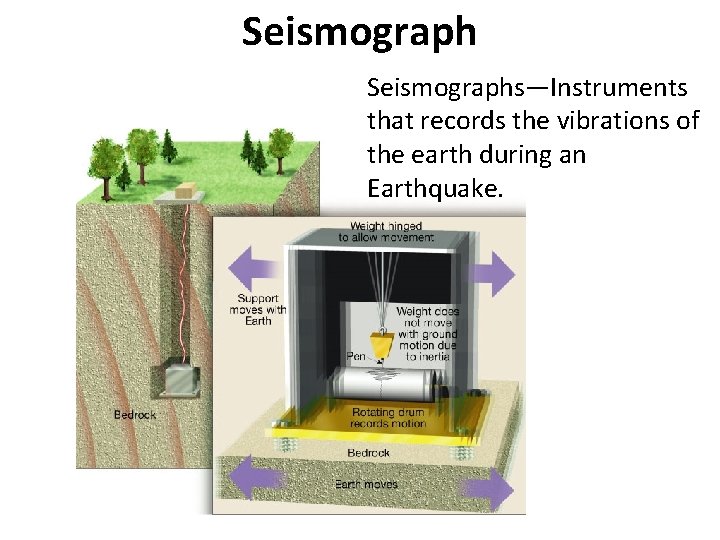
Seismographs—Instruments that records the vibrations of the earth during an Earthquake.
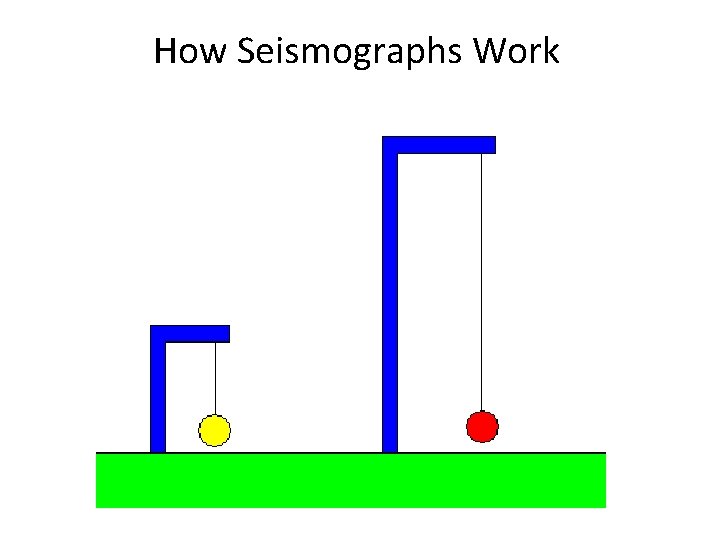
How Seismographs Work the pendulum remains fixed as the ground moves beneath it
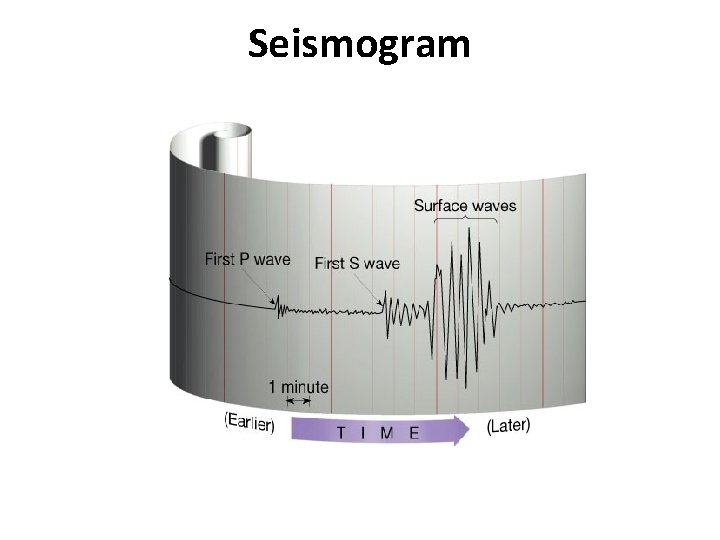
Seismogram
Earthquake Terms • Seismographs—Instruments that records the vibrations of the earth during an Earthquake. • Seismologists—People who study earthquakes. • Richter Scale— Scale used to measure the strength of an earthquake. • Magnitude—The strength of an earthquake.
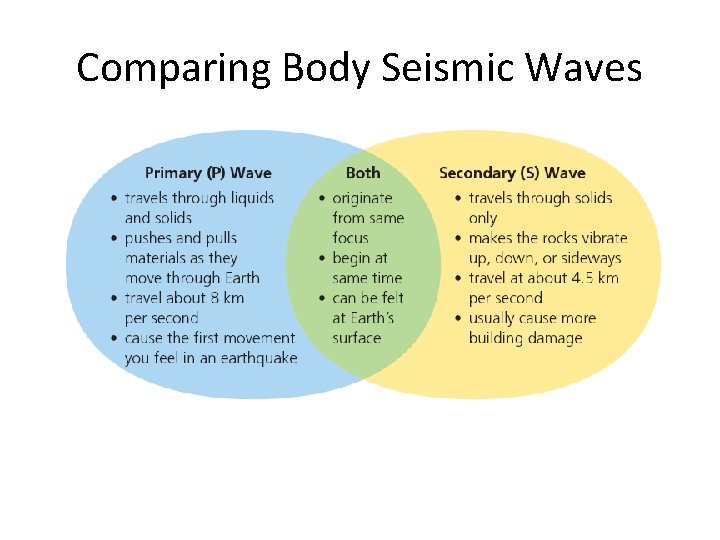
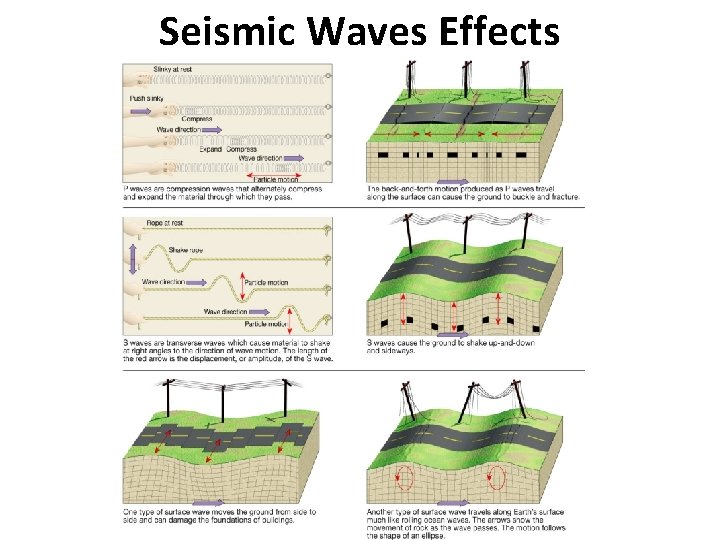
Seismic Waves Body Waves • Identified as P (primary) waves or S (secondary) waves • P waves - Are push-pull waves that push (compress) and pull (expand) in the direction that the waves travel - Travel through solids, liquids, and gases - Have the greatest velocity of all earthquake waves 8 km/sec • S waves - Shake particles at right angles to the direction that they travel - Travel only through solids. Cannot travel through liquids - Slower velocity than P waves 4. 5 km/sec Surface Waves - L or Love waves - Rayleigh waves
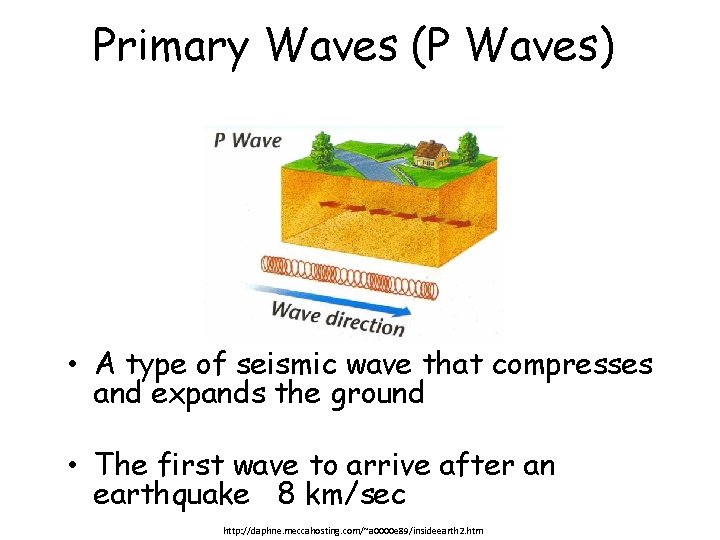
Primary Waves (P Waves) • A type of seismic wave that compresses and expands the ground • The first wave to arrive after an earthquake 8 km/sec http: //daphne. meccahosting. com/~a 0000 e 89/insideearth 2. htm
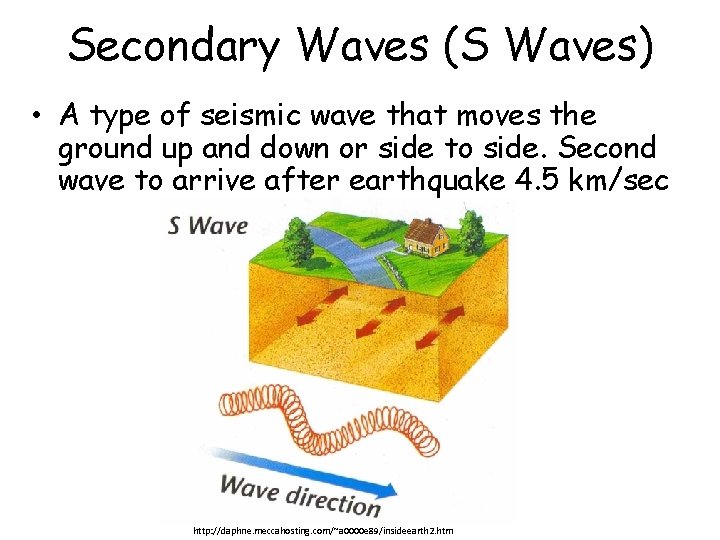
Secondary Waves (S Waves) • A type of seismic wave that moves the ground up and down or side to side. Second wave to arrive after earthquake 4. 5 km/sec http: //daphne. meccahosting. com/~a 0000 e 89/insideearth 2. htm
Comparing Body Seismic Waves
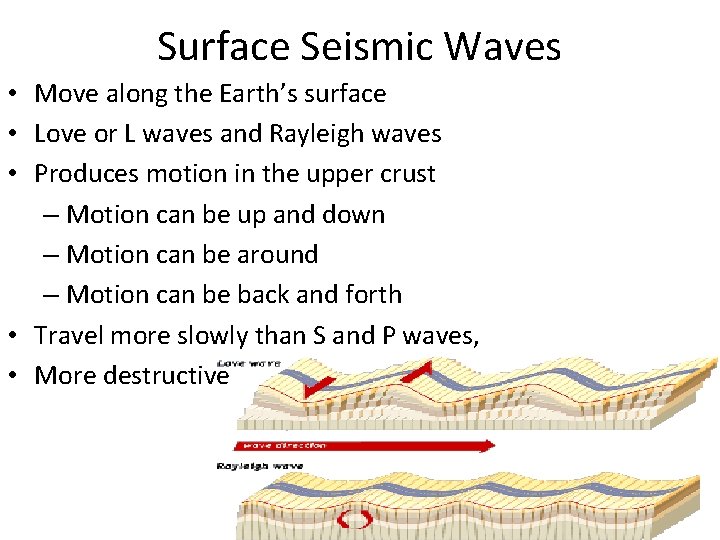
Surface Seismic Waves • Move along the Earth’s surface • Love or L waves and Rayleigh waves • Produces motion in the upper crust – Motion can be up and down – Motion can be around – Motion can be back and forth • Travel more slowly than S and P waves, • More destructive
Seismic Waves Effects
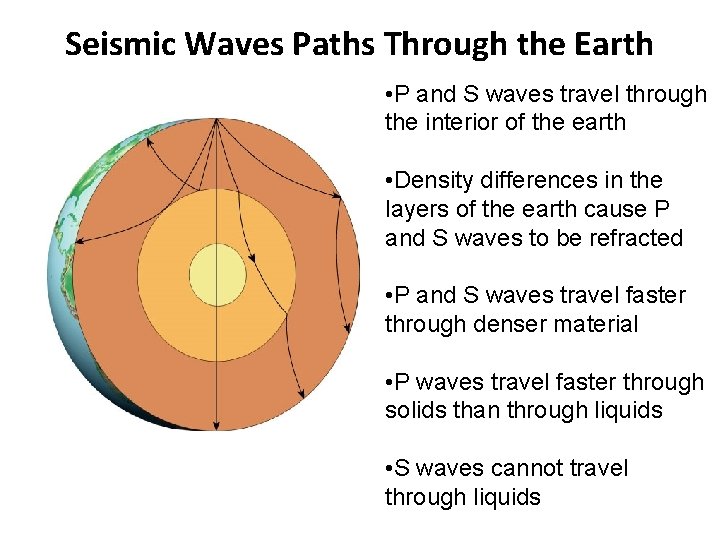
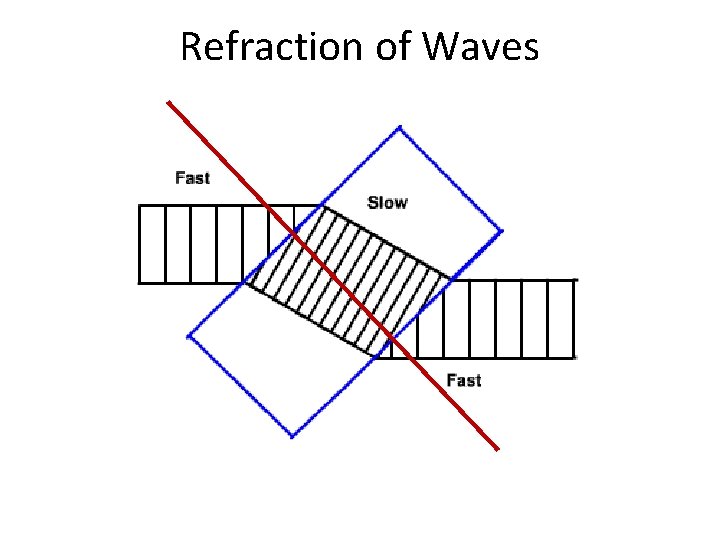
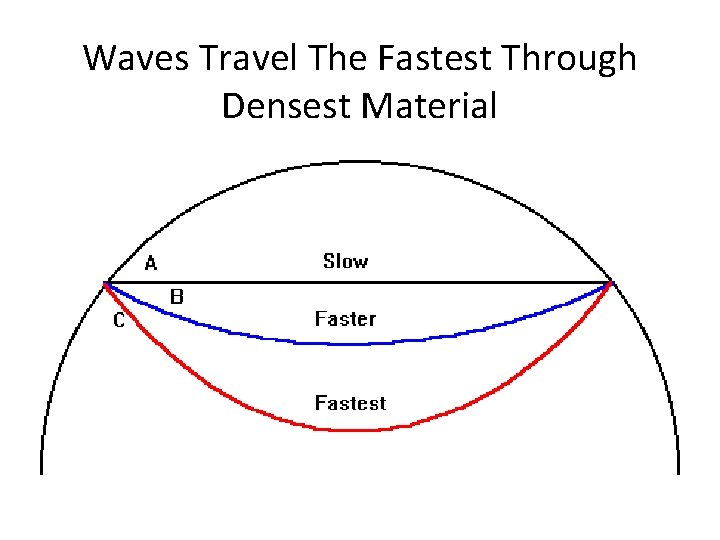
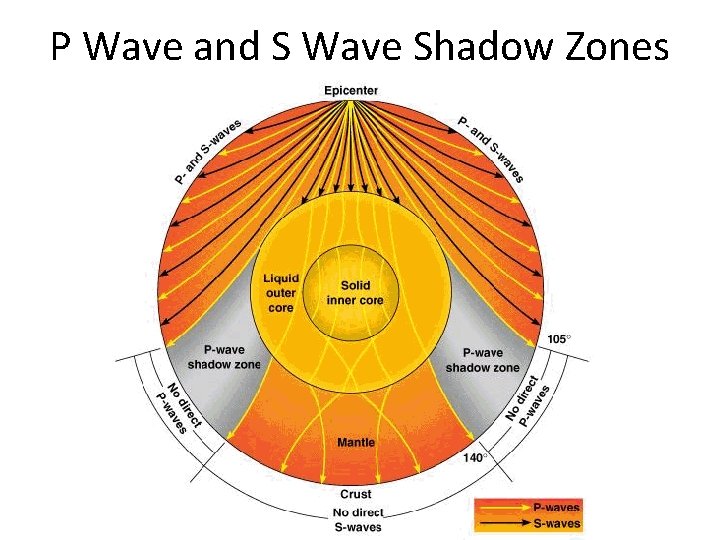
Seismic Waves Paths Through the Earth • P and S waves travel through the interior of the earth • Density differences in the layers of the earth cause P and S waves to be refracted • P and S waves travel faster through denser material • P waves travel faster through solids than through liquids • S waves cannot travel through liquids
Refraction of Waves
Waves Travel The Fastest Through Densest Material
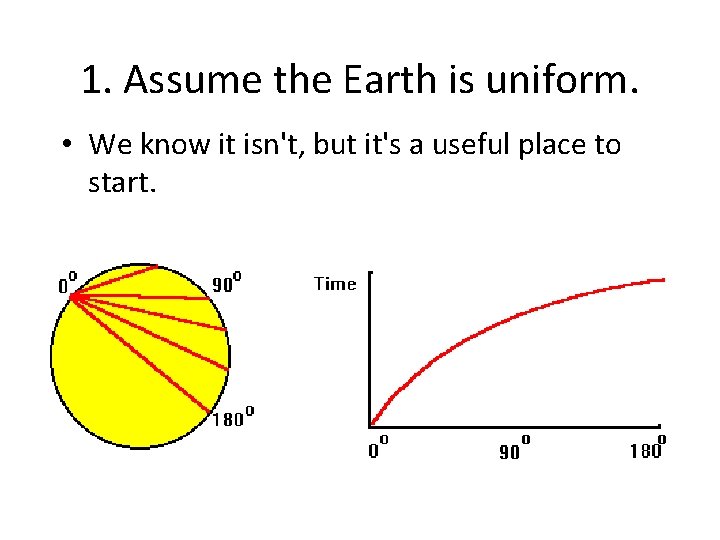
1. Assume the Earth is uniform. • We know it isn't, but it's a useful place to start.
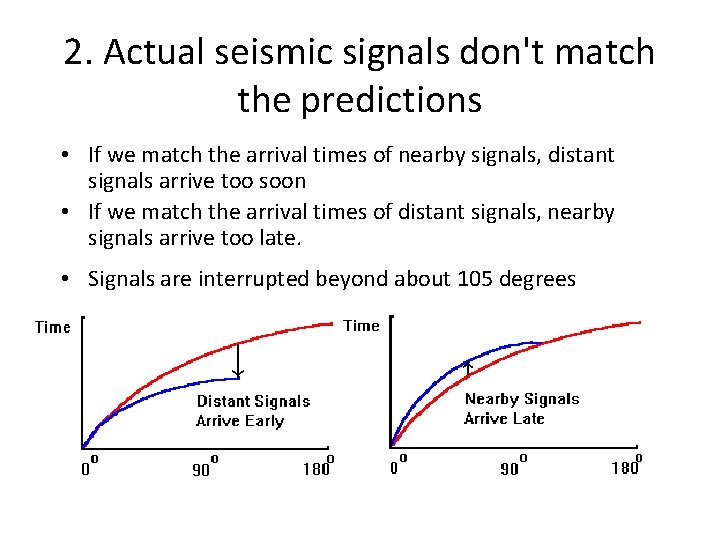
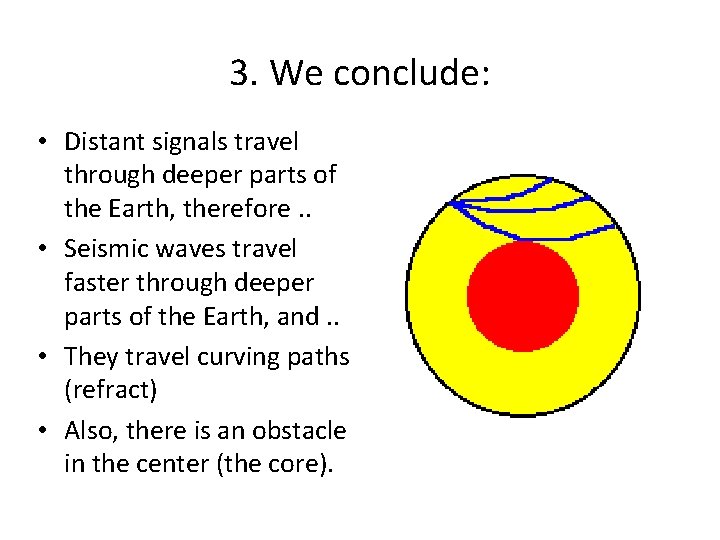
2. Actual seismic signals don't match the predictions • If we match the arrival times of nearby signals, distant signals arrive too soon • If we match the arrival times of distant signals, nearby signals arrive too late. • Signals are interrupted beyond about 105 degrees
3. We conclude: • Distant signals travel through deeper parts of the Earth, therefore. . • Seismic waves travel faster through deeper parts of the Earth, and. . • They travel curving paths (refract) • Also, there is an obstacle in the center (the core).
P Wave and S Wave Shadow Zones
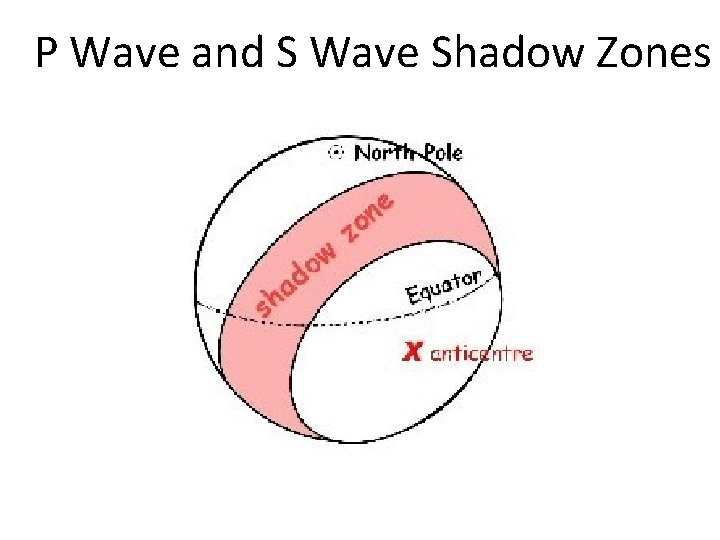
P Wave and S Wave Shadow Zones
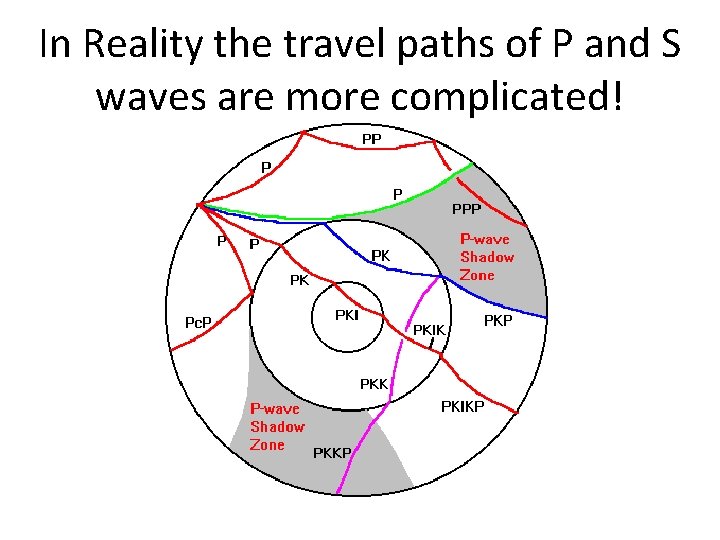
In Reality the travel paths of P and S waves are more complicated!