
EARTHQUAKES AND SEISMIC WAVES Earthquake shaking and trebling
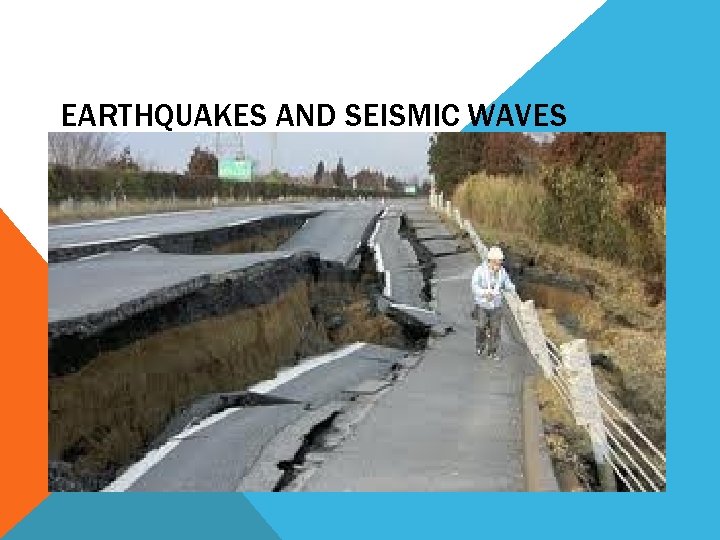
EARTHQUAKES AND SEISMIC WAVES
Earthquake – shaking and trebling that results from the movement of rock beneath Earth’s surface. Plate movement causes earthquakes from stress and faults in Earth’s crust. When the rock breaks earthquakes happen
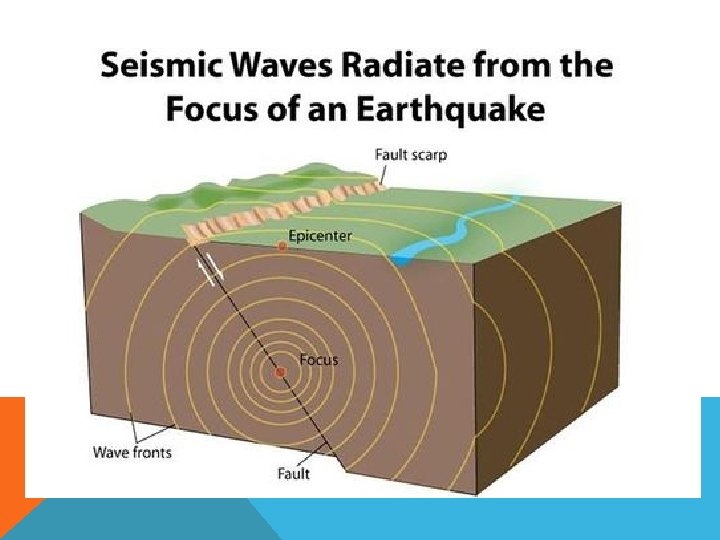
• Most Earthquakes start in the lithosphere about 100 kilometers of Earth’s surface. • Focus – area beneath Earth’s surface where rock that is under stress breaks, causing an earthquake • Epicenter – the point on the surface directly above the focus
• Seismic waves are vibrations that travel through Earth carrying the energy released during an Earthquake • Seismic waves move out from the focus in all directions through the interior and across the surface
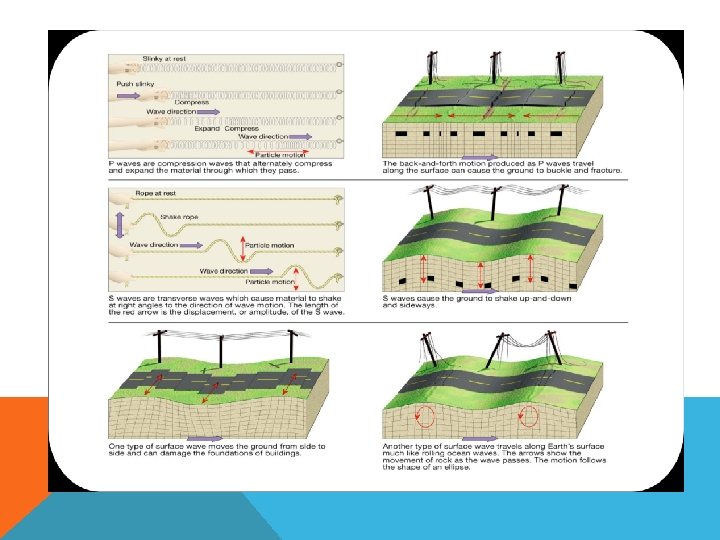
3 main seismic waves • P Waves – Primary waves • First to arrive • They compress and expand the ground • Can damage buildings • Travel through solid and liquid
S Waves – Secondary waves • Seismic waves that vibrate from side to side as well as up and down • Travel through solid not liquid
Surface Waves – when P waves and S waves reach the surface, some become surface waves. • Move slower than P waves and S waves, produce severe ground movement • Can make the ground roll like ocean waves

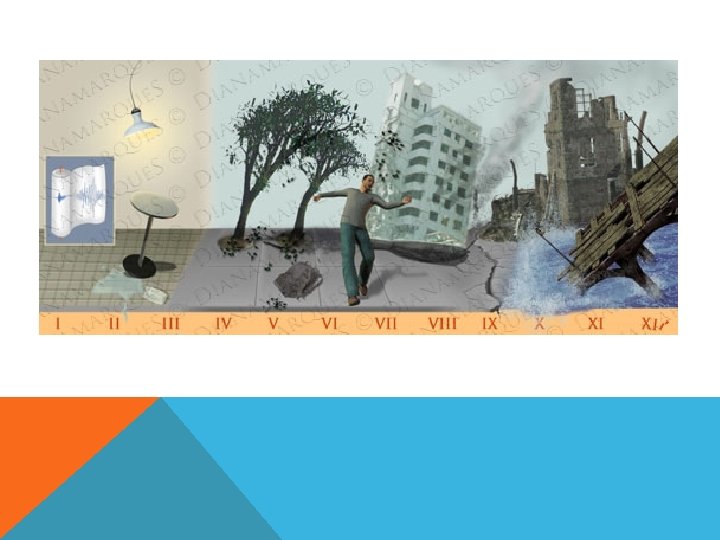
MEASURING EARTHQUAKES Mercalli Scale • Rates Earthquakes by the level of damage at a given place • 12 steps • I-III people notice vibration • IV-VI slight damage • VII-IX Moderate to heavy damage (buildings off foundations or destroyed) • X-XII Great destruction (cracks in the ground, waves seen on surface)
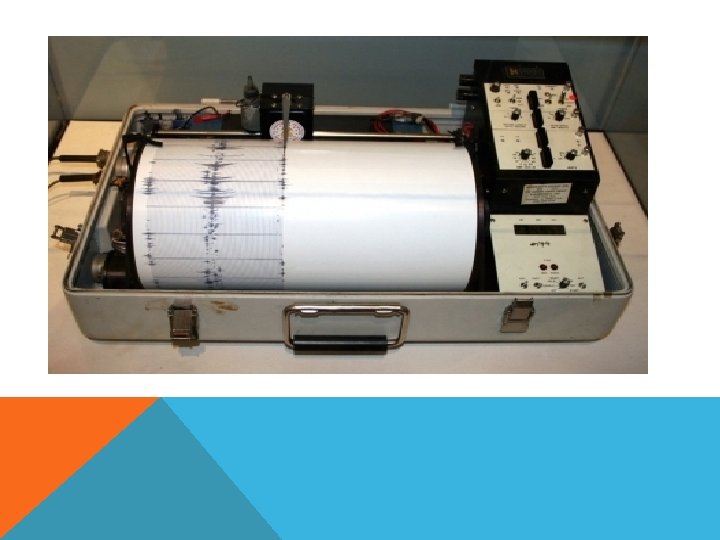
The Richter Scale • Magnitude a number geologists assign based on the earthquake size • Geologists measure seismic waves and fault movement with a Richter scale • Seismic waves are measured by a seismograph • More accurate for small, nearby earthquakes
Moment Magnitude Scale • Rating system that estimates the total energy release • Rates near or far earthquakes • Use data from the seismographs, kind of seismic waves, how strong they were, movement along the fault and the strength of the rocks that broke
Locating the Epicenter • Use seismic waves to locate an earthquake’s epicenter • P waves arrive first, then S waves close behind • They use the arrival time between the P waves and S waves, the farther away the greater the time between the arrival • They then draw three circles using data from different seismographs, where they all intersect that is the epicenter.
News Report As a television news reporter, you are covering an earthquake rated between IV and V on the Mercalli scale. Write a short news story describing the earthquake’s effects. Your lead paragraph should tell who, what where, when and how. (The Mercalli Scale on page 55 Figure 9 will help)
- Slides: 16