
Earthquakes and Earths Interior Earthquakes v General features
- Slides: 22
Earthquakes and Earth’s Interior
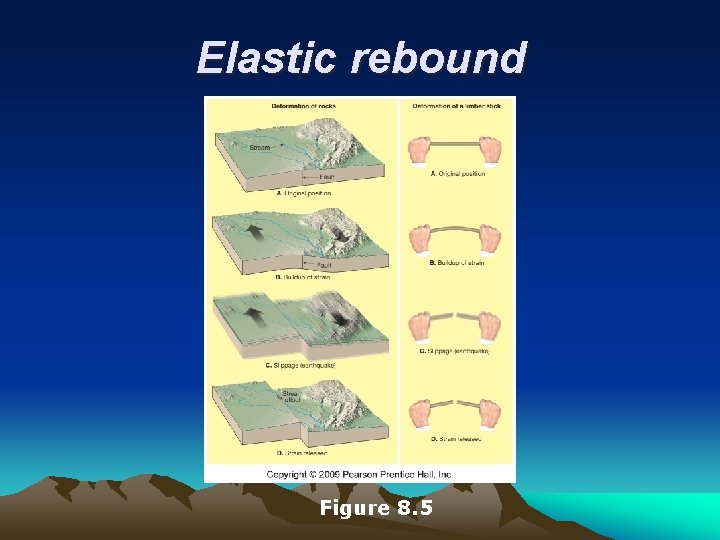
Earthquakes v. General features • Vibration of Earth produced by the rapid release of energy • occur as rock elastically returns to its original shape • Associated with movements along faults
Elastic rebound Figure 8. 5
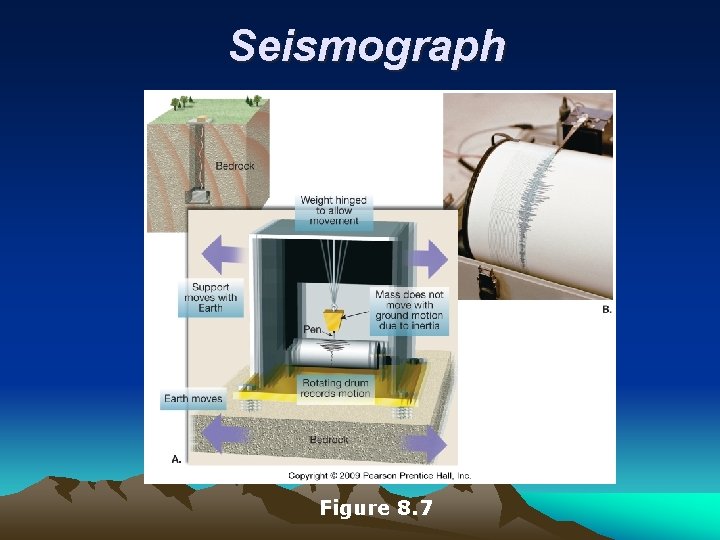
Seismograph Figure 8. 7
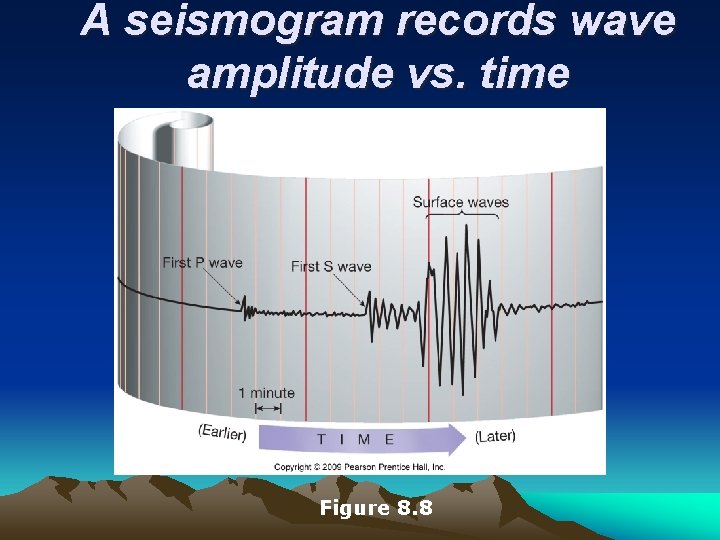
A seismogram records wave amplitude vs. time Figure 8. 8
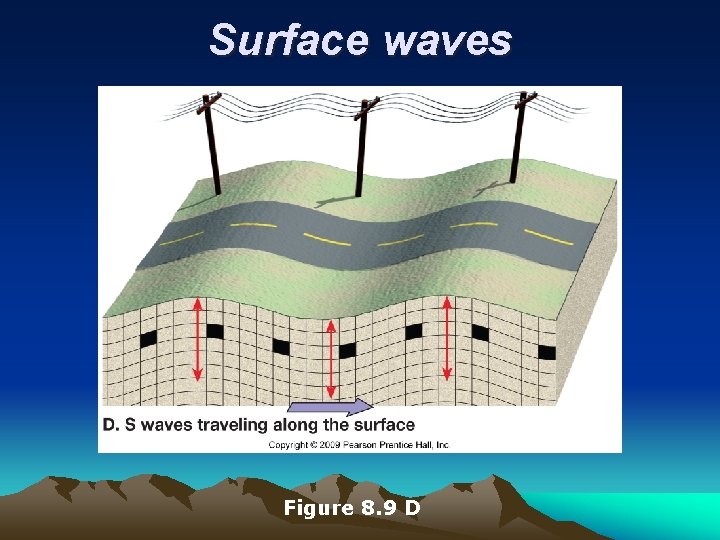
Surface waves Figure 8. 9 D
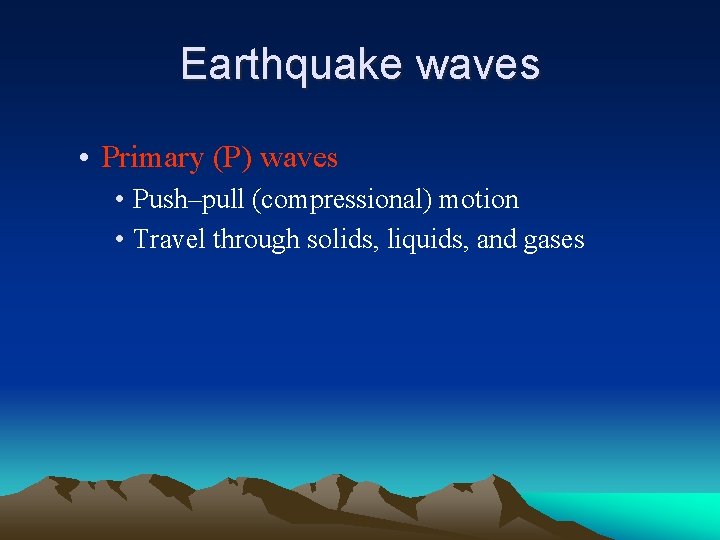
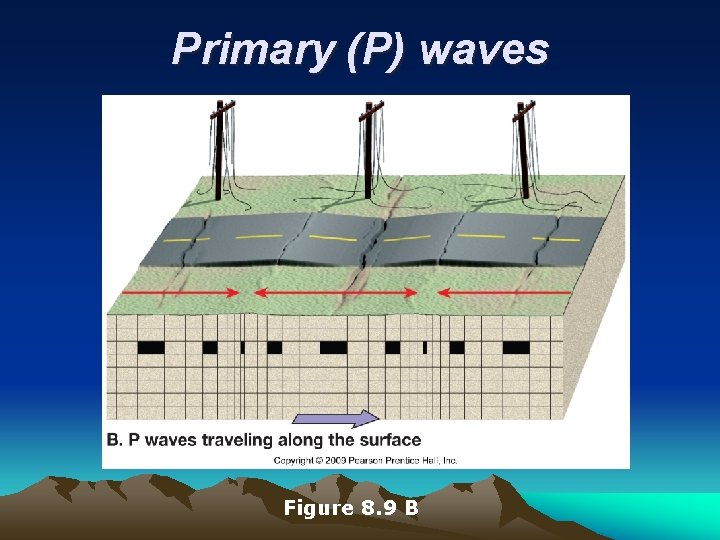
Earthquake waves • Primary (P) waves • Push–pull (compressional) motion • Travel through solids, liquids, and gases
Primary (P) waves Figure 8. 9 B
Types of earthquake waves • Secondary (S) waves – “Shake” motion – Travel only through solids – Slower velocity than P waves
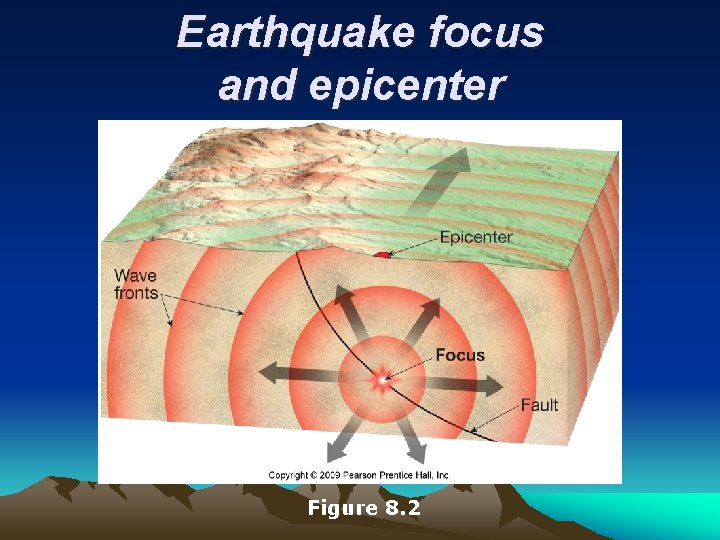
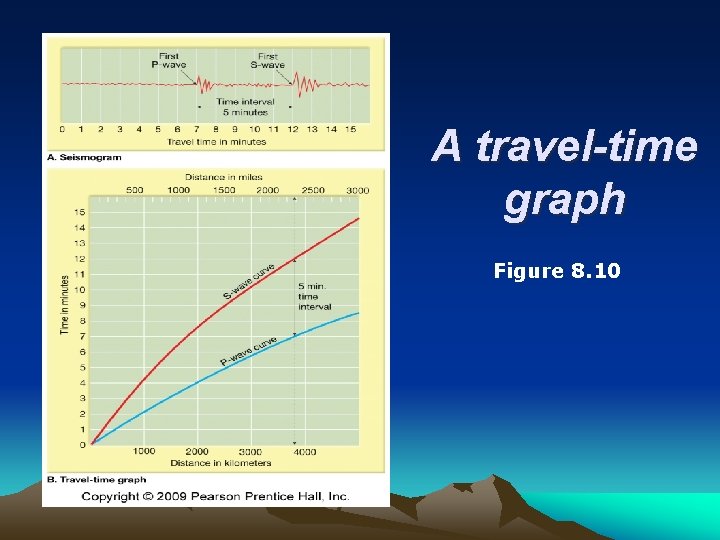
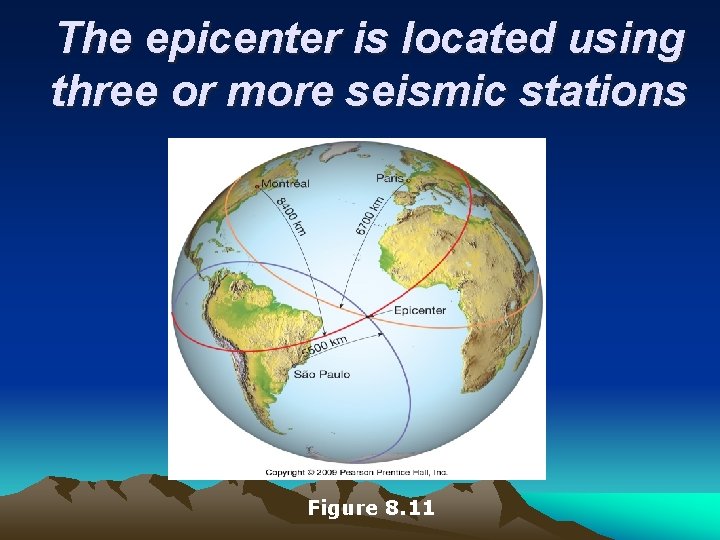
Locating an earthquake • Focus – the place within Earth where earthquake waves originate • Epicenter • Point on the surface, directly above the focus • Located using the difference in the arrival times between P and S wave recordings, which are related to distance
Earthquake focus and epicenter Figure 8. 2
A travel-time graph Figure 8. 10
The epicenter is located using three or more seismic stations Figure 8. 11
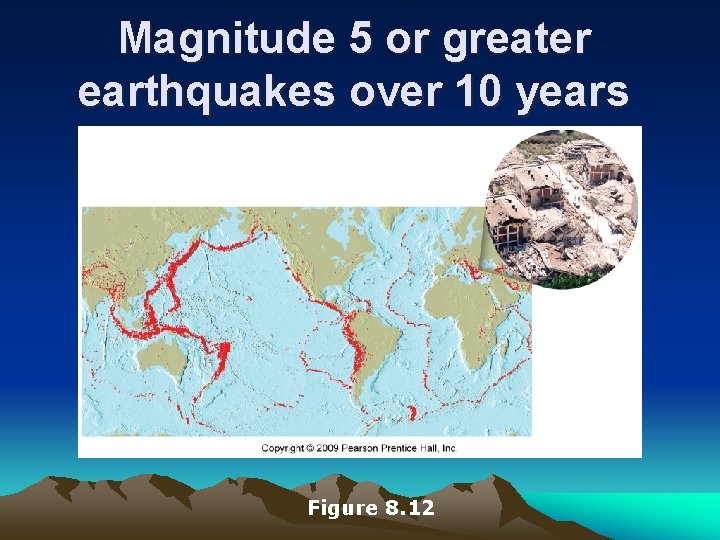
Magnitude 5 or greater earthquakes over 10 years Figure 8. 12
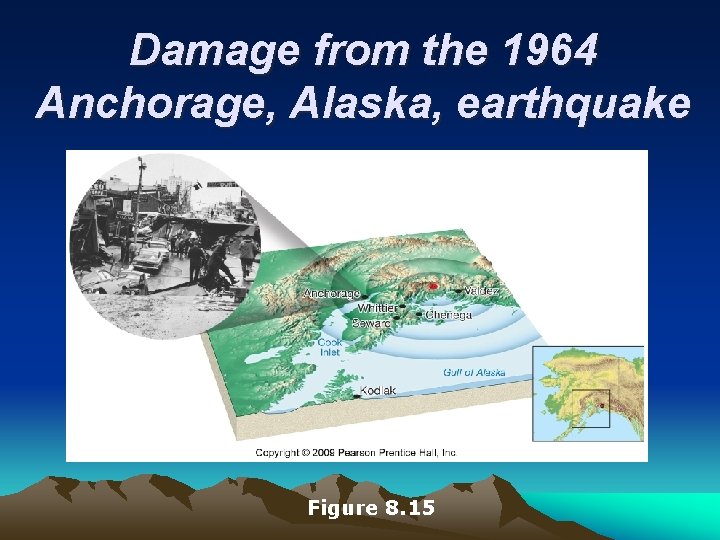
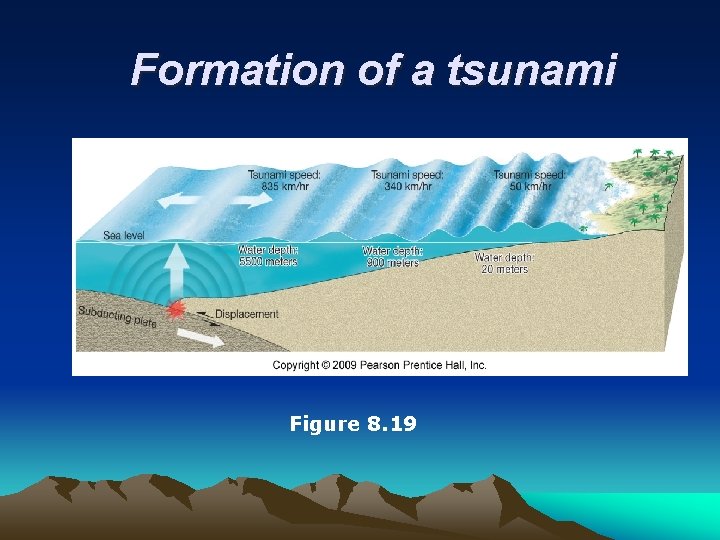
Earthquake destruction • Ground shaking – Liquefaction of the ground • Saturated material turns fluid – Tsunami, or seismic sea waves – Landslides and ground subsidence – Fires
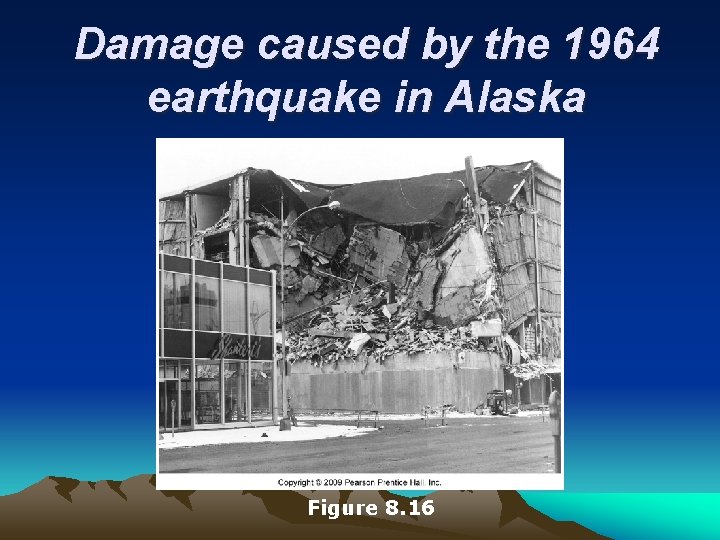
Damage caused by the 1964 earthquake in Alaska Figure 8. 16
Damage from the 1964 Anchorage, Alaska, earthquake Figure 8. 15
Formation of a tsunami Figure 8. 19
Crust • Continental crust – Upper crust composed of granitic rocks – Average density is about 2. 7 g/cm 3 • Oceanic Crust • Basaltic composition • Density about 3. 0 g/cm 3
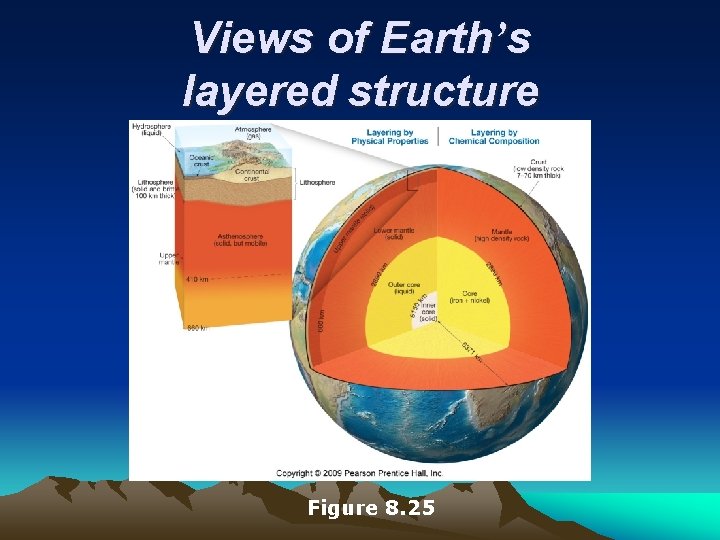
Earth’s internal structure v. Layers based on physical properties • Outer Core • • Below mantle A sphere having a radius of 3, 486 km (2, 161 miles) Composed of an iron–nickel alloy Average density of nearly 11 g/cm 3
Core • Outer Core – Liquid layer – Convective flow of metallic iron within generates Earth’s magnetic field • Inner Core – Behaves like a solid
Views of Earth’s layered structure Figure 8. 25