
Earthquake Engineering Research Institute University of Notre Dame









- Slides: 59
Earthquake Engineering Research Institute University of Notre Dame
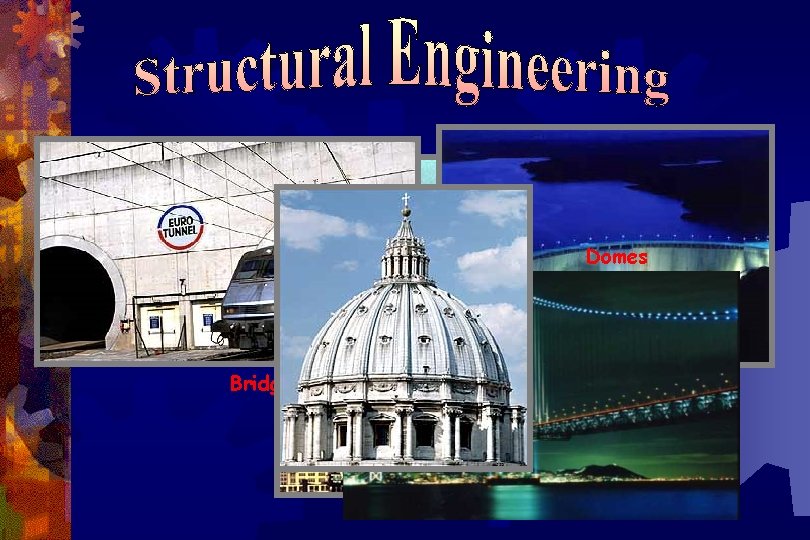
Buildings Dams Tunnels Bridges Domes
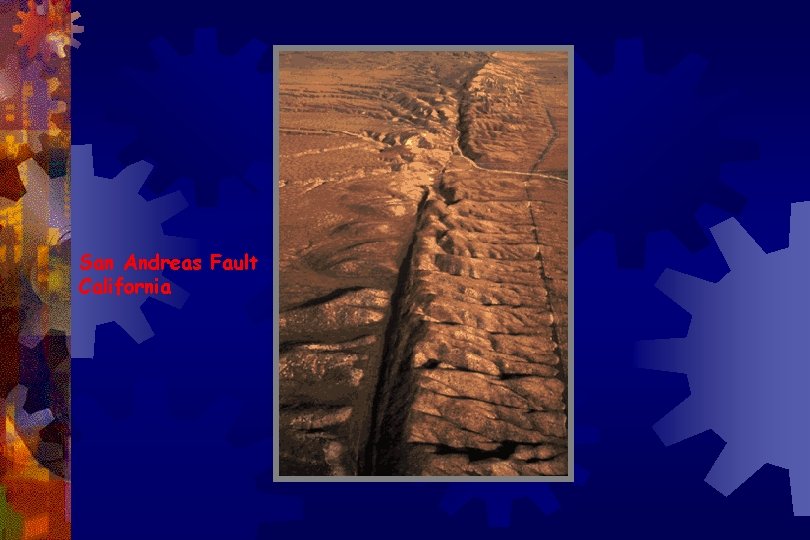
San Andreas Fault California
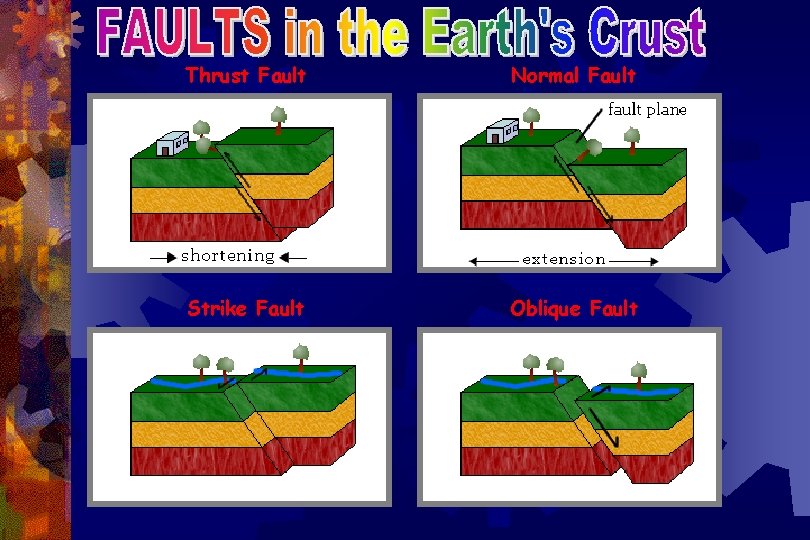
Thrust Fault Normal Fault Strike Fault Oblique Fault
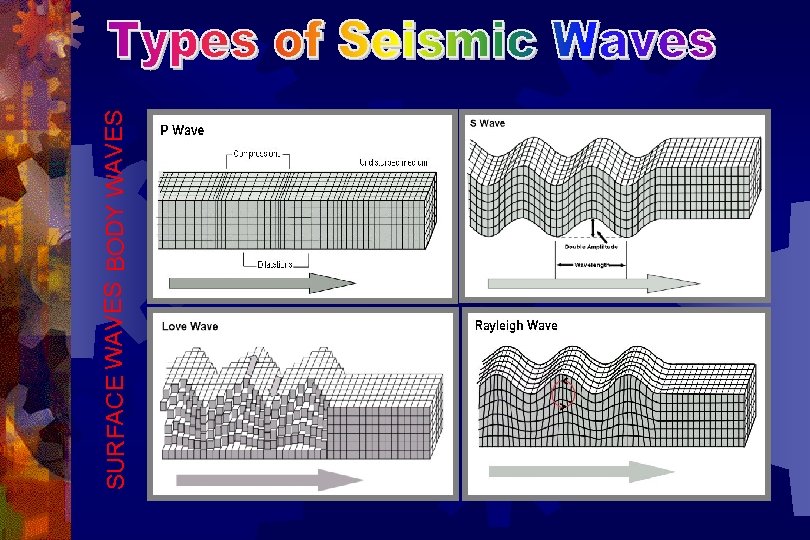
SURFACE WAVES BODY WAVES
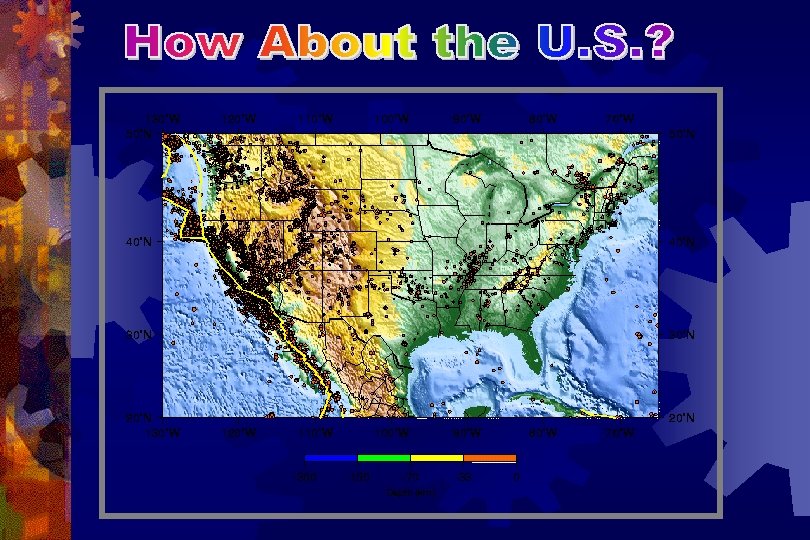
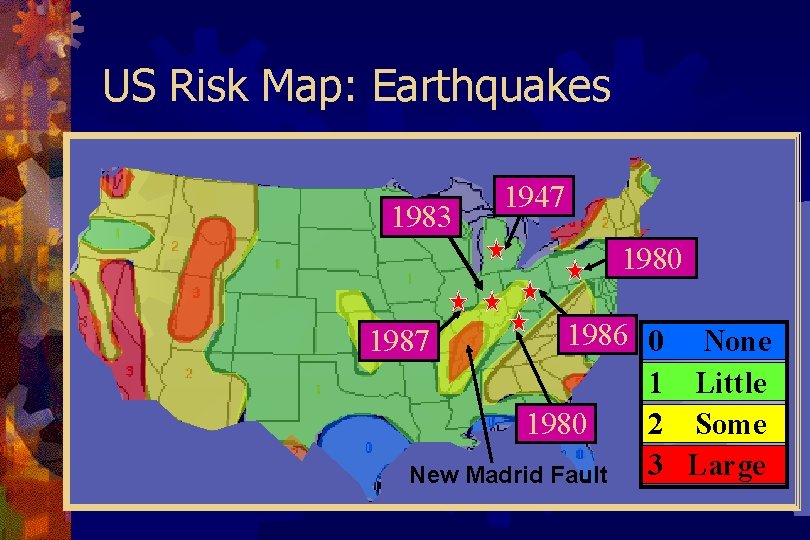
US Risk Map: Earthquakes 1983 1947 1980 1986 0 None 1 Little 2 Some 1980 3 Large New Madrid Fault 1987
How can we protect the lives of those in danger? We must design buildings that can survive earthquakes!
What are buildings made of?
® Companies consisting of 3 or 4 partners ® Company name ® Need teamwork and planning ® Partner tasks ® Building owner ® Architect ® Engineer ® Builder
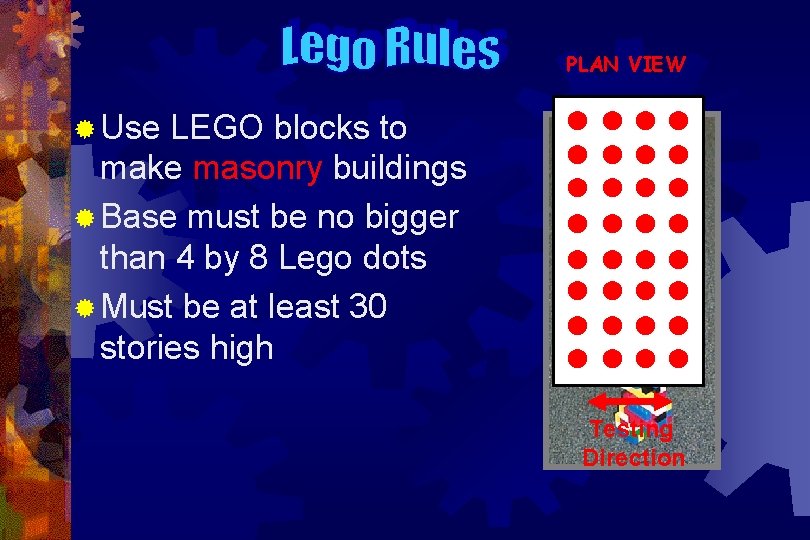
PLAN VIEW ® Use LEGO blocks to make masonry buildings ® Base must be no bigger than 4 by 8 Lego dots ® Must be at least 30 stories high Testing Direction
What goes into designing our building? ® Owner pays for the building ® wants to make money ® must have lots of rooms, especially rooms with windows, and be very tall
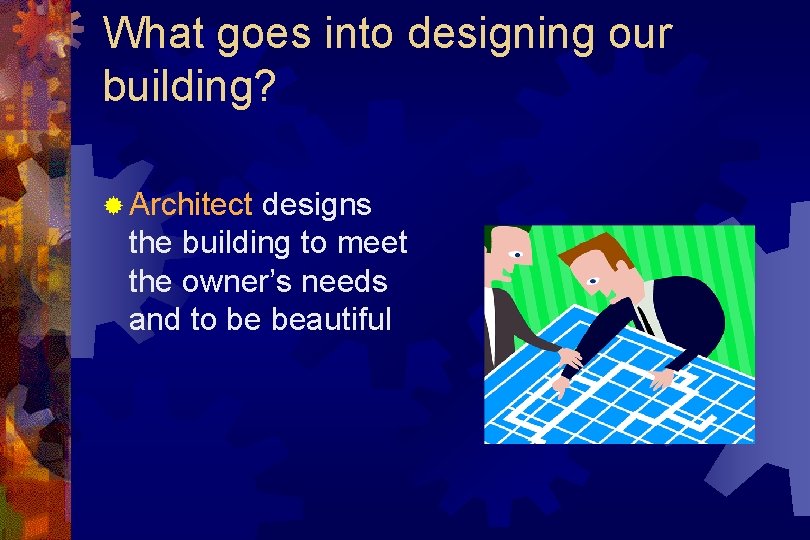
What goes into designing our building? ® Architect designs the building to meet the owner’s needs and to be beautiful
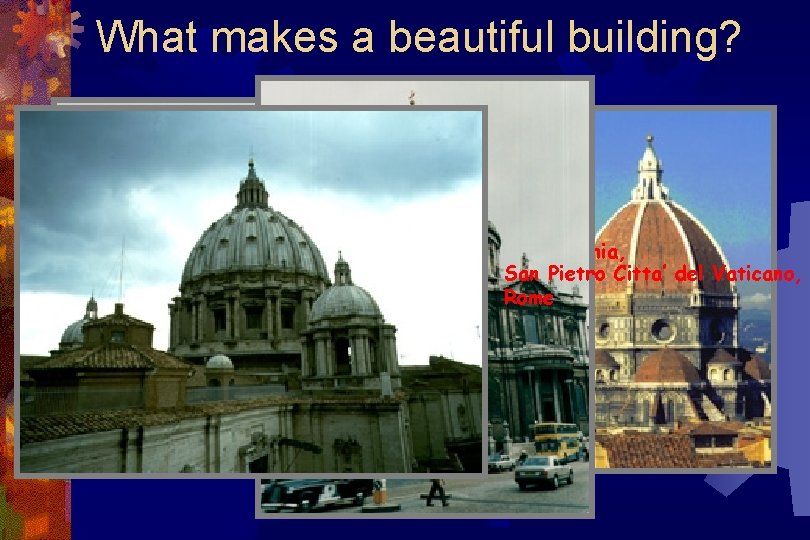
What makes a beautiful building? Pantheon, Santa Maria del Fiore, St. Paul’s Cathedral, Rome Florence London Hagia Sophia, San Pietro Citta’ del Vaticano, Istanbul Rome
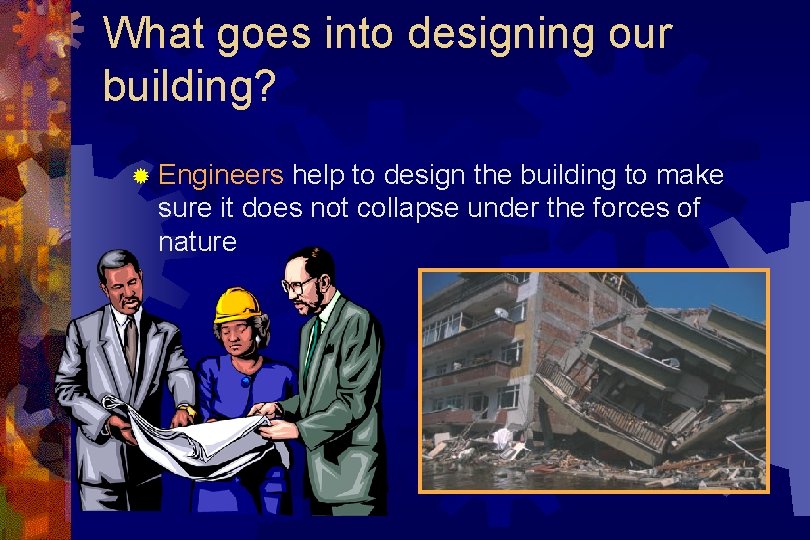
What goes into designing our building? ® Engineers help to design the building to make sure it does not collapse under the forces of nature
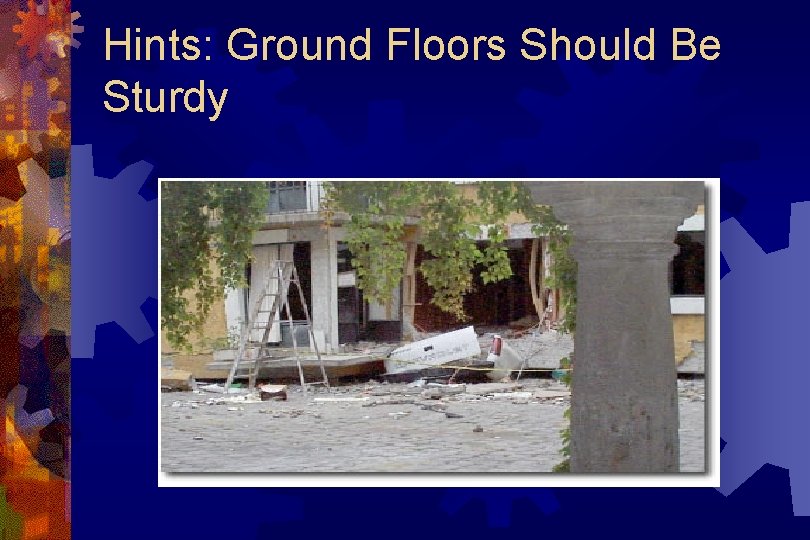
Hints: Ground Floors Should Be Sturdy
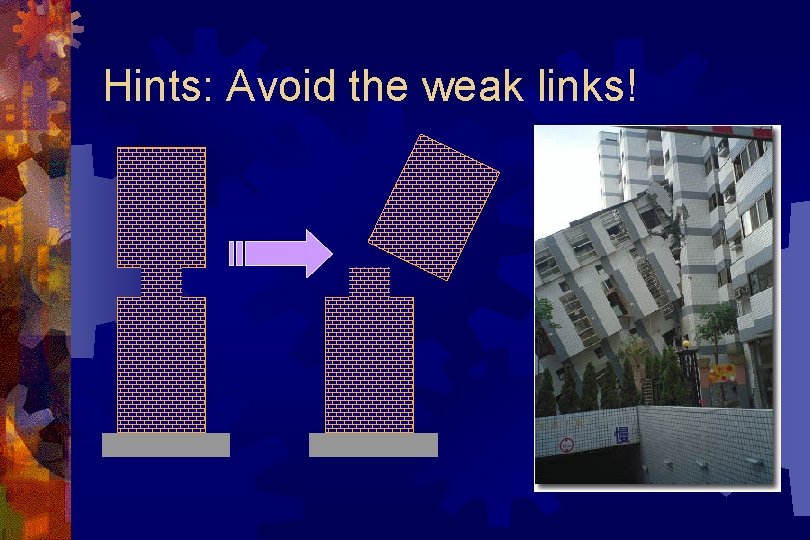
Hints: Avoid the weak links!
Hints: Don’t be top heavy!
Construction ® The builder is responsible for constructing the building based on the final design. ® Hint: Be sure the blocks are firmly pressed together…connections are important!
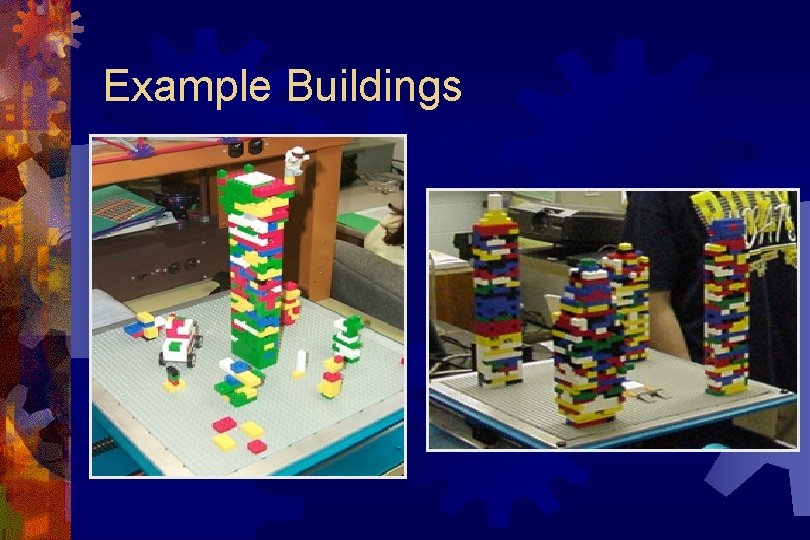
Example Buildings
What kind of buildings are made of masonry? Are all the world’s buildings made of masonry?
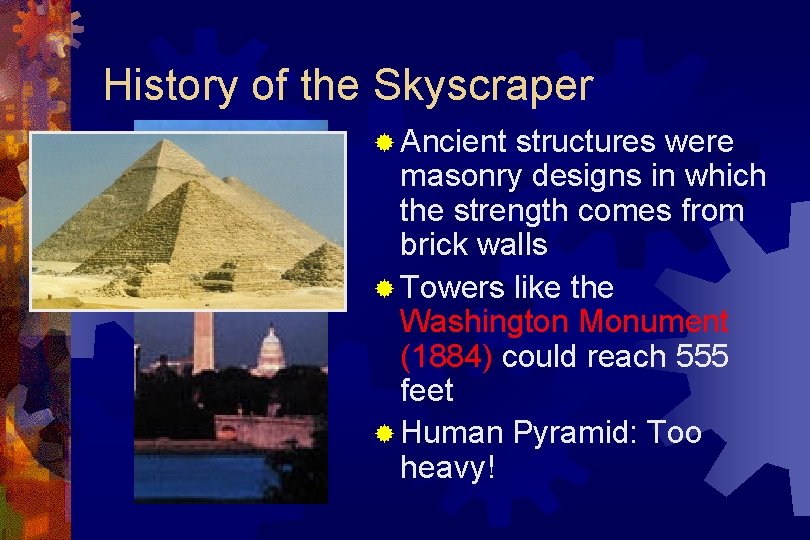
History of the Skyscraper ® Ancient structures were masonry designs in which the strength comes from brick walls ® Towers like the Washington Monument (1884) could reach 555 feet ® Human Pyramid: Too heavy!
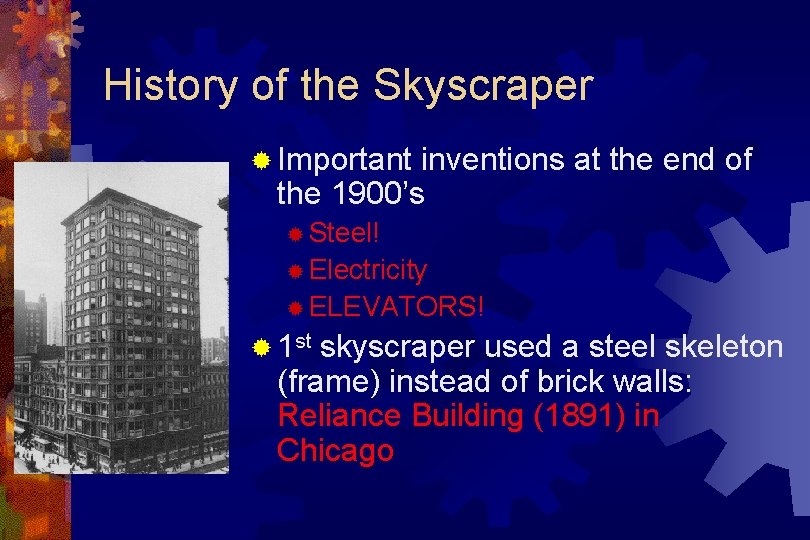
History of the Skyscraper ® Important inventions at the end of the 1900’s ® Steel! ® Electricity ® ELEVATORS! ® 1 st skyscraper used a steel skeleton (frame) instead of brick walls: Reliance Building (1891) in Chicago
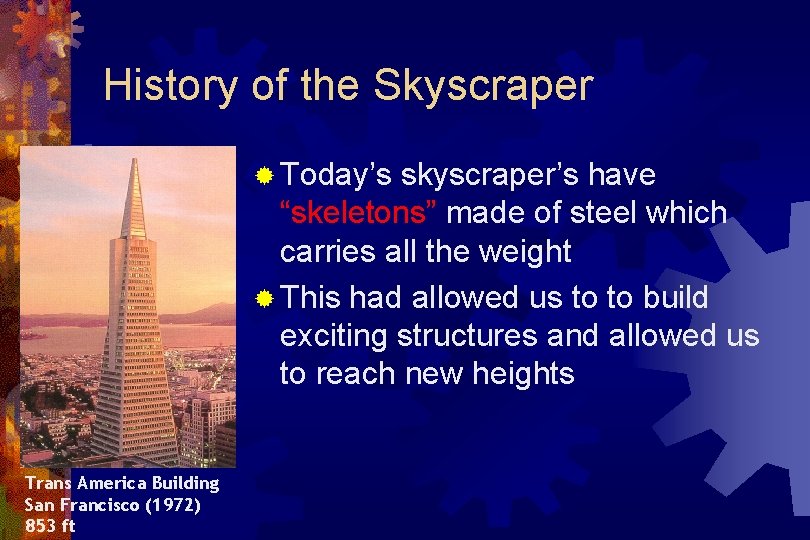
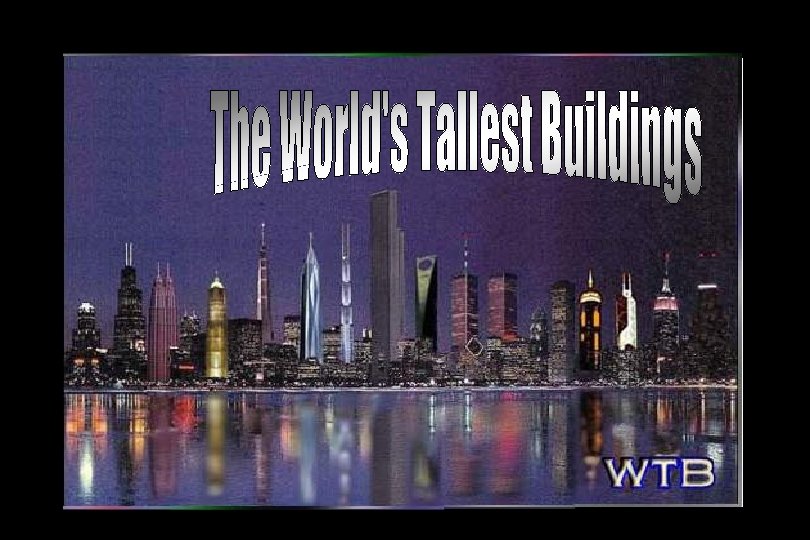
History of the Skyscraper ® Today’s skyscraper’s have “skeletons” made of steel which carries all the weight ® This had allowed us to to build exciting structures and allowed us to reach new heights Trans America Building San Francisco (1972) 853 ft
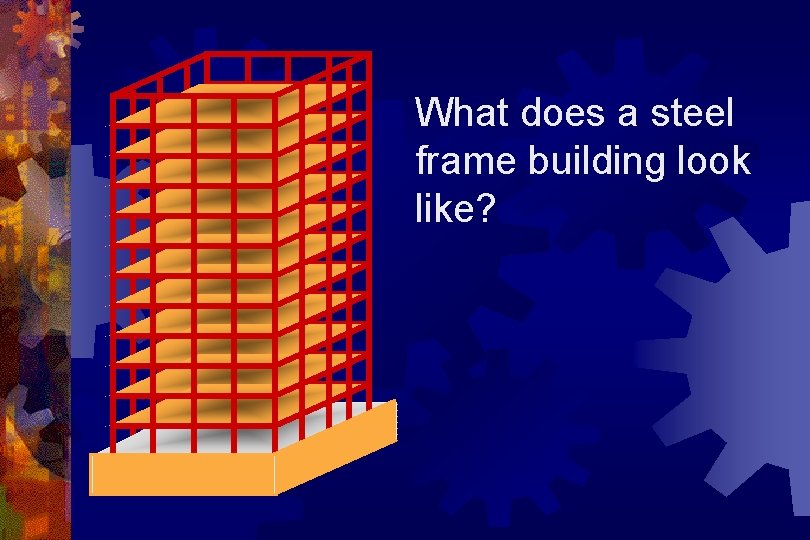
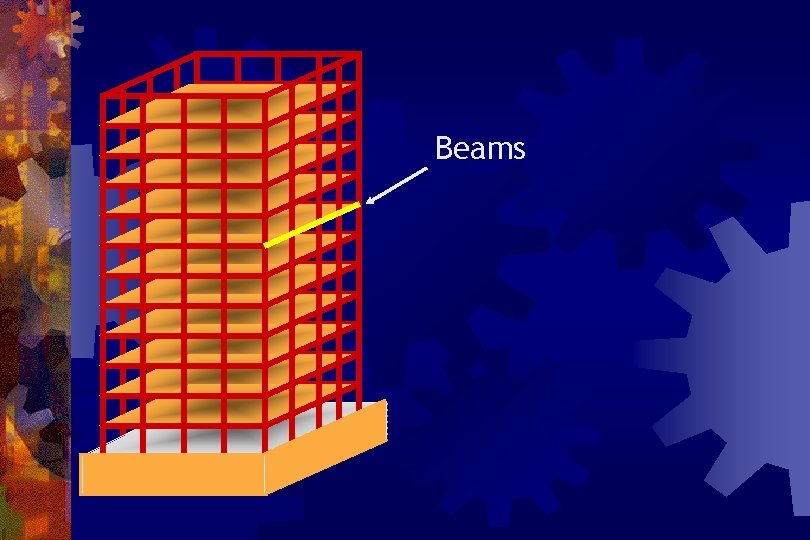
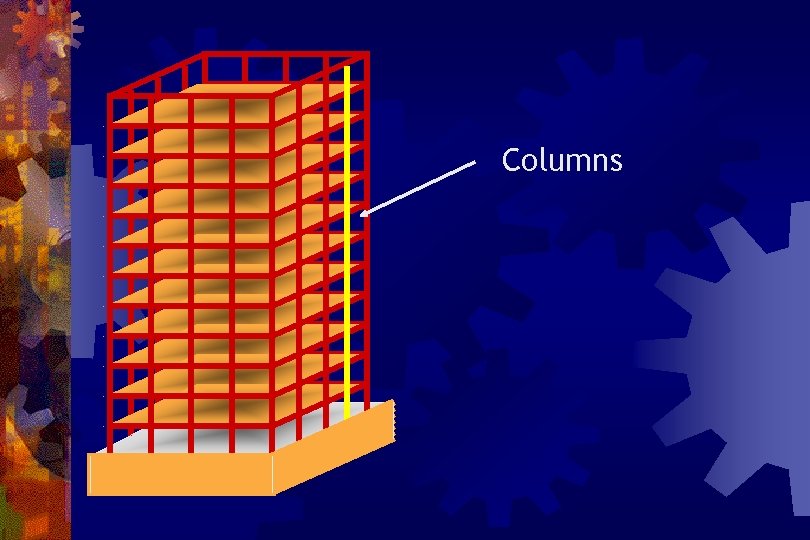
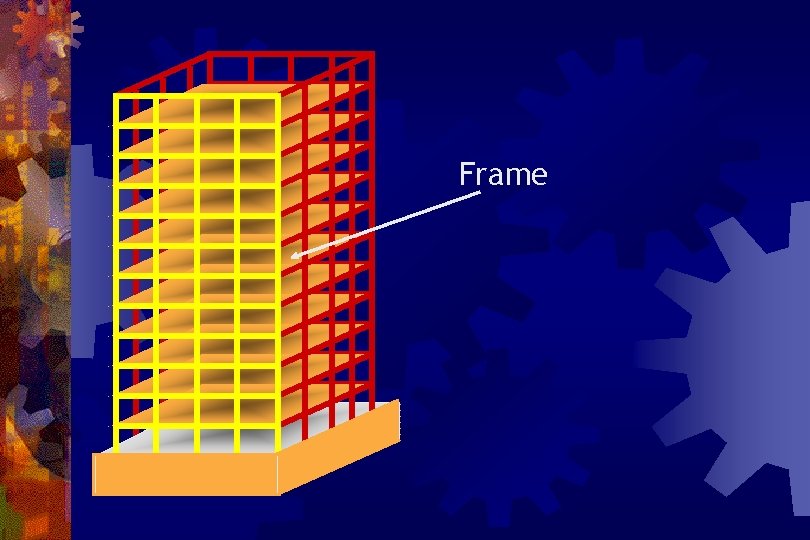
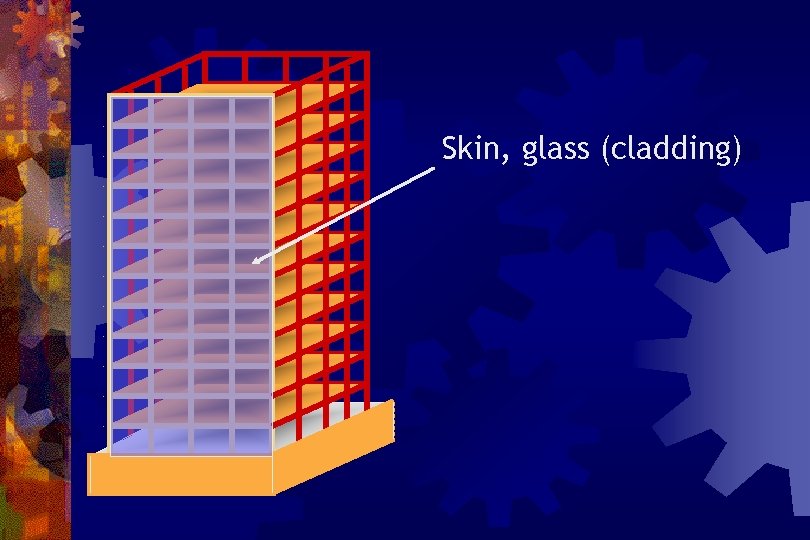
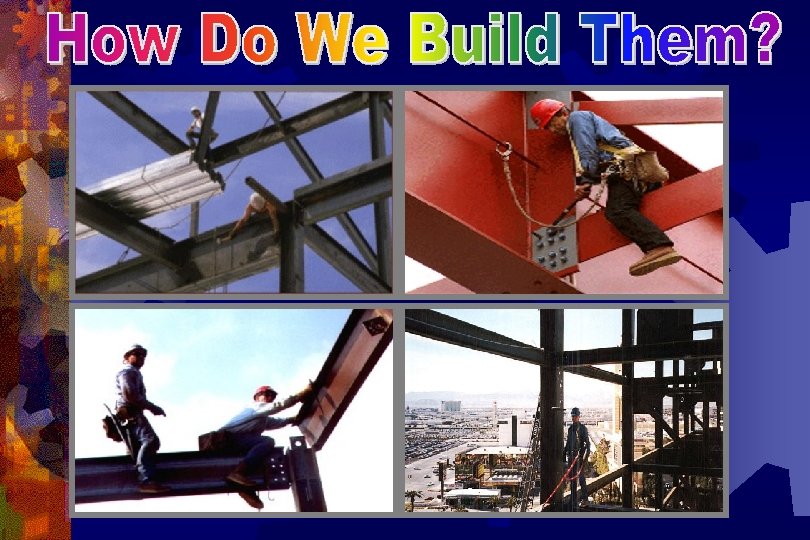
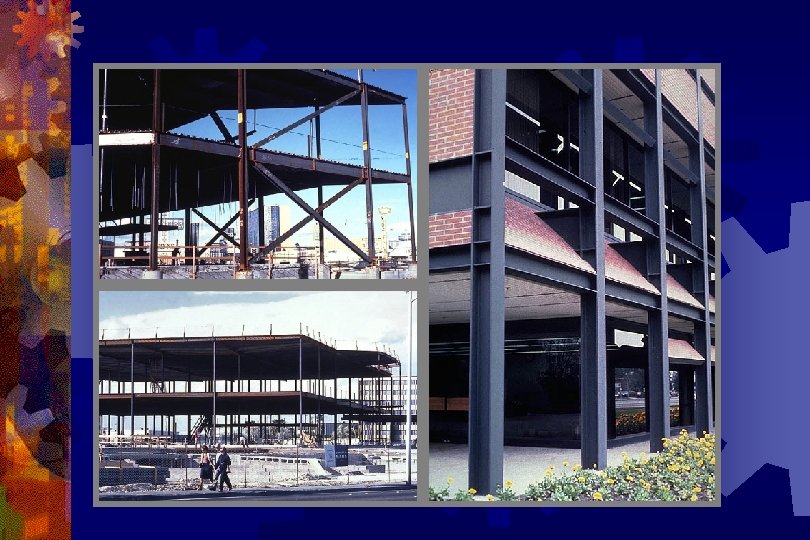
What does a steel frame building look like?
Beams
Columns
Frame
Skin, glass (cladding)
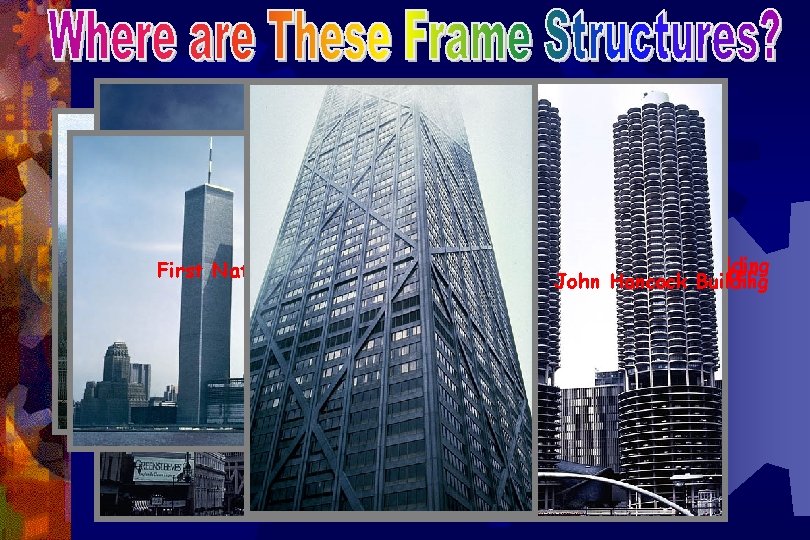
Empire Trade State Center Building First National Bank Building World John Hancock Building Marina City Transamerica Building Sears Tower
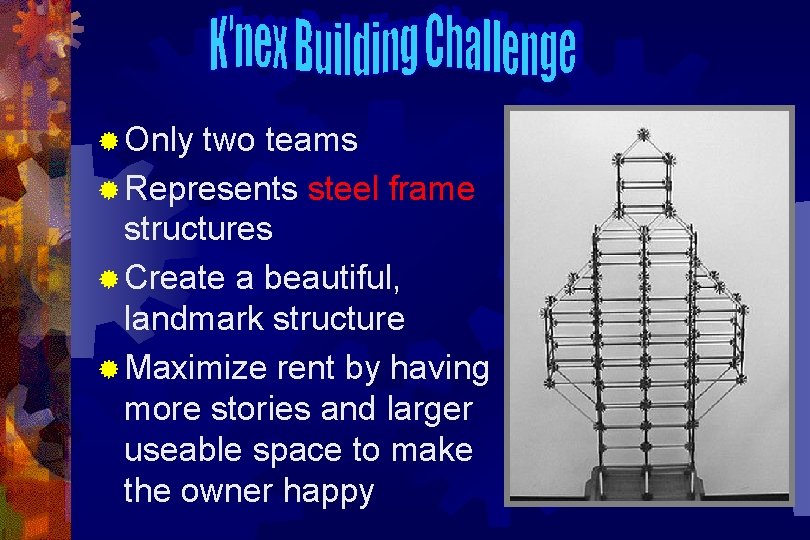
® Only two teams ® Represents steel frame structures ® Create a beautiful, landmark structure ® Maximize rent by having more stories and larger useable space to make the owner happy
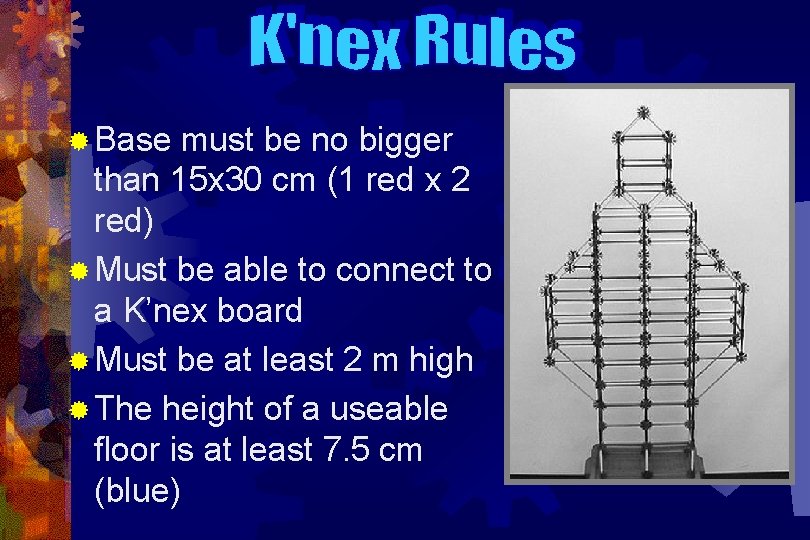
® Base must be no bigger than 15 x 30 cm (1 red x 2 red) ® Must be able to connect to a K’nex board ® Must be at least 2 m high ® The height of a useable floor is at least 7. 5 cm (blue)
Do masonry and steel frame buildings behave differently under earthquakes?
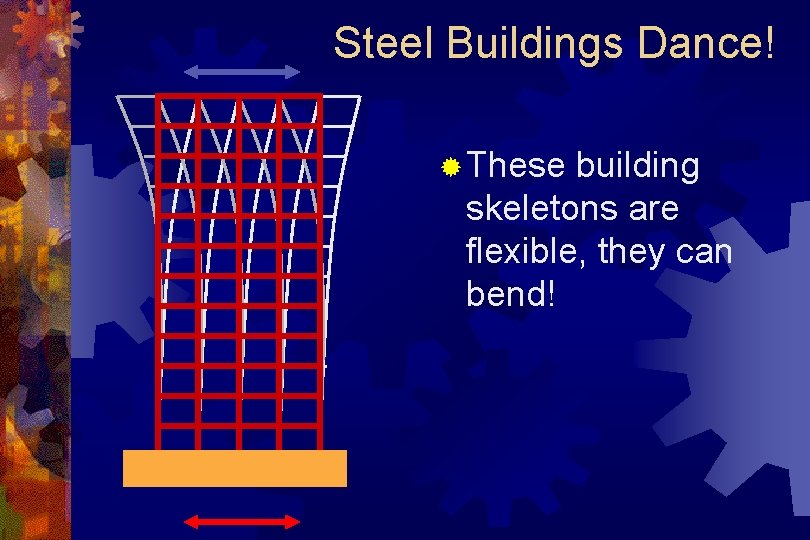
Steel Buildings Dance! ® These building skeletons are flexible, they can bend!
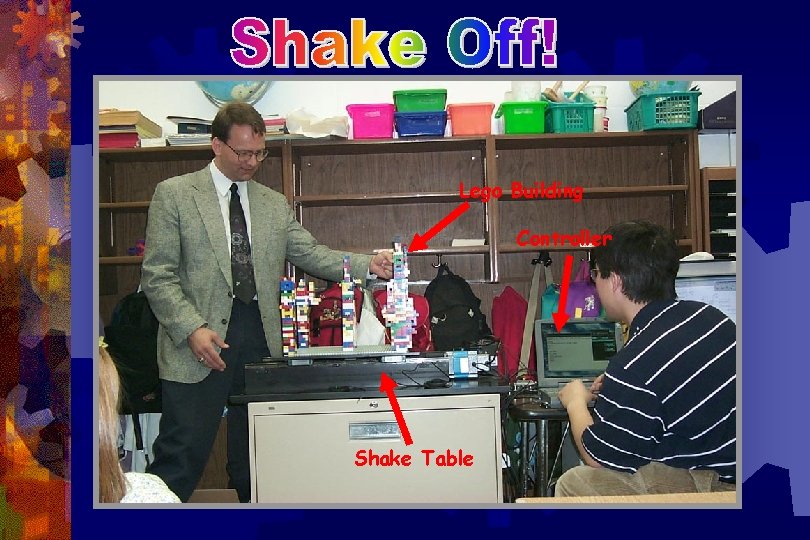
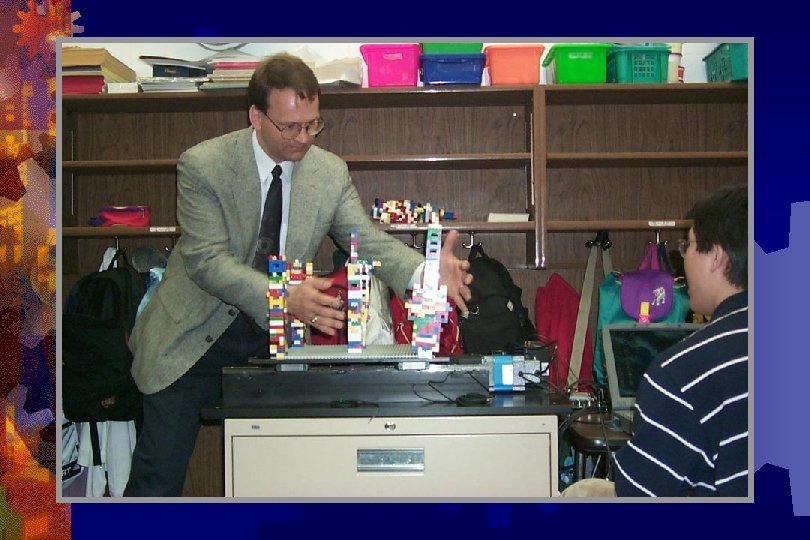
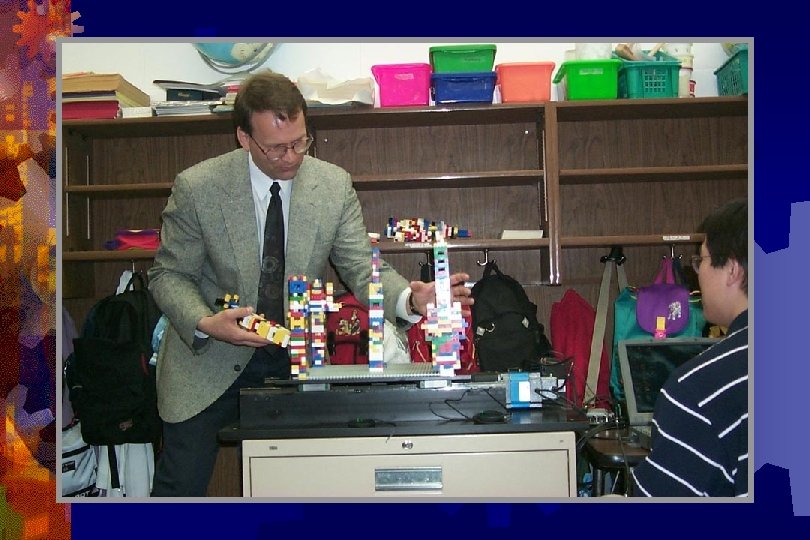
Lego Building Controller Shake Table
Testing Day ® 3 minute company presentations ® Awards ® Final will be presented! project report from each company ® Good Luck!
National Science Foundation Scientists and Engineers in the Schools Program