
earthobservatory nasa gov Ocean Acidification Increase in Atmospheric
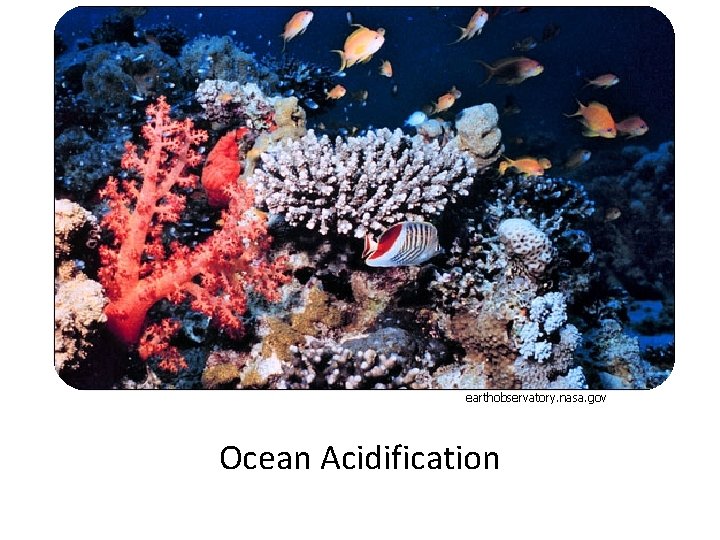
earthobservatory. nasa. gov Ocean Acidification
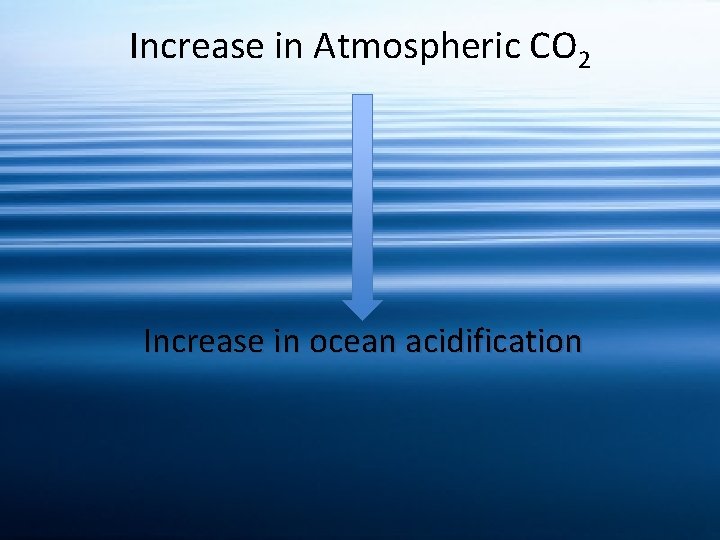
Increase in Atmospheric CO 2 Increase in ocean acidification
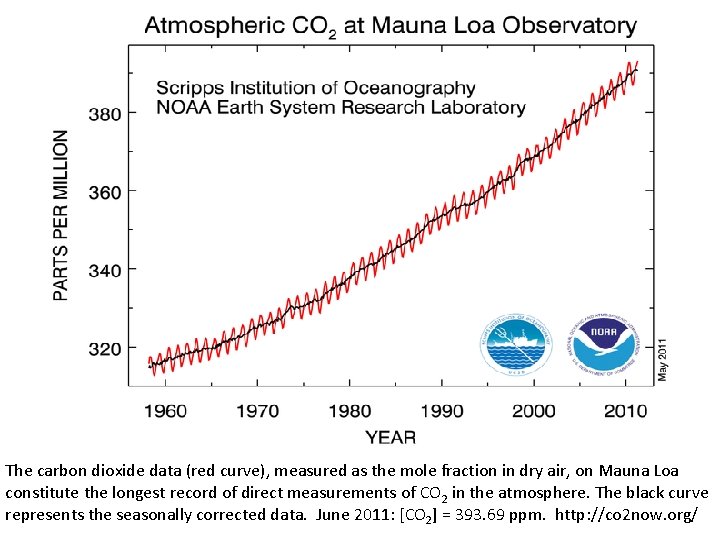
The carbon dioxide data (red curve), measured as the mole fraction in dry air, on Mauna Loa constitute the longest record of direct measurements of CO 2 in the atmosphere. The black curve represents the seasonally corrected data. June 2011: [CO 2] = 393. 69 ppm. http: //co 2 now. org/
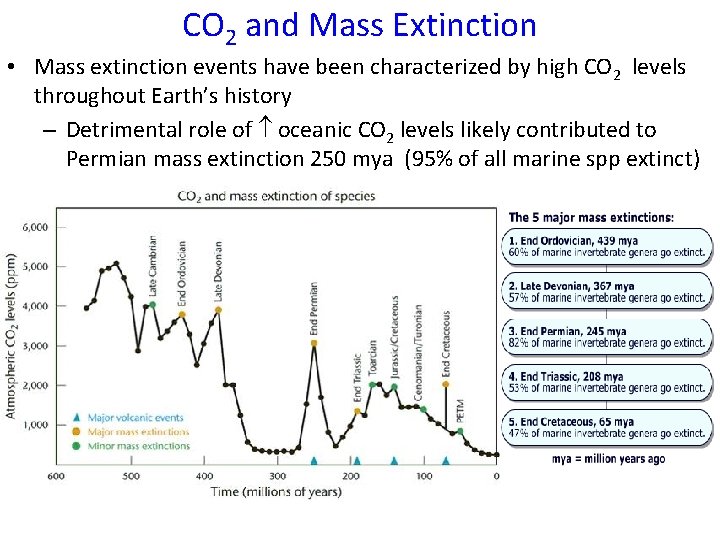
CO 2 and Mass Extinction • Mass extinction events have been characterized by high CO 2 levels throughout Earth’s history – Detrimental role of oceanic CO 2 levels likely contributed to Permian mass extinction 250 mya (95% of all marine spp extinct)
A Sixth Mass Extinction? “The prospect of ocean acidification is potentially the most serious of all predicted outcomes of anthropogenic carbon dioxide increase. This study concludes that acidification has the potential to trigger a sixth mass extinction event and to do so independently of anthropogenic extinctions that are currently taking place. ” – J. E. N. Veron. 2008. Coral Reefs 27: 459 -472. Watch video on ocean acidification (as part of BBC’s “Death of the Oceans”) at http: //www. youtube. com/watch? v=n. KPNc. Qyljds&feature=player_embedded#at=19
Current Rate of Extinction • Background level: 1 species/million. yr (or 10 – 100 spp/yr) • In tropical forests alone, currently losing 27, 000 spp/yr • For mammals, current rates of extinction are 45 x higher than predicted • > 50% of all extant spp will be extinct by 2100
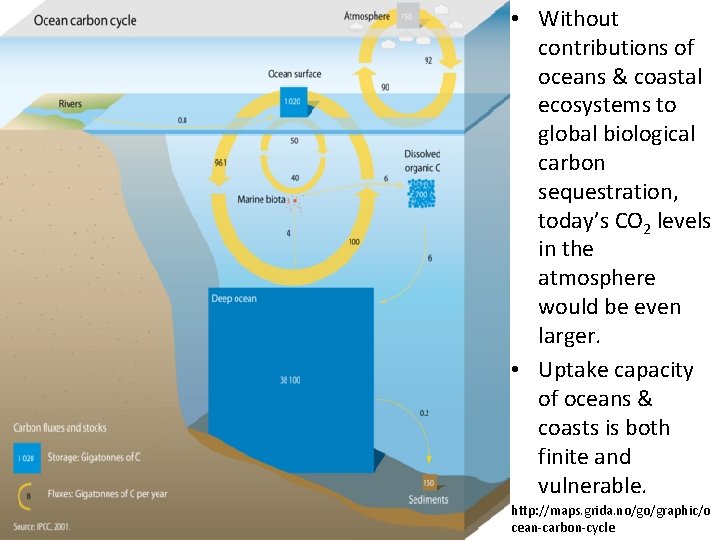
• Without contributions of oceans & coastal ecosystems to global biological carbon sequestration, today’s CO 2 levels in the atmosphere would be even larger. • Uptake capacity of oceans & coasts is both finite and vulnerable. http: //maps. grida. no/go/graphic/o cean-carbon-cycle
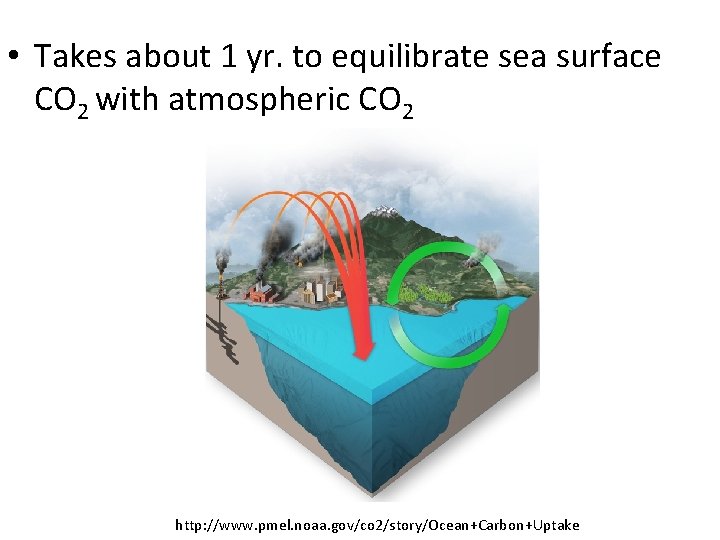
• Takes about 1 yr. to equilibrate sea surface CO 2 with atmospheric CO 2 http: //www. pmel. noaa. gov/co 2/story/Ocean+Carbon+Uptake
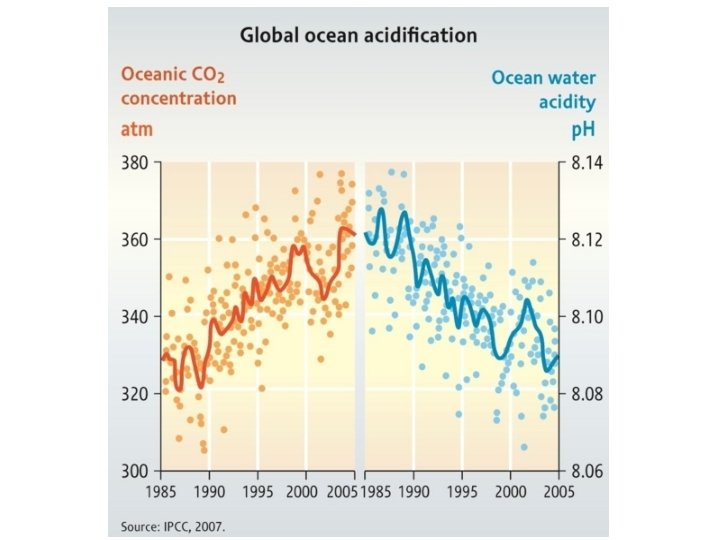
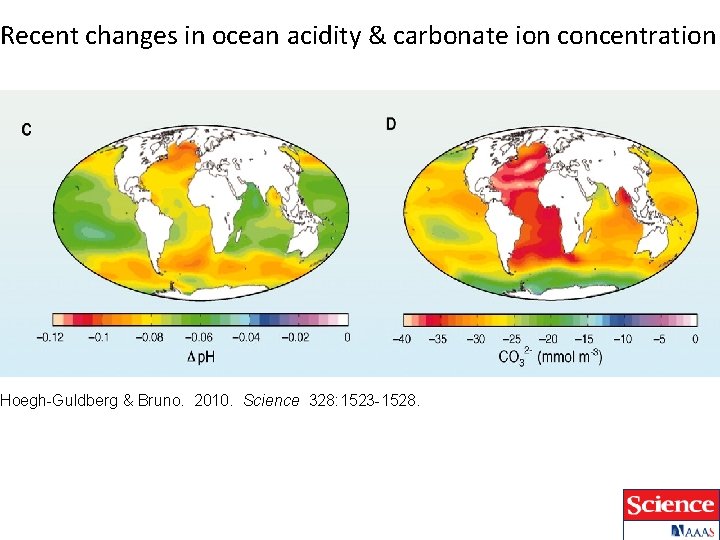
Recent changes in ocean acidity & carbonate ion concentration Hoegh-Guldberg & Bruno. 2010. Science 328: 1523 -1528.
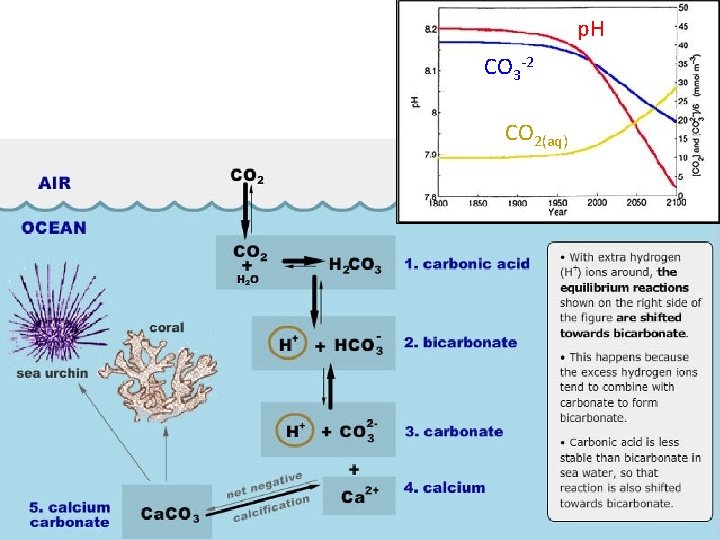
p. H CO 3 -2 CO 2(aq)
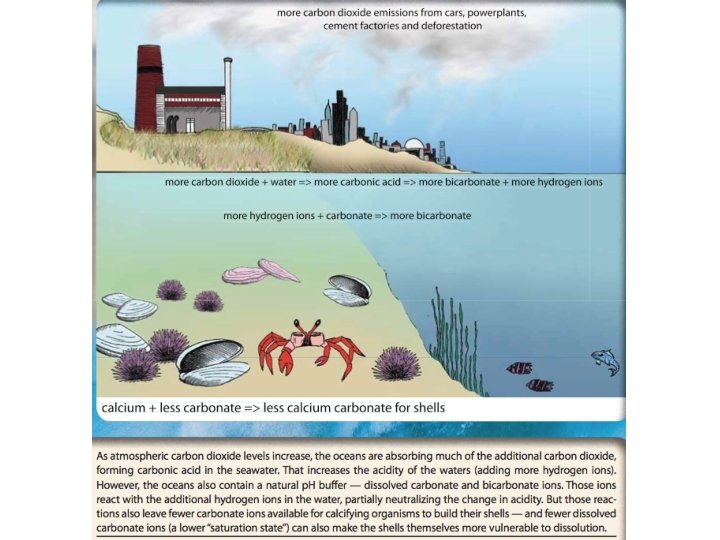
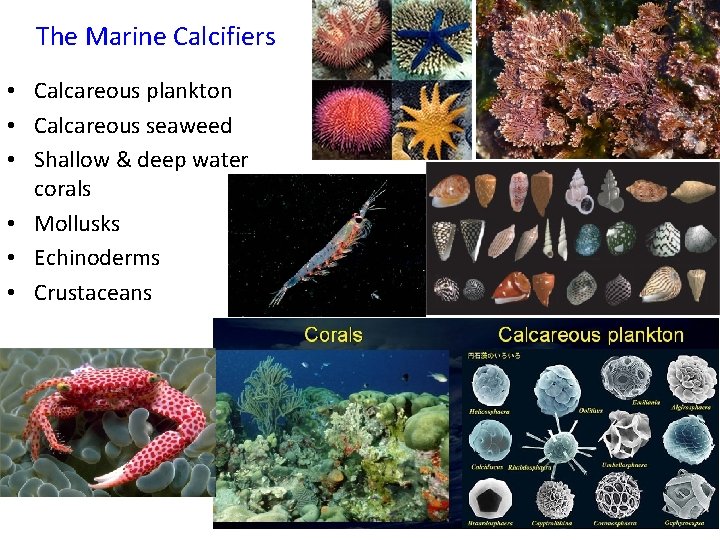
The Marine Calcifiers • Calcareous plankton • Calcareous seaweed • Shallow & deep water corals • Mollusks • Echinoderms • Crustaceans
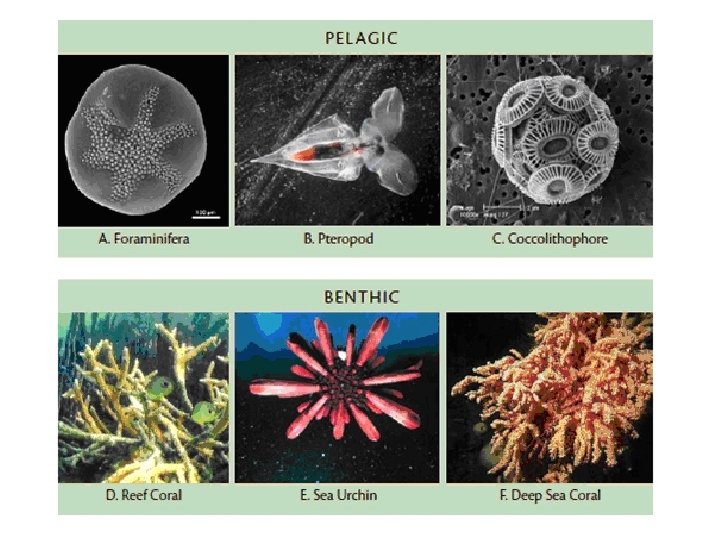
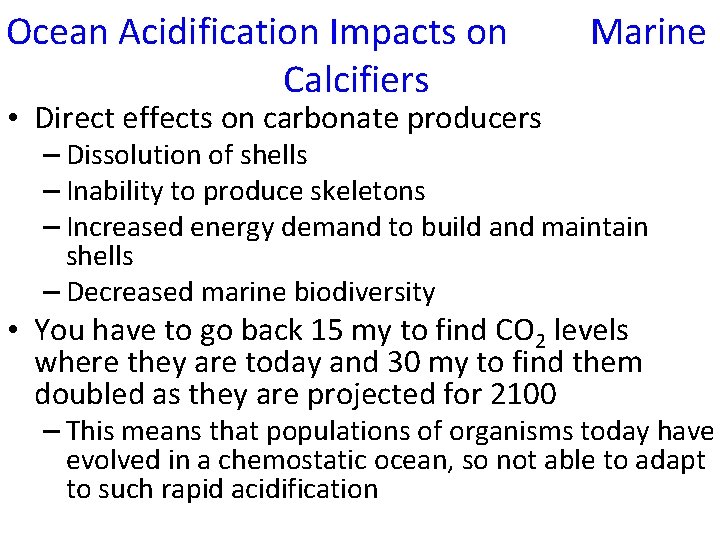
Ocean Acidification Impacts on Calcifiers Marine • Direct effects on carbonate producers – Dissolution of shells – Inability to produce skeletons – Increased energy demand to build and maintain shells – Decreased marine biodiversity • You have to go back 15 my to find CO 2 levels where they are today and 30 my to find them doubled as they are projected for 2100 – This means that populations of organisms today have evolved in a chemostatic ocean, so not able to adapt to such rapid acidification
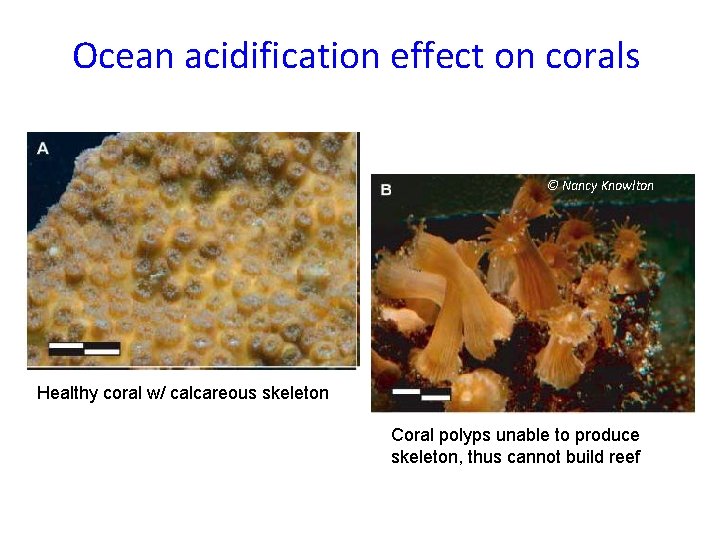
Ocean acidification effect on corals © Nancy Knowlton Healthy coral w/ calcareous skeleton Coral polyps unable to produce skeleton, thus cannot build reef
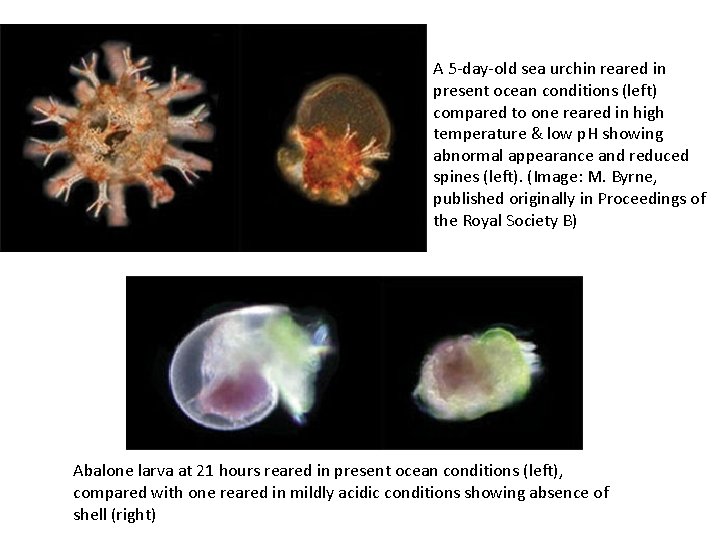
A 5 -day-old sea urchin reared in present ocean conditions (left) compared to one reared in high temperature & low p. H showing abnormal appearance and reduced spines (left). (Image: M. Byrne, published originally in Proceedings of the Royal Society B) Abalone larva at 21 hours reared in present ocean conditions (left), compared with one reared in mildly acidic conditions showing absence of shell (right)
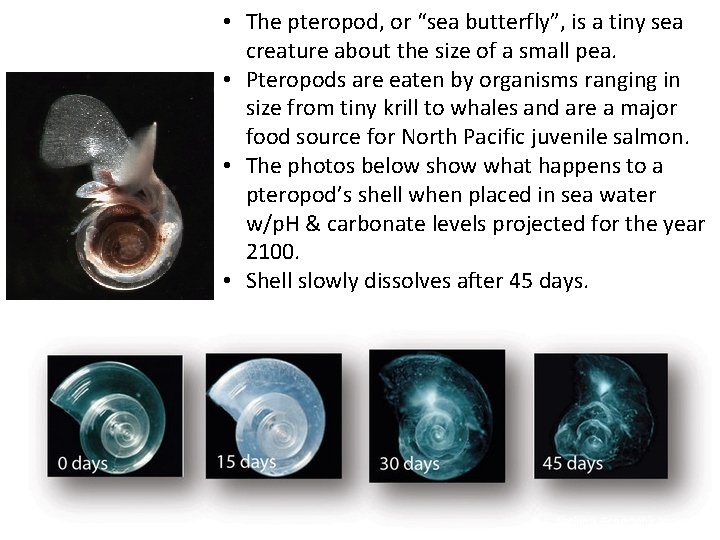
• The pteropod, or “sea butterfly”, is a tiny sea creature about the size of a small pea. • Pteropods are eaten by organisms ranging in size from tiny krill to whales and are a major food source for North Pacific juvenile salmon. • The photos below show what happens to a pteropod’s shell when placed in sea water w/p. H & carbonate levels projected for the year 2100. • Shell slowly dissolves after 45 days. National Geographic Images
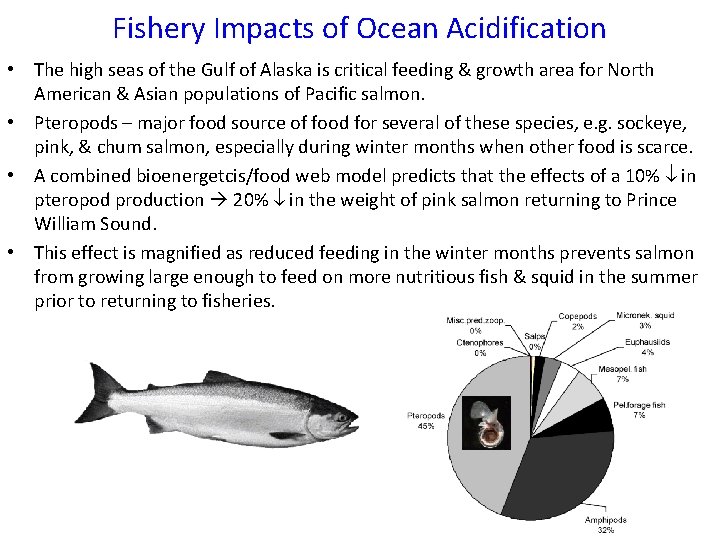
Fishery Impacts of Ocean Acidification • The high seas of the Gulf of Alaska is critical feeding & growth area for North American & Asian populations of Pacific salmon. • Pteropods – major food source of food for several of these species, e. g. sockeye, pink, & chum salmon, especially during winter months when other food is scarce. • A combined bioenergetcis/food web model predicts that the effects of a 10% in pteropod production 20% in the weight of pink salmon returning to Prince William Sound. • This effect is magnified as reduced feeding in the winter months prevents salmon from growing large enough to feed on more nutritious fish & squid in the summer prior to returning to fisheries.
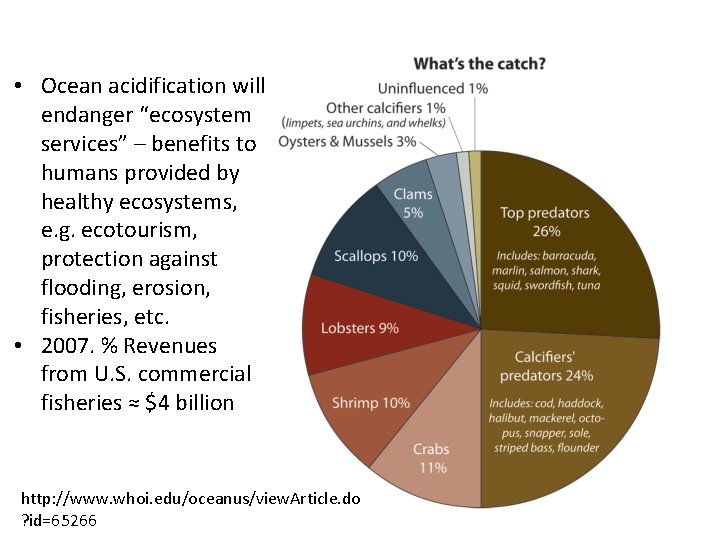
• Ocean acidification will endanger “ecosystem services” – benefits to humans provided by healthy ecosystems, e. g. ecotourism, protection against flooding, erosion, fisheries, etc. • 2007. % Revenues from U. S. commercial fisheries ≈ $4 billion http: //www. whoi. edu/oceanus/view. Article. do ? id=65266
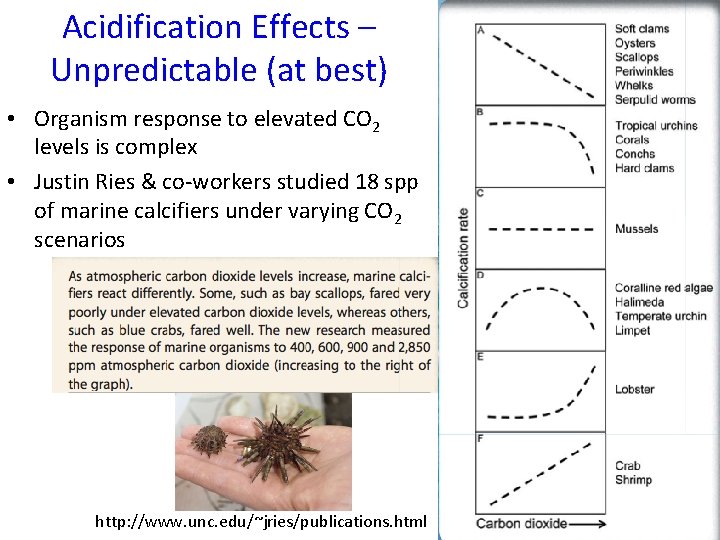
Acidification Effects – Unpredictable (at best) • Organism response to elevated CO 2 levels is complex • Justin Ries & co-workers studied 18 spp of marine calcifiers under varying CO 2 scenarios http: //www. unc. edu/~jries/publications. html
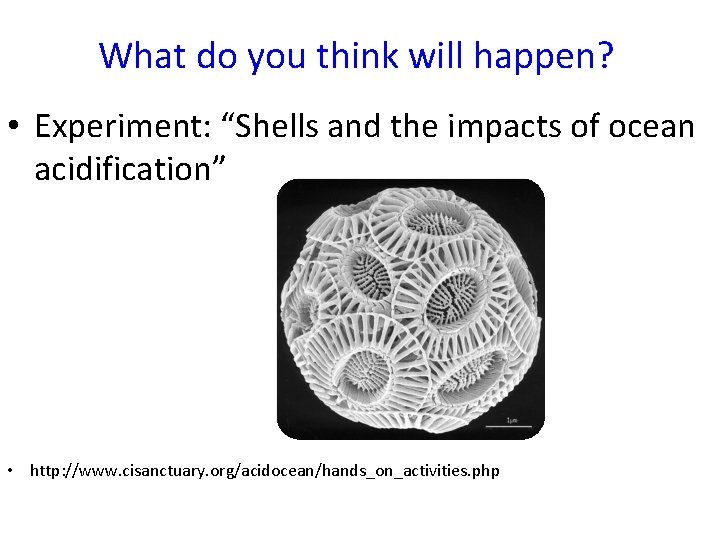
What do you think will happen? • Experiment: “Shells and the impacts of ocean acidification” • http: //www. cisanctuary. org/acidocean/hands_on_activities. php
"We can't solve problems by using the same kind of thinking we used when we created them. " - Albert Einstein
- Slides: 23