
Earth Systems Resources Earth Science Concepts Earths Formation


- Slides: 31
Earth Systems & Resources Earth Science Concepts
Earth’s Formation & Structure Ø Earth formed approximately 4. 6 billion years ago Ø Early in its formation, the earth was completely molten Ø As earth cooled density differences between the forming minerals caused interior of earth to become differentiated.
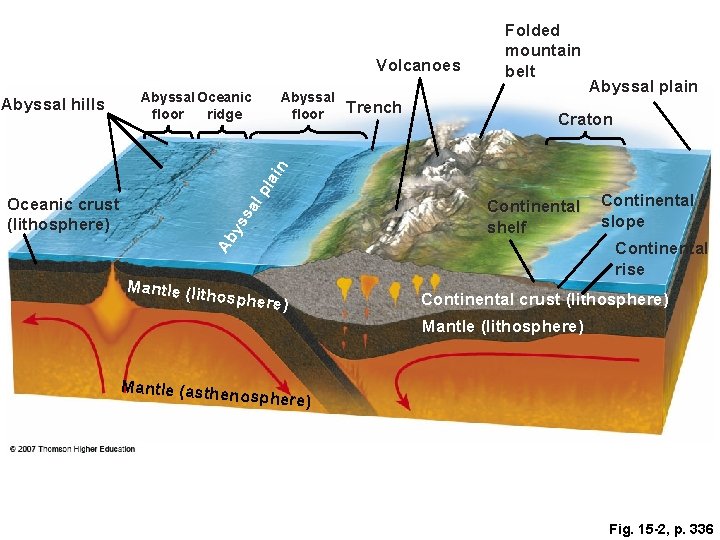
GEOLOGIC PROCESSES Ø The earth is made up of a core, mantle, and crust and is constantly changing as a result of processes taking place on and below its surface. Ø The earth’s interior consists of: l l l Core: innermost zone with solid inner core and molten outer core that is extremely hot. Mantle: solid rock with a rigid outer part (asthenosphere) that is melted pliable rock. Crust: Outermost zone which underlies the continents.
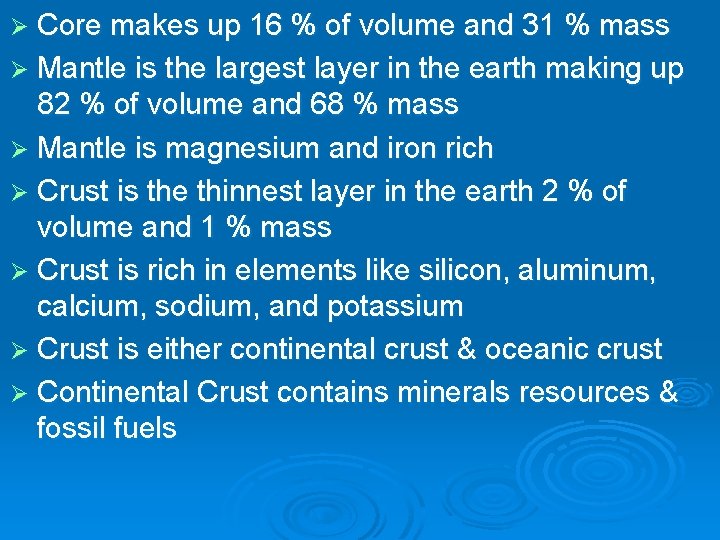
Ø Core makes up 16 % of volume and 31 % mass Ø Mantle is the largest layer in the earth making up 82 % of volume and 68 % mass Ø Mantle is magnesium and iron rich Ø Crust is the thinnest layer in the earth 2 % of volume and 1 % mass Ø Crust is rich in elements like silicon, aluminum, calcium, sodium, and potassium Ø Crust is either continental crust & oceanic crust Ø Continental Crust contains minerals resources & fossil fuels
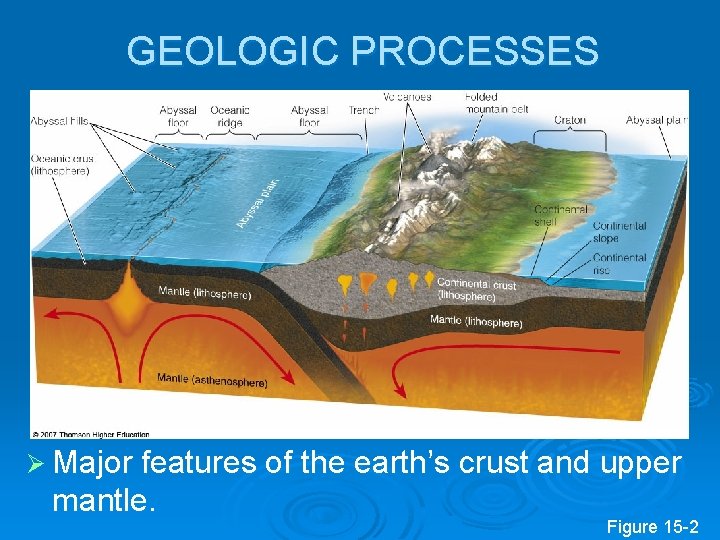
GEOLOGIC PROCESSES Ø Major features of the earth’s crust and upper mantle. Figure 15 -2
Volcanoes Abyssal floor Trench Abyssal plain Craton ys sa lp lai n Abyssal hills Abyssal Oceanic floor ridge Folded mountain belt Continental shelf Ab Oceanic crust (lithosphere) Continental slope Mantle (li Continental rise thospher e) Continental crust (lithosphere) Mantle (asthen osphere) Fig. 15 -2, p. 336
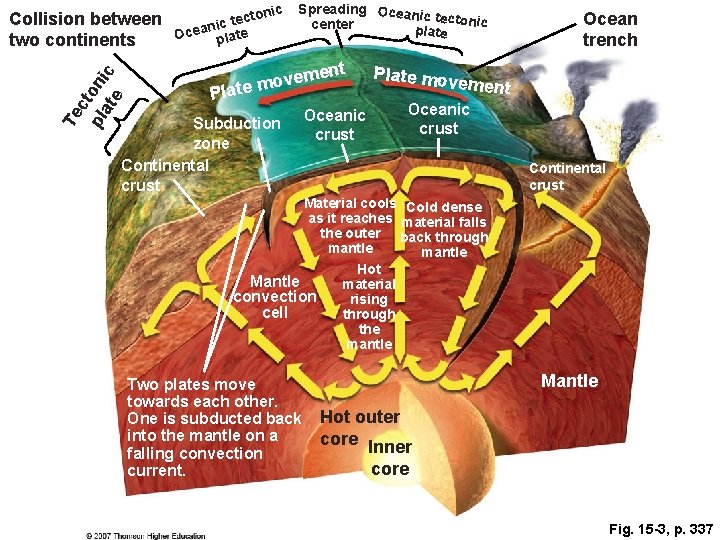
Te c pl toni at c e Collision between two continents tonic c e t nic Ocea plate Spreading Oceanic tectonic center plate ent m e v o ate m Pl Subduction zone Continental crust Oceanic crust Ocean trench Plate mov ement Oceanic crust Continental crust Material cools Cold dense as it reaches material falls the outer back through mantle Hot Mantle material convection rising cell through the mantle Two plates move towards each other. One is subducted back into the mantle on a falling convection current. Mantle Hot outer core Inner core Fig. 15 -3, p. 337
The Lithosphere & Plate Tectonics • The layer of the mantle above the asthenosphere and the crust make up the lithosphere • Lithosphere is broken into a series of plates that independently float (like a raft on an ocean)
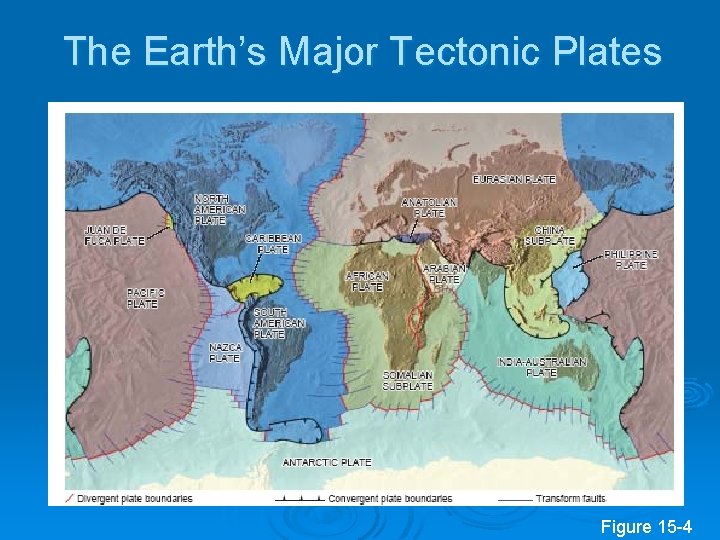
Tectonic Plates l l Tectonic plates: huge rigid plates that are moved with convection cells or currents by floating on magma or molten rock. There are 7 major plates and because they are in constant motion interactions occur where plates meet
The Earth’s Major Tectonic Plates Figure 15 -4
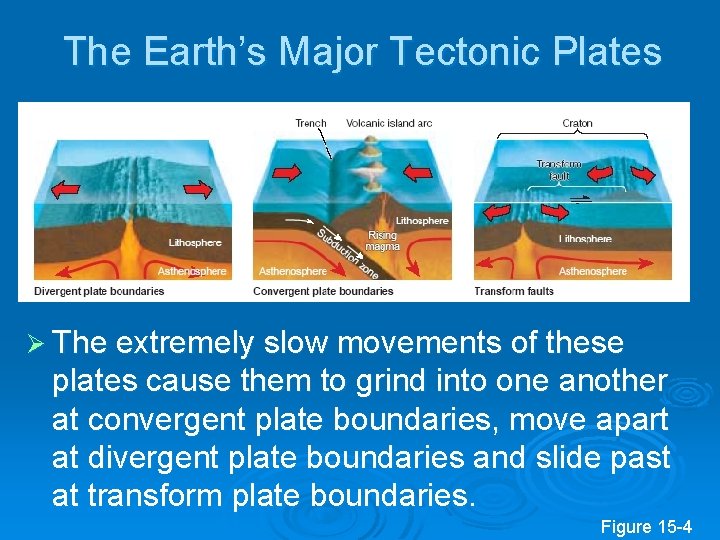
The Earth’s Major Tectonic Plates Ø The extremely slow movements of these plates cause them to grind into one another at convergent plate boundaries, move apart at divergent plate boundaries and slide past at transform plate boundaries. Figure 15 -4
Fig. 15 -4, p. 338
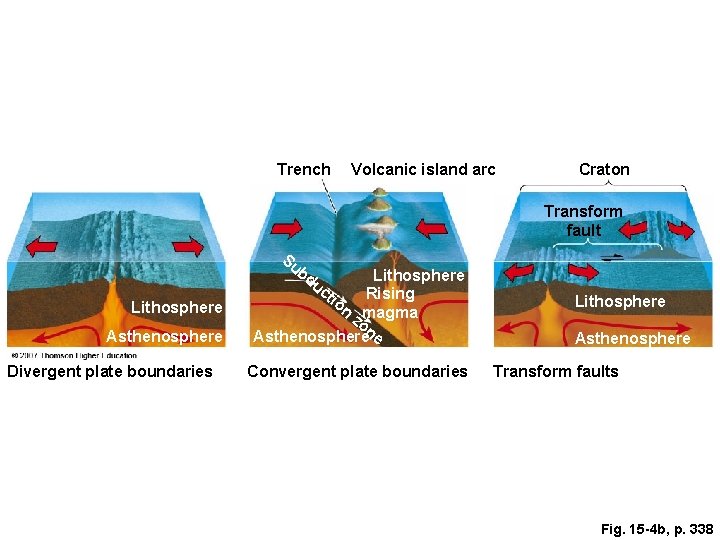
Trench Volcanic island arc Craton Transform fault Su bd Lithosphere Rising tio n magma zo Asthenospherene uc Lithosphere Asthenosphere Divergent plate boundaries Convergent plate boundaries Lithosphere Asthenosphere Transform faults Fig. 15 -4 b, p. 338
• Convergent plates cause land mountains to form and oceanic volcanoes to form • Examples include: Himalayas, Mariana trench in the western pacific ocean • Divergent plates form new crust and land volcanoes • Transform plates cause earthquakes to occur
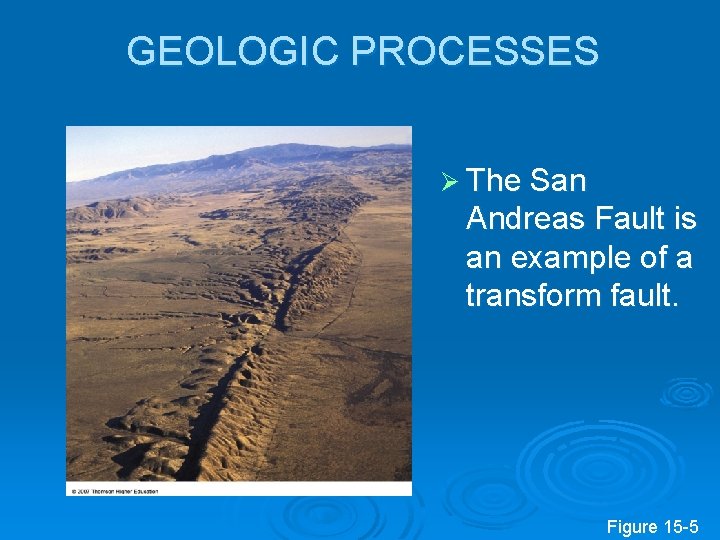
GEOLOGIC PROCESSES Ø The San Andreas Fault is an example of a transform fault. Figure 15 -5
Volcanoes Ø Occurs when magma (Molten rock) reaches earth surface through a crack or vent in the crust Ø Extrusion of lava, ejection of solid rock and ash, release of water vapor and gases Ø Occurs 85 % of time at convergent plate boundaries Ø Volcanoes can result in loss of life, habitat, and alteration & reduction in air quality
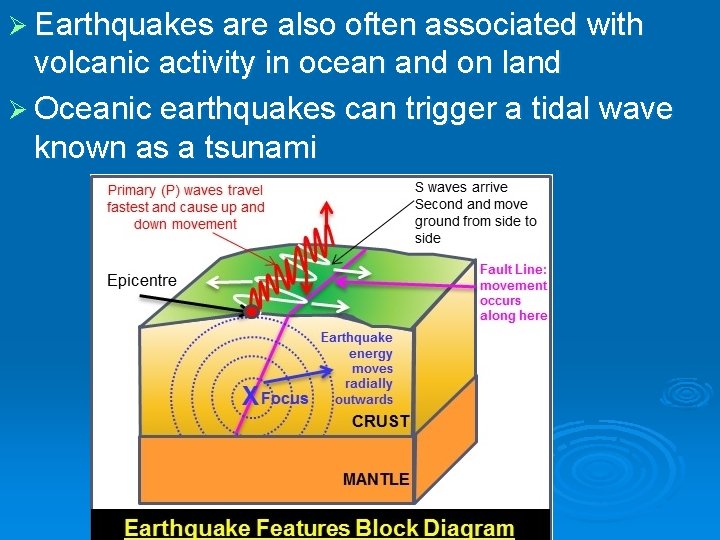
Earthquakes Ø Occurs when build up strain in a rock mass causes it to rupture suddenly. Ø Destructive waves travel from below the surface (focus) to above the surface (Epicenter) Ø Magnitude of an earthquake is a measure of the total amount of energy released Ø Earthquakes generally occur along breaks in the rock mass known as faults
Ø Earthquakes are also often associated with volcanic activity in ocean and on land Ø Oceanic earthquakes can trigger a tidal wave known as a tsunami
Soil & Soil Dynamics
MINERALS, ROCKS, AND THE ROCK CYCLE Ø The earth’s crust consists of solid inorganic elements and compounds called minerals that can sometimes be used as resources. Ø Minerals make up rocks l Mineral resource: is a concentration of naturally occurring material in or on the earth’s crust that can be extracted and processed into useful materials at an affordable cost.
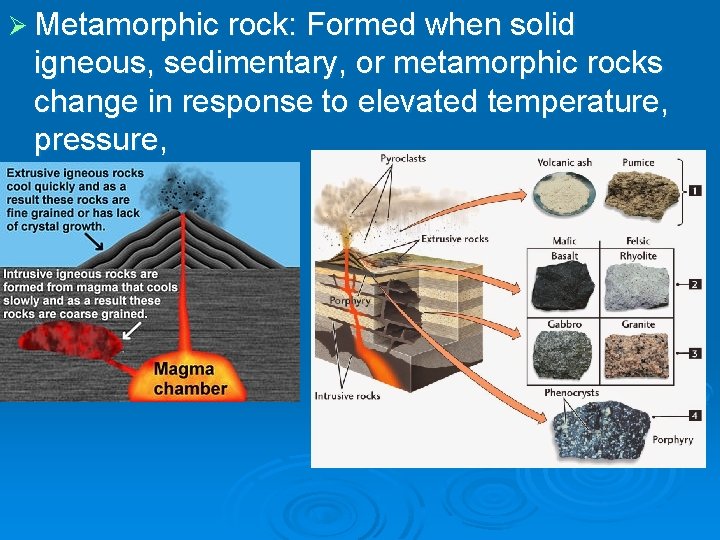
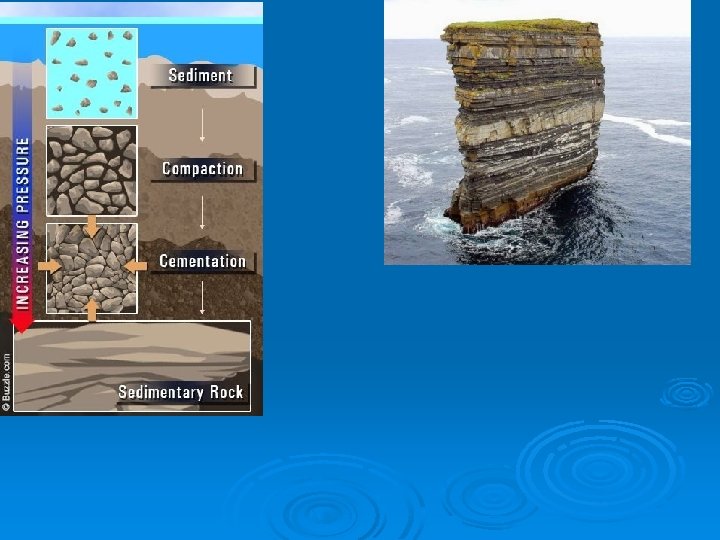
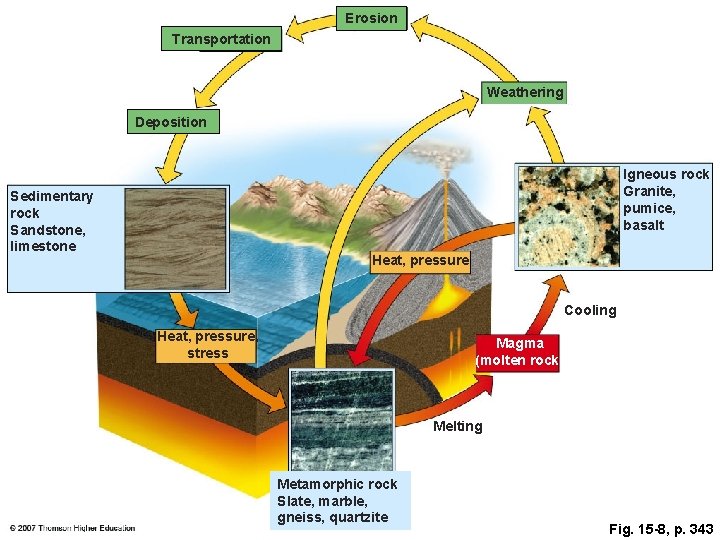
Ø Rocks are classified into 3 groups: Igneous, Sedimentary, and metamorphic Ø Igneous Rocks= Most common type of rock. Form when magma cools and crystallizes on the surface Ø Sedimentary Rocks= Made from a combination of weathered fragments of preexisting rocks, precipitation of minerals, compaction of remains of living organisms (Fossil Fuels like coal & shale)
Ø Metamorphic rock: Formed when solid igneous, sedimentary, or metamorphic rocks change in response to elevated temperature, pressure,
GEOLOGIC PROCESSES Ø Deposits of nonrenewable mineral resources in the earth’s crust vary in their abundance and distribution. Ø A very slow chemical cycle recycles three types of rock found in the earth’s crust: l l l Sedimentary rock (sandstone, limestone). Metamorphic rock (slate, marble, quartzite). Igneous rock (granite, pumice, basalt).
Erosion Transportation Weathering Deposition Igneous rock Granite, pumice, basalt Sedimentary rock Sandstone, limestone Heat, pressure Cooling Heat, pressure, stress Magma (molten rock) Melting Metamorphic rock Slate, marble, gneiss, quartzite Fig. 15 -8, p. 343
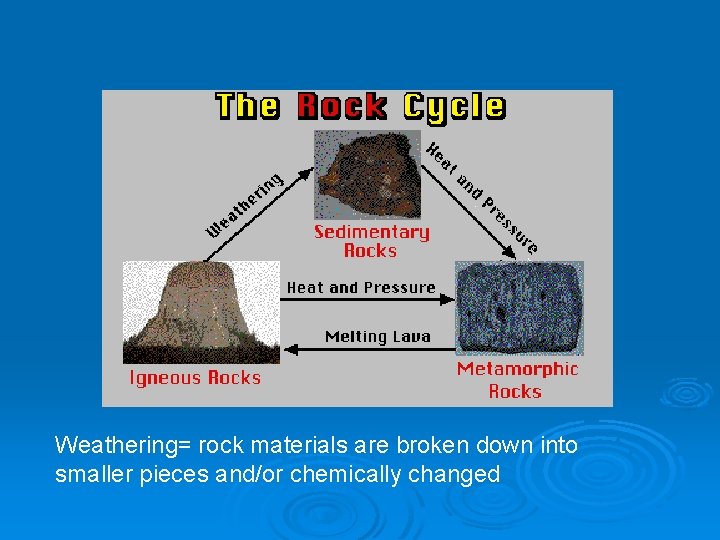
Weathering= rock materials are broken down into smaller pieces and/or chemically changed
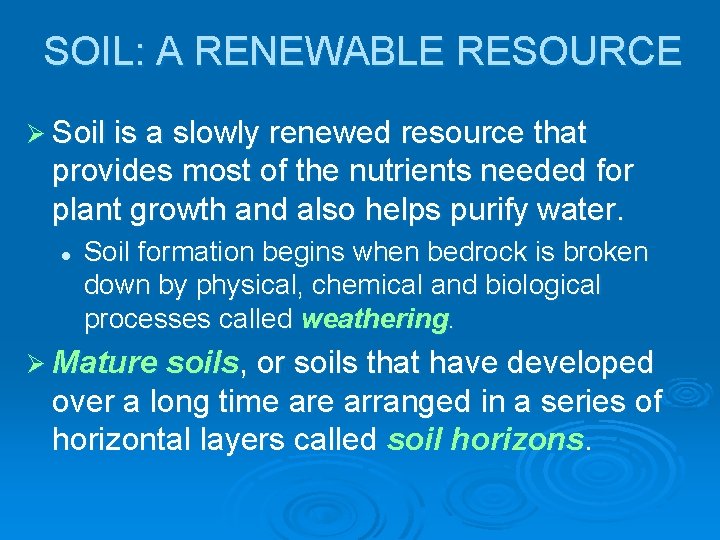
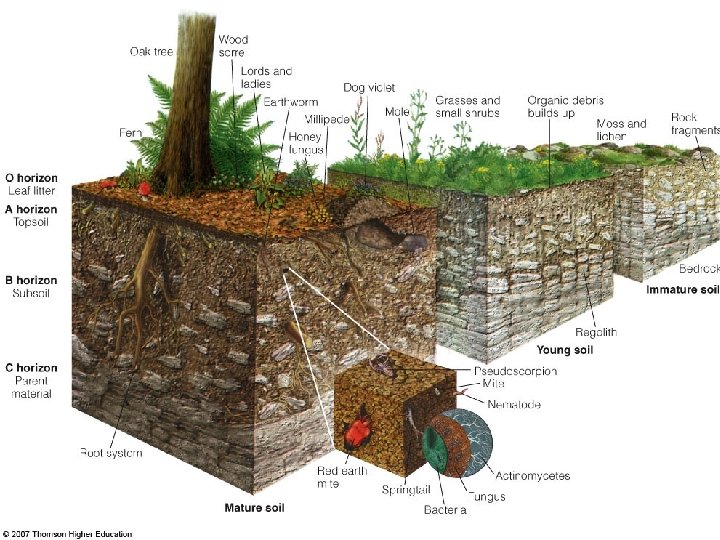
SOIL: A RENEWABLE RESOURCE Ø Soil is a slowly renewed resource that provides most of the nutrients needed for plant growth and also helps purify water. l Soil formation begins when bedrock is broken down by physical, chemical and biological processes called weathering. Ø Mature soils, or soils that have developed over a long time arranged in a series of horizontal layers called soil horizons.
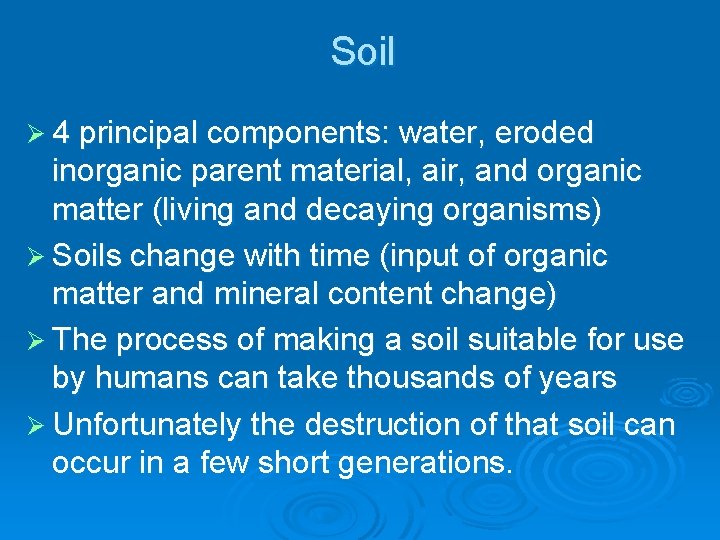
Soil Ø 4 principal components: water, eroded inorganic parent material, air, and organic matter (living and decaying organisms) Ø Soils change with time (input of organic matter and mineral content change) Ø The process of making a soil suitable for use by humans can take thousands of years Ø Unfortunately the destruction of that soil can occur in a few short generations.
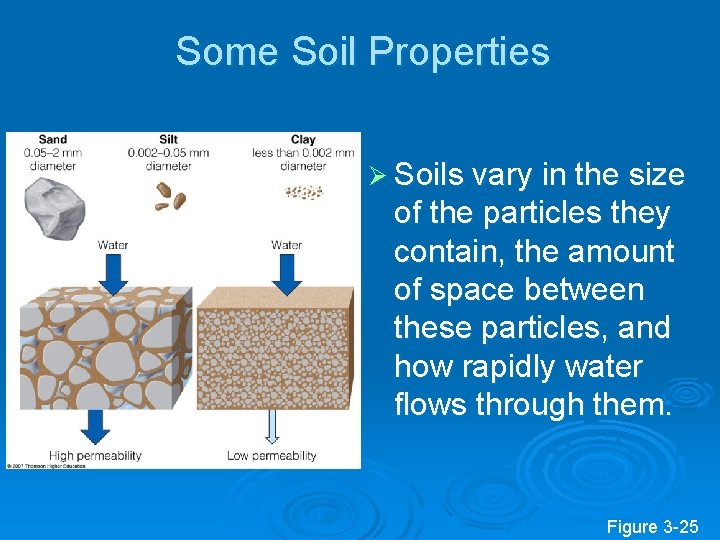
Some Soil Properties Ø Soils vary in the size of the particles they contain, the amount of space between these particles, and how rapidly water flows through them. Figure 3 -25
Services Provided by Soil Ø Medium for plant growth Ø Primary filter of water as water moves from atmosphere into rivers, streams, and groundwater Ø Provides a habitat for a wide variety of organisms