
Earth Systems Earths Layers and Plate Tectonics How
- Slides: 56
Earth Systems Earth’s Layers and Plate Tectonics
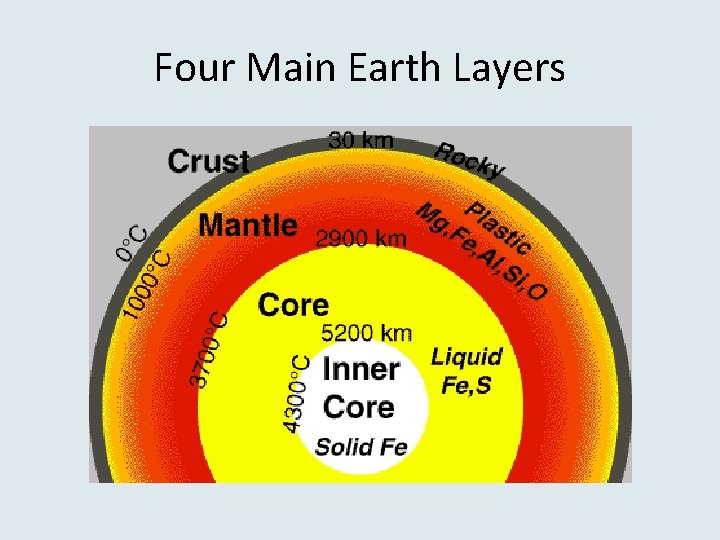
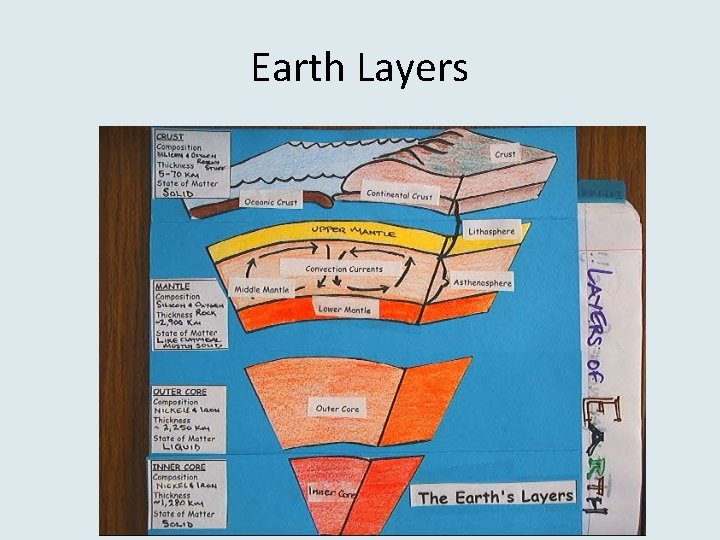
How many layers is the Earth dived into? • The earth has four main layers and those layers are divided even further into sub-layers. • Scientists have learned about the structure of the Earth through deep drilling and seismic evidence.
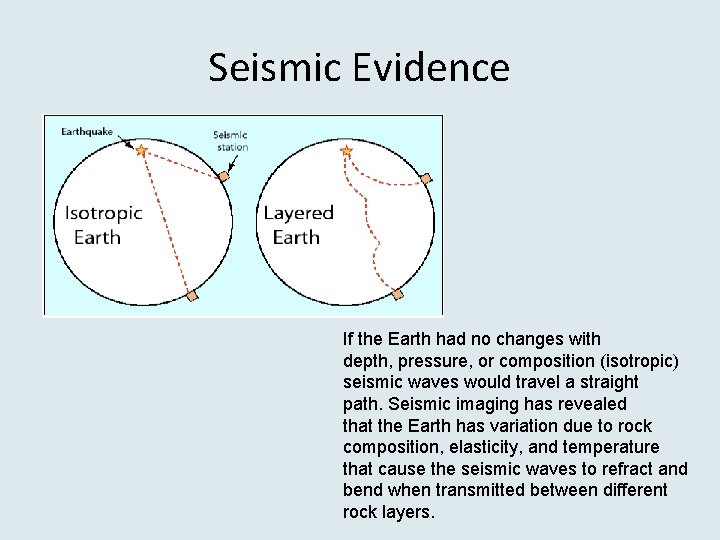
Seismic Evidence If the Earth had no changes with depth, pressure, or composition (isotropic) seismic waves would travel a straight path. Seismic imaging has revealed that the Earth has variation due to rock composition, elasticity, and temperature that cause the seismic waves to refract and bend when transmitted between different rock layers.
How many layers is the Earth dived into? The earth has four distinct layers: – Crust (continental and oceanic) – Mantle (upper: asthenosphere and lower) – Outer Core – Inner Core
Four Main Earth Layers
What is the Crust? • The crust or “thin shell” that covers the globe is the first layer. • 60 -70% covered water • 30 -40% seven continental continents
What is the difference between Continental Crust and Oceanic Crust? • The continental crust is the rigid and brittle layer of igneous, sedimentary, and metamorphic rocks which form the continents. The age of these rocks varies from between 4 billion to 600 million years. Even though it has all types of rocks the majority is granitic rock, so continental crust has a density of about 2. 7 g/cm 3. • It ranges in thickness of 20 -70 km. The thickest crust is found in mountain ranges.
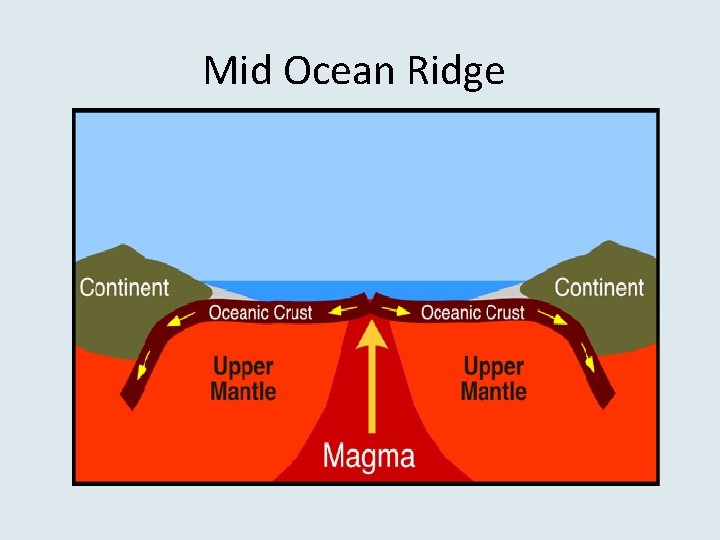
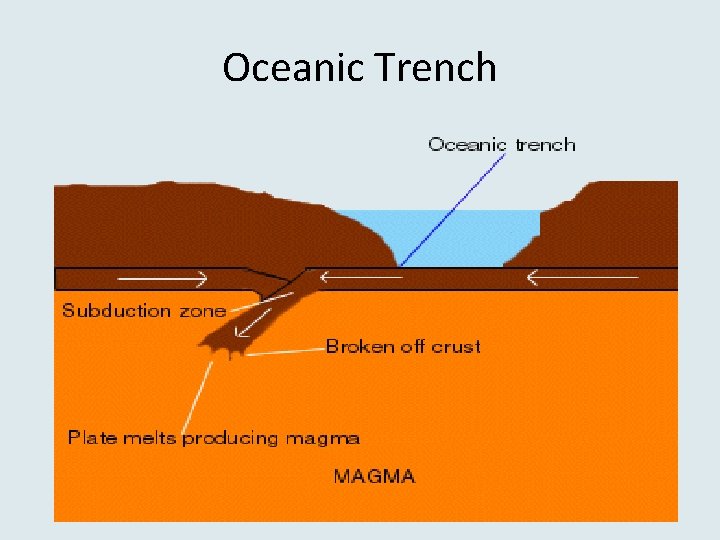
What is the difference between Continental Crust and Oceanic Crust? • Oceanic crust is the layer of mostly basalt found under the oceans. • The average density of the oceanic crust is 3. 3 g/cm³. It ranges in thickness of 5 -10 km. • Oceanic crust is created at the mid-oceanic ridges and destroyed at the oceanic trenches. Oceanic crust is relatively young age and is being created even today at mid-oceanic rift zones. Maximum age is about 200 million years.
Mid Ocean Ridge
Oceanic Trench
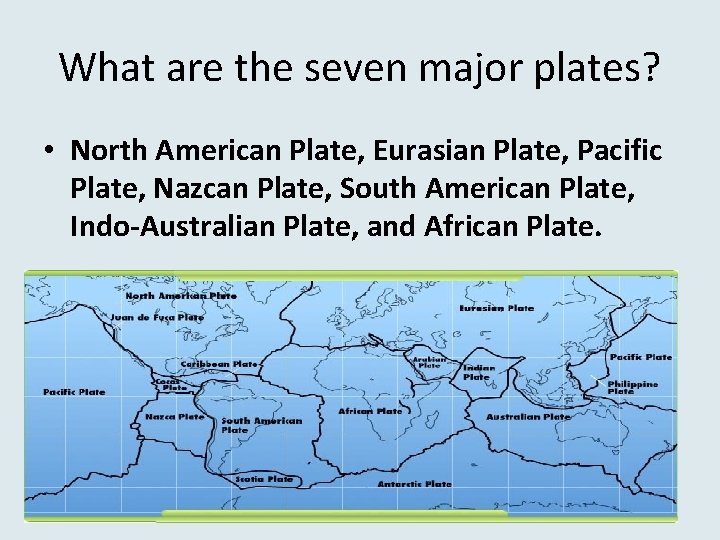
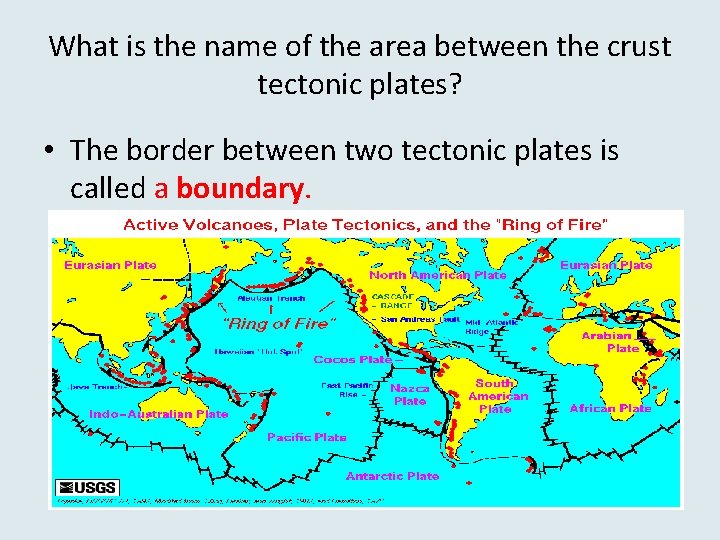
Is the crust one big piece or multiple pieces? • Theory of Plate Tectonics (1960) states that the Earth’s crust is made up of about a seven major plates on which the continents and oceans rest and that these plates are in constant slow motion.
What are the seven major plates? • North American Plate, Eurasian Plate, Pacific Plate, Nazcan Plate, South American Plate, Indo-Australian Plate, and African Plate.
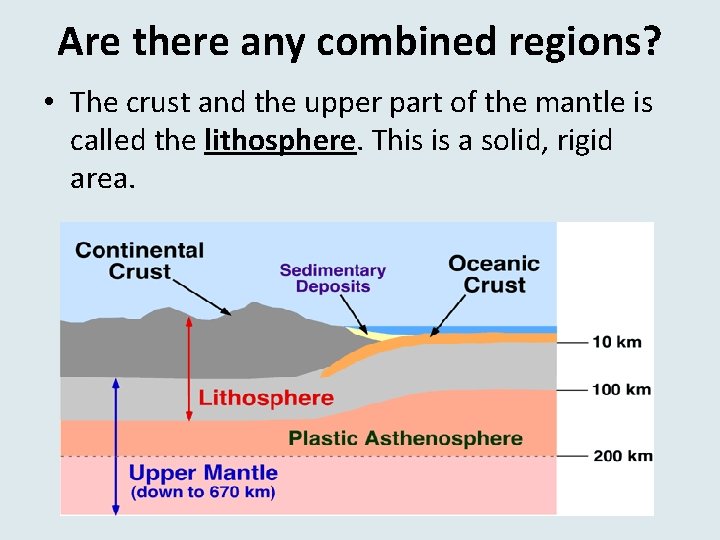
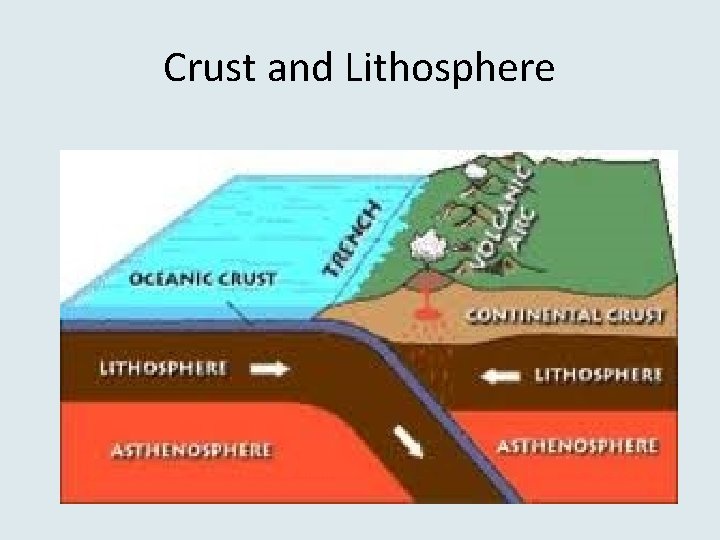
Are there any combined regions? • The crust and the upper part of the mantle is called the lithosphere. This is a solid, rigid area.
Crust and Lithosphere
Where is the mantle and what are its features? • The mantle is located below the crust and it contains mostly Fe, Mg, Si, Al, and O. • The mantle has an upper portion and a lower portion. • The asthenosphere is the molten, ductile, upper portion of the earth's mantle and it reaches a depth of about 250 km. • The asthenosphere is a solid but it flows like a liquid –this is known as plasticity.
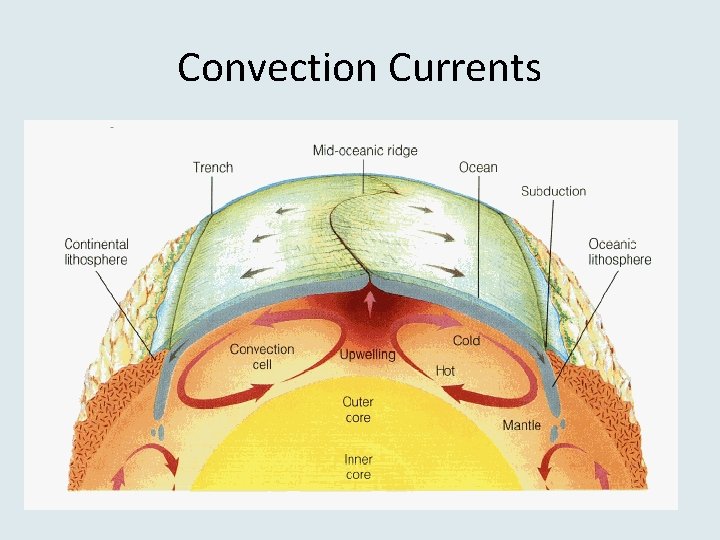
Where is the mantle and what are its features? • The rest of the mantle extends to 2900 km. The mantle has convection currents which result from differential temperatures (2800 ◦C to 3200 ◦C) in mantle materials. • Convection currents are the vertical (rising and falling) movement of rock within the mantle. Convection currents are the driving force that causes tectonic plates to move around the Earth's surface.
Convection Currents
Where is the core and what are its features? • The core is broken up into two sections (inner and outer core).
Outer Core Features • The outer core is less dense than the inner core and it is about 2, 200 km thick. • The temperatures reach between 4000 ◦C – 5000 ◦C. • Due to the great temperature, the outer core made of LIQUID iron (Fe) and nickel (Ni).
Inner Core Features • The inner core is about 1, 250 km thick. • The inner core is denser and has temperatures reaching 6000 ◦C. • Even though it is hotter than any other part of the layers of the earth, it is NOT liquid. The inner core is SOLID because of the intense pressure applied on it from all the layers above. • The material in the core is mostly iron (Fe).
Earth Layers
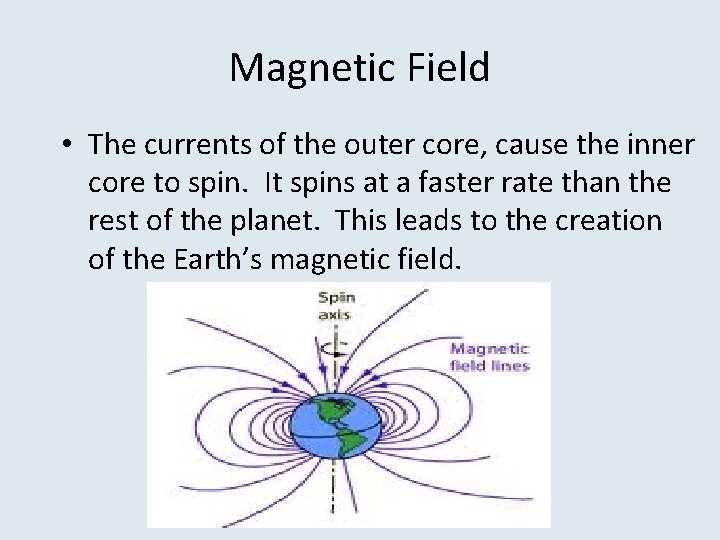
Magnetic Field • The currents of the outer core, cause the inner core to spin. It spins at a faster rate than the rest of the planet. This leads to the creation of the Earth’s magnetic field.
Part II: Plate Tectonics
How did Alfred Wegner come up with his idea? • In 1911 Alfred Wegner (German geophysicist/meteorologist) began his quest to prove that the continents were once connected due to what he called “continental drift. ” It all started when Wegner was browsing in the university library when he came across a scientific paper that listed fossils of identical plants and animals found on opposite sides of the Atlantic.
Alfred Wegner Continued… Intrigued by this information, Wegner began to look for, and find, more similar cases of similar organisms separated by great oceans. Alfred Wegner also noticed that the different large landmasses of the Earth almost fit together like a jigsaw. America fit closely to Africa and Europe and Antartica, Australia, India, and Madagascar fit next to the tip of Southern Africa.
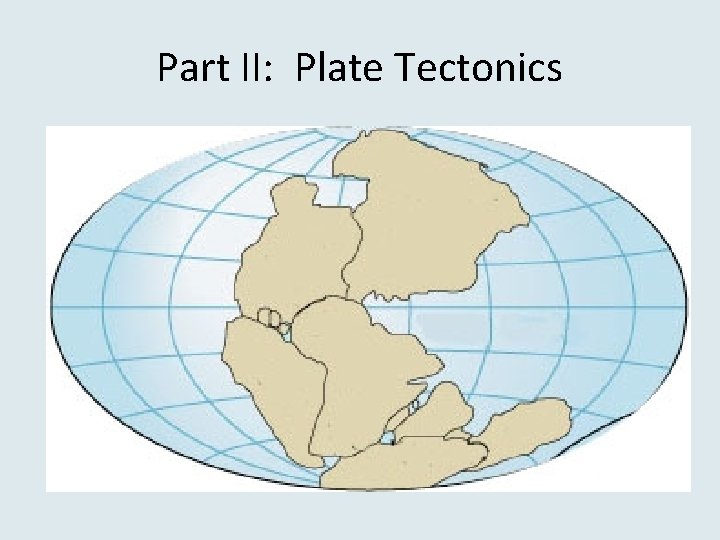
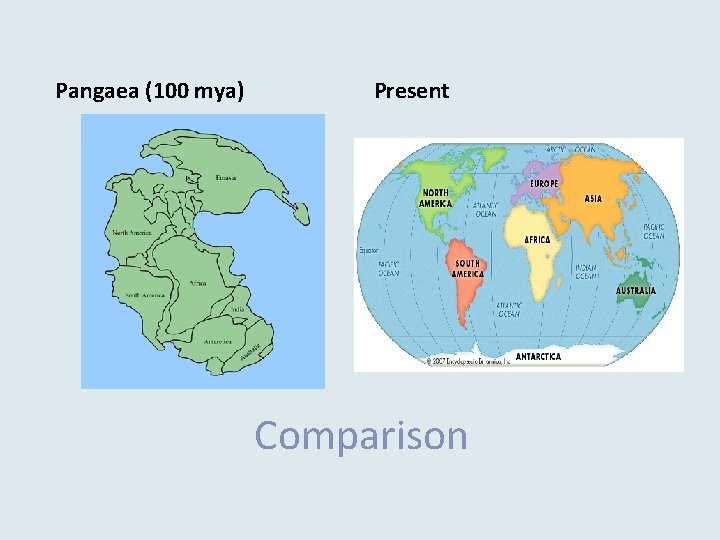
What did Alfred Wegner propose? • In 1912, he proposed theory of continental drift which hypothesized that the continents were slowly drifting around the Earth. He claimed that millions of years before present Earth, the continents were all connected. He called this huge landmass Pangaea.
Pangaea (100 mya) Present Comparison
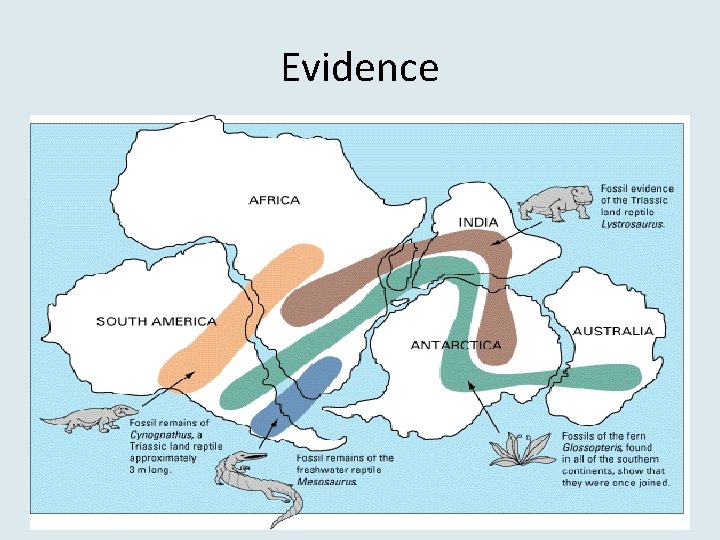
What evidence helps to support his theory of Pangaea? • Geologist have discovered that the geological structures of rocks in South West Africa and South East Brazil were distinctively identical, and the age of the two rocks were the same. • Fossils of the same species were found on several different continents. Wegner proposed that species dispersed were together and later carried to their present position as continents drifted.
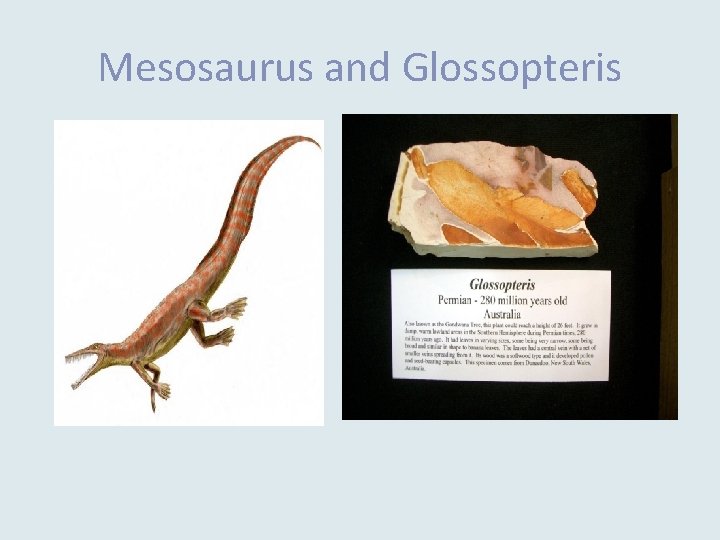
What evidence helps to support his theory of Pangaea? • Coal can be found underneath the cold and dry Antarctic ice cap, though coal can only form in warm and wet conditions. • Glossopteris, a fern, was found on the continents of South America, Africa, India, and Australia. • Mesosaurus, an early freshwater reptile, fossils are both found in Africa and South America. Since this animal inhabited freshwater habitats, it could not have swam in the ocean with is salt-water.
Evidence
Mesosaurus and Glossopteris
Is there proof that the plates move? • Even though the crust is solid rock, it sits on top of a hot, soft, semi-solid material located in the mantle. As the material in the upper mantle moves, it drags the overlying plates across the Earth’s surface. The plates are moving about 1 centimeter to 15 centimeters per year in different directions. GPS (Global Positioning Units) and satellites are used track this movement.
What is the name of the area between the crust tectonic plates? • The border between two tectonic plates is called a boundary.
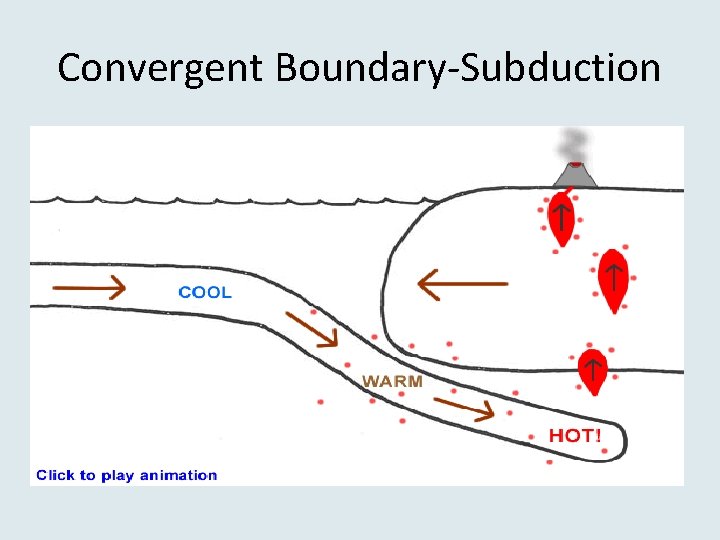
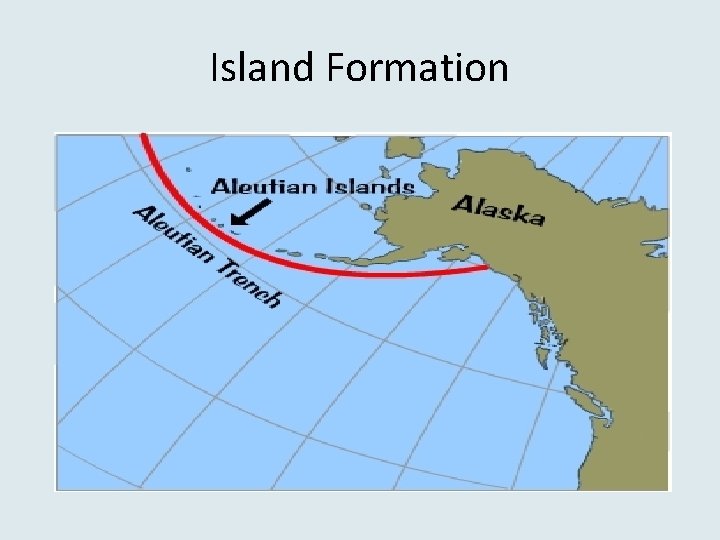
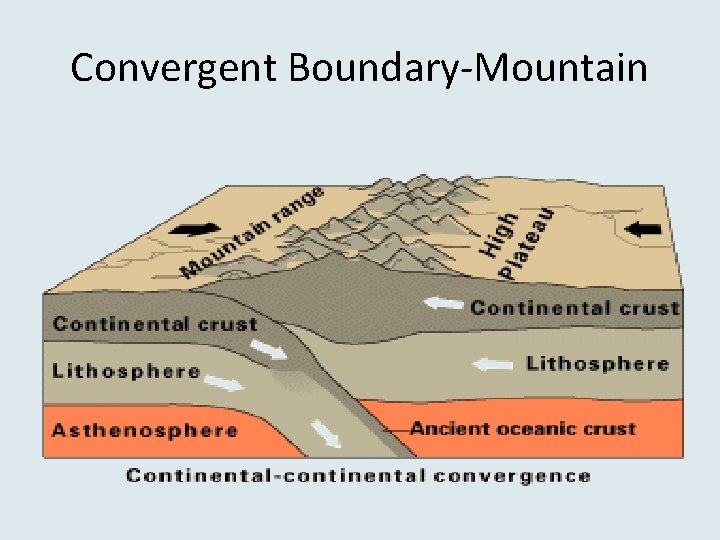
What types of boundaries are there? • Convergent boundaries areas under pressure that either result in subduction which is the lithosphere plates are driven down and OR destroyed in the molten magma in crustal uplifting that leads to mountain building.
Convergent Boundary-Subduction
Island Formation
Convergent Boundary-Mountain
Convergent Plates EURASIAN PLATE INDIAN PLATE
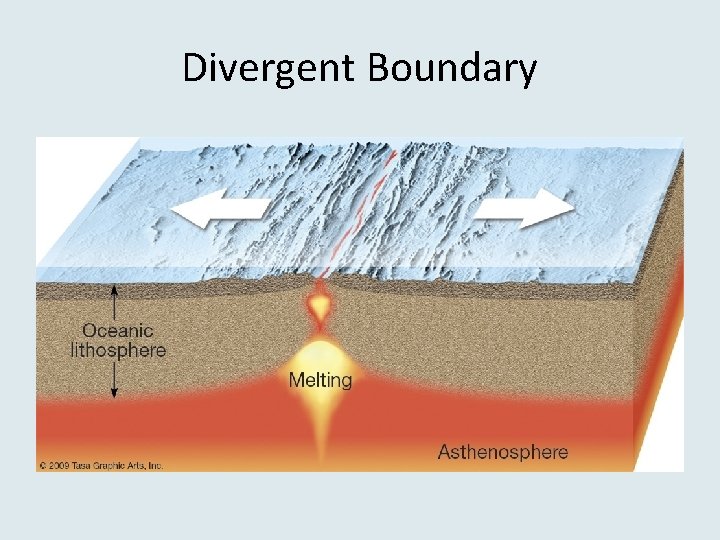
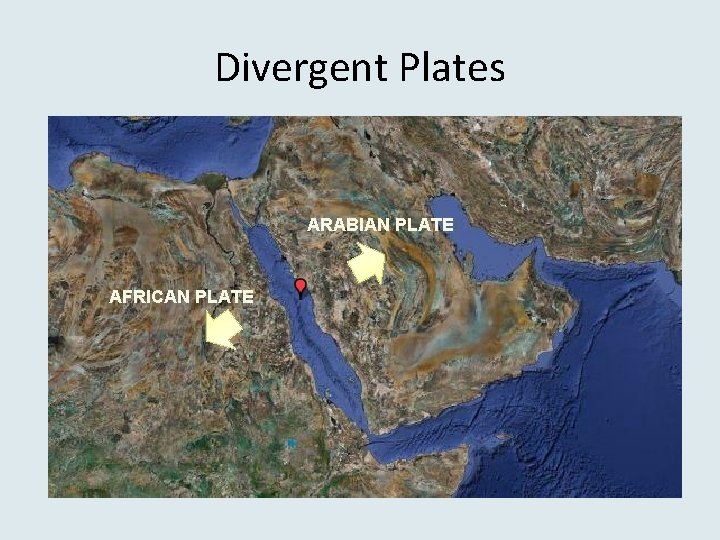
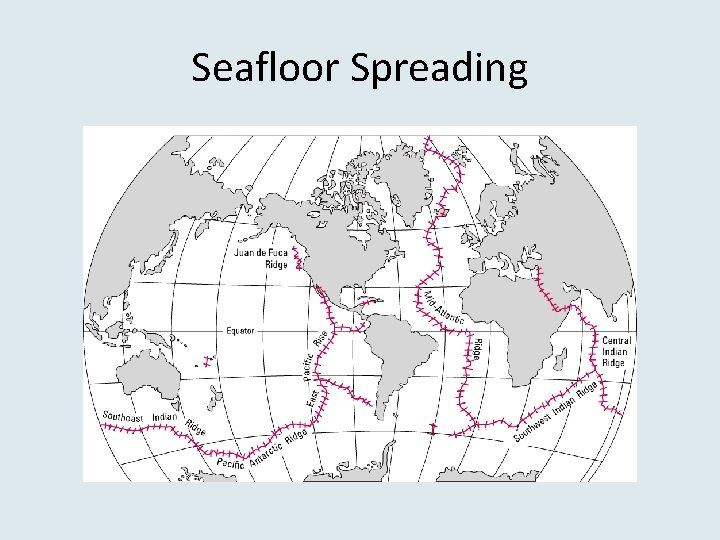
Divergent Boundary • Divergent boundaries areas under tension where plates are pushed apart by magma uprising from the mantle.
Divergent Boundary
Divergent Plates ARABIAN PLATE AFRICAN PLATE
Seafloor Spreading
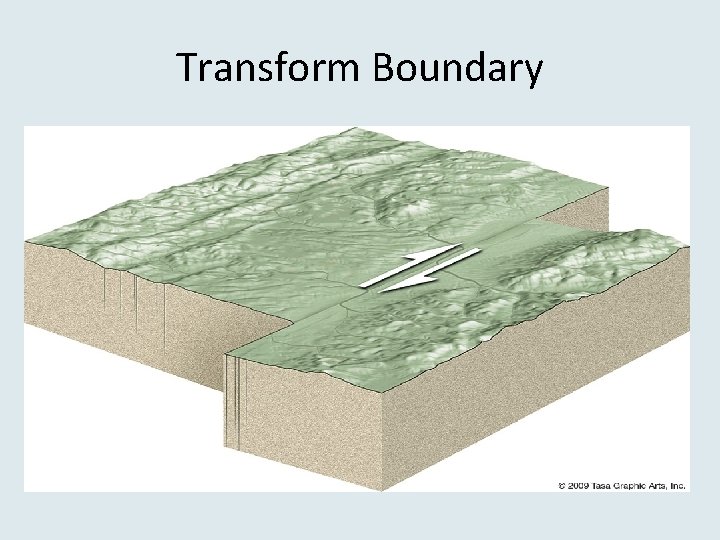
Transform Boundary • Transform boundaries areas that are moving laterally past one another and creating a shearing force.
Transform Boundary
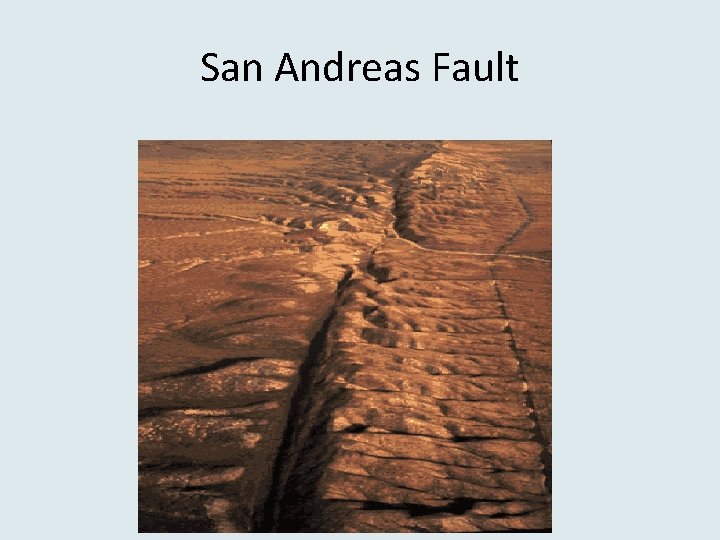
San Andreas Fault
When the plates move and interact, can this cause natural events on Earth? • When plates interaction through collisions, plates sliding past each other, plates splitting from each other, it can lead to the formation of mountains, volcano eruptions, sea-floor spreading and earthquakes.
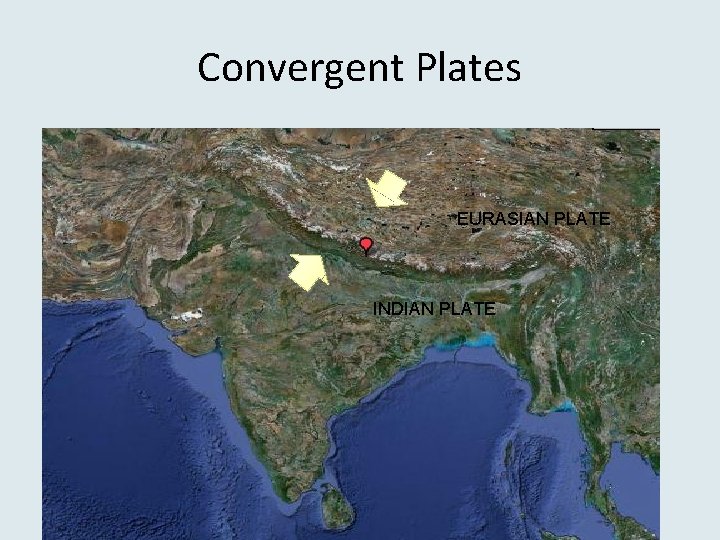
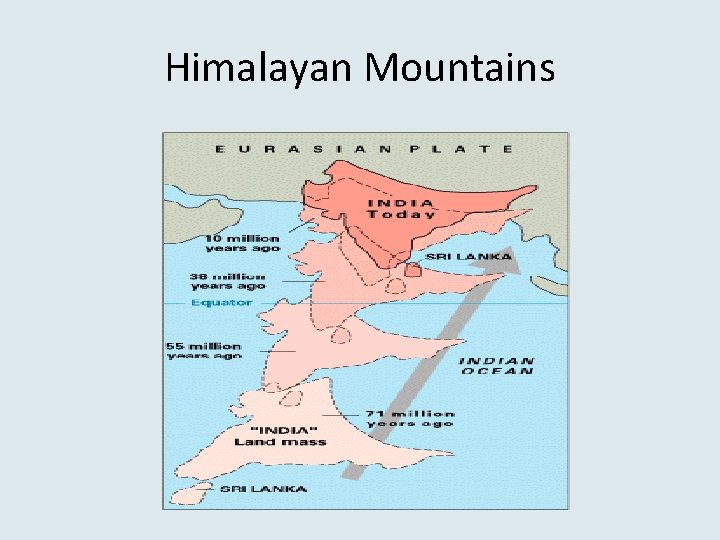
When do mountain chains form? • Mountain chains form when continental landmasses that have the same rock density converge. Since they have similar density, one plate can’t be subducted under the other. The pressure of the impinging plates can only be relieved by thrusting skyward forming mountain peaks. For example, the Himalayas, which stretch 2900 km along the border between India and Tibet formed between 40 -50 mya when India and Eurasia, driven by plate movement collided.
Himalayan Mountains
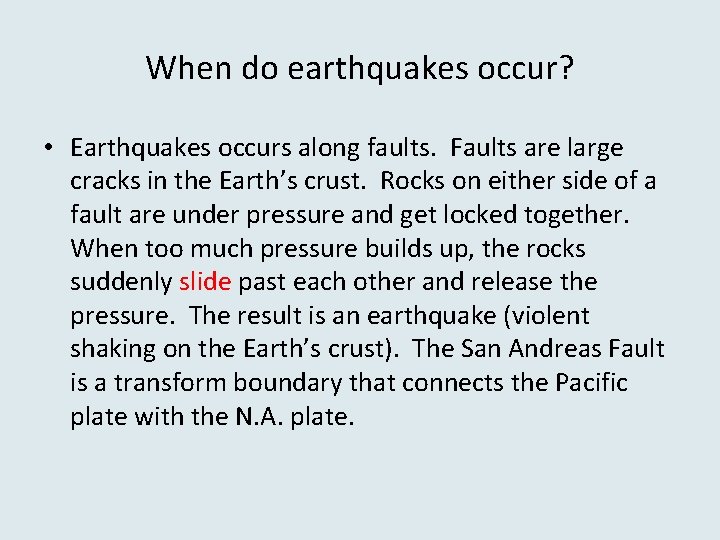
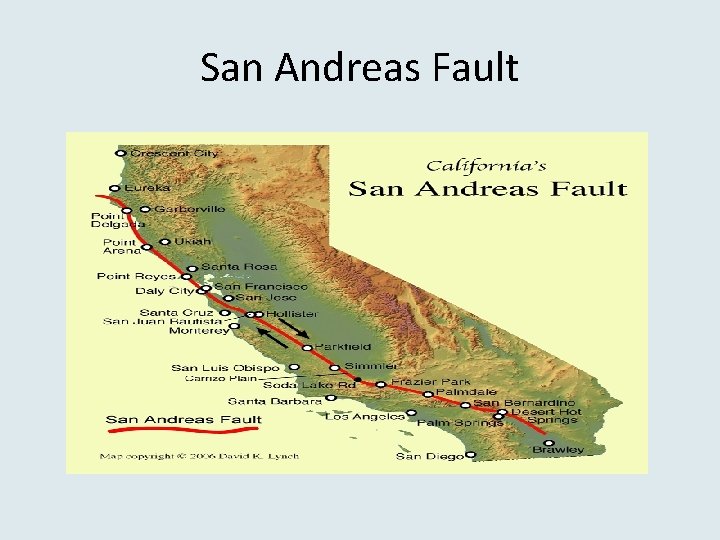
When do earthquakes occur? • Earthquakes occurs along faults. Faults are large cracks in the Earth’s crust. Rocks on either side of a fault are under pressure and get locked together. When too much pressure builds up, the rocks suddenly slide past each other and release the pressure. The result is an earthquake (violent shaking on the Earth’s crust). The San Andreas Fault is a transform boundary that connects the Pacific plate with the N. A. plate.
San Andreas Fault
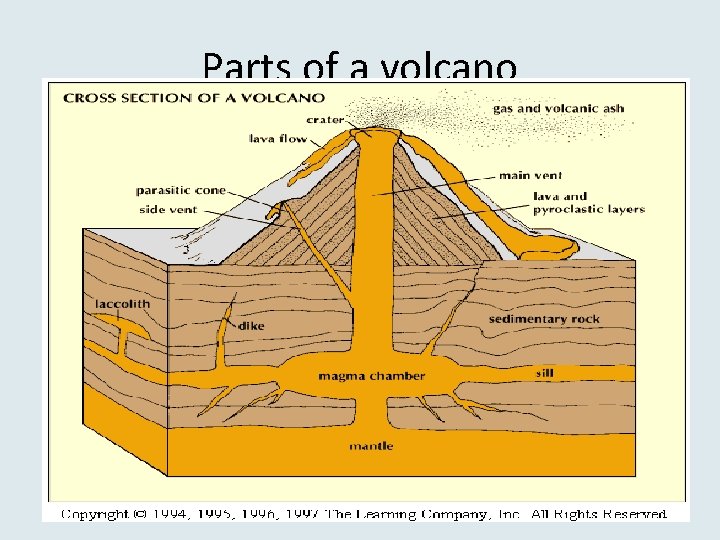
How do volcanoes form? • Volcanoes form when material from inside the Earth reaches the surface. In convergent boundaries one plate can submerge under another and the heat and pressure turn rock into magma, which can rise through the cracks in the crust. In divergent boundaries, where plates pull apart, magma rises through cracks and forms volcanoes.
Parts of a volcano
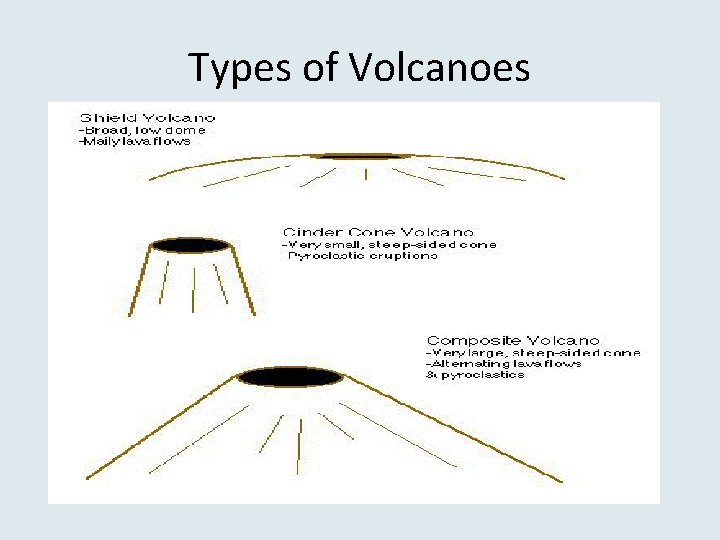
Types of Volcanoes
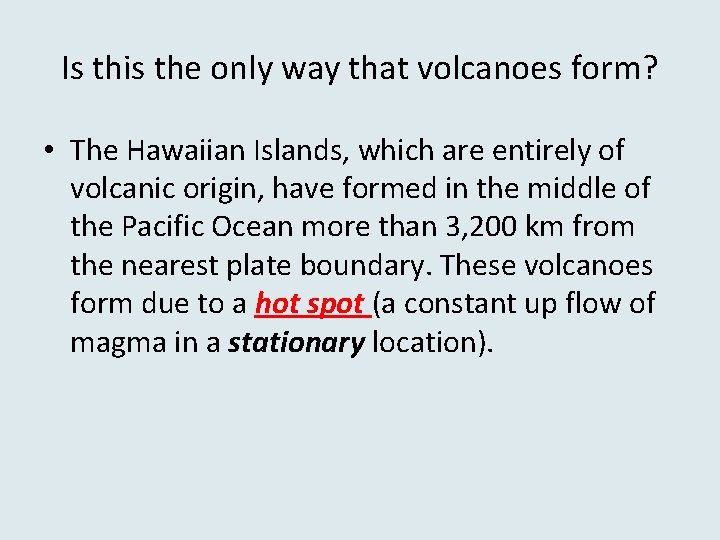
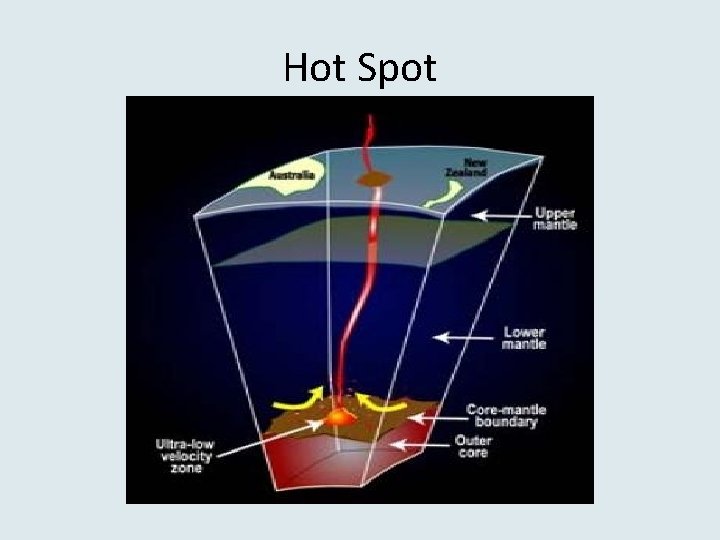
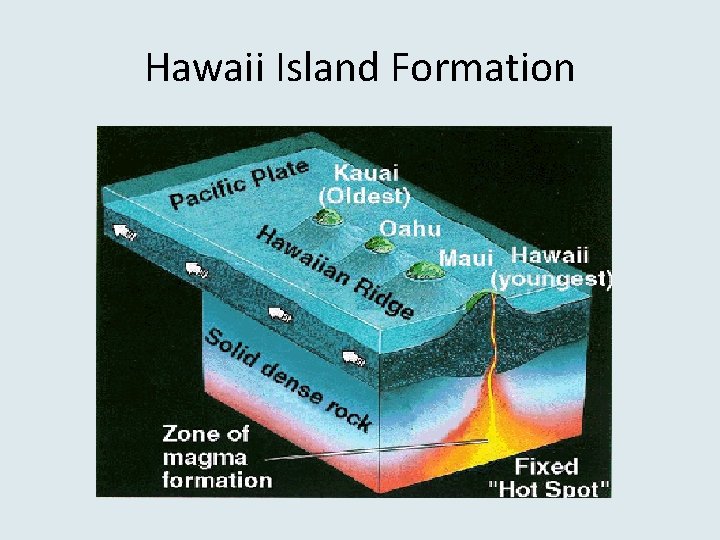
Is this the only way that volcanoes form? • The Hawaiian Islands, which are entirely of volcanic origin, have formed in the middle of the Pacific Ocean more than 3, 200 km from the nearest plate boundary. These volcanoes form due to a hot spot (a constant up flow of magma in a stationary location).
Hot Spot
Hawaii Island Formation