
Earth Systems 1 Earths Air The outermost Earth

- Slides: 28
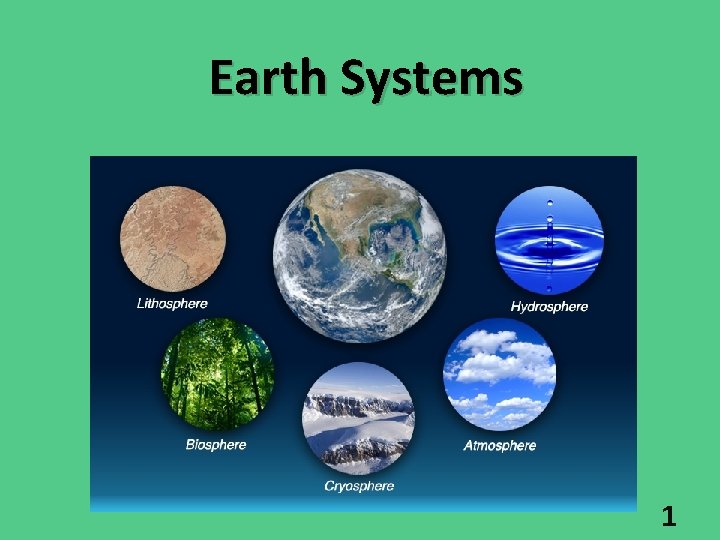
Earth Systems 1
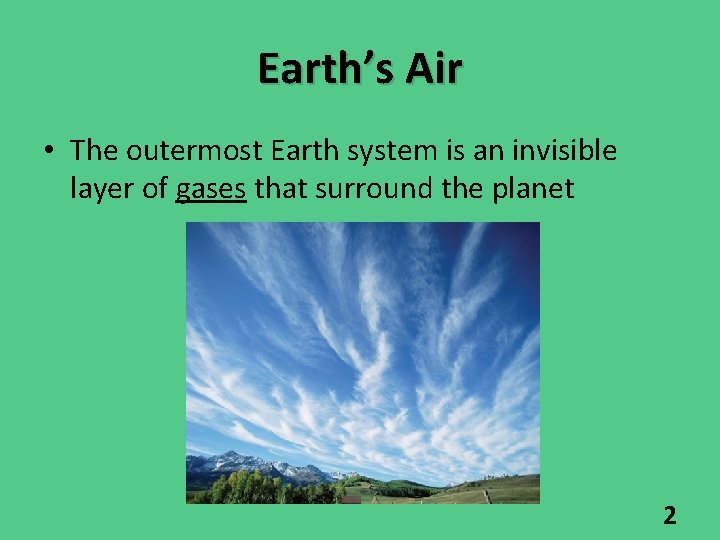
Earth’s Air • The outermost Earth system is an invisible layer of gases that surround the planet 2
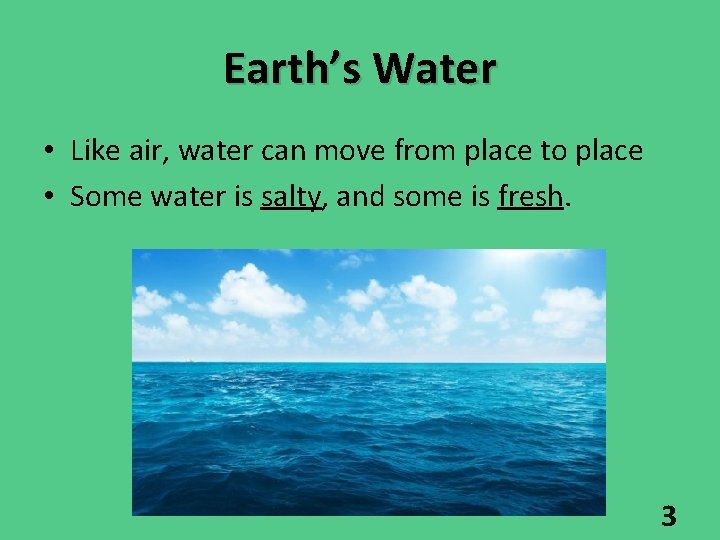
Earth’s Water • Like air, water can move from place to place • Some water is salty, and some is fresh. 3
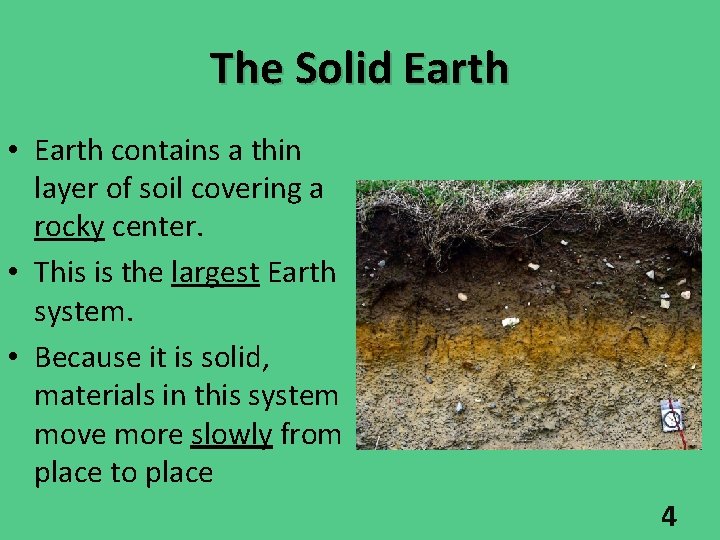
The Solid Earth • Earth contains a thin layer of soil covering a rocky center. • This is the largest Earth system. • Because it is solid, materials in this system move more slowly from place to place 4
Life on Earth • The Earth system that contains all living things is the biosphere. • Living things are found in air, water, and soil. Thus, the biosphere has no distinct boundaries. 5
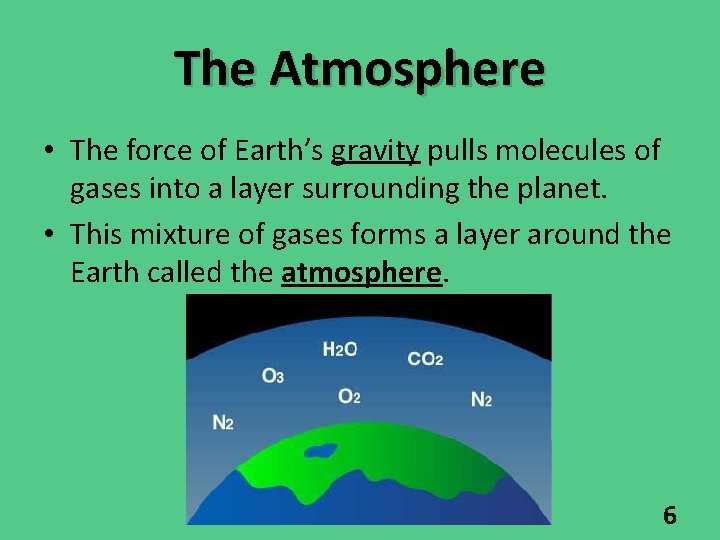
The Atmosphere • The force of Earth’s gravity pulls molecules of gases into a layer surrounding the planet. • This mixture of gases forms a layer around the Earth called the atmosphere. 6
The Atmosphere • The atmosphere is denser near Earth’s surface. Why? Gravity! • The atmosphere becomes thinner further from Earth. Why? Less Gravity! 7
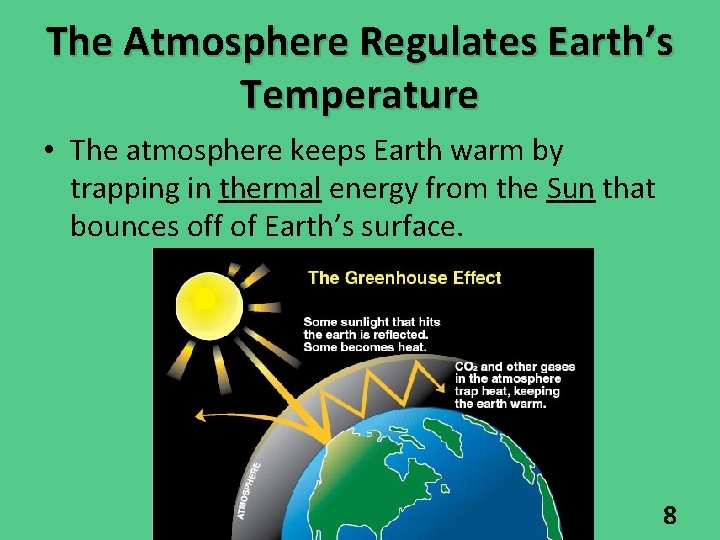
The Atmosphere Regulates Earth’s Temperature • The atmosphere keeps Earth warm by trapping in thermal energy from the Sun that bounces off of Earth’s surface. 8
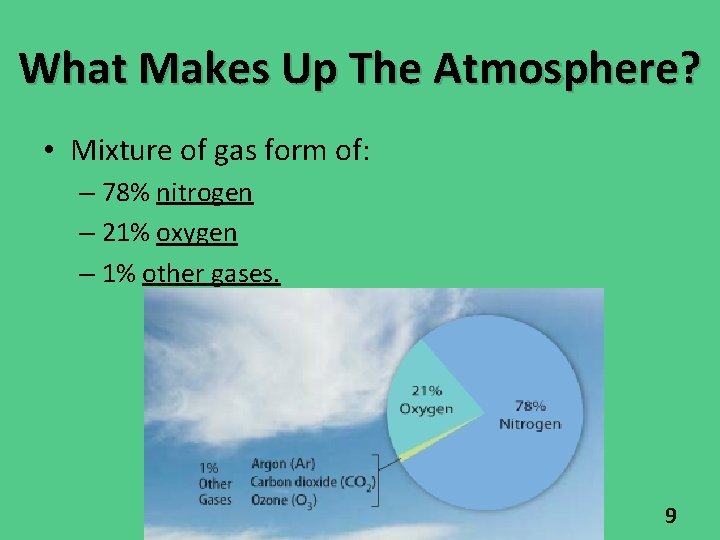
What Makes Up The Atmosphere? • Mixture of gas form of: – 78% nitrogen – 21% oxygen – 1% other gases. 9
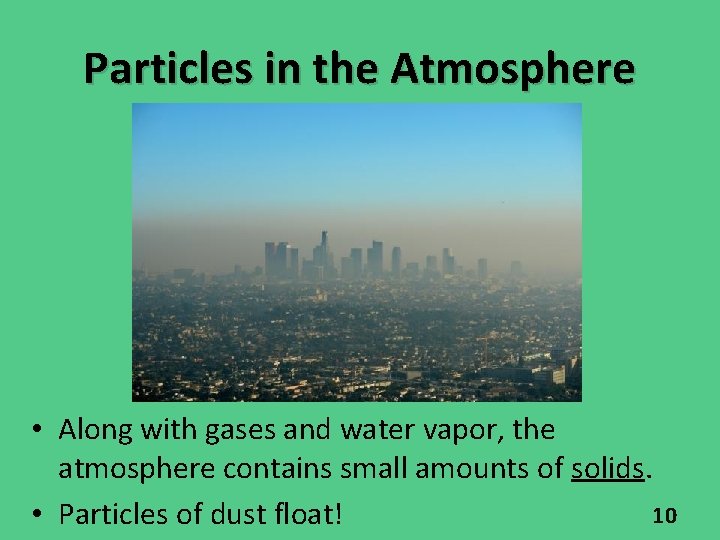
Particles in the Atmosphere • Along with gases and water vapor, the atmosphere contains small amounts of solids. 10 • Particles of dust float!
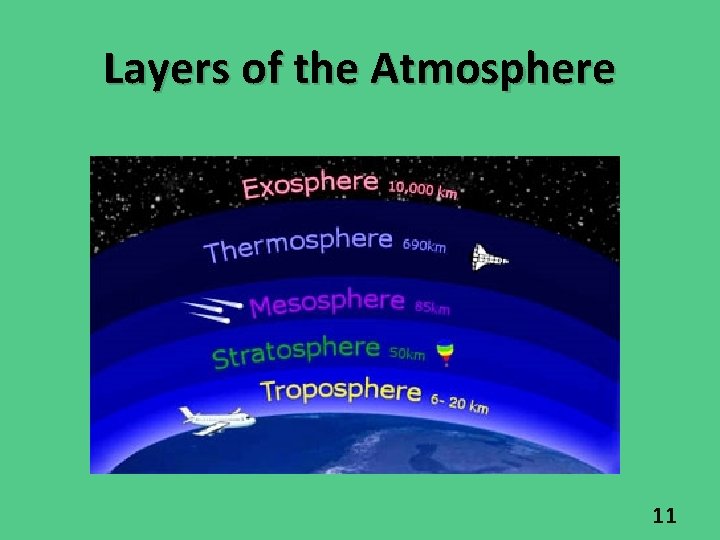
Layers of the Atmosphere 11
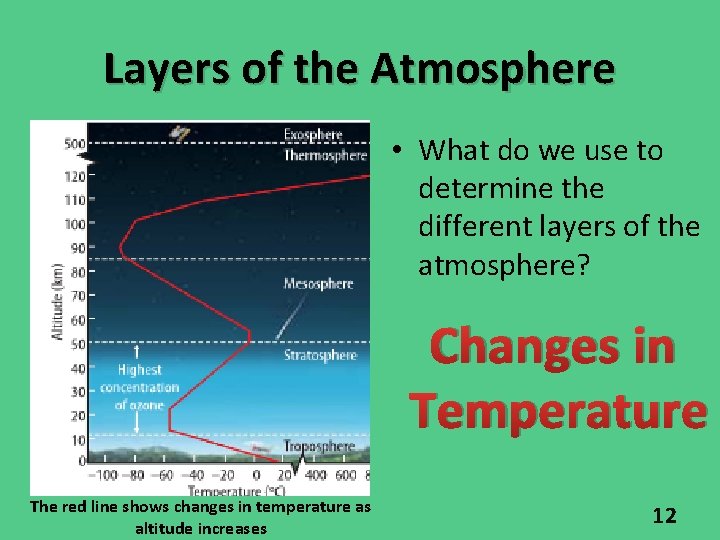
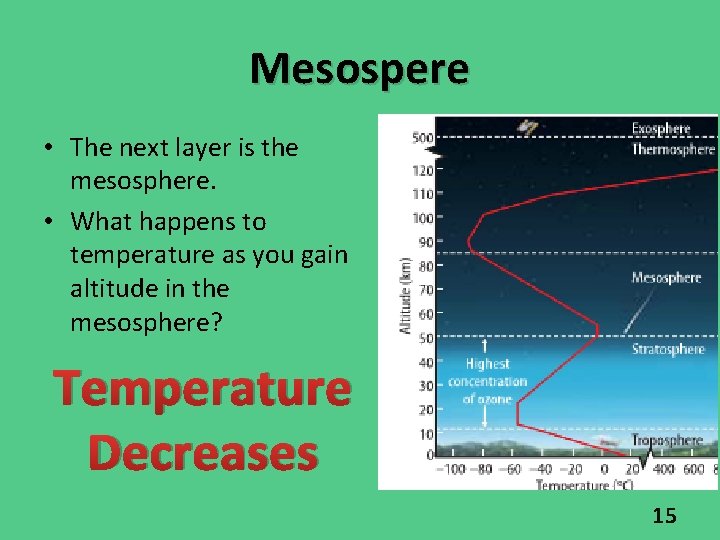
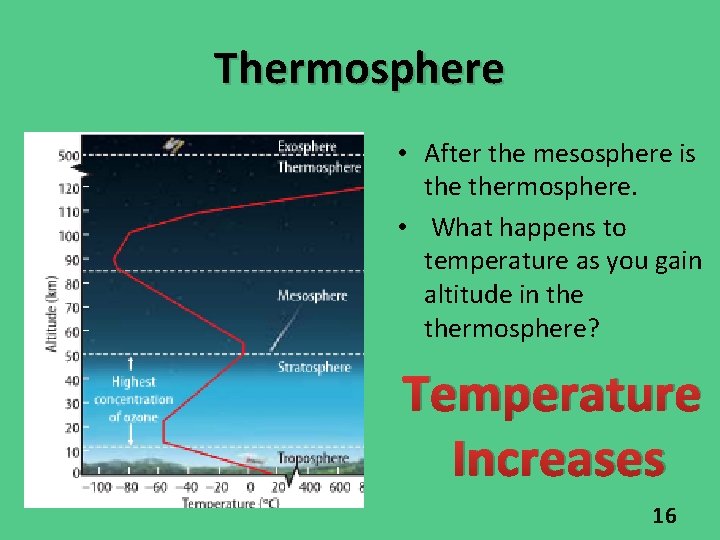
Layers of the Atmosphere • What do we use to determine the different layers of the atmosphere? Changes in Temperature The red line shows changes in temperature as altitude increases 12
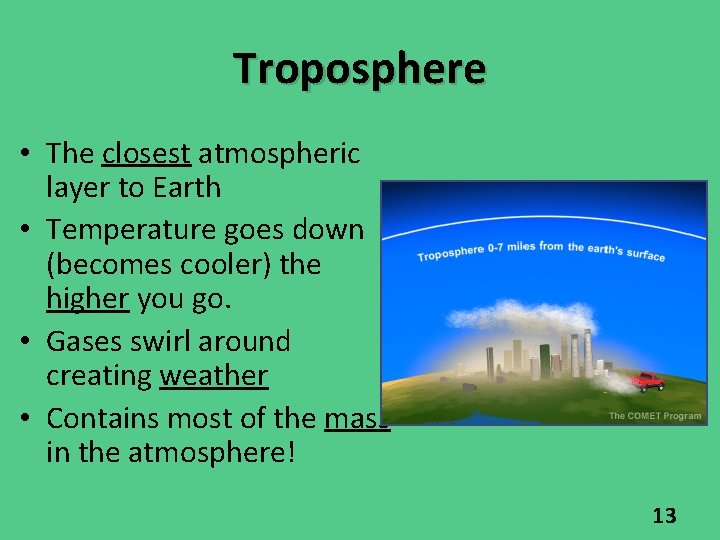
Troposphere • The closest atmospheric layer to Earth • Temperature goes down (becomes cooler) the higher you go. • Gases swirl around creating weather • Contains most of the mass in the atmosphere! 13
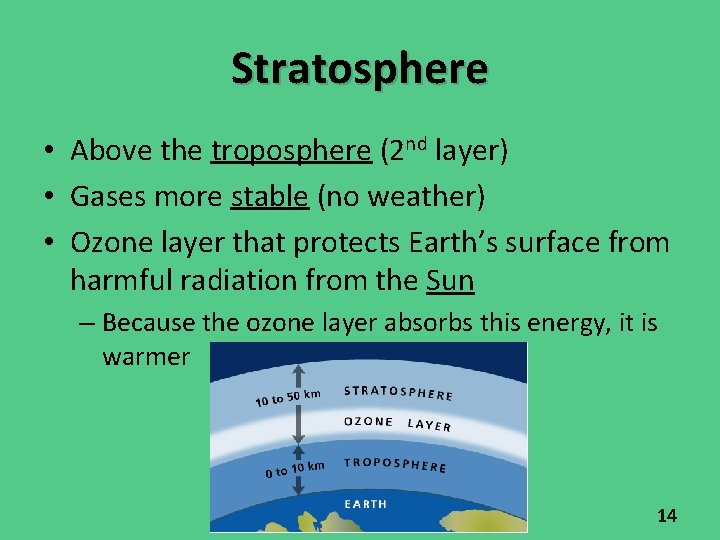
Stratosphere • Above the troposphere (2 nd layer) • Gases more stable (no weather) • Ozone layer that protects Earth’s surface from harmful radiation from the Sun – Because the ozone layer absorbs this energy, it is warmer 14
Mesospere • The next layer is the mesosphere. • What happens to temperature as you gain altitude in the mesosphere? Temperature Decreases 15
Thermosphere • After the mesosphere is thermosphere. • What happens to temperature as you gain altitude in thermosphere? Temperature Increases 16
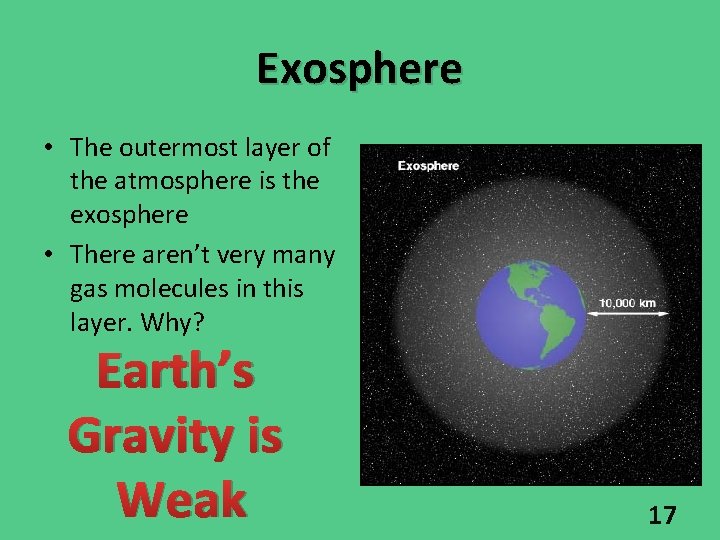
Exosphere • The outermost layer of the atmosphere is the exosphere • There aren’t very many gas molecules in this layer. Why? Earth’s Gravity is Weak 17
Earth’s Atmosphere Practice! 18
19
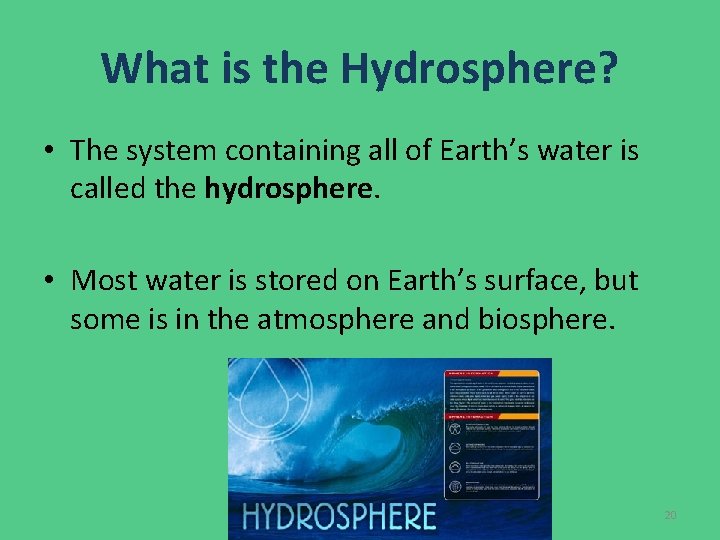
What is the Hydrosphere? • The system containing all of Earth’s water is called the hydrosphere. • Most water is stored on Earth’s surface, but some is in the atmosphere and biosphere. 20
The Hydrosphere • Water in the hydrosphere flows from one location to the next. • What forms of water can be found here on Earth? Solid Liquid Gas 21
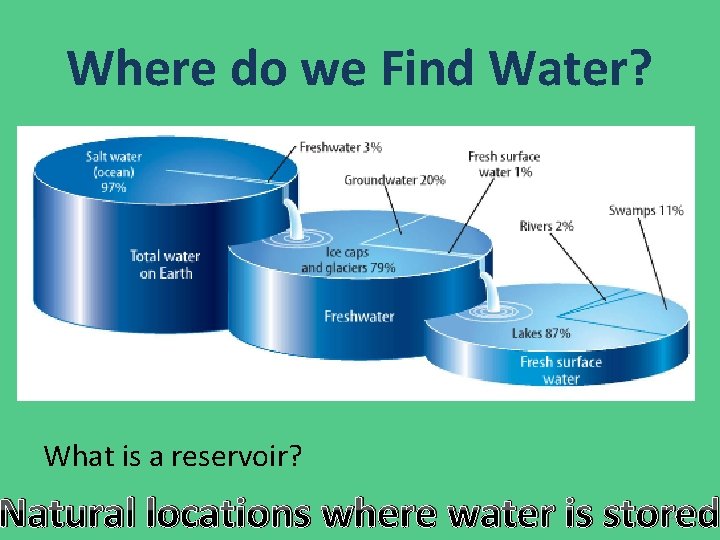
Where do we Find Water? What is a reservoir? Natural locations where water is stored 22
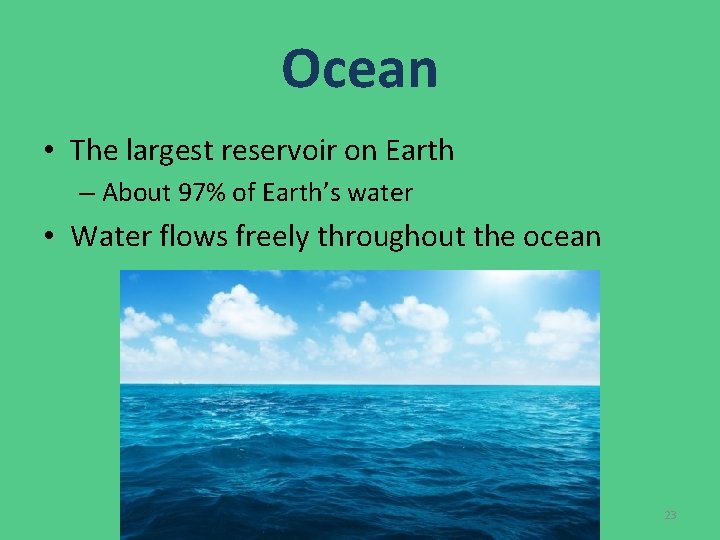
Ocean • The largest reservoir on Earth – About 97% of Earth’s water • Water flows freely throughout the ocean 23
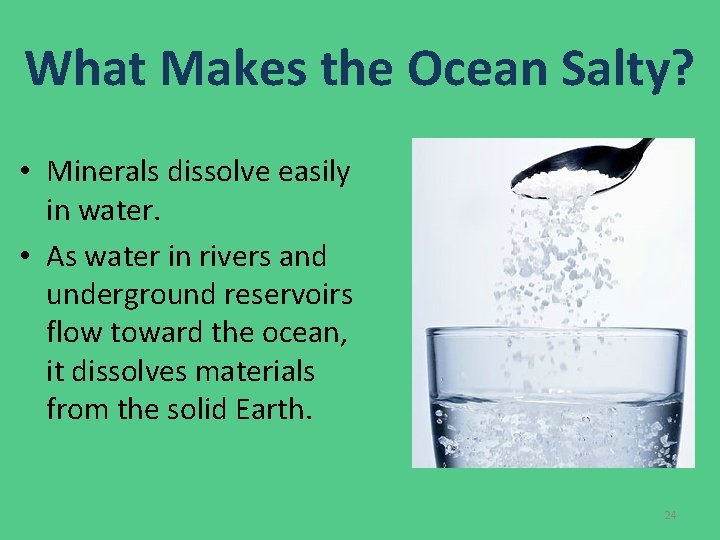
What Makes the Ocean Salty? • Minerals dissolve easily in water. • As water in rivers and underground reservoirs flow toward the ocean, it dissolves materials from the solid Earth. 24
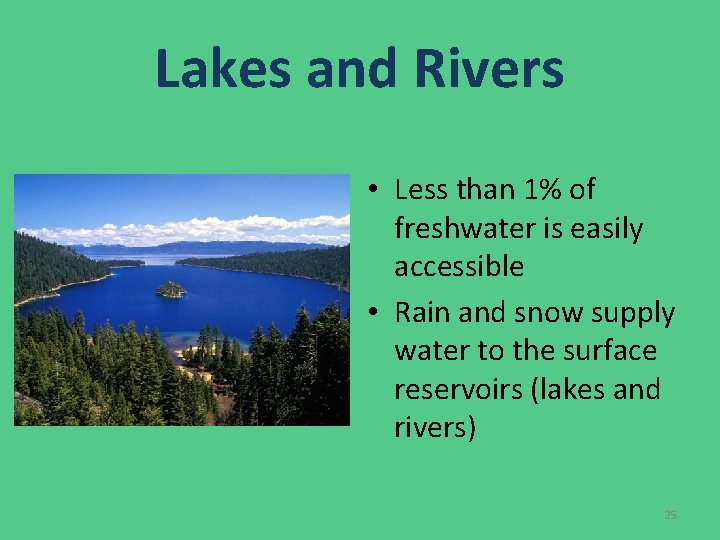
Lakes and Rivers • Less than 1% of freshwater is easily accessible • Rain and snow supply water to the surface reservoirs (lakes and rivers) 25
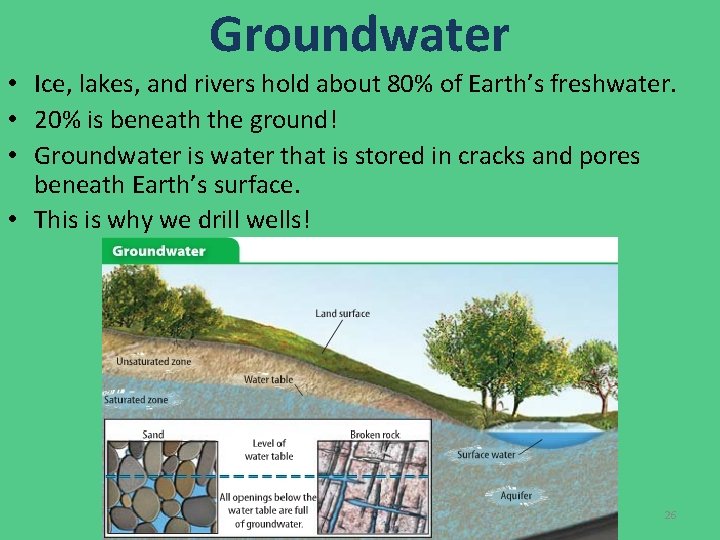
Groundwater • Ice, lakes, and rivers hold about 80% of Earth’s freshwater. • 20% is beneath the ground! • Groundwater is water that is stored in cracks and pores beneath Earth’s surface. • This is why we drill wells! 26
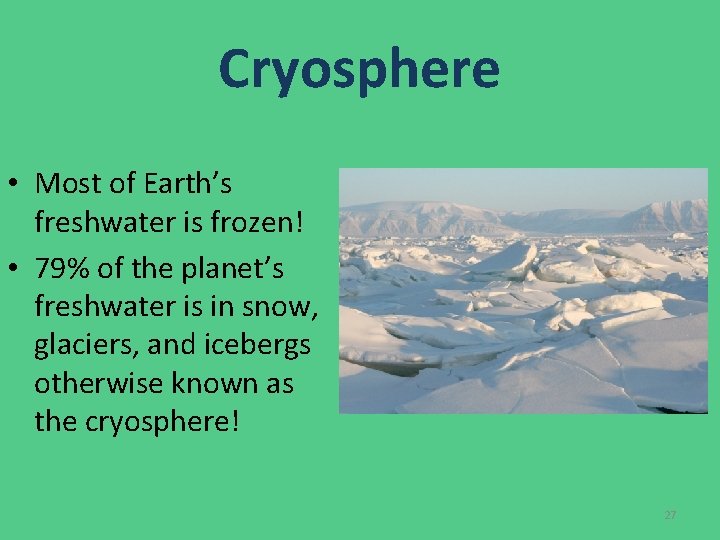
Cryosphere • Most of Earth’s freshwater is frozen! • 79% of the planet’s freshwater is in snow, glaciers, and icebergs otherwise known as the cryosphere! 27
28