
Earth System Notes Open vs Closed System Open
- Slides: 9
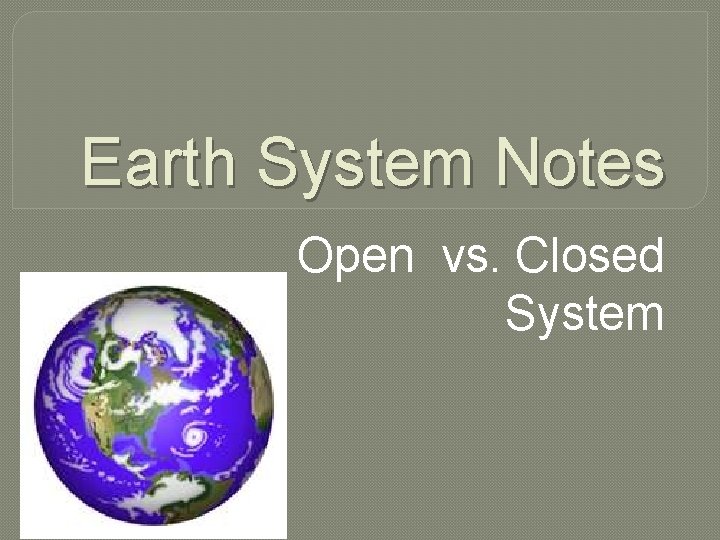
Earth System Notes Open vs. Closed System
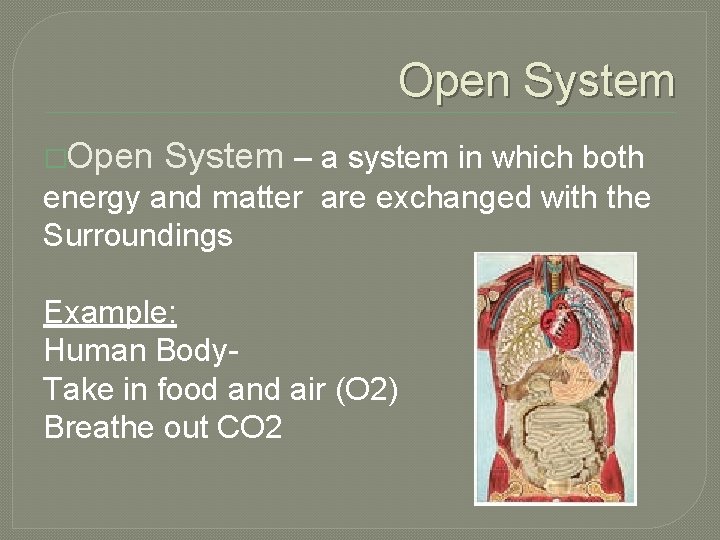
Open System �Open System – a system in which both energy and matter are exchanged with the Surroundings Example: Human Body. Take in food and air (O 2) Breathe out CO 2
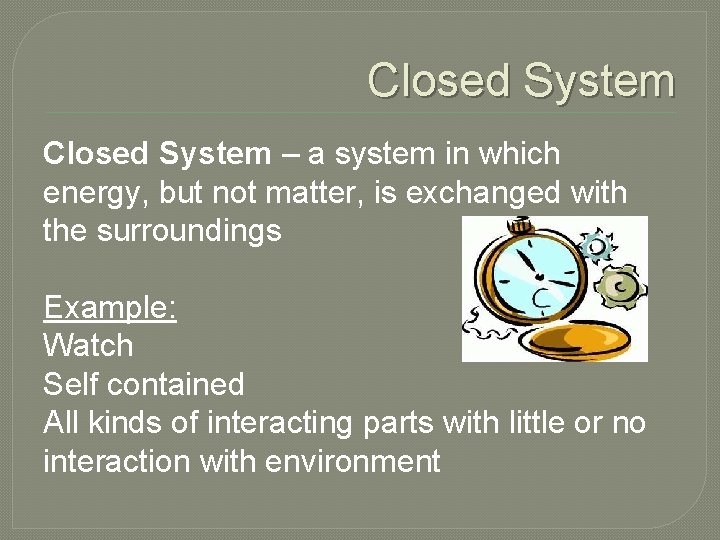
Closed System – a system in which energy, but not matter, is exchanged with the surroundings Example: Watch Self contained All kinds of interacting parts with little or no interaction with environment
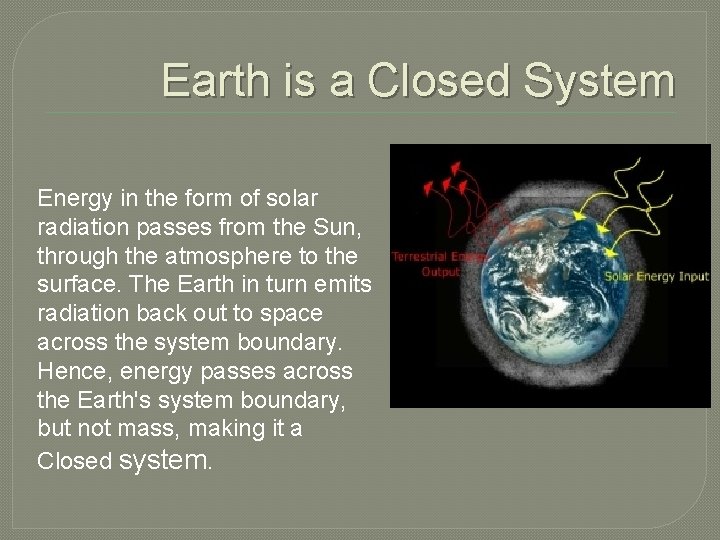
Earth is a Closed System Energy in the form of solar radiation passes from the Sun, through the atmosphere to the surface. The Earth in turn emits radiation back out to space across the system boundary. Hence, energy passes across the Earth's system boundary, but not mass, making it a Closed system.
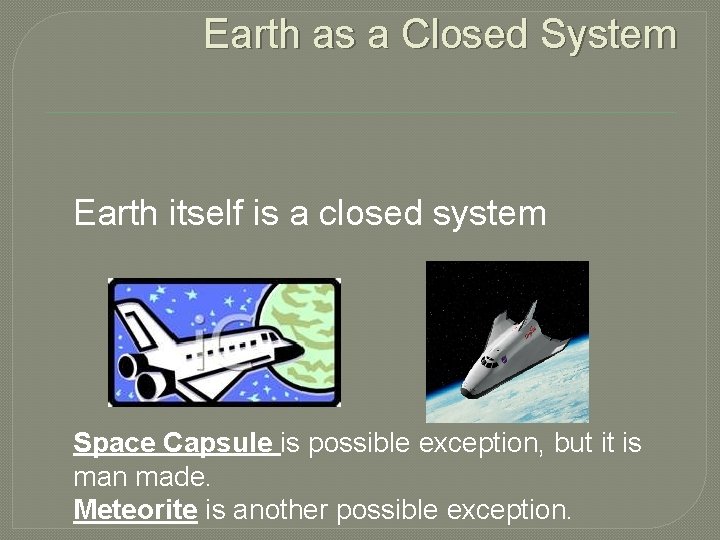
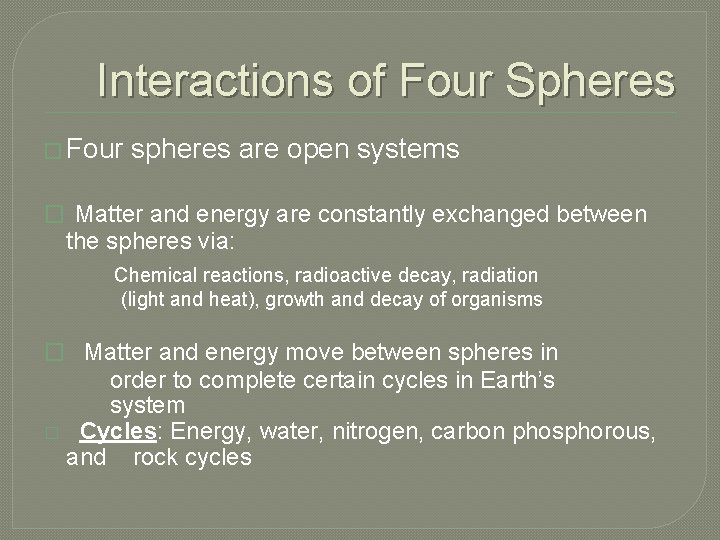
Earth as a Closed System Earth itself is a closed system Space Capsule is possible exception, but it is man made. Meteorite is another possible exception.
Interactions of Four Spheres � Four spheres are open systems � Matter and energy are constantly exchanged between the spheres via: Chemical reactions, radioactive decay, radiation (light and heat), growth and decay of organisms � Matter and energy move between spheres in order to complete certain cycles in Earth’s system � Cycles: Energy, water, nitrogen, carbon phosphorous, and rock cycles
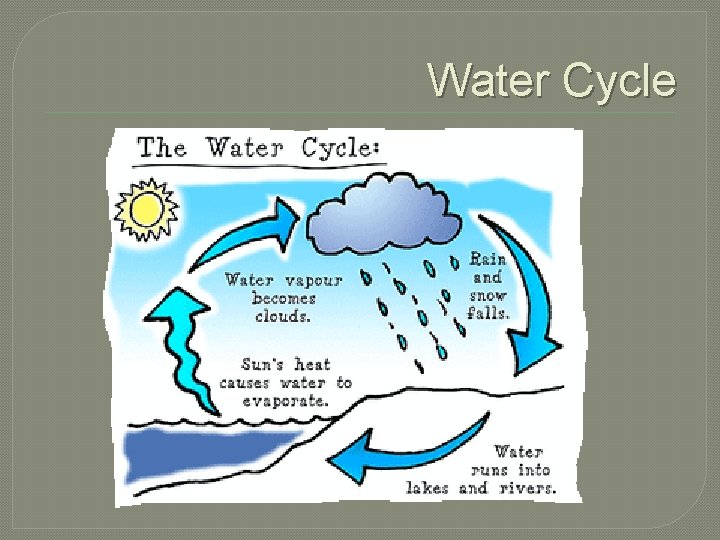
Water Cycle
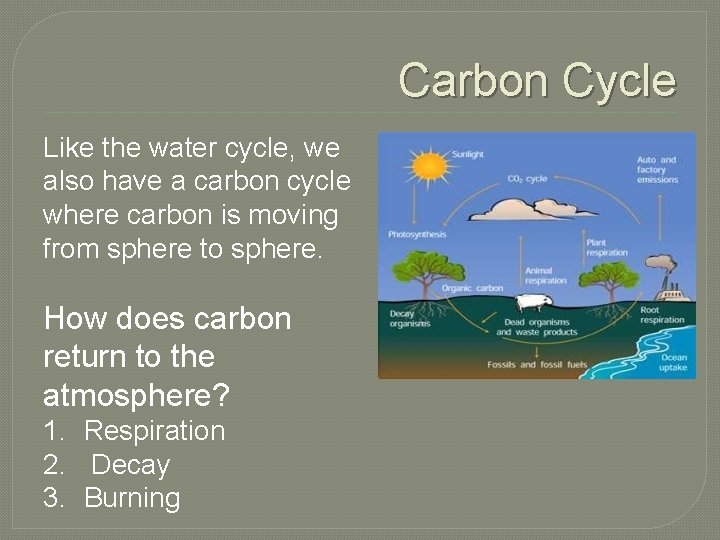
Carbon Cycle Like the water cycle, we also have a carbon cycle where carbon is moving from sphere to sphere. How does carbon return to the atmosphere? 1. Respiration 2. Decay 3. Burning
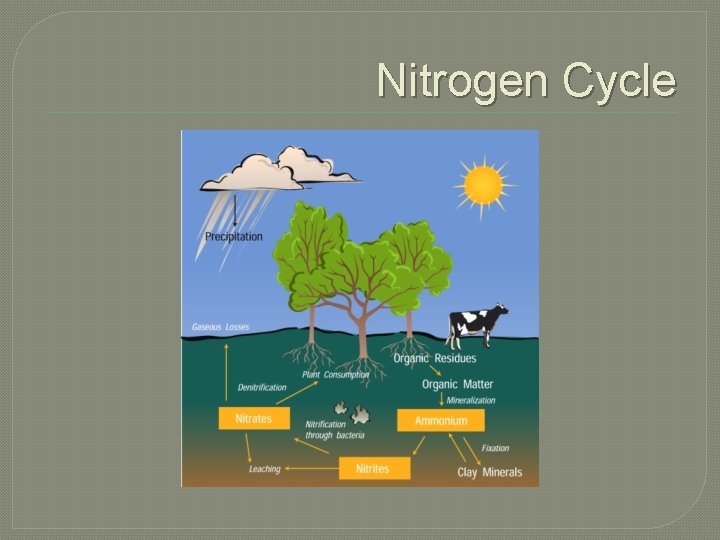
Nitrogen Cycle