
Earth System Model Beyond the boundary Model A
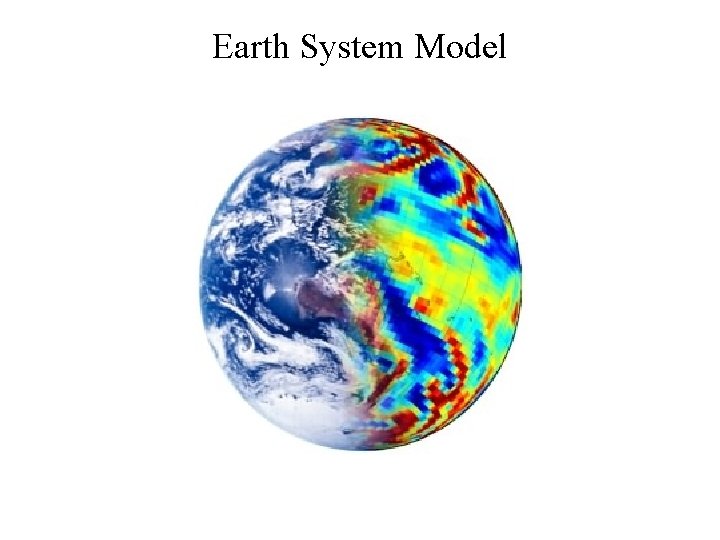
Earth System Model
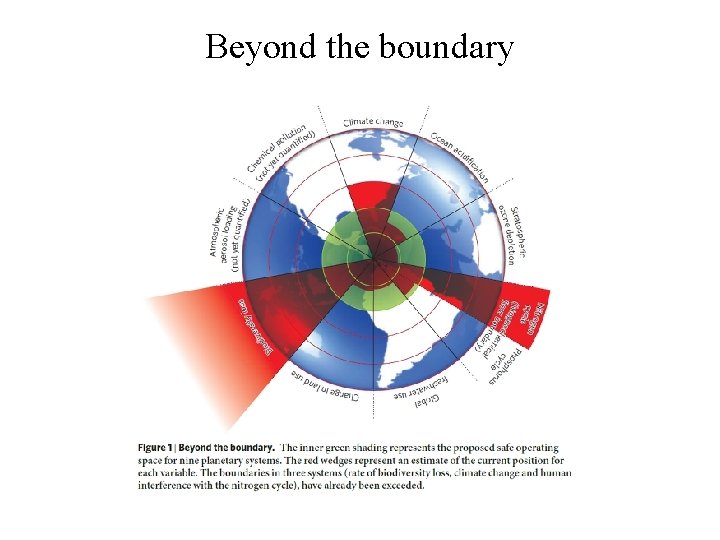
Beyond the boundary
Model • A mathematical representation of the many processes that make up our climate. • Requires: – – Knowledge of the physical laws that govern climate Mathematical expressions for those laws Numerical methods to solve the mathematical expressions on a computer (if needed) A computer of adequate size to carry out the calculations
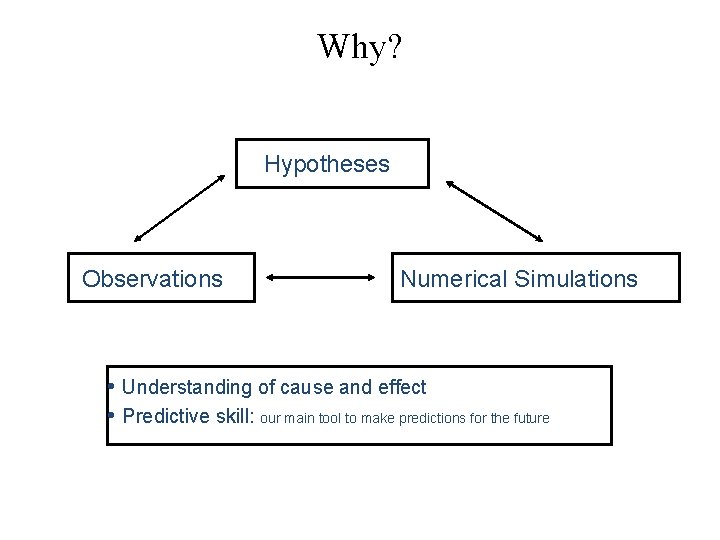
Why? Hypotheses Observations Numerical Simulations • Understanding of cause and effect • Predictive skill: our main tool to make predictions for the future
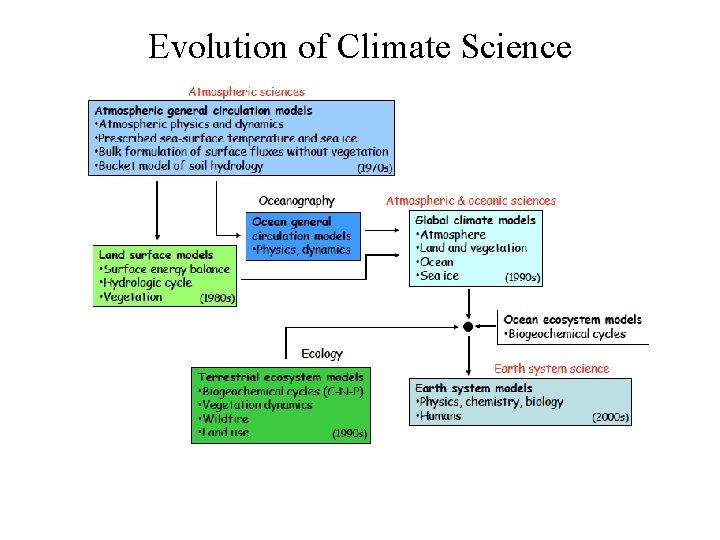
Evolution of Climate Science
Definition There is no unique definition of which processes must be represented before a climate model becomes an Earth System Model (ESM), but typically such models have at least an interactive carbon cycle component. The development of this capability was motivated by suggestions that the ability of terrestrial ecosystems and the ocean to remove carbon dioxide from the atmosphere will be limited by future climate change (e. g. , Friedlingstein et al. 2006).
![Climate-Carbon Feedback [Friedlingstein et al. 2006]](http://slidetodoc.com/presentation_image_h2/4f8c00f81459573d7a049e7570f67288/image-7.jpg "Climate-Carbon Feedback [Friedlingstein et al. 2006]")
Climate-Carbon Feedback [Friedlingstein et al. 2006]
Climate-Carbon Feedback Positive feedback if the warming leads to enhanced rates of decay of organic matter in soils, or a reduction in oceanic carbon uptake, then the concentration of CO 2 in the atmosphere will rise more rapidly than it would in the absence of such (positive) feedbacks, and the rate of warming will be greater as well. Negative feedback if increased CO 2 in the atmosphere enhances photosynthesis and the storage of carbon in plants and soils, then CO 2 levels will rise less rapidly than in the absence of this (negative) feedback, and climate change will also be slower as a result.
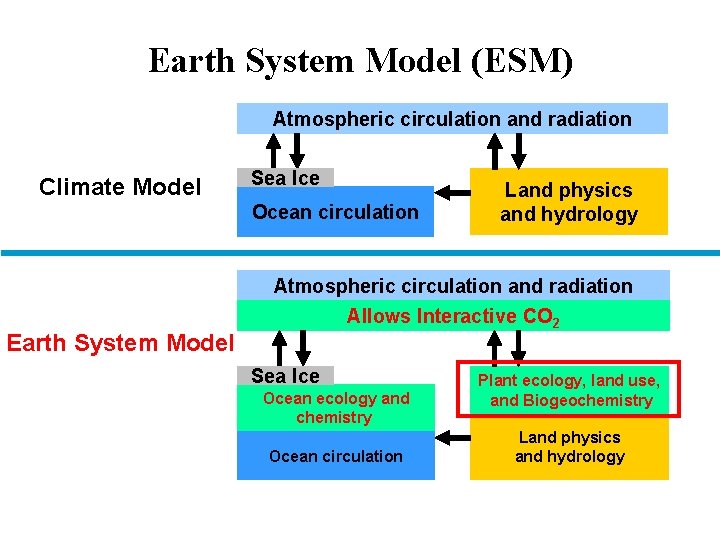
Earth System Model (ESM) Atmospheric circulation and radiation Climate Model Sea Ice Ocean circulation Earth System Model Land physics and hydrology Atmospheric circulation and radiation Allows Interactive CO 2 Sea Ice Ocean ecology and chemistry Ocean circulation Plant ecology, land use, and Biogeochemistry Land physics and hydrology
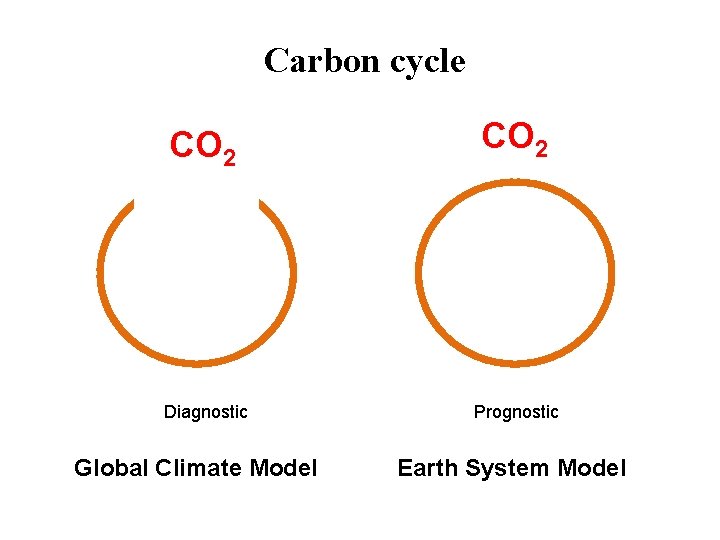
Carbon cycle CO 2 Diagnostic Prognostic Global Climate Model Earth System Model
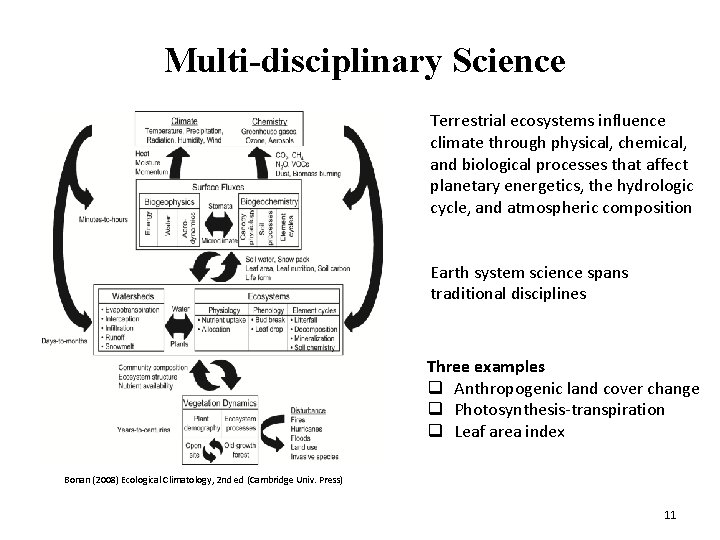
Multi-disciplinary Science Terrestrial ecosystems influence climate through physical, chemical, and biological processes that affect planetary energetics, the hydrologic cycle, and atmospheric composition Earth system science spans traditional disciplines Three examples q Anthropogenic land cover change q Photosynthesis-transpiration q Leaf area index Bonan (2008) Ecological Climatology, 2 nd ed (Cambridge Univ. Press) 11
History
Heterogenity
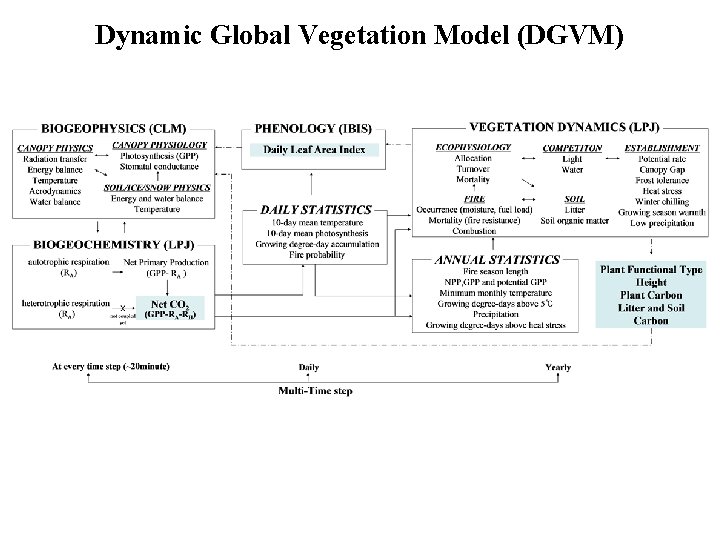
Dynamic Global Vegetation Model (DGVM)
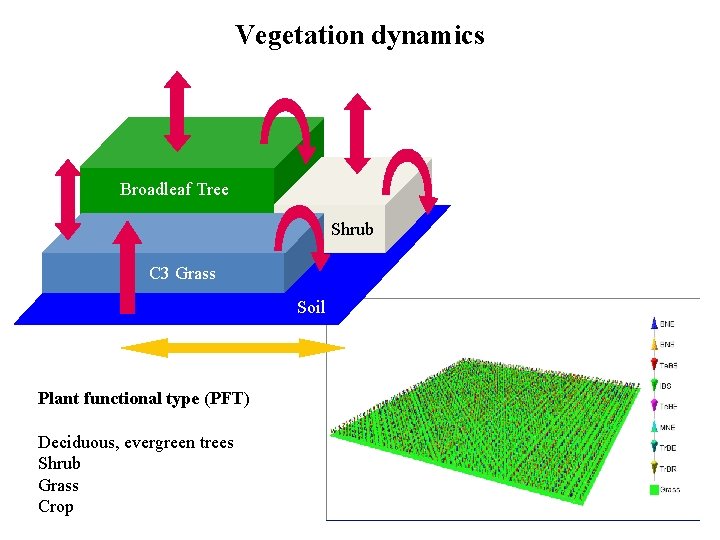
Vegetation dynamics Broadleaf Tree Shrub C 3 Grass Soil Competition (10 days) Plant functional type (PFT) Deciduous, evergreen trees Shrub Grass Crop
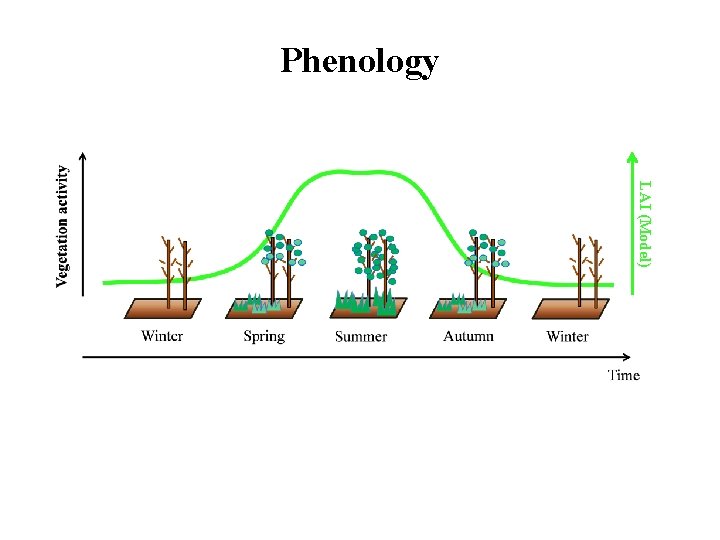
Phenology LAI (Model)
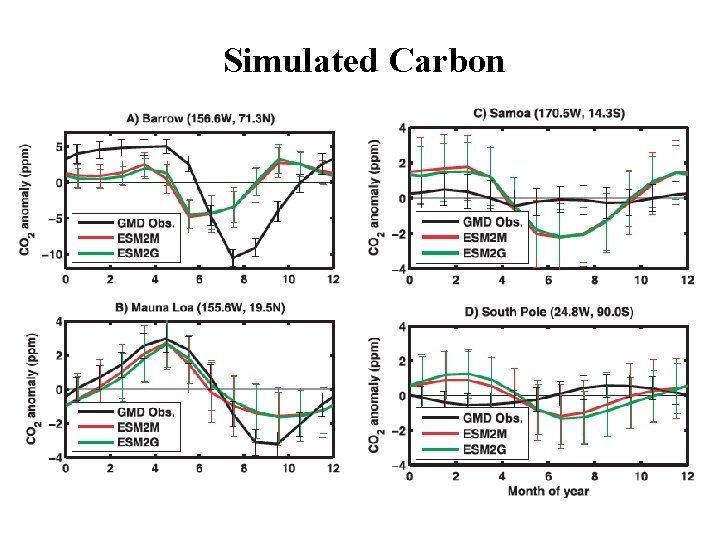
Simulated Carbon
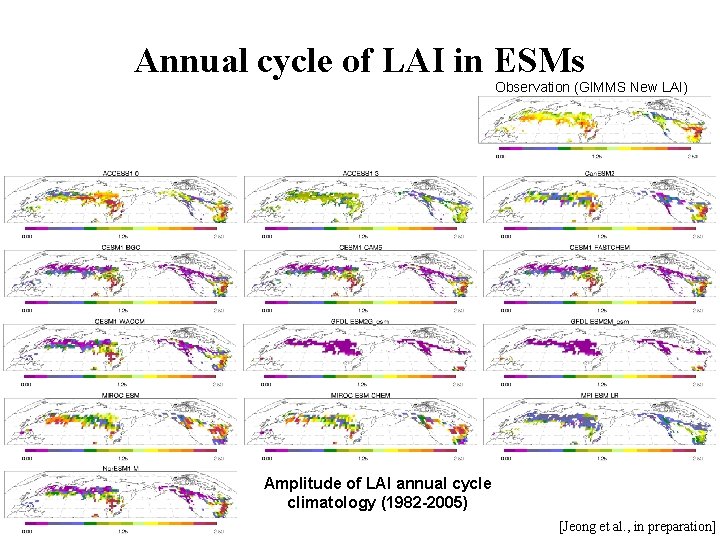
Annual cycle of LAI in ESMs Observation (GIMMS New LAI) Amplitude of LAI annual cycle climatology (1982 -2005) [Jeong et al. , in preparation]
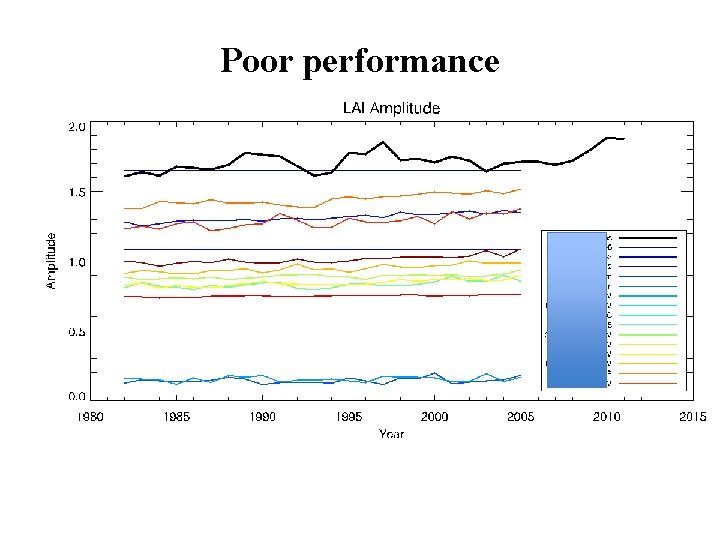
Poor performance
![Net ecosystem productivity Uncertainties in phenology [Optimal parameterization] [parameter] [structure] [hypothesis] [species] [DGVM group](http://slidetodoc.com/presentation_image_h2/4f8c00f81459573d7a049e7570f67288/image-20.jpg "Net ecosystem productivity Uncertainties in phenology [Optimal parameterization] [parameter] [structure] [hypothesis] [species] [DGVM group")
Net ecosystem productivity Uncertainties in phenology [Optimal parameterization] [parameter] [structure] [hypothesis] [species] [DGVM group 1] [DGVM group 2] EX 4 m EX 5 m Budburst date Carbon uptake commencement Parameter: -1. 2 days -1. 0 days Structure: -0. 5 days - 0. 0 days Hypothesis: -1. 5 days -2. 0 days Species: -9. 7 days -11. 5 days DGVMs: -9. 2 days -11. 1 days Day of year [Jeong et al. , 2012]
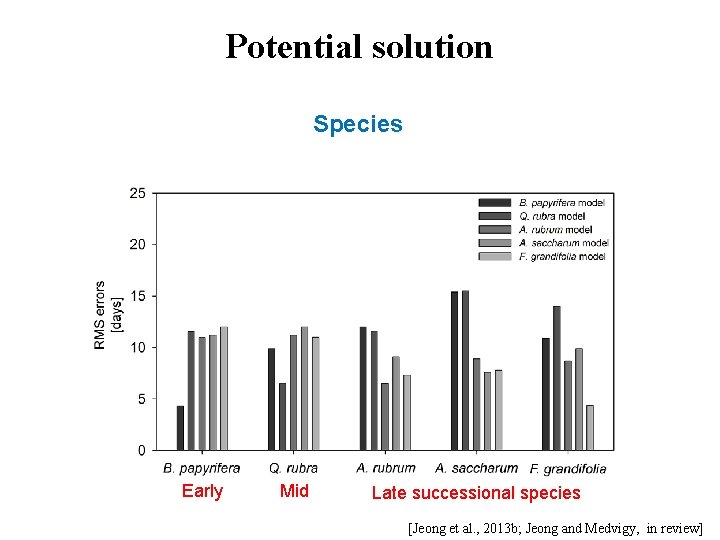
Potential solution Species Early Mid Late successional species [Jeong et al. , 2013 b; Jeong and Medvigy, in review]
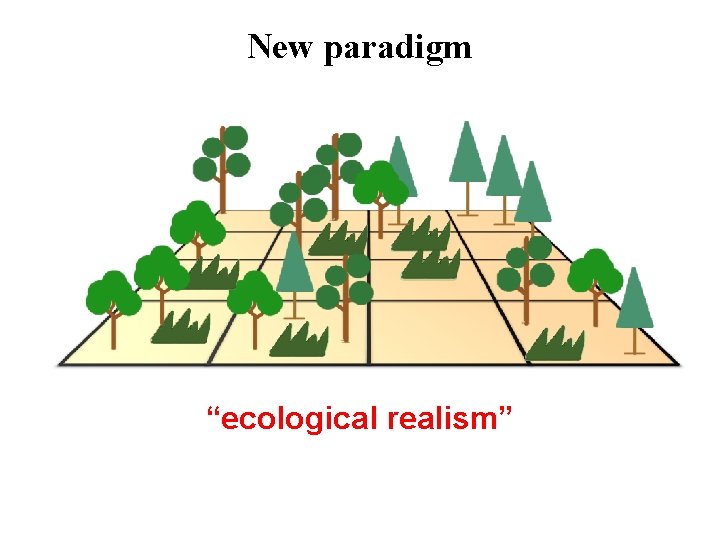
New paradigm “ecological realism”
Managed ecosystem
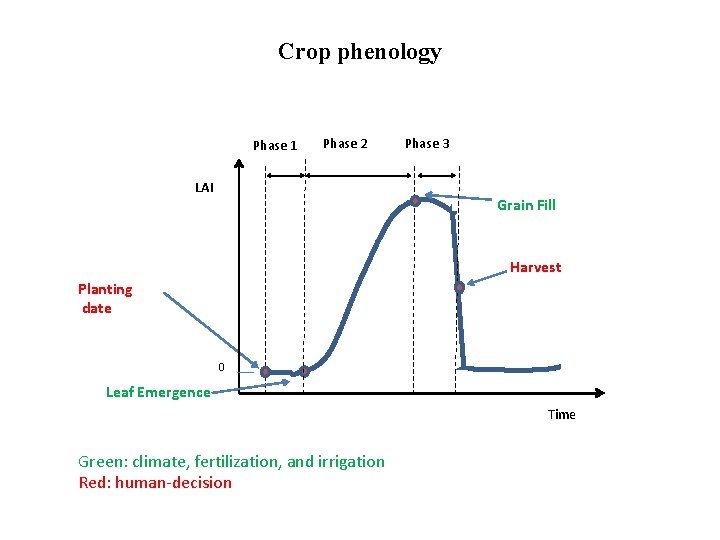
Crop phenology Phase 1 Phase 2 LAI Phase 3 Grain Fill Harvest Planting date 0 Leaf Emergence Time Green: climate, fertilization, and irrigation Red: human-decision
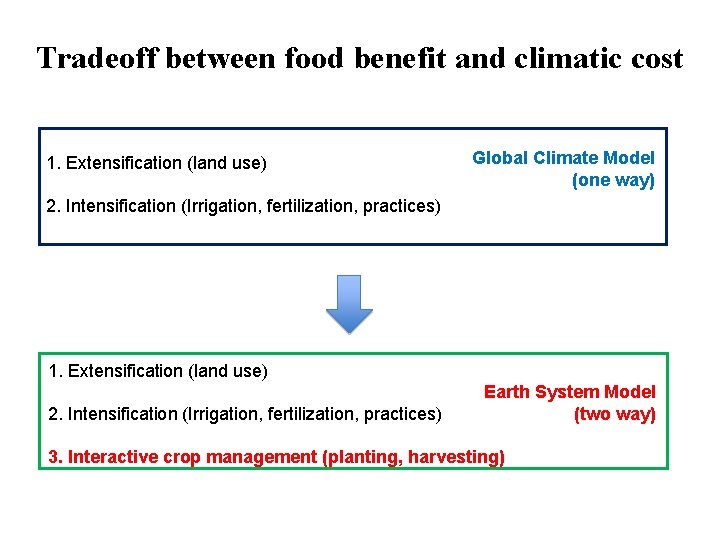
Tradeoff between food benefit and climatic cost 1. Extensification (land use) Global Climate Model (one way) 2. Intensification (Irrigation, fertilization, practices) 1. Extensification (land use) 2. Intensification (Irrigation, fertilization, practices) Earth System Model (two way) 3. Interactive crop management (planting, harvesting)
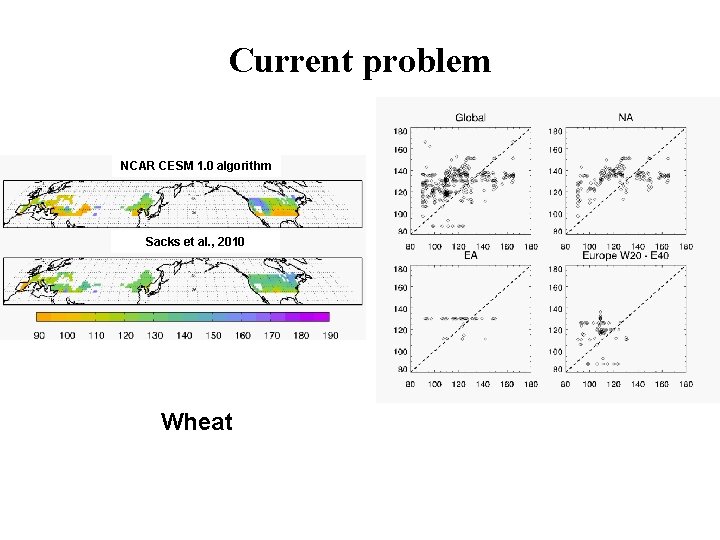
Current problem NCAR CESM 1. 0 algorithm Sacks et al. , 2010 Wheat
![Potential solution [Jeong et al. , 2013 a]](http://slidetodoc.com/presentation_image_h2/4f8c00f81459573d7a049e7570f67288/image-27.jpg "Potential solution [Jeong et al. , 2013 a]")
Potential solution [Jeong et al. , 2013 a]
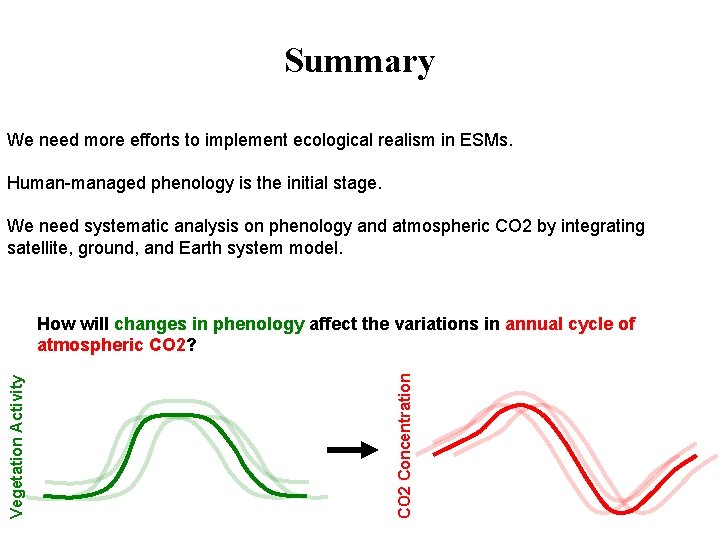
Summary We need more efforts to implement ecological realism in ESMs. Human-managed phenology is the initial stage. We need systematic analysis on phenology and atmospheric CO 2 by integrating satellite, ground, and Earth system model. CO 2 Concentration Vegetation Activity How will changes in phenology affect the variations in annual cycle of atmospheric CO 2?
- Slides: 28