
Earth Structure The Preliminary Reference Earth Model PREM1
- Slides: 11
Earth Structure: The Preliminary Reference Earth Model (PREM)1 Earth Physics 1 Autumn, 2017 Dziewonski and Anderson, 1981
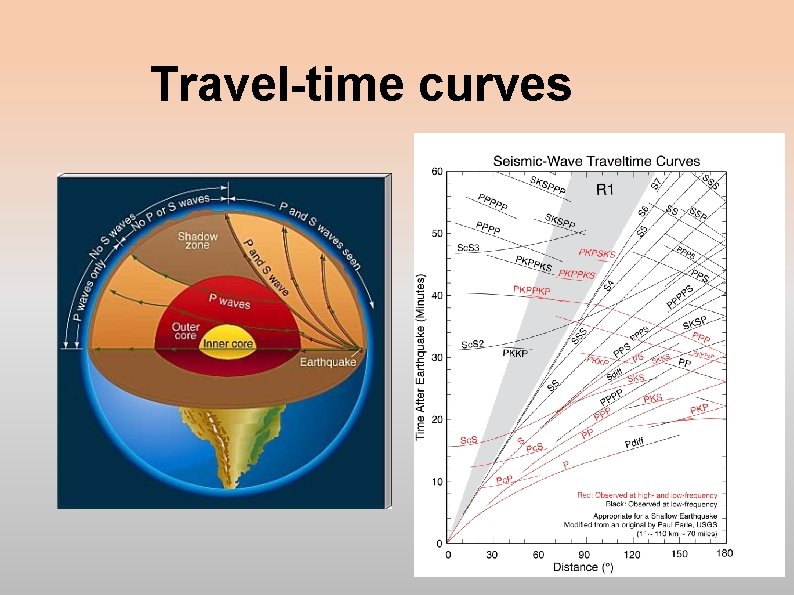
Travel-time curves Earthquake traveltime curves are consistent with a structural model of the mechanical properties of the Earth's interior
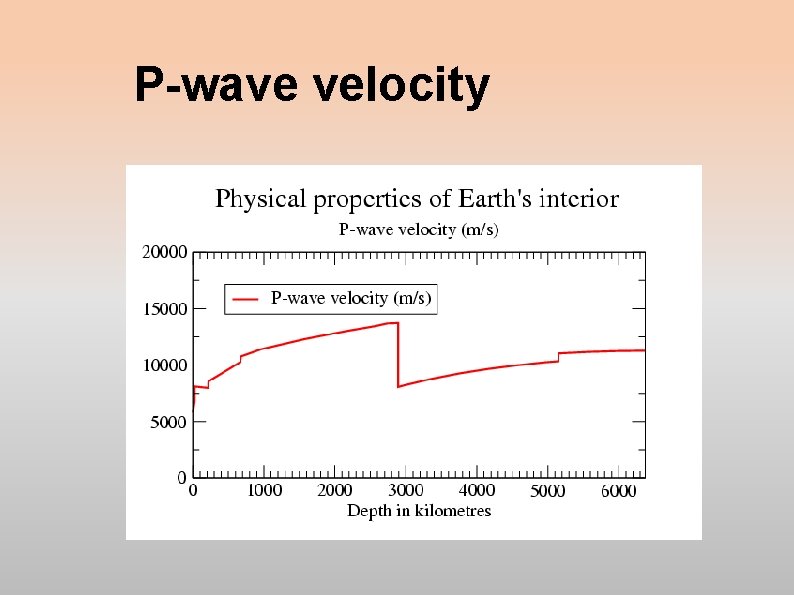
P-wave velocity
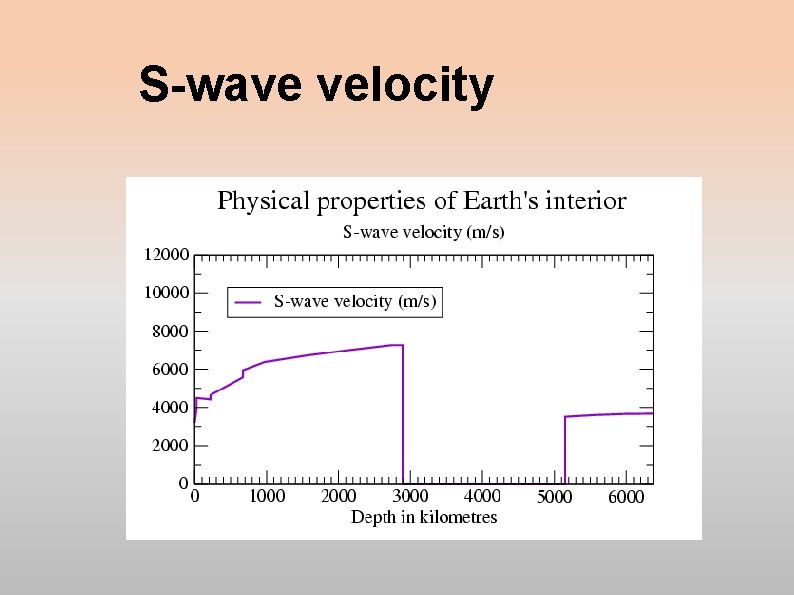
S-wave velocity
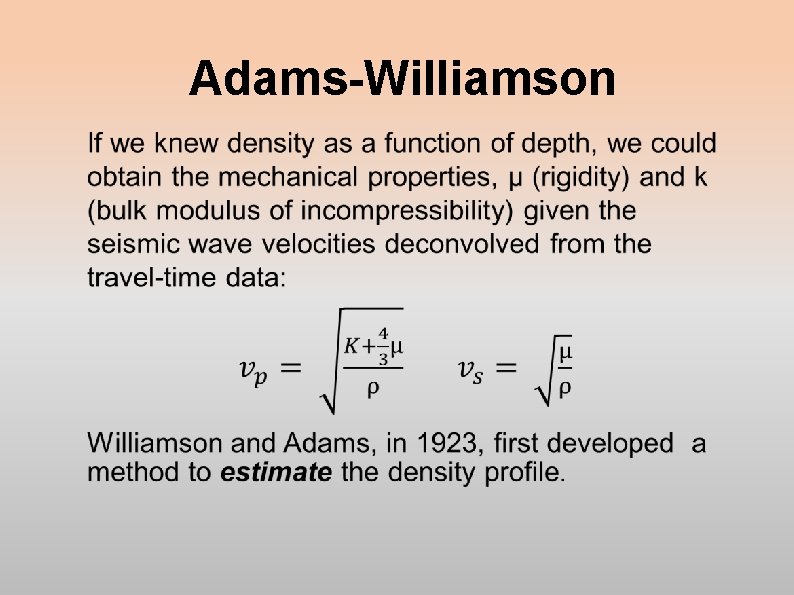
Adams-Williamson
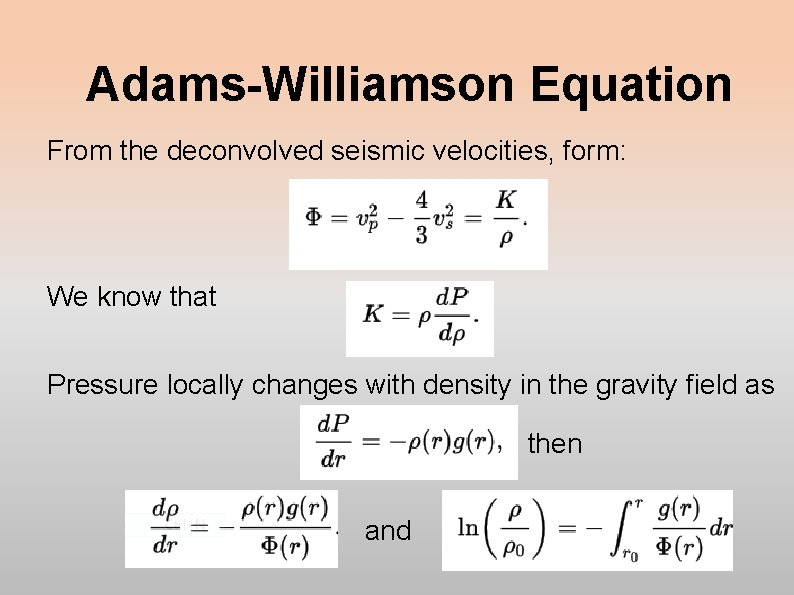
Adams-Williamson Equation From the deconvolved seismic velocities, form: We know that Pressure locally changes with density in the gravity field as then and
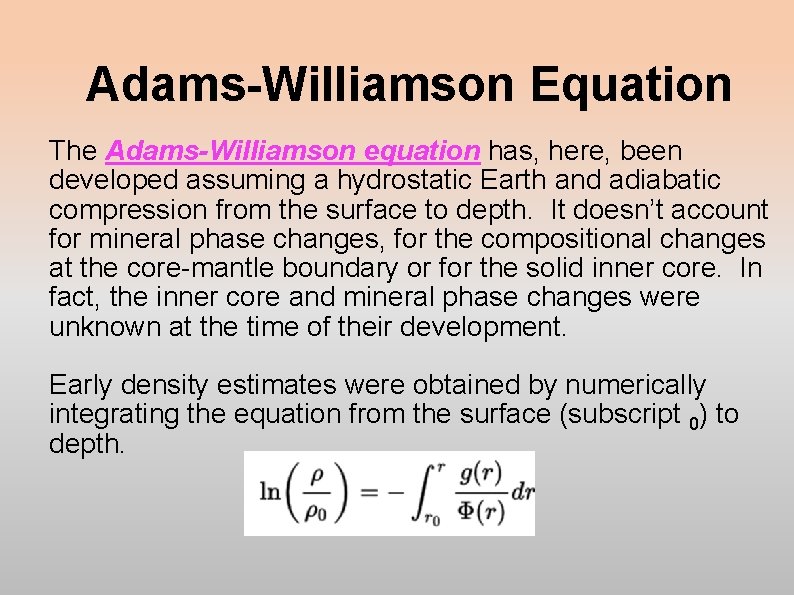
Adams-Williamson Equation The Adams-Williamson equation has, here, been developed assuming a hydrostatic Earth and adiabatic compression from the surface to depth. It doesn’t account for mineral phase changes, for the compositional changes at the core-mantle boundary or for the solid inner core. In fact, the inner core and mineral phase changes were unknown at the time of their development. Early density estimates were obtained by numerically integrating the equation from the surface (subscript 0) to depth.
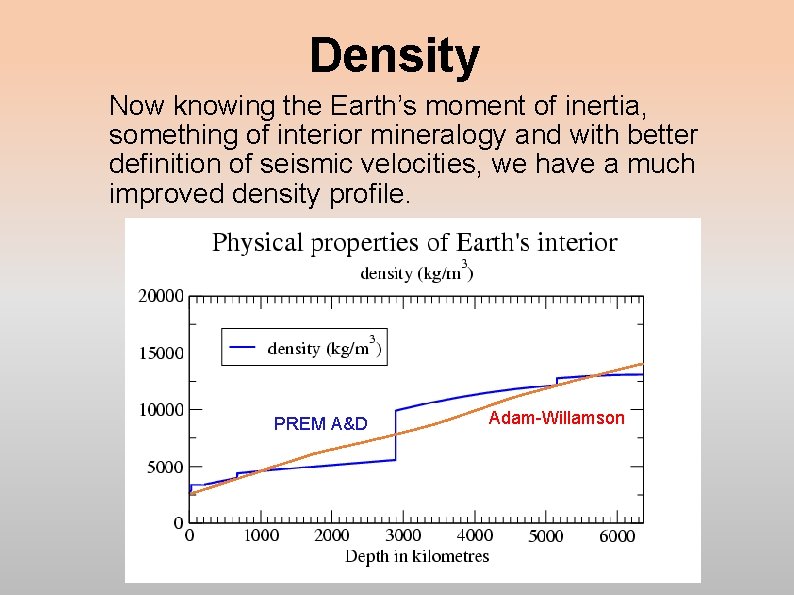
Density Now knowing the Earth’s moment of inertia, something of interior mineralogy and with better definition of seismic velocities, we have a much improved density profile. PREM A&D Adam-Willamson
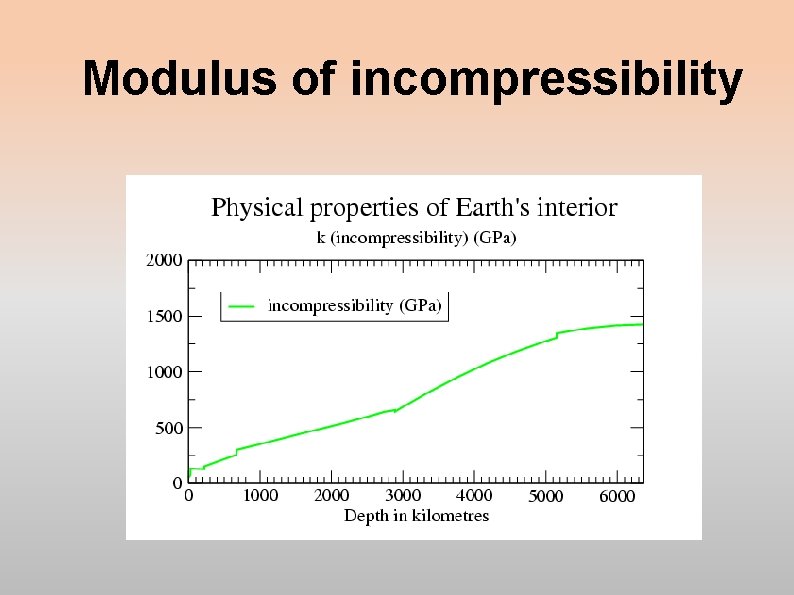
Modulus of incompressibility
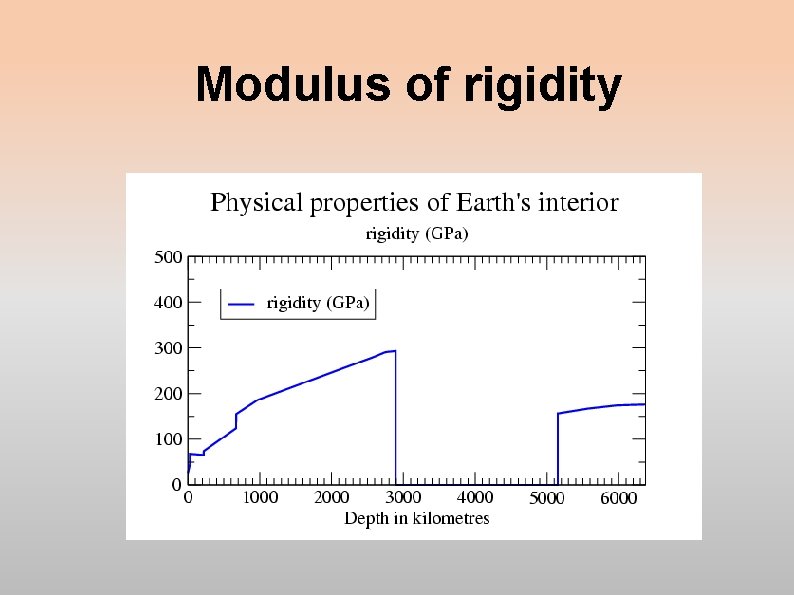
Modulus of rigidity
PREM We normally don’t take PREM to be a definitive model of the variation of the mechanical parameters of the Earth with depth and averaged over spherical shells. Still, it is a very useful reference model because it does seem to fit these parameters quite well and any deviation from the PREM does or can provide detailed information about the interior. PREM does not offer error bounds on its estimates. It is “definitional” or “referential”. It remains the favoured reference model but there are many others: See IRIS data services.