
Earth Space Science Chapter 5 Igneous Rocks The
- Slides: 12
Earth & Space Science Chapter 5 Igneous Rocks
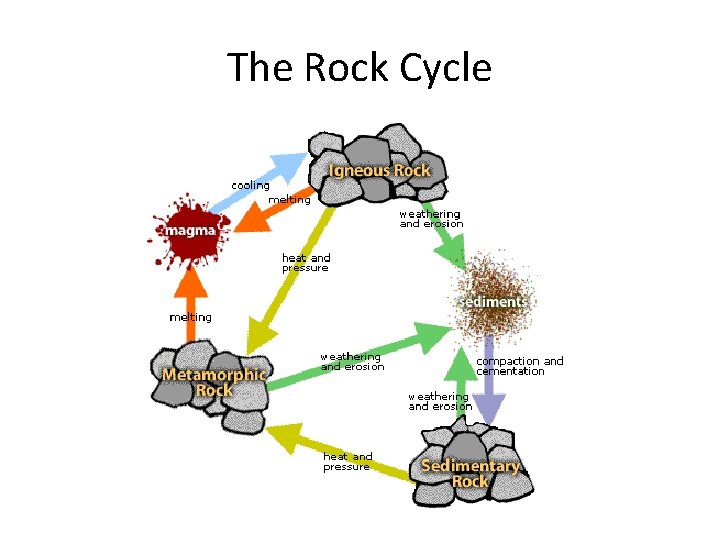
The Rock Cycle
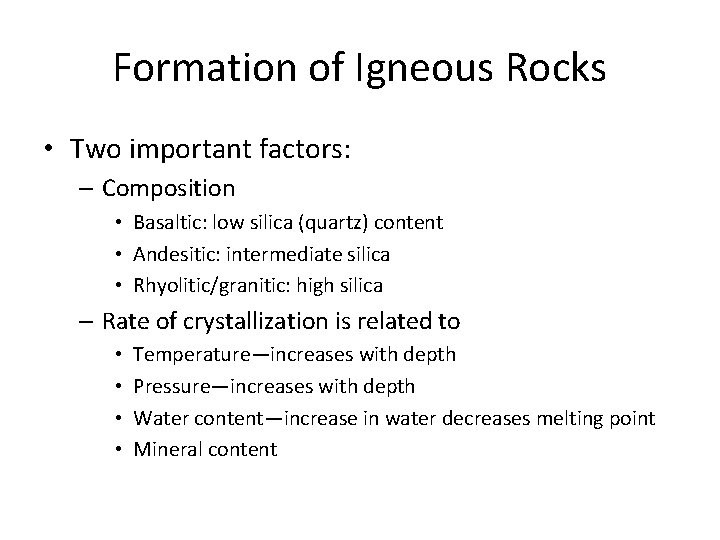
Formation of Igneous Rocks • Two important factors: – Composition • Basaltic: low silica (quartz) content • Andesitic: intermediate silica • Rhyolitic/granitic: high silica – Rate of crystallization is related to • • Temperature—increases with depth Pressure—increases with depth Water content—increase in water decreases melting point Mineral content
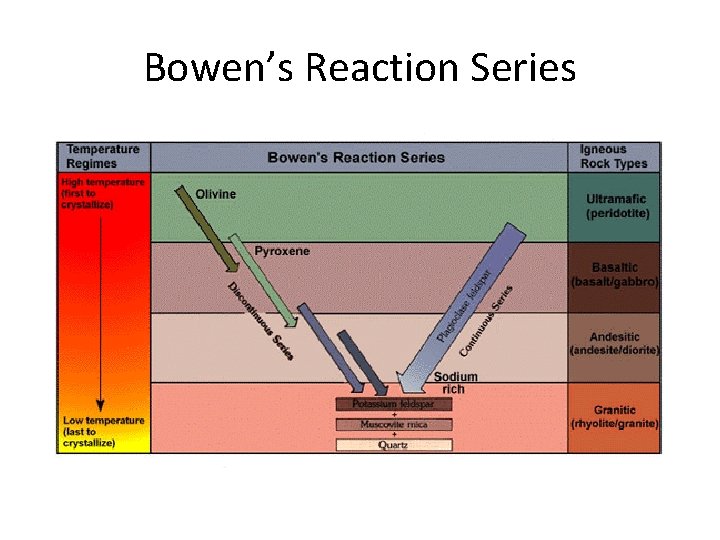
Bowen’s Reaction Series
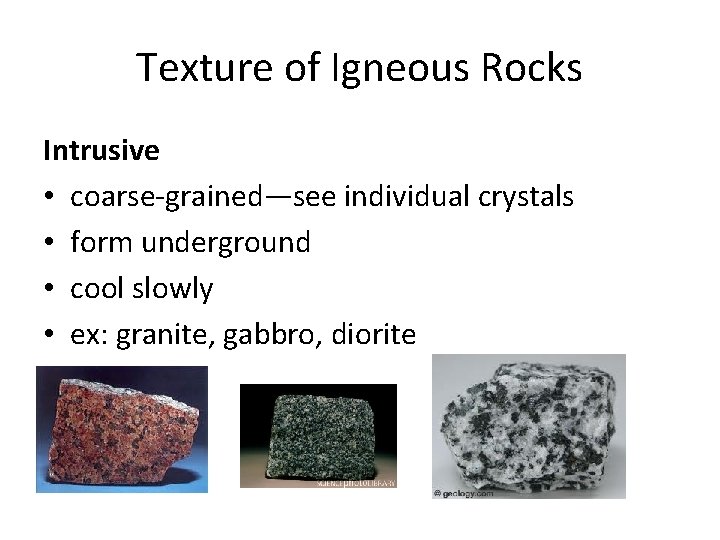
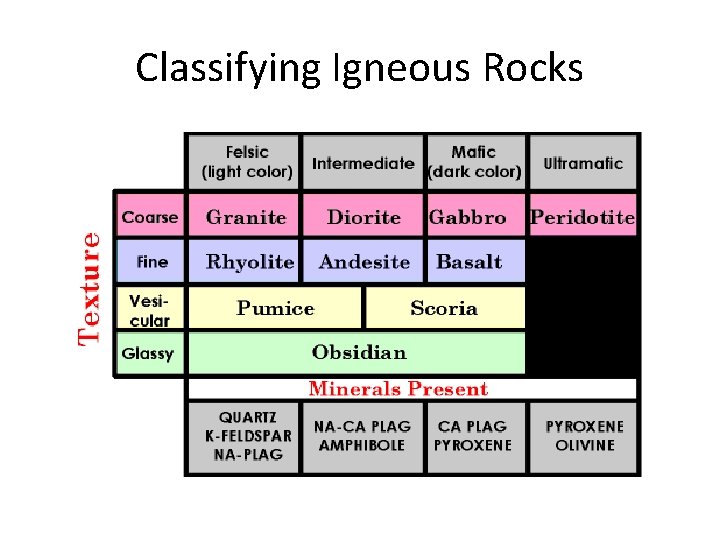
Texture of Igneous Rocks Intrusive • coarse-grained—see individual crystals • form underground • cool slowly • ex: granite, gabbro, diorite
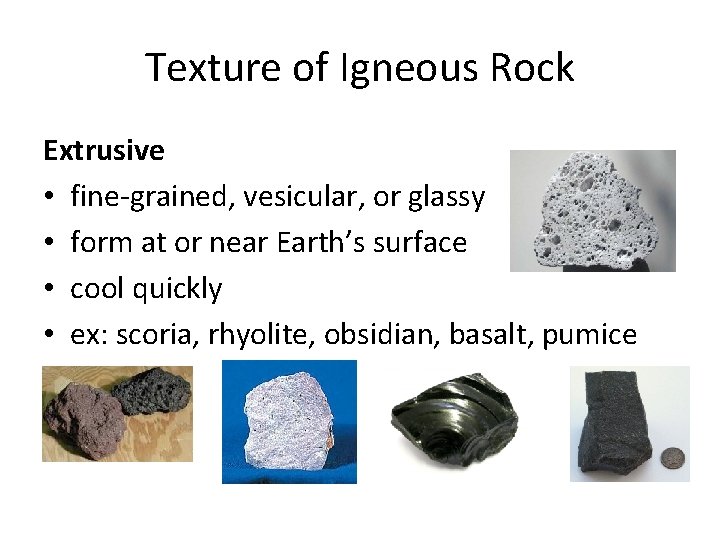
Texture of Igneous Rock Extrusive • fine-grained, vesicular, or glassy • form at or near Earth’s surface • cool quickly • ex: scoria, rhyolite, obsidian, basalt, pumice
What determines texture? • Demonstration…group game… • More time (slower cooling rate) allows bigger crystals to form. • Intrusive rock cool more slowly, producing coarse-grained rocks.
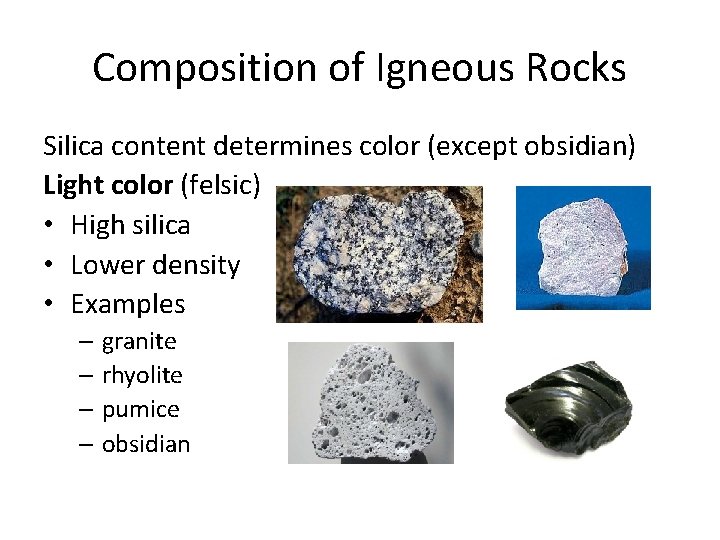
Composition of Igneous Rocks Silica content determines color (except obsidian) Light color (felsic) • High silica • Lower density • Examples – granite – rhyolite – pumice – obsidian
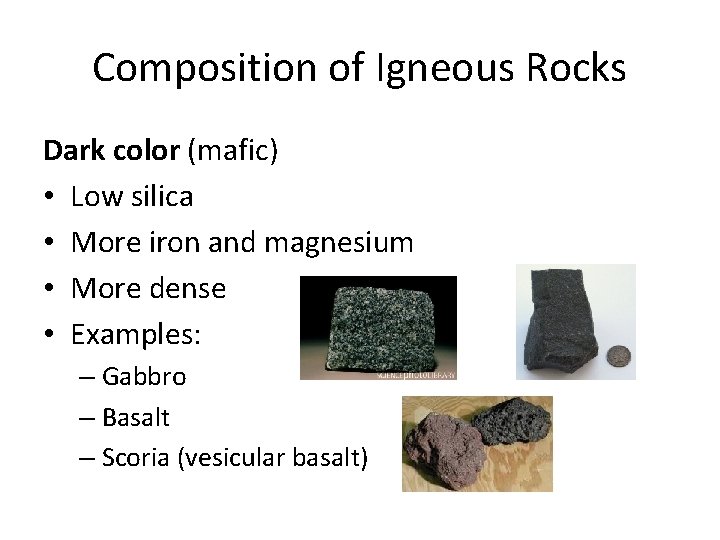
Composition of Igneous Rocks Dark color (mafic) • Low silica • More iron and magnesium • More dense • Examples: – Gabbro – Basalt – Scoria (vesicular basalt)
Why is silica important? Silica content determines: • What type of rock forms from the magma/lava • The temperature at which the rock melts or crystallizes • Characteristics of volcanoes – High silica: violently explosive (Yellowstone) – Intermediate silica: moderate (Mt. St. Helens) – Low silica: gentle, frequent (Kilauea, Hawaii)
Classifying Igneous Rocks
Uses of Igneous Rocks • • Metal ores/veins within igneous rock Pegmatites (veins of other minerals) Kimberlites (Diamond mines) Construction – Granite is very resistant to weathering • Crystals interlock • Composed of weather-resistant minerals • Name something that is made of granite…