
Earth Science Picture Flashcards Part One Askew 5
- Slides: 29
Earth Science Picture Flashcards Part One Askew – 5 th Grade
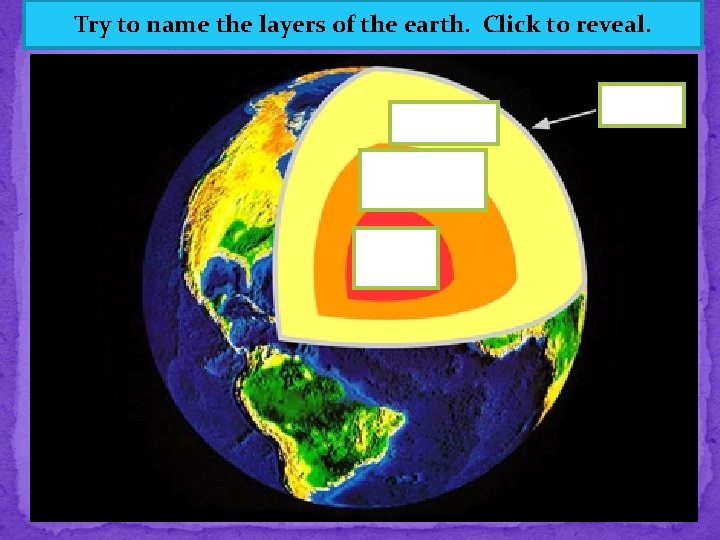
Try to name the layers of the earth. Click to reveal.
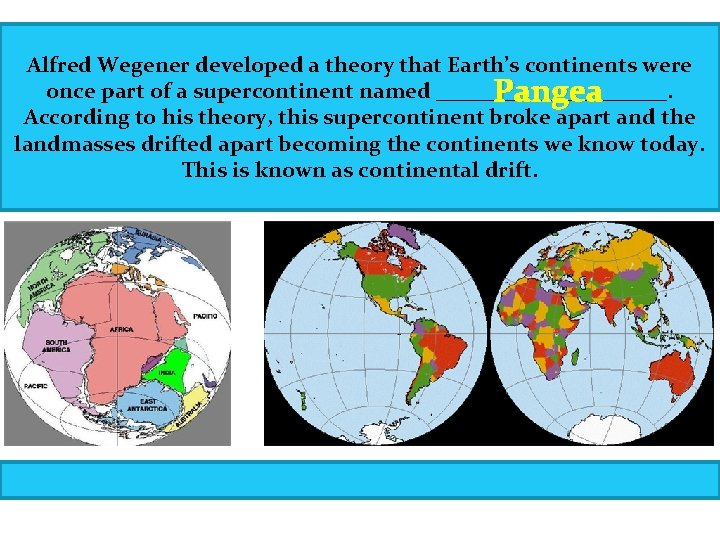
Alfred Wegener developed a theory that Earth’s continents were once part of a supercontinent named ___________. Pangea According to his theory, this supercontinent broke apart and the landmasses drifted apart becoming the continents we know today. This is known as continental drift.
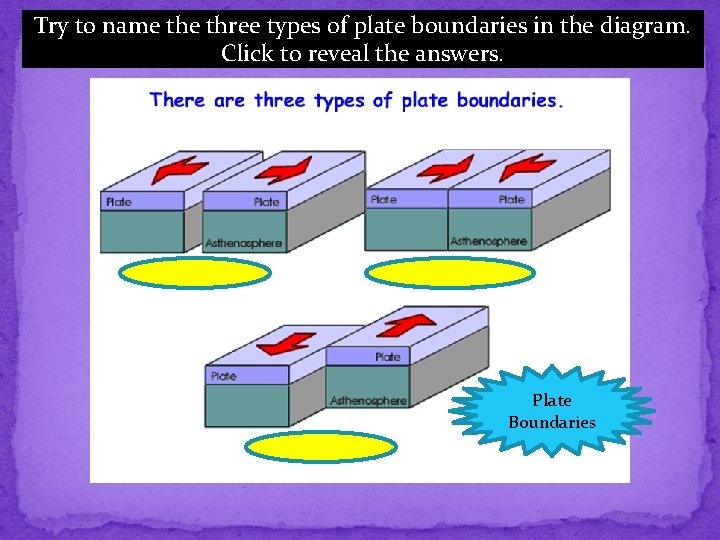
Try to name three types of plate boundaries in the diagram. Click to reveal the answers. Plate Boundaries
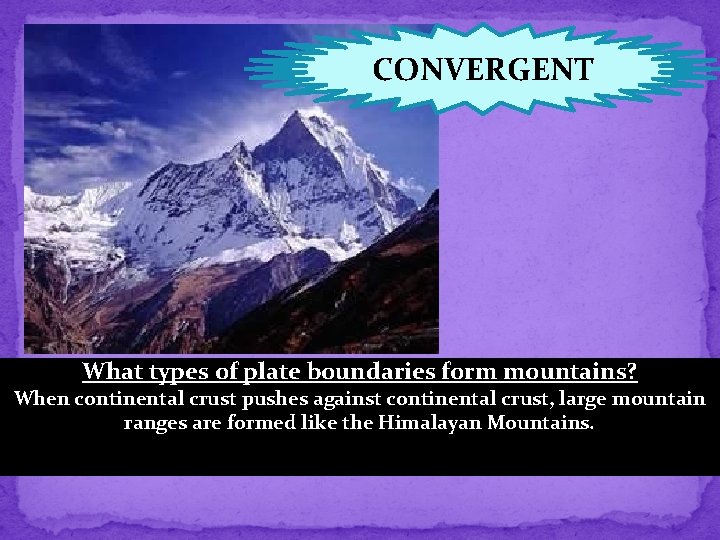
CONVERGENT What types of plate boundaries form mountains? When continental crust pushes against continental crust, large mountain ranges are formed like the Himalayan Mountains.
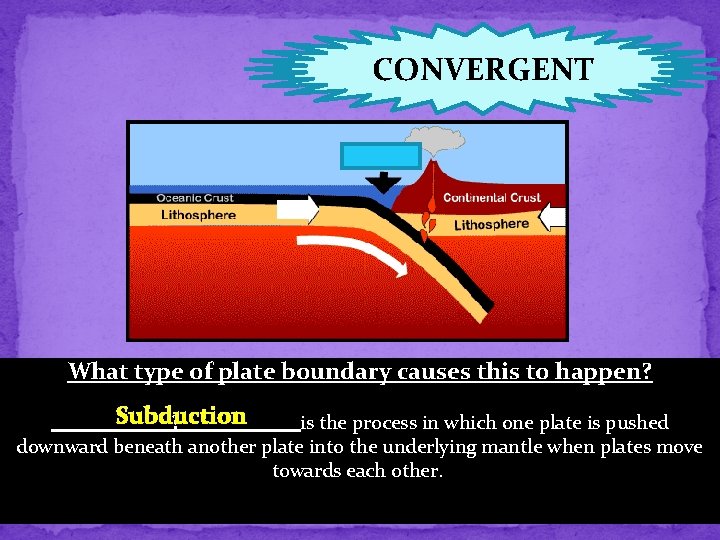
CONVERGENT What type of plate boundary causes this to happen? Subduction ______? ______is the process in which one plate is pushed downward beneath another plate into the underlying mantle when plates move towards each other.
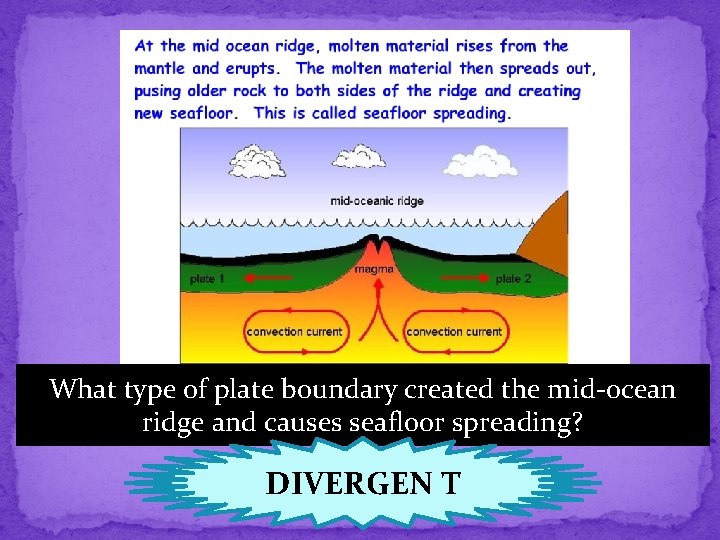
What type of plate boundary created the mid-ocean ridge and causes seafloor spreading? DIVERGEN T
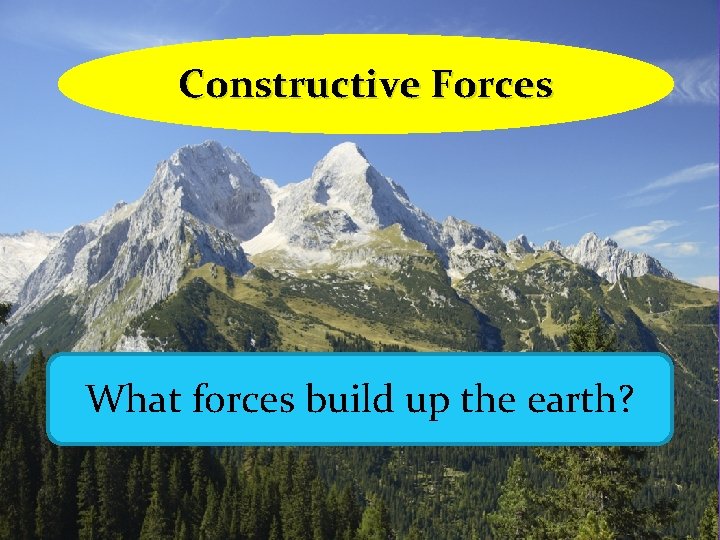
Constructive Forces What forces build up the earth?
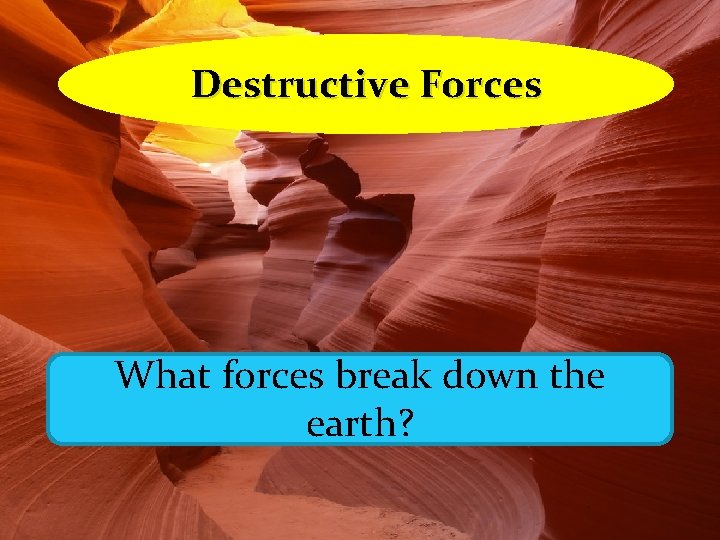
Destructive Forces What forces break down the earth?
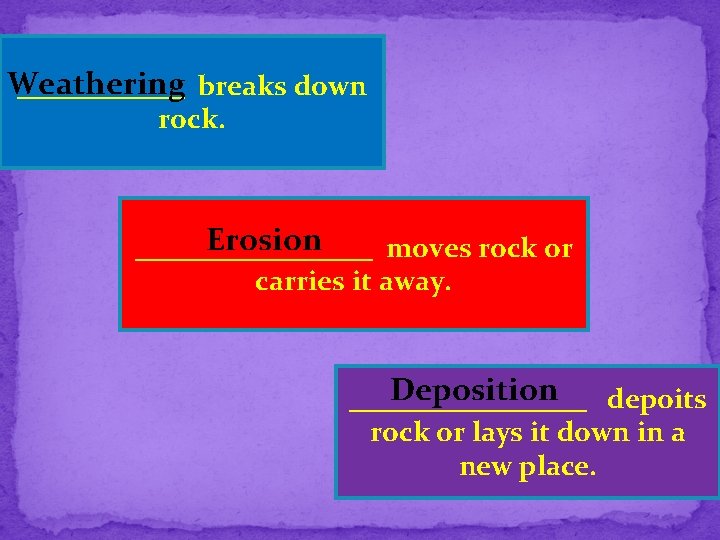
Weathering ______ breaks down rock. Erosion _________ moves rock or carries it away. Deposition _________ depoits rock or lays it down in a new place.
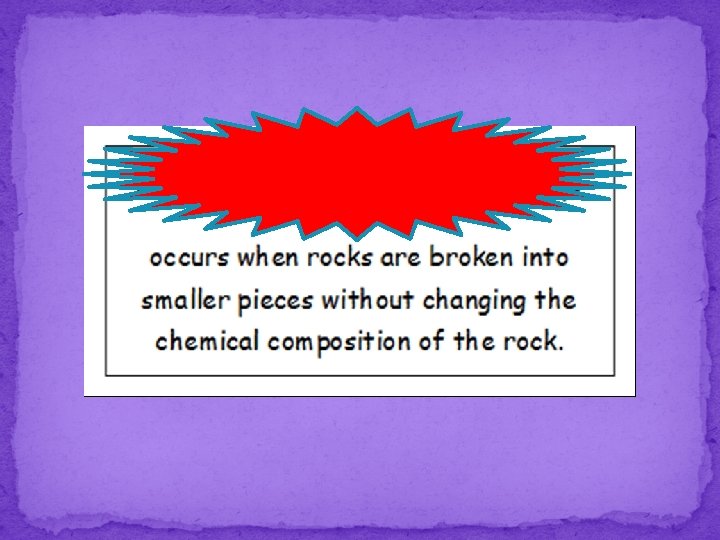
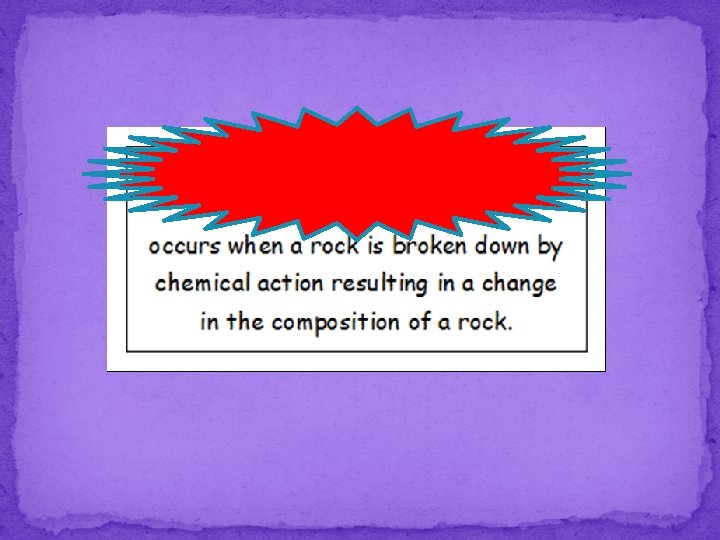
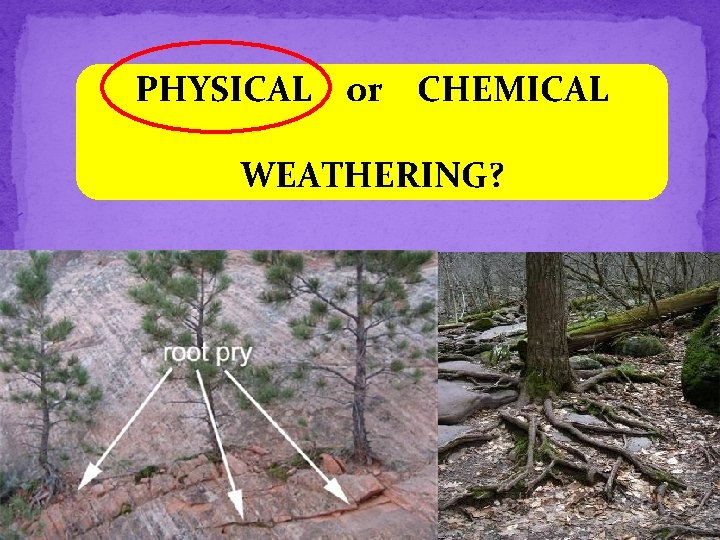
PHYSICAL or CHEMICAL WEATHERING?
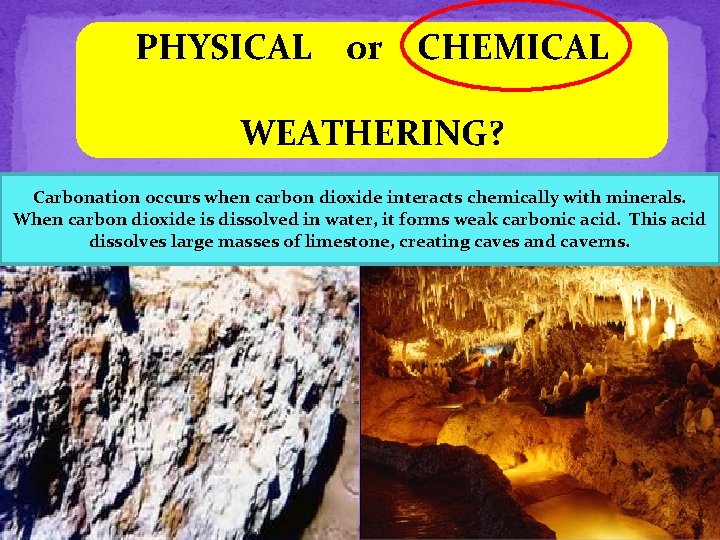
PHYSICAL or CHEMICAL WEATHERING? Carbonation occurs when carbon dioxide interacts chemically with minerals. When carbon dioxide is dissolved in water, it forms weak carbonic acid. This acid dissolves large masses of limestone, creating caves and caverns.
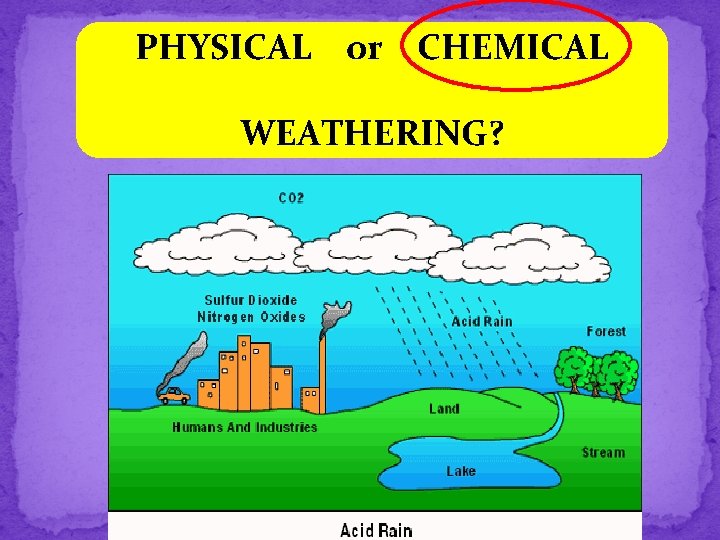
PHYSICAL or CHEMICAL WEATHERING?
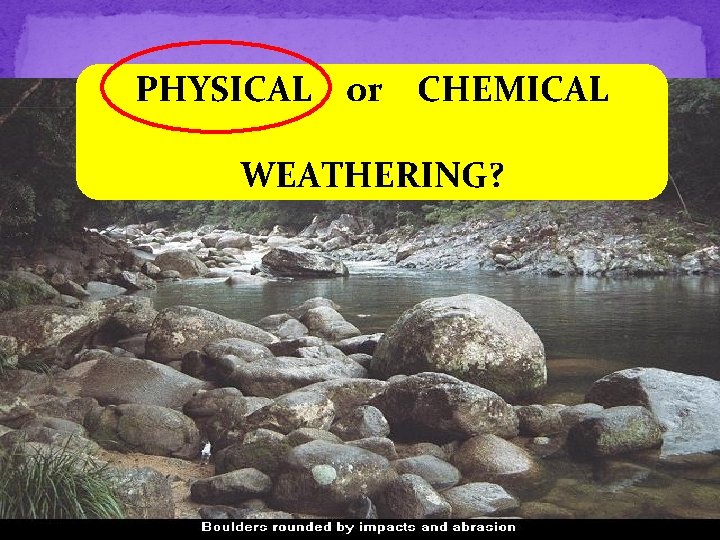
PHYSICAL or CHEMICAL WEATHERING?
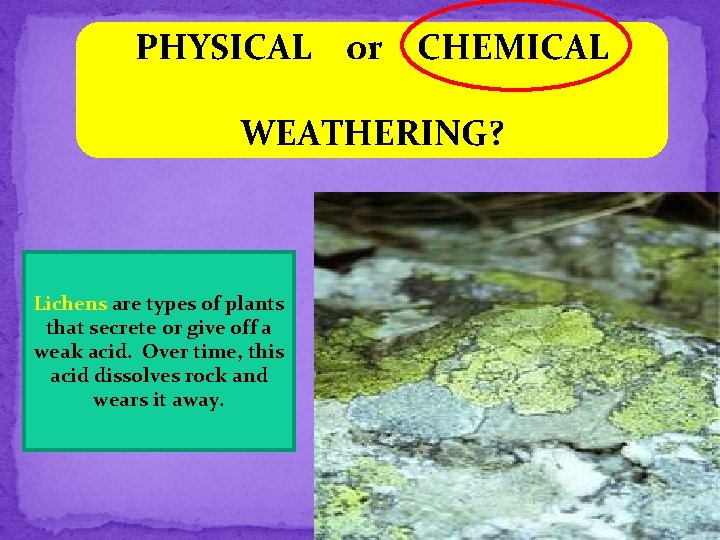
PHYSICAL or CHEMICAL WEATHERING? Lichens are types of plants that secrete or give off a weak acid. Over time, this acid dissolves rock and wears it away.
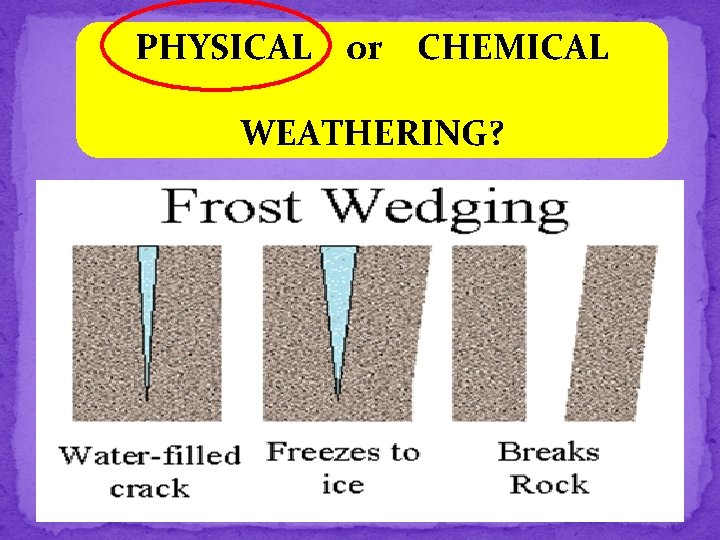
PHYSICAL or CHEMICAL WEATHERING?
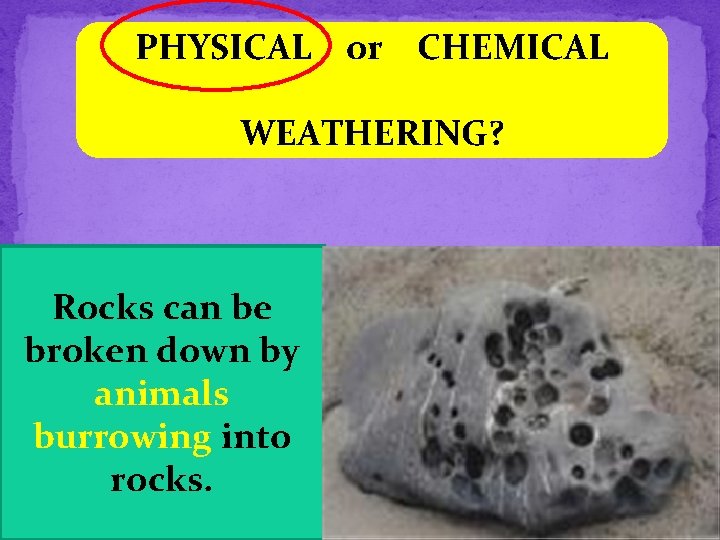
PHYSICAL or CHEMICAL WEATHERING? Rocks can be broken down by animals burrowing into rocks.
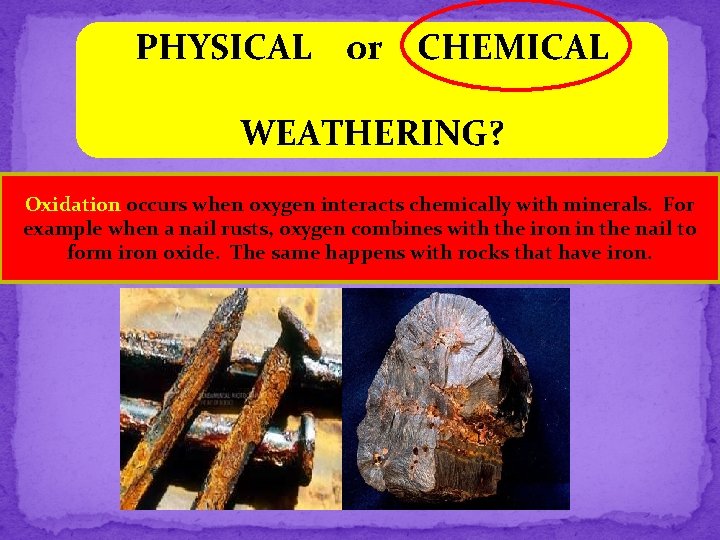
PHYSICAL or CHEMICAL WEATHERING? Oxidation occurs when oxygen interacts chemically with minerals. For example when a nail rusts, oxygen combines with the iron in the nail to form iron oxide. The same happens with rocks that have iron.
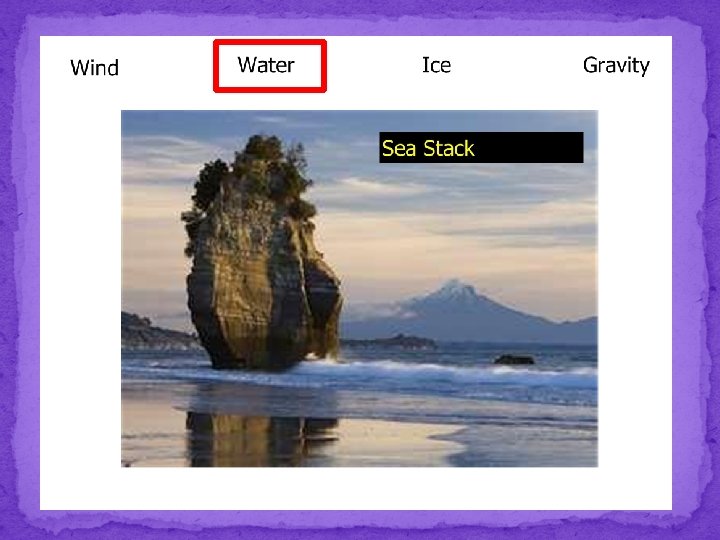
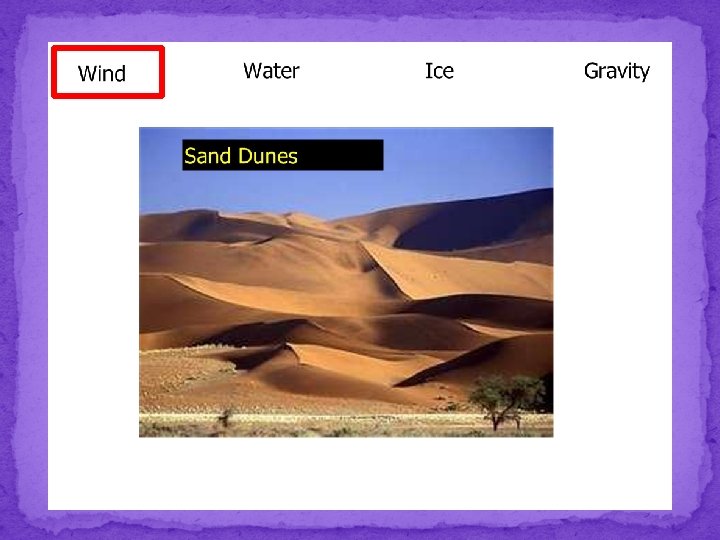
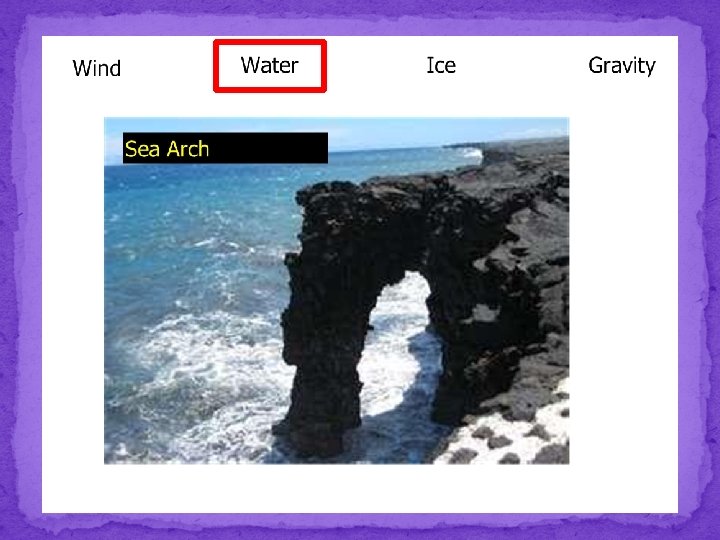
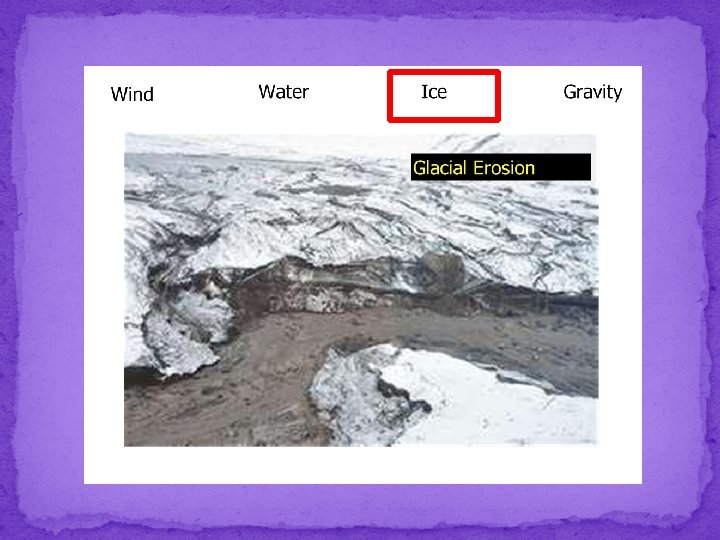
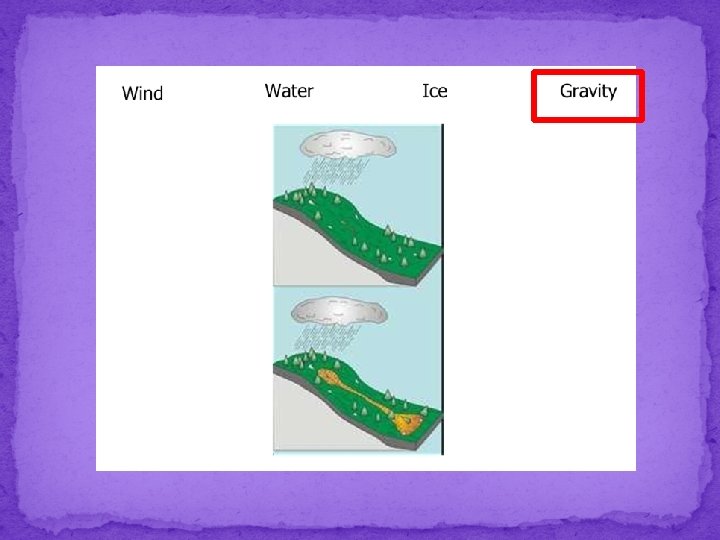
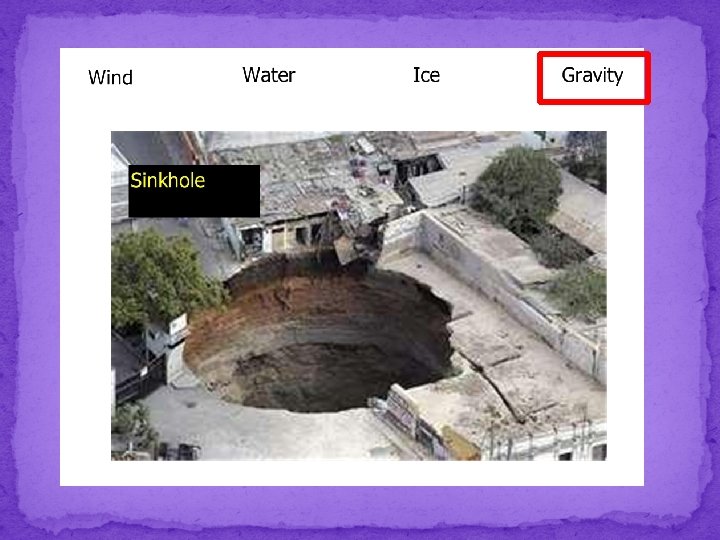
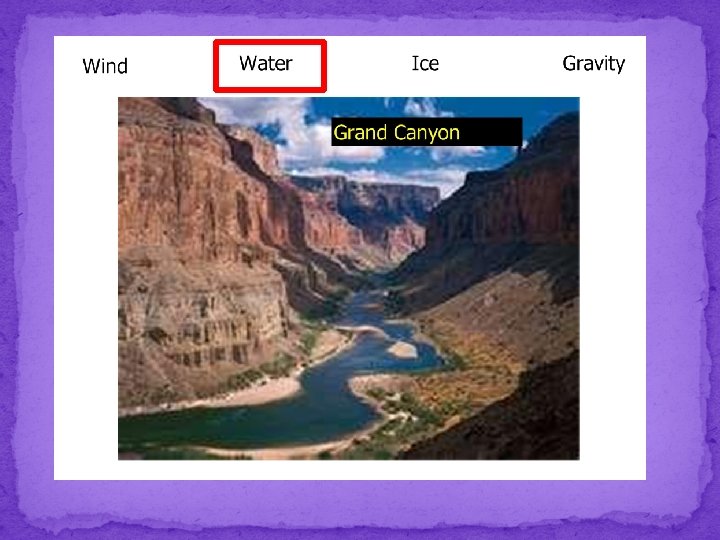
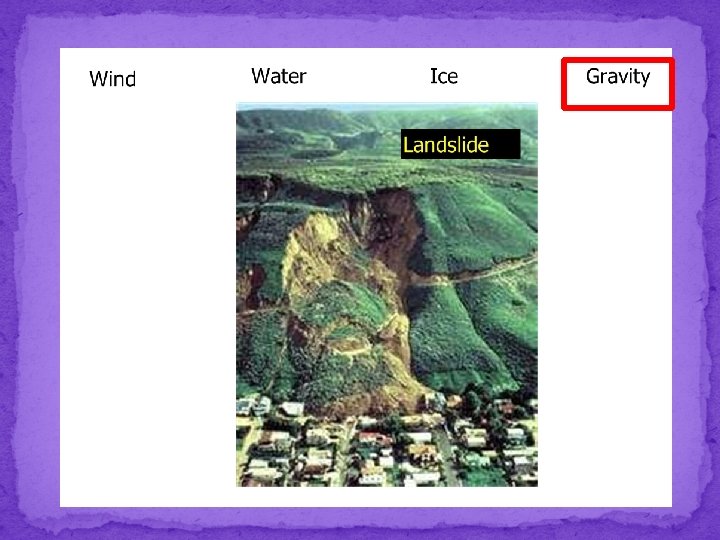
Look at the pictures in the next few slides. Name the agent of erosion at work.