
EARTH SCIENCE Overview Earths Structure Geologic Time Scale
- Slides: 29
EARTH SCIENCE
Overview � Earth’s Structure � Geologic Time Scale � Plate Tectonics � Plate Boundaries � Volcanoes � Earthquakes � Rocks and Rock Cycle � Soil Formation
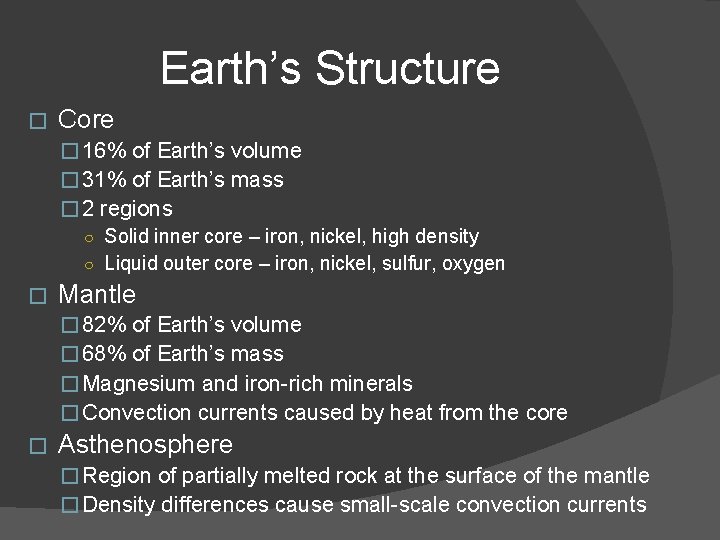
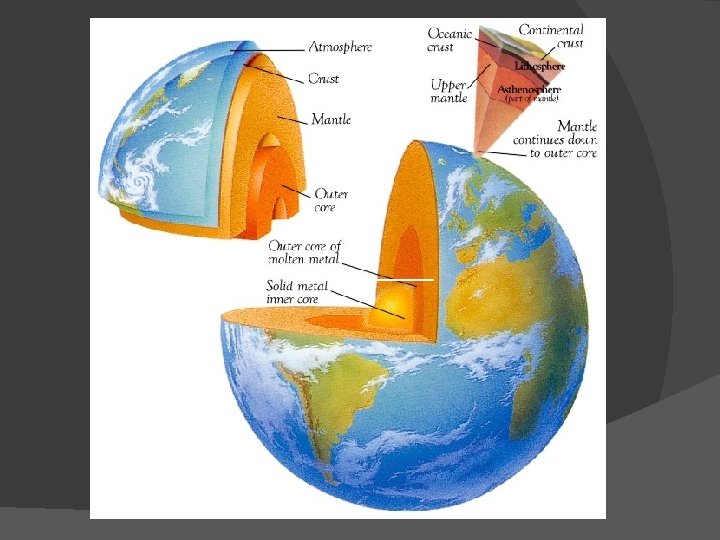
Earth’s Structure � Core � 16% of Earth’s volume � 31% of Earth’s mass � 2 regions ○ Solid inner core – iron, nickel, high density ○ Liquid outer core – iron, nickel, sulfur, oxygen � Mantle � 82% of Earth’s volume � 68% of Earth’s mass � Magnesium and iron-rich minerals � Convection currents caused by heat from the core � Asthenosphere � Region of partially melted rock at the surface of the mantle � Density differences cause small-scale convection currents
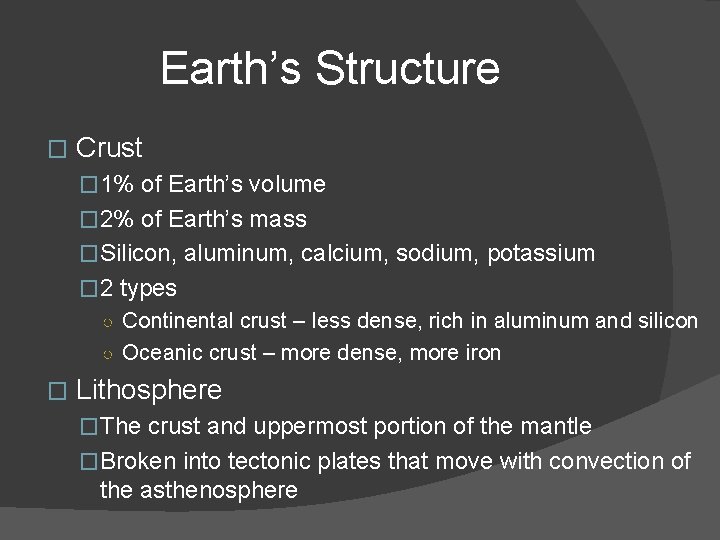
Earth’s Structure � Crust � 1% of Earth’s volume � 2% of Earth’s mass �Silicon, aluminum, calcium, sodium, potassium � 2 types ○ Continental crust – less dense, rich in aluminum and silicon ○ Oceanic crust – more dense, more iron � Lithosphere �The crust and uppermost portion of the mantle �Broken into tectonic plates that move with convection of the asthenosphere
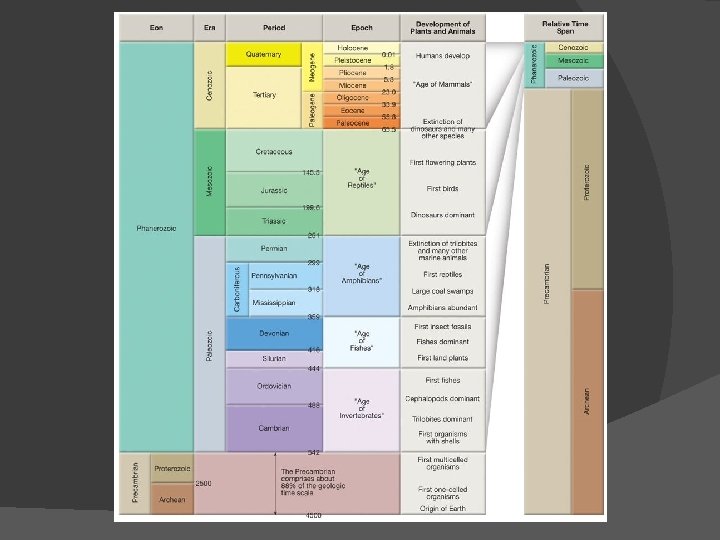
Geologic Time Scale � Based on petrology (origin of rocks), stratigraphy (layering of rocks), and paleontology (evolution of life) � Absolute ages have been assigned based on radioactive dating � Eons Eras Periods Epochs
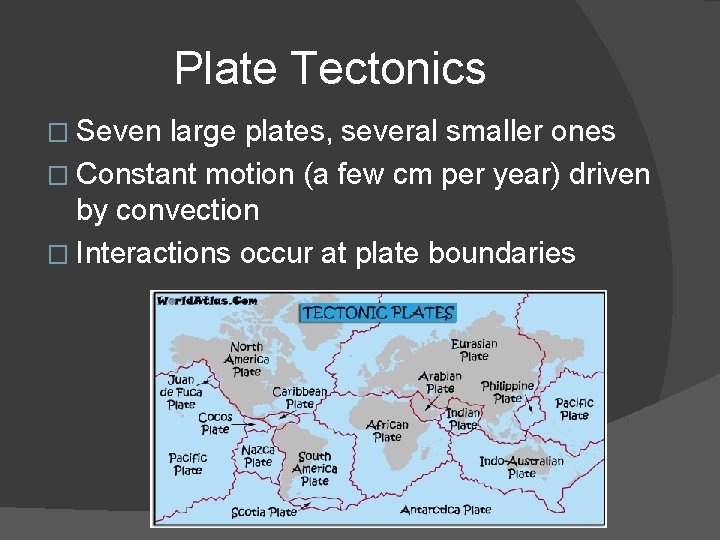
Plate Tectonics � Seven large plates, several smaller ones � Constant motion (a few cm per year) driven by convection � Interactions occur at plate boundaries
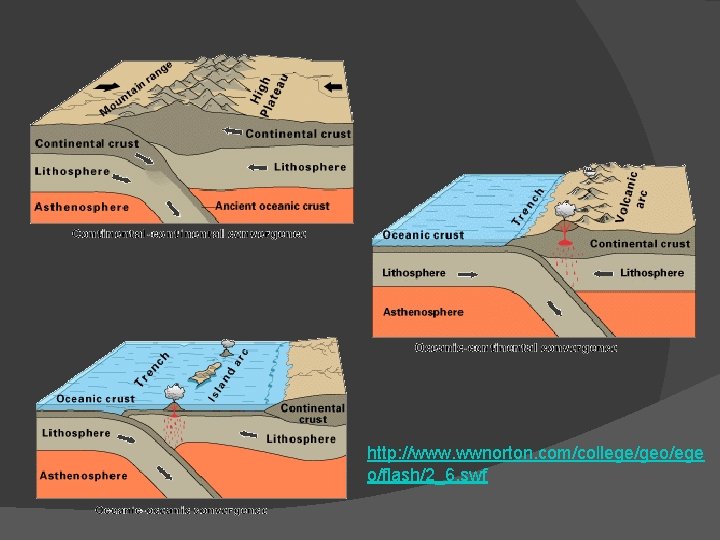
Plate Boundaries � Convergent – two plates collide �continental-continental – crusts will compress into high mountain ranges (Himalayas) �continental-oceanic – more dense oceanic crust will sink below continental crust ○ Creates a subduction zone ○ Usually results in an ocean trench (Mariana Trench) ○ Subducting plate melts and may rise to form volcanoes (Japan)
http: //www. wwnorton. com/college/geo/ege o/flash/2_6. swf
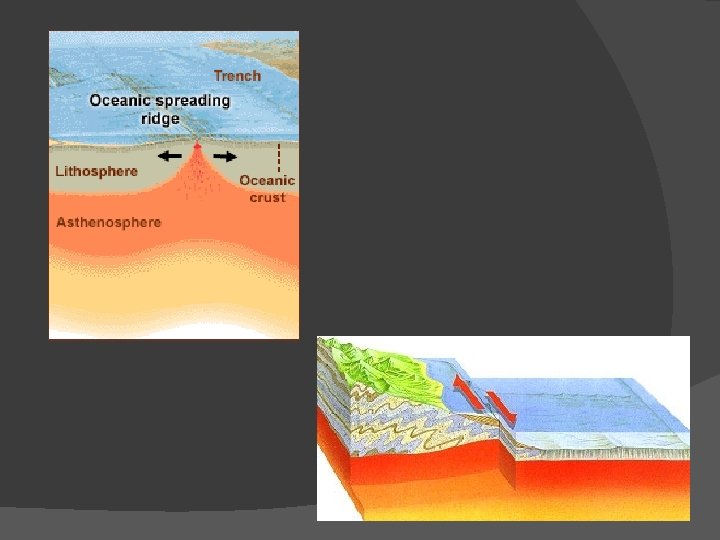
Plate Boundaries � Divergent – two plates move away from each other �magma rises through crack, creating new crust (Mid-Atlantic Ridge) �volcanoes can form (Iceland) � Transform – two plates slide past one another (San Andreas Fault) �builds up strain in rocks; often resulting in earthquakes
Volcanoes � Occurs when magma reaches Earth’s surface through a crack or vent in the crust � Commonly occur at plate boundaries (about 80% at convergent boundaries where one plate subducts) � Can release lava, solid rock and ash, water vapor, or gas (CO 2 or SO 2) � Classified according to material ejected
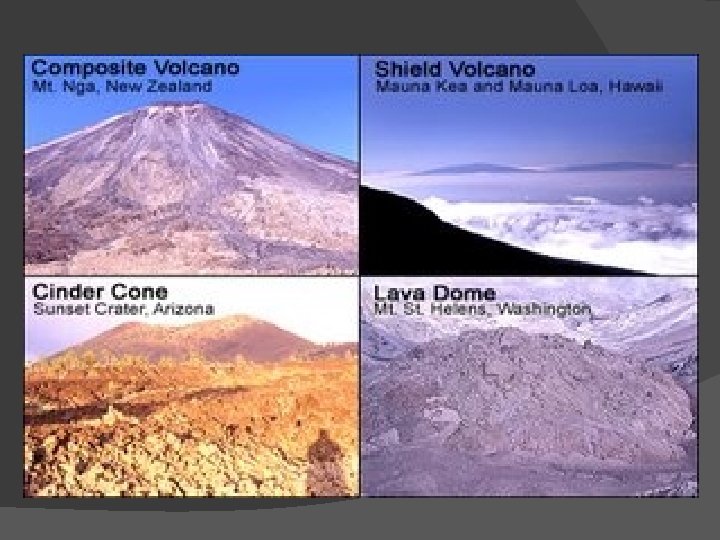
Volcanoes � 3 types �composite – steep-sided, symmetrical cones, built of layers of lava and ash, crater at summit (Ex. Mt. Fuji, Mt. Ranier) � shield – broad, gently sloping cones, built of lava flows (Ex. Mt. Kilauea) �cinder cones – steep-sided cones, crater at summit, built of layers of cinders (Ex. Sunset Crater) �lava domes – rounded, steep-sided dome, built of lava piled up around the vent, common on craters or flanks of composite volcanoes (Ex. Mt. St. Helens)
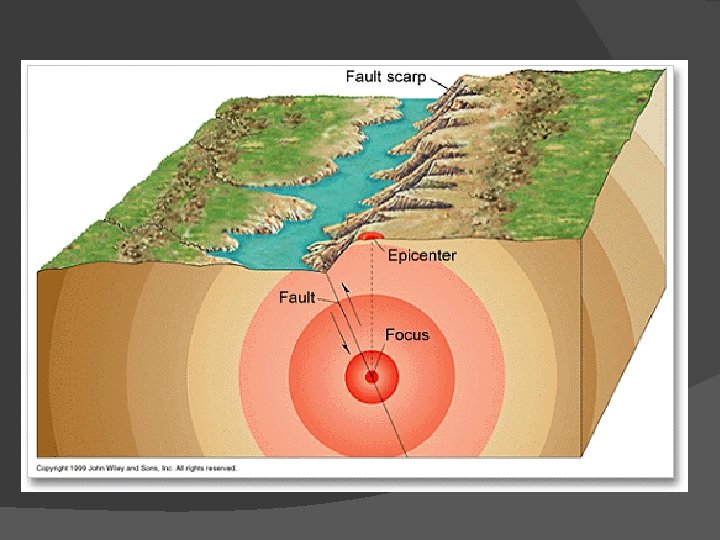
Earthquakes � Occurs when a built up strain in rock is suddenly released � Most often occur at breaks in rock masses, called faults � 80% occur near convergent plate boundaries � Region where the rupture occurs is the focus � Point on Earth’s surface directly above the focus is the epicenter � Quakes under the ocean can trigger tsunamis
Earthquakes � Waves of energy move away from the focus and travel through the earth � Total energy released is the magnitude � Waves measured by seismographs � Richter Scale indicates magnitude of quake � Richter Scale is logarithmic – each increase in number means a 10 -fold increase in wave intensity, which corresponds to a 32 -fold increase in energy
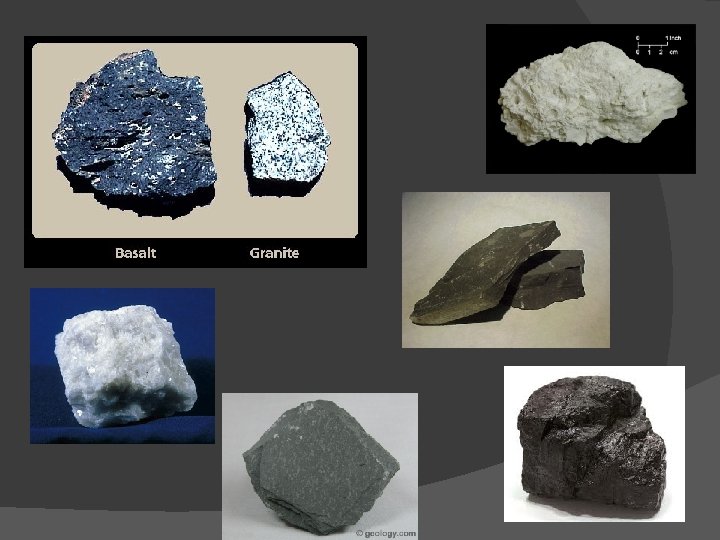
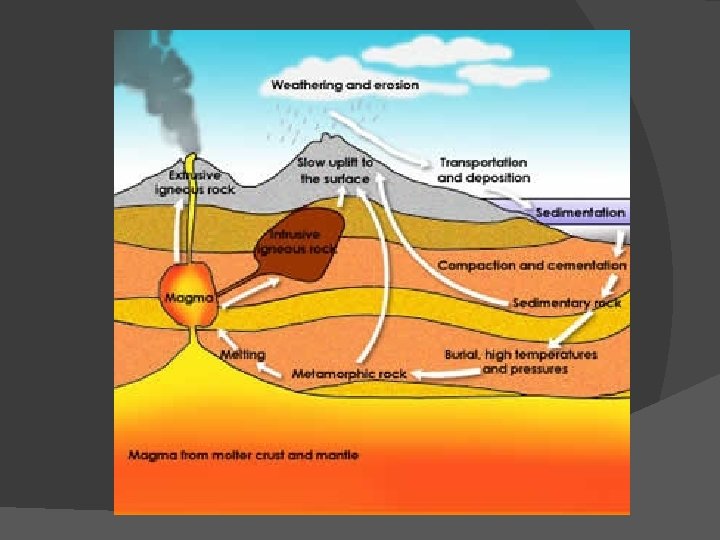
Rocks � 3 groups �igneous – formed when magma cools and crystallizes (Ex. basalt, granite) �sedimentary – formed by consolidation of weathered fragments, precipitation of minerals from solution, or compaction of the remains of living organisms (Ex. limestone, shale, coal) �metamorphic – formed when igneous, sedimentary, or metamorphic rock undergoes extreme heat and pressure (Ex. marble, slate)
Rock Cycle � Processes: �melting/cooling �compaction/cementation (together called lithification) �weathering (breaking down of rock)/erosion (movement of fragments) �metamorphism (heat and pressure) �uplift
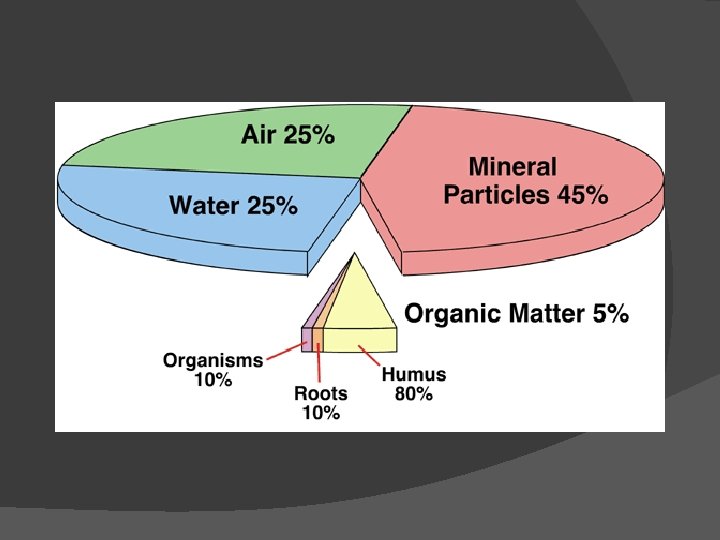
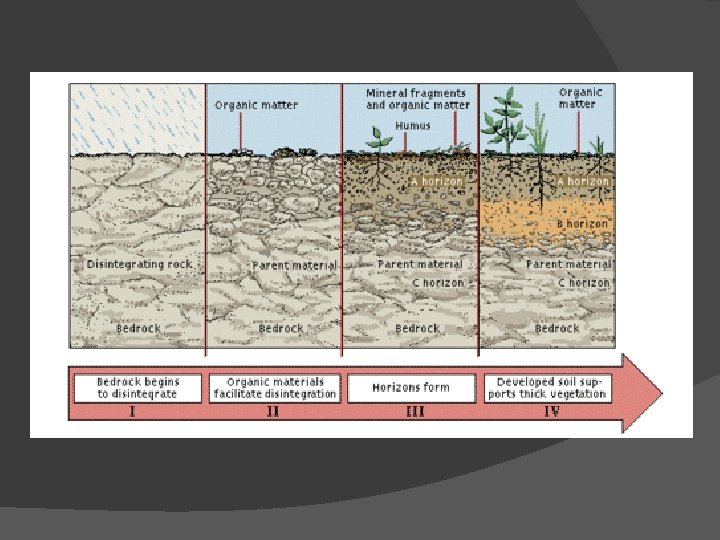
Soil Formation � Components of soil: water, inorganic eroded parent material, air, organic matter � Formation begins with unconsolidated products of weathering � Weathering can be physical (ex. water seeping into cracks and freezing) or chemical (ex. dissolution of minerals by acid rain) – physical more common in cold and dry climates; chemical more common in warm or moist climates
Soil Formation � Once in formation environment, organic material and sediments are added and living organisms become incorporated � Living components break down organic matter and release nutrients into the soil (nitrogen, potassium, phosphorus) � Nutrients are used and recycled by plants and other organisms
Soil Formation � Formation influenced by �climate: temperature affects rates of chemical reactions; precipitation affects soil p. H and leaching �parent material: varies from region to region, can affect p. H and texture �vegetation: affects rate at which nutrients in soil are recycled and type and amount of organic matter in soil, soil erosion, and micro-organisms in soil �topography �time
Soil � Humans affect soils by plowing, irrigation, and mining � Topography of a region affects runoff, erosion, and solar energy intake � Formation is a continuous process � Soil changes as organic matter input and mineral content change � Takes much longer to form than to destroy