
Earth Science Notes The Planets of our Solar
- Slides: 23
Earth Science Notes The Planets of our Solar System
Objectives I can… • Recall Key feature about the planets in our solar system. • Compare and Contrast structural features of the planets.
Instructions • Read through these notes and identify key features that each planet possess. • Prepare to ask questions • You will be quizzed over: • • • Relative size of planets Relating mass to gravitational pull Similarities between planets Unique qualities of each planet Structure of planets
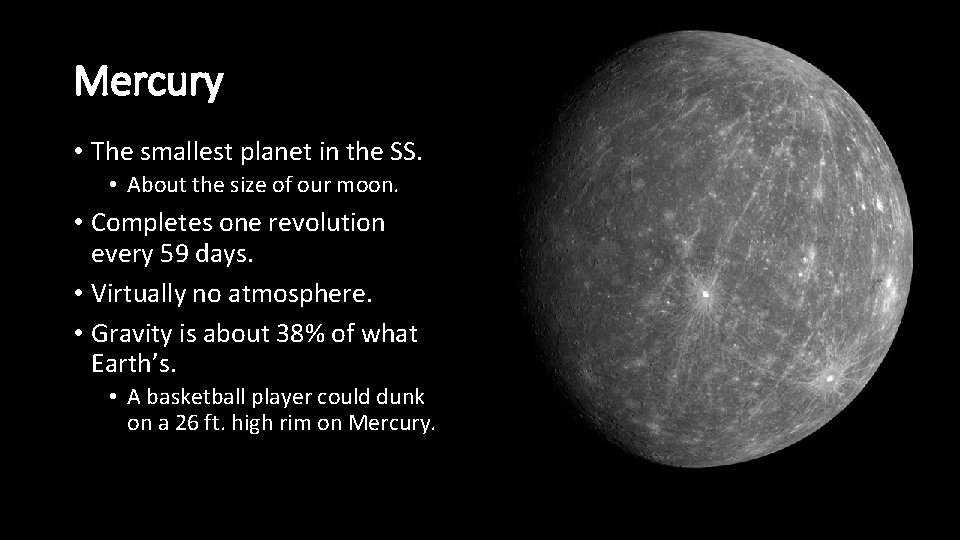
Mercury • The smallest planet in the SS. • About the size of our moon. • Completes one revolution every 59 days. • Virtually no atmosphere. • Gravity is about 38% of what Earth’s. • A basketball player could dunk on a 26 ft. high rim on Mercury.
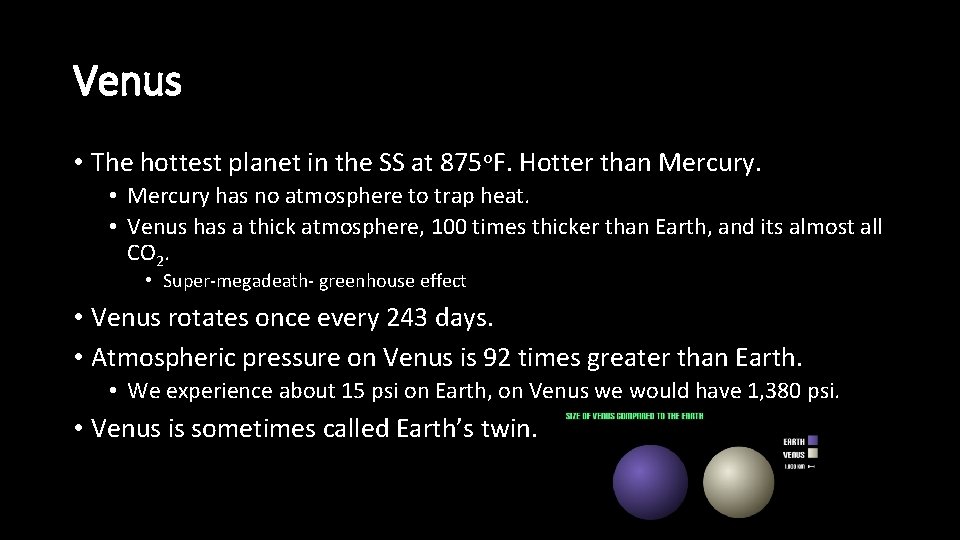
Venus • The hottest planet in the SS at 875 o. F. Hotter than Mercury. • Mercury has no atmosphere to trap heat. • Venus has a thick atmosphere, 100 times thicker than Earth, and its almost all CO 2. • Super-megadeath- greenhouse effect • Venus rotates once every 243 days. • Atmospheric pressure on Venus is 92 times greater than Earth. • We experience about 15 psi on Earth, on Venus we would have 1, 380 psi. • Venus is sometimes called Earth’s twin.
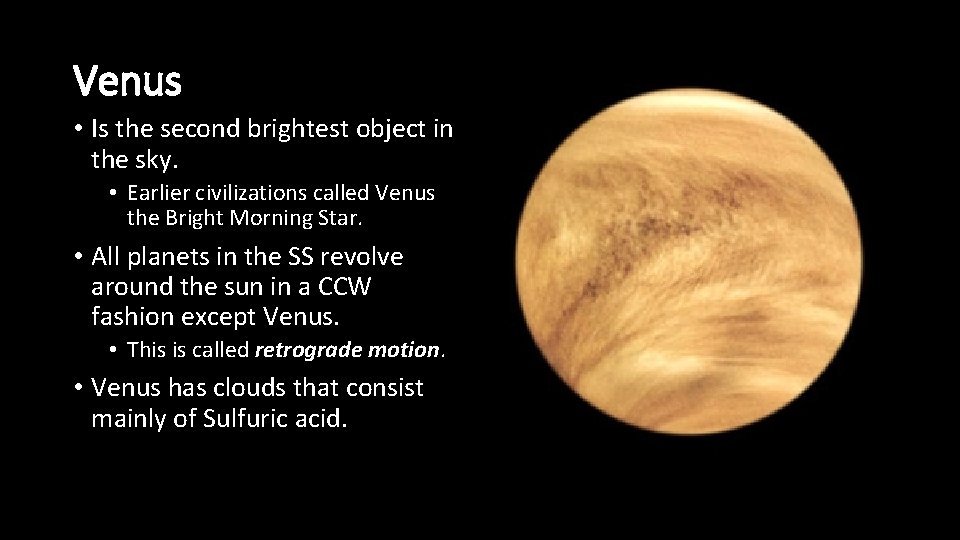
Venus • Is the second brightest object in the sky. • Earlier civilizations called Venus the Bright Morning Star. • All planets in the SS revolve around the sun in a CCW fashion except Venus. • This is called retrograde motion. • Venus has clouds that consist mainly of Sulfuric acid.
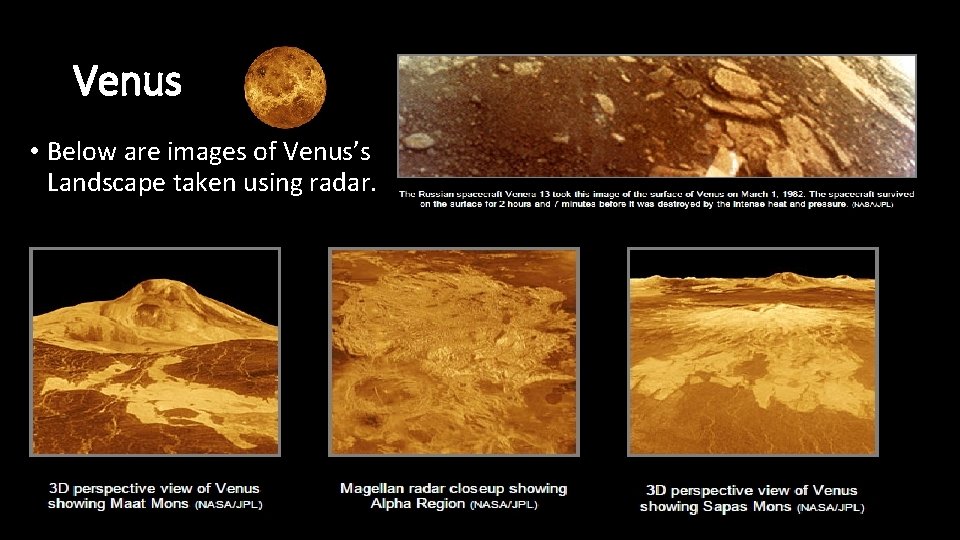
Venus • Below are images of Venus’s Landscape taken using radar.
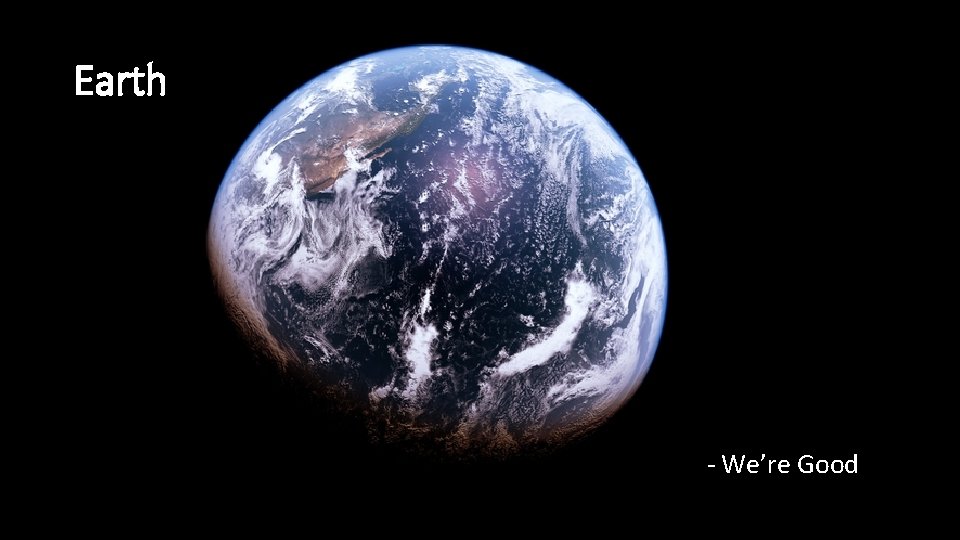
Earth - We’re Good
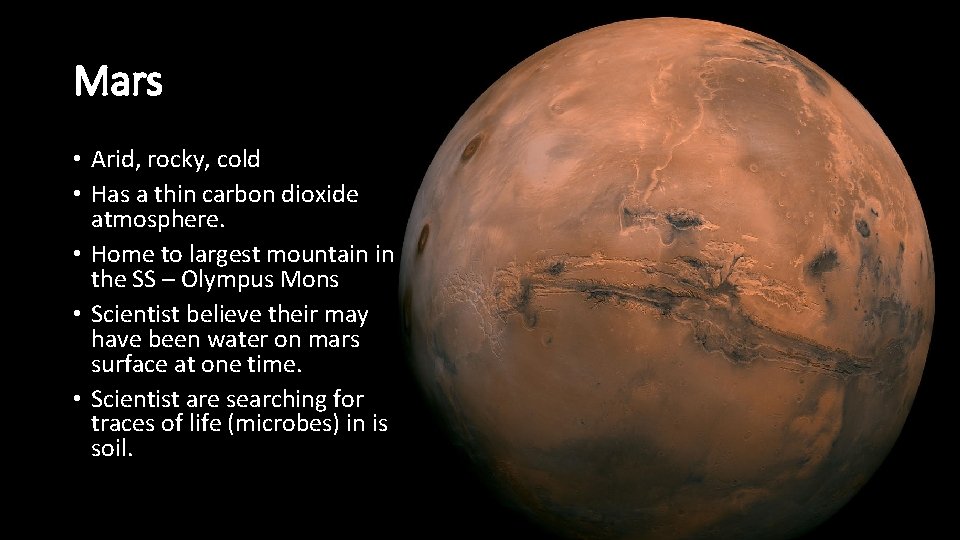
Mars • Arid, rocky, cold • Has a thin carbon dioxide atmosphere. • Home to largest mountain in the SS – Olympus Mons • Scientist believe their may have been water on mars surface at one time. • Scientist are searching for traces of life (microbes) in is soil.
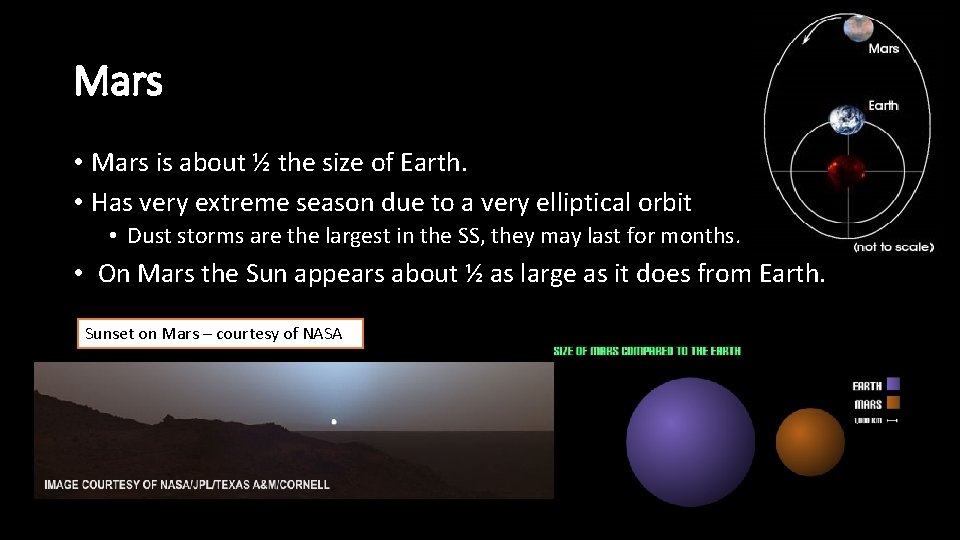
Mars • Mars is about ½ the size of Earth. • Has very extreme season due to a very elliptical orbit • Dust storms are the largest in the SS, they may last for months. • On Mars the Sun appears about ½ as large as it does from Earth. Sunset on Mars – courtesy of NASA
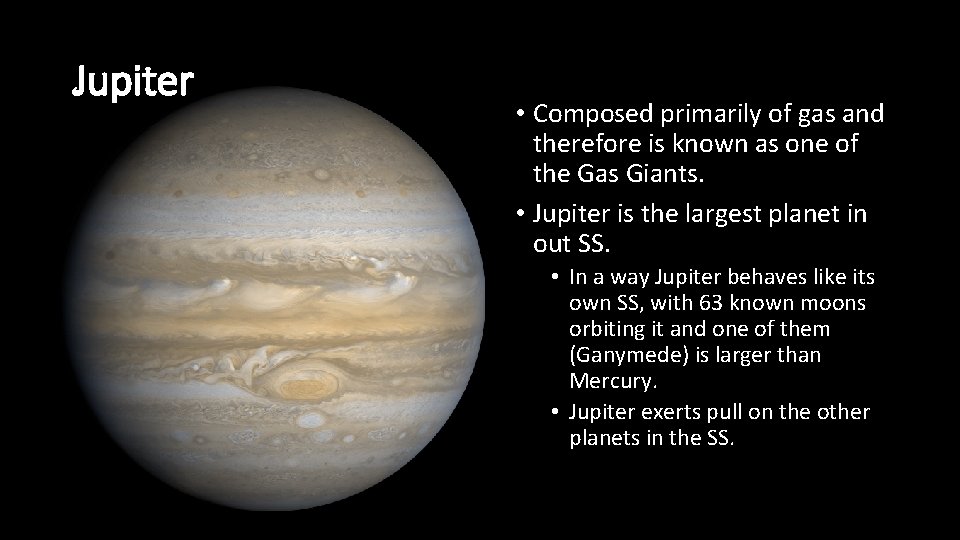
Jupiter • Composed primarily of gas and therefore is known as one of the Gas Giants. • Jupiter is the largest planet in out SS. • In a way Jupiter behaves like its own SS, with 63 known moons orbiting it and one of them (Ganymede) is larger than Mercury. • Jupiter exerts pull on the other planets in the SS.
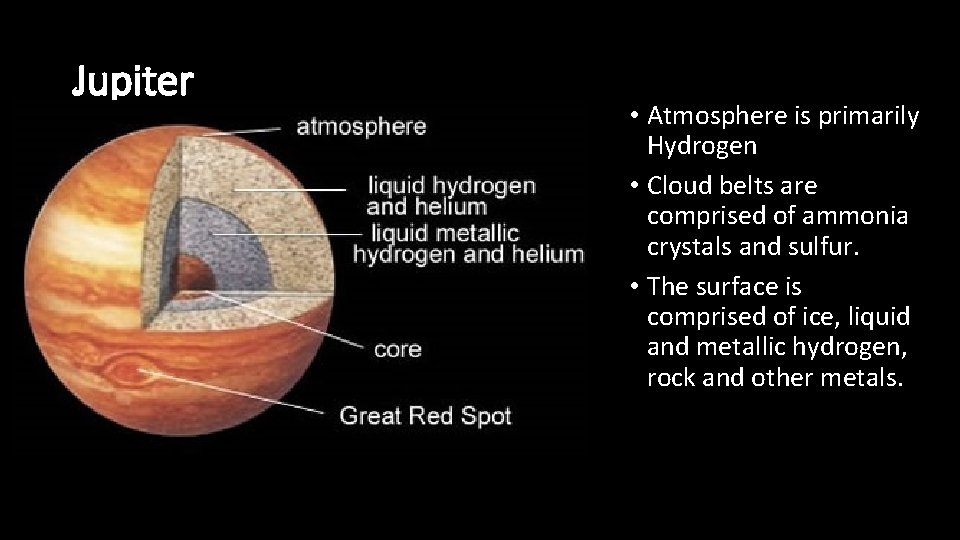
Jupiter • Atmosphere is primarily Hydrogen • Cloud belts are comprised of ammonia crystals and sulfur. • The surface is comprised of ice, liquid and metallic hydrogen, rock and other metals.
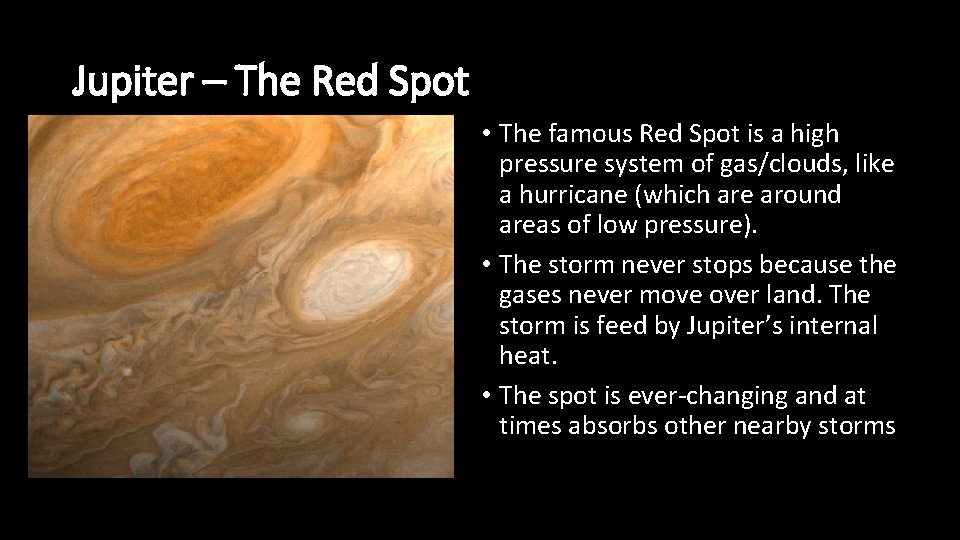
Jupiter – The Red Spot • The famous Red Spot is a high pressure system of gas/clouds, like a hurricane (which are around areas of low pressure). • The storm never stops because the gases never move over land. The storm is feed by Jupiter’s internal heat. • The spot is ever-changing and at times absorbs other nearby storms
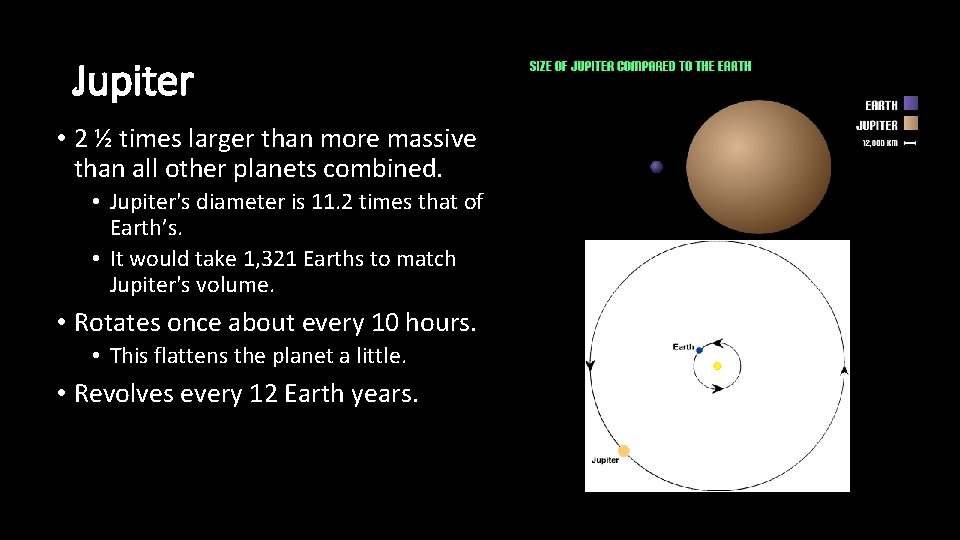
Jupiter • 2 ½ times larger than more massive than all other planets combined. • Jupiter's diameter is 11. 2 times that of Earth’s. • It would take 1, 321 Earths to match Jupiter's volume. • Rotates once about every 10 hours. • This flattens the planet a little. • Revolves every 12 Earth years.
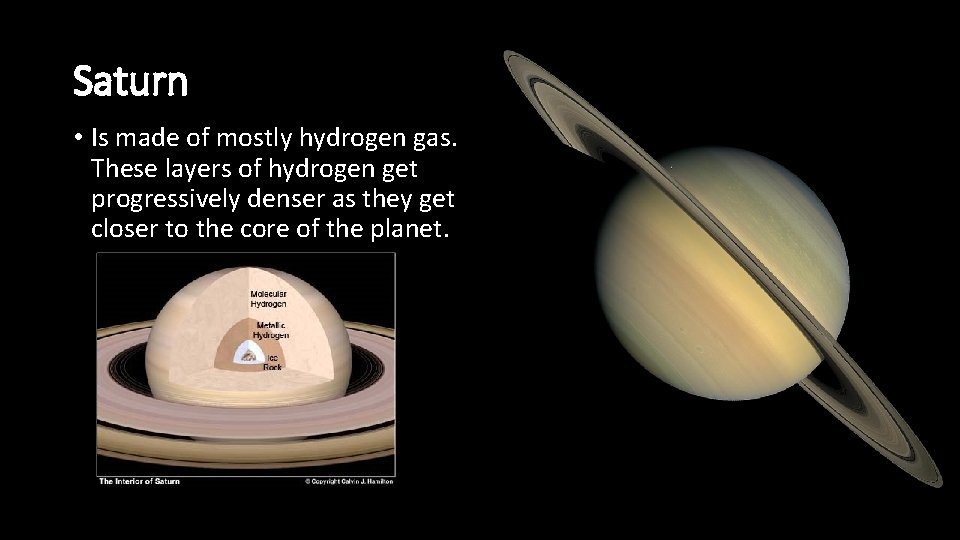
Saturn • Is made of mostly hydrogen gas. These layers of hydrogen get progressively denser as they get closer to the core of the planet.
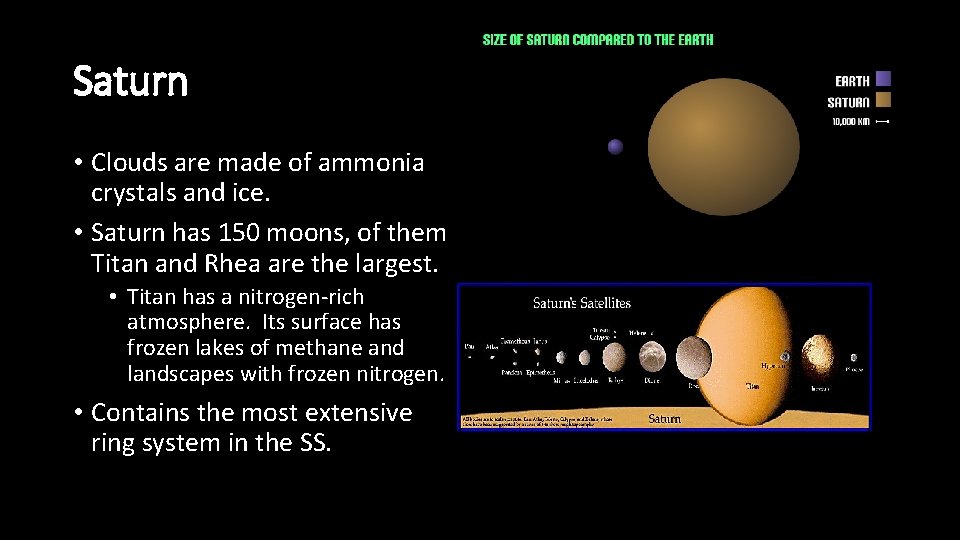
Saturn • Clouds are made of ammonia crystals and ice. • Saturn has 150 moons, of them Titan and Rhea are the largest. • Titan has a nitrogen-rich atmosphere. Its surface has frozen lakes of methane and landscapes with frozen nitrogen. • Contains the most extensive ring system in the SS.
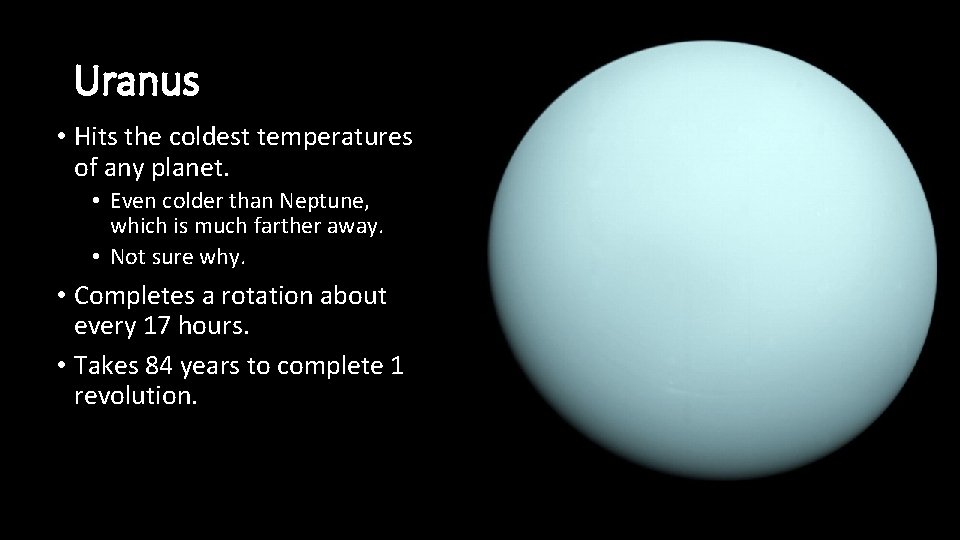
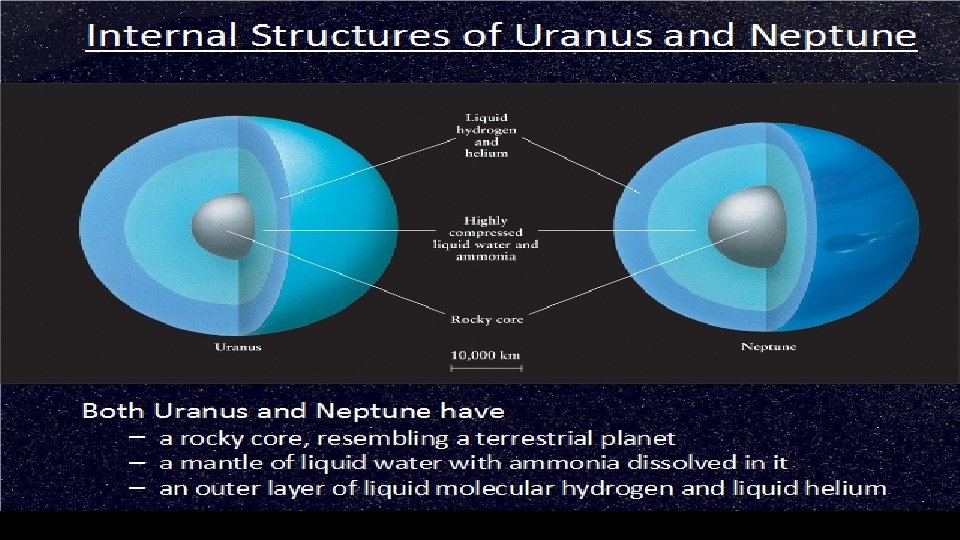
Uranus • Hits the coldest temperatures of any planet. • Even colder than Neptune, which is much farther away. • Not sure why. • Completes a rotation about every 17 hours. • Takes 84 years to complete 1 revolution.
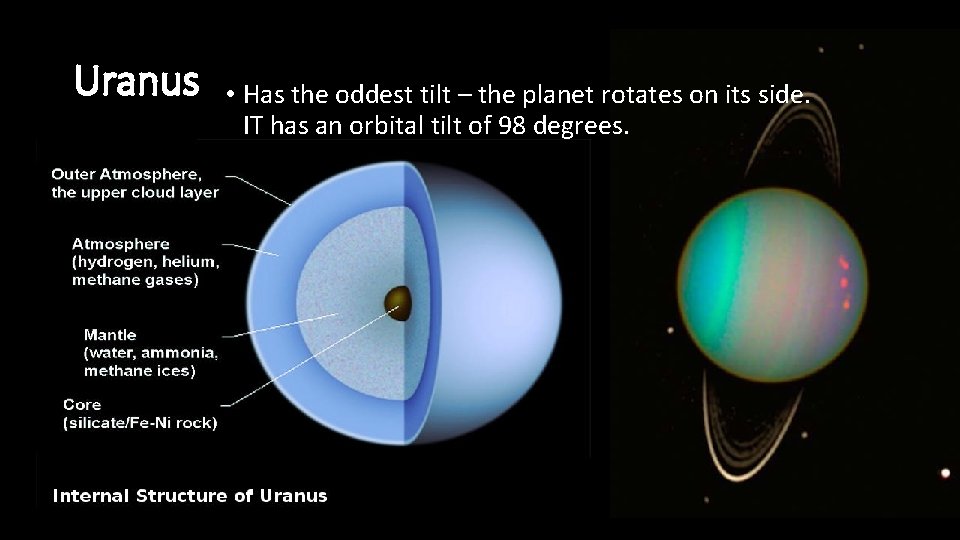
Uranus • Has the oddest tilt – the planet rotates on its side. IT has an orbital tilt of 98 degrees.
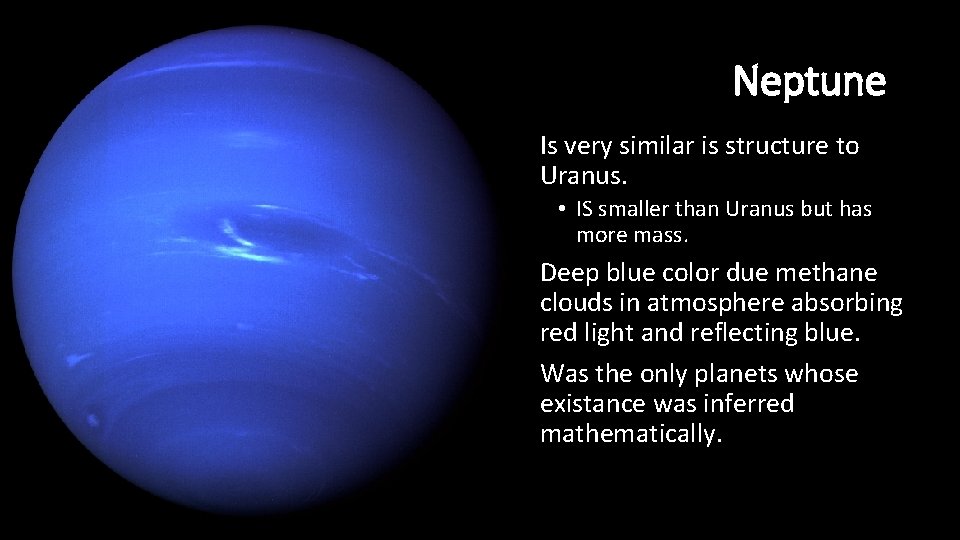
Neptune • Is very similar is structure to Uranus. • IS smaller than Uranus but has more mass. • Deep blue color due methane clouds in atmosphere absorbing red light and reflecting blue. • Was the only planets whose existance was inferred mathematically.
Neptune • Is very similar is structure to Uranus. • IS smaller than Uranus but has more mass. • Deep blue color due methane clouds in atmosphere absorbing red light and reflecting blue. • Was the only planets whose existance was inferred mathematically.
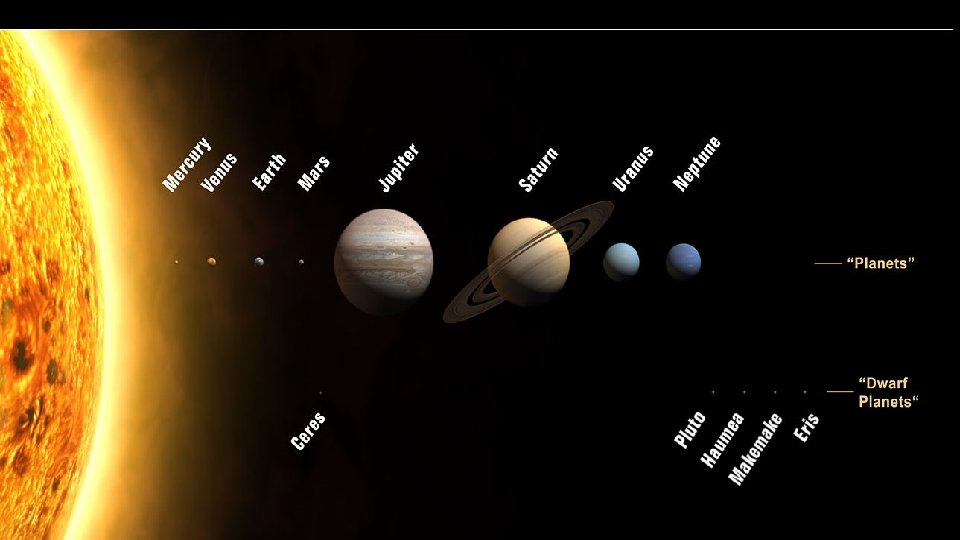
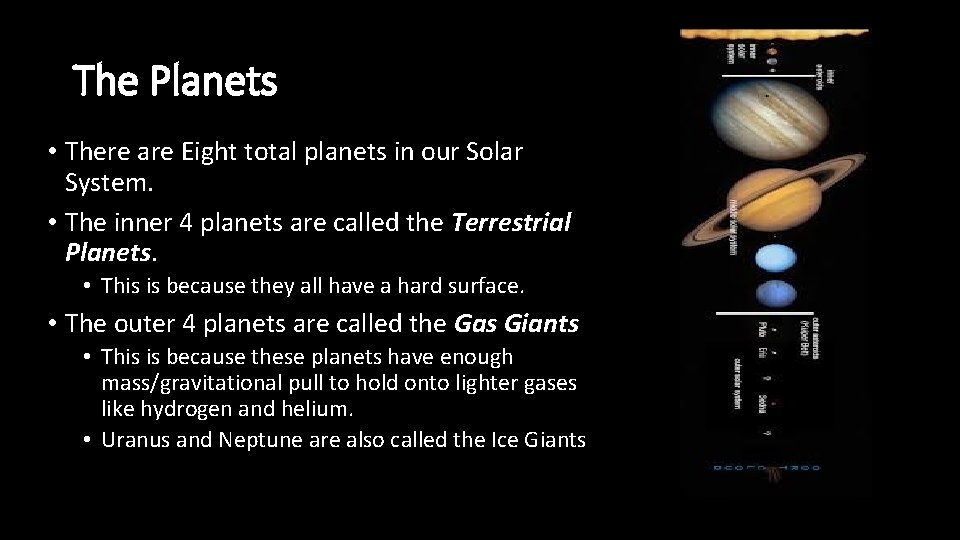
The Planets • There are Eight total planets in our Solar System. • The inner 4 planets are called the Terrestrial Planets. • This is because they all have a hard surface. • The outer 4 planets are called the Gas Giants • This is because these planets have enough mass/gravitational pull to hold onto lighter gases like hydrogen and helium. • Uranus and Neptune are also called the Ice Giants
Other Stuff in Our Solar System We will discuss these next time: • Asteroids • Meteoroids / Meteorites • Comets • Debris