
Earth Science Notes Air Masses and Weather Fronts
- Slides: 23
Earth Science Notes Air Masses and Weather Fronts
Objectives I can… • Explain what an air mass • Describe different weather fronts. • Explain how weather is created by passing fronts.
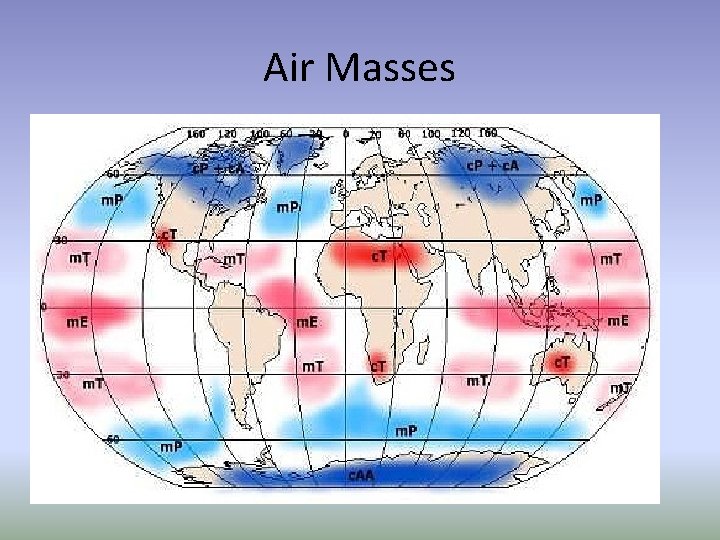
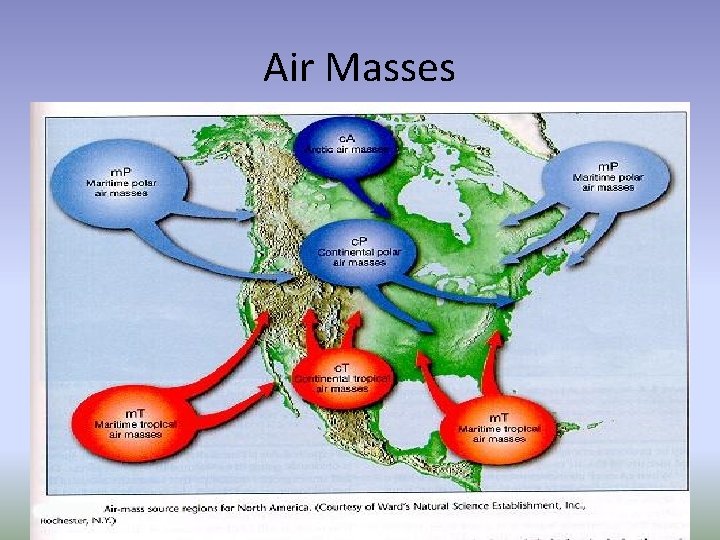
Air Masses • Air Masses are bodies of air that possess the same characteristics like temperature and humidity. – You have read about these air masses in your book. – Can cover hundred of thousands of square miles – Can have some variation within • Air masses originate in an area called a source region. – The longer the air mass stays over its source region, the more likely it will acquire the properties of the surface below.
Air Masses • There are four general air mass classifications categorized according to the source region. – polar latitudes P - located poleward of 60° north and south – tropical latitudes T - located within about 25° of the equator – continental c - located over large land masses--dry – marine m - located over the oceans----moist
Air Masses
Air Masses
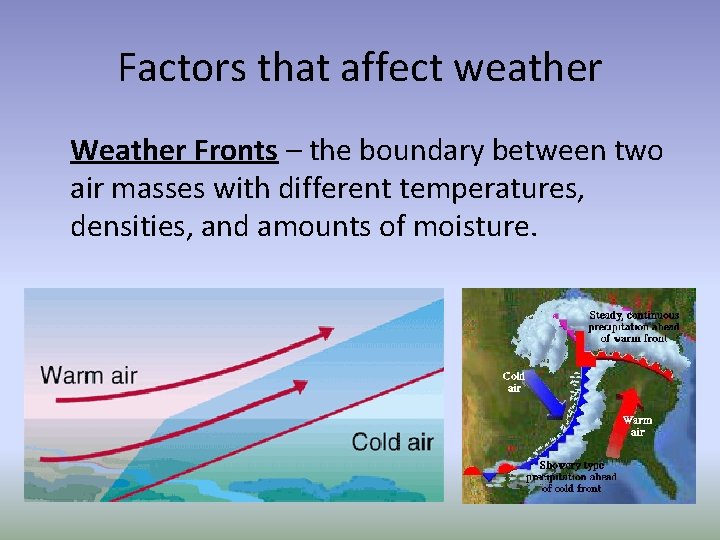
Factors that affect weather Weather Fronts – the boundary between two air masses with different temperatures, densities, and amounts of moisture.
Fronts
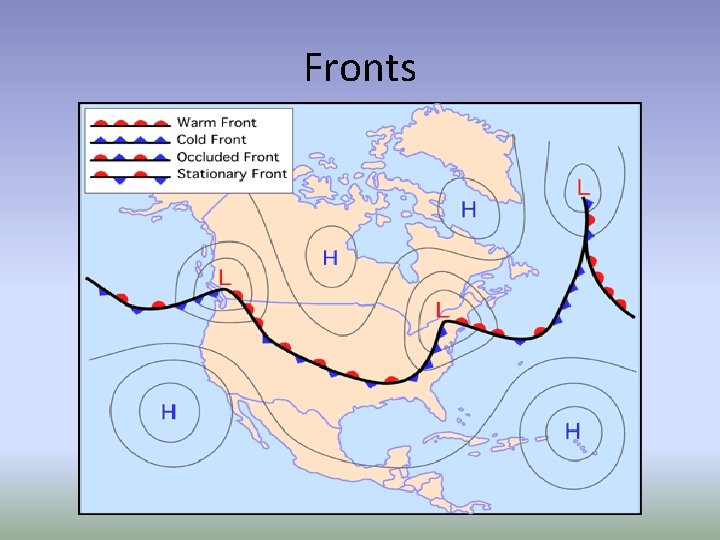
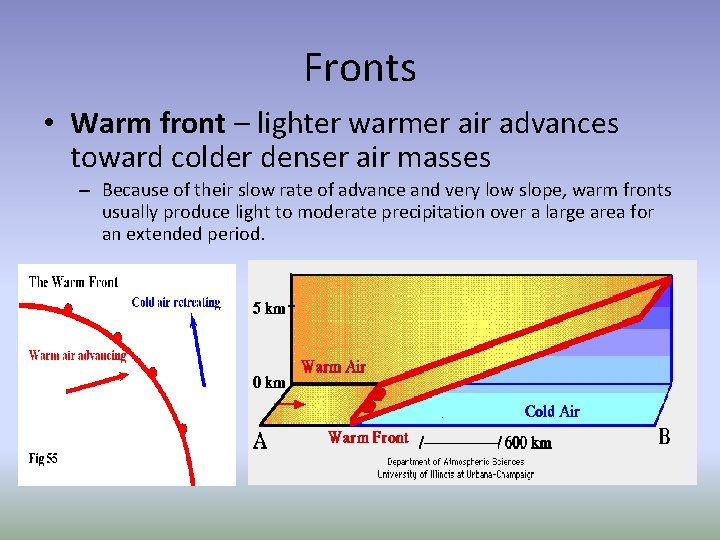
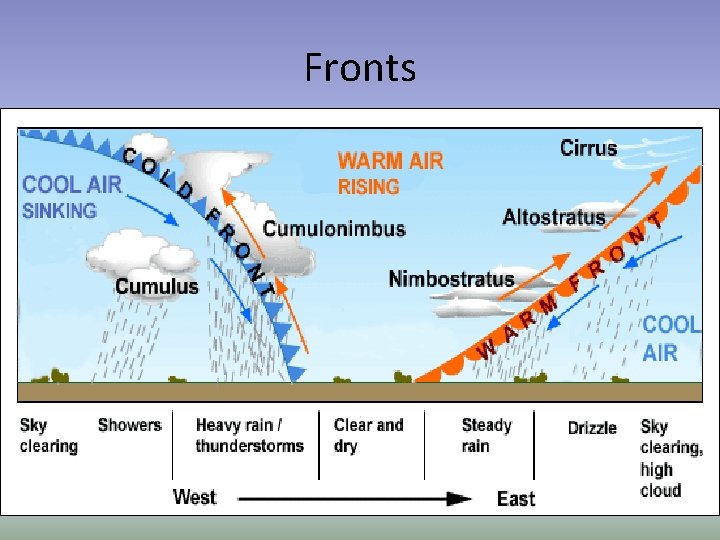
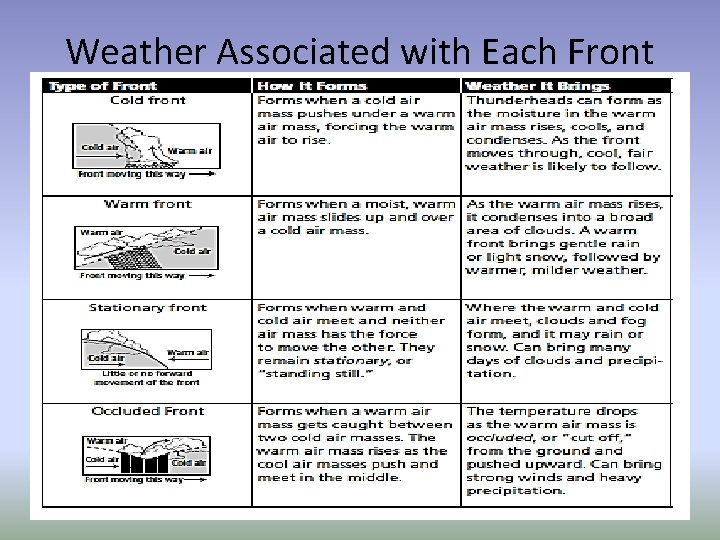
Fronts • Warm front – lighter warmer air advances toward colder denser air masses – Because of their slow rate of advance and very low slope, warm fronts usually produce light to moderate precipitation over a large area for an extended period.
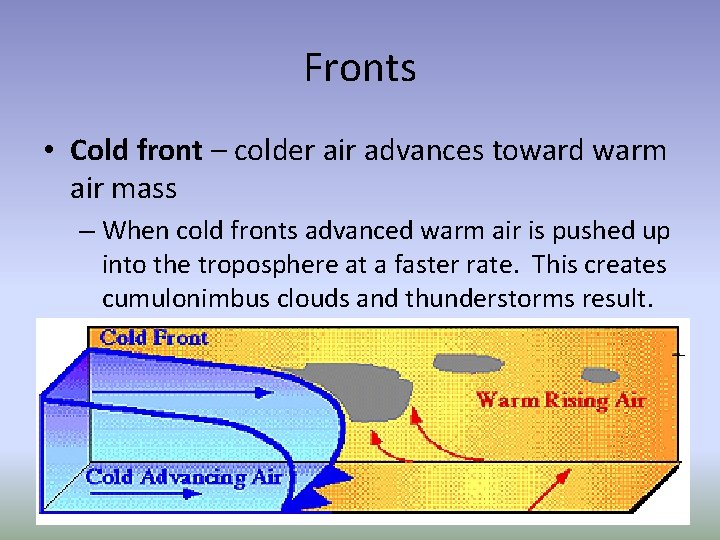
Fronts • Cold front – colder air advances toward warm air mass – When cold fronts advanced warm air is pushed up into the troposphere at a faster rate. This creates cumulonimbus clouds and thunderstorms result.
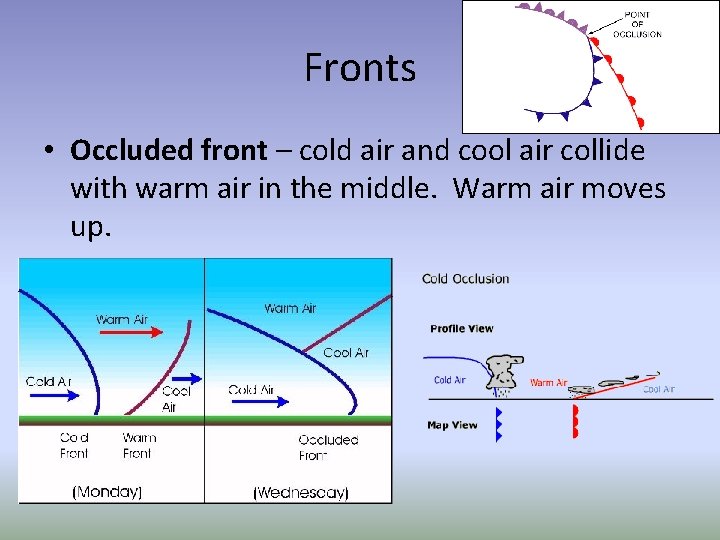
Fronts • Occluded front – cold air and cool air collide with warm air in the middle. Warm air moves up.
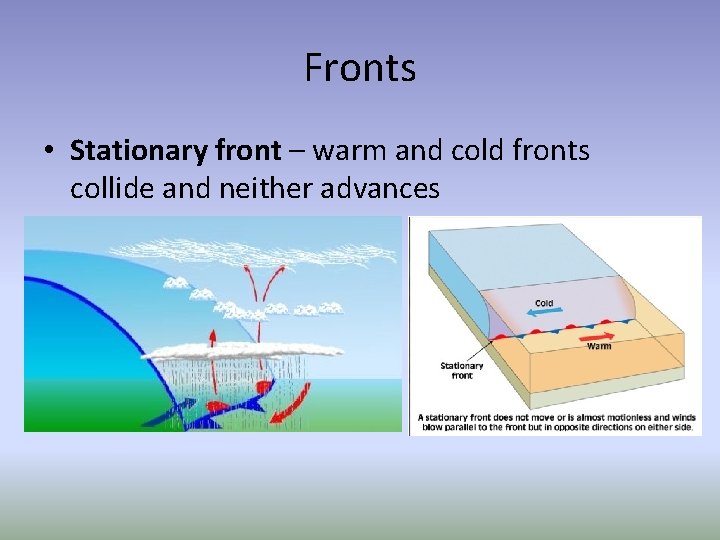
Fronts • Stationary front – warm and cold fronts collide and neither advances
Fronts
Weather Associated with Each Front
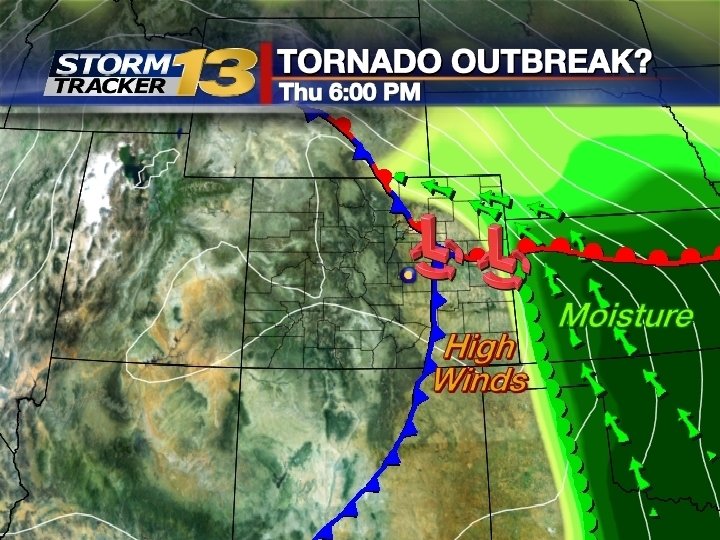
Severe Weather • Produced by collision of different air masses (i. e. FRONTS) or rapid change in conditions. – Example: T-Storms, tornadoes, hurricanes, blizzards, etc. • Be able to explain each example
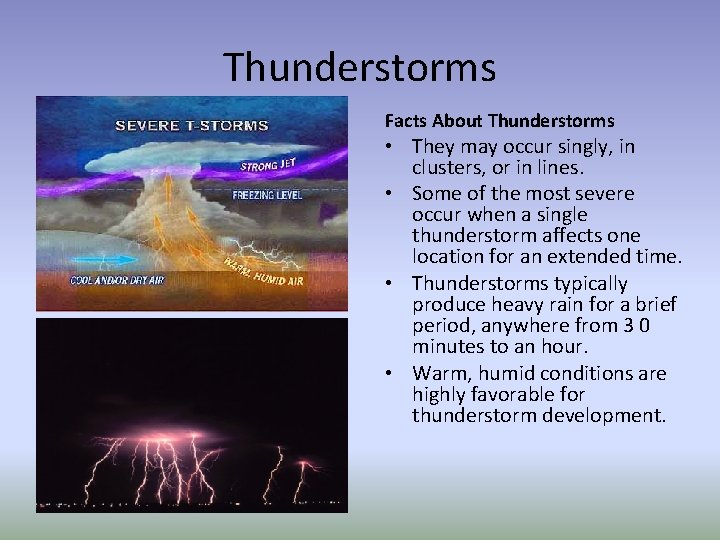
Thunderstorms Facts About Thunderstorms • They may occur singly, in clusters, or in lines. • Some of the most severe occur when a single thunderstorm affects one location for an extended time. • Thunderstorms typically produce heavy rain for a brief period, anywhere from 3 0 minutes to an hour. • Warm, humid conditions are highly favorable for thunderstorm development.
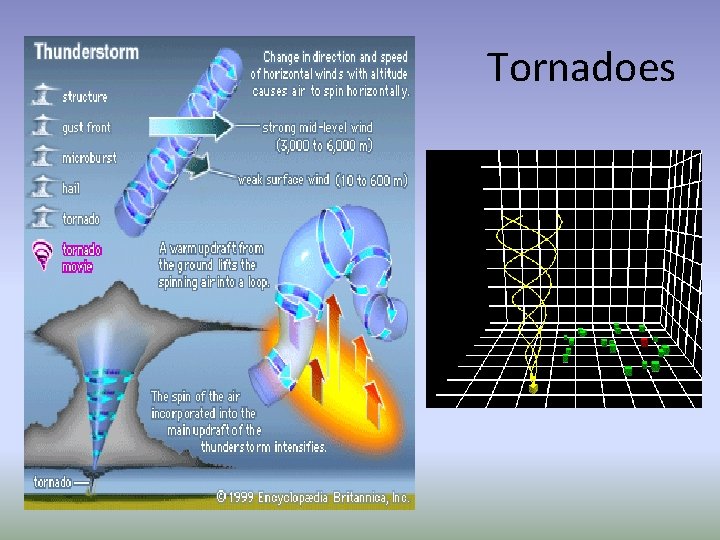
Tornadoes A violently rotating column of air… • in contact with the ground • hanging from a cumulonimbus cloud • often (but not always) visible as a funnel cloud.
Tornadoes
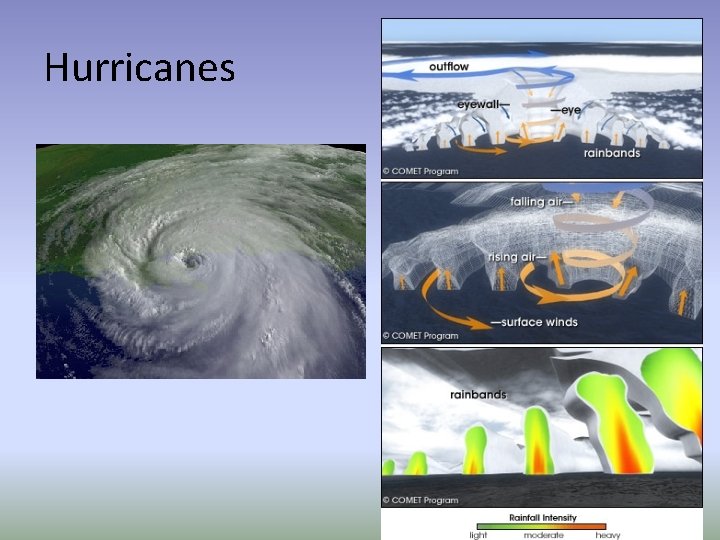
Hurricanes • A hurricane is an intense, rotating oceanic weather system that circles around a region of low pressure. • possesses maximum sustained winds exceeding 119 km/hr (74 mph). • It forms and intensifies over tropical oceanic regions.
Hurricanes
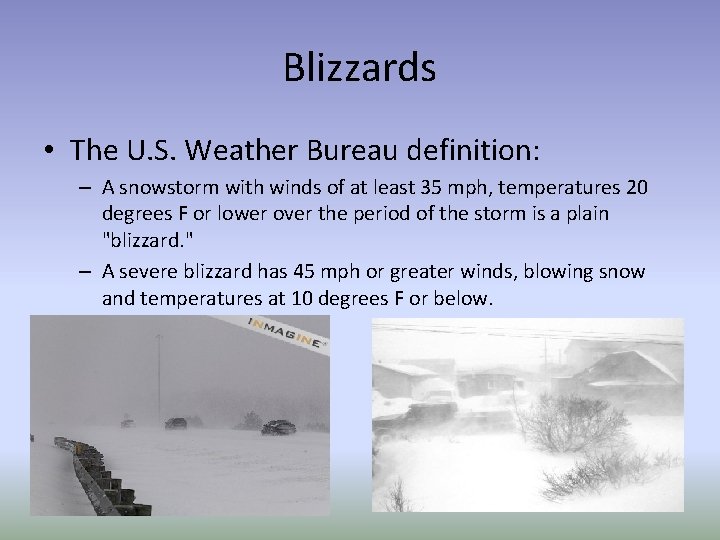
Blizzards • The U. S. Weather Bureau definition: – A snowstorm with winds of at least 35 mph, temperatures 20 degrees F or lower over the period of the storm is a plain "blizzard. " – A severe blizzard has 45 mph or greater winds, blowing snow and temperatures at 10 degrees F or below.
Assessment Can I… • Explain what an air mass • Describe different weather fronts. • Explain how weather is created by passing fronts. • Describe different types of severe weather.