
Earth Science Chapter 5 Earthquakes Forces in Earths


- Slides: 20
Earth Science Chapter 5 Earthquakes
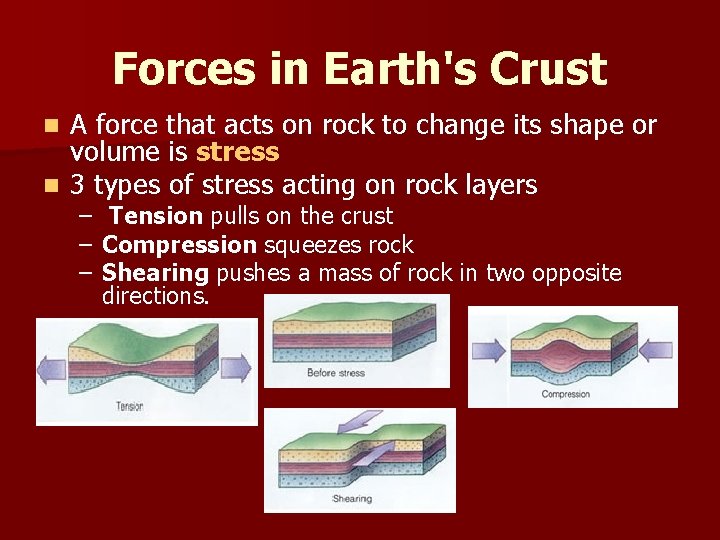
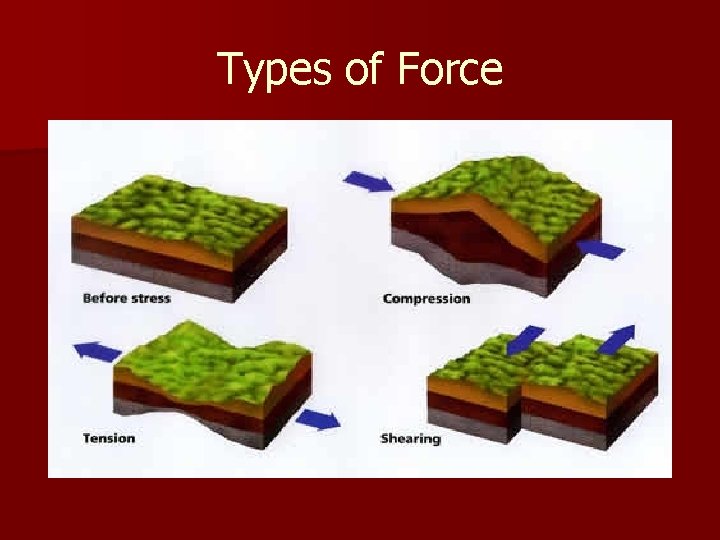
Forces in Earth's Crust A force that acts on rock to change its shape or volume is stress n 3 types of stress acting on rock layers n – Tension pulls on the crust – Compression squeezes rock – Shearing pushes a mass of rock in two opposite directions.
Types of Force
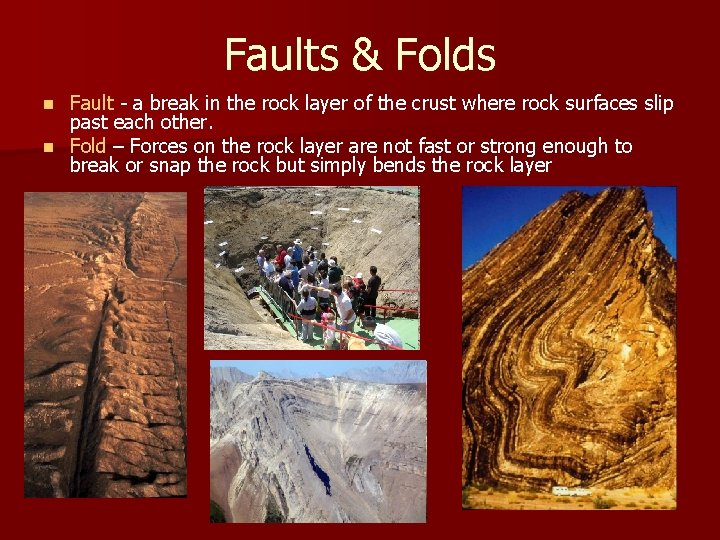
Faults & Folds Fault - a break in the rock layer of the crust where rock surfaces slip past each other. n Fold – Forces on the rock layer are not fast or strong enough to break or snap the rock but simply bends the rock layer n
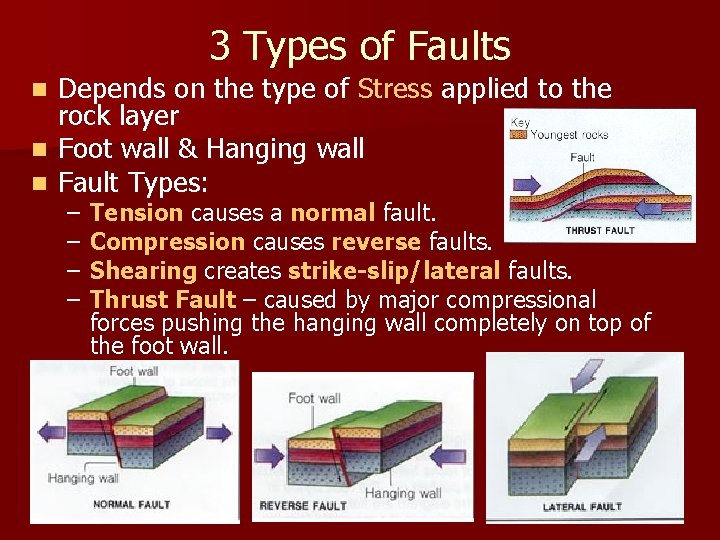
3 Types of Faults Depends on the type of Stress applied to the rock layer n Foot wall & Hanging wall n Fault Types: n – – Tension causes a normal fault. Compression causes reverse faults. Shearing creates strike-slip/lateral faults. Thrust Fault – caused by major compressional forces pushing the hanging wall completely on top of the foot wall.
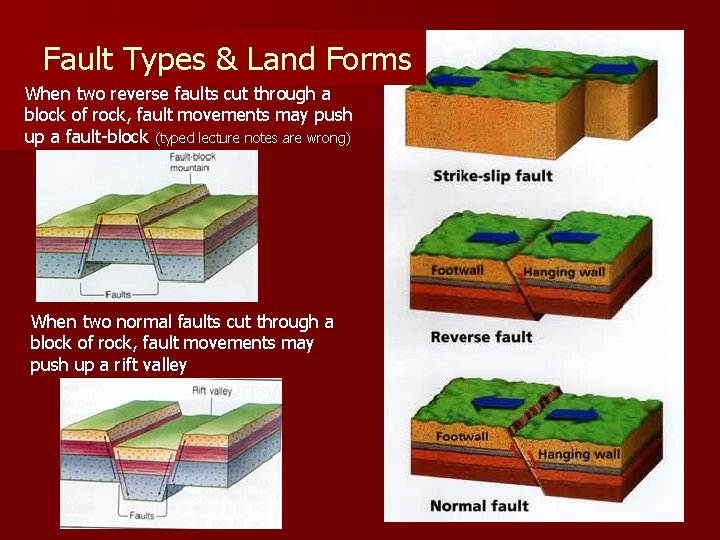
Fault Types & Land Forms When two reverse faults cut through a block of rock, fault movements may push up a fault-block (typed lecture notes are wrong) When two normal faults cut through a block of rock, fault movements may push up a rift valley
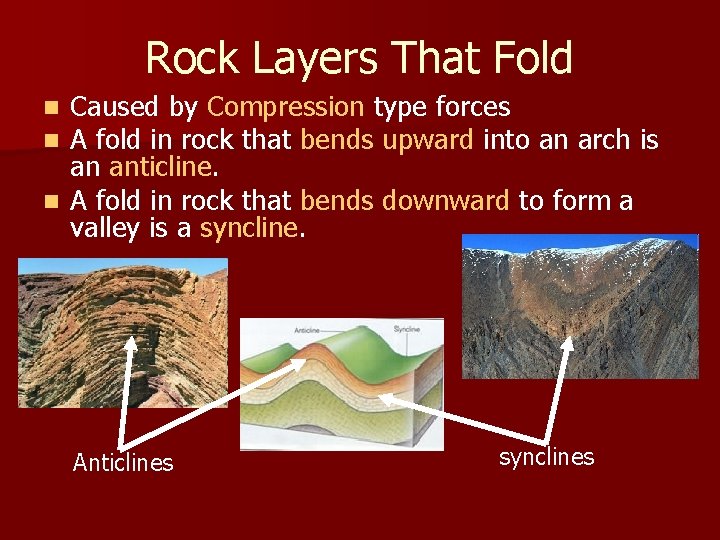
Rock Layers That Fold Caused by Compression type forces A fold in rock that bends upward into an arch is an anticline. n A fold in rock that bends downward to form a valley is a syncline. n n Anticlines synclines
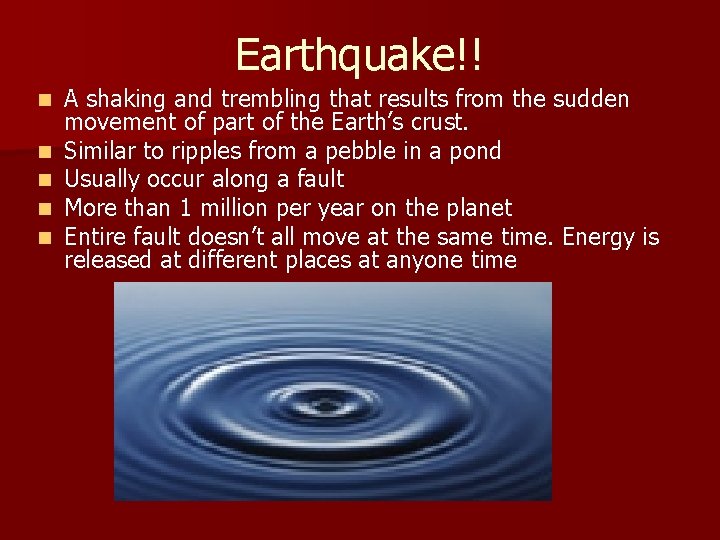
Earthquake!! n n n A shaking and trembling that results from the sudden movement of part of the Earth’s crust. Similar to ripples from a pebble in a pond Usually occur along a fault More than 1 million per year on the planet Entire fault doesn’t all move at the same time. Energy is released at different places at anyone time
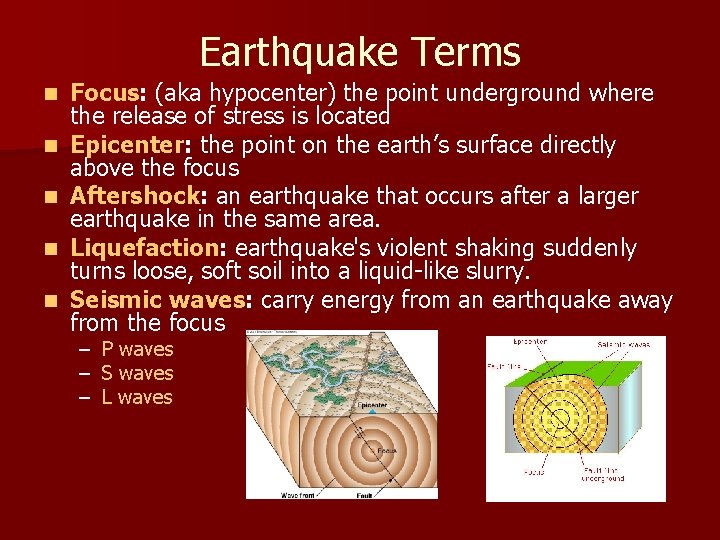
Earthquake Terms n n n Focus: (aka hypocenter) the point underground where the release of stress is located Epicenter: the point on the earth’s surface directly above the focus Aftershock: an earthquake that occurs after a larger earthquake in the same area. Liquefaction: earthquake's violent shaking suddenly turns loose, soft soil into a liquid-like slurry. Seismic waves: carry energy from an earthquake away from the focus – P waves – S waves – L waves
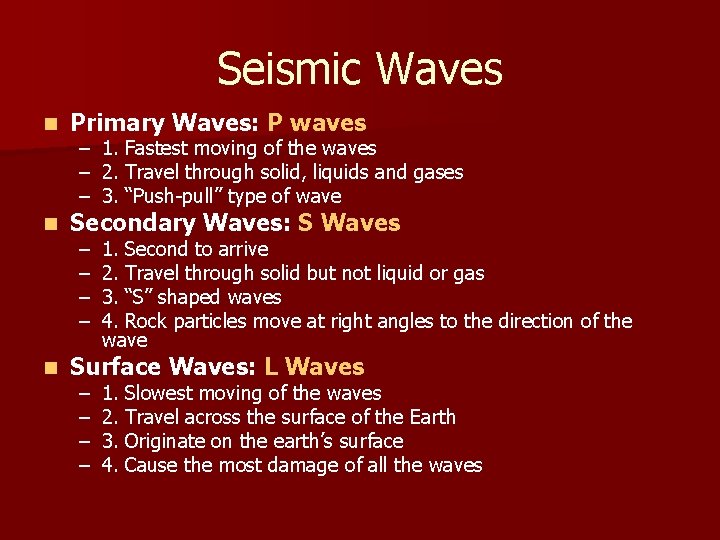
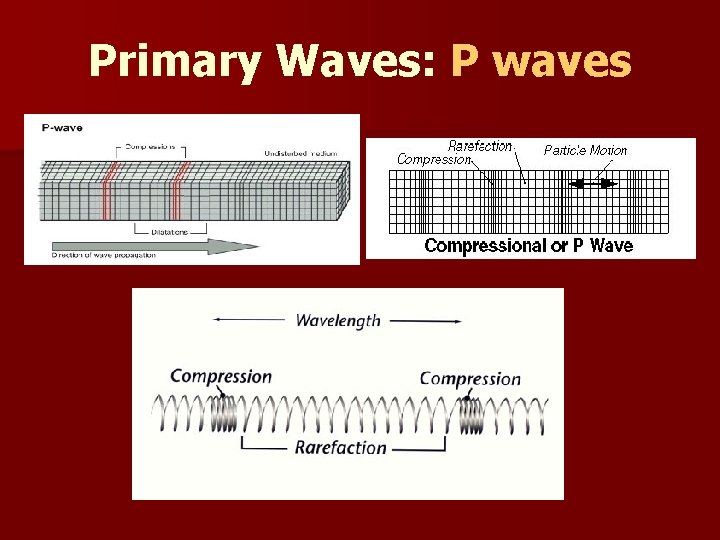
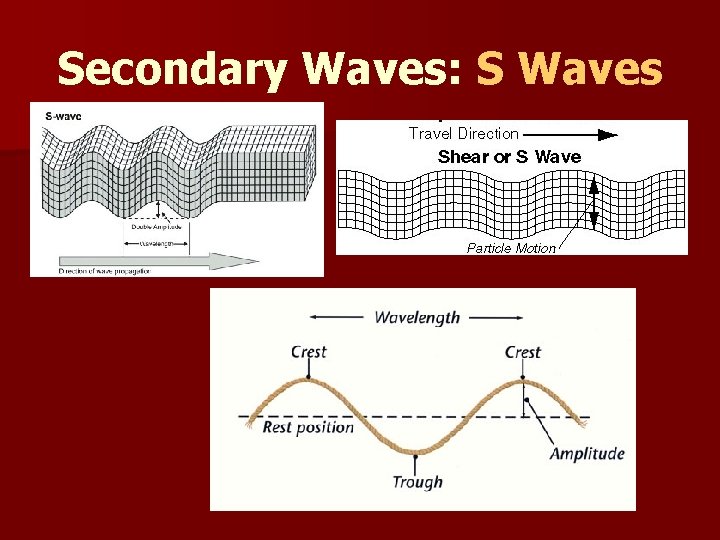
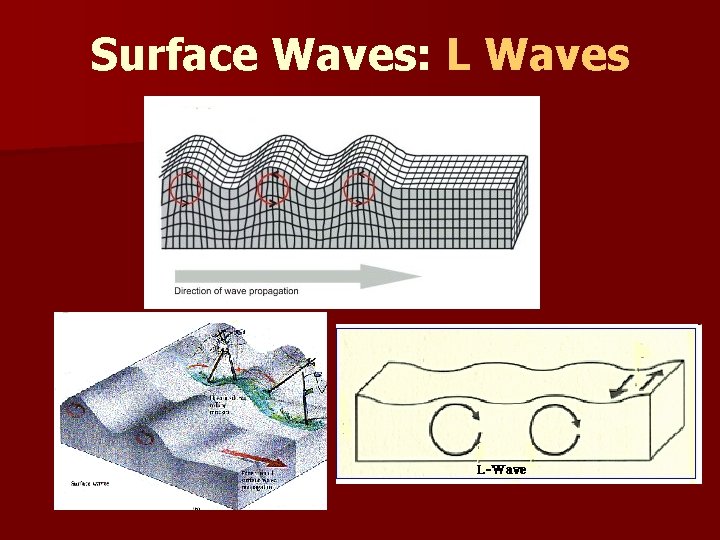
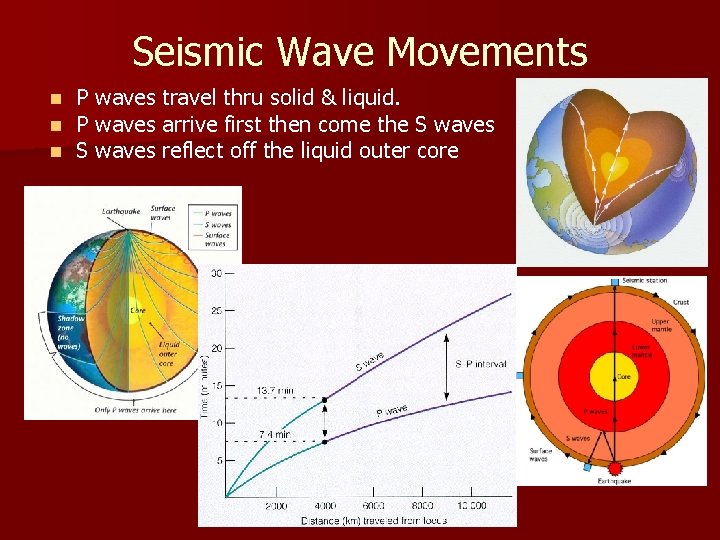
Seismic Waves n Primary Waves: P waves – 1. Fastest moving of the waves – 2. Travel through solid, liquids and gases – 3. “Push-pull” type of wave n Secondary Waves: S Waves – – n 1. Second to arrive 2. Travel through solid but not liquid or gas 3. “S” shaped waves 4. Rock particles move at right angles to the direction of the wave Surface Waves: L Waves – – 1. 2. 3. 4. Slowest moving of the waves Travel across the surface of the Earth Originate on the earth’s surface Cause the most damage of all the waves
Primary Waves: P waves
Secondary Waves: S Waves
Surface Waves: L Waves
Seismic Wave Movements n n n P waves travel thru solid & liquid. P waves arrive first then come the S waves reflect off the liquid outer core
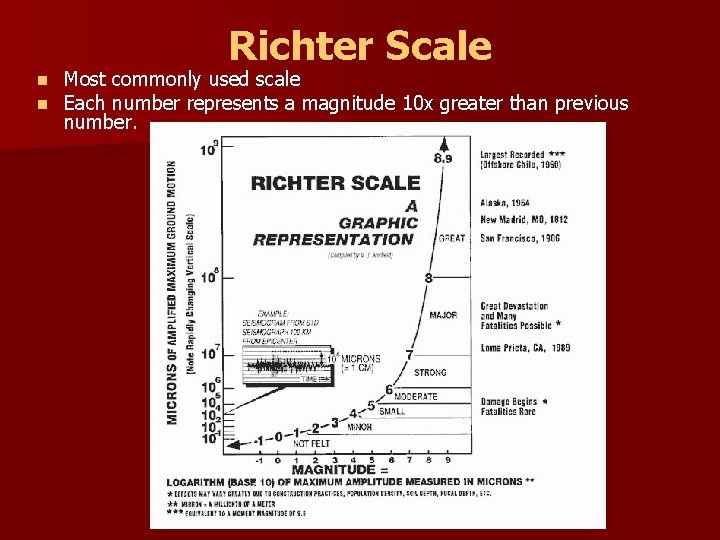
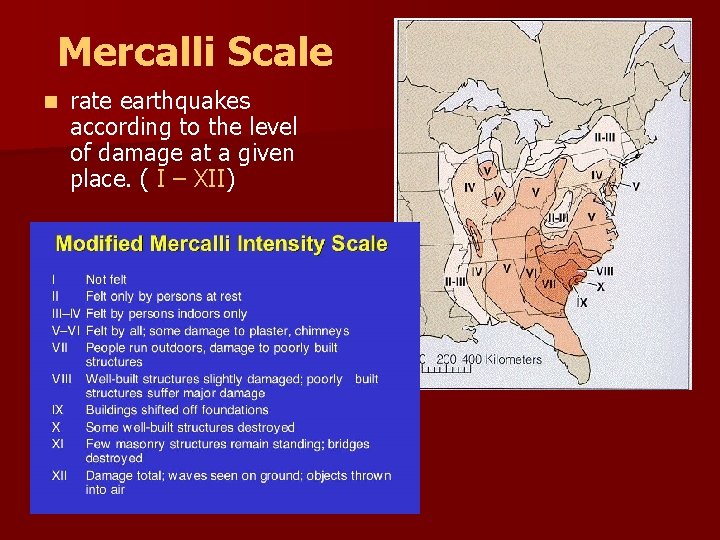
Earthquake Strength & Intensity n Richter Scale - rating of an earthquake's magnitude based on the size of the earthquake's seismic waves ( 1 – 10) n Mercalli Scale - rate earthquakes according to the level of damage at a given place. ( I – XII) n Moment Magnitude Scale - rating system that estimates the total energy released by an earthquake
Richter Scale n n Most commonly used scale Each number represents a magnitude 10 x greater than previous number.
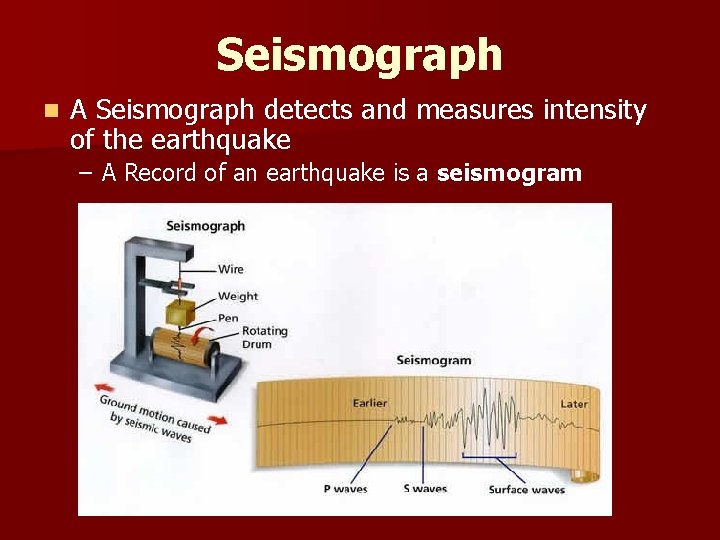
Seismograph n A Seismograph detects and measures intensity of the earthquake – A Record of an earthquake is a seismogram
Mercalli Scale n rate earthquakes according to the level of damage at a given place. ( I – XII)
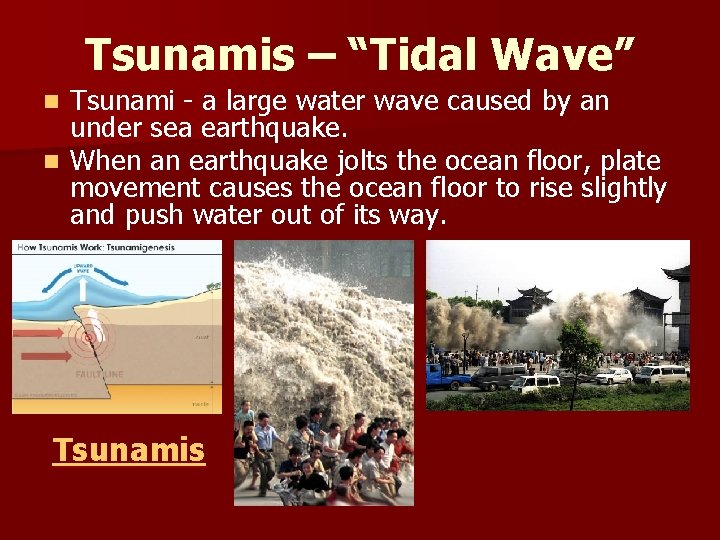
Tsunamis – “Tidal Wave” Tsunami - a large water wave caused by an under sea earthquake. n When an earthquake jolts the ocean floor, plate movement causes the ocean floor to rise slightly and push water out of its way. n Tsunamis
That’s it !! Let’s go home….