
Earth Science Chapter 23 3 CENOZOIC ERA CENOZOIC

- Slides: 16
Earth Science Chapter 23. 3 CENOZOIC ERA
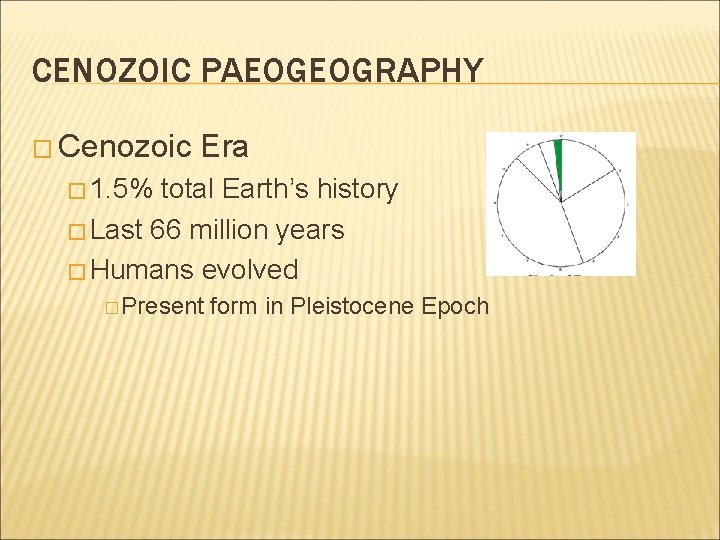
CENOZOIC PAEOGEOGRAPHY � Cenozoic Era � 1. 5% total Earth’s history � Last 66 million years � Humans evolved � Present form in Pleistocene Epoch
PERIODS OF CENOZOIC ERA
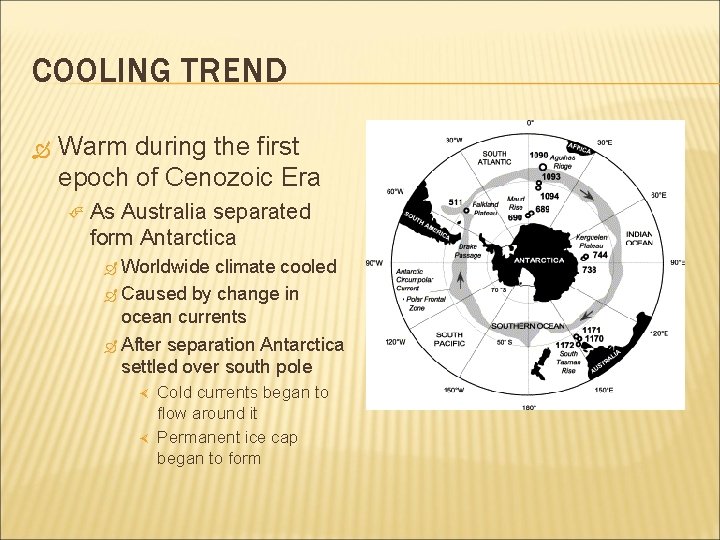
COOLING TREND Warm during the first epoch of Cenozoic Era As Australia separated form Antarctica Worldwide climate cooled Caused by change in ocean currents After separation Antarctica settled over south pole Cold currents began to flow around it Permanent ice cap began to form
MIOCENE WARMING � Miocene Period � Climate began to warm again � Ice cap- Antarctica began to melt � Oceans flooded margins of North America � Late Miocene � Ice caps began to freeze again � Set the stage for ice ages
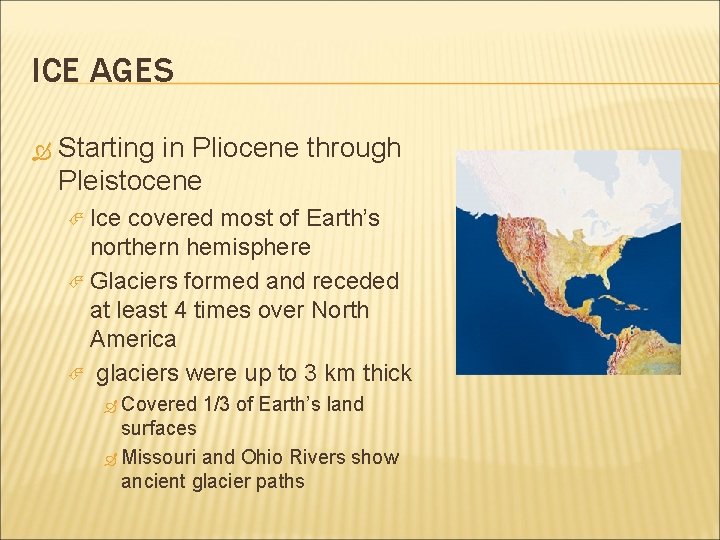
ICE AGES Starting in Pliocene through Pleistocene Ice covered most of Earth’s northern hemisphere Glaciers formed and receded at least 4 times over North America glaciers were up to 3 km thick Covered 1/3 of Earth’s land surfaces Missouri and Ohio Rivers show ancient glacier paths
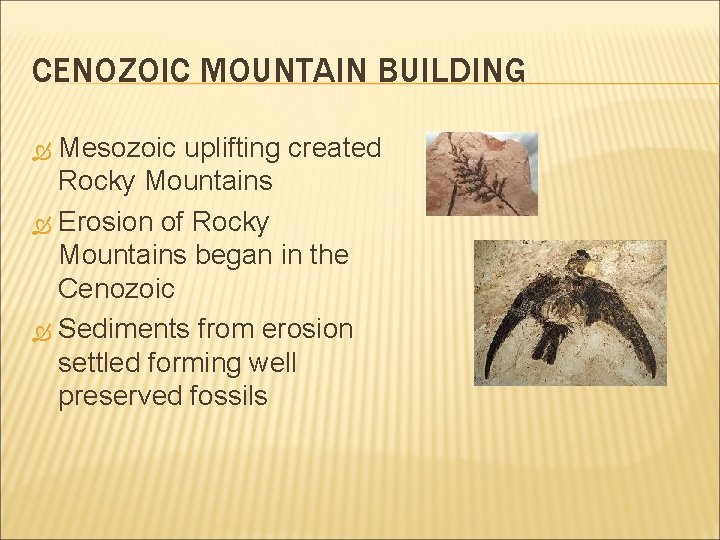
CENOZOIC MOUNTAIN BUILDING Mesozoic uplifting created Rocky Mountains Erosion of Rocky Mountains began in the Cenozoic Sediments from erosion settled forming well preserved fossils
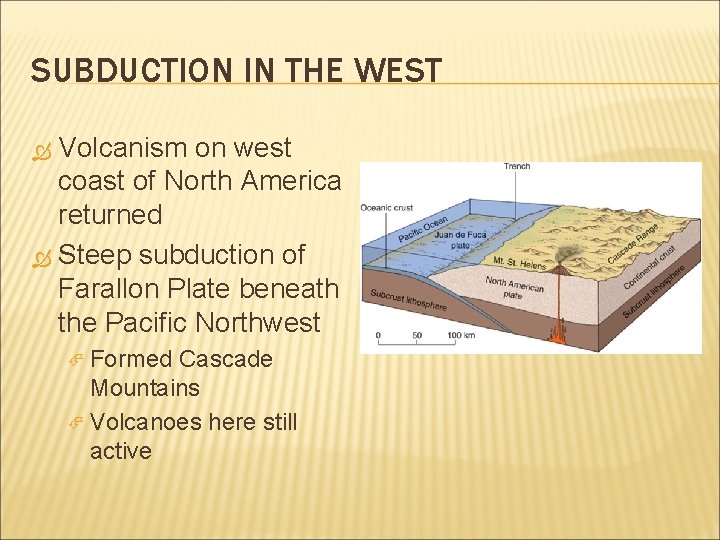
SUBDUCTION IN THE WEST Volcanism on west coast of North America returned Steep subduction of Farallon Plate beneath the Pacific Northwest Formed Cascade Mountains Volcanoes here still active
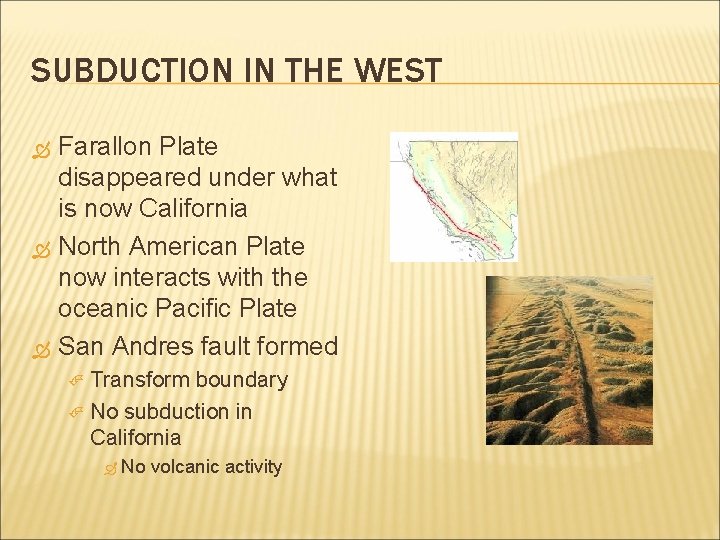
SUBDUCTION IN THE WEST Farallon Plate disappeared under what is now California North American Plate now interacts with the oceanic Pacific Plate San Andres fault formed Transform boundary No subduction in California No volcanic activity
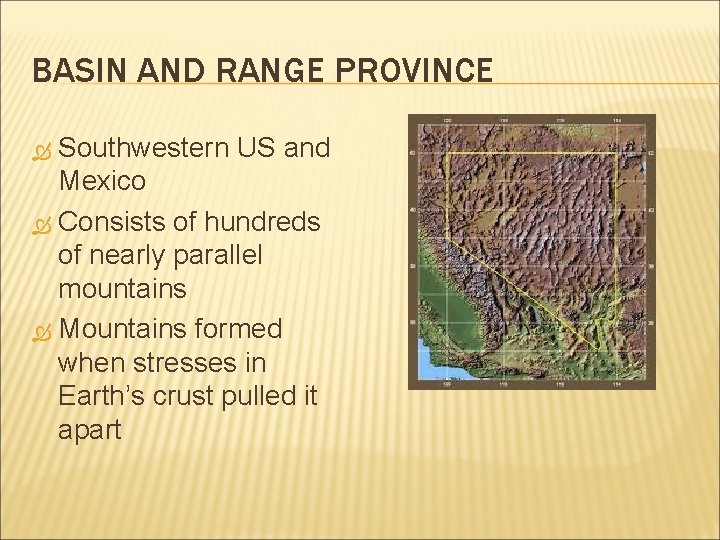
BASIN AND RANGE PROVINCE Southwestern US and Mexico Consists of hundreds of nearly parallel mountains Mountains formed when stresses in Earth’s crust pulled it apart
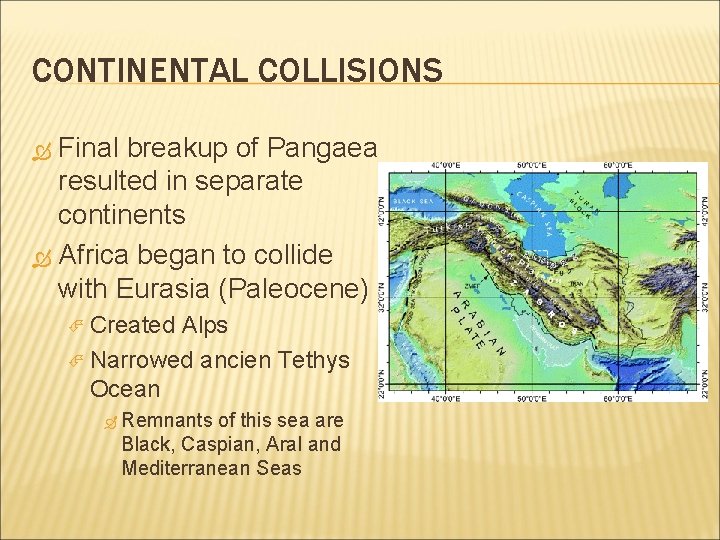
CONTINENTAL COLLISIONS Final breakup of Pangaea resulted in separate continents Africa began to collide with Eurasia (Paleocene) Created Alps Narrowed ancien Tethys Ocean Remnants of this sea are Black, Caspian, Aral and Mediterranean Seas
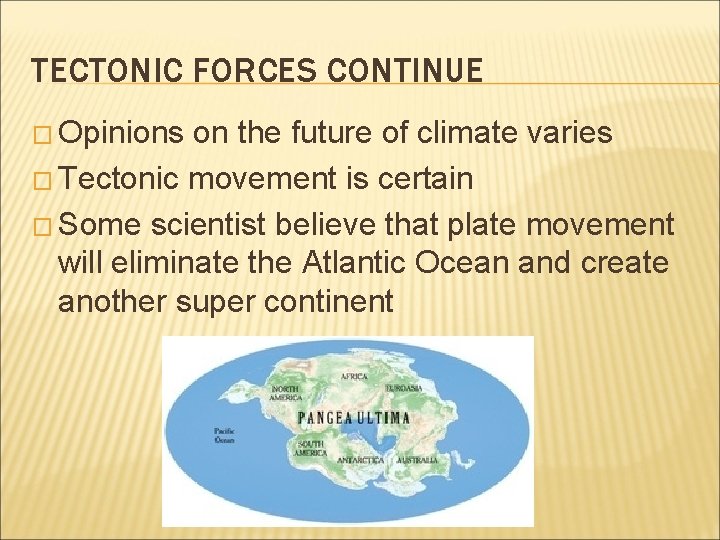
TECTONIC FORCES CONTINUE � Opinions on the future of climate varies � Tectonic movement is certain � Some scientist believe that plate movement will eliminate the Atlantic Ocean and create another super continent
CENOZOIC LIFE � Marine life that survived extinction at the end of Cretaceous period � Clams, sea urchins, sharks � Forests dominated continents � As climate cooled � Grasslands appeared � Rise of grasslands led to diverse new mammal groups � Age of Mammals
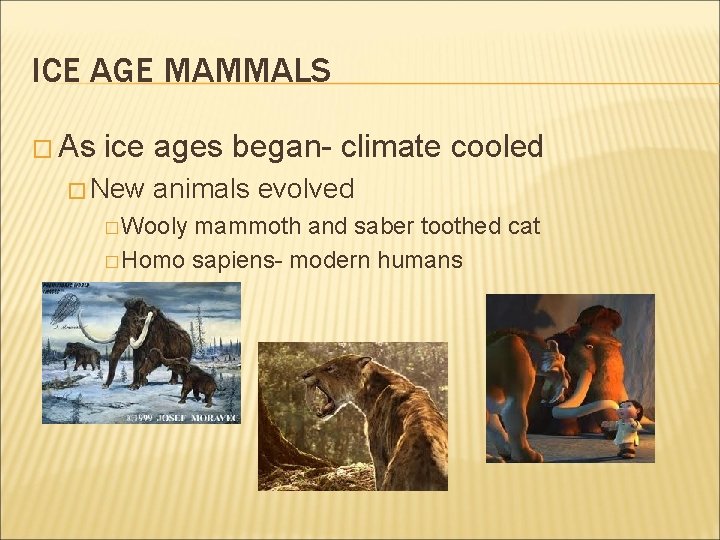
ICE AGE MAMMALS � As ice ages began- climate cooled � New animals evolved � Wooly mammoth and saber toothed cat � Homo sapiens- modern humans
HUMANS � Defining characteristics � Standing upright � Bipedal � First fossil remains found in Africa � 195, 000 years old
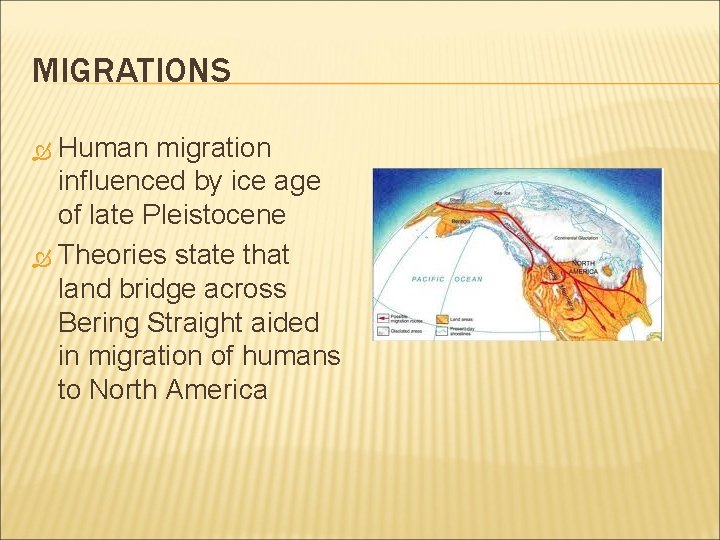
MIGRATIONS Human migration influenced by ice age of late Pleistocene Theories state that land bridge across Bering Straight aided in migration of humans to North America