
Earth Science Chapter 1 Introduction Earth Science Study
- Slides: 17
Earth Science Chapter 1 - Introduction
Earth Science Ø Study of the Earth and the universe around it Ø 4 Branches of Earth science Ø Geology Ø Oceanography Ø Meteorology Ø Astronomy
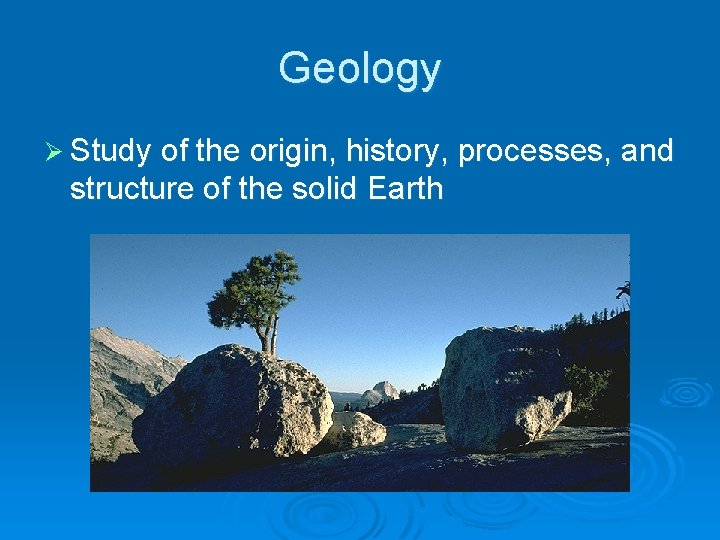
Geology Ø Study of the origin, history, processes, and structure of the solid Earth
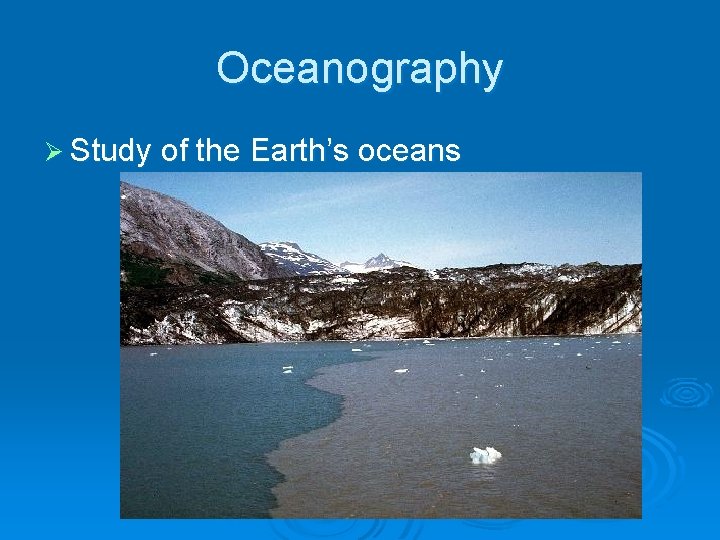
Oceanography Ø Study of the Earth’s oceans
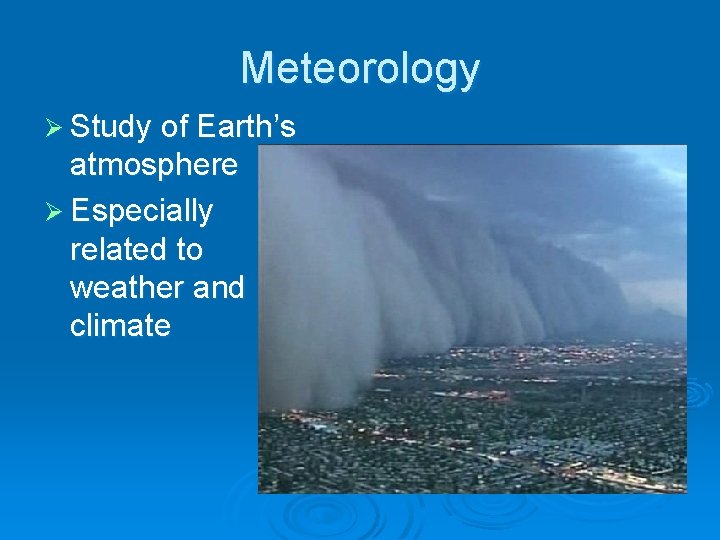
Meteorology Ø Study of Earth’s atmosphere Ø Especially related to weather and climate
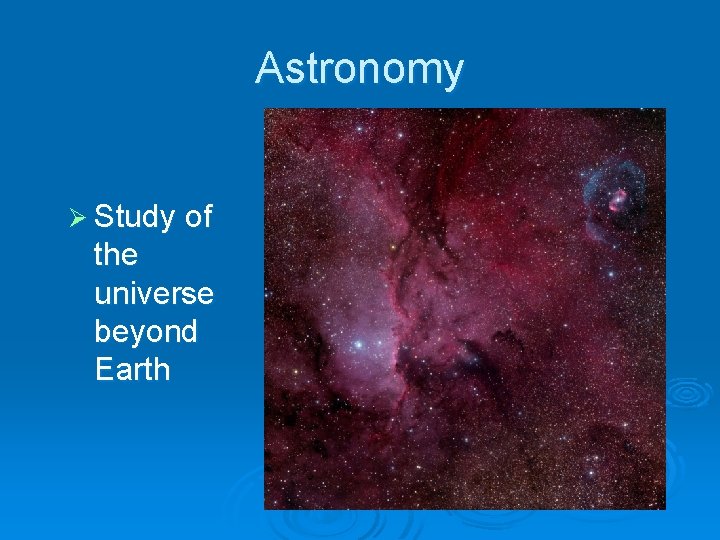
Astronomy Ø Study of the universe beyond Earth
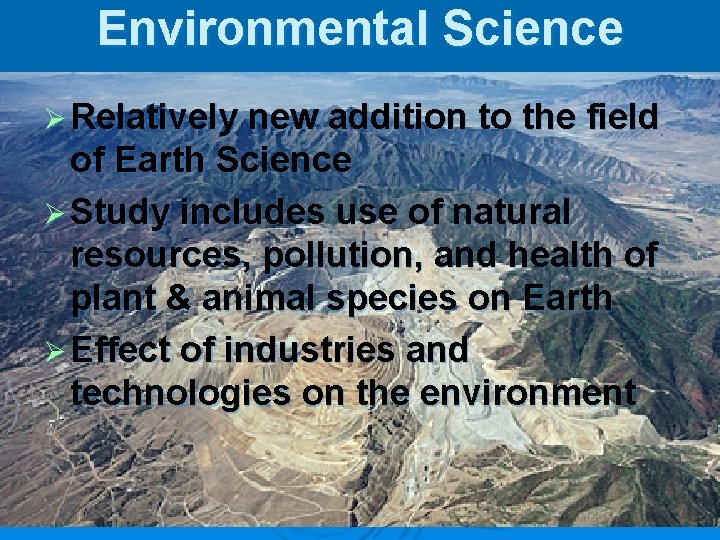
Environmental Science Ø Relatively new addition to the field of Earth Science Ø Study includes use of natural resources, pollution, and health of plant & animal species on Earth Ø Effect of industries and technologies on the environment
The Scientific Method Ø A series of logical steps to follow in order to solve a problem
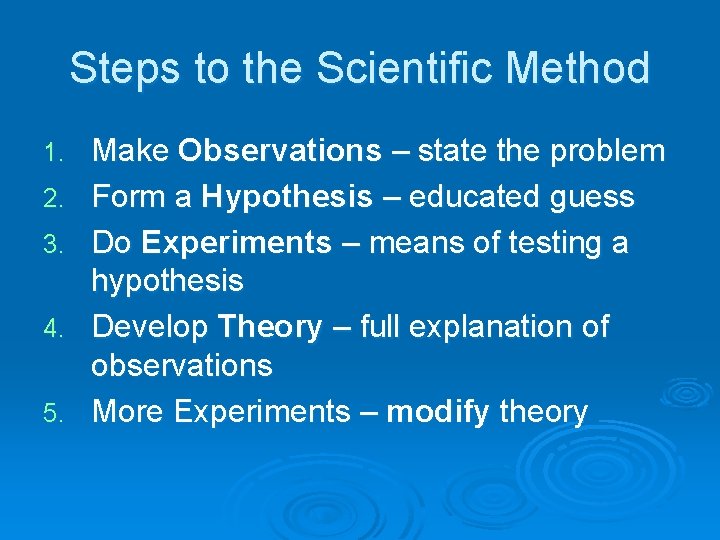
Steps to the Scientific Method 1. 2. 3. 4. 5. Make Observations – state the problem Form a Hypothesis – educated guess Do Experiments – means of testing a hypothesis Develop Theory – full explanation of observations More Experiments – modify theory
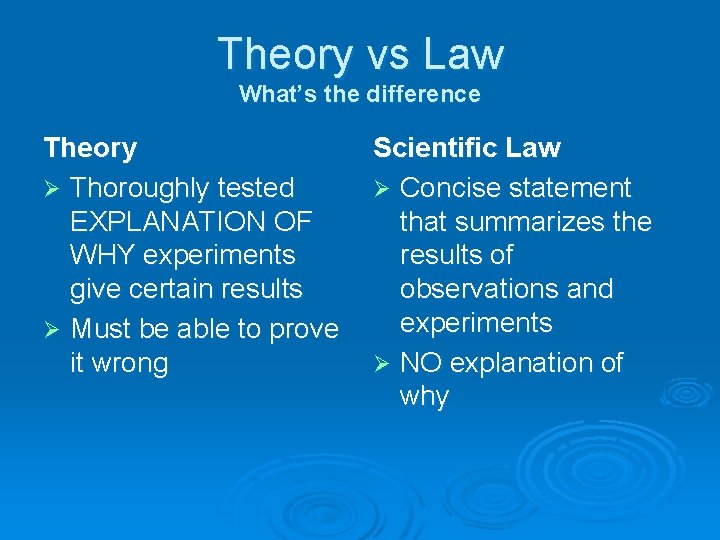
Theory vs Law What’s the difference Theory Ø Thoroughly tested EXPLANATION OF WHY experiments give certain results Ø Must be able to prove it wrong Scientific Law Ø Concise statement that summarizes the results of observations and experiments Ø NO explanation of why
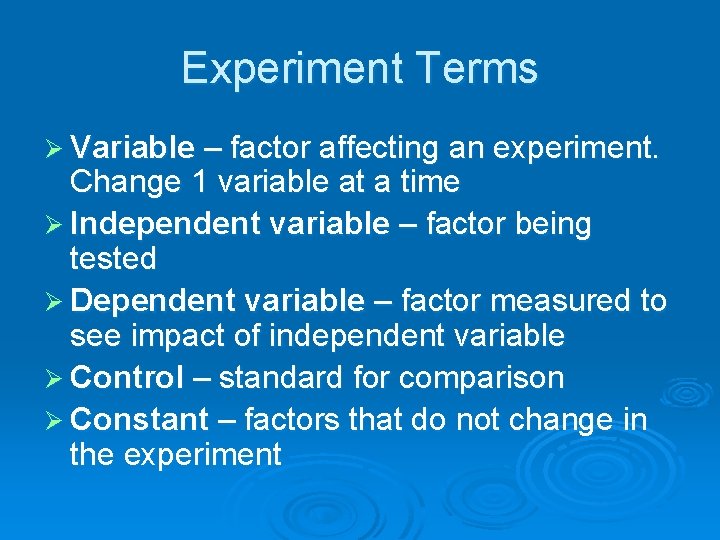
Experiment Terms Ø Variable – factor affecting an experiment. Change 1 variable at a time Ø Independent variable – factor being tested Ø Dependent variable – factor measured to see impact of independent variable Ø Control – standard for comparison Ø Constant – factors that do not change in the experiment
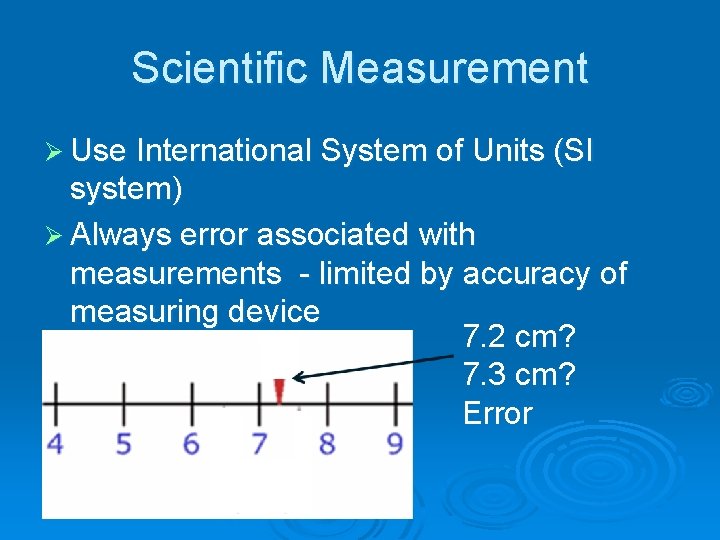
Scientific Measurement Ø Use International System of Units (SI system) Ø Always error associated with measurements - limited by accuracy of measuring device 7. 2 cm? 7. 3 cm? Error
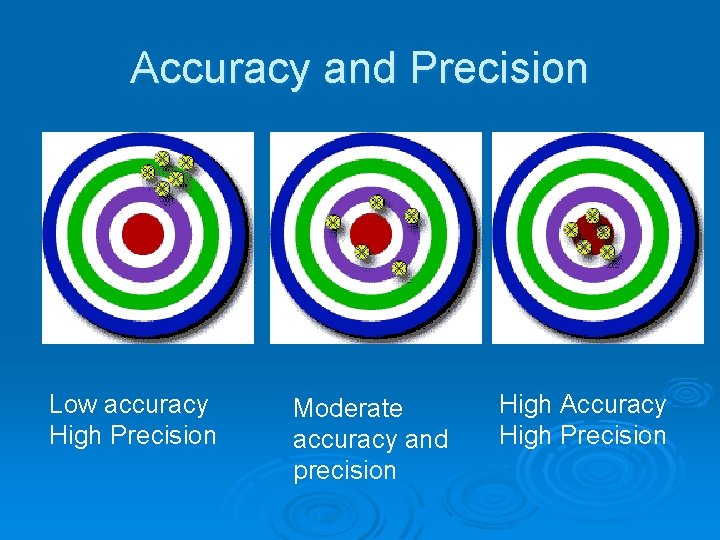
Scientific Measurement Ø Accuracy l How close a measurement is to the true value of the thing being measured Ø Precision l l Exactness of measurement Ability to repeat a measurement
Accuracy and Precision Low accuracy High Precision Moderate accuracy and precision High Accuracy High Precision
Peer Review Ø Experts review each other’s work before publication of results Ø Reduces personal bias Ø Research worth publishing? Ø Suggest improvements or point out flaws Ø Ethical standards Ø Way to police science
Nature of Science Ø Science is… l l l An attempt to explain natural phenomena Tentative Based on observations, evidence, arguments, & skepticism Involves creativity Part of social and cultural traditions Affected by social norms and history
Nature of Science Ø There is no one way to do science Ø Laws and theories play different roles in science Ø All cultures contribute to the body of scientific knowledge Ø Science involves accurate record keeping, peer review, & is repeatable Ø Science & technology impact each other