
Earth Science 7 The Layers of the Earth
- Slides: 11
Earth Science 7 The Layers of the Earth
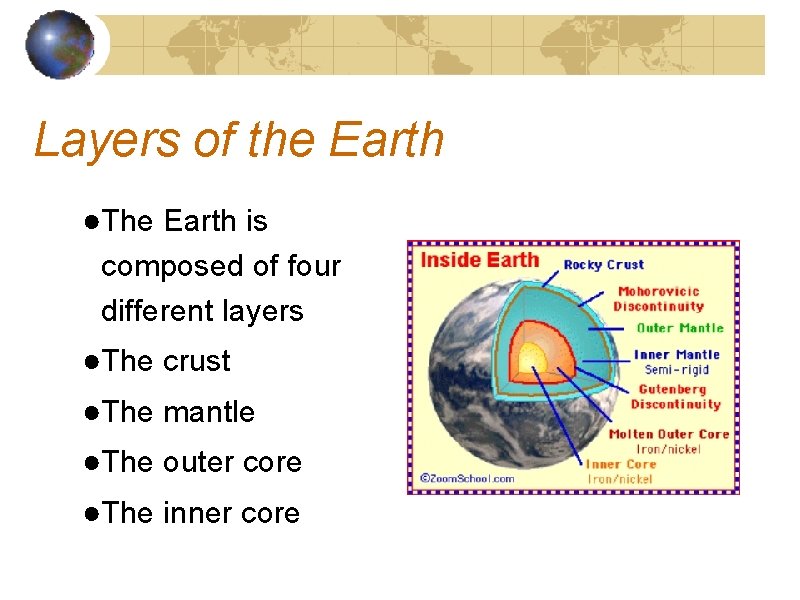
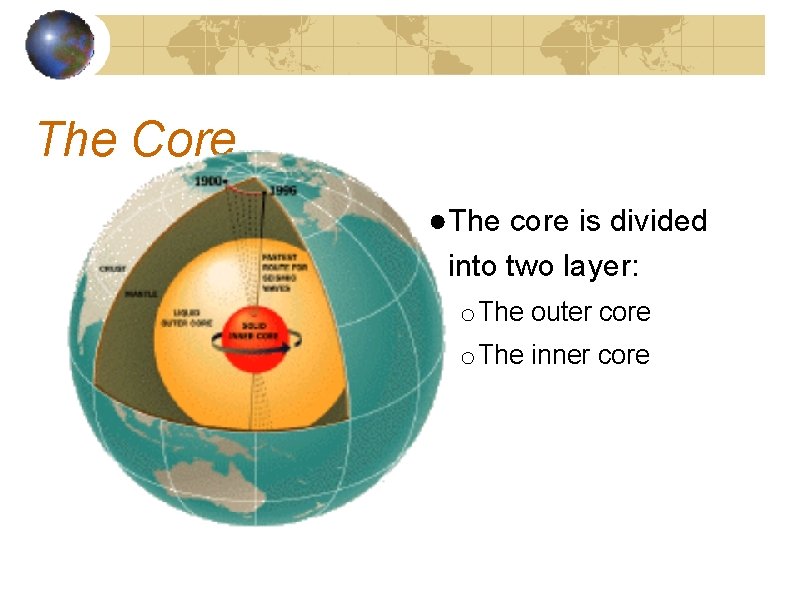
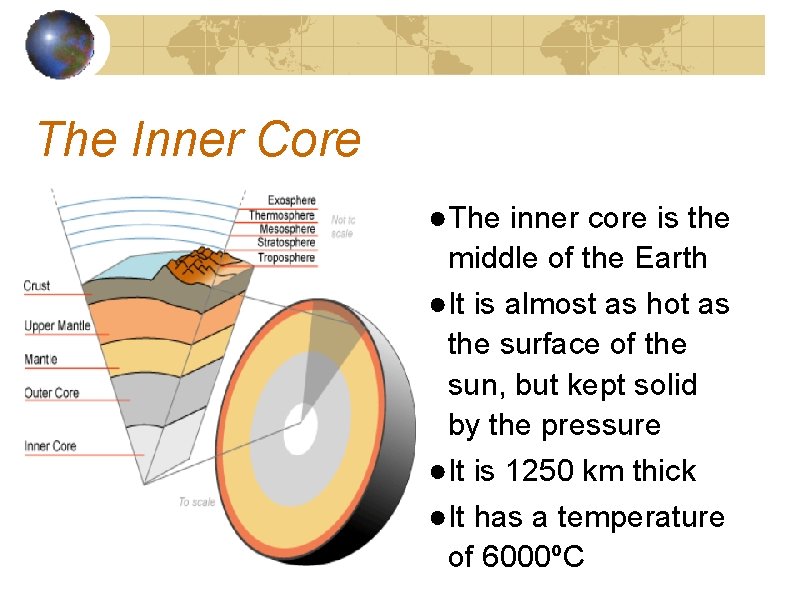
Layers of the Earth ●The Earth is composed of four different layers ●The crust ●The mantle ●The outer core ●The inner core
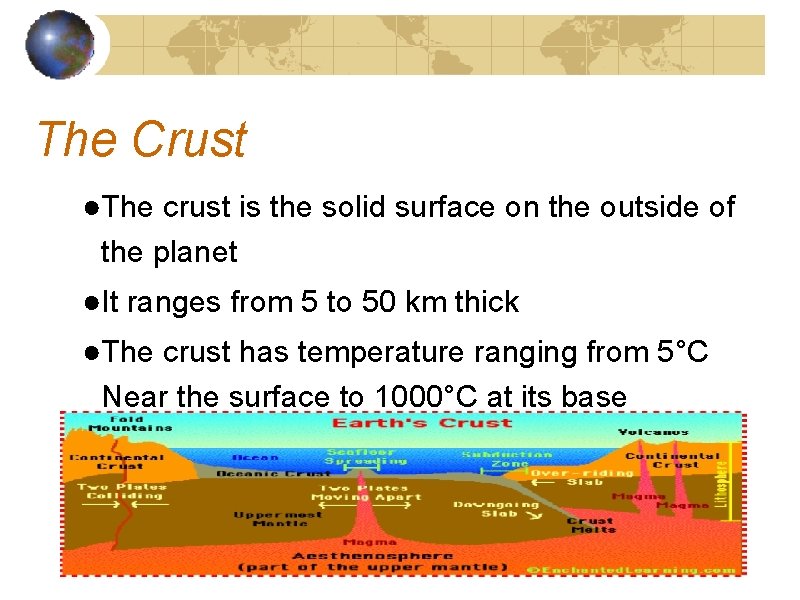
The Crust ●The crust is the solid surface on the outside of the planet ●It ranges from 5 to 50 km thick ●The crust has temperature ranging from 5°C Near the surface to 1000°C at its base
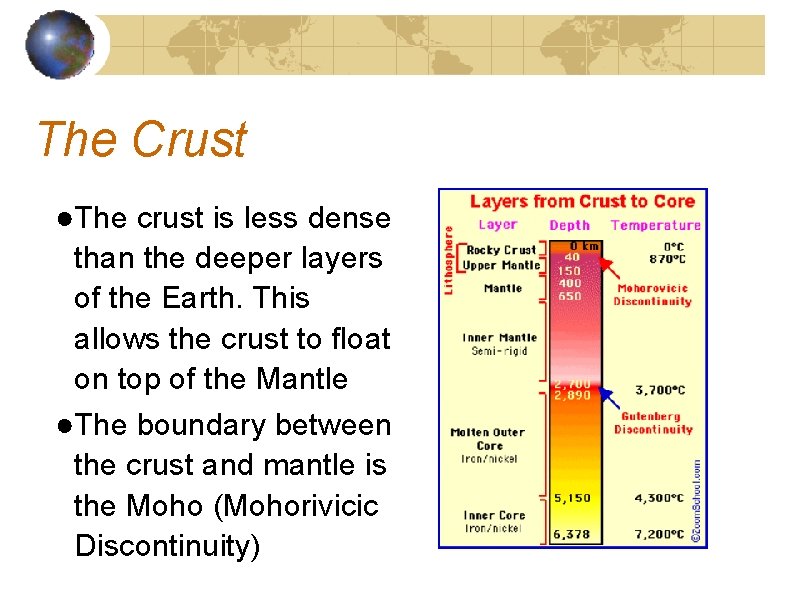
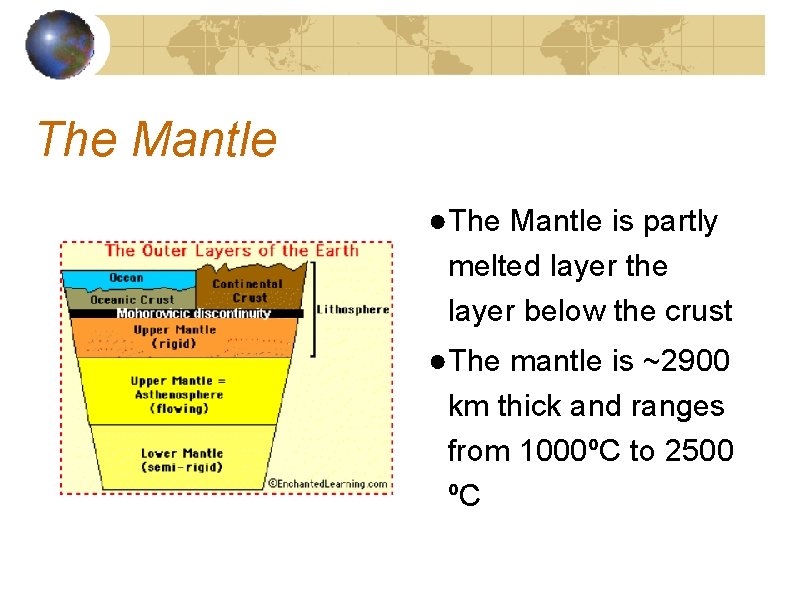
The Crust ●The crust is less dense than the deeper layers of the Earth. This allows the crust to float on top of the Mantle ●The boundary between the crust and mantle is the Moho (Mohorivicic Discontinuity)
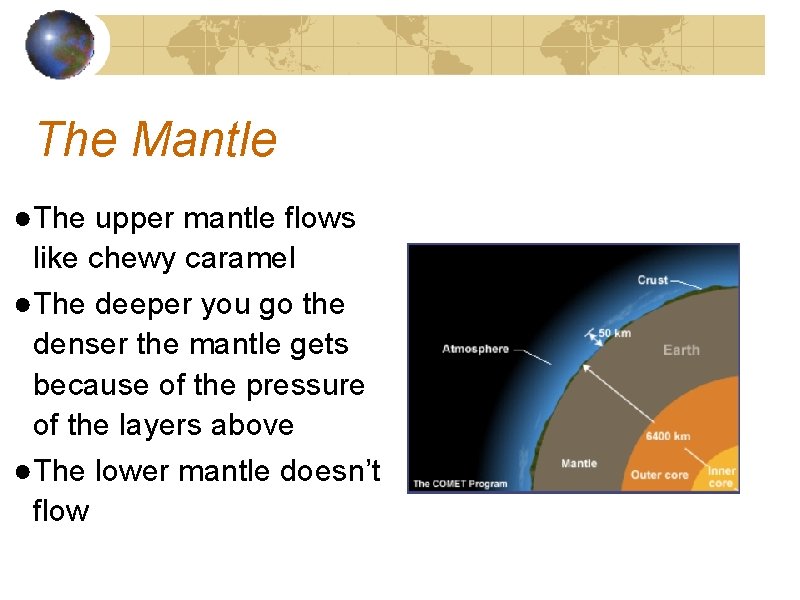
The Mantle ●The Mantle is partly melted layer the layer below the crust ●The mantle is ~2900 km thick and ranges from 1000ºC to 2500 ºC
The Mantle ●The upper mantle flows like chewy caramel ●The deeper you go the denser the mantle gets because of the pressure of the layers above ●The lower mantle doesn’t flow
The Core ●The core is divided into two layer: o The outer core o The inner core
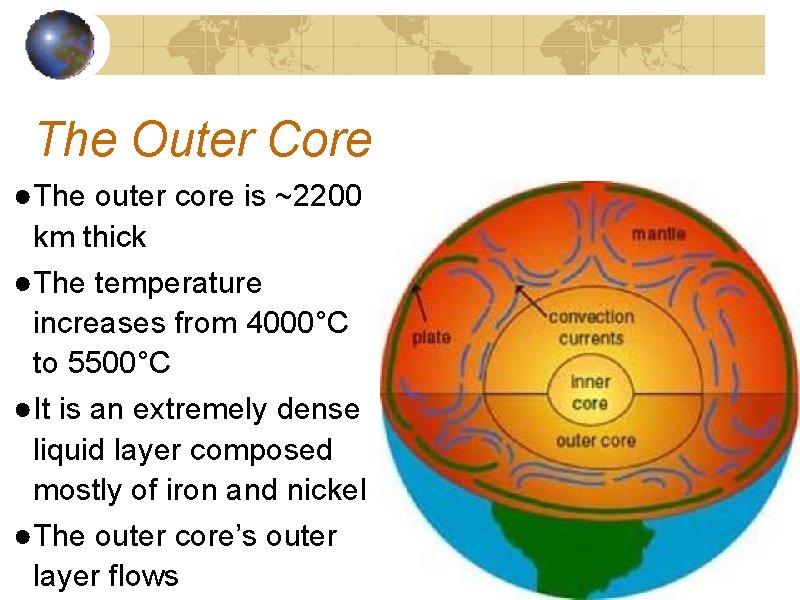
The Outer Core ●The outer core is ~2200 km thick ●The temperature increases from 4000°C to 5500°C ●It is an extremely dense liquid layer composed mostly of iron and nickel ●The outer core’s outer layer flows
The Inner Core ●The inner core is the middle of the Earth ●It is almost as hot as the surface of the sun, but kept solid by the pressure ●It is 1250 km thick ●It has a temperature of 6000ºC
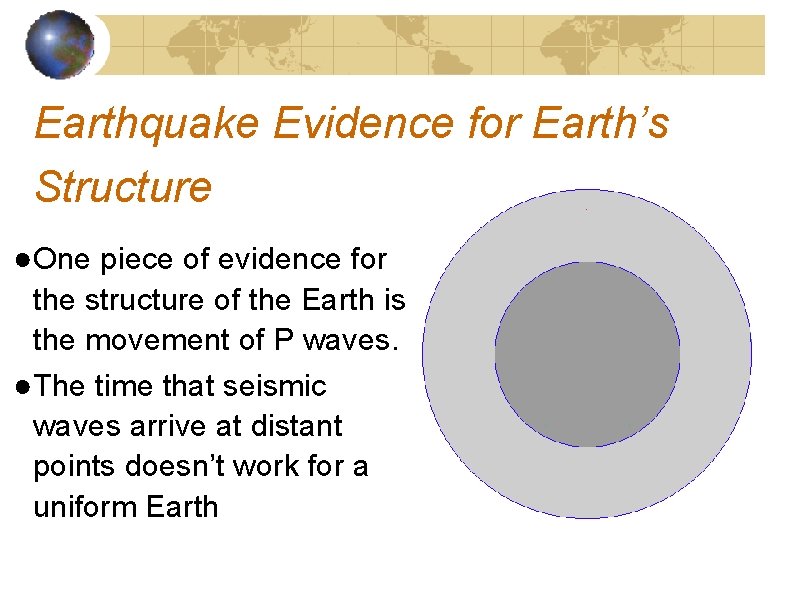
Earthquake Evidence for Earth’s Structure ●One piece of evidence for the structure of the Earth is the movement of P waves. ●The time that seismic waves arrive at distant points doesn’t work for a uniform Earth
Review of the Earth’s Layers ●The Earth has four layers: o. The crust o. The mantle o. The outer core o. The inner core ●Each layer has a different temperature, thickness, and composition