
Earth Notes Chapter 12 Rotation vs Revolution Rotation

- Slides: 14
Earth Notes Chapter 12
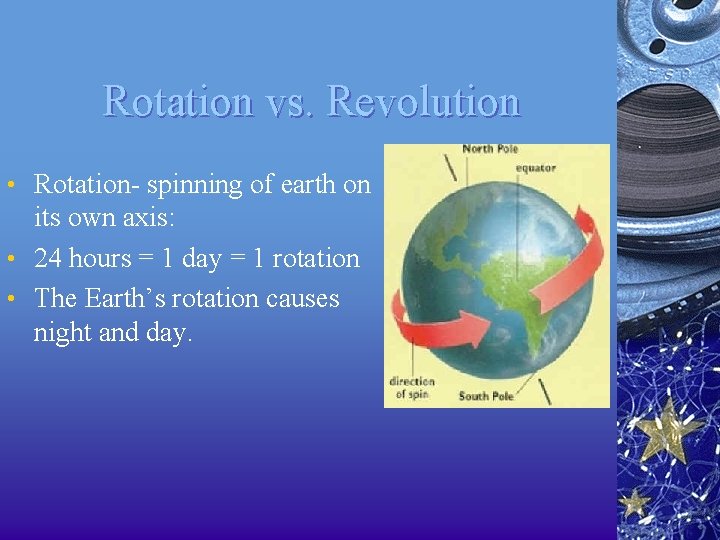
Rotation vs. Revolution • Rotation- spinning of earth on its own axis: • 24 hours = 1 day = 1 rotation • The Earth’s rotation causes night and day.
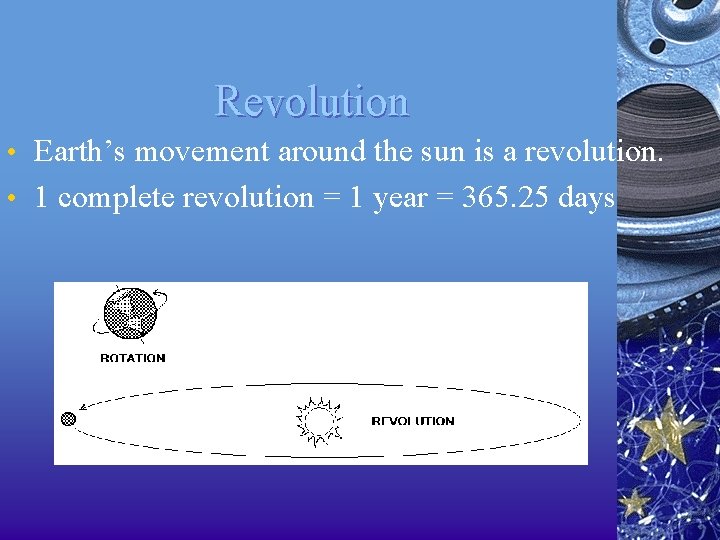
Revolution • Earth’s movement around the sun is a revolution. • 1 complete revolution = 1 year = 365. 25 days
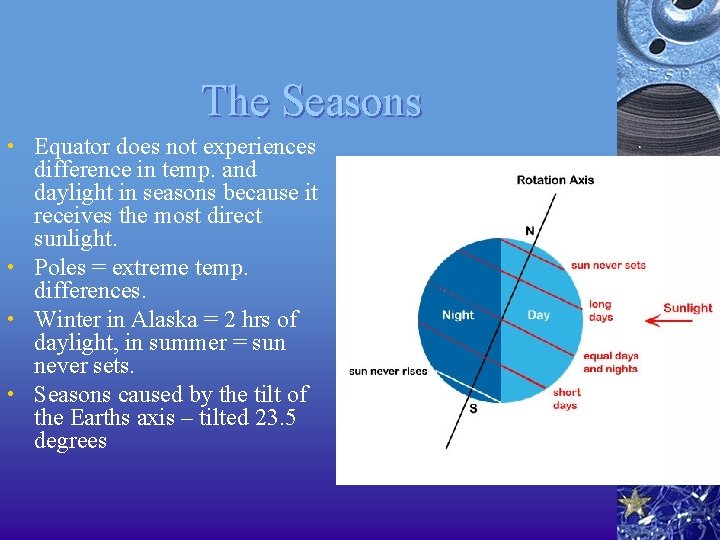
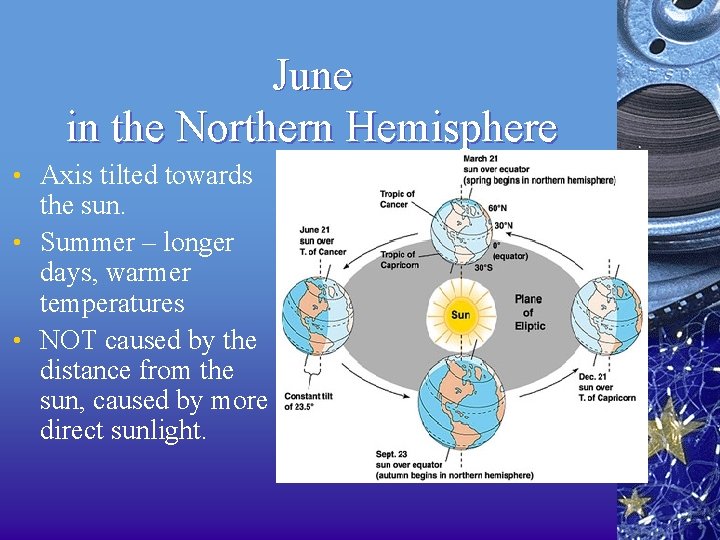
The Seasons • Equator does not experiences difference in temp. and daylight in seasons because it receives the most direct sunlight. • Poles = extreme temp. differences. • Winter in Alaska = 2 hrs of daylight, in summer = sun never sets. • Seasons caused by the tilt of the Earths axis – tilted 23. 5 degrees
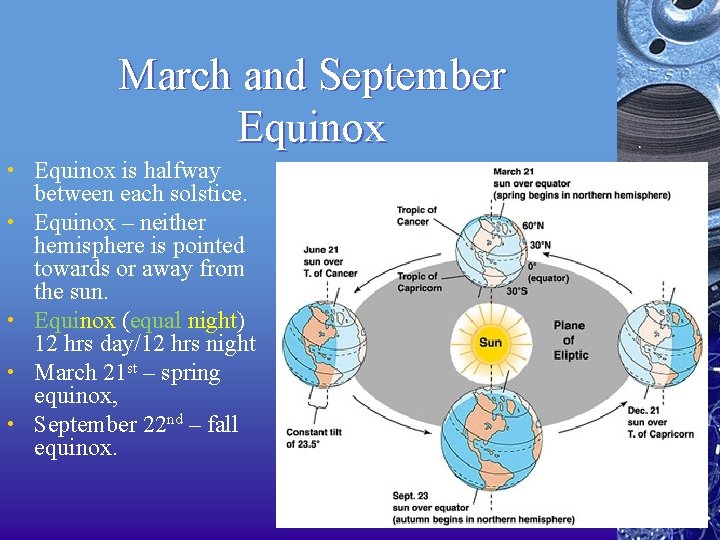
June in the Northern Hemisphere • Axis tilted towards the sun. • Summer – longer days, warmer temperatures • NOT caused by the distance from the sun, caused by more direct sunlight.
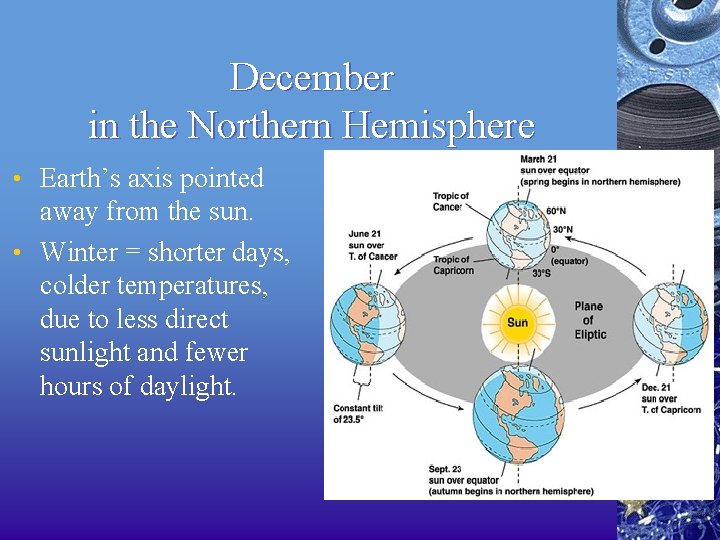
December in the Northern Hemisphere • Earth’s axis pointed away from the sun. • Winter = shorter days, colder temperatures, due to less direct sunlight and fewer hours of daylight.
Misconception • Seasonal differences are NOT caused by changes in the distance from the sun. They are caused by changes in the amount of direct sunlight due to the 23. 3* tilt of Earth’s axis.
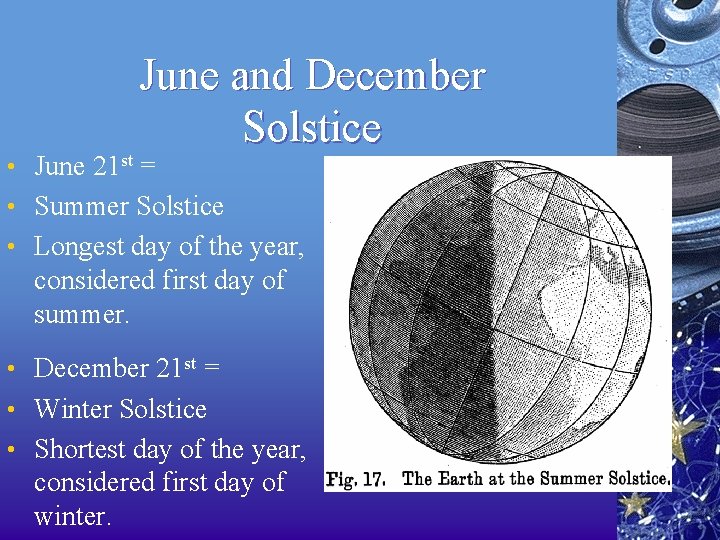
June and December Solstice • June 21 st = • Summer Solstice • Longest day of the year, considered first day of summer. • December 21 st = • Winter Solstice • Shortest day of the year, considered first day of winter.
March and September Equinox • Equinox is halfway • • between each solstice. Equinox – neither hemisphere is pointed towards or away from the sun. Equinox (equal night) 12 hrs day/12 hrs night March 21 st – spring equinox, September 22 nd – fall equinox.
BRAINPOP
Gravity and Motion • Recall that gravity is a force that attracts all objects towards each other. • Universal Law of Gravitation – every object in the universe attracts every other object.
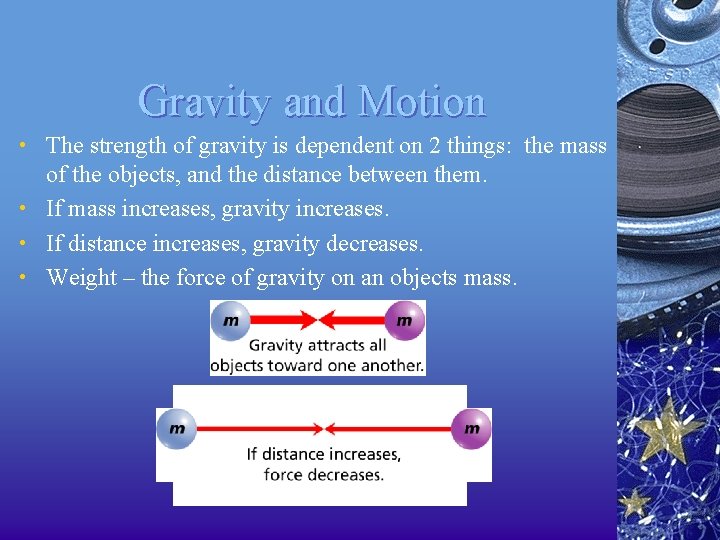
Gravity and Motion • The strength of gravity is dependent on 2 things: the mass of the objects, and the distance between them. • If mass increases, gravity increases. • If distance increases, gravity decreases. • Weight – the force of gravity on an objects mass.
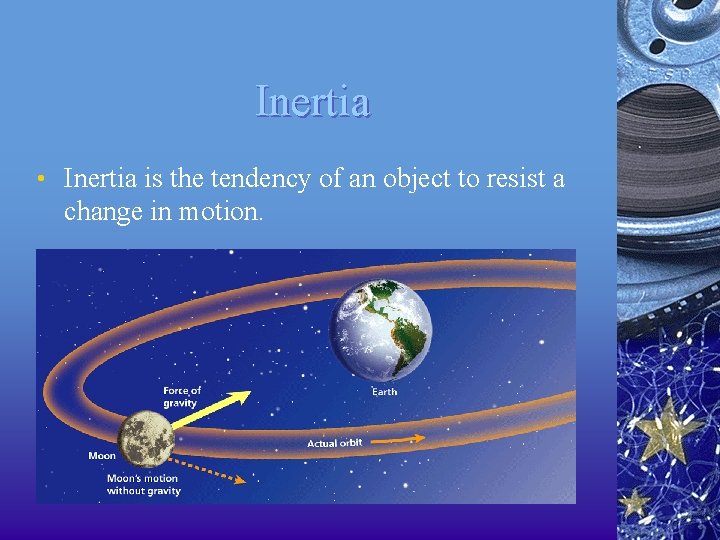
Inertia and Orbital Motion • Two factors keep Earth and the moon in their orbits – inertia and gravity. • Earth’s gravity pulls the moon toward it, preventing the moon from traveling in a straight line. The moon keeps moving ahead because of its inertia.
Inertia • Inertia is the tendency of an object to resist a change in motion.