
Earth Materials Silicate Minerals Igneous Rocks TODAY Rocks
- Slides: 37
Earth Materials: Silicate Minerals & Igneous Rocks
TODAY!!!!: Rocks: ØCommon rock-forming “silicate” minerals ØRocks & the rock cycle ØIgneous Rocks
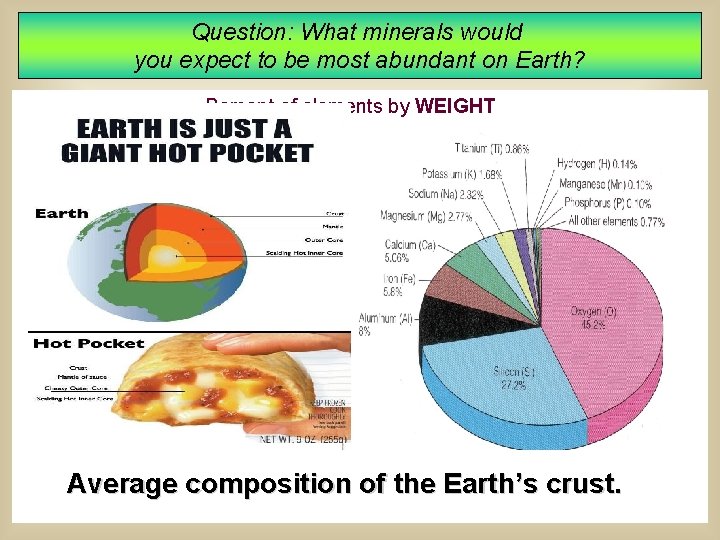
Question: What minerals would you expect to be most abundant on Earth? Percent of elements by WEIGHT Average composition of the Earth’s crust.
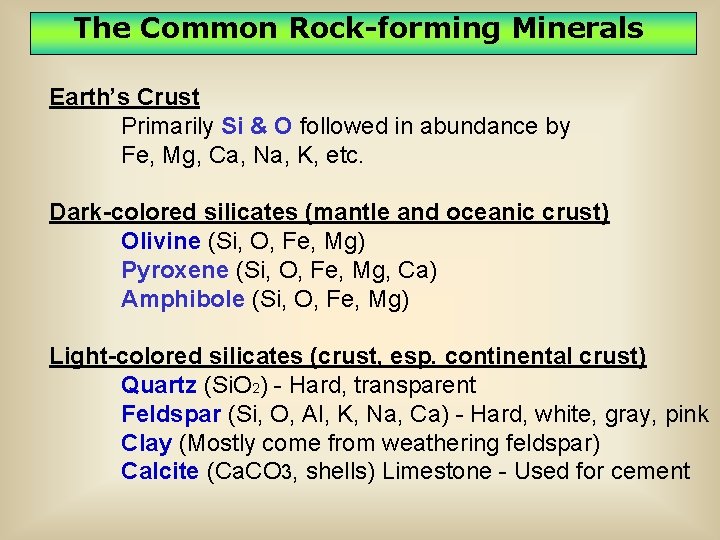
The Common Rock-forming Minerals Earth’s Crust Primarily Si & O followed in abundance by Fe, Mg, Ca, Na, K, etc. Dark-colored silicates (mantle and oceanic crust) Olivine (Si, O, Fe, Mg) Pyroxene (Si, O, Fe, Mg, Ca) Amphibole (Si, O, Fe, Mg) Light-colored silicates (crust, esp. continental crust) Quartz (Si. O 2) - Hard, transparent Feldspar (Si, O, Al, K, Na, Ca) - Hard, white, gray, pink Clay (Mostly come from weathering feldspar) Calcite (Ca. CO 3, shells) Limestone - Used for cement
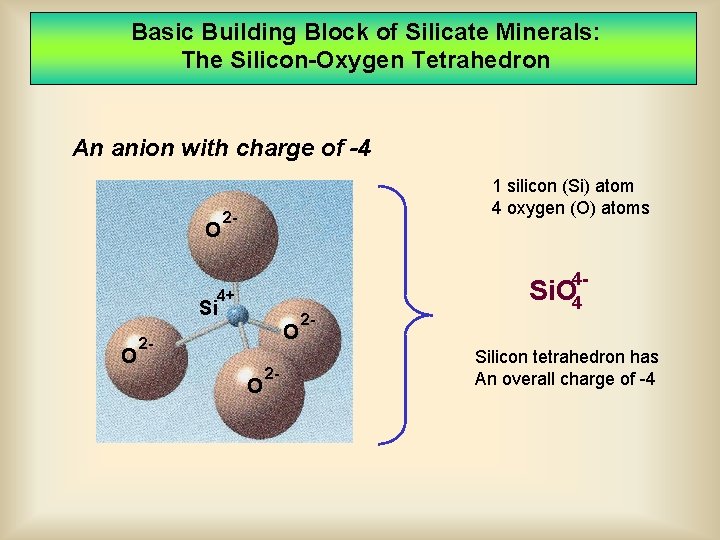
Basic Building Block of Silicate Minerals: The Silicon-Oxygen Tetrahedron An anion with charge of -4 O 1 silicon (Si) atom 4 oxygen (O) atoms 2 - 4 - 4+ Si O O 2 - 2 - Si. O 4 Silicon tetrahedron has An overall charge of -4
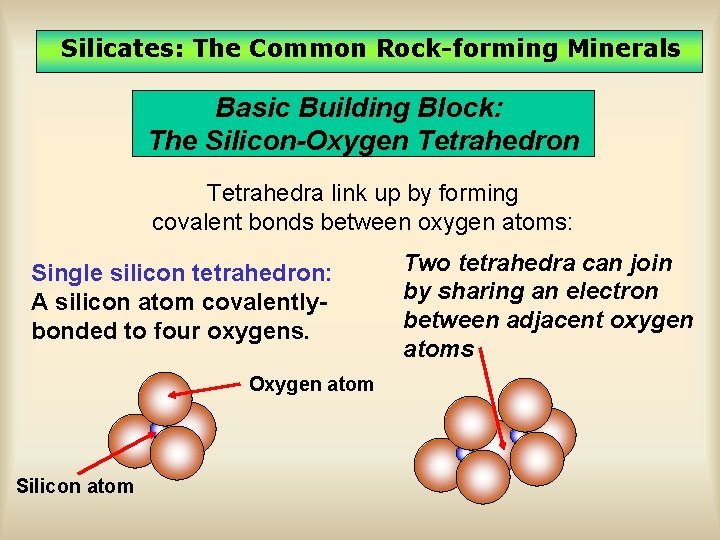
Silicates: The Common Rock-forming Minerals Basic Building Block: The Silicon-Oxygen Tetrahedron Tetrahedra link up by forming covalent bonds between oxygen atoms: Single silicon tetrahedron: A silicon atom covalentlybonded to four oxygens. Oxygen atom Silicon atom Two tetrahedra can join by sharing an electron between adjacent oxygen atoms
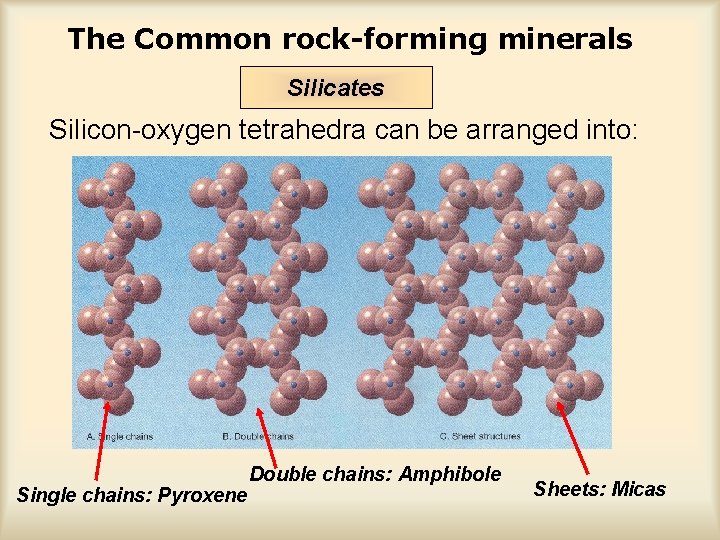
The Common rock-forming minerals Silicates Silicon-oxygen tetrahedra can be arranged into: Single chains: Pyroxene Double chains: Amphibole Sheets: Micas
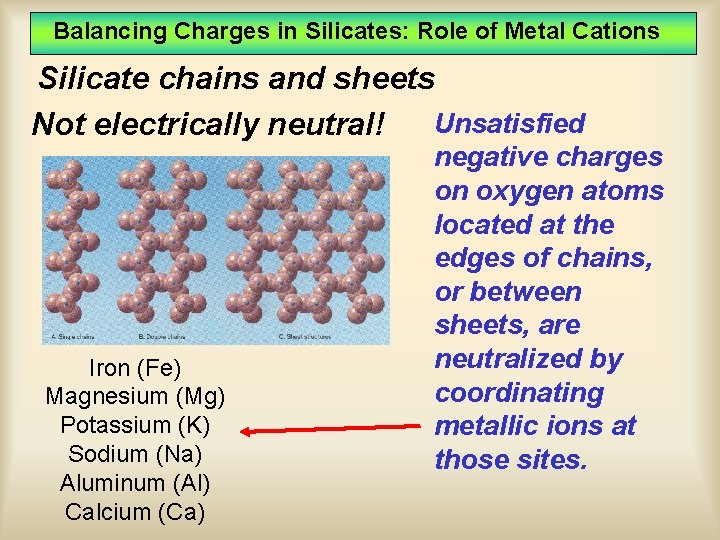
Balancing Charges in Silicates: Role of Metal Cations Silicate chains and sheets Unsatisfied Not electrically neutral! Iron (Fe) Magnesium (Mg) Potassium (K) Sodium (Na) Aluminum (Al) Calcium (Ca) negative charges on oxygen atoms located at the edges of chains, or between sheets, are neutralized by coordinating metallic ions at those sites.
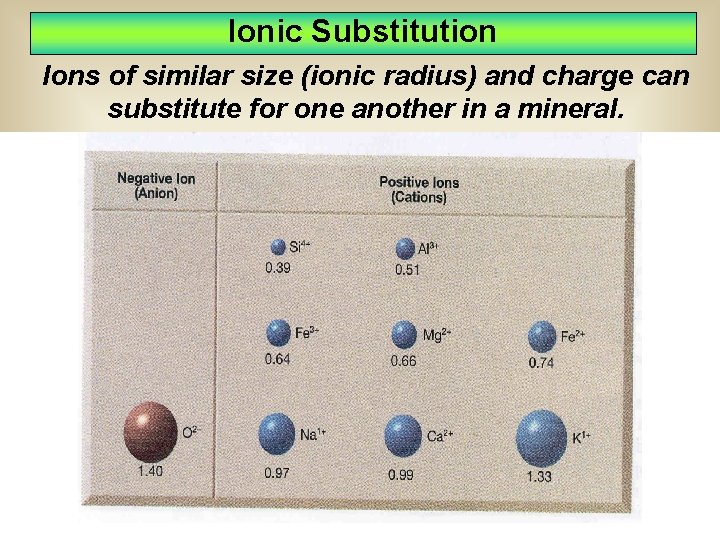
Ionic Substitution Ions of similar size (ionic radius) and charge can substitute for one another in a mineral.
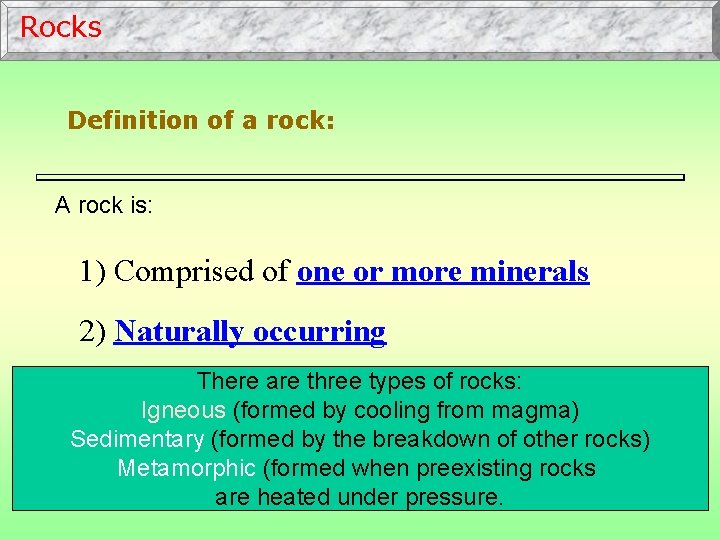
Rocks Definition of a rock: A rock is: 1) Comprised of one or more minerals 2) Naturally occurring There are three types of rocks: Igneous (formed by cooling from magma) Sedimentary (formed by the breakdown of other rocks) Metamorphic (formed when preexisting rocks are heated under pressure.
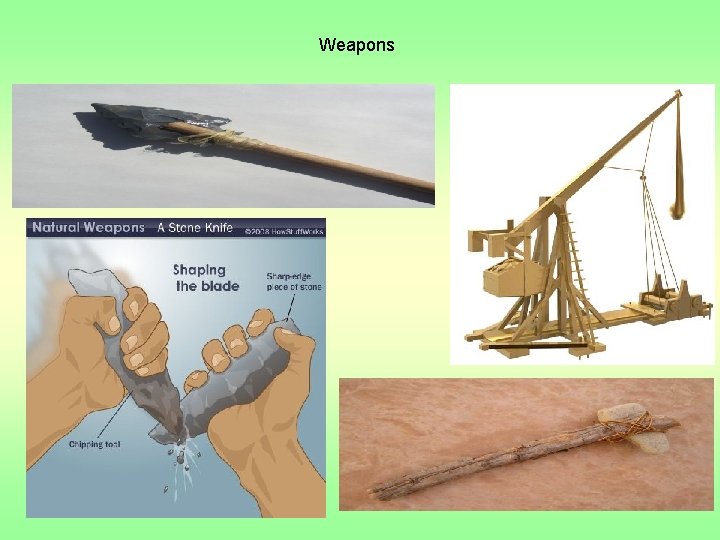
Weapons
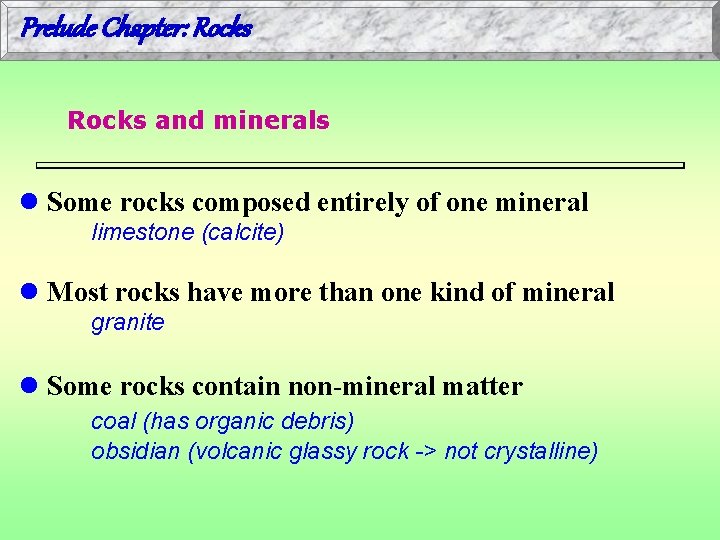
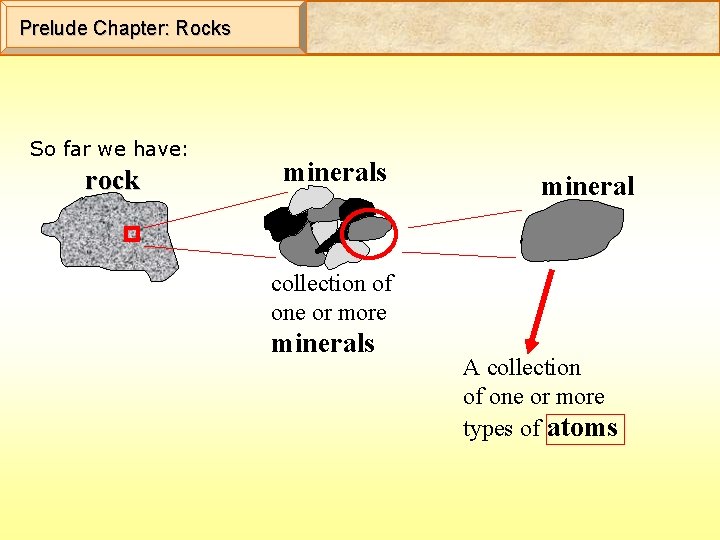
Prelude Chapter: Rocks and minerals l Some rocks composed entirely of one mineral limestone (calcite) l Most rocks have more than one kind of mineral granite l Some rocks contain non-mineral matter coal (has organic debris) obsidian (volcanic glassy rock -> not crystalline)
Prelude Chapter: Rocks rock
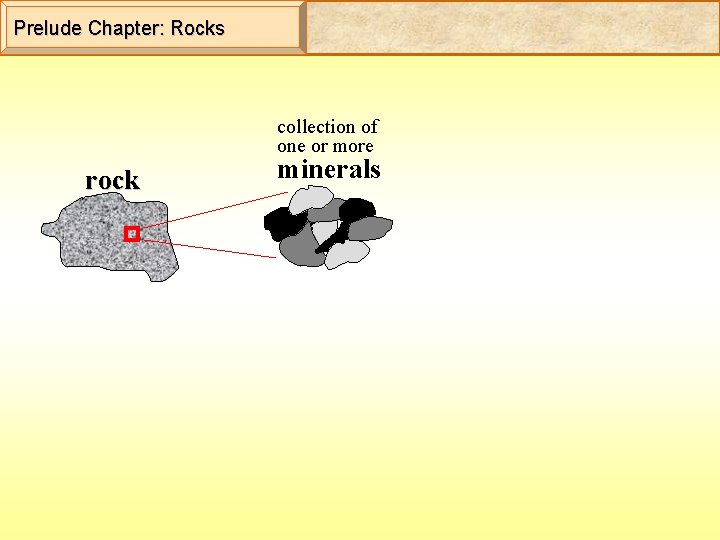
Prelude Chapter: Rocks collection of one or more rock minerals
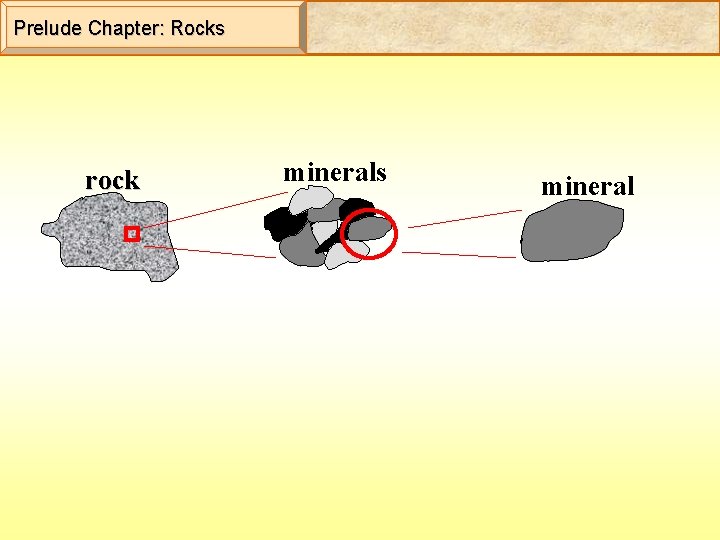
Prelude Chapter: Rocks rock minerals mineral
Prelude Chapter: Rocks So far we have: rock minerals mineral collection of one or more minerals A collection of one or more types of atoms
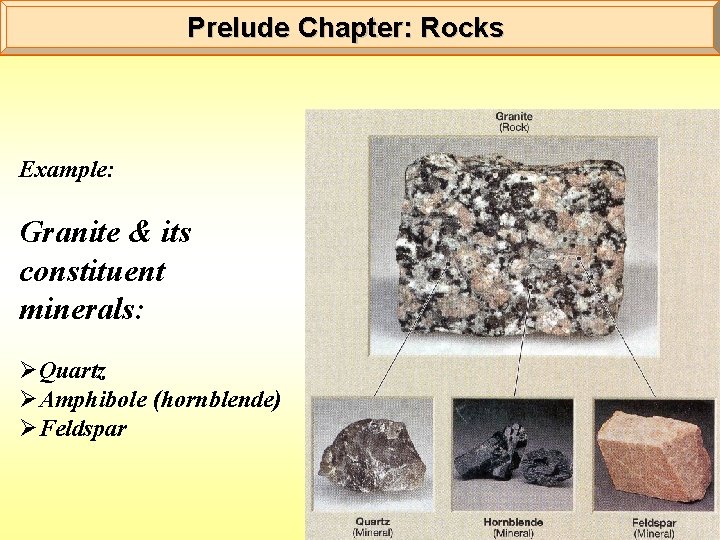
Prelude Chapter: Rocks Example: Granite & its constituent minerals: ØQuartz ØAmphibole (hornblende) ØFeldspar
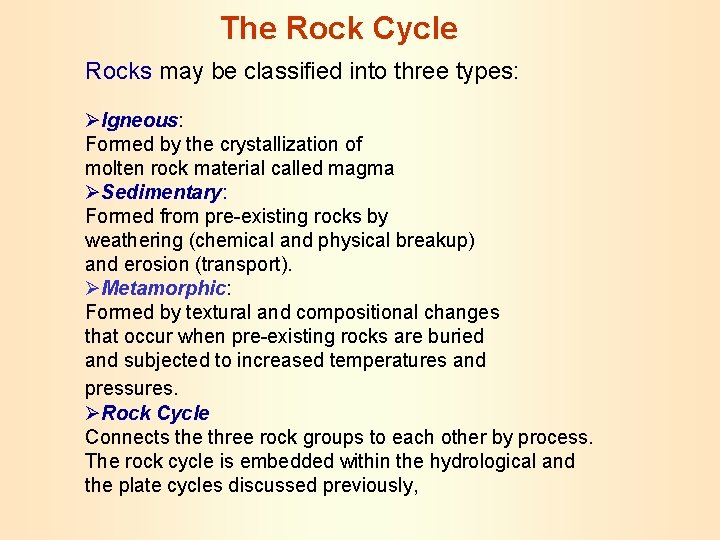
The Rock Cycle Rocks may be classified into three types: ØIgneous: Formed by the crystallization of molten rock material called magma ØSedimentary: Formed from pre-existing rocks by weathering (chemical and physical breakup) and erosion (transport). ØMetamorphic: Formed by textural and compositional changes that occur when pre-existing rocks are buried and subjected to increased temperatures and pressures. ØRock Cycle Connects the three rock groups to each other by process. The rock cycle is embedded within the hydrological and the plate cycles discussed previously,
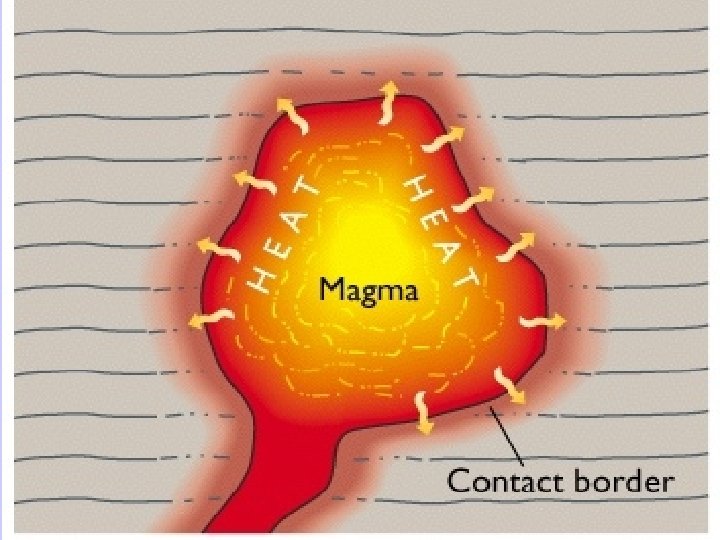
Focus: Interlude A & Chapter 6. Igneous Rocks Molten rock l In the Earth is called magma. Magma is buoyant, rises to surface, & sometimes breaks through as volcanic eruptions. l When magma reaches the surface it is called lava.
Igneous Rocks An igneous rock is formed when magma or lava cools and solidifies.
Igneous rocks Why care? u Igneous rocks make up bulk of Earth’s crust. u Earth’s mantle is composed entirely of igneous rock! u Igneous rocks are important economically as building stones and as host rocks for a variety of mineral (ore) deposits. u Volcanic activity is a well-known geological hazard, and the associated igneous rocks hold the secrets for understanding both the nature of past volcanic eruptions and the potential for future eruption hazards.
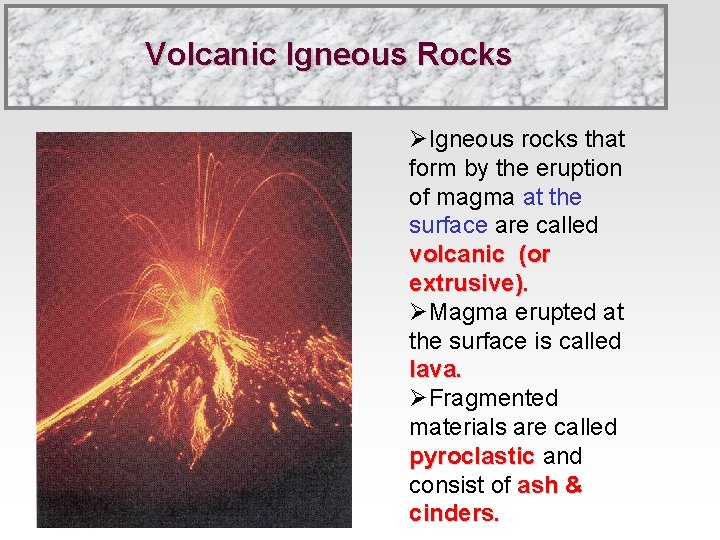
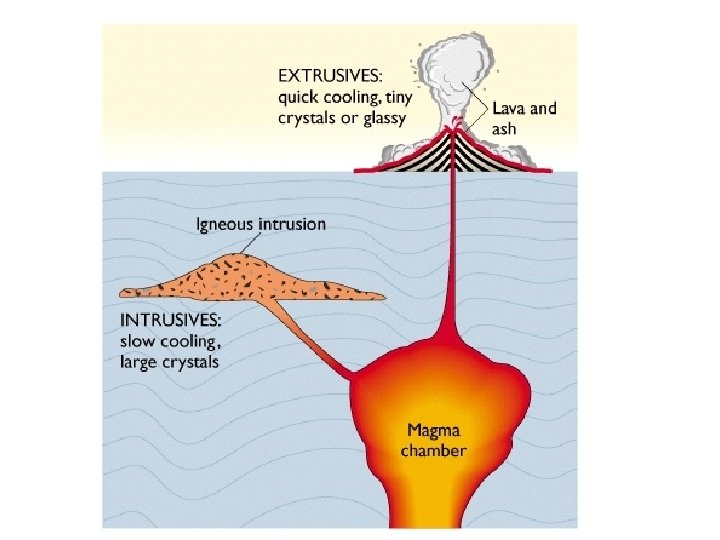
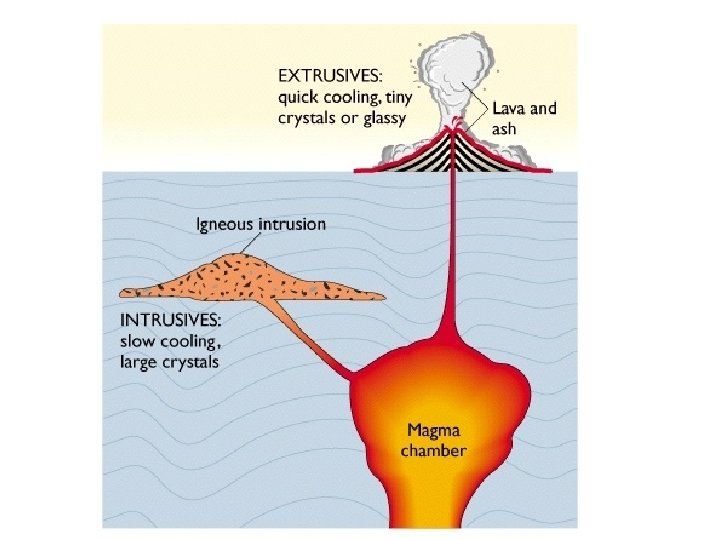
Volcanic Igneous Rocks ØIgneous rocks that form by the eruption of magma at the surface are called volcanic (or extrusive). ØMagma erupted at the surface is called lava. ØFragmented materials are called pyroclastic and consist of ash & cinders.
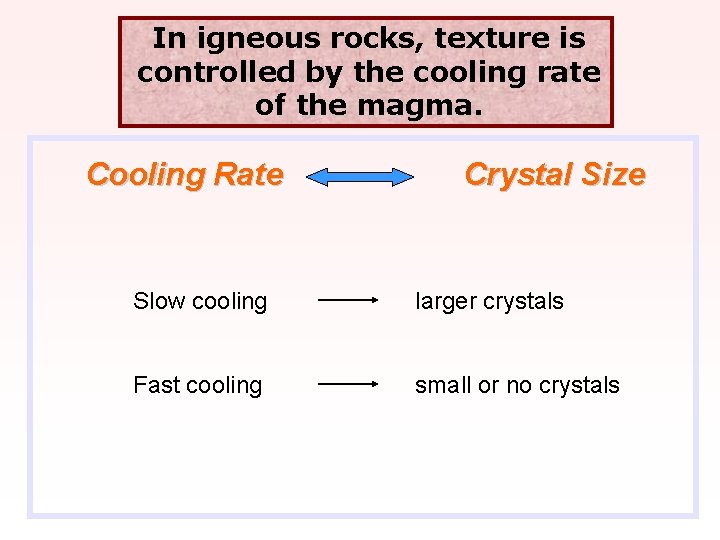
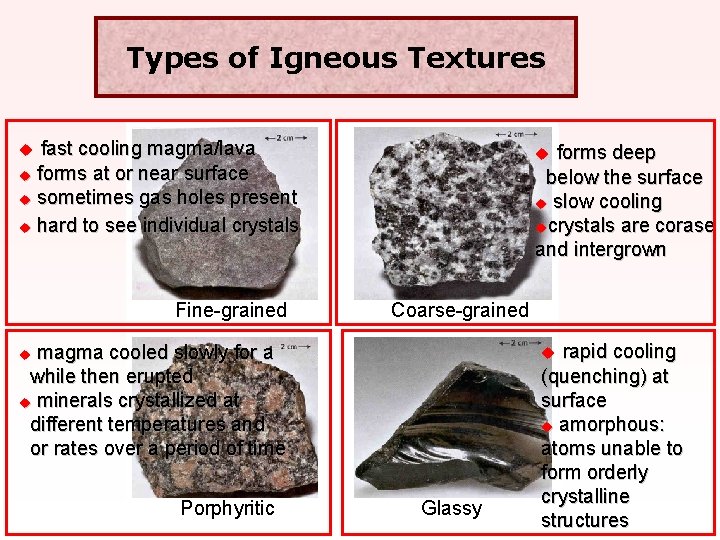
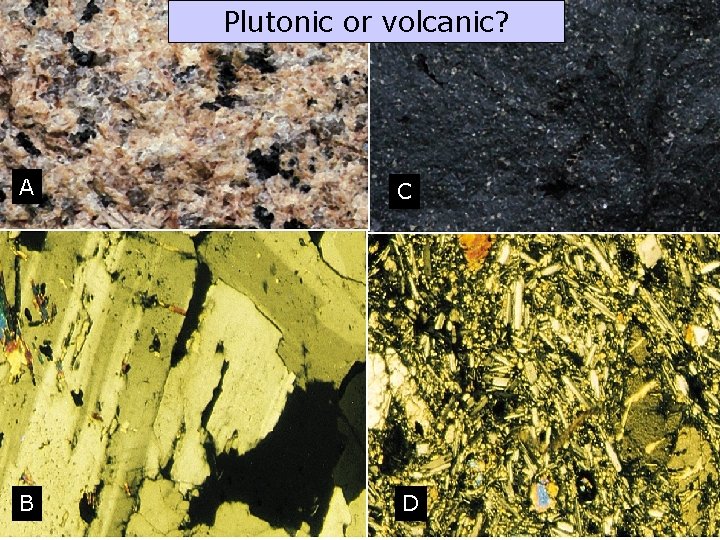
In igneous rocks, texture is controlled by the cooling rate of the magma. Cooling Rate Crystal Size Slow cooling larger crystals Fast cooling small or no crystals
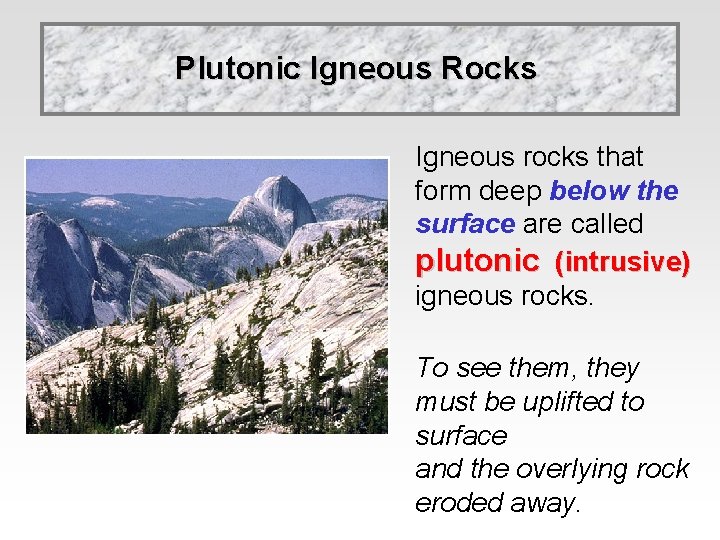
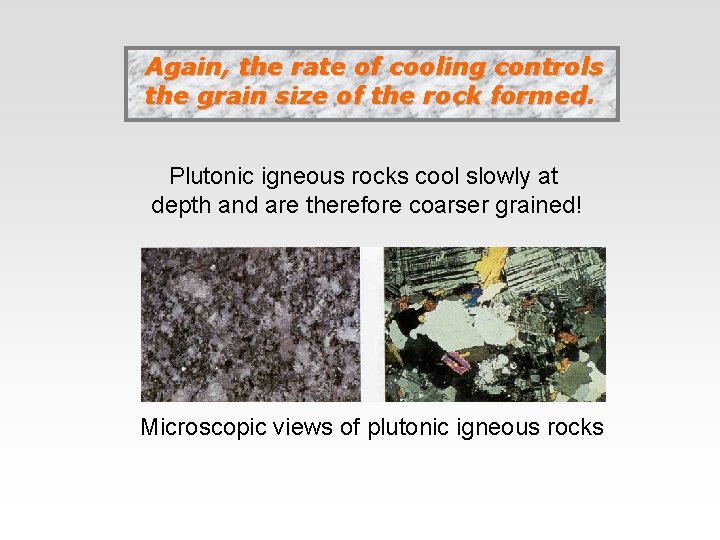
Plutonic Igneous Rocks Igneous rocks that form deep below the surface are called plutonic (intrusive) igneous rocks. To see them, they must be uplifted to surface and the overlying rock eroded away.
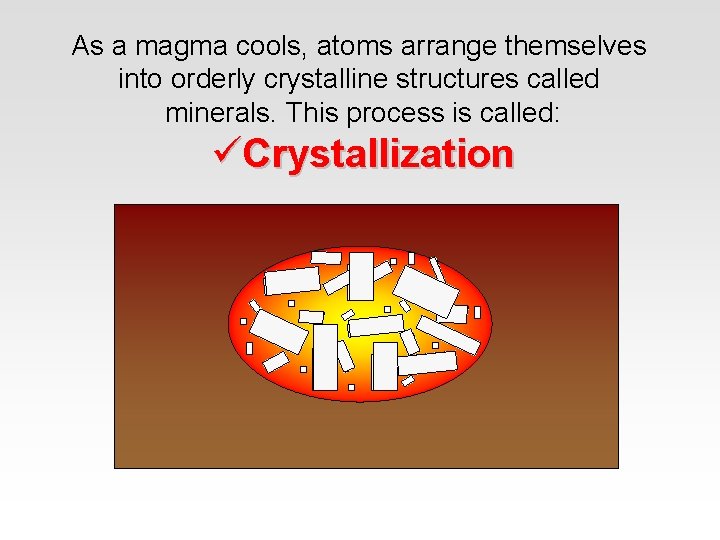
As a magma cools, atoms arrange themselves into orderly crystalline structures called minerals. This process is called: üCrystallization
Again, the rate of cooling controls the grain size of the rock formed Plutonic igneous rocks cool slowly at depth and are therefore coarser grained! Microscopic views of plutonic igneous rocks
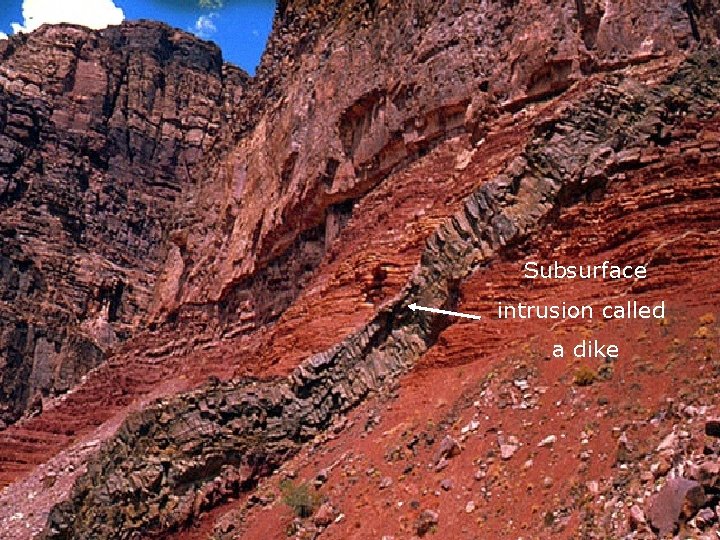
Subsurface intrusion called a dike
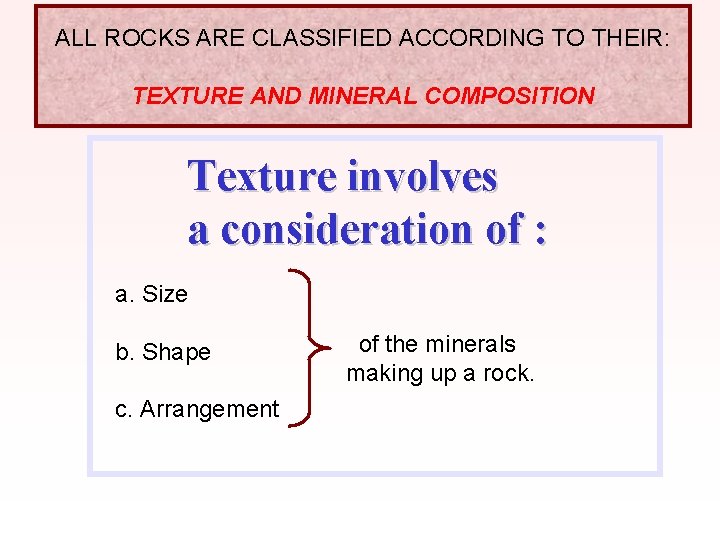
ALL ROCKS ARE CLASSIFIED ACCORDING TO THEIR: TEXTURE AND MINERAL COMPOSITION Texture involves a consideration of : a. Size b. Shape c. Arrangement of the minerals making up a rock.
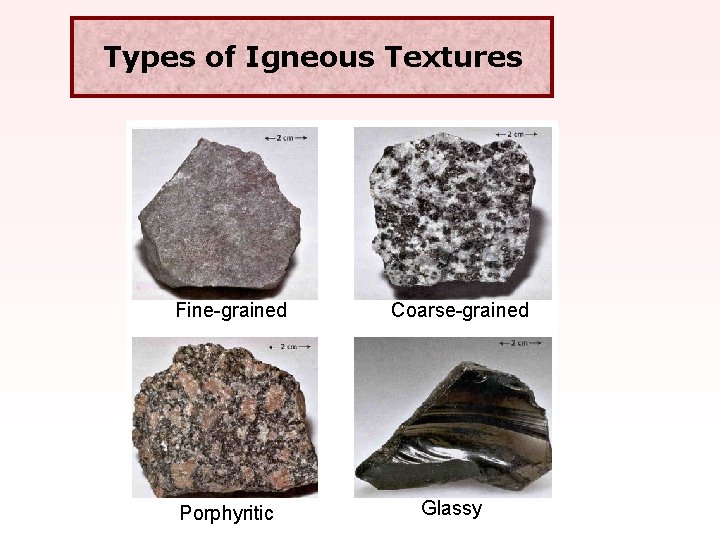
Types of Igneous Textures Fine-grained Porphyritic Coarse-grained Glassy
Types of Igneous Textures fast cooling magma/lava u forms at or near surface u sometimes gas holes present u hard to see individual crystals forms deep below the surface u slow cooling ucrystals are corase and intergrown u Fine-grained u Coarse-grained magma cooled slowly for a while then erupted u minerals crystallized at different temperatures and or rates over a period of time Porphyritic rapid cooling (quenching) at surface u amorphous: atoms unable to form orderly crystalline structures u u Glassy
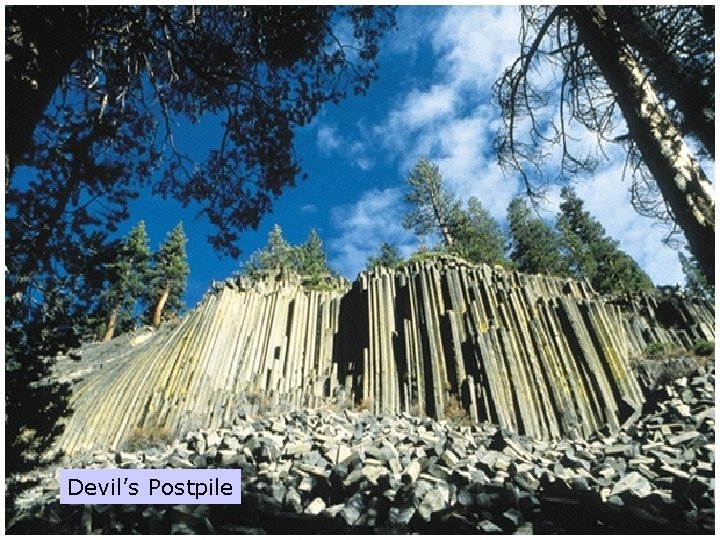
Devil’s Postpile
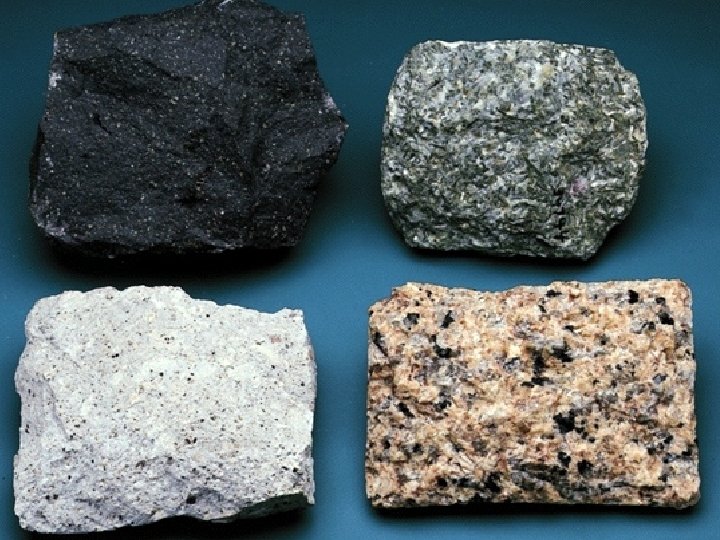
Plutonic or volcanic? A C B D