
Earth Diameter 12756 km Rotation Period 24 hours



- Slides: 22
Earth Diameter 12756 km Rotation Period 24 hours Orbital Period Distance from Sun 365. 25 days 150 x 106 km Orbit Eccentricity/Tilt 0. 02 / 23. 3 degrees Temperature 14 C Atmosphere N 2, O 2, Ar, CO 2 Gravity 1 g Moons 1
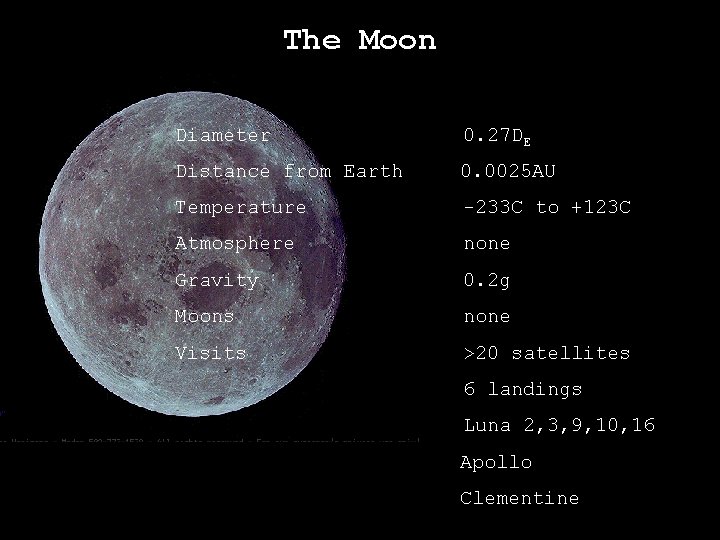
The Moon Diameter 0. 27 DE Distance from Earth 0. 0025 AU Temperature -233 C to +123 C Atmosphere none Gravity 0. 2 g Moons none Visits >20 satellites 6 landings Luna 2, 3, 9, 10, 16 Apollo Clementine
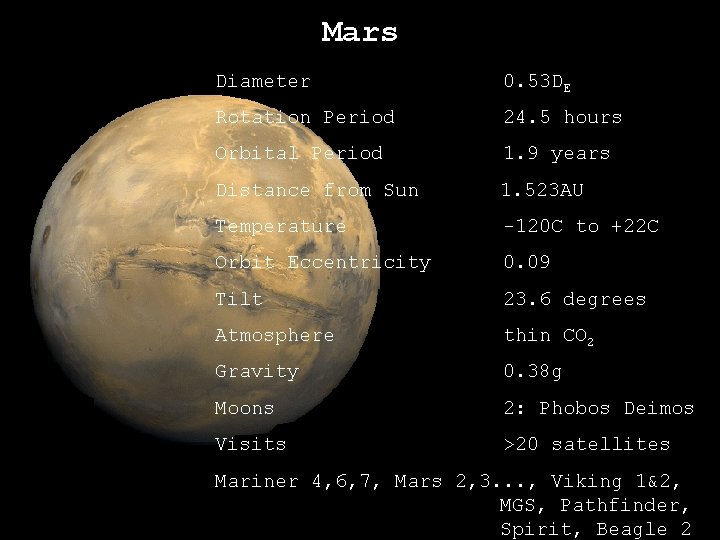
Mars Diameter 0. 53 DE Rotation Period 24. 5 hours Orbital Period 1. 9 years Distance from Sun 1. 523 AU Temperature -120 C to +22 C Orbit Eccentricity 0. 09 Tilt 23. 6 degrees Atmosphere thin CO 2 Gravity 0. 38 g Moons 2: Phobos Deimos Visits >20 satellites Mariner 4, 6, 7, Mars 2, 3. . . , Viking 1&2, MGS, Pathfinder, Spirit, Beagle 2
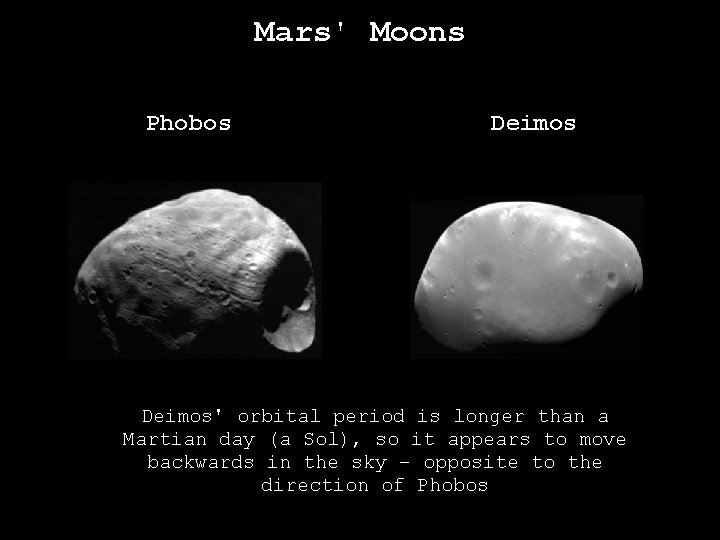
Mars' Moons Phobos Deimos' orbital period is longer than a Martian day (a Sol), so it appears to move backwards in the sky – opposite to the direction of Phobos
Mars and Martians Astronomer Percival Lowell at the turn of the 20 th C. observed “canals” on Mars, which he suggested were created in a last ditch attempt by Martians to prevent Mars from drying out and save their civilisation. The canals were merely a figment of his imagination. But Mars is dry, and we are still looking for Martians and the water needed to sustain them. . Mars is a small world, so cooled down more quickly and is now geologically dead.
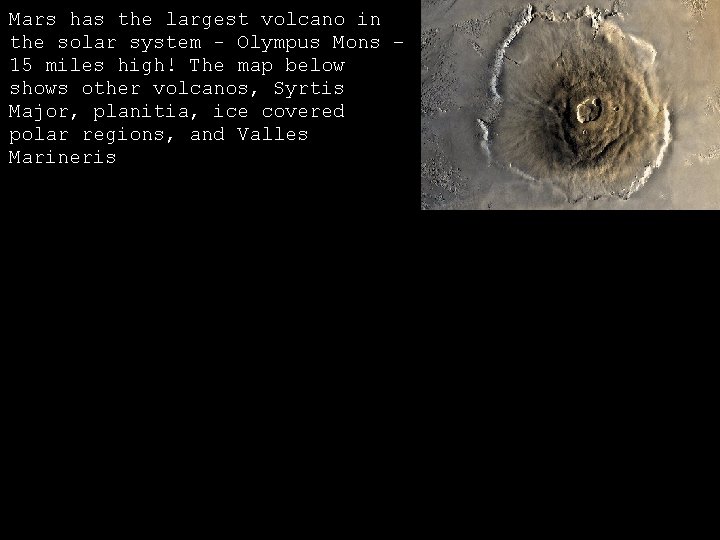
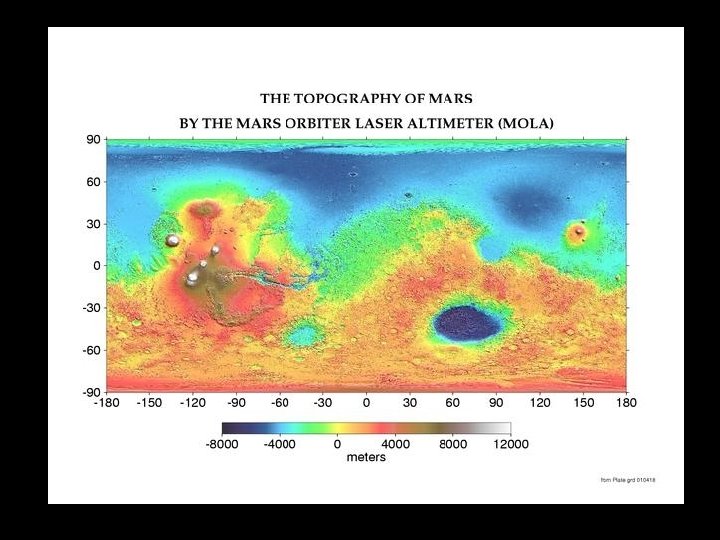
Mars has the largest volcano in the solar system - Olympus Mons – 15 miles high! The map below shows other volcanos, Syrtis Major, planitia, ice covered polar regions, and Valles Marineris
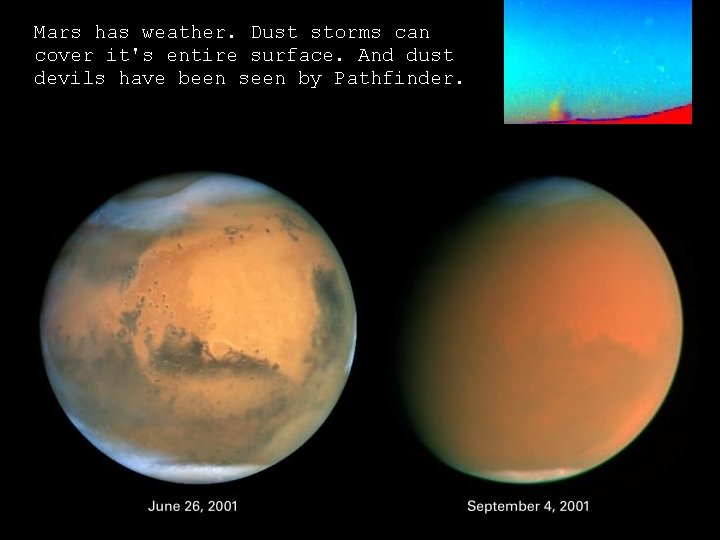
Mars has weather. Dust storms can cover it's entire surface. And dust devils have been seen by Pathfinder.
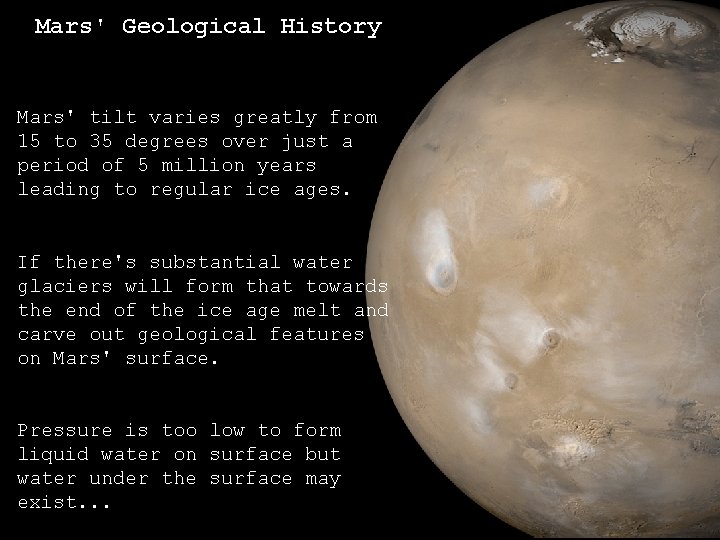
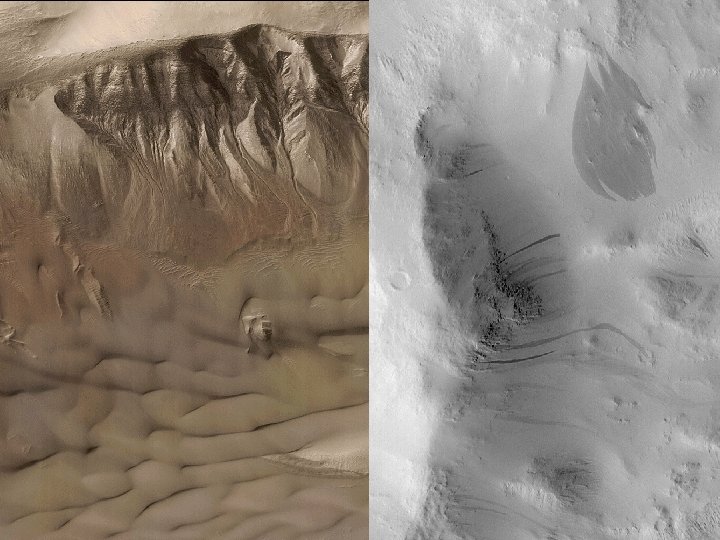
Mars' Geological History Mars' tilt varies greatly from 15 to 35 degrees over just a period of 5 million years leading to regular ice ages. If there's substantial water glaciers will form that towards the end of the ice age melt and carve out geological features on Mars' surface. Pressure is too low to form liquid water on surface but water under the surface may exist. . .
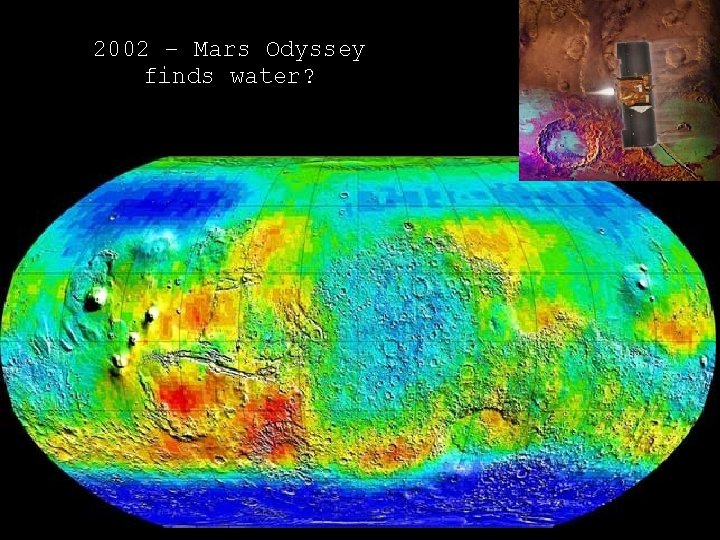
2002 – Mars Odyssey finds water?
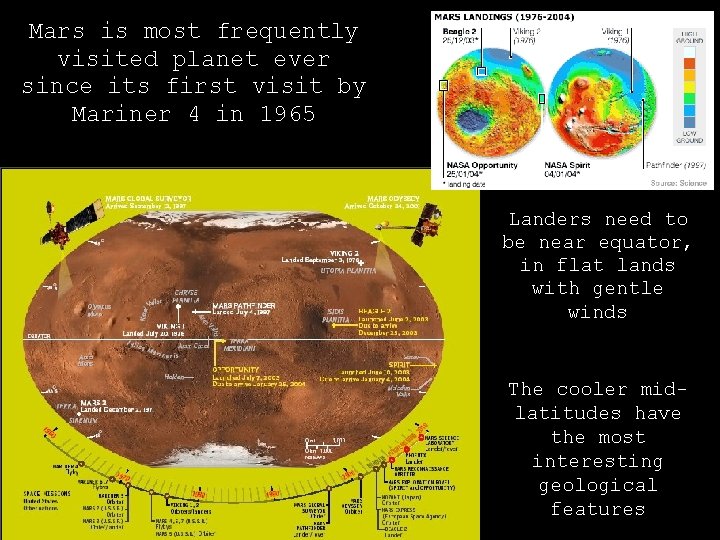
Mars is most frequently visited planet ever since its first visit by Mariner 4 in 1965 Landers need to be near equator, in flat lands with gentle winds The cooler midlatitudes have the most interesting geological features
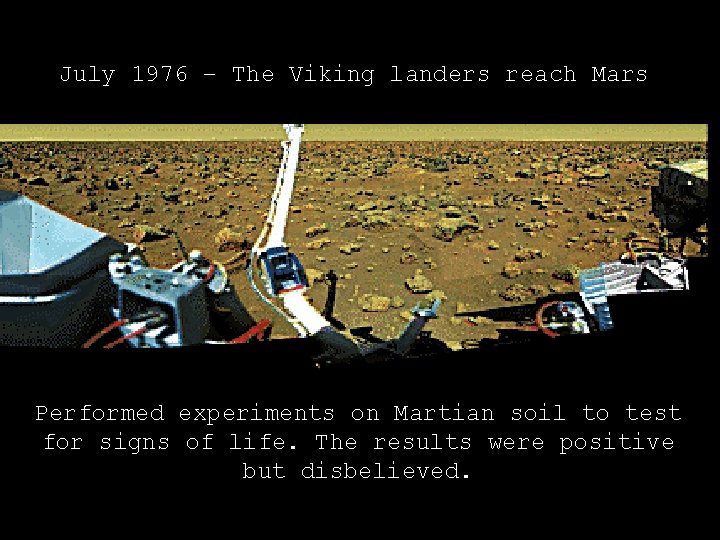
July 1976 – The Viking landers reach Mars Performed experiments on Martian soil to test for signs of life. The results were positive but disbelieved.
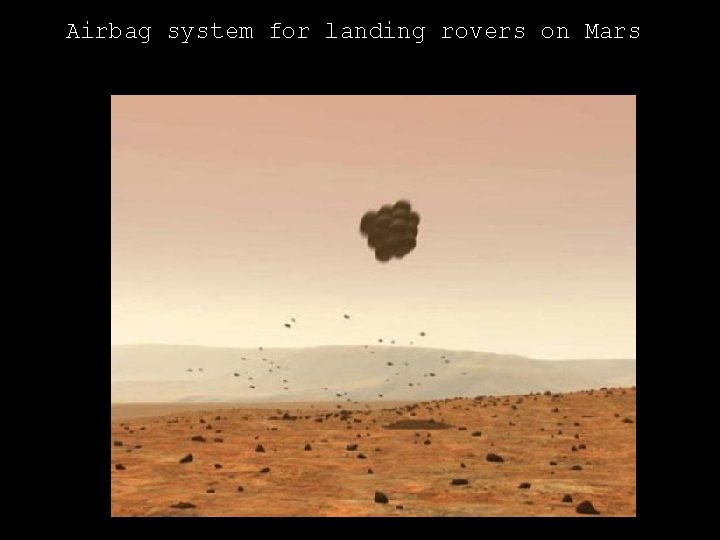
Airbag system for landing rovers on Mars
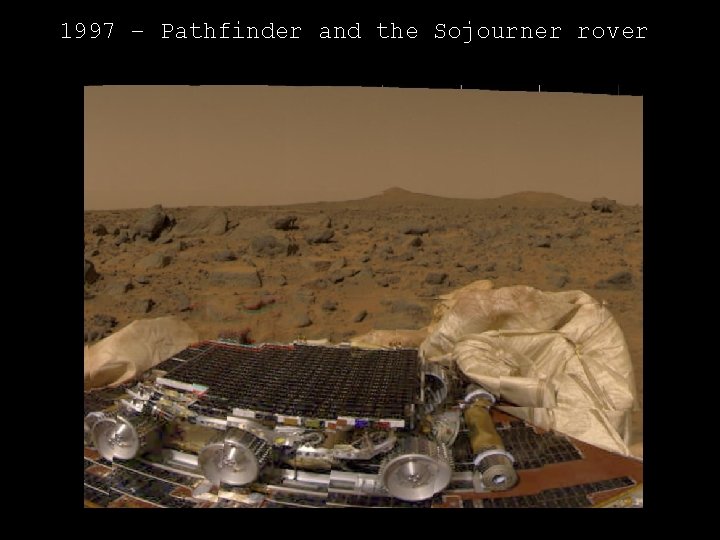
1997 – Pathfinder and the Sojourner rover
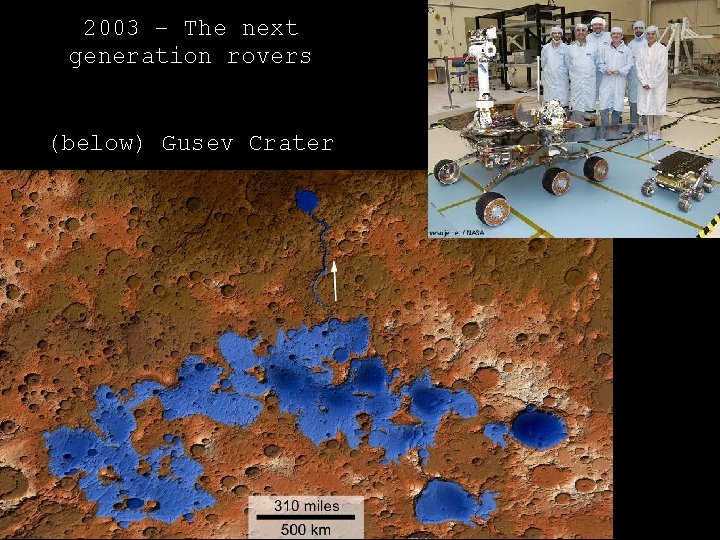
2003 – The next generation rovers (below) Gusev Crater
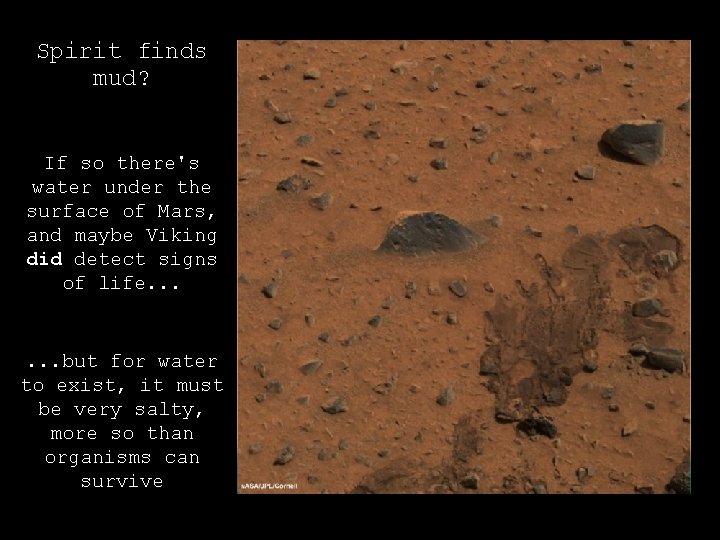
Spirit finds mud? If so there's water under the surface of Mars, and maybe Viking did detect signs of life. . . but for water to exist, it must be very salty, more so than organisms can survive
Opportunity lands on hematite covered uplands
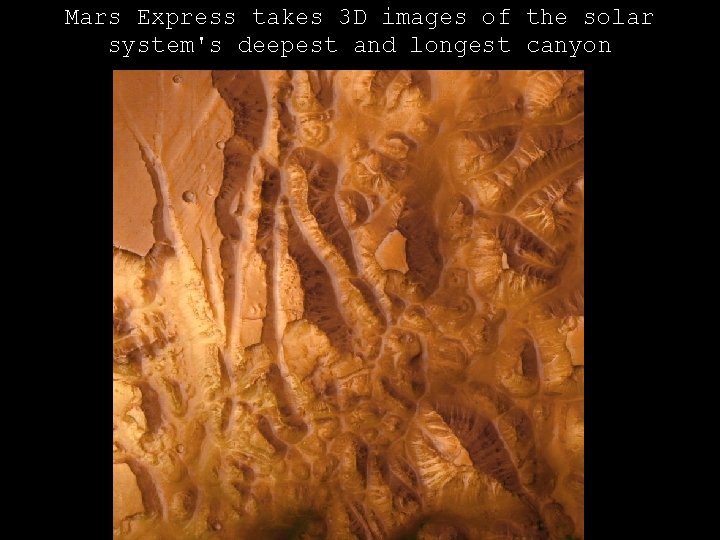
Mars Express takes 3 D images of the solar system's deepest and longest canyon
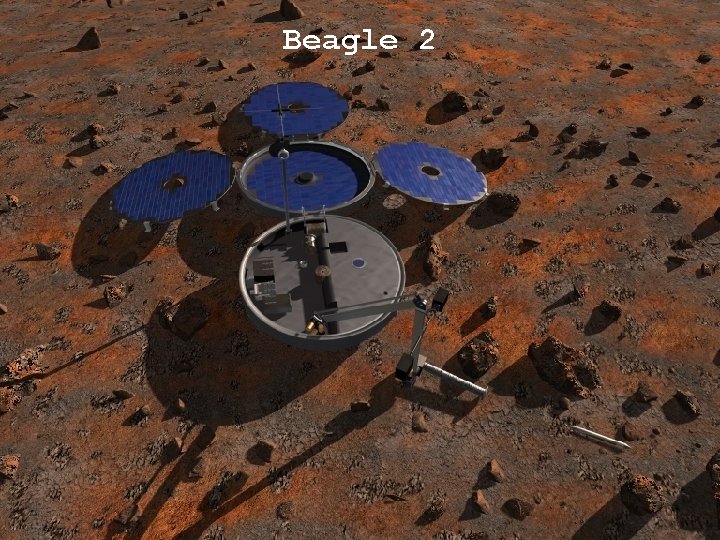
Beagle 2
The Future Mars Flyers Mars Reconnaissance Orbiter Phoenix Lander Sample Return Manned Mission?