
Earth as a System Three Types of Systems
- Slides: 15
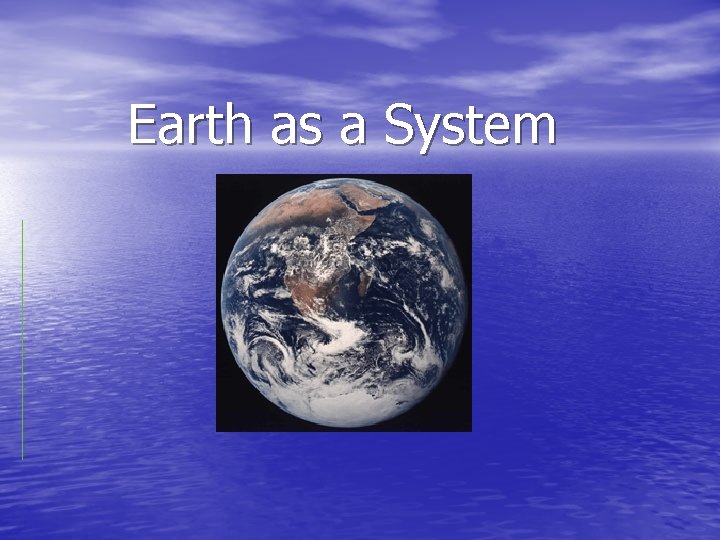
Earth as a System
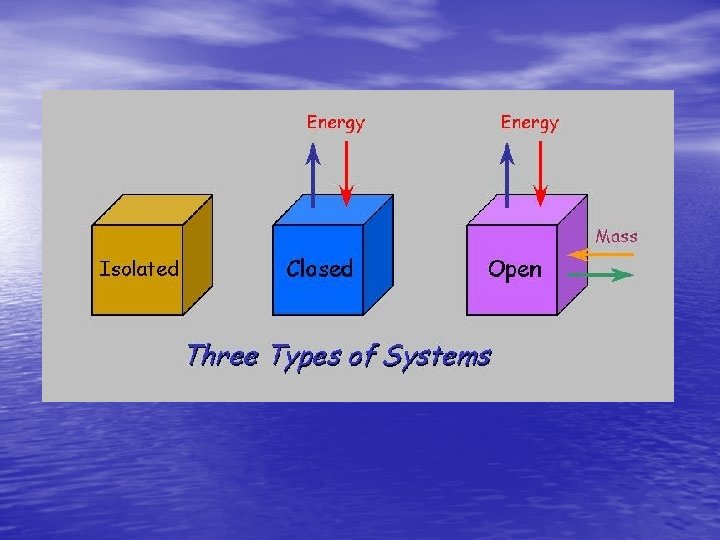
Three Types of Systems 1. Isolated 2. Closed 3. Open
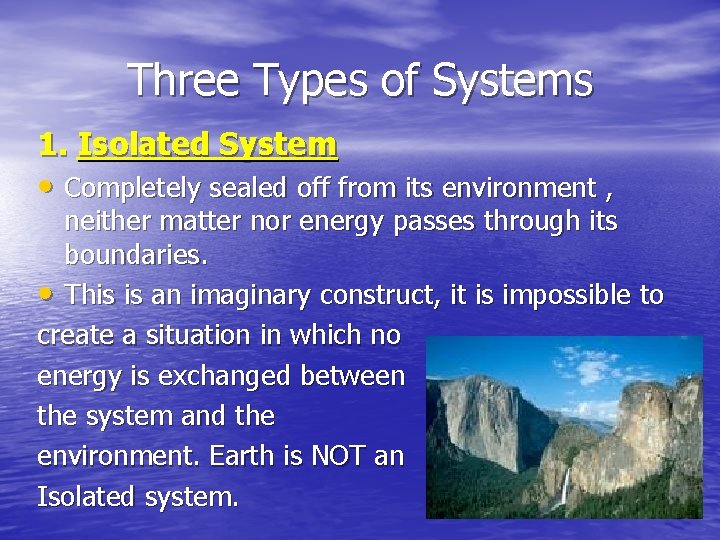
Three Types of Systems 1. Isolated System • Completely sealed off from its environment , neither matter nor energy passes through its boundaries. • This is an imaginary construct, it is impossible to create a situation in which no energy is exchanged between the system and the environment. Earth is NOT an Isolated system.
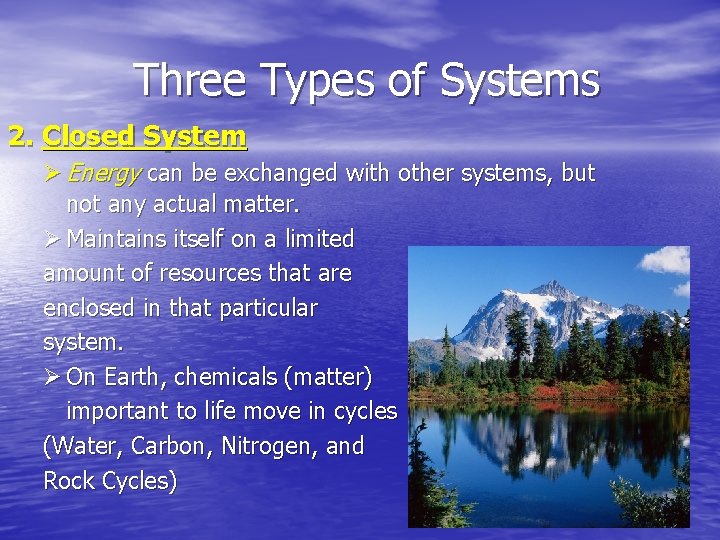
Three Types of Systems 2. Closed System Ø Energy can be exchanged with other systems, but not any actual matter. Ø Maintains itself on a limited amount of resources that are enclosed in that particular system. Ø On Earth, chemicals (matter) important to life move in cycles (Water, Carbon, Nitrogen, and Rock Cycles)
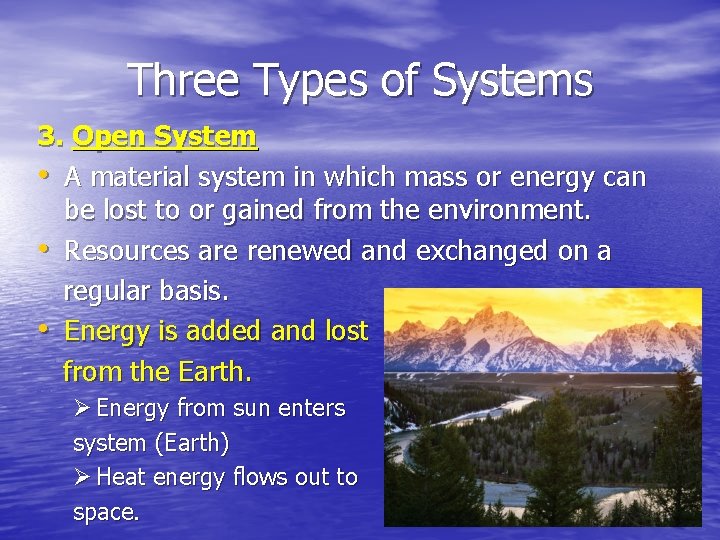
Three Types of Systems 3. Open System • A material system in which mass or energy can be lost to or gained from the environment. • Resources are renewed and exchanged on a regular basis. • Energy is added and lost from the Earth. Ø Energy from sun enters system (Earth) Ø Heat energy flows out to space.
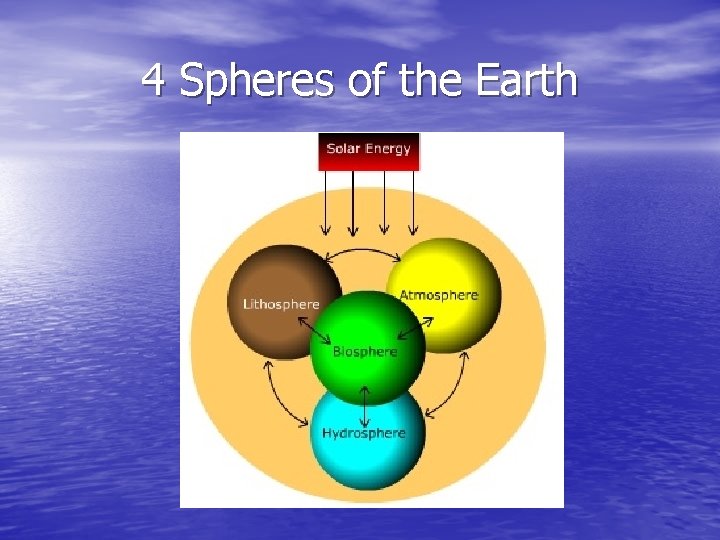
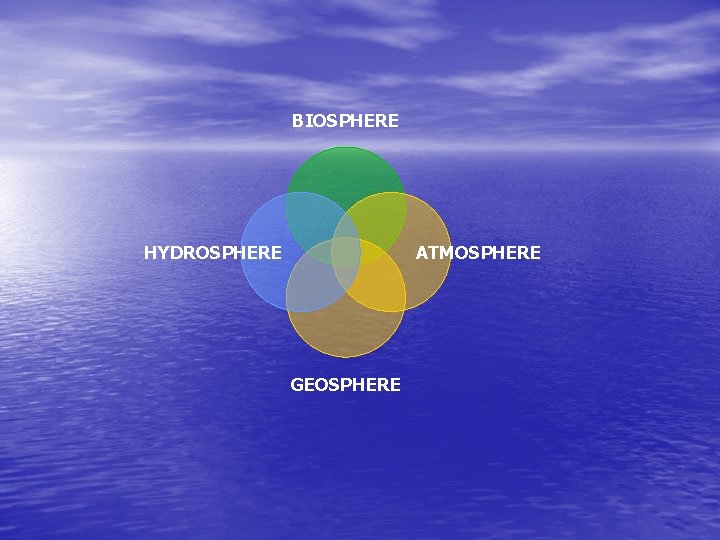
4 Spheres of the Earth
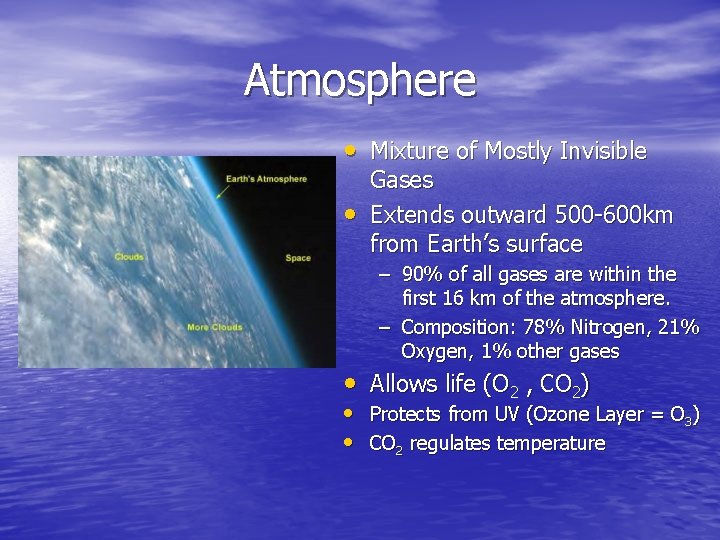
Atmosphere • Mixture of Mostly Invisible • Gases Extends outward 500 -600 km from Earth’s surface – 90% of all gases are within the first 16 km of the atmosphere. – Composition: 78% Nitrogen, 21% Oxygen, 1% other gases • Allows life (O 2 , CO 2) • Protects from UV (Ozone Layer = O 3) • CO 2 regulates temperature
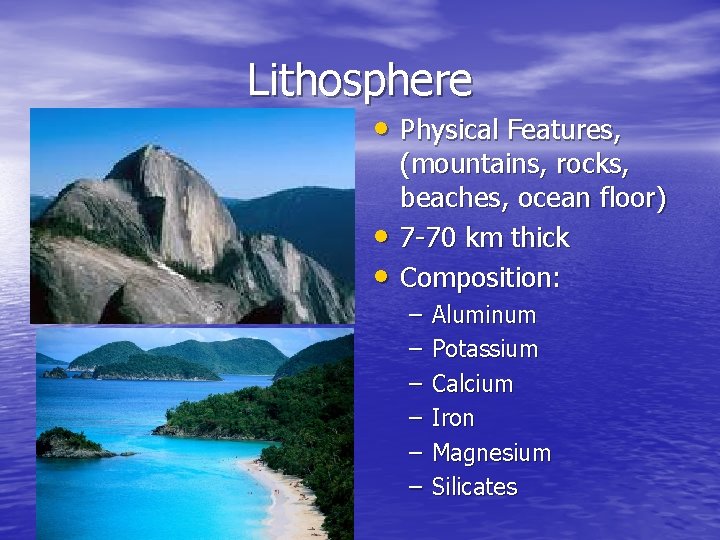
Lithosphere • Physical Features, • • (mountains, rocks, beaches, ocean floor) 7 -70 km thick Composition: – – – Aluminum Potassium Calcium Iron Magnesium Silicates
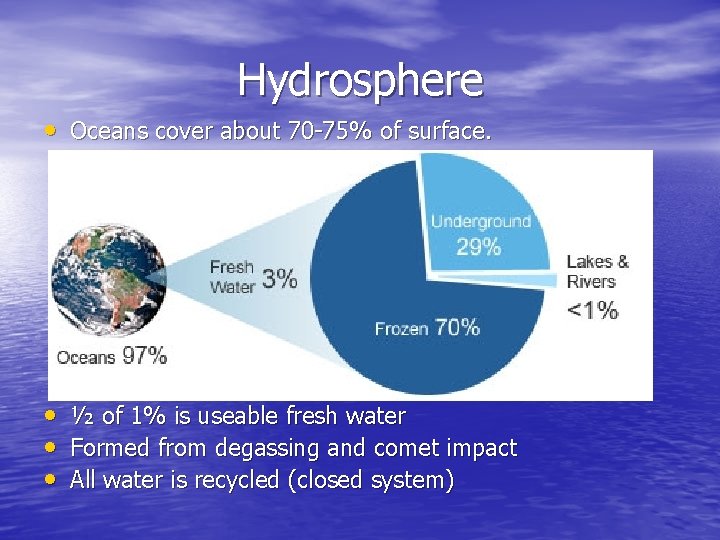
Hydrosphere • Oceans cover about 70 -75% of surface. • • • ½ of 1% is useable fresh water Formed from degassing and comet impact All water is recycled (closed system)
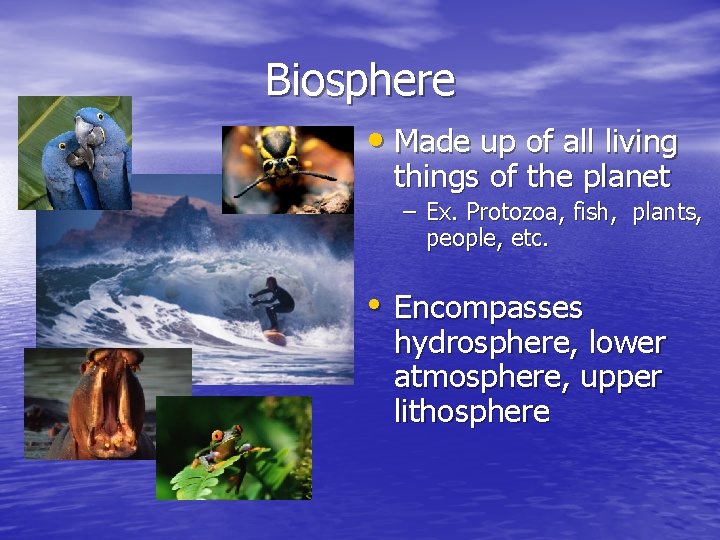
Biosphere • Made up of all living things of the planet – Ex. Protozoa, fish, plants, people, etc. • Encompasses hydrosphere, lower atmosphere, upper lithosphere
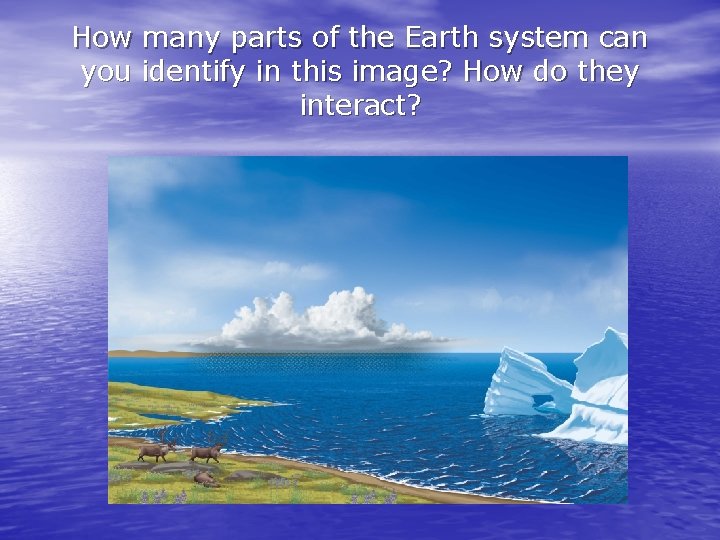
How many parts of the Earth system can you identify in this image? How do they interact?
How do Earth’s spheres interact? • All of the spheres of Earth interact as matter and energy change and cycle through the Earth system. • A result of these interactions is that they make life on Earth possible
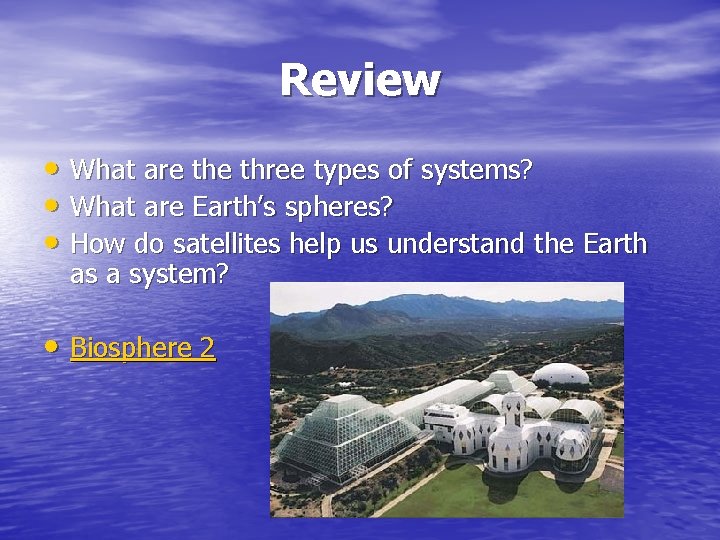
Review • What are three types of systems? • What are Earth’s spheres? • How do satellites help us understand the Earth as a system? • Biosphere 2
BIOSPHERE HYDROSPHERE ATMOSPHERE GEOSPHERE