
Early Years Foundation Stage Information Meeting 24 th
- Slides: 22
Early Years Foundation Stage Information Meeting 24 th June 2021
Aims of Meeting • To define the Early Years Foundation Stage (EYFS) • Examine the Characteristics of Effective Learning • Present areas of learning - the EYFS Curriculum • Provide additional information • Opportunity for questions and answers
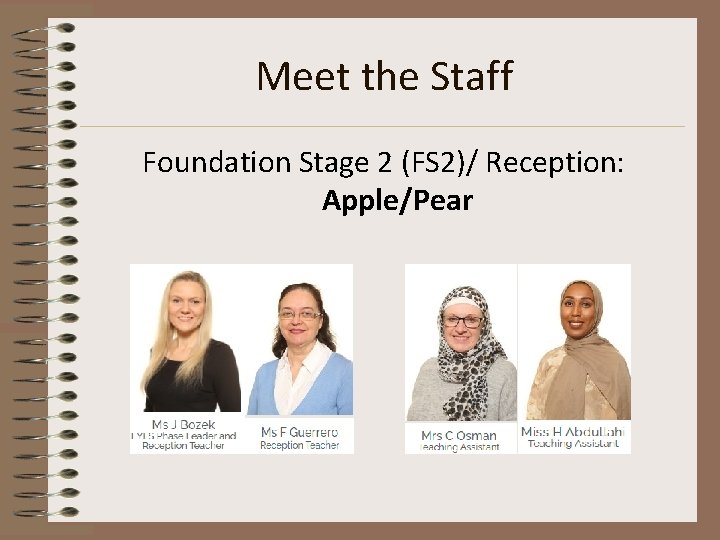
Meet the Staff Foundation Stage 2 (FS 2)/ Reception: Apple/Pear
What is the Early Years Foundation Stage? • The Early Years Foundation Stage (E. Y. F. S. ) is the stage of education for children from birth to the end of the Reception year. • It is based on the recognition that children learn best through play and active learning.
Early Years Curriculum Activities in Reception are carefully planned and organised in order to provide a range of learning experiences. Planning for each week is carried out using a topic-based approach, following the children’s interests and responding to specific events. • • There are 7 Areas of Learning in the Early Years Foundation Stage, which activities are planned around. Personal, Social and Emotional Development Physical Development Communication and Language Literacy Mathematics Understanding the World Expressive Arts and Design
Characteristic of Effective Learning Playing and exploring are the ways in which children engage in their learning – through finding out, exploring, playing with what they know and being willing to ‘have a go’. Active learning is what motivates children – being involved and concentrating, to keep trying and enjoying what they set out to do. Creating and thinking critically – children need lots of opportunities to think, have their own ideas, make links and choose ways of doing things.
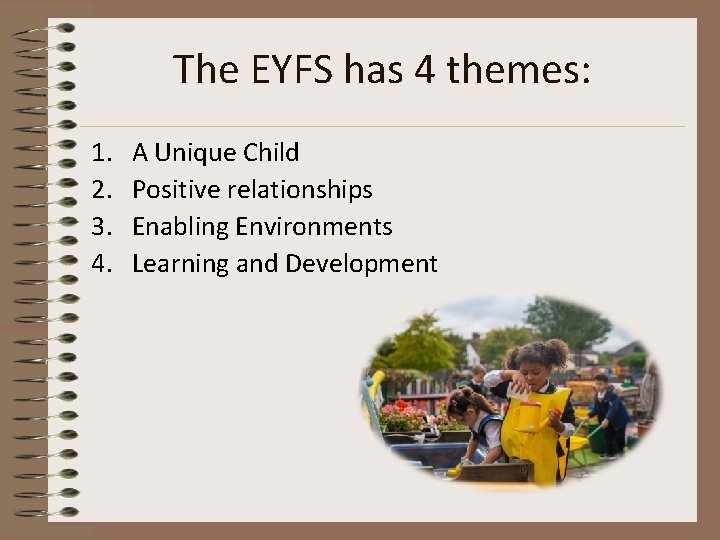
The EYFS has 4 themes: 1. 2. 3. 4. A Unique Child Positive relationships Enabling Environments Learning and Development
What will happen between now and September? • 24 th June 2021 Virtual Parents Welcome Event. • Individual visit to the Reception classes and our new outdoor environment. • Parents will receive a welcome pack confirming start dates, which will be staggered. Please complete the Communication Passport for your child and send it back to the school office as soon as possible. • School visits will be arranged between 2 nd and 7 th September, where parents and children will have the opportunity to meet their class teacher and share important information.
Monitoring progress. Progress and achievement is monitored through daily observations, participation in adult focus activities and regular discussions with children. It is recorded in learning journals and the Seesaw online learning platform, which parents will have access to. Baseline Assessment During the first half term in September, adults will complete a baseline assessment, which informs us of your child’s starting points. We will find out what the children already know and can do and use this information to help us develop a range of learning activities to move them on.
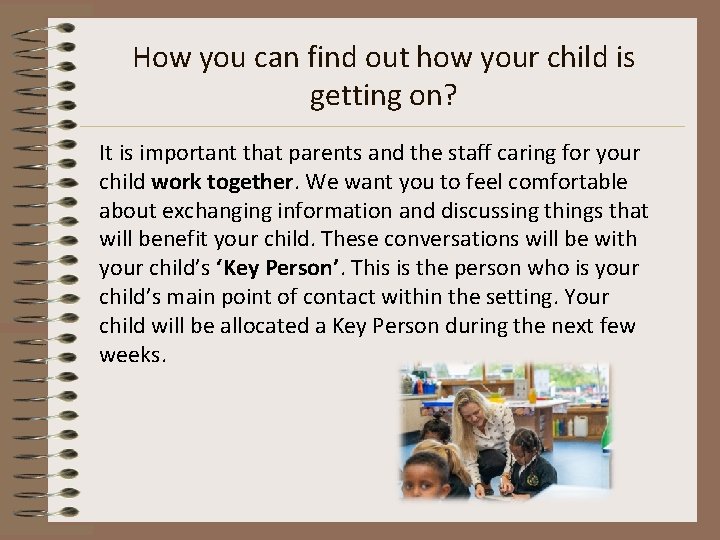
How you can find out how your child is getting on? It is important that parents and the staff caring for your child work together. We want you to feel comfortable about exchanging information and discussing things that will benefit your child. These conversations will be with your child’s ‘Key Person’. This is the person who is your child’s main point of contact within the setting. Your child will be allocated a Key Person during the next few weeks.
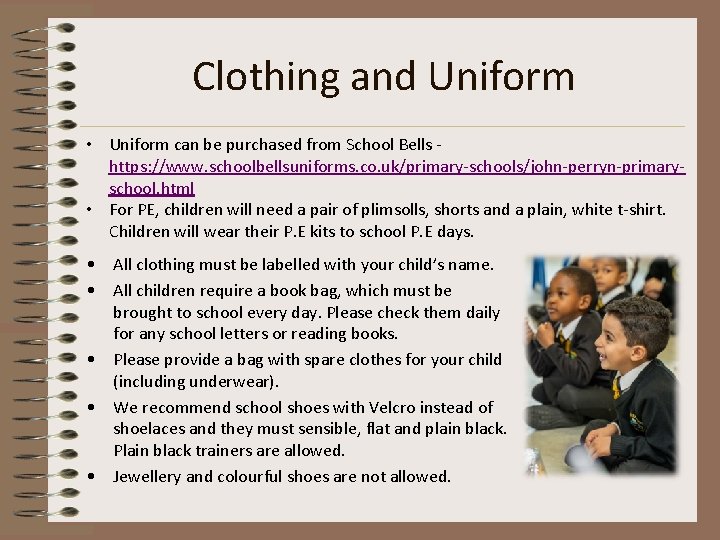
Clothing and Uniform • Uniform can be purchased from School Bells https: //www. schoolbellsuniforms. co. uk/primary-schools/john-perryn-primaryschool. html • For PE, children will need a pair of plimsolls, shorts and a plain, white t-shirt. Children will wear their P. E kits to school P. E days. • All clothing must be labelled with your child’s name. • All children require a book bag, which must be brought to school every day. Please check them daily for any school letters or reading books. • Please provide a bag with spare clothes for your child (including underwear). • We recommend school shoes with Velcro instead of shoelaces and they must sensible, flat and plain black. Plain black trainers are allowed. • Jewellery and colourful shoes are not allowed.
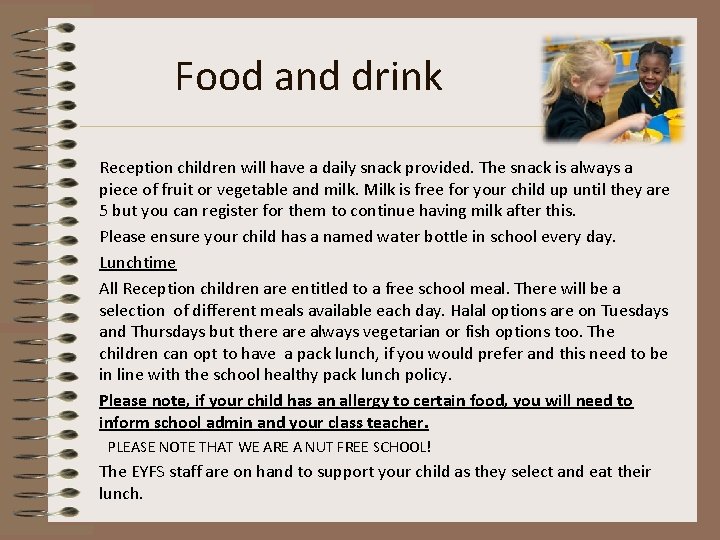
Food and drink Reception children will have a daily snack provided. The snack is always a piece of fruit or vegetable and milk. Milk is free for your child up until they are 5 but you can register for them to continue having milk after this. Please ensure your child has a named water bottle in school every day. Lunchtime All Reception children are entitled to a free school meal. There will be a selection of different meals available each day. Halal options are on Tuesdays and Thursdays but there always vegetarian or fish options too. The children can opt to have a pack lunch, if you would prefer and this need to be in line with the school healthy pack lunch policy. Please note, if your child has an allergy to certain food, you will need to inform school admin and your class teacher. PLEASE NOTE THAT WE ARE A NUT FREE SCHOOL! The EYFS staff are on hand to support your child as they select and eat their lunch.
Medical and Dietary Requirements Staff need to be aware of your child’s medical background including any allergies (e. g. bee stings, dairy food, animals) and dietary restrictions (e. g. vegetarian, Halal) as well as any medical conditions (e. g. asthma, eczema) it is vital that we have this information before your child starts school. Please return these forms to us by 9 th July at the latest. Please ensure that the school is kept up to date with your contact details – we must have at least two contacts for each child. If your child is unable to attend school due to illness, please telephone the school office to let us know or report via the school APP. If your child, or anyone in your family tests displays symptoms or positive for Covid-19 please advise the school immediately. Any prescribed medication can only be administrated by prior arrangement with the school office.
Reception Daily routine • 8. 45 - 9. 05 Doors open, soft start, register • 9. 10 - 9. 25 Morning carpet session - phonics • 9. 30 -10. 30 Free flow time - children can explore the whole environment both indoor and outdoor • 10. 30 - 11. 00 snack time • 11. 00 - 11. 30 Adult planned activities • 11. 30 -1. 05 children wash hands ready for lunch time • 1. 05 - 1. 20 Register and afternoon carpet session - mathematics • 1. 20 - 2. 20 Free flow time • 2. 30 - 3. 00 Story time, singing, show and tell. • 3. 00 Start to get ready for home. • 3. 15 Home time
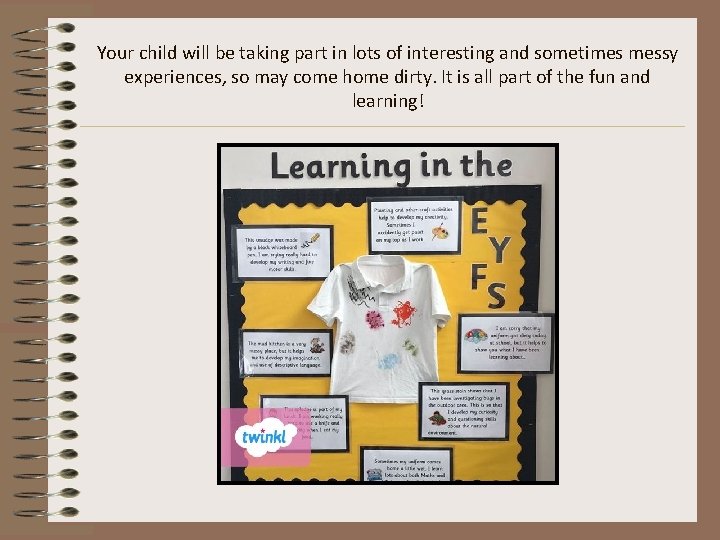
Your child will be taking part in lots of interesting and sometimes messy experiences, so may come home dirty. It is all part of the fun and learning!
Home /School Communication • Please ensure that your address and phone details are kept up to date at all times and provide an emergency contact for your child in case your phone is not working or we are unable to reach you. • You must inform the school about who is collecting your child. Please let us know if there is a change to the usual pick-up arrangements and someone different is picking up your child. We will not allow children to be taken home if we are not informed. • No family members under 18 years old will be allowed to collect younger siblings from Reception, unless parental consent has been given in writing. • Open door policy - you will be greeted at the start and end of the day by a member of the Reception team. All EYFS team members are always willing to meet with parents. Please let us know when you like to speak to a class teacher about your child. • Parents evening will be held every term. • Parents will receive a full report at the end of the academic year.
Parent Partnership • We would love you to contribute on your children’s Seesaw learning journey, where you will regularly receive updates on your child’s experiences in school. • Please do add your own observations of your child when notice the doing wonderful things at home so that we can celebrate these in school too. • Children will receive home learning on Seesaw every Friday. This is designed to extend and consolidate their learning in class. • We hope to bring back ‘Stay & Learn’ sessions every Friday once restrictions have been lifted.
Extended School Provision • We offer Breakfast Club every day from 7. 30 a. m. • Please talk to the office about how to book and pay for this service. • We are hoping to bring back our After School Club provision in September too. Further details will be provided once we have them all finalised.
What can you do to help you child? • Teach you child to be responsible for their clothing, hanging up coats, putting hats, scarves and shoes on. • Encourage your child to eat independently. • Help your child feel comfortable and able to go to the toilet themselves. • Encourage them to be independent and able to look after themselves. • Support any learning that comes on Seesaw. • Encourage children to talk, ask about their day at school. • Read/share books, talk about the pictures even in you mother tongue language. • Play simple board games that involve turn taking.
What is phonics? Phonics • Phonics is a way of teaching children how to read and write. It helps children hear, identify and use different sounds that distinguish one word from another in the English language. • Written language can be compared to a code, so knowing the sounds of individual letters and how those letters sound when they’re combined will help children decode words as they read. • Understanding phonics will also help children know which letters to use when they are writing words. • At John Perryn we teach using the Read, Write, Inc (RWI) program. Each day, children learn a new phoneme in a friendly and fun way. Sessions are carefully matched to each child’s needs and are delivered at an appropriate pace. • They also practice the correct formation of each letter.
Reading All reception children will be taking home reading books, which are carefully selected by a class teacher, and yellow reading record books. Please reading with your child every day and write your comments/feedback in the yellow record book. Library books Children will be visiting our school library once a week. They will have opportunity to choose their favourite book and take it home. Please support your child at home and read with them daily. Introduce language of title, author and illustrator explaining what these words mean and discuss the characters and pictures.
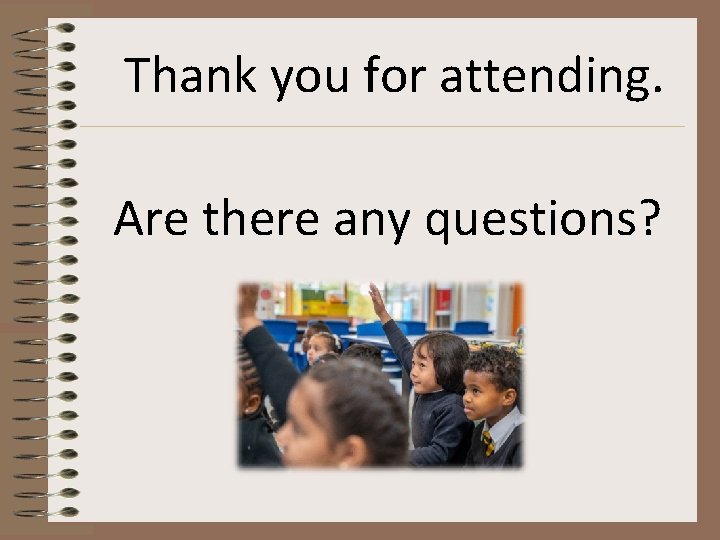
Thank you for attending. Are there any questions?