
Early Warning Systems on Food and Agriculture Presentation
- Slides: 30
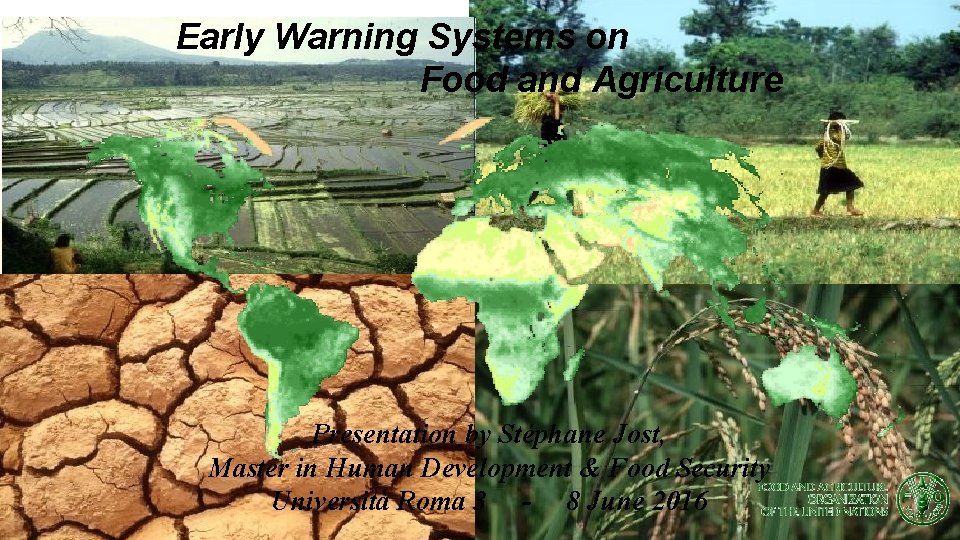
Early Warning Systems on Food and Agriculture Presentation by Stéphane Jost, Master in Human Development & Food Security Università Roma 3 - 8 June 2016
Early Warning Systems on Food and Agriculture Early Warning Systems activities: Three main steps 1) Data collection 2) Data analysis 3) Dissemination of information
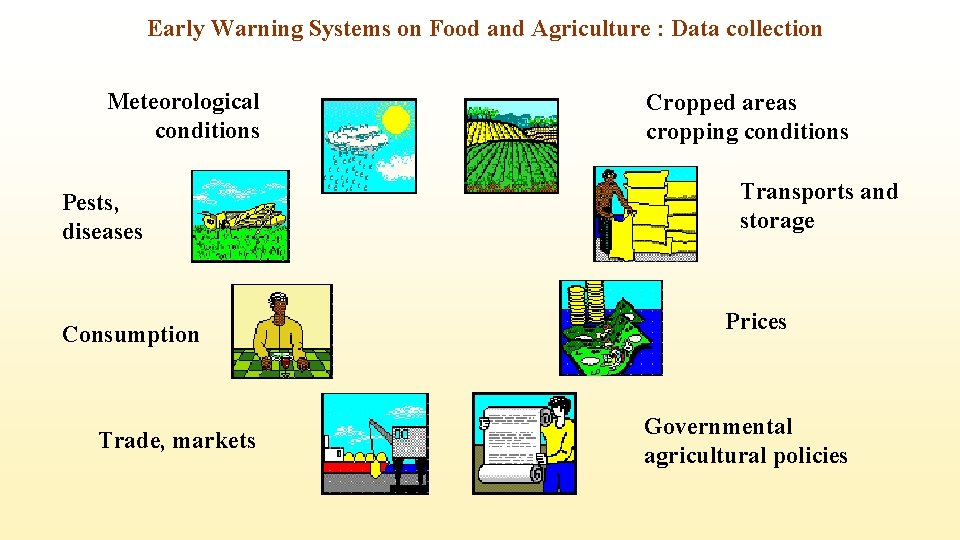
Early Warning Systems on Food and Agriculture : Data collection Meteorological conditions Pests, diseases Consumption Trade, markets Cropped areas cropping conditions Transports and storage Prices Governmental agricultural policies
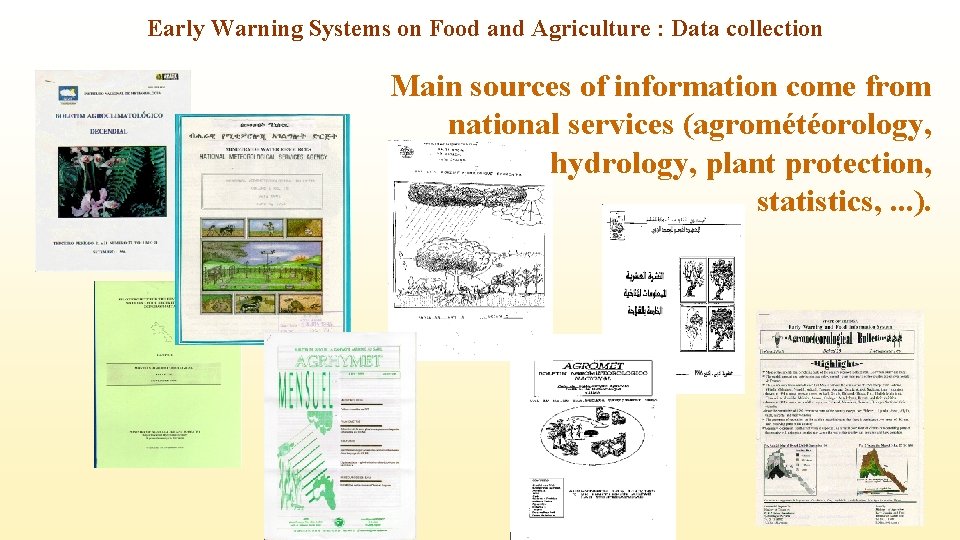
Early Warning Systems on Food and Agriculture : Data collection Main sources of information come from national services (agrométéorology, hydrology, plant protection, statistics, . . . ).
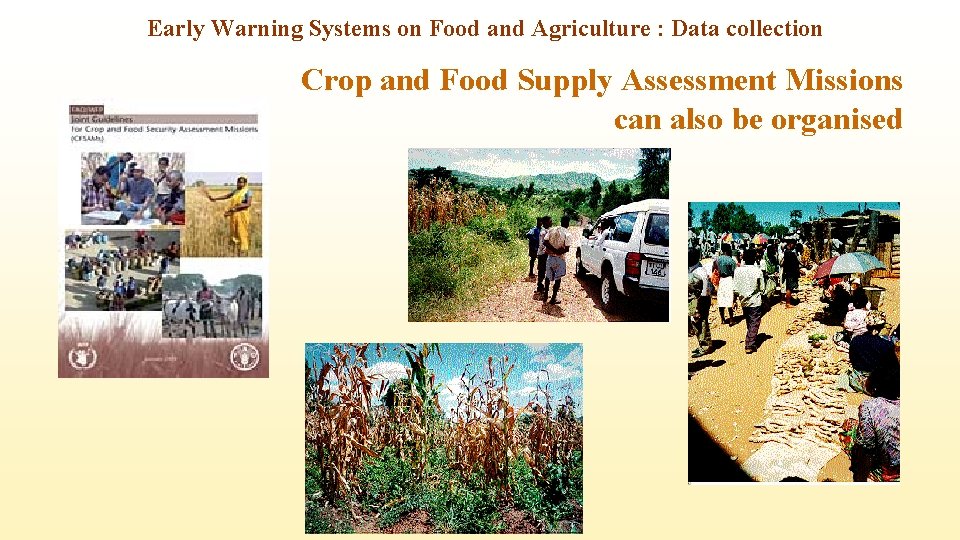
Early Warning Systems on Food and Agriculture : Data collection Crop and Food Supply Assessment Missions can also be organised
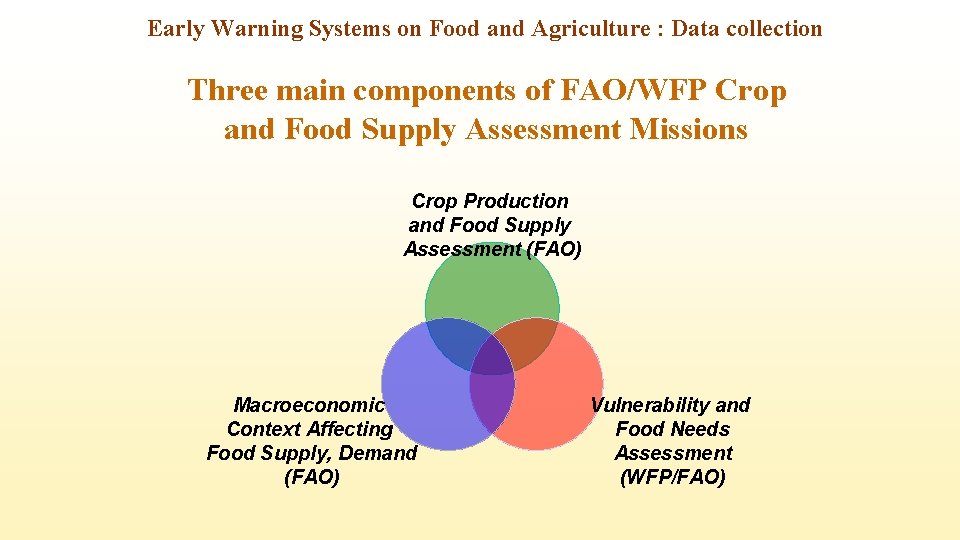
Early Warning Systems on Food and Agriculture : Data collection Three main components of FAO/WFP Crop and Food Supply Assessment Missions Crop Production and Food Supply Assessment (FAO) Macroeconomic Context Affecting Food Supply, Demand (FAO) Vulnerability and Food Needs Assessment (WFP/FAO)
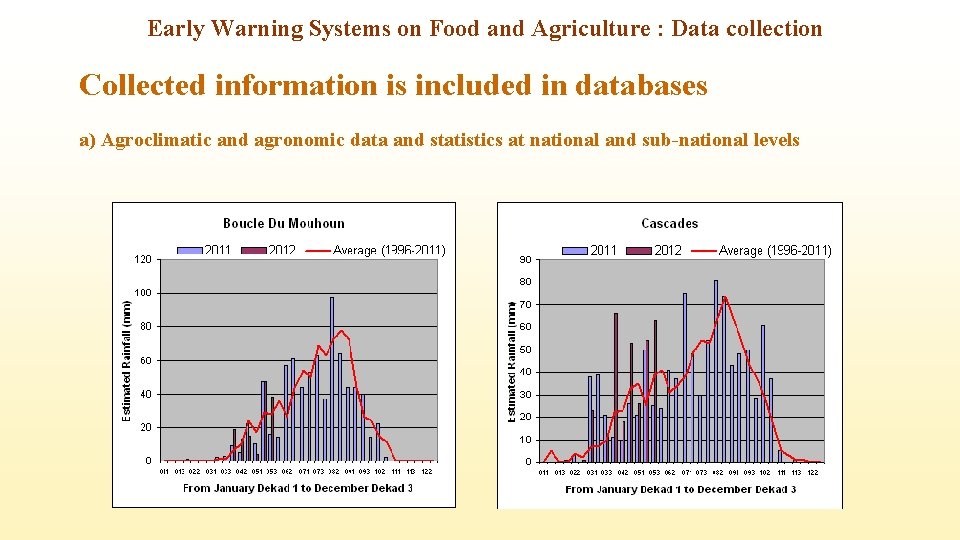
Early Warning Systems on Food and Agriculture : Data collection Collected information is included in databases a) Agroclimatic and agronomic data and statistics at national and sub-national levels
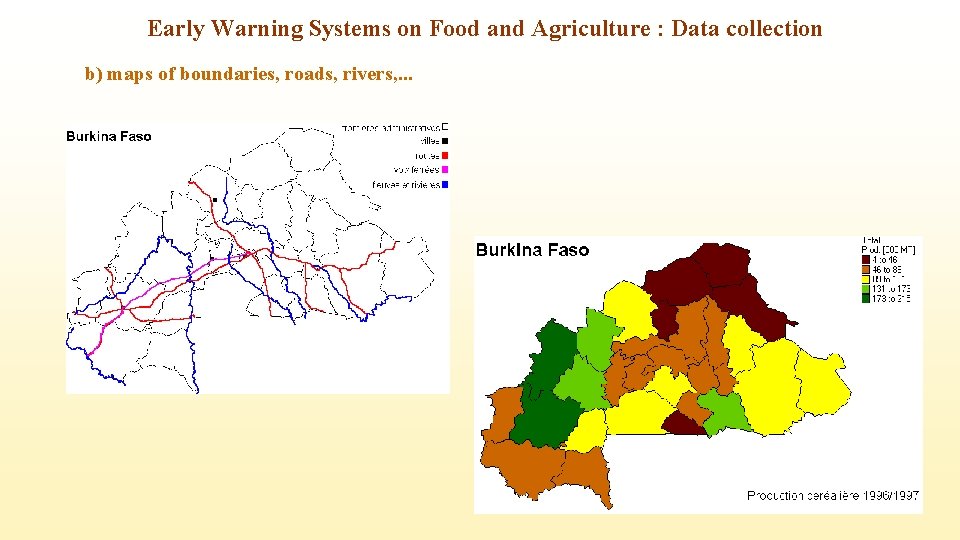
Early Warning Systems on Food and Agriculture : Data collection b) maps of boundaries, roads, rivers, . . .
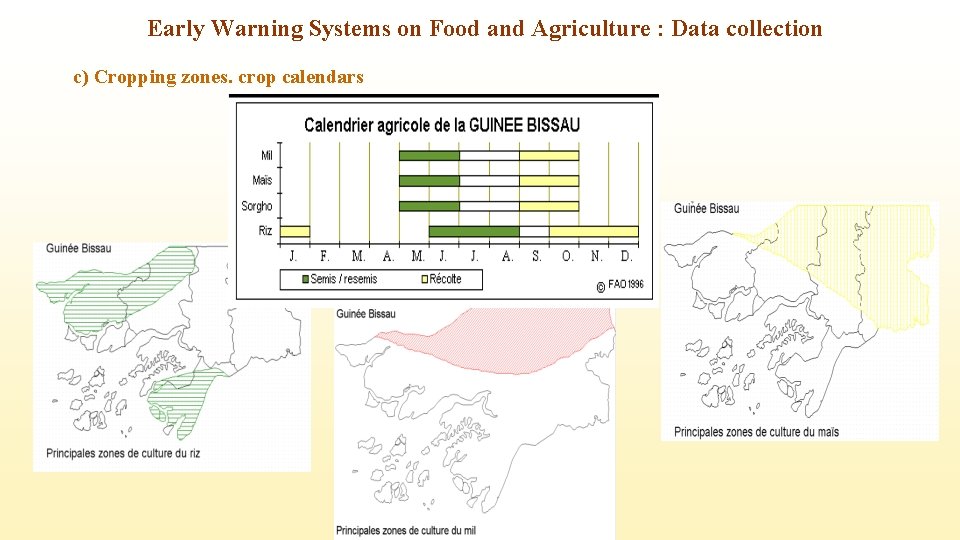
Early Warning Systems on Food and Agriculture : Data collection c) Cropping zones. crop calendars
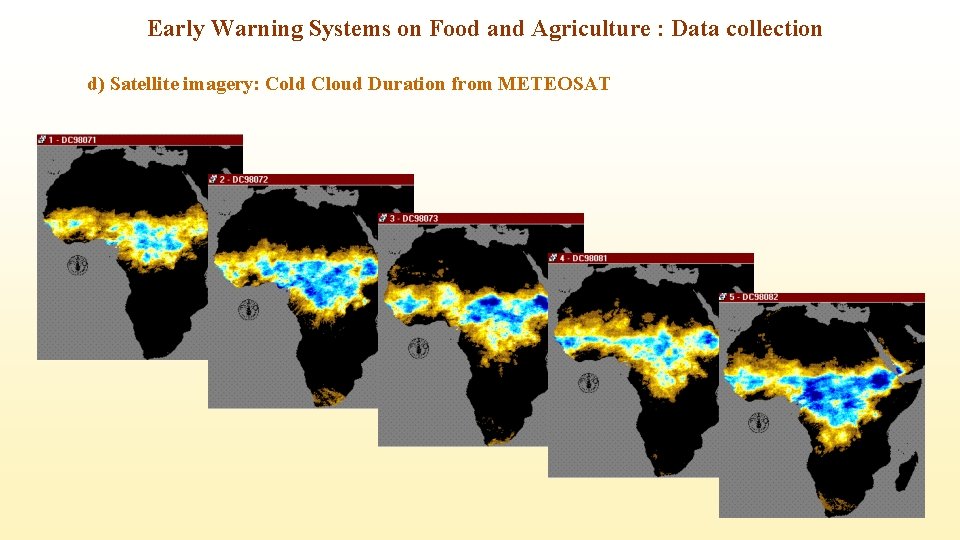
Early Warning Systems on Food and Agriculture : Data collection d) Satellite imagery: Cold Cloud Duration from METEOSAT
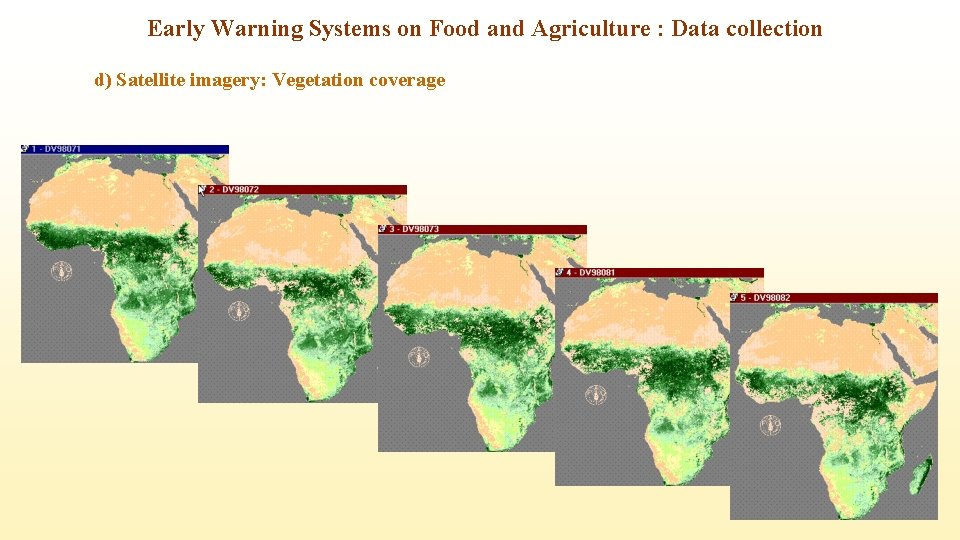
Early Warning Systems on Food and Agriculture : Data collection d) Satellite imagery: Vegetation coverage
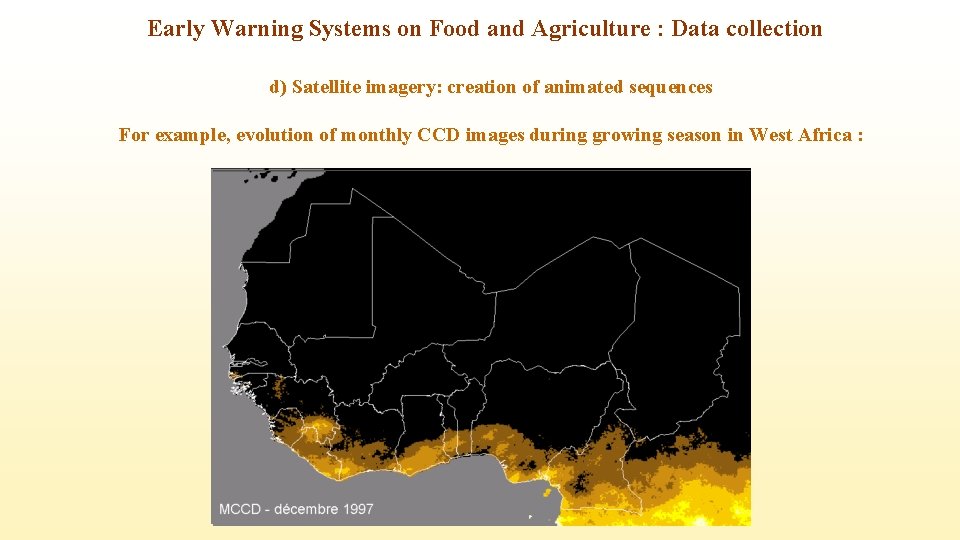
Early Warning Systems on Food and Agriculture : Data collection d) Satellite imagery: creation of animated sequences For example, evolution of monthly CCD images during growing season in West Africa :
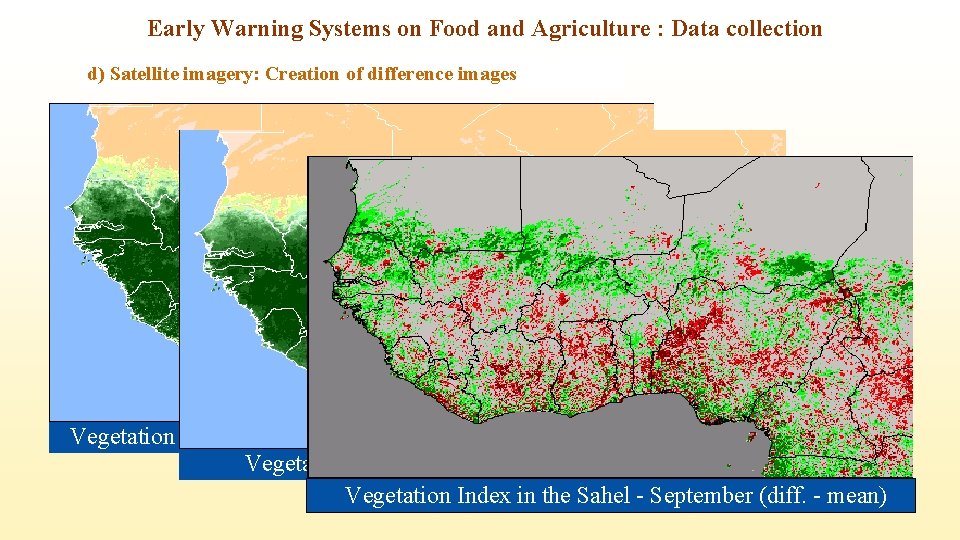
Early Warning Systems on Food and Agriculture : Data collection d) Satellite imagery: Creation of difference images Vegetation Index in the Sahel – September, reference year Vegetation Index in the Sahel - September (mean) Vegetation Index in the Sahel - September (diff. - mean)
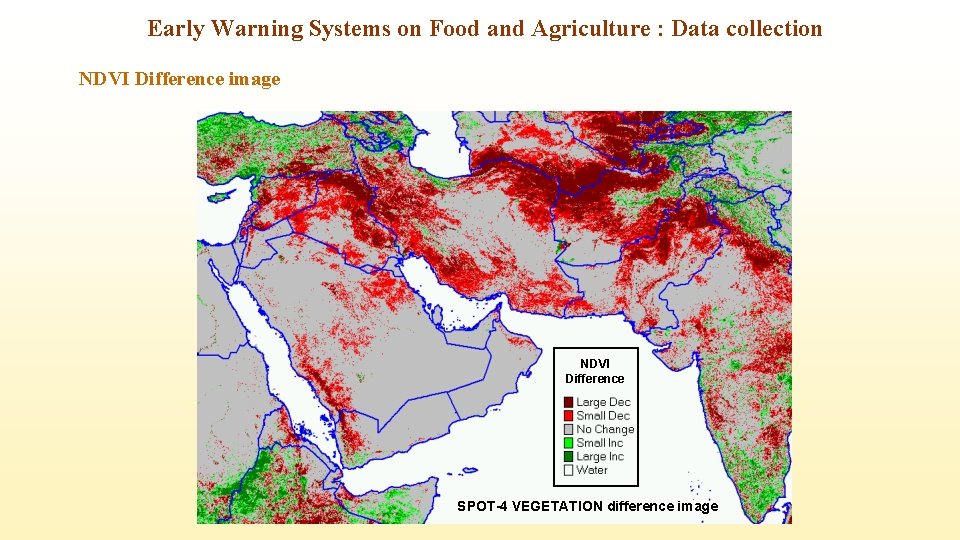
Early Warning Systems on Food and Agriculture : Data collection NDVI Difference image NDVI Difference SPOT-4 VEGETATION difference image
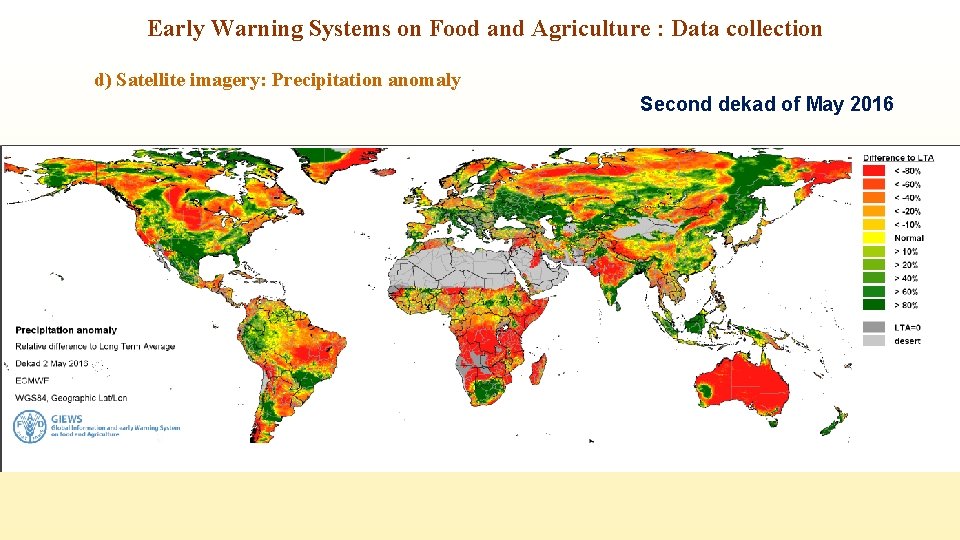
Early Warning Systems on Food and Agriculture : Data collection d) Satellite imagery: Precipitation anomaly Second dekad of May 2016
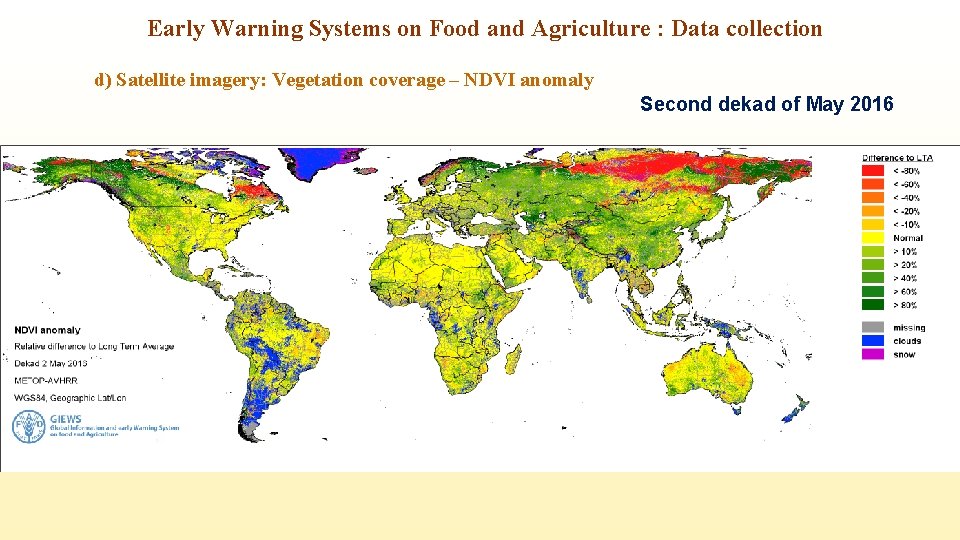
Early Warning Systems on Food and Agriculture : Data collection d) Satellite imagery: Vegetation coverage – NDVI anomaly Second dekad of May 2016
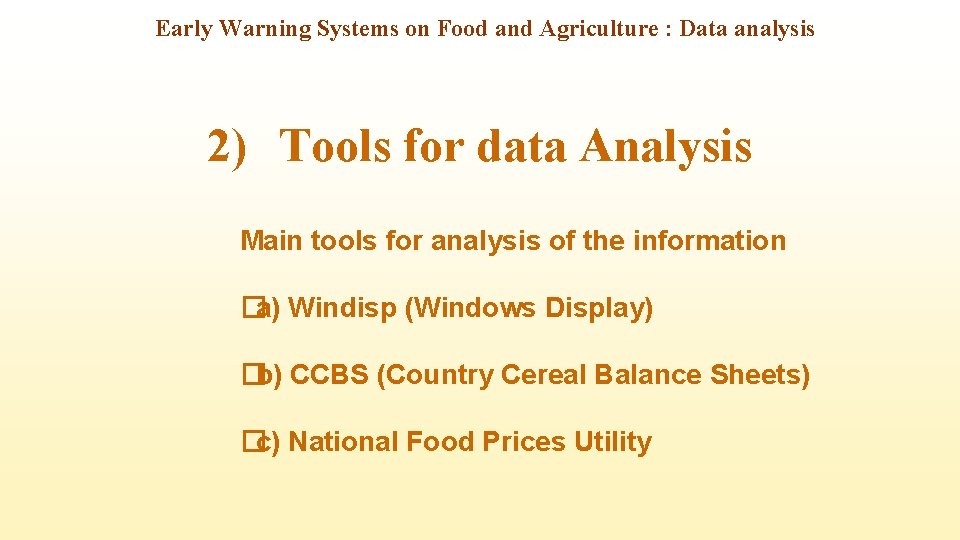
Early Warning Systems on Food and Agriculture : Data analysis 2) Tools for data Analysis Main tools for analysis of the information �a) Windisp (Windows Display) �b) CCBS (Country Cereal Balance Sheets) �c) National Food Prices Utility
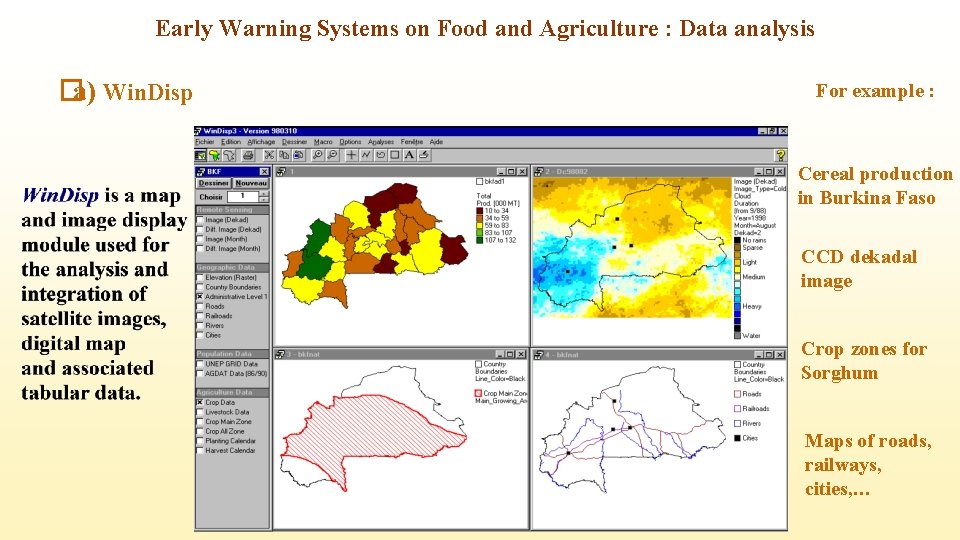
Early Warning Systems on Food and Agriculture : Data analysis �a) Win. Disp For example : Cereal production in Burkina Faso CCD dekadal image Crop zones for Sorghum Maps of roads, railways, cities, …
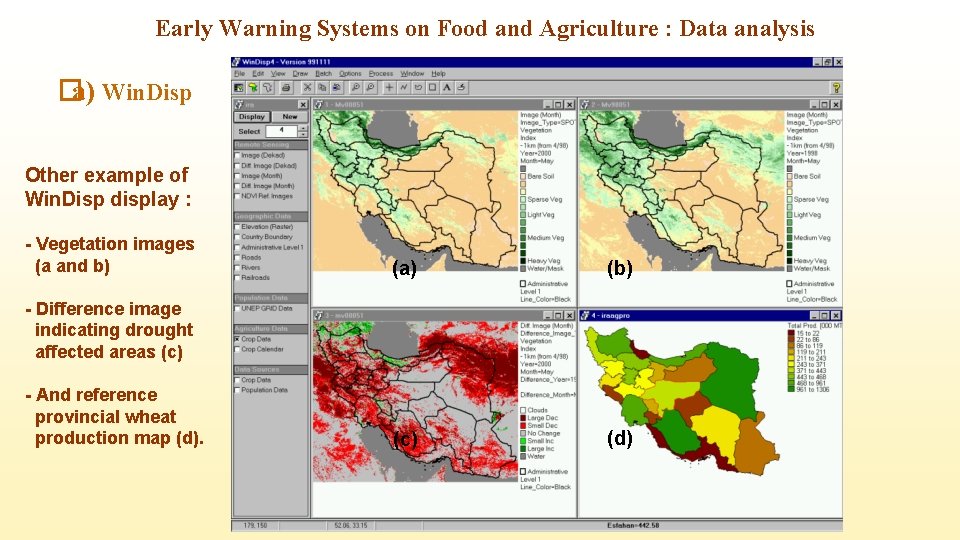
Early Warning Systems on Food and Agriculture : Data analysis �a) Win. Disp Other example of Win. Disp display : - Vegetation images (a and b) (a) (b) (c) (d) - Difference image indicating drought affected areas (c) - And reference provincial wheat production map (d).
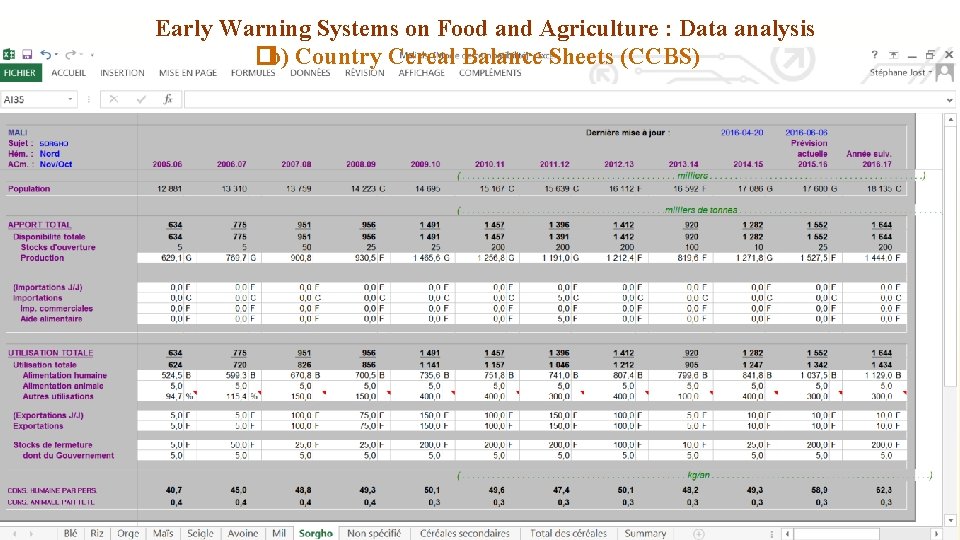
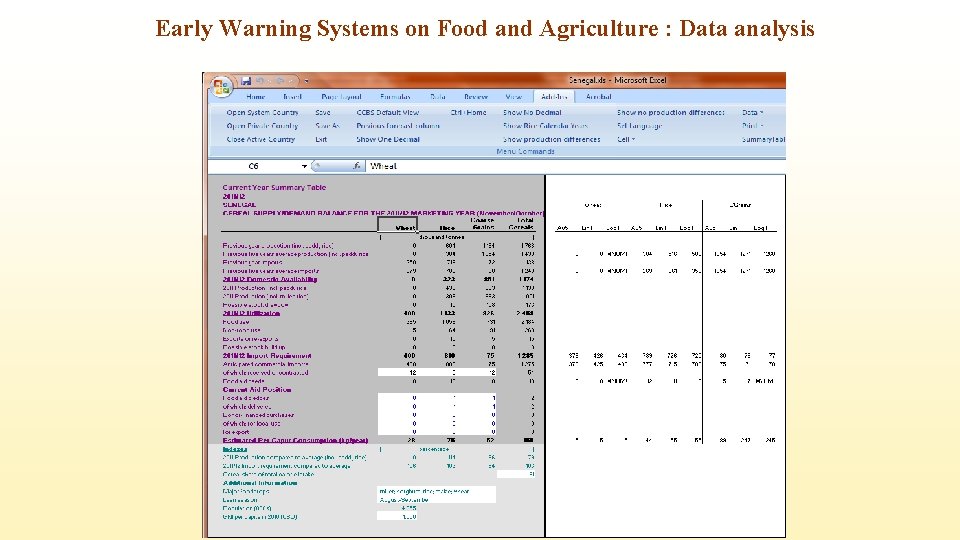
Early Warning Systems on Food and Agriculture : Data analysis �b) Country Cereal Balance Sheets (CCBS)
Early Warning Systems on Food and Agriculture : Data analysis
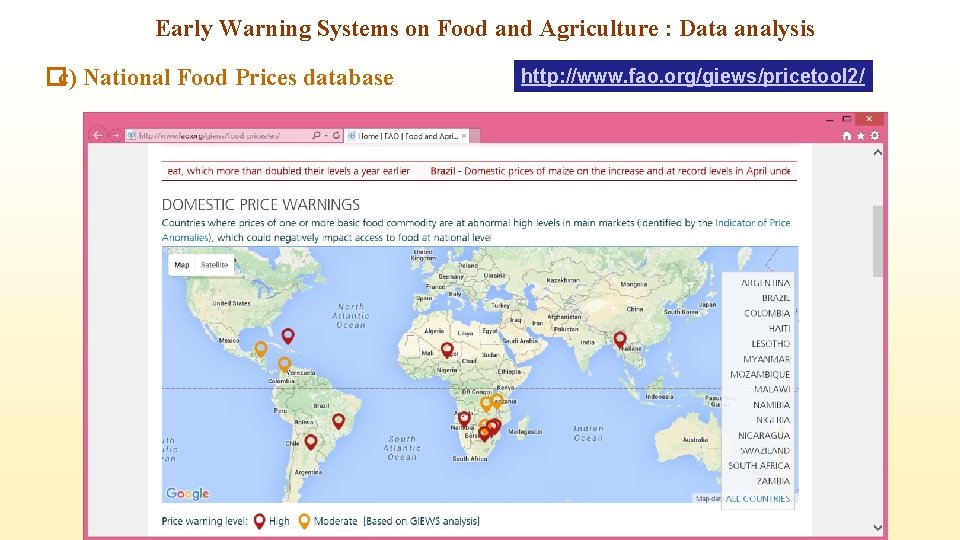
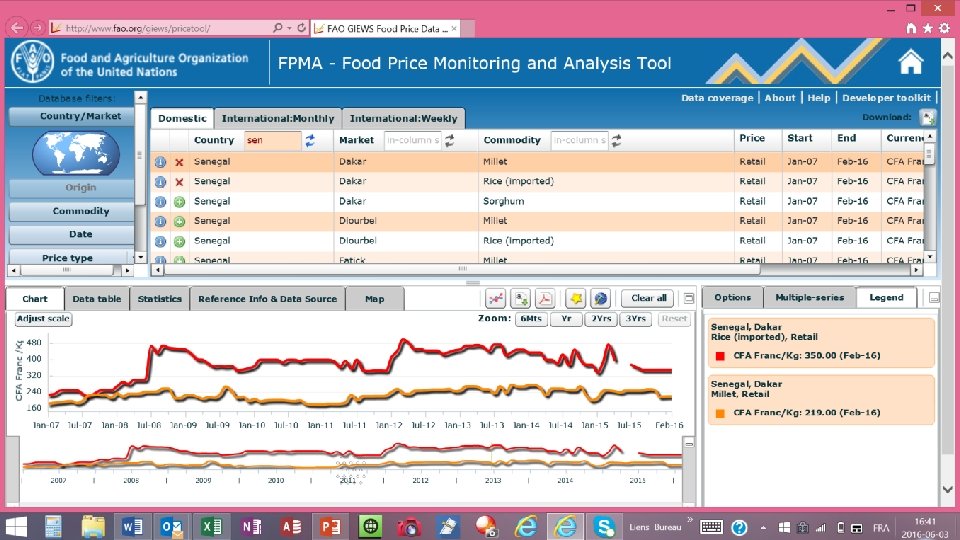
Early Warning Systems on Food and Agriculture : Data analysis �c) National Food Prices database http: //www. fao. org/giews/pricetool 2/
Early Warning Systems on Food and Agriculture : Data analysis
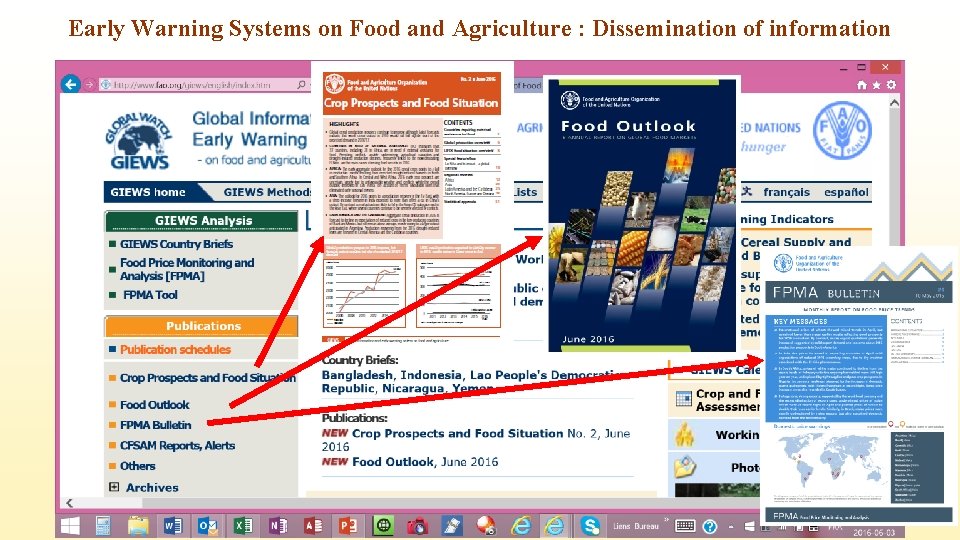
Early Warning Systems on Food and Agriculture : Dissemination of information 3) Dissemination of information
Early Warning Systems on Food and Agriculture : Dissemination of information
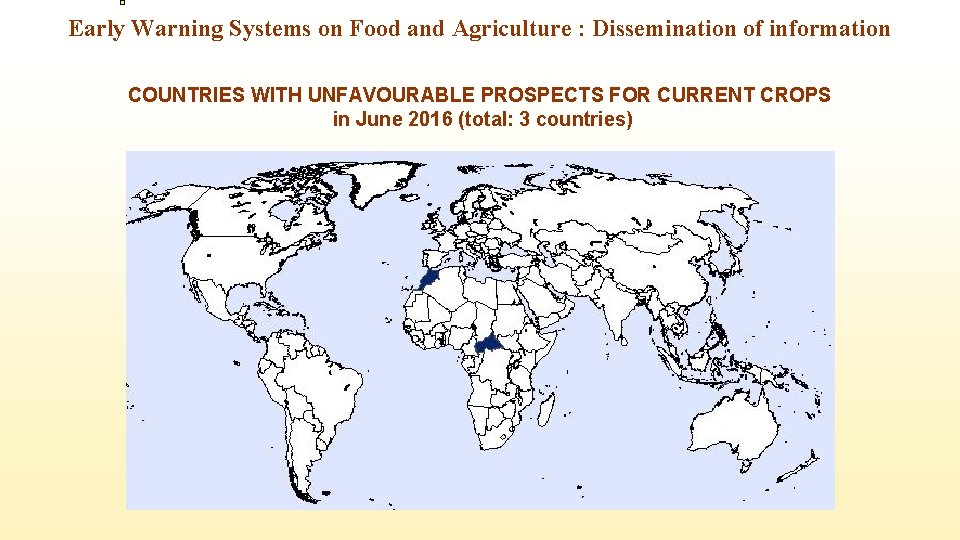
Early Warning Systems on Food and Agriculture : Dissemination of information COUNTRIES WITH UNFAVOURABLE PROSPECTS FOR CURRENT CROPS in June 2016 (total: 3 countries)
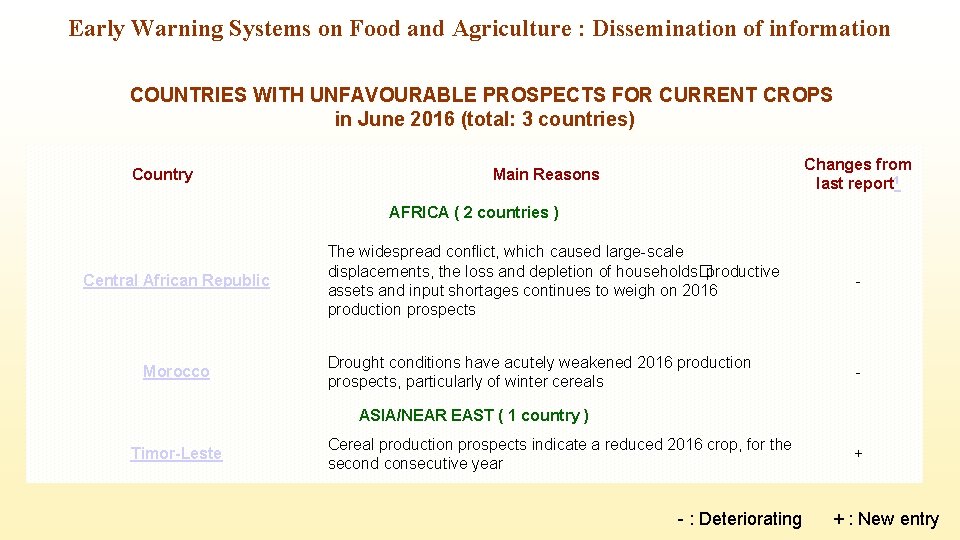
Early Warning Systems on Food and Agriculture : Dissemination of information COUNTRIES WITH UNFAVOURABLE PROSPECTS FOR CURRENT CROPS in June 2016 (total: 3 countries) Country Changes from last report 1 Main Reasons AFRICA ( 2 countries ) Central African Republic Morocco The widespread conflict, which caused large-scale displacements, the loss and depletion of households� productive assets and input shortages continues to weigh on 2016 production prospects - Drought conditions have acutely weakened 2016 production prospects, particularly of winter cereals - ASIA/NEAR EAST ( 1 country ) Timor-Leste Cereal production prospects indicate a reduced 2016 crop, for the second consecutive year - : Deteriorating + + : New entry
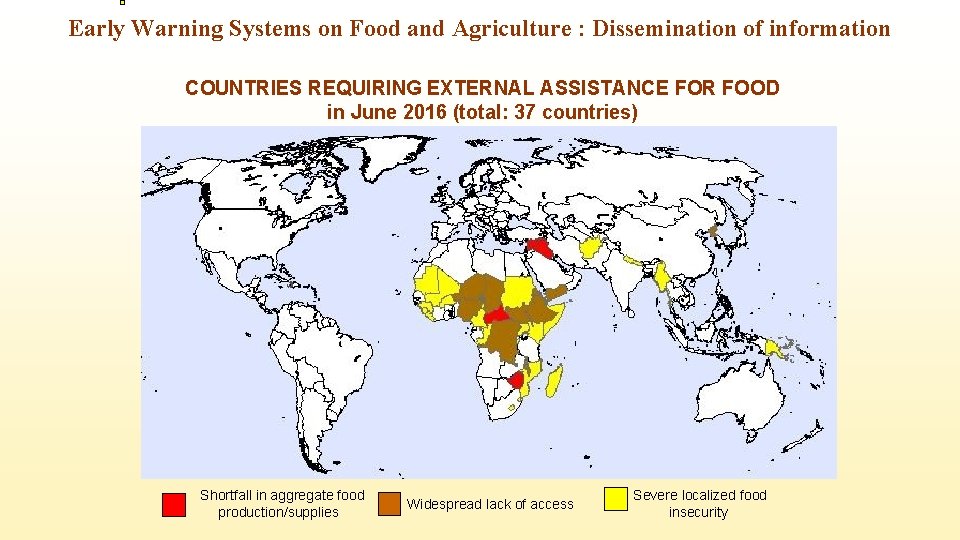
Early Warning Systems on Food and Agriculture : Dissemination of information COUNTRIES REQUIRING EXTERNAL ASSISTANCE FOR FOOD in June 2016 (total: 37 countries) Shortfall in aggregate food production/supplies Widespread lack of access Severe localized food insecurity
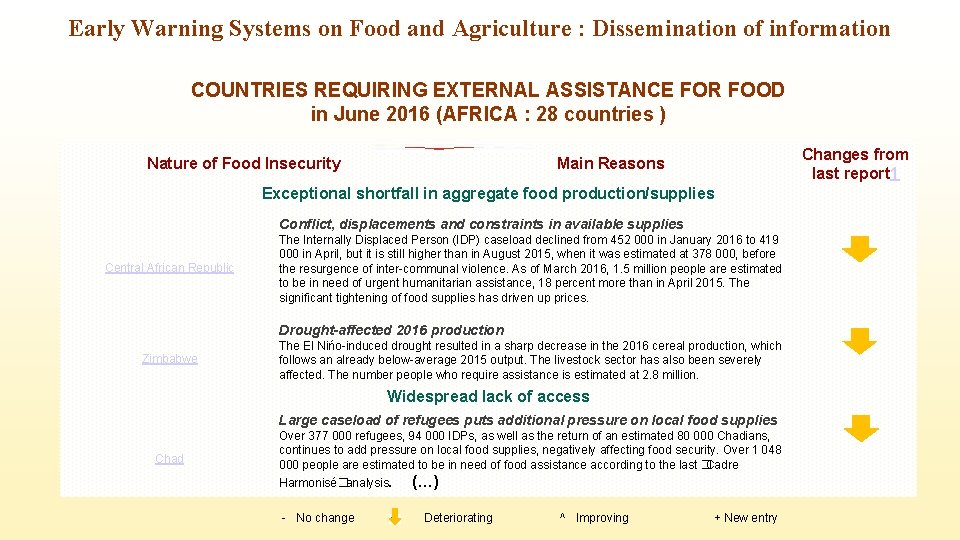
Early Warning Systems on Food and Agriculture : Dissemination of information COUNTRIES REQUIRING EXTERNAL ASSISTANCE FOR FOOD in June 2016 (AFRICA : 28 countries ) Nature of Food Insecurity Changes from last report 1 Main Reasons Exceptional shortfall in aggregate food production/supplies Conflict, displacements and constraints in available supplies Central African Republic The Internally Displaced Person (IDP) caseload declined from 452 000 in January 2016 to 419 000 in April, but it is still higher than in August 2015, when it was estimated at 378 000, before the resurgence of inter-communal violence. As of March 2016, 1. 5 million people are estimated to be in need of urgent humanitarian assistance, 18 percent more than in April 2015. The significant tightening of food supplies has driven up prices. Drought-affected 2016 production Zimbabwe The El Nińo-induced drought resulted in a sharp decrease in the 2016 cereal production, which follows an already below-average 2015 output. The livestock sector has also been severely affected. The number people who require assistance is estimated at 2. 8 million. Widespread lack of access Large caseload of refugees puts additional pressure on local food supplies Chad Over 377 000 refugees, 94 000 IDPs, as well as the return of an estimated 80 000 Chadians, continues to add pressure on local food supplies, negatively affecting food security. Over 1 048 000 people are estimated to be in need of food assistance according to the last � Cadre Harmonisé� analysis. (…) - No change Deteriorating ^ Improving + New entry
Early Warning Systems on Food and Agriculture Master in Human Development & Food Security Università Roma 3 8 June 2016 Thank you for your attention