
Early SocialEmotional and Cognitive Basis for Human Development
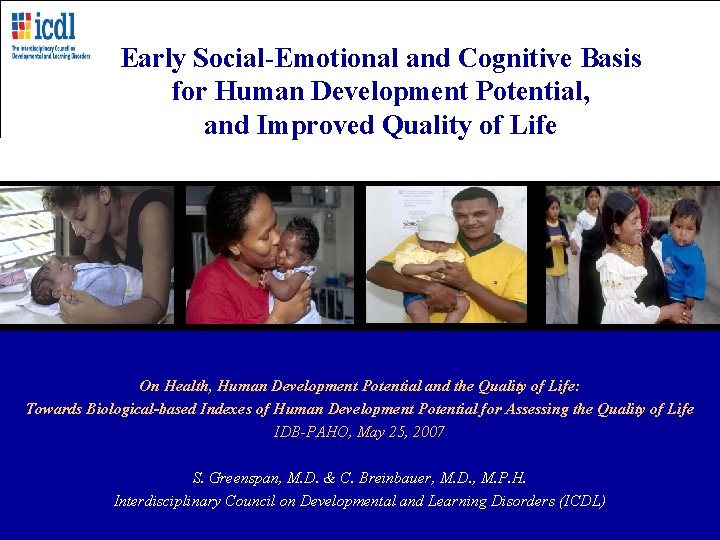
Early Social-Emotional and Cognitive Basis for Human Development Potential, and Improved Quality of Life On Health, Human Development Potential and the Quality of Life: Towards Biological-based Indexes of Human Development Potential for Assessing the Quality of Life IDB-PAHO, May 25, 2007 S. Greenspan, M. D. & C. Breinbauer, M. D. , M. P. H. Interdisciplinary Council on Developmental and Learning Disorders (ICDL)
Brain Development Index? ? “Social-Emotional & Cognitive Development” ü The evidence is clear: good nutrition and social, emotional, language and cognitive development are critical for human development and quality of life ü We know how to measure early childhood stunting Ø The next challenge is to develop “internationally comparable and feasible measures of child development” (Grantham-Mc. Greggor et al. , 2007)
Traditional Domains of Child Development • • • Language Cognitive (IQ) Social-Emotional Fine Motor Gross Motor Limitations for internationally comparable & feasible measures: • Separate and/or long instruments for each domain • Complex application, expensive • Fragmented approach
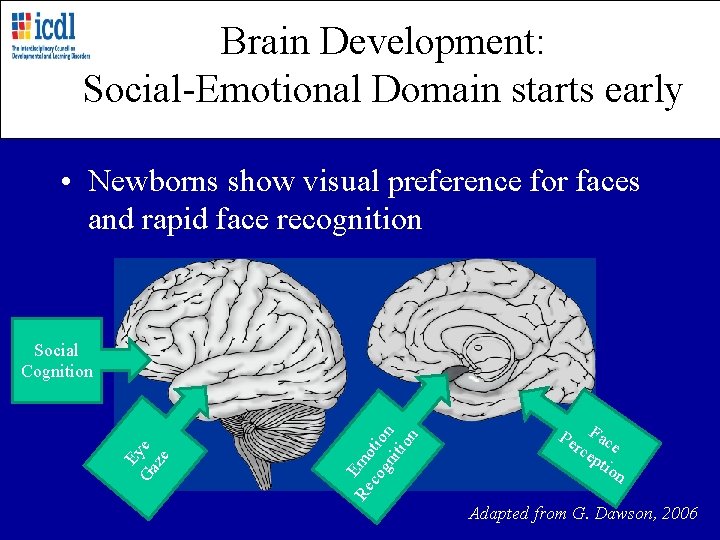
Brain Development: Social-Emotional Domain starts early • Newborns show visual preference for faces and rapid face recognition Re Emo co tio gn n iti on E Ga ye ze Social Cognition Pe Fac rce e pti on Adapted from G. Dawson, 2006
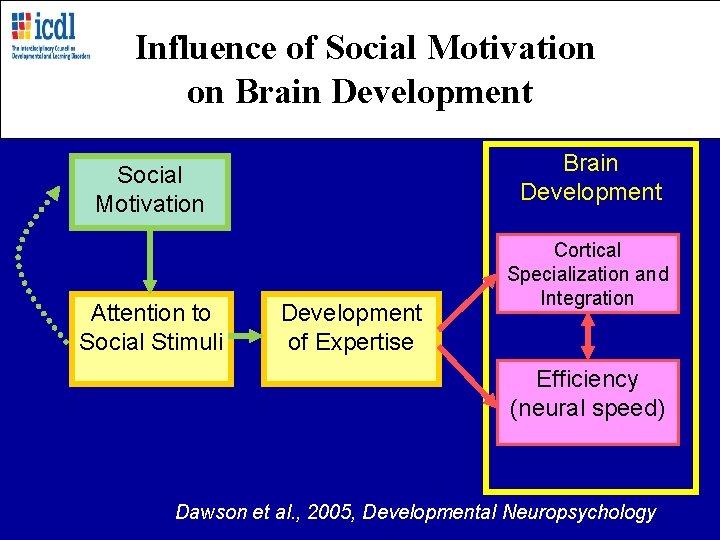
Influence of Social Motivation on Brain Development Social Motivation Attention to Social Stimuli Development of Expertise Cortical Specialization and Integration Efficiency (neural speed) Dawson et al. , 2005, Developmental Neuropsychology
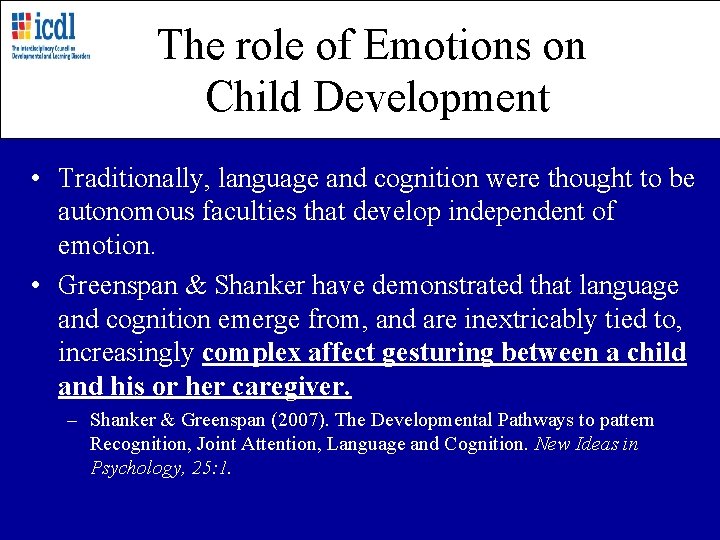
The role of Emotions on Child Development • Traditionally, language and cognition were thought to be autonomous faculties that develop independent of emotion. • Greenspan & Shanker have demonstrated that language and cognition emerge from, and are inextricably tied to, increasingly complex affect gesturing between a child and his or her caregiver. – Shanker & Greenspan (2007). The Developmental Pathways to pattern Recognition, Joint Attention, Language and Cognition. New Ideas in Psychology, 25: 1.

Classical Domains • • • Language Cognitive Socio-emotional Gross motor Fine motor Functional , Integrated Social-Emotional , Language & Cognitive Domains • • Attention & Regulation Engagement Purposeful Communication Problem Solving Symbolic Ideas Logical, Critical Thinking Multi-Causal, Comparative, and Triangular Thinking • Gray-Area Thinking • Reflective Thinking
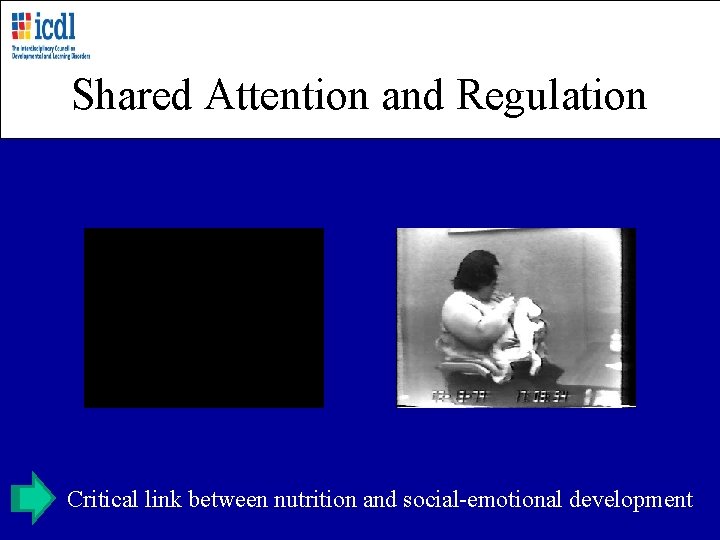
Shared Attention and Regulation Critical link between nutrition and social-emotional development
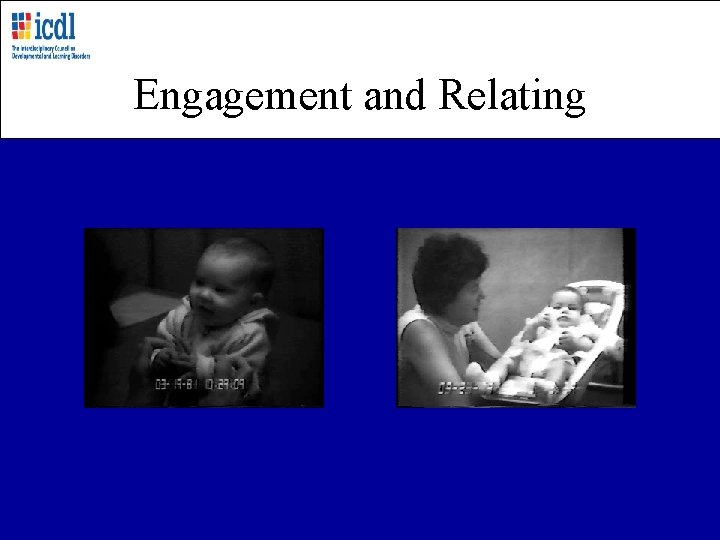
Engagement and Relating
Purposeful Emotional Interactions
Shared Problem Solving
Emotional Ideas
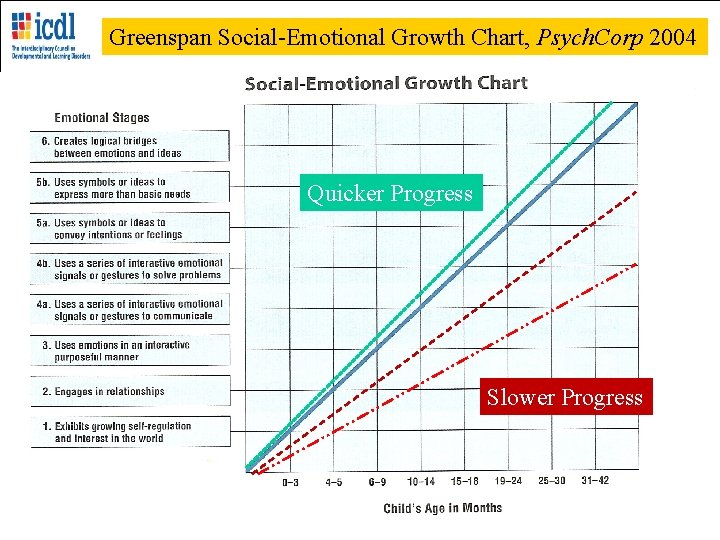
Greenspan Social-Emotional Growth Chart, Psych. Corp 2004 Quicker Progress Slower Progress
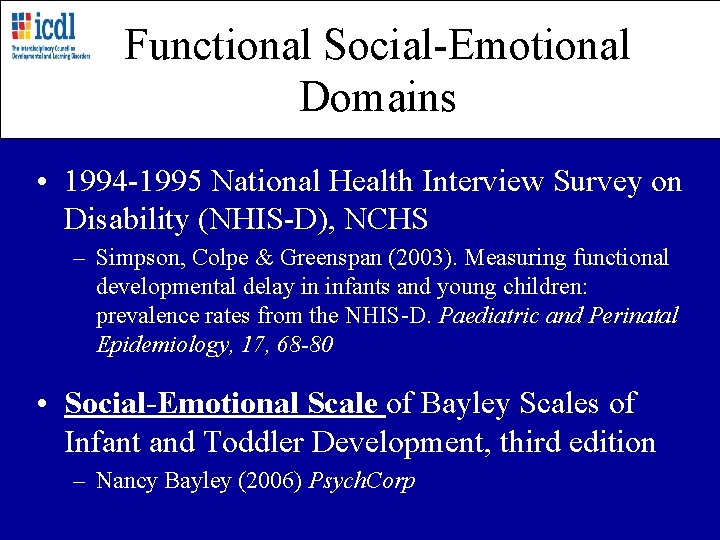
Functional Social-Emotional Domains • 1994 -1995 National Health Interview Survey on Disability (NHIS-D), NCHS – Simpson, Colpe & Greenspan (2003). Measuring functional developmental delay in infants and young children: prevalence rates from the NHIS-D. Paediatric and Perinatal Epidemiology, 17, 68 -80 • Social-Emotional Scale of Bayley Scales of Infant and Toddler Development, third edition – Nancy Bayley (2006) Psych. Corp
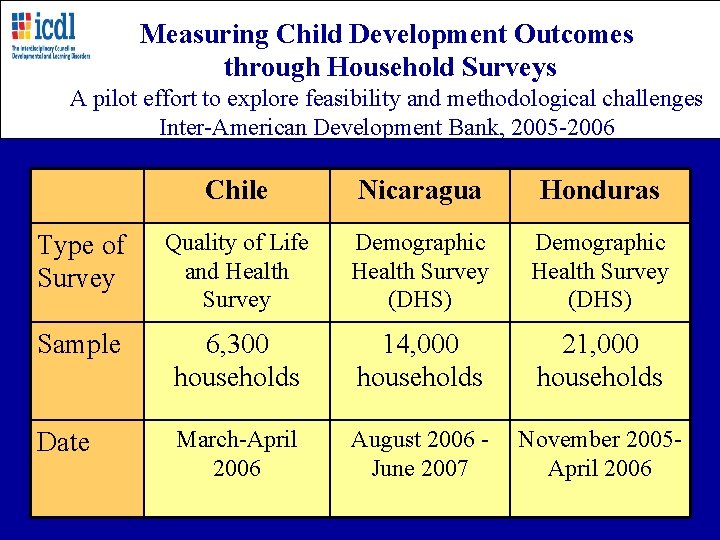
Measuring Child Development Outcomes through Household Surveys A pilot effort to explore feasibility and methodological challenges Inter-American Development Bank, 2005 -2006 Chile Nicaragua Honduras Type of Survey Quality of Life and Health Survey Demographic Health Survey (DHS) Sample 6, 300 households 14, 000 households 21, 000 households Date March-April 2006 August 2006 June 2007 November 2005 April 2006
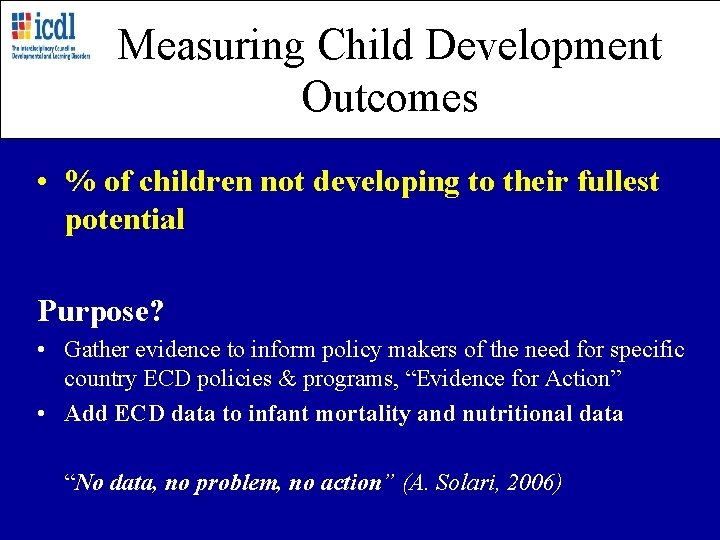
Measuring Child Development Outcomes • % of children not developing to their fullest potential Purpose? • Gather evidence to inform policy makers of the need for specific country ECD policies & programs, “Evidence for Action” • Add ECD data to infant mortality and nutritional data Ø “No data, no problem, no action” (A. Solari, 2006)
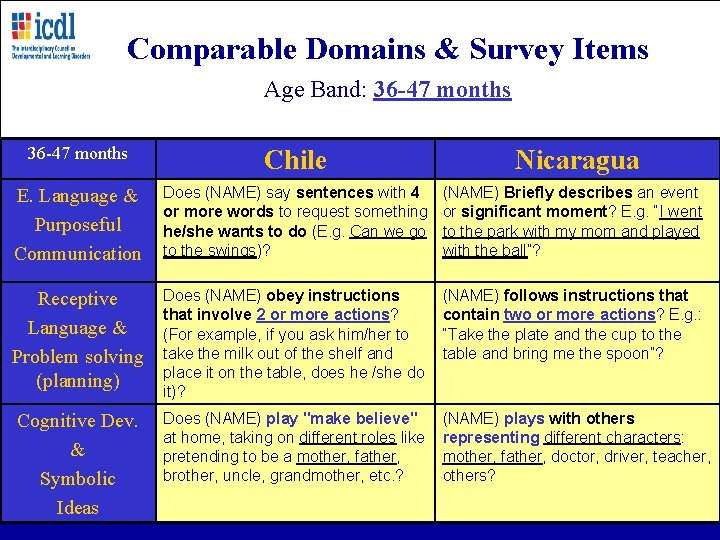
Comparable Domains & Survey Items Age Band: 36 -47 months Chile E. Language & Purposeful Communication Does (NAME) say sentences with 4 or more words to request something he/she wants to do (E. g. Can we go to the swings)? (NAME) Briefly describes an event or significant moment? E. g. “I went to the park with my mom and played with the ball”? Receptive Language & Problem solving (planning) Does (NAME) obey instructions that involve 2 or more actions? (For example, if you ask him/her to take the milk out of the shelf and place it on the table, does he /she do it)? (NAME) follows instructions that contain two or more actions? E. g. : “Take the plate and the cup to the table and bring me the spoon”? Cognitive Dev. & Symbolic Ideas Does (NAME) play "make believe" at home, taking on different roles like pretending to be a mother, father, brother, uncle, grandmother, etc. ? (NAME) plays with others representing different characters: mother, father, doctor, driver, teacher, others? Nicaragua
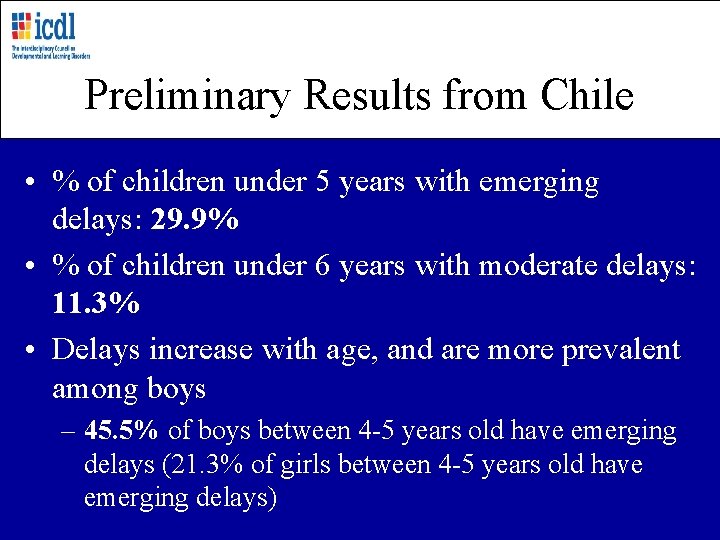
Preliminary Results from Chile • % of children under 5 years with emerging delays: 29. 9% • % of children under 6 years with moderate delays: 11. 3% • Delays increase with age, and are more prevalent among boys – 45. 5% of boys between 4 -5 years old have emerging delays (21. 3% of girls between 4 -5 years old have emerging delays)
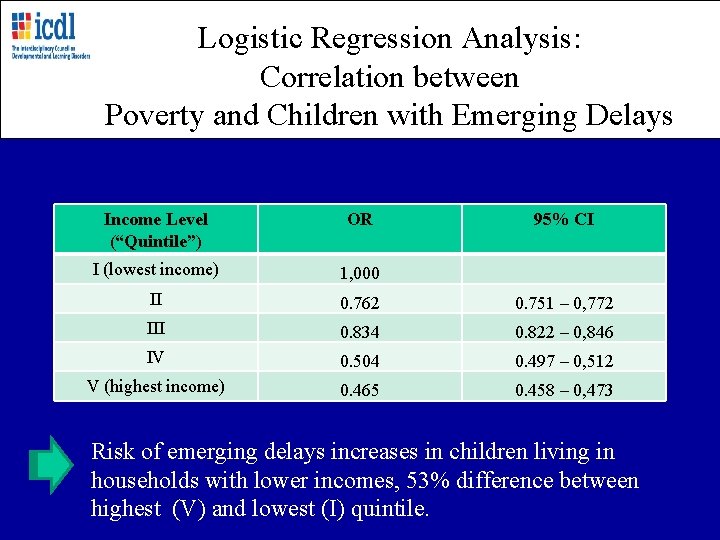
Logistic Regression Analysis: Correlation between Poverty and Children with Emerging Delays Income Level (“Quintile”) OR 95% CI I (lowest income) 1, 000 II 0. 762 0. 751 – 0, 772 III 0. 834 0. 822 – 0, 846 IV 0. 504 0. 497 – 0, 512 V (highest income) 0. 465 0. 458 – 0, 473 Risk of emerging delays increases in children living in households with lower incomes, 53% difference between highest (V) and lowest (I) quintile.
Conclusions • Optimal nutrition and social-emotional development are the basic building blocks for higher level thinking abilities, human development and quality of life. • It is feasible to measure early child development outcomes through household surveys by interviewing their main caretaker, usually the mother. • More work is needed to develop feasible valid, reliable, and internationally comparable measures of early child development.
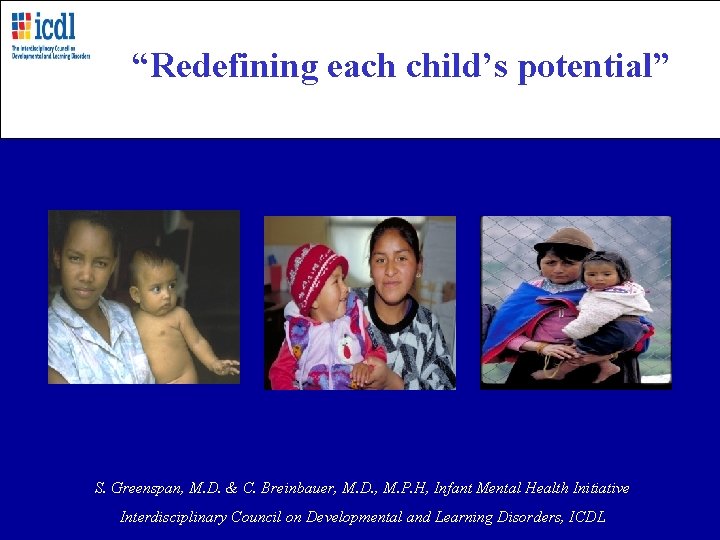
“Redefining each child’s potential” S. Greenspan, M. D. & C. Breinbauer, M. D. , M. P. H, Infant Mental Health Initiative Interdisciplinary Council on Developmental and Learning Disorders, ICDL
- Slides: 21