
Early Rome Roman as a City and Roman
- Slides: 15
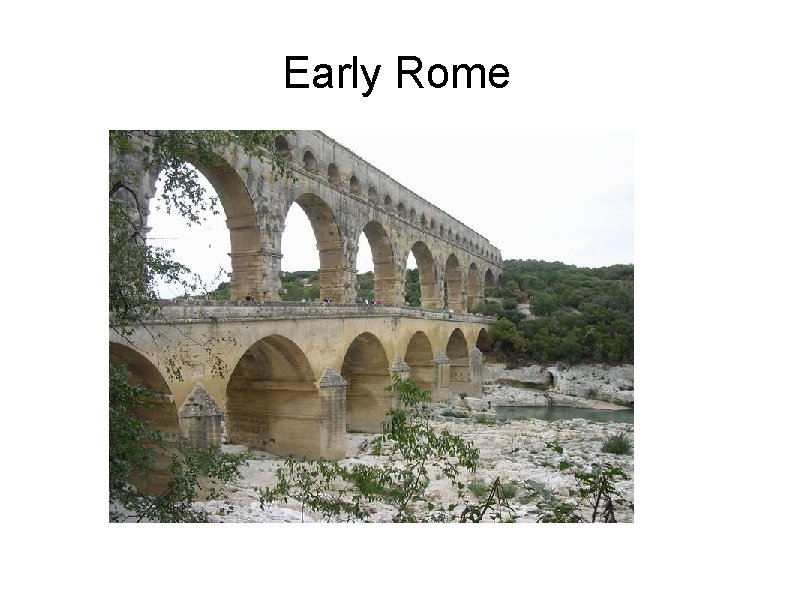
Early Rome
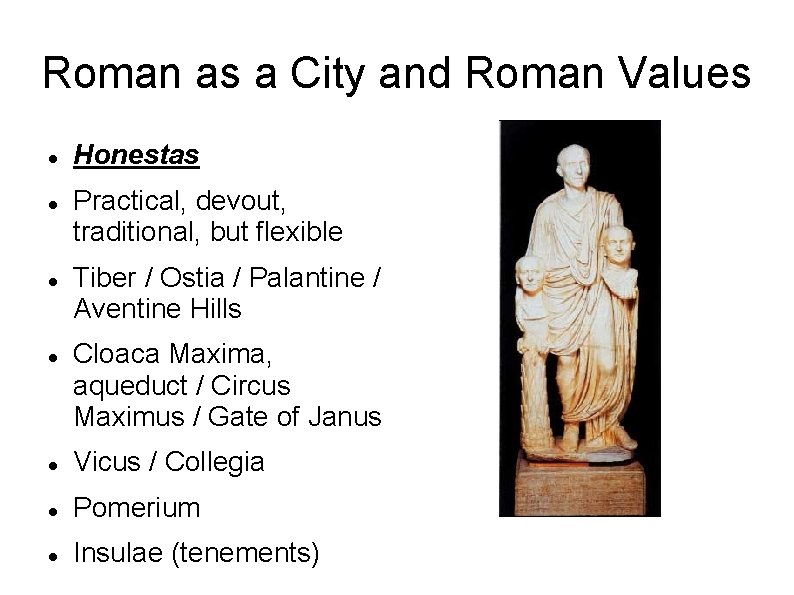
Roman as a City and Roman Values Honestas Practical, devout, traditional, but flexible Tiber / Ostia / Palantine / Aventine Hills Cloaca Maxima, aqueduct / Circus Maximus / Gate of Janus Vicus / Collegia Pomerium Insulae (tenements)
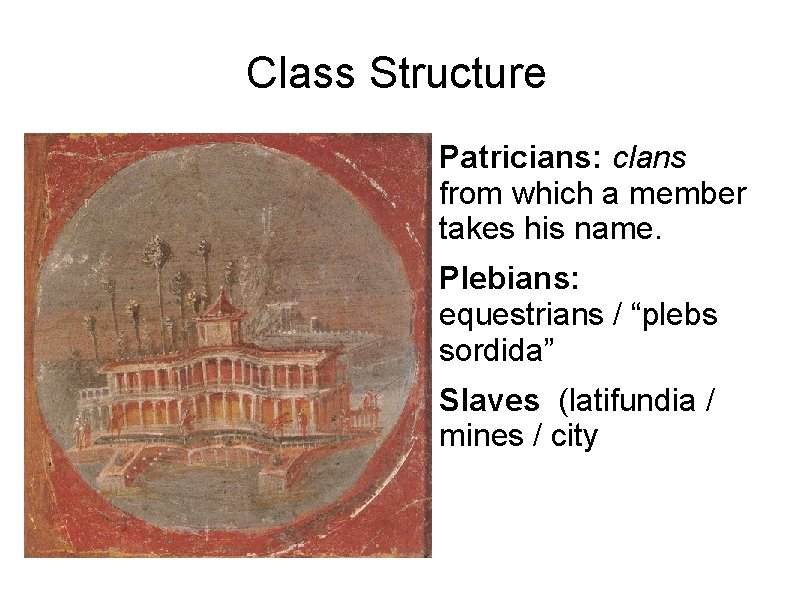
Class Structure Patricians: clans from which a member takes his name. Plebians: equestrians / “plebs sordida” Slaves (latifundia / mines / city
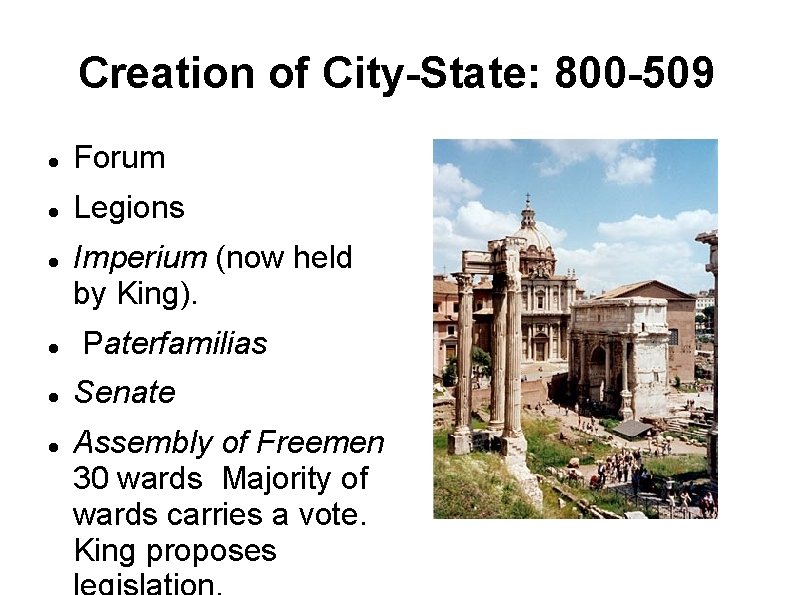
Creation of City-State: 800 -509 Forum Legions Imperium (now held by King). Paterfamilias Senate Assembly of Freemen 30 wards Majority of wards carries a vote. King proposes
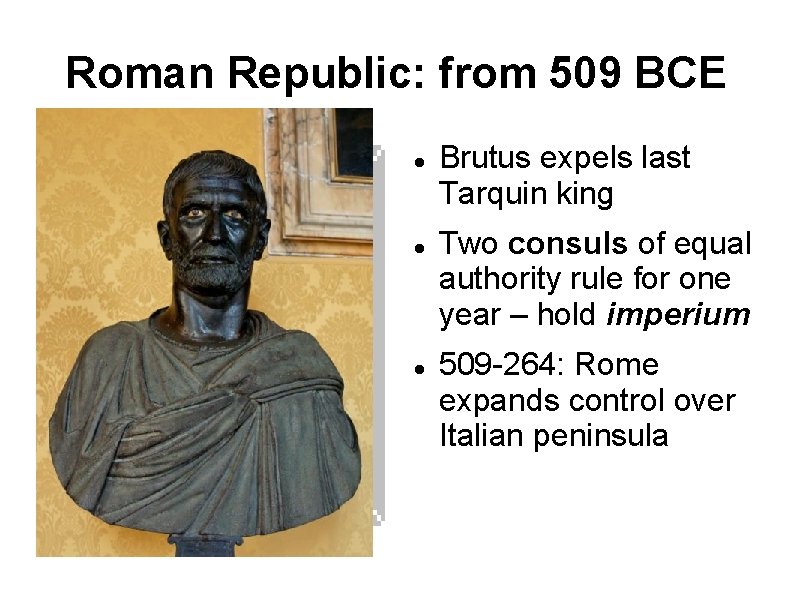
Roman Republic: from 509 BCE Double-click to add graphics Brutus expels last Tarquin king Two consuls of equal authority rule for one year – hold imperium 509 -264: Rome expands control over Italian peninsula
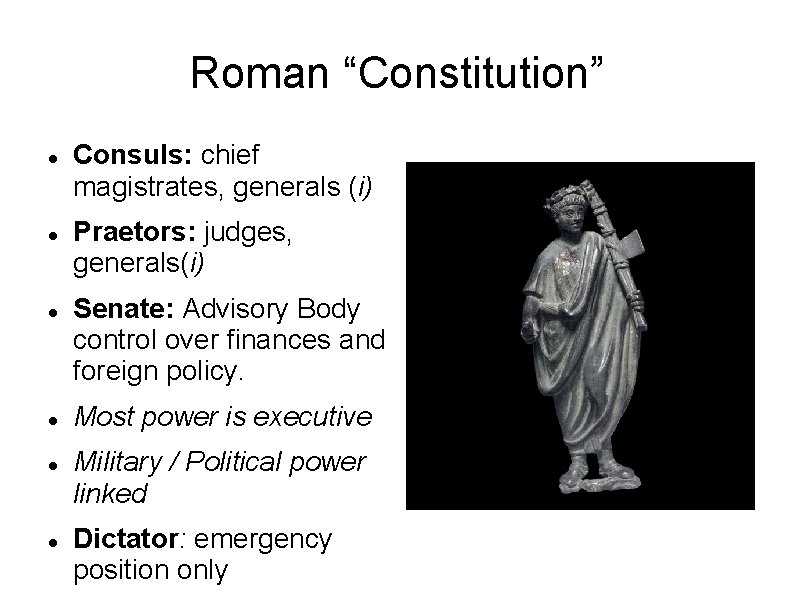
Roman “Constitution” Consuls: chief magistrates, generals (i) Praetors: judges, generals(i) Senate: Advisory Body control over finances and foreign policy. Most power is executive Military / Political power linked Dictator: emergency position only
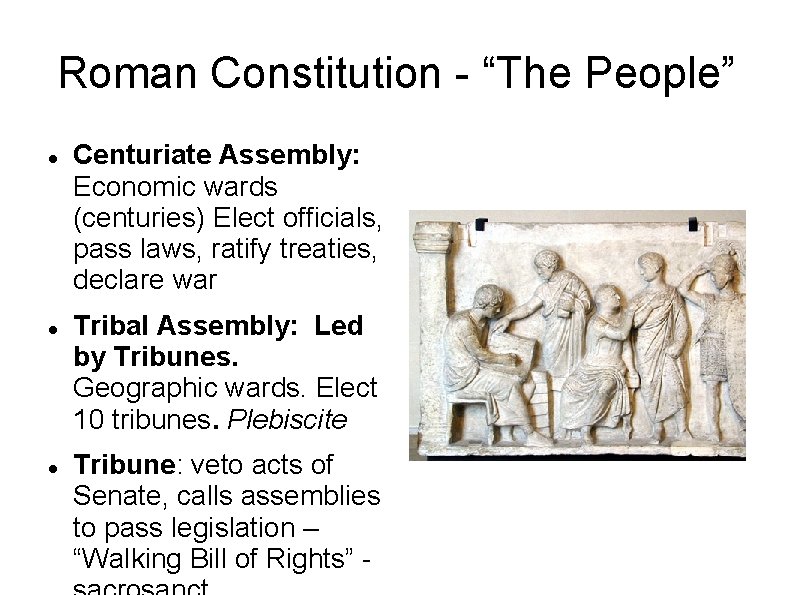
Roman Constitution - “The People” Centuriate Assembly: Economic wards (centuries) Elect officials, pass laws, ratify treaties, declare war Tribal Assembly: Led by Tribunes. Geographic wards. Elect 10 tribunes. Plebiscite Tribune: veto acts of Senate, calls assemblies to pass legislation – “Walking Bill of Rights” -
Struggle for Plebian Rights Conflict of the Orders (490 -287) Plebs force patricians to cede rights such as the right to vote in Assembly, to have tribunes as leaders of assembly, for plebs to be eligible for consulship 287 - Plebs strike to remove partum auctoritas (patrician approval on all legislation) Free citizens: rights and duties Wives and children can be emancipated. But Senatorial aristocracy dominates
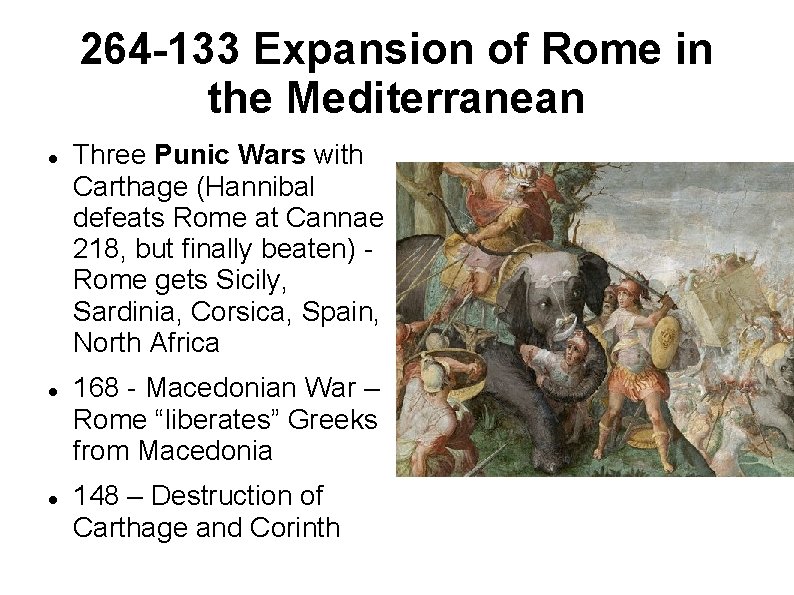
264 -133 Expansion of Rome in the Mediterranean Three Punic Wars with Carthage (Hannibal defeats Rome at Cannae 218, but finally beaten) Rome gets Sicily, Sardinia, Corsica, Spain, North Africa 168 - Macedonian War – Rome “liberates” Greeks from Macedonia 148 – Destruction of Carthage and Corinth
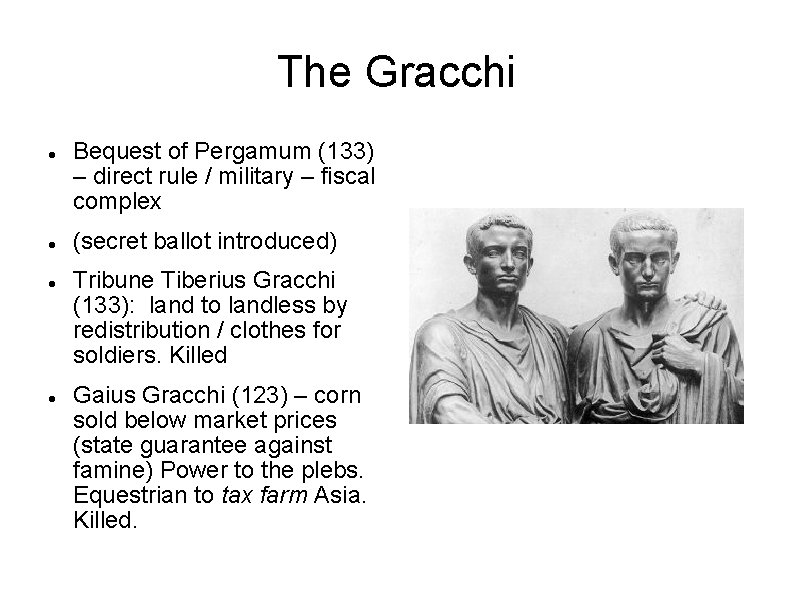
The Gracchi Bequest of Pergamum (133) – direct rule / military – fiscal complex (secret ballot introduced) Tribune Tiberius Gracchi (133): land to landless by redistribution / clothes for soldiers. Killed Gaius Gracchi (123) – corn sold below market prices (state guarantee against famine) Power to the plebs. Equestrian to tax farm Asia. Killed.
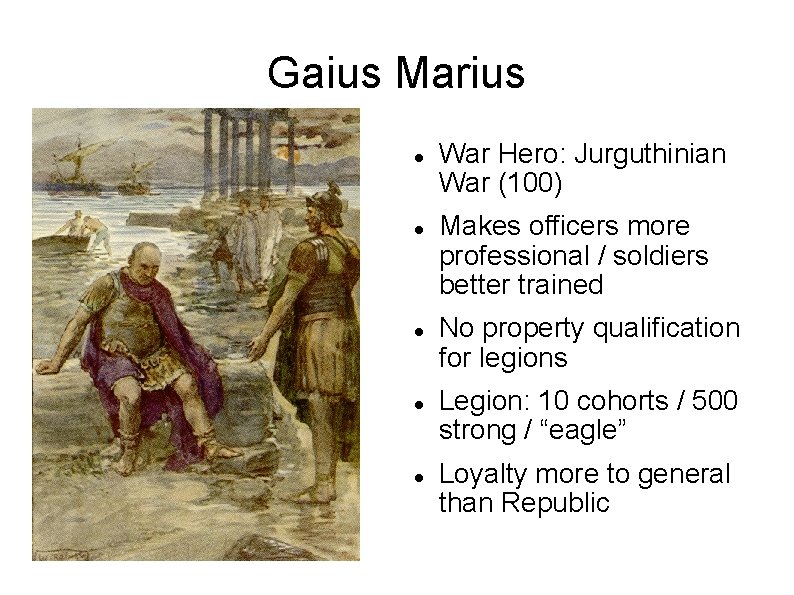
Gaius Marius War Hero: Jurguthinian War (100) Makes officers more professional / soldiers better trained No property qualification for legions Legion: 10 cohorts / 500 strong / “eagle” Loyalty more to general than Republic
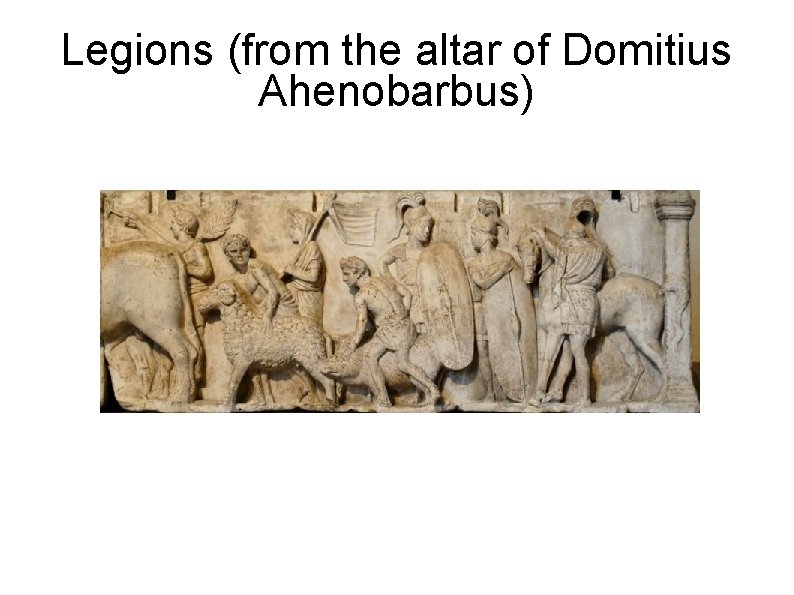
Legions (from the altar of Domitius Ahenobarbus)
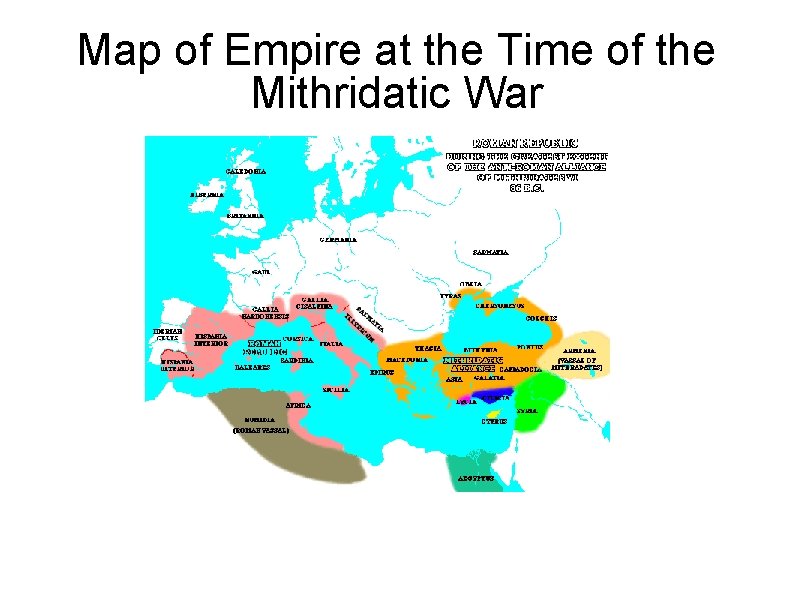
Map of Empire at the Time of the Mithridatic War
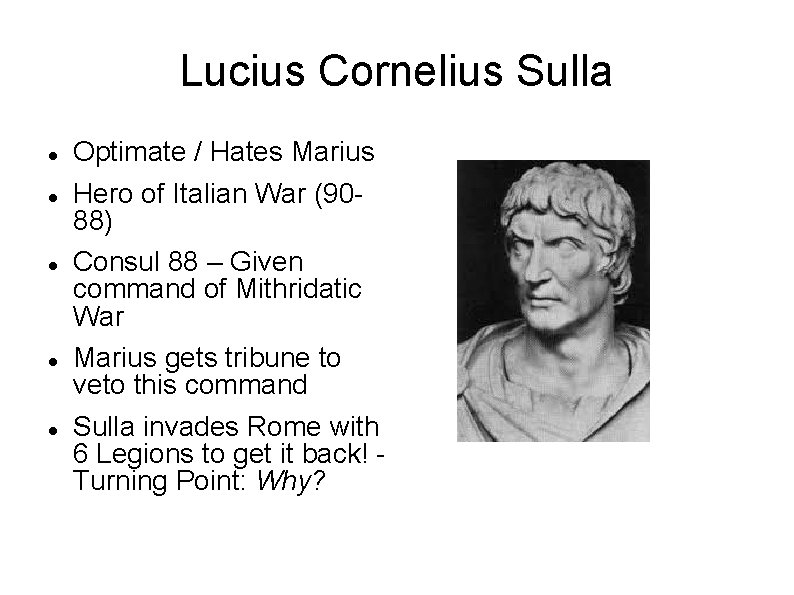
Lucius Cornelius Sulla Optimate / Hates Marius Hero of Italian War (9088) Consul 88 – Given command of Mithridatic War Marius gets tribune to veto this command Sulla invades Rome with 6 Legions to get it back! Turning Point: Why?
Civil War (83 -82) Marians (populares) vs. Sullas (optimates) While Sulla is fighting Mithradates, Marius becomes consul Sulla returns to Rome and routes him, becomes dictator Orders mass killings of populares (bounties) Kills the rich to pay his troops and give them land Resigns as dictator in 79 “Reforms”: reduces power of tribunes / empowers Senate – more Senators, power of courts, most of power of republic