
Early Onset Spinal Abnormalities Treatment and Complications in
Early Onset Spinal Abnormalities, Treatment, and Complications in Loeys-Dietz Syndrome Sara K. Fuhrhop, BS Mark J. Mc. Elroy, MS Harry C. Dietz, MD Paul D. Sponseller, MD
Disclosures Sara Fuhrhop: None Mark Mc. Elroy: None Harry Dietz: None Paul Sponseller: – Depuy spine- research support, consultant, royalties – Globus- royalties – JBJS- Pediatrics editor

Background Loeys-Dietz Syndrome (LDS) – Autosomal dominant connective tissue disorder – Mutations in TGF-βR 1 & TGF-βR 2 genes – Characterized by vascular tortuosity and aggressive aneurysm formation, midline defects, and musculoskeletal abnormalities – Early recognition
Background Spinal abnormalities have been reported and involve all aspects of the spine among patients of all ages: – 19% cervical spine formation defects or instability – 25% scoliosis – 67% dural ectasia
Objectives In LDS patients ≤ 10 years old: – Quantify the prevalence of spinal abnormalities – Report treatment and complications
Methods • Patient population – 42 patients diagnosed with LDS – Age ≤ 10 years (median 6. 8 ± 3. 5, range 1. 3 -10. 5) – Average length of follow up 5. 3 years • Data collection – Cervical spine neutral, flexion, and extension x-rays – TL spine x-rays and CT – Some imaging modalities were not available for all patients, so results are reported as a fraction of those imaged.
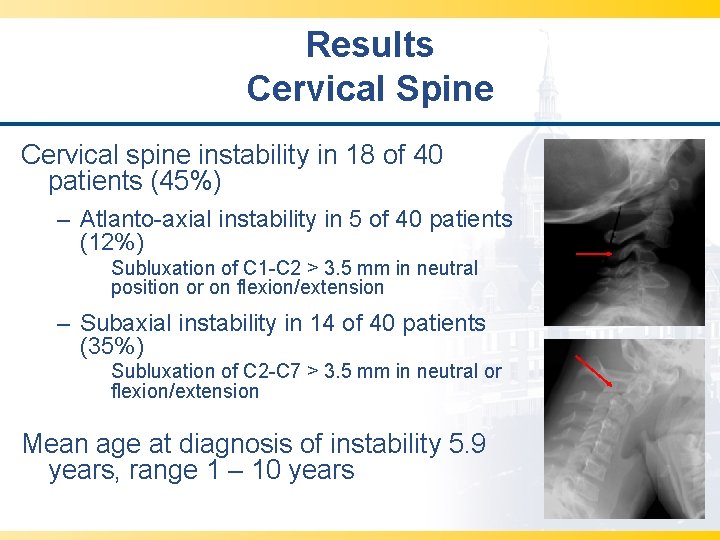
Results Cervical Spine Cervical spine instability in 18 of 40 patients (45%) – Atlanto-axial instability in 5 of 40 patients (12%) Subluxation of C 1 -C 2 > 3. 5 mm in neutral position or on flexion/extension – Subaxial instability in 14 of 40 patients (35%) Subluxation of C 2 -C 7 > 3. 5 mm in neutral or flexion/extension Mean age at diagnosis of instability 5. 9 years, range 1 – 10 years
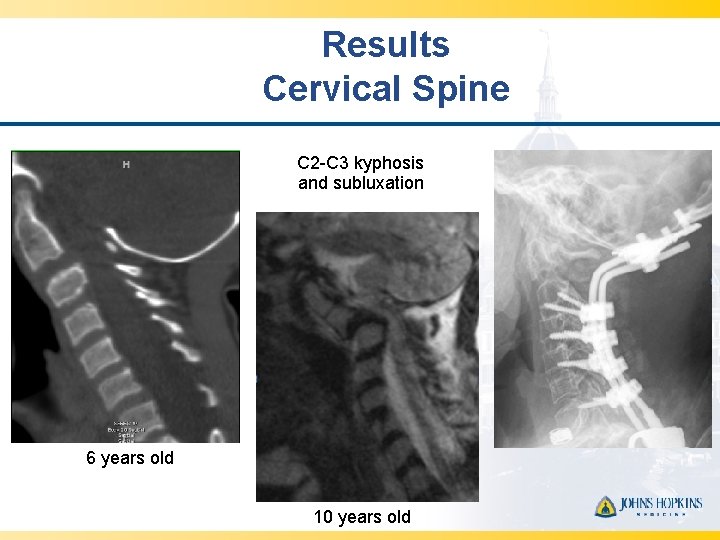
Results Cervical Spine C 2 -C 3 kyphosis and subluxation 6 years old 10 years old
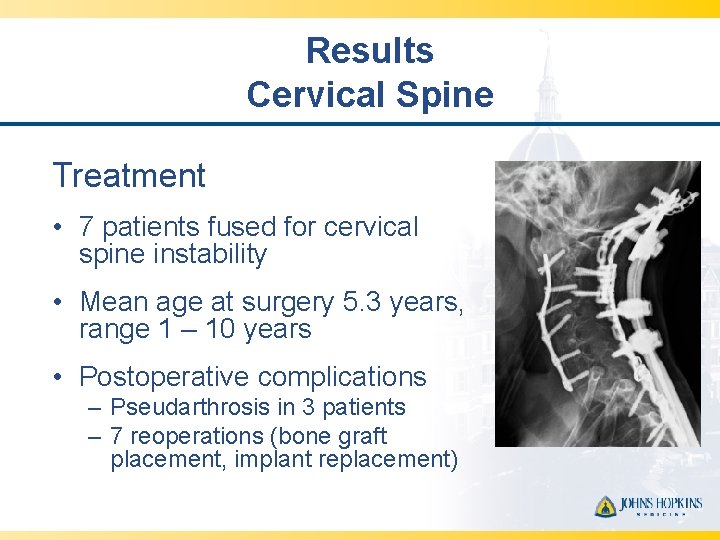
Results Cervical Spine Treatment • 7 patients fused for cervical spine instability • Mean age at surgery 5. 3 years, range 1 – 10 years • Postoperative complications – Pseudarthrosis in 3 patients – 7 reoperations (bone graft placement, implant replacement)
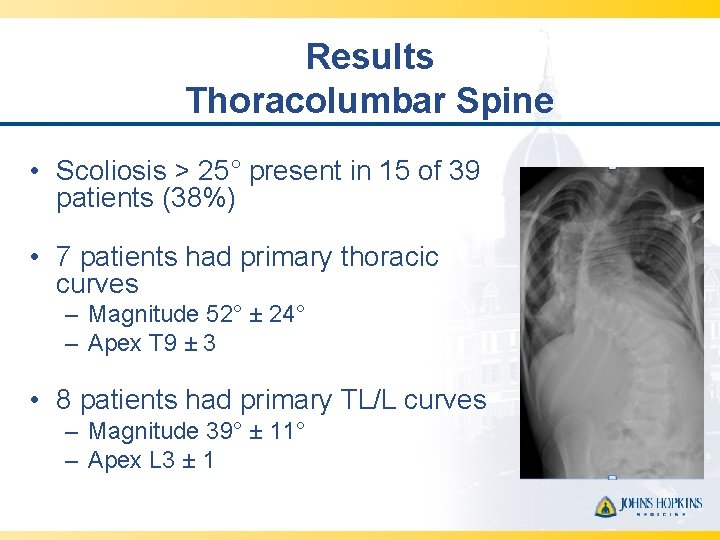
Results Thoracolumbar Spine • Scoliosis > 25° present in 15 of 39 patients (38%) • 7 patients had primary thoracic curves – Magnitude 52° ± 24° – Apex T 9 ± 3 • 8 patients had primary TL/L curves – Magnitude 39° ± 11° – Apex L 3 ± 1
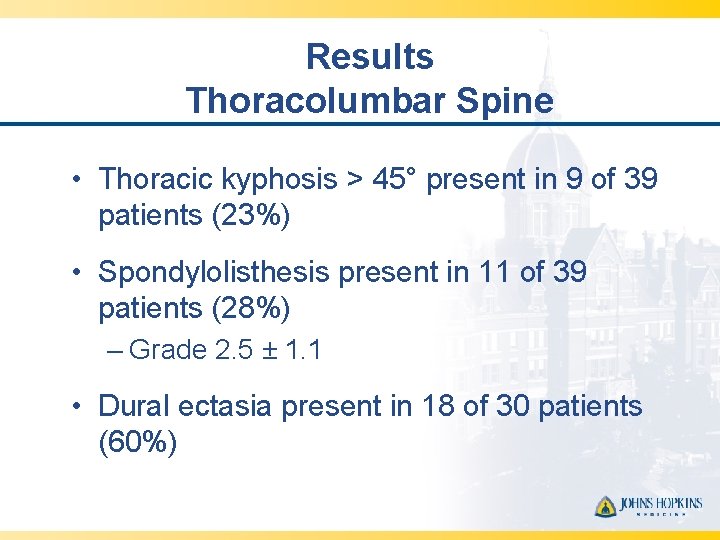
Results Thoracolumbar Spine • Thoracic kyphosis > 45° present in 9 of 39 patients (23%) • Spondylolisthesis present in 11 of 39 patients (28%) – Grade 2. 5 ± 1. 1 • Dural ectasia present in 18 of 30 patients (60%)
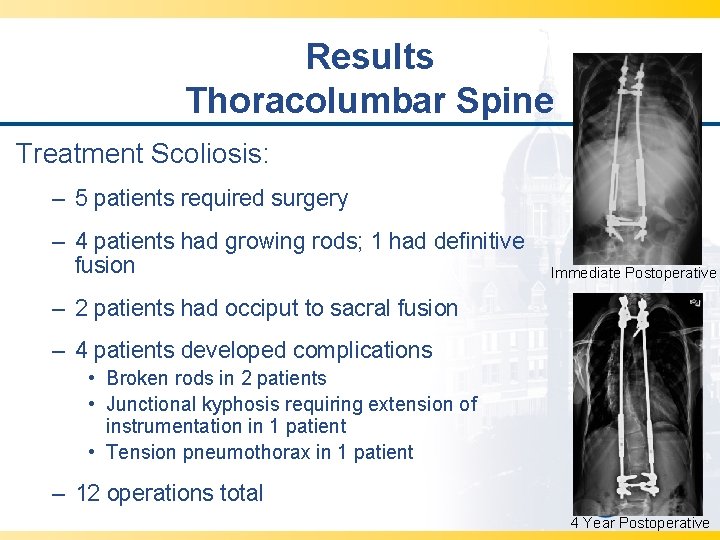
Results Thoracolumbar Spine Treatment Scoliosis: – 5 patients required surgery – 4 patients had growing rods; 1 had definitive fusion Immediate Postoperative – 2 patients had occiput to sacral fusion – 4 patients developed complications • Broken rods in 2 patients • Junctional kyphosis requiring extension of instrumentation in 1 patient • Tension pneumothorax in 1 patient – 12 operations total 4 Year Postoperative
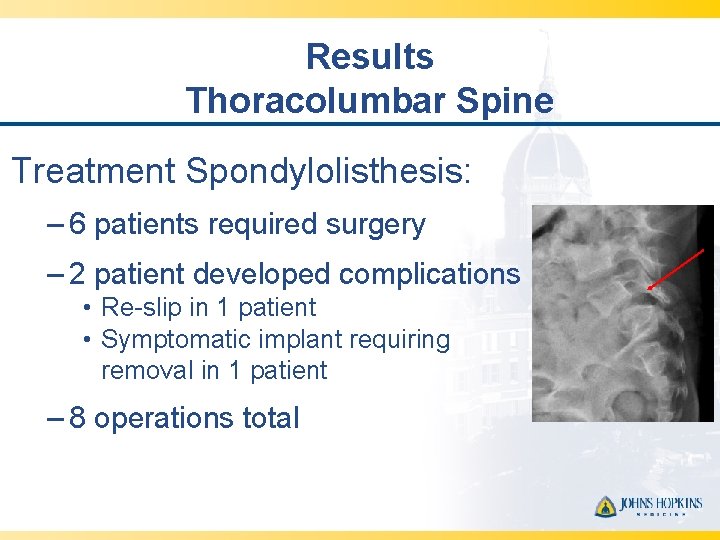
Results Thoracolumbar Spine Treatment Spondylolisthesis: – 6 patients required surgery – 2 patient developed complications • Re-slip in 1 patient • Symptomatic implant requiring removal in 1 patient – 8 operations total
Limitations 1. Incomplete records: Not all areas of the spine were imaged for every patient. 2. Sampling bias: The more severely involved patients may have been treated at our institution.
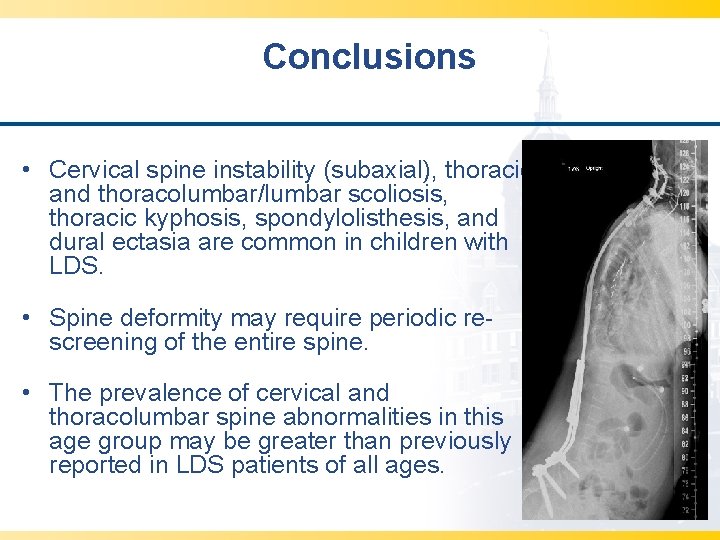
Conclusions • Cervical spine instability (subaxial), thoracic and thoracolumbar/lumbar scoliosis, thoracic kyphosis, spondylolisthesis, and dural ectasia are common in children with LDS. • Spine deformity may require periodic rescreening of the entire spine. • The prevalence of cervical and thoracolumbar spine abnormalities in this age group may be greater than previously reported in LDS patients of all ages.
Thank you
- Slides: 16