
Early North American Colonies Part 2 1 Colonization


- Slides: 21
Early North American Colonies Part 2
1. Colonization and Forging a Nation a. Identify the reasons for colonization, evaluate its impacts, and analyze the success or failure of settlements in North America Source: http: //www. act. org/qualitycore/
b. Analyze religious development and its significance in colonial America (e. g. , religious settlements, the Great Awakening) Source: http: //www. act. org/qualitycore/
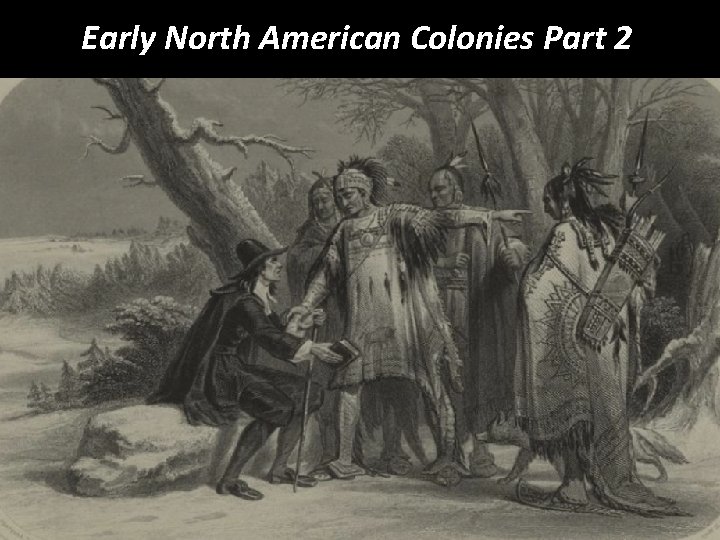
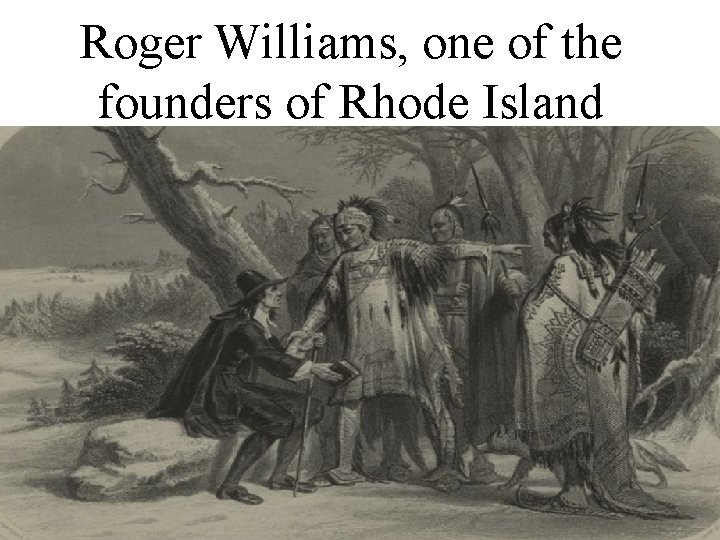
Tension in the Colonies -Dissent occurred with people like Roger Williams, who at one point identified as a Baptist. -Williams wanted to worship differently than the Puritans. He also wanted the English to buy land from Native Americans, not just take it. -Williams felt that the Europeans had a moral obligation to treat the Native Americans justly.
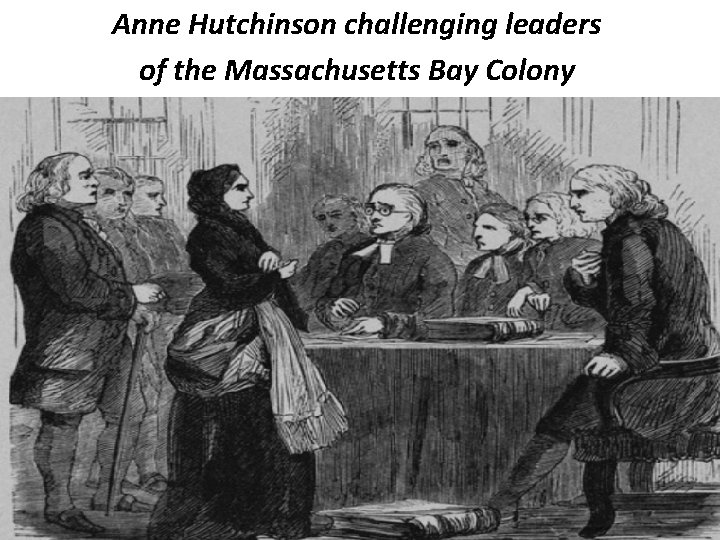
The Formation of Providence -Williams left and formed Providence, which later became the capital of Rhode Island. -In Providence, Williams gave citizens religious freedom. -Anne Hutchinson also challenged the authority of leaders to interpret the Bible and was banished from the Massachusetts Bay Colony.
Roger Williams, one of the founders of Rhode Island
Anne Hutchinson challenging leaders of the Massachusetts Bay Colony
More Conflict with Native Americans -As more colonies formed, like New Hampshire and Connecticut, Native American groups began to challenge the English. -They resisted converting to Christianity as well. -During KING PHILIPS WAR, in 1675, a Wampanoag chief, Metacom (the English called him King Philip), organized an alliance against English settlers.
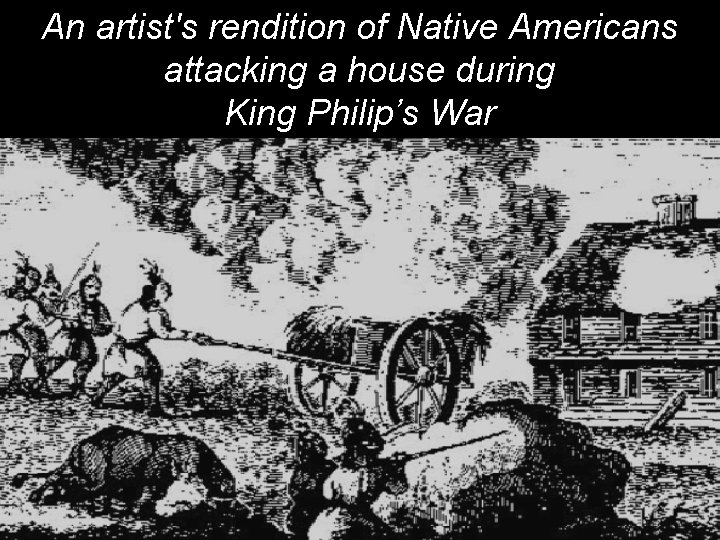
King Philipp’s War Continued -The Native Americans attacked and burned villages to the ground and the English responded with intense brutality. -The hostility between the two groups came with the struggle to control the lands claimed by England. -Eventually, war and disease wore down the Native Americans and the resistance faded.
An artist's rendition of Native Americans attacking a house during King Philip’s War
Settlements in North American -In 1609, Henry Hudson explored for the Dutch, who founded New Amsterdam in 1625. This became New York by 1664. -The English eventually took over the area. -In 1660, King Charles II paid a debt off by giving a man named William Penn land in North America called Pennsylvania, which means Penn’s Woods.
Pennsylvania -Penn was a Quaker, an off shoot religion that deviated from Protestantism. Penn allowed complete religious freedom in his colony. -Quakers were extreme pacifists and believed nobody should serve in the military. They also paid Native Americans for land. -Quaker values included equality, cooperation, and religious tolerance.
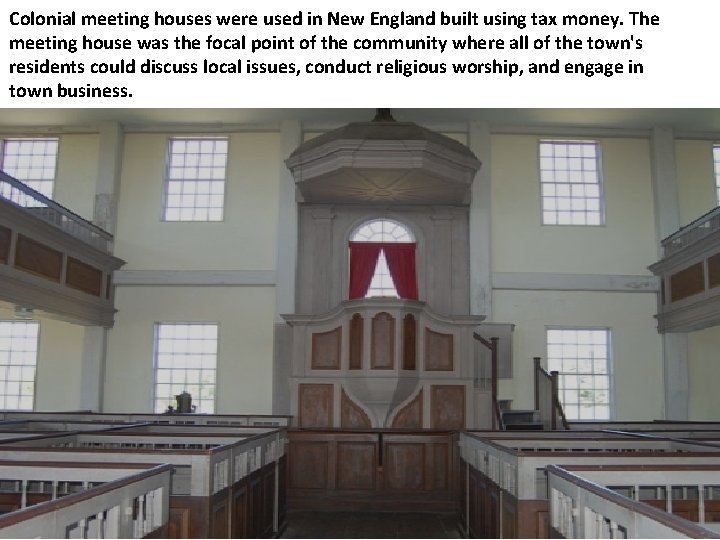
Colonial meeting houses were used in New England built using tax money. The meeting house was the focal point of the community where all of the town's residents could discuss local issues, conduct religious worship, and engage in town business.
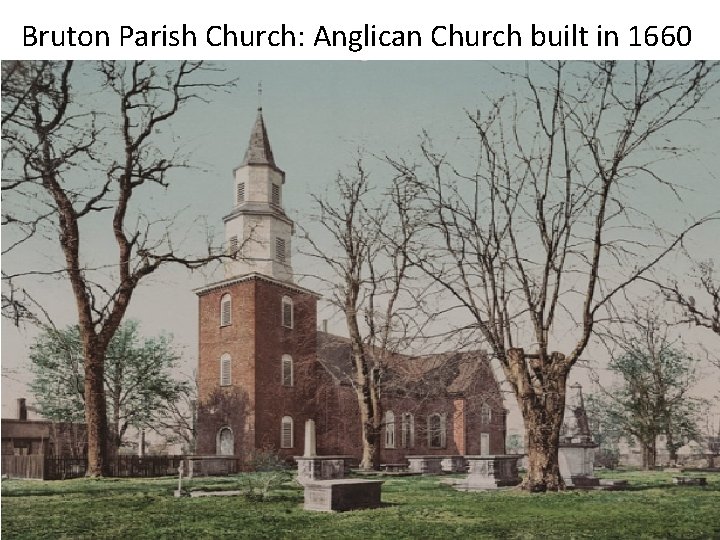
Bruton Parish Church: Anglican Church built in 1660
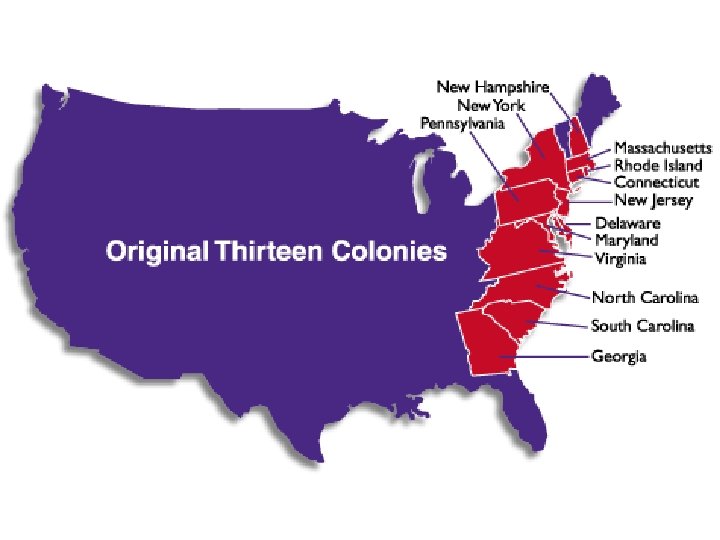
England her Colonies Prosper -From the 1600 s to the 1700 s, the colonies appeared that would form the 13 colonies. -Mercantilism also arose. This system claimed wealth came from gaining precious metals, such as gold and silver. -Also, the system claimed wealth comes from selling more goods than you buy.
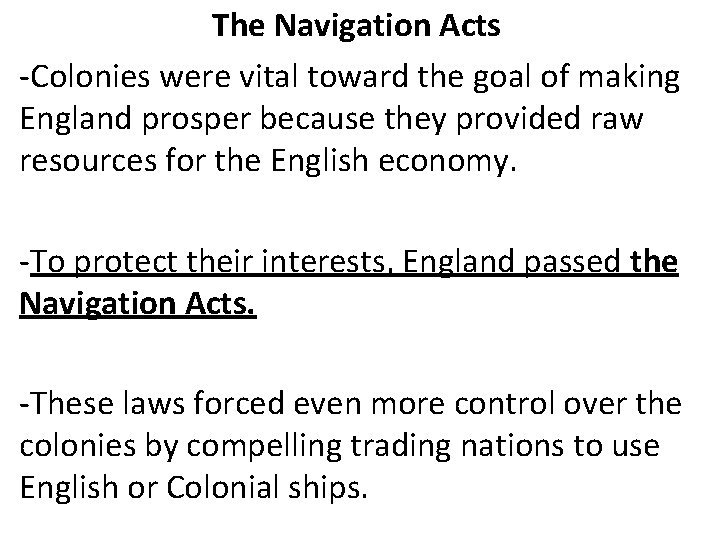
The Navigation Acts -Colonies were vital toward the goal of making England prosper because they provided raw resources for the English economy. -To protect their interests, England passed the Navigation Acts. -These laws forced even more control over the colonies by compelling trading nations to use English or Colonial ships.
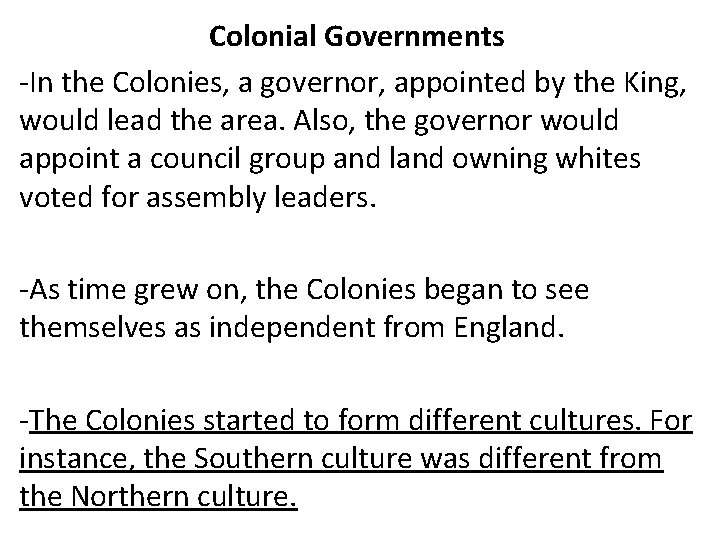
Colonial Governments -In the Colonies, a governor, appointed by the King, would lead the area. Also, the governor would appoint a council group and land owning whites voted for assembly leaders. -As time grew on, the Colonies began to see themselves as independent from England. -The Colonies started to form different cultures. For instance, the Southern culture was different from the Northern culture.
THE END
Do you need more resources? GO TO ushistoryteachers. com Copyright, © USHistory. Teachers. com All Rights Reserved.