
Early Nile Civilizations n Overview of Ancient Egypt
- Slides: 23
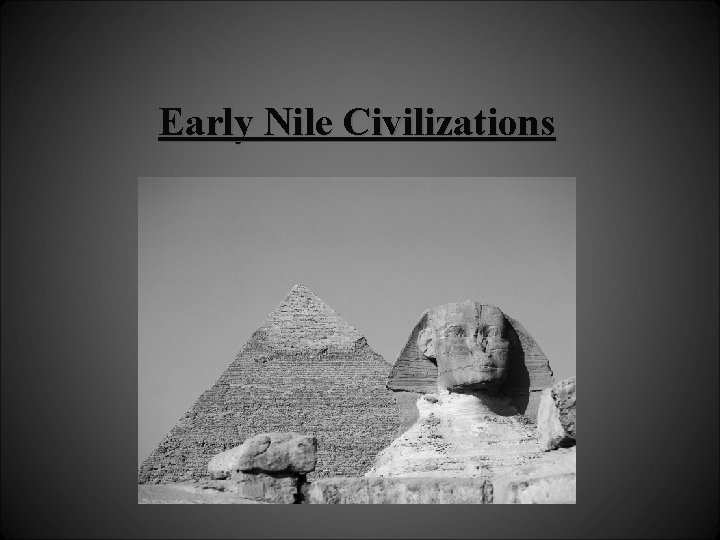
Early Nile Civilizations
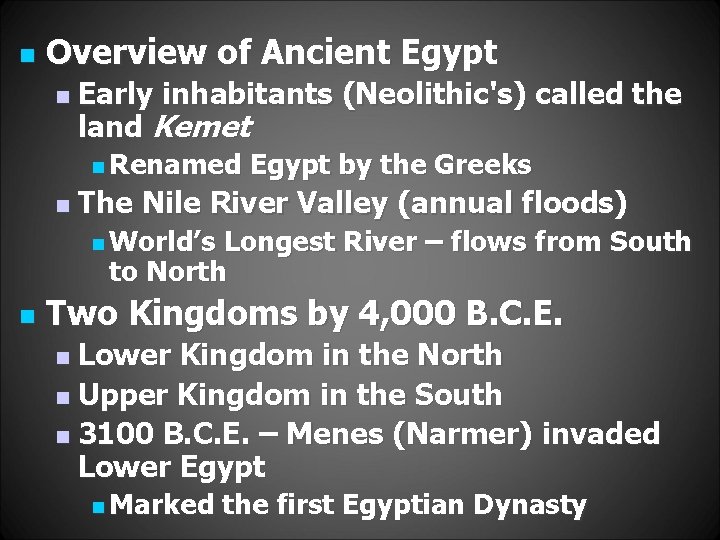
n Overview of Ancient Egypt n Early inhabitants (Neolithic's) called the land Kemet n Renamed n Egypt by the Greeks The Nile River Valley (annual floods) n World’s Longest River – flows from South to North n Two Kingdoms by 4, 000 B. C. E. Lower Kingdom in the North n Upper Kingdom in the South n 3100 B. C. E. – Menes (Narmer) invaded Lower Egypt n n Marked the first Egyptian Dynasty
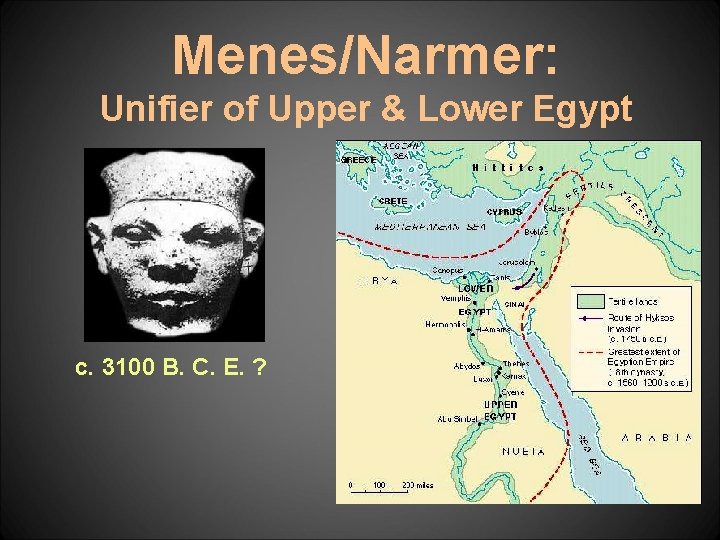
Menes/Narmer: Unifier of Upper & Lower Egypt c. 3100 B. C. E. ?
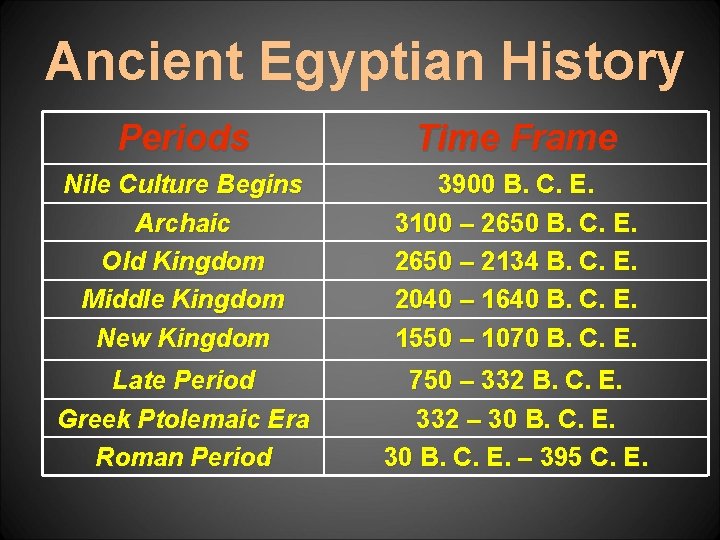
Ancient Egyptian History Periods Time Frame Nile Culture Begins Archaic Old Kingdom Middle Kingdom New Kingdom 3900 B. C. E. 3100 – 2650 B. C. E. 2650 – 2134 B. C. E. 2040 – 1640 B. C. E. 1550 – 1070 B. C. E. Late Period Greek Ptolemaic Era Roman Period 750 – 332 B. C. E. 332 – 30 B. C. E. – 395 C. E.
II. Three Egyptian Dynasties n The Old Kingdom (2700 -2200 B. C. E. ) n n n The Middle Kingdom (2050 -1700 B. C. E. ) n n Established a theocracy (god-king) Built pyramids to honor pharoahs (mummification) Egypt was reunited after a time of upheaval The capital was moved to Thebes Were invaded by the Hyksos (from Western Asia) The New Kingdom (1600 -1200 B. C. E. ) n n Egyptians overthrew the Hyksos – led by Ahmose Kings began to use the title Pharaoh
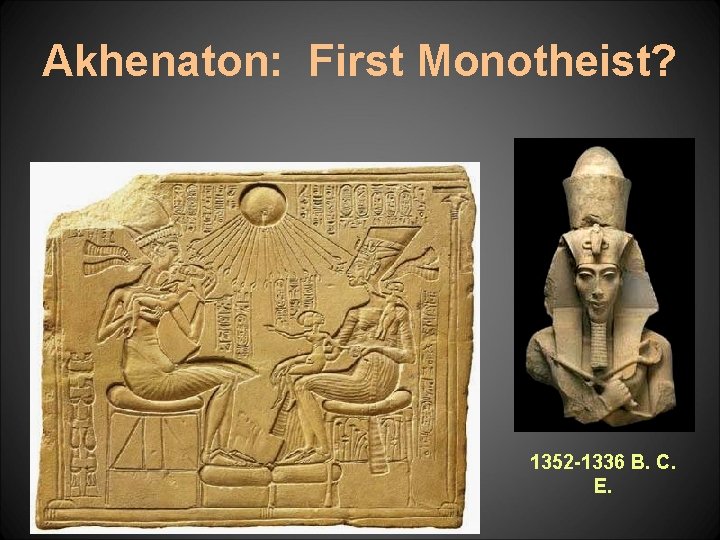
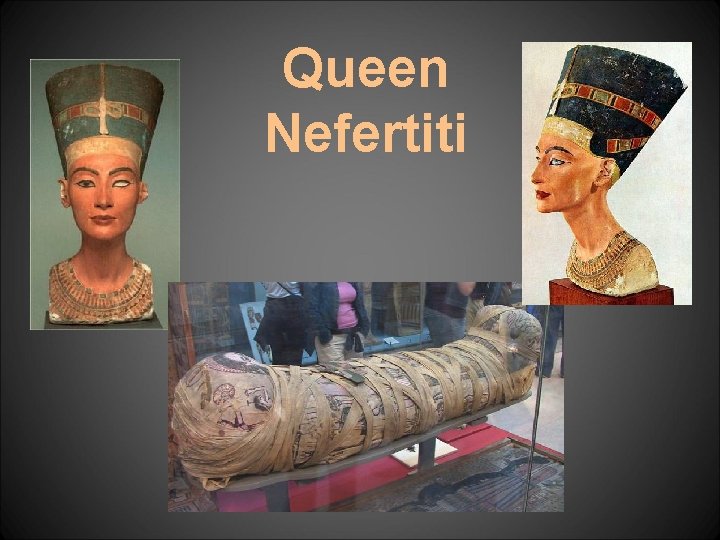
III. New Kingdom Pharaohs n Hatshepsut (1480 B. C. E. ) - female pharaoh n n n Thutmose III (Hatshepsut’s son) n n n Ruled because her son was too young to rule Extensive building projects Expanded the Dynasty to include Syria Made an “empire” for Egypt – cultural diffusion Amenhotep: (1370 B. C. E. ) – wife Nefertiti n n n Decided to make Egypt monotheistic (Aton) Changed his name to Akhenaton Moved the capital to central Egypt
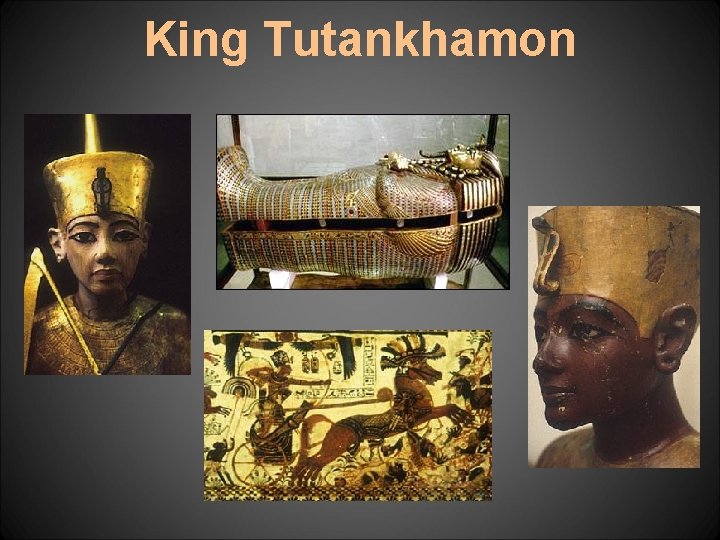
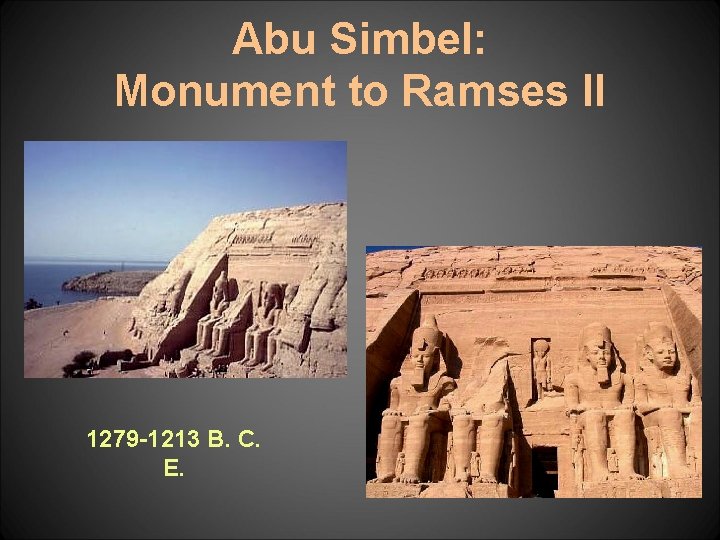
n Tutankhamen (King Tut) n n n The boy king Moved the capital back to Thebes Ramses II (“the Great”) n n n Fought the Hittites for control of Syria 1995 C. E. , a tomb was uncovered that held 50 of Ramses 52 sons Egypt weakened after Ramses’ death n Invasions by the Libyans and Kushites
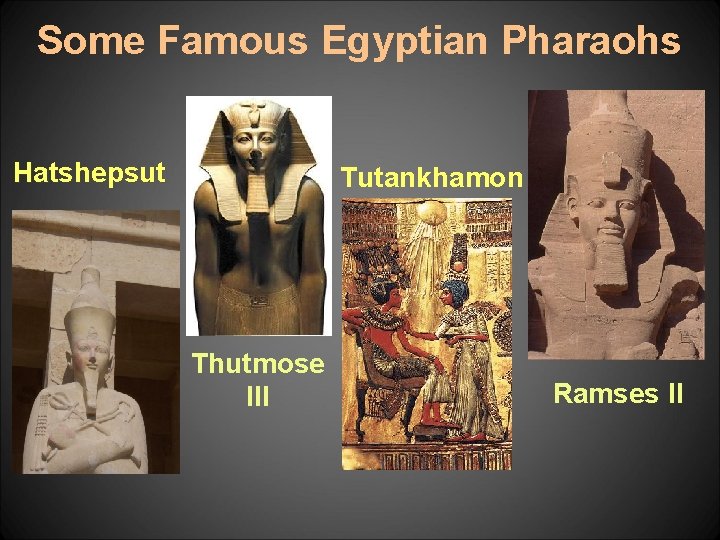
Some Famous Egyptian Pharaohs Hatshepsut Tutankhamon Thutmose III Ramses II
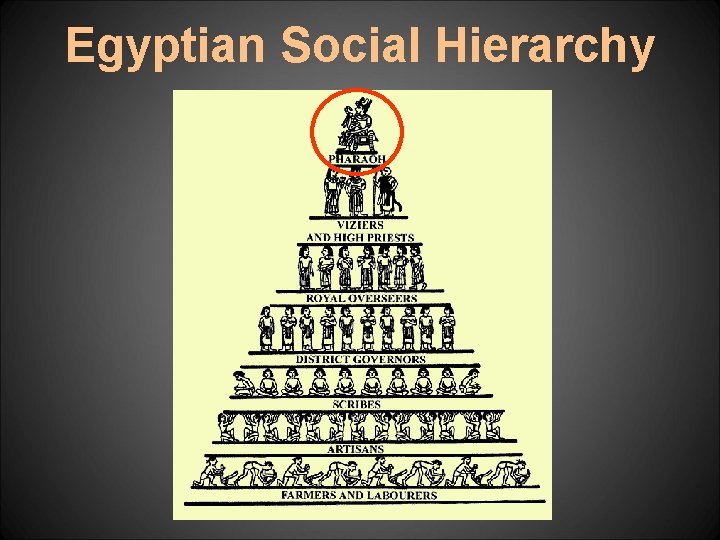
Egyptian Social Hierarchy
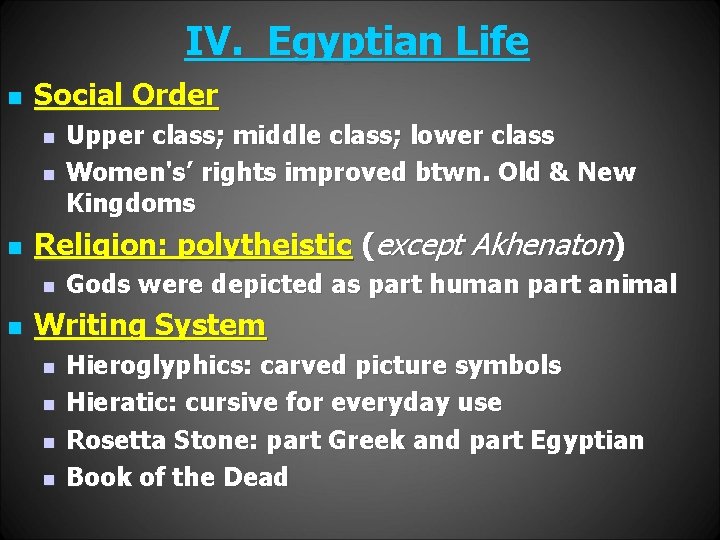
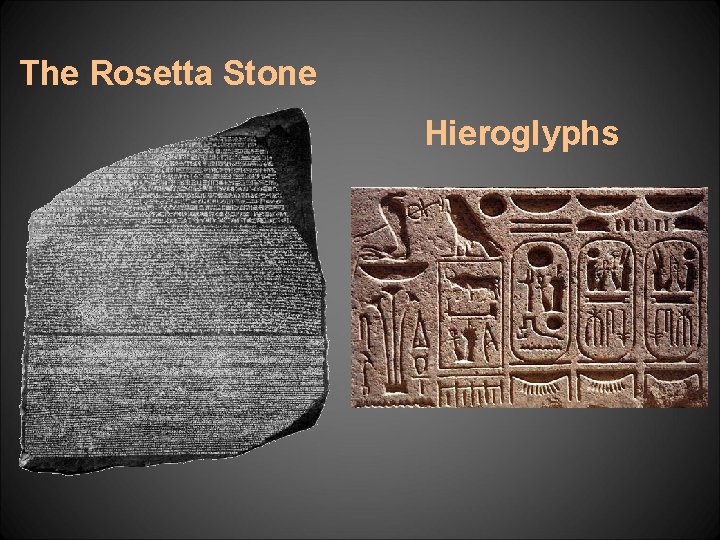
IV. Egyptian Life n Social Order n n n Religion: polytheistic (except Akhenaton) n n Upper class; middle class; lower class Women's’ rights improved btwn. Old & New Kingdoms Gods were depicted as part human part animal Writing System n n Hieroglyphics: carved picture symbols Hieratic: cursive for everyday use Rosetta Stone: part Greek and part Egyptian Book of the Dead
The Rosetta Stone Hieroglyphs
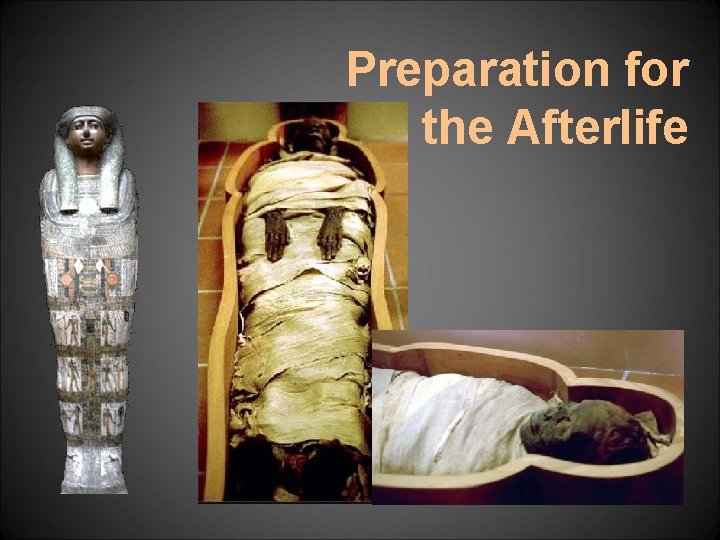
Preparation for the Afterlife
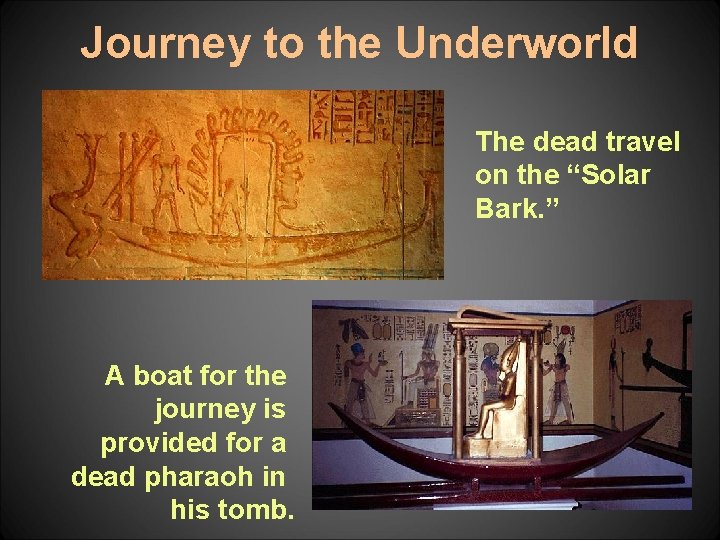
Journey to the Underworld The dead travel on the “Solar Bark. ” A boat for the journey is provided for a dead pharaoh in his tomb.
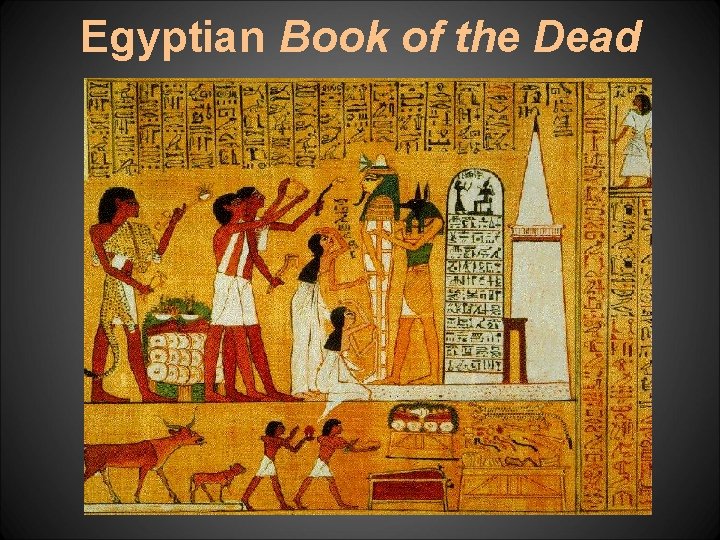
Egyptian Book of the Dead
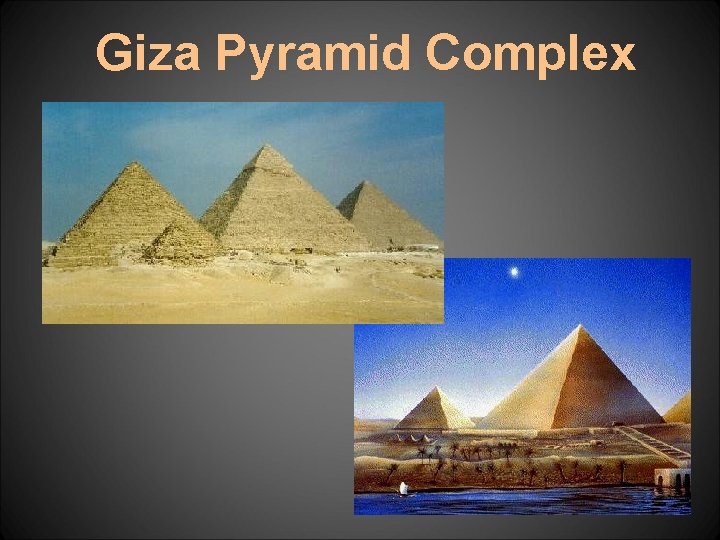
Giza Pyramid Complex
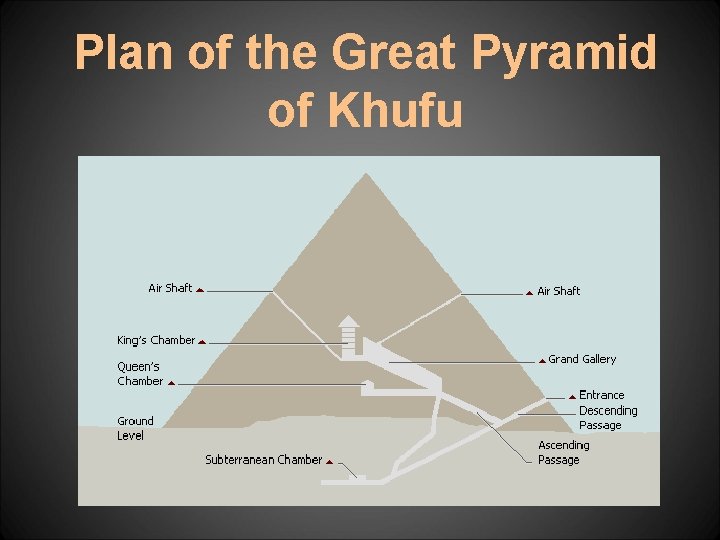
Plan of the Great Pyramid of Khufu
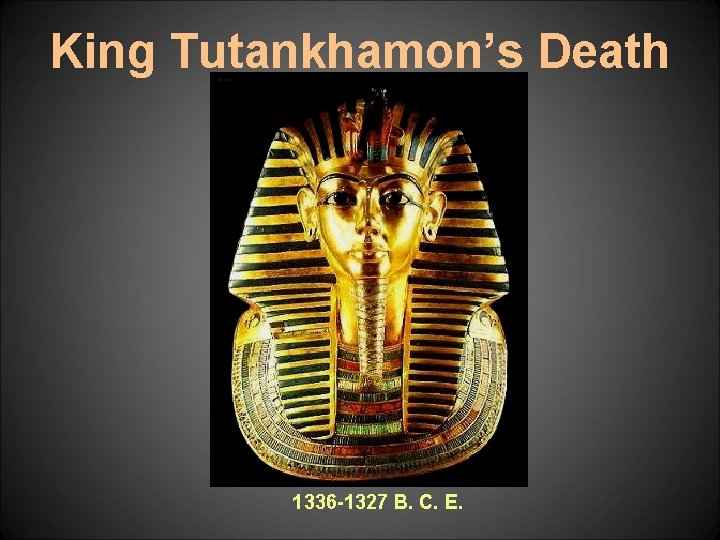
King Tutankhamon’s Death Mask 1336 -1327 B. C. E.
King Tutankhamon
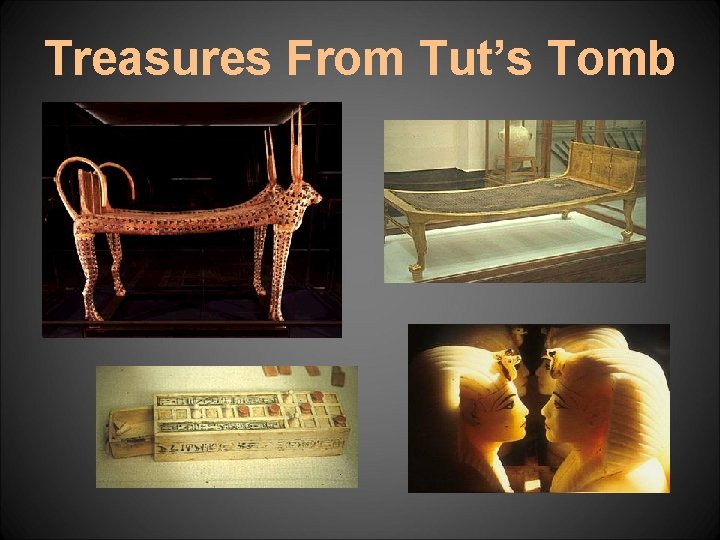
Treasures From Tut’s Tomb
Akhenaton: First Monotheist? 1352 -1336 B. C. E.
Queen Nefertiti
Abu Simbel: Monument to Ramses II 1279 -1213 B. C. E.
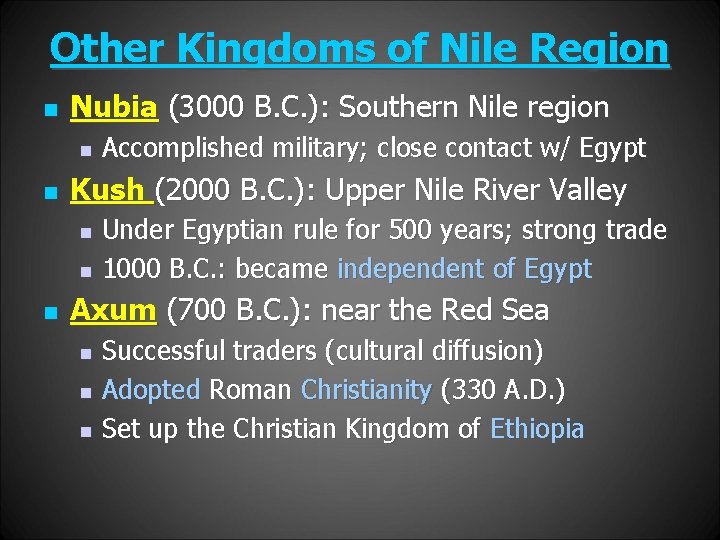
Other Kingdoms of Nile Region n Nubia (3000 B. C. ): Southern Nile region n n Kush (2000 B. C. ): Upper Nile River Valley n n n Accomplished military; close contact w/ Egypt Under Egyptian rule for 500 years; strong trade 1000 B. C. : became independent of Egypt Axum (700 B. C. ): near the Red Sea n n n Successful traders (cultural diffusion) Adopted Roman Christianity (330 A. D. ) Set up the Christian Kingdom of Ethiopia