
Early Models of the Atom Scientists create models

- Slides: 17
Early Models of the Atom
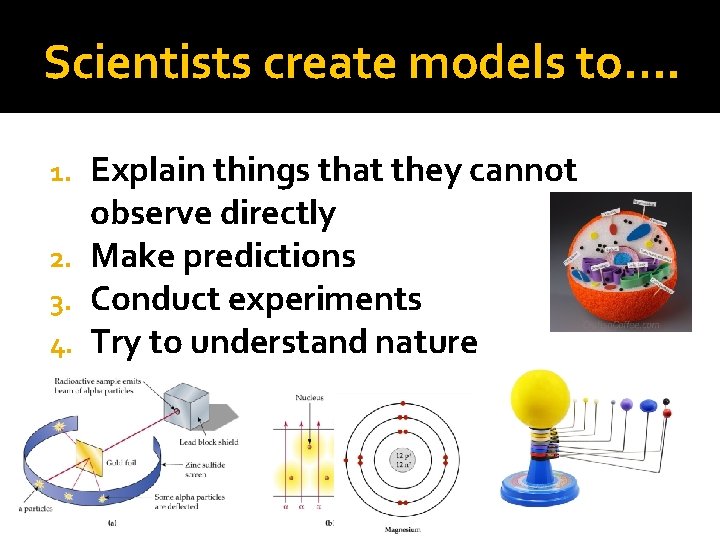
Scientists create models to…. Explain things that they cannot observe directly 2. Make predictions 3. Conduct experiments 4. Try to understand nature 1.
2400 Year Search for the Atom
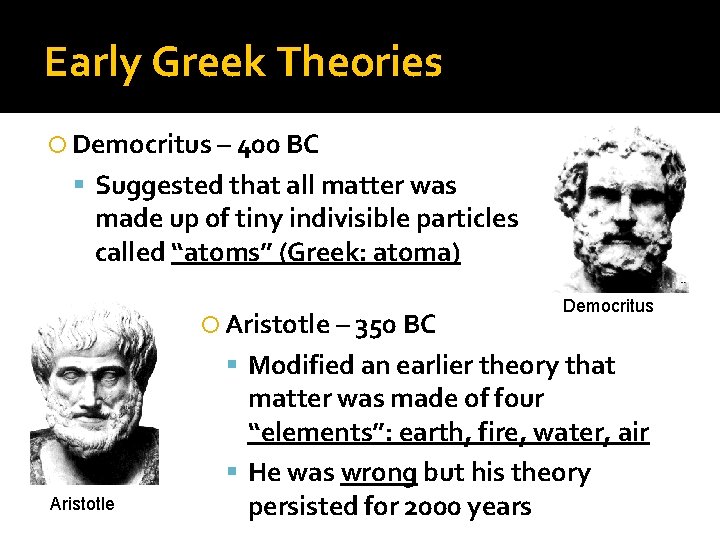
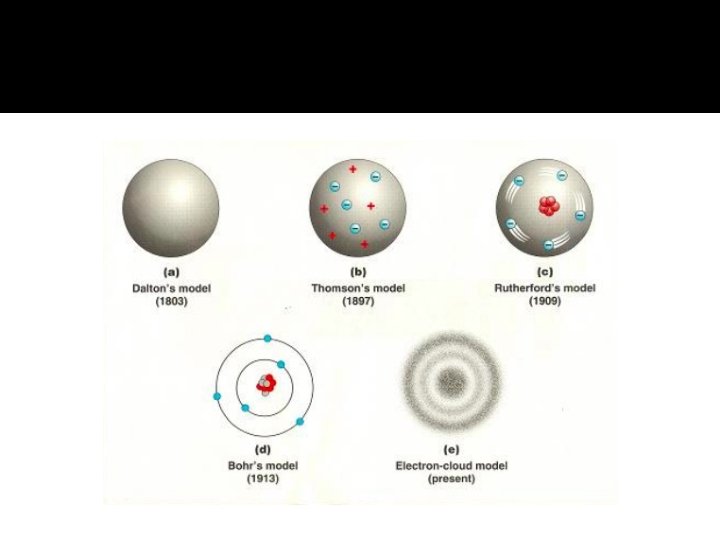
Early Greek Theories Democritus – 400 BC Suggested that all matter was made up of tiny indivisible particles called “atoms” (Greek: atoma) Aristotle – 350 BC Democritus Modified an earlier theory that Aristotle matter was made of four “elements”: earth, fire, water, air He was wrong but his theory persisted for 2000 years
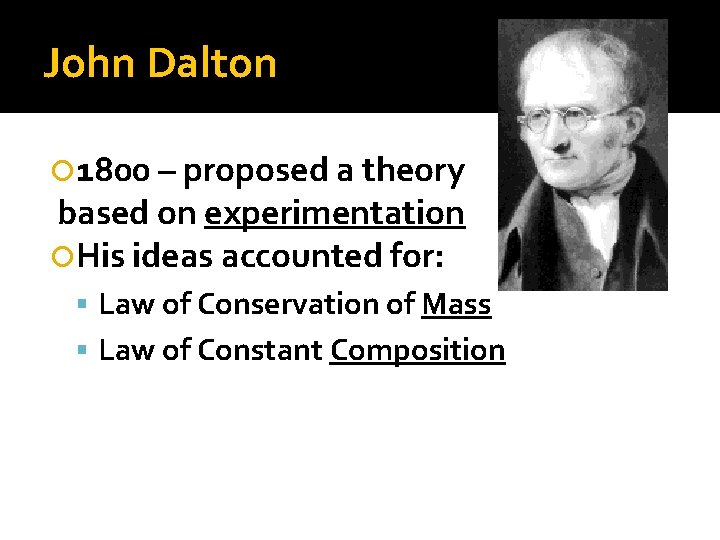
John Dalton 1800 – proposed a theory based on experimentation His ideas accounted for: Law of Conservation of Mass Law of Constant Composition
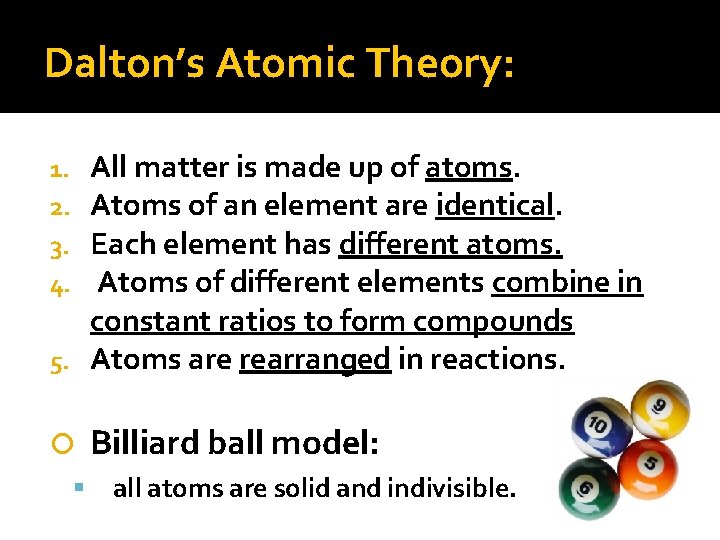
Dalton’s Atomic Theory: All matter is made up of atoms. Atoms of an element are identical. Each element has different atoms. Atoms of different elements combine in constant ratios to form compounds 5. Atoms are rearranged in reactions. 1. 2. 3. 4. Billiard ball model: all atoms are solid and indivisible.
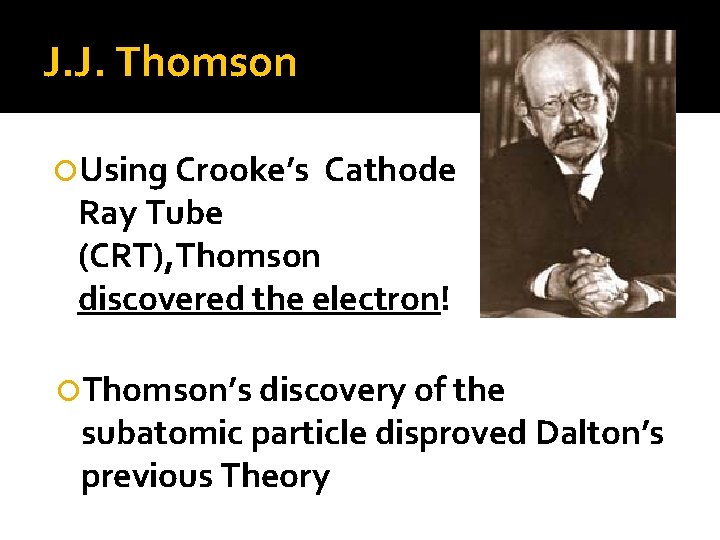
J. J. Thomson Using Crooke’s Cathode Ray Tube (CRT), Thomson discovered the electron! Thomson’s discovery of the subatomic particle disproved Dalton’s previous Theory
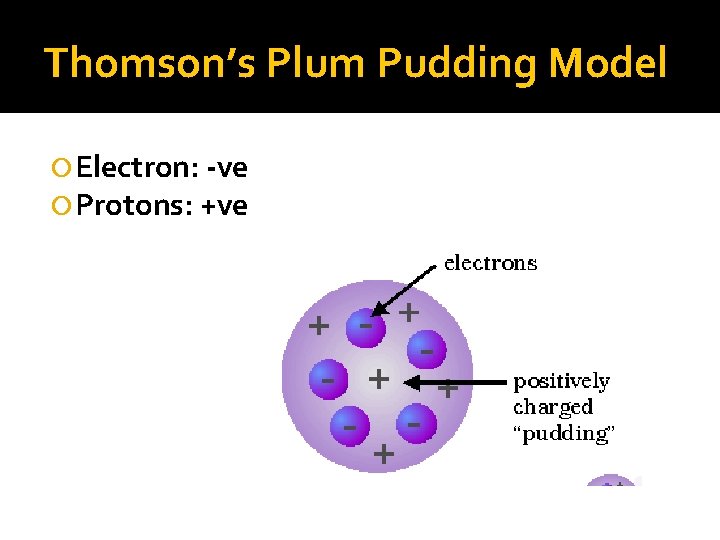
Thomson’s Plum Pudding Model Electron: -ve Protons: +ve
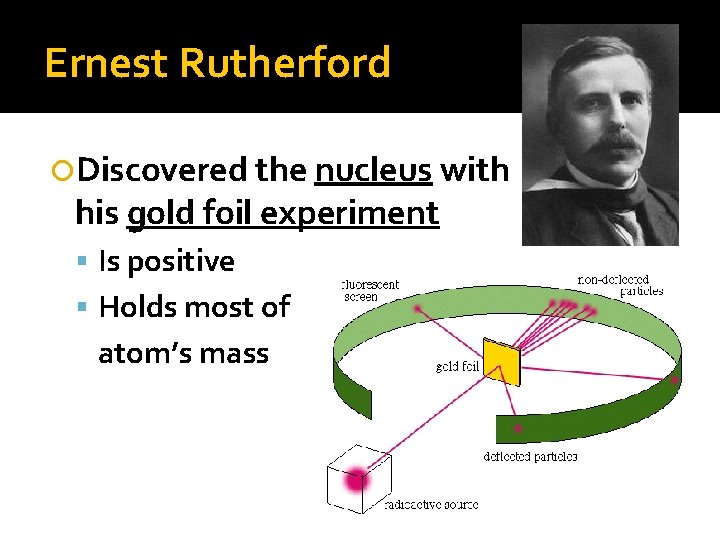
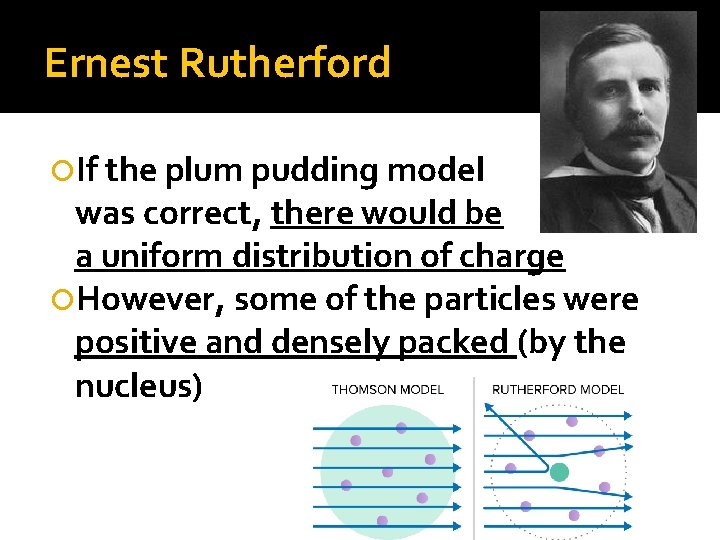
Ernest Rutherford Discovered the nucleus with his gold foil experiment Is positive Holds most of atom’s mass
Ernest Rutherford If the plum pudding model was correct, there would be a uniform distribution of charge However, some of the particles were positive and densely packed (by the nucleus)
The flaw in Rutherford’s model: Could not explain why the electrons didn’t fall into the nucleus and destroy the atom
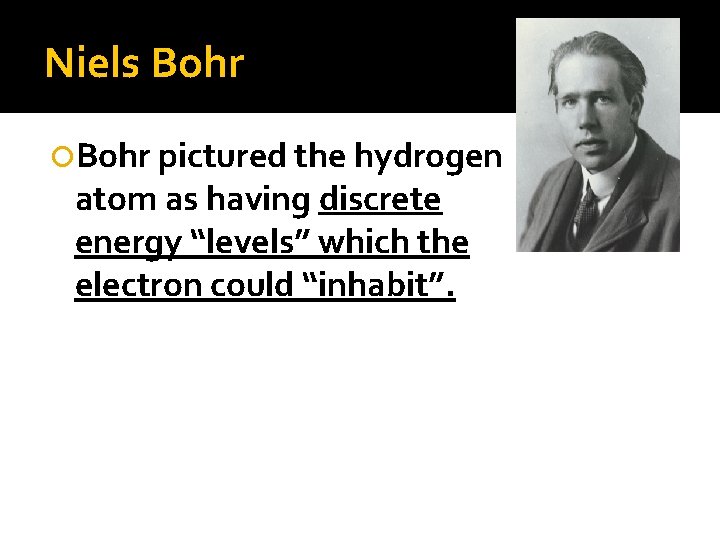
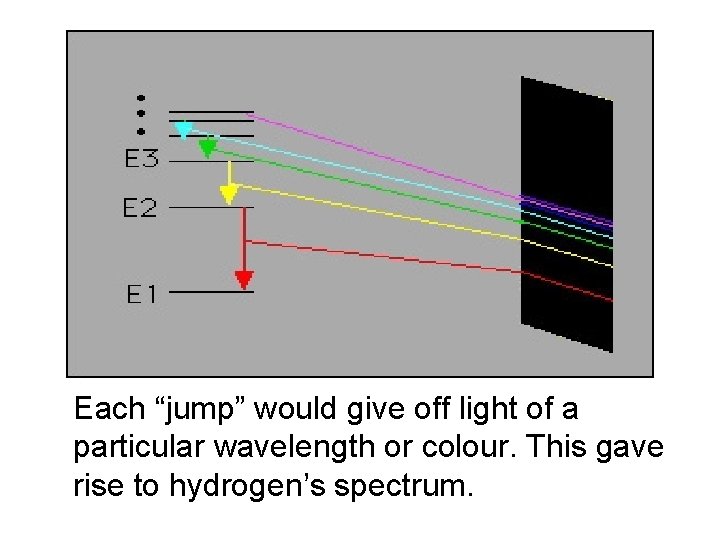
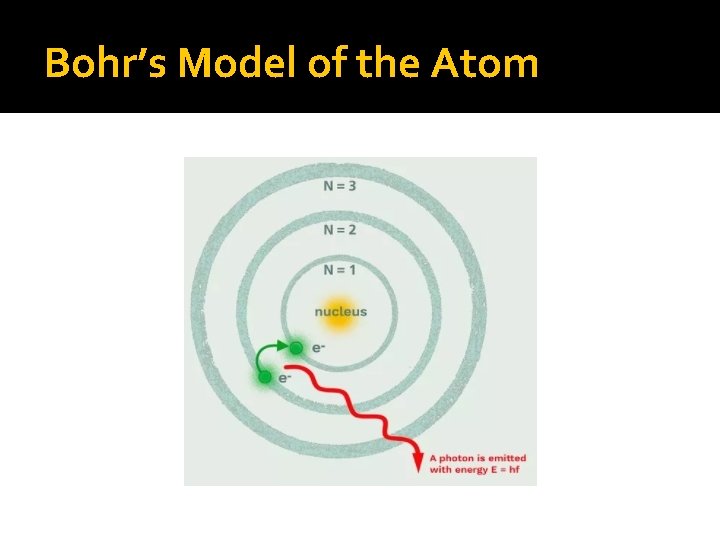
Niels Bohr pictured the hydrogen atom as having discrete energy “levels” which the electron could “inhabit”.
Each “jump” would give off light of a particular wavelength or colour. This gave rise to hydrogen’s spectrum.
When the atom was “excited” the electron could “jump” to a higher level. When the electron came back down, it released energy in the form of light.
Bohr’s Model of the Atom
Atomic Structure Atomic Number: The number of protons in an element Mass Number: The number of protons and neutrons in an element If an atom has a neutral charge, it must have the same number of protons and electrons Isotope: an element that has the same number of protons, but different number of neutrons Same atomic number, different mass number