
Early Models of the Atom Ancient Greeks were


- Slides: 24
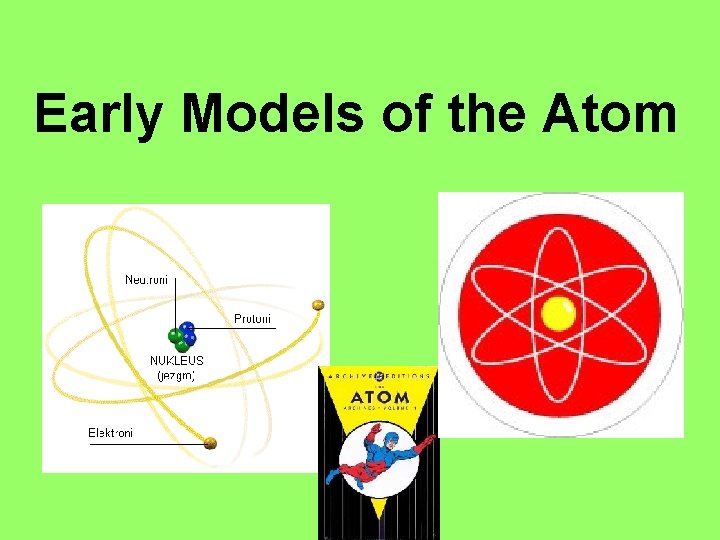
Early Models of the Atom
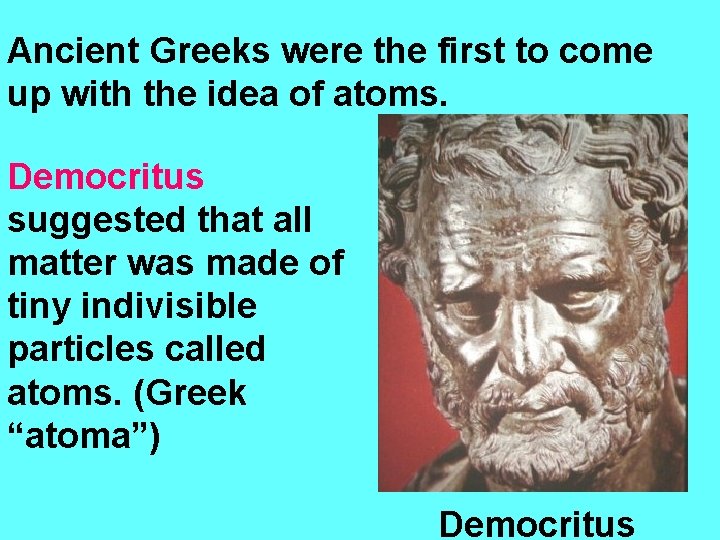
Ancient Greeks were the first to come up with the idea of atoms. Democritus suggested that all matter was made of tiny indivisible particles called atoms. (Greek “atoma”) Democritus
In the dark ages, the idea of atoms was frowned upon. Not much progress was made. ATOMS? What’s that? OFF with your HEAD!
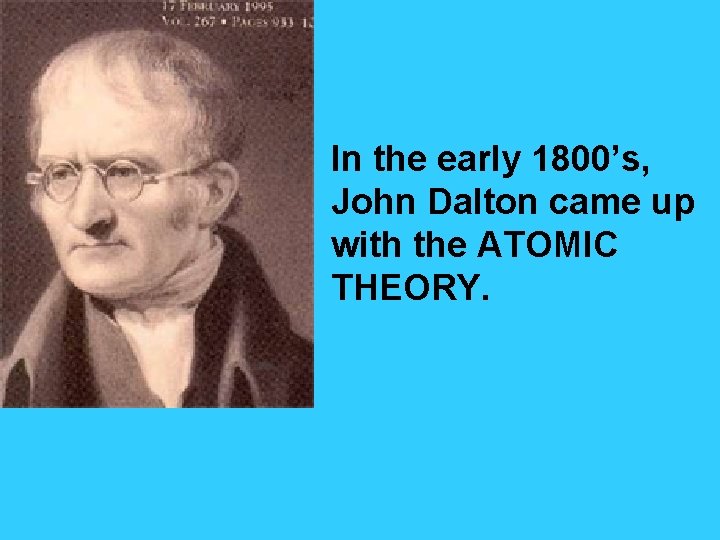
In the early 1800’s, John Dalton came up with the ATOMIC THEORY.
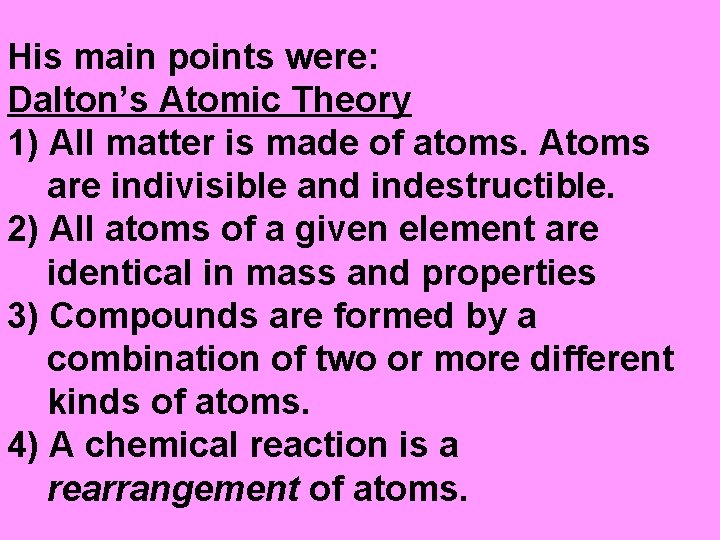
His main points were: Dalton’s Atomic Theory 1) All matter is made of atoms. Atoms are indivisible and indestructible. 2) All atoms of a given element are identical in mass and properties 3) Compounds are formed by a combination of two or more different kinds of atoms. 4) A chemical reaction is a rearrangement of atoms.
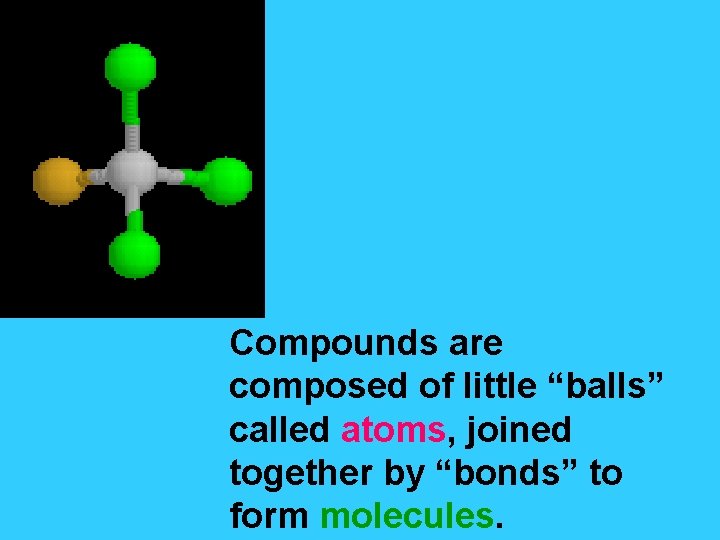
Compounds are composed of little “balls” called atoms, joined together by “bonds” to form molecules.
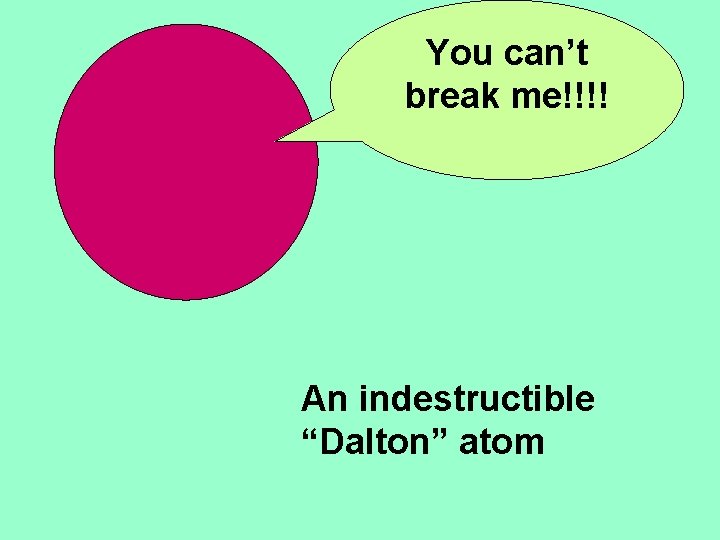
You can’t break me!!!! An indestructible “Dalton” atom
crookes tube J. J. Thomson's Experiments Using Crooke’s tubes and other equipment, J. J. Thomson discovered the electron and measured its e/m (charge to mass) ratio. Later, “e” was found and the mass of an electron was found to be 9. 10938188 × 10 -28 grams (much lighter than H)
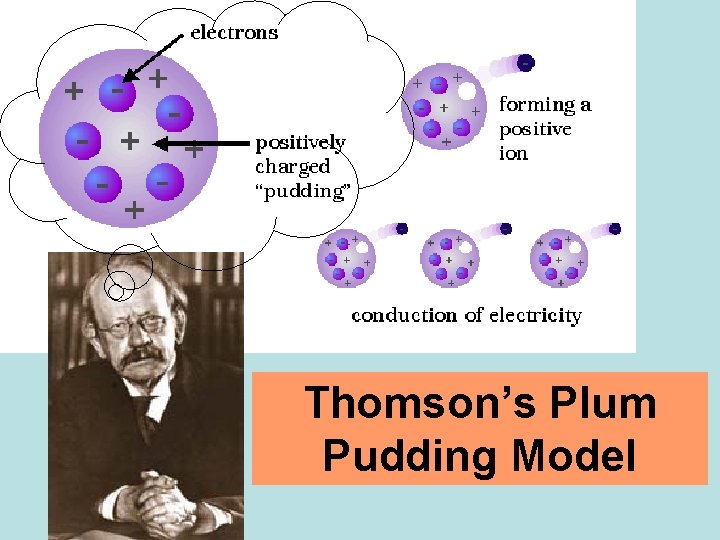
Thomson’s Plum Pudding Model
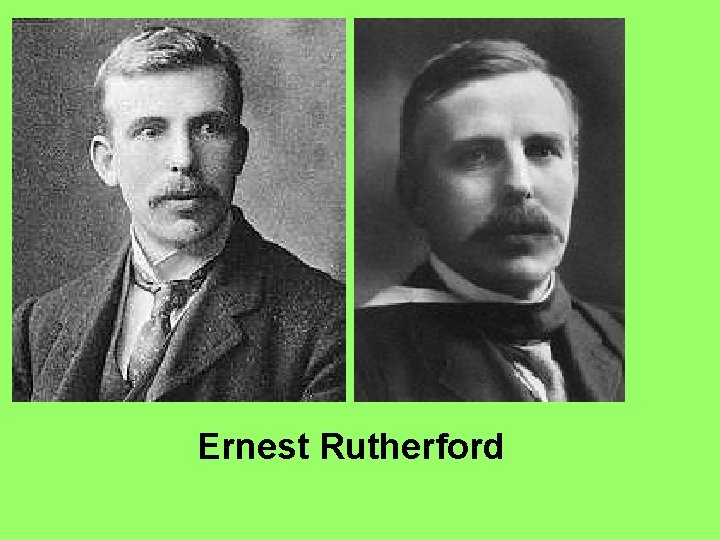
Ernest Rutherford
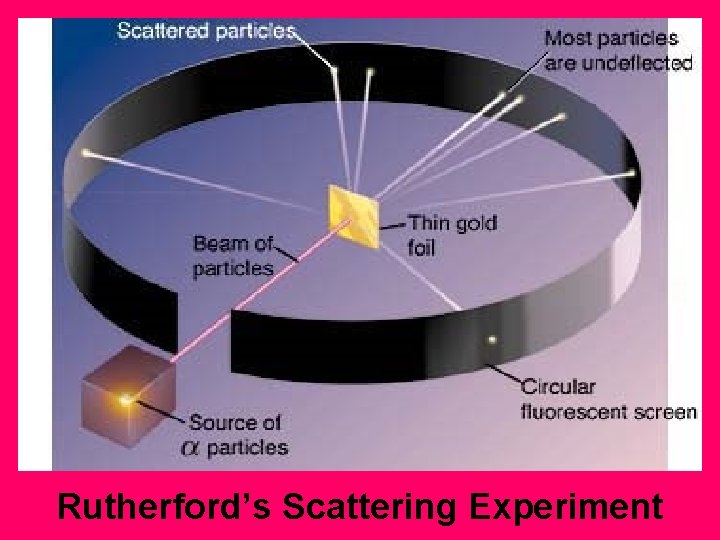
Rutherford’s Scattering Experiment
Applet on Rutherford's Experiment http: //micro. magnet. fsu. edu/elect romag/java/rutherford/
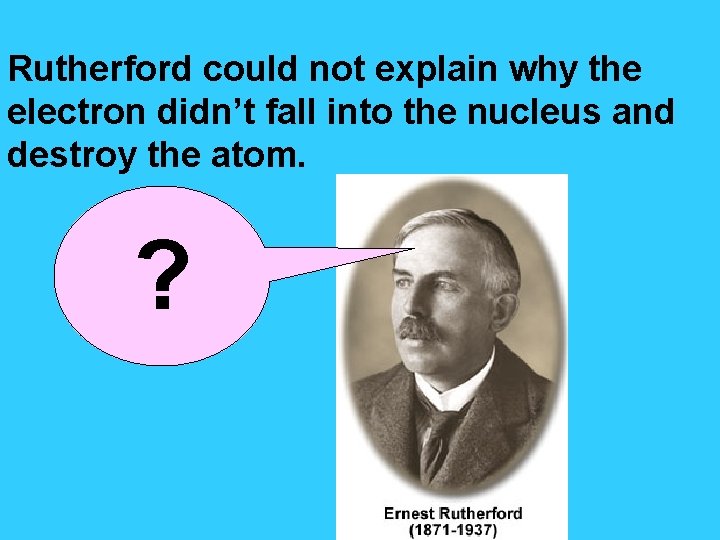
Rutherford could not explain why the electron didn’t fall into the nucleus and destroy the atom. ?
I think I can help! Neils Bohr
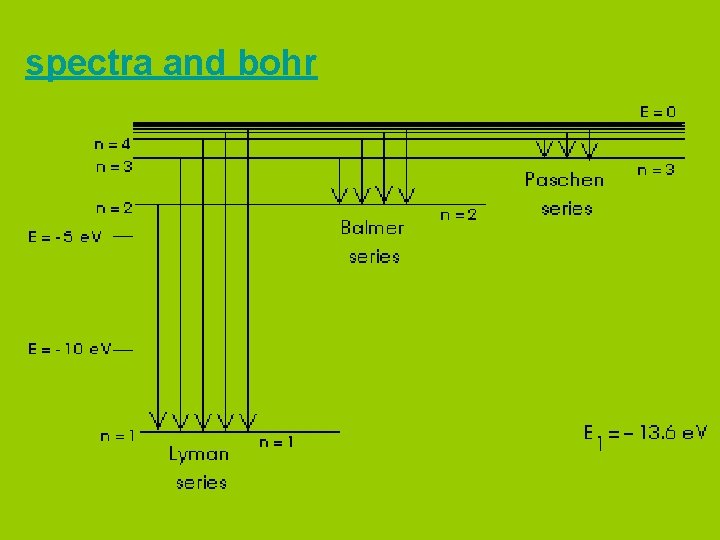
spectra and bohr
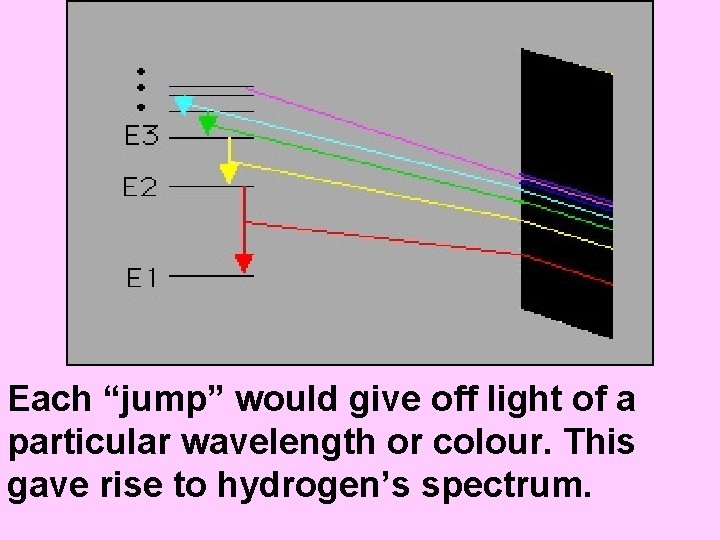
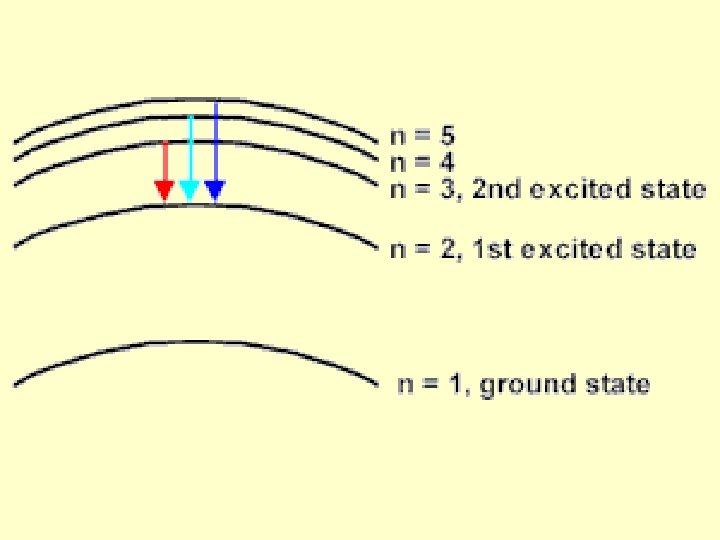
Bohr pictured the hydrogen atom as having discrete energy “levels” which the electron could “inhabit”. In it’s ground state, the electron would be in the lowest level (n=1) When the atom was “excited” the electron could “jump” to a higher level. When the electron came back down, it released energy in the form of light.
Each “jump” would give off light of a particular wavelength or colour. This gave rise to hydrogen’s spectrum.
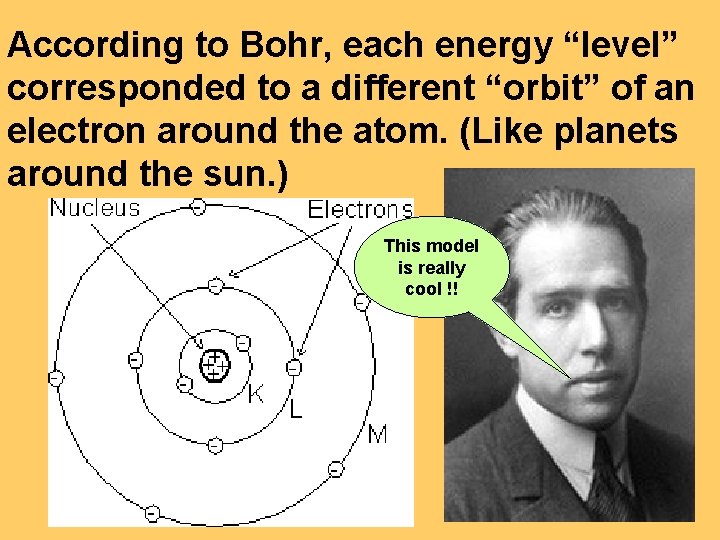
According to Bohr, each energy “level” corresponded to a different “orbit” of an electron around the atom. (Like planets around the sun. ) This model is really cool !!
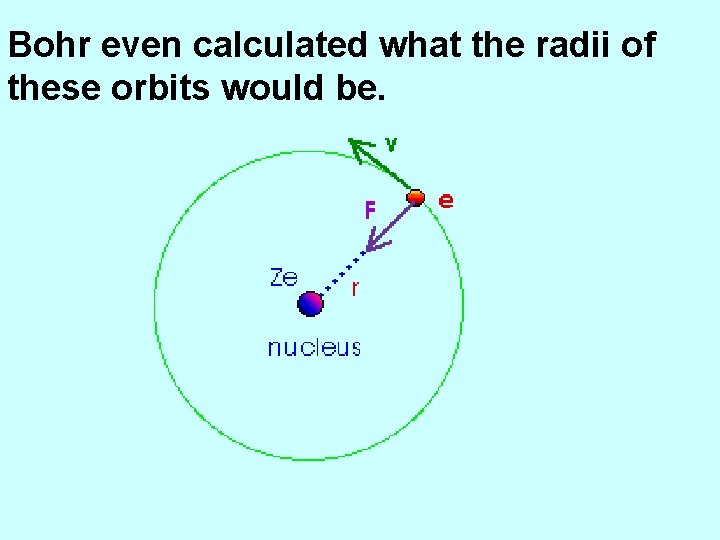
Bohr even calculated what the radii of these orbits would be.
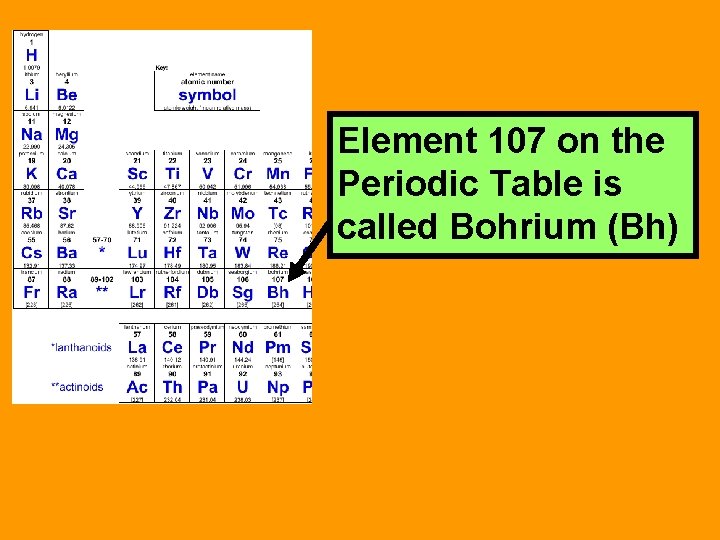
Element 107 on the Periodic Table is called Bohrium (Bh)
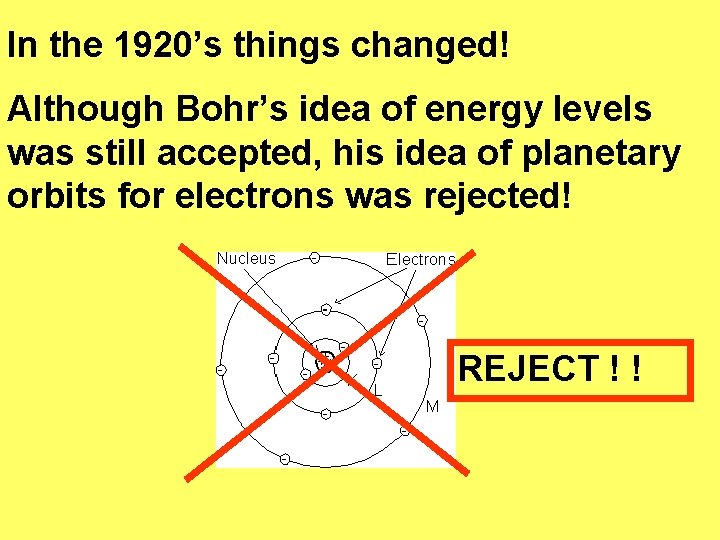
In the 1920’s things changed! Although Bohr’s idea of energy levels was still accepted, his idea of planetary orbits for electrons was rejected! REJECT ! !
So…… What’s Next? ? ? ?